• KGS/USD = 0.01143 -0%
  • KZT/USD = 0.00198 -0%
  • TJS/USD = 0.10899 0.65%
  • UZS/USD = 0.00008 -0%
  • TMT/USD = 0.28490 -0.28%
  • KGS/USD = 0.01143 -0%
  • KZT/USD = 0.00198 -0%
  • TJS/USD = 0.10899 0.65%
  • UZS/USD = 0.00008 -0%
  • TMT/USD = 0.28490 -0.28%
  • KGS/USD = 0.01143 -0%
  • KZT/USD = 0.00198 -0%
  • TJS/USD = 0.10899 0.65%
  • UZS/USD = 0.00008 -0%
  • TMT/USD = 0.28490 -0.28%
  • KGS/USD = 0.01143 -0%
  • KZT/USD = 0.00198 -0%
  • TJS/USD = 0.10899 0.65%
  • UZS/USD = 0.00008 -0%
  • TMT/USD = 0.28490 -0.28%
  • KGS/USD = 0.01143 -0%
  • KZT/USD = 0.00198 -0%
  • TJS/USD = 0.10899 0.65%
  • UZS/USD = 0.00008 -0%
  • TMT/USD = 0.28490 -0.28%
  • KGS/USD = 0.01143 -0%
  • KZT/USD = 0.00198 -0%
  • TJS/USD = 0.10899 0.65%
  • UZS/USD = 0.00008 -0%
  • TMT/USD = 0.28490 -0.28%
  • KGS/USD = 0.01143 -0%
  • KZT/USD = 0.00198 -0%
  • TJS/USD = 0.10899 0.65%
  • UZS/USD = 0.00008 -0%
  • TMT/USD = 0.28490 -0.28%
  • KGS/USD = 0.01143 -0%
  • KZT/USD = 0.00198 -0%
  • TJS/USD = 0.10899 0.65%
  • UZS/USD = 0.00008 -0%
  • TMT/USD = 0.28490 -0.28%
07 December 2025

Viewing results 445 - 450 of 530

Trial of Former Minister Bishimbayev Charged with Murdering Wife Begins

On March 27, the trial of former Minister of the Economy, Kuandyk Bishimbayev, who is accused of murdering his wife, Saltanat Nukenova, began in Astana. A live broadcast of the trial was available on the YouTube channel of the Supreme Court. Preliminary hearings in the case against former Minister, Kuandyk Bishimbayev had begun on March 11, with the indictment being read out and the defense filing a motion asking for a jury trial. In court yesterday, the prosecutor, Aizhan Aimaganova read out a long list of injuries sustained by Nukenova as revealed during her autopsy: "Closed craniocerebral trauma, multiple abrasions, facial bruising, splinter fracture of the nasal bones, wounds to the chin area, hemorrhage in the soft tissues of the face, head, and occipital area, and acute subdural hematoma. When analyzing Nukenova's internal organs, no narcotic, medicinal or psychotropic substances were found," Aimaganova added. "Kuandyk Bishimbayev is accused of causing physical and mental suffering by means of systematic beatings or other violent actions committed against a person who was financially dependent on the perpetrator," the prosecution stated. Following the prosecutor's speech, the judge asked the defendant for his plea, to which Bishimbayev replied “not guilty” before explaining the reasons for his response. "I didn't have a chance to tell my story at the pre-trial investigation, not anywhere. At all. Everything read out by the prosecutor are largely fabrications, for which there is no confirmation or evidence. According to Article 110, I have not committed such a crime at all. Therefore, I do not admit my guilt," Bishimbayev stated, adding that he hoped for an opportunity to express himself thoroughly. To the next count, namely article 99, part 2, paragraph 5, "Murder committed with particular cruelty," Beshimbayev also pled not guilty, stating that "I did not commit the premeditated murder of a human being with particular cruelty." Also in court accused of concealing a serious crime, Bakhytzhan Baizhanov, the director of BAU's Gastro-center where the crime allegedly took place, said he was not sure if he had committed this crime. "I confess that I asked to delete the video recordings [from the surveillance cameras] and asked to take Saltanat's phone home [to hide the geolocation]. I don't know if I committed a crime. At that time, I didn’t know whether Saltanat was dying or dead," Baizhanov said. The next session in the case is scheduled for March 29.   What Bishimbayev is accused of: Article 110, part 2, paragraph 1, item 1 of the Criminal Code: "Causing physical and mental suffering by systematic beatings with violent actions committed against a person who is materially dependent on the perpetrator"; Article 99, part 2, paragraph 5: "Murder committed with particular cruelty"; Article 14, paragraph 2 - according to the prosecution's version, Bishimbayev's actions are considered a dangerous recidivism of this crime. The law states that “Dangerous repetition of crimes shall be recognized as commission by person.”
Former Kyrgyz Official Matraimov Extradited in Connection with Assassination Plot

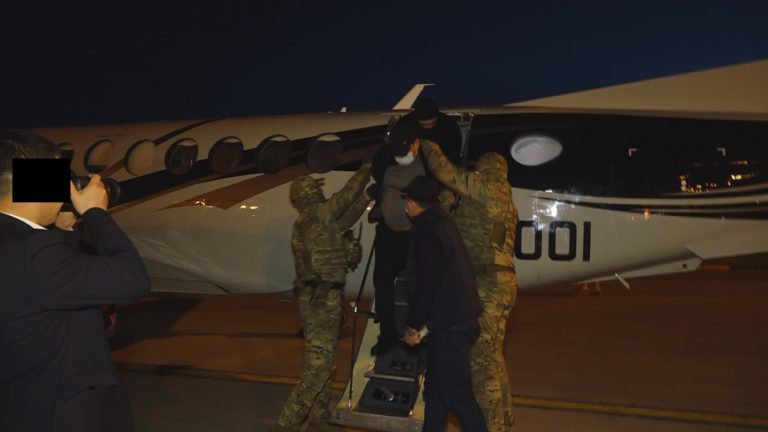
According to statements issued by the special services of Kyrgyzstan, former deputy head of the customs service Raimbek Matraimov is connected with assassins who recently came to Bishkek from Azerbaijan to assassinate members of Kyrgyzstan's leadership. On March 23 Kyrgyz law enforcement became aware that the wanted Matraimov was in Baku, Azerbaijan's capital. The State Committee for National Security of Kyrgyzstan (CNSK) sent a letter to the Azeri authorities with a request to detain and extradite him. In Baku this request was fulfilled. Matraimov's brothers were also detained and flown to Kyrgyzstan, the CNSK reported. The investigation into Matraimov alleges that his clan once had its own people in virtually all government agencies, including the police, prosecutor's office, and parliament, where an entire political party worked on his behalf. Matraimov's group had enormous resources, and numerous levers of influence over the authorities. The 2020 coup d'état in Kyrgyzstan was carried out in part because Matraimov's party won the elections. As a result, those elections were deemed as corrupt, and subsequently voided. Matraimov was put on an international wanted list on January 26. He was charged in absentia under two articles of the Kyrgyz criminal code: illegal imprisonment and legalization of criminal proceeds. As The Times of Central Asia has previously reported, on March 22 in the center of Bishkek authorities detained members of a transnational criminal group, who came to Bishkek from Azerbaijan to assassinate the Kyrgyz political leadership. Kyrgyzstan's special services believe that Matraimov is linked to the criminals and is involved in organizing the assassination attempt. It was also reported that the former official was extradited with the aid of a government board of Kyrgyz authorities.

Man with Kyrgyzstan Links Among Suspects in Moscow Attack

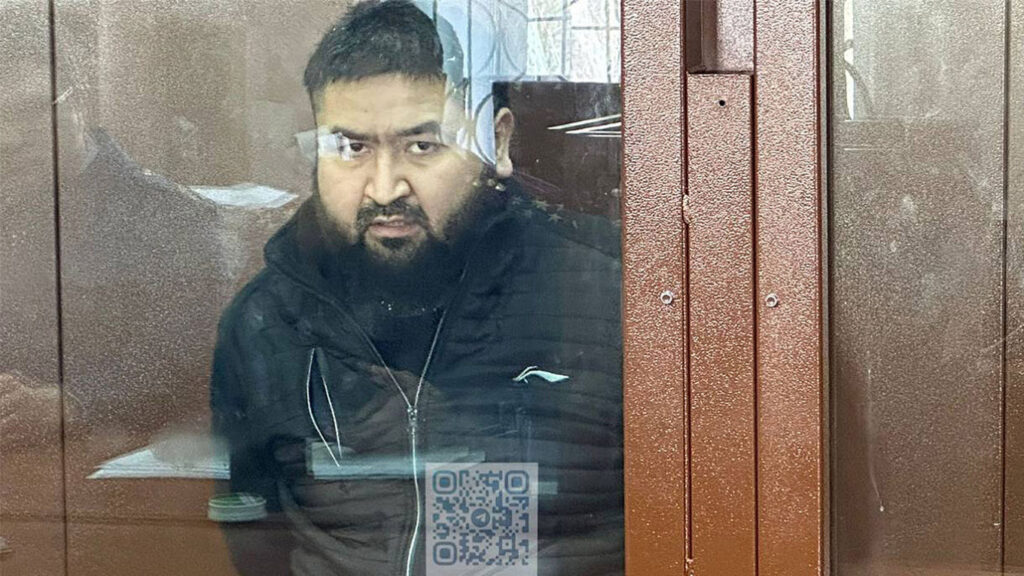
A man originally from Kyrgyzstan is among the suspects detained in the attack on a Moscow concert hall that killed about 140 people, according to media reports. The man, identified as Alisher Kasimov, allegedly rented an apartment to men who carried out the attack on the Crocus City complex on Friday night. He appeared in court on Tuesday and did not show signs of having been beaten or tortured, as was the case with some other suspects. Videos circulating on social media showed a distraught woman purported to be Kasimov’s mother. In the videos, the woman says Kasimov is innocent and that he did not know that he was renting an apartment to people who were plotting an attack. Kasimov denounced his Kyrgyz citizenship in favor of Russian nationality in 2014. Several migrant laborers from Tajikistan were charged with terrorism Sunday night for their alleged role in the devastating assault with rifles and explosives. The attack has focused attention on the large number of Central Asian migrants living – often in grim conditions – in Russia, as well as the possible vulnerability of some of them to recruitment by extremist groups. The Islamic State group claimed responsibility for the Crocus City killings. Russia has tried to assign blame to Ukraine and the West, without offering evidence.

Nazarbayev’s Nephew Samat Abish Handed Eight-Year Suspended Sentence

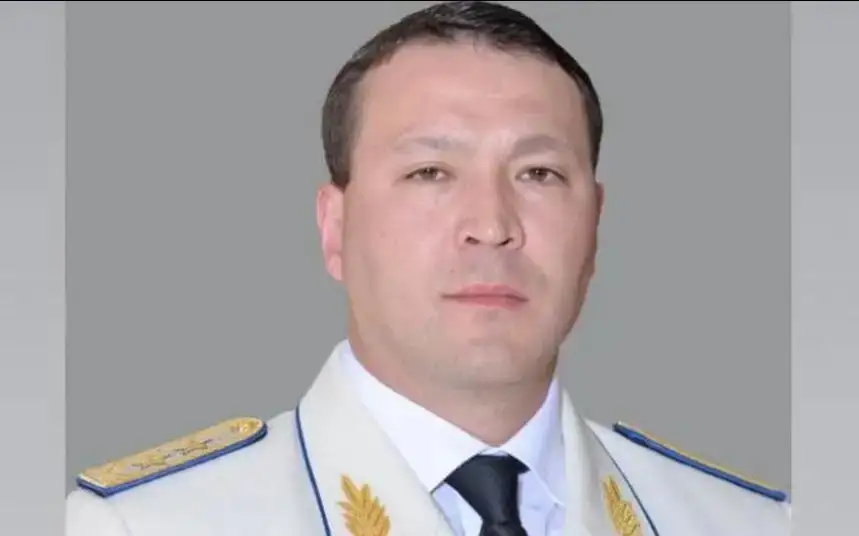
An Astana court has found Samat Abish, a nephew of Kazakhstan's former president Nursultan Nazarbayev, guilty of "exceeding power or official authority" and given him an eight-year suspended sentence. Abish, the former deputy chairman of the National Security Committee (KNB), had his criminal case classified as "secret," and all court sessions were held behind closed doors. "By the court's verdict, [Abish] was found guilty of committing a crime under Part 4 of Article 362 of the Criminal Code of the Republic of Kazakhstan, and sentenced to eight years of imprisonment with deprivation of the right to hold certain positions for 10 years. On the basis of article 63 of the Criminal Code of the Republic of Kazakhstan, it [was] decided to consider the appointed punishment as conditional", reads a message from the inter-district criminal court of Astana. Mitigating circumstances for Abish included his young children, and the fact that he admitted his guilt and showed remorse. The court made an additional ruling to strip Abish of all of his state awards. Abish is the son of Satybaldy Nazarbayev, the younger brother of Kazakhstan's first president. Abish's father died in 1981 in a car accident. Nursultan Nazarbayev's nephew was appointed deputy chairman of the National Security Committee in 2013, and in 2015 became first deputy. Abish lost this position on January 17, 2022 after the unrest in the country and the subsequent detention of KNB head Karim Masimov.  At the time, the country's prosecutor general said that Abish was being held as a witness in the investigation into the unrest. In September last year it emerged that a criminal case had been opened against Abish. He came under investigation after the former head of a KNB department said that he had been following orders from his first deputy during the unrest that January. Abish was charged with abuse of power and abuse of authority. Another nephew of Nursultan Nazarbayev, Samat Abish's older brother Kairat Satybaldy, is accused of money laundering. He has been in prison since 2022 on charges of grand embezzlement. The trial is scheduled for April 1.

“You’re Afraid I’m Not Beautiful; I’m Afraid You’ll Kill Me” – Women Rally in Bishkek

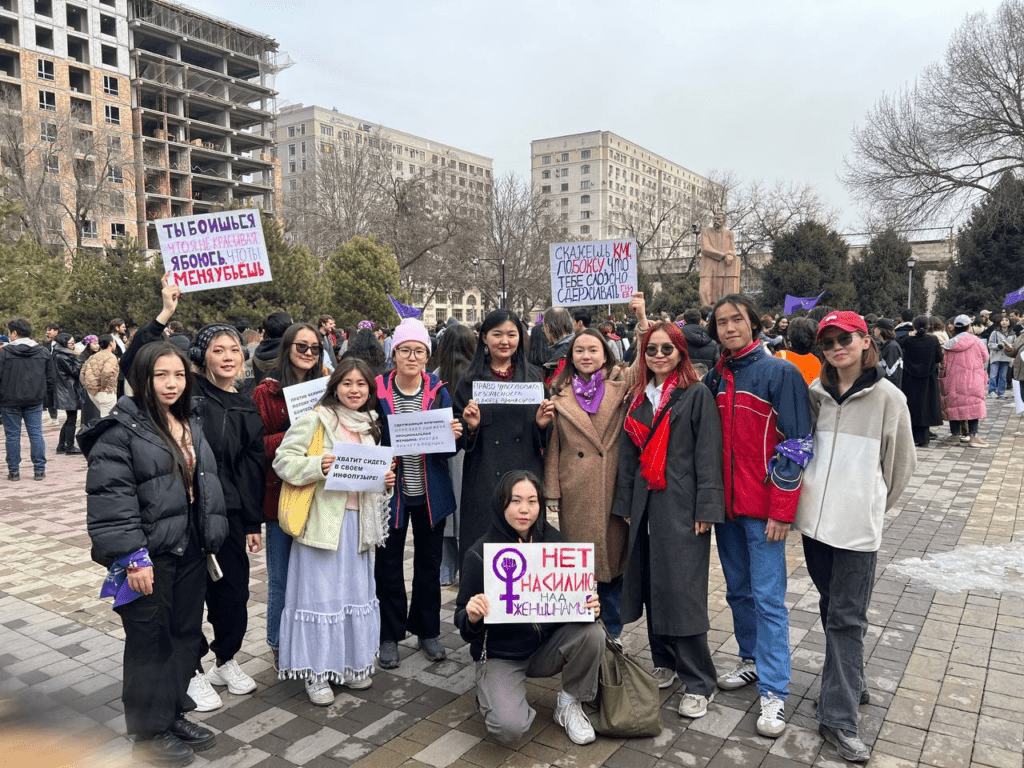
On International Women's Day on March 8th, hundreds of people took to the streets of Bishkek to participate in the annual march for women's rights. Under the slogan "A woman's life is a mirror of the time," the march started from the monument to revolutionary fighters on Chui Avenue and ended in Gorky Square on Isanov Street. The marchers carried placards and made calls for an end to violence against women, to ensure their freedom and protect freedom of speech. One of the speakers was Asel Nogoibayeva, who said she had first-hand experience of domestic violence. Her words left a lasting impression, as did her call for the police to address the problems of domestic violence. Marches on March 8th in support of women's rights have become an annual tradition in Bishkek, with the main theme always for the authorities to pay attention to women's issues. "I went with a double-sided poster that said: ‘You’re afraid I’m not beautiful; I’m afraid you’ll kill me’ and on the other side, ‘Only a human being can give birth to a human being,’” Saraya, a participant at the rally told TCA. “I also printed out some posters that I handed out." Saraya said that the march went exactly as planned with no deviations and expressed her joy at the increase in the number of participants, including girls with their boyfriends, which is a testament to the expanded audience and impact of the event. "Of course, marching is not the only way to influence people,” she said. “It doesn't work if once a year you walk around with placards and then forget about it. Businesses, for example, have different ways of attracting customers - social media, word of mouth, banners, etc. A march is like an advertising campaign, periodically loudly and announcing itself so that people don't forget it. Only women’s rights are not a business – they’re a struggle for justice."

Kazakhstan soars on gender data transparency amid mixed results from rest of Central Asia

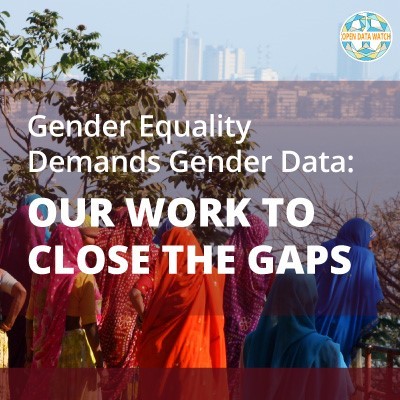
Open Data Watch, an international non-profit organization supported by the Bill and Melinda Gates Foundation, published in late 2023 a Gender Data Compass (GDC) report on the availability and openness of 53 key gender indicators in 185 countries. With numerous outlets and articles celebrating international women’s day last week, now is a good opportunity to revisit this important document to see where Central Asian countries rank in the world in terms of gender data transparency. The most interesting finding from the report is Kazakhstan’s remarkable success: The country has secured a coveted fourth position globally, coming just behind Great Britain, South Korea and Denmark, and is the only country from Central Asia that entered the top five. By comparison, Kyrgyzstan holds the 45th place out of 185 countries, Uzbekistan the 56th, Tajikistan the 159th, and Turkmenistan holds the 171st spot. The United States, on the hand, came in 48th globally. The GDC provides information on national gender data systems and the environment in which they operate. It investigates whether a country has policies and laws that encourage the production and dissemination of official gender data, as well as the strengths of their regulatory frameworks, funding structures and national capacities in terms of ability to support transformative changes. Kazakhstan has scored 60 out of 100 on both “openness” and “availability” of its gender data, according to Open Data Watch. It is important to note that the front runner of the rankings, the United Kingdom, has scored just 55 on “availability” and 74 on “openness”, underlining a need even in developed countries for improving gender data coverage gaps and publishing data in more open and available formats, among other things. The goal of this report is to provide necessary insights and serve as a practical guide to relevant national authorities as well as to their partners to take effective action towards gender equality.