• KGS/USD = 0.01143 -0%
  • KZT/USD = 0.00198 -0%
  • TJS/USD = 0.10899 0.93%
  • UZS/USD = 0.00008 0%
  • TMT/USD = 0.28490 -0.28%
  • KGS/USD = 0.01143 -0%
  • KZT/USD = 0.00198 -0%
  • TJS/USD = 0.10899 0.93%
  • UZS/USD = 0.00008 0%
  • TMT/USD = 0.28490 -0.28%
  • KGS/USD = 0.01143 -0%
  • KZT/USD = 0.00198 -0%
  • TJS/USD = 0.10899 0.93%
  • UZS/USD = 0.00008 0%
  • TMT/USD = 0.28490 -0.28%
  • KGS/USD = 0.01143 -0%
  • KZT/USD = 0.00198 -0%
  • TJS/USD = 0.10899 0.93%
  • UZS/USD = 0.00008 0%
  • TMT/USD = 0.28490 -0.28%
  • KGS/USD = 0.01143 -0%
  • KZT/USD = 0.00198 -0%
  • TJS/USD = 0.10899 0.93%
  • UZS/USD = 0.00008 0%
  • TMT/USD = 0.28490 -0.28%
  • KGS/USD = 0.01143 -0%
  • KZT/USD = 0.00198 -0%
  • TJS/USD = 0.10899 0.93%
  • UZS/USD = 0.00008 0%
  • TMT/USD = 0.28490 -0.28%
  • KGS/USD = 0.01143 -0%
  • KZT/USD = 0.00198 -0%
  • TJS/USD = 0.10899 0.93%
  • UZS/USD = 0.00008 0%
  • TMT/USD = 0.28490 -0.28%
  • KGS/USD = 0.01143 -0%
  • KZT/USD = 0.00198 -0%
  • TJS/USD = 0.10899 0.93%
  • UZS/USD = 0.00008 0%
  • TMT/USD = 0.28490 -0.28%
07 December 2025

Viewing results 715 - 720 of 987

Nationwide Survey on Domestic Violence in Kazakhstan Publishes Results

A large-scale statistical analysis on domestic violence in Kazakhstan was conducted by three professors from Karaganda Medical University: Saule Musabekova, Ksenia Mkhitaryan and Hamida Abdukadirova. The study, conducted between 2019 and 2022, covered 14,342 women between the ages of 18 and 75 from 14 regions of Kazakhstan. The questionnaire included questions about health, children, partners, violence and its consequences, financial independence, and cases of sexual abuse in childhood. The study showed that the main victims of domestic violence in Kazakhstan are women (more than 77.9%). Next on the list are children (17.52%), elderly people (3.5%) and men (less than 1.1%). It is important to note that not all victims seek help from the police or hospitals. Therefore, there may be many more victims. According to the results of the study, the most vulnerable age group is women from 40 to 49 years (41.46%) and from 30 to 39 years (37.80%). Victims of domestic violence were most often unemployed women or those with low levels of education, with two or more children, and economically dependent on their husbands. Most of the victims of violence were from urban areas (63%). It was also found that violence against women is committed by strangers in only 12.2% of cases. In 87.8% it is committed by men with whom the victims are in a close relationship. Almost all of them are intimate partners of the victims (in 95-98% of cases). Half of the women interviewed stated that their intimate partners had attacked them while they were pregnant or raising young children. The forms of systematic violence varied. The most common were physical violence, experienced by 78% of respondents; psychological violence, experienced by 21% of respondents; sexual and physical violence, 16%; economic violence, 7%; and regular sexual violence, 6% of respondents. More than half of the respondents (57%) also stated that over the past year they have faced one of the above forms of abusive behavior more than once (from 2 to 8 times). Almost all cases of violence against women (98.2%) occurred when the abuser was intoxicated. Other factors cited by female researchers were economic problems and male unemployment. Incidents of violence most often occurred at home in the evening and at night (91%). Two-thirds of women (66%) said they had suffered at least one injury after partner violence. The study also took into account physical and sexual abuse of women by men with whom they were not in an intimate relationship. In 92%, the abusers were family members, friends and coworkers, and only 8% were unknown men. The researchers noted that Kazakhstan only formally supports the main international commitments to gender equality. Domestic violence and general tolerance to it persist in the country. "Gender roles and cultural norms are clearly expressed in some regions of Kazakhstan: in the south of the country, educated women often do not look for work outside the home because of the priority of domestic duties, and attempts to restrict women in their choice of occupation are quite common. Thus,...

Kyrgyz Writer Oljobai Shakir Sentenced to Five Years in Prison

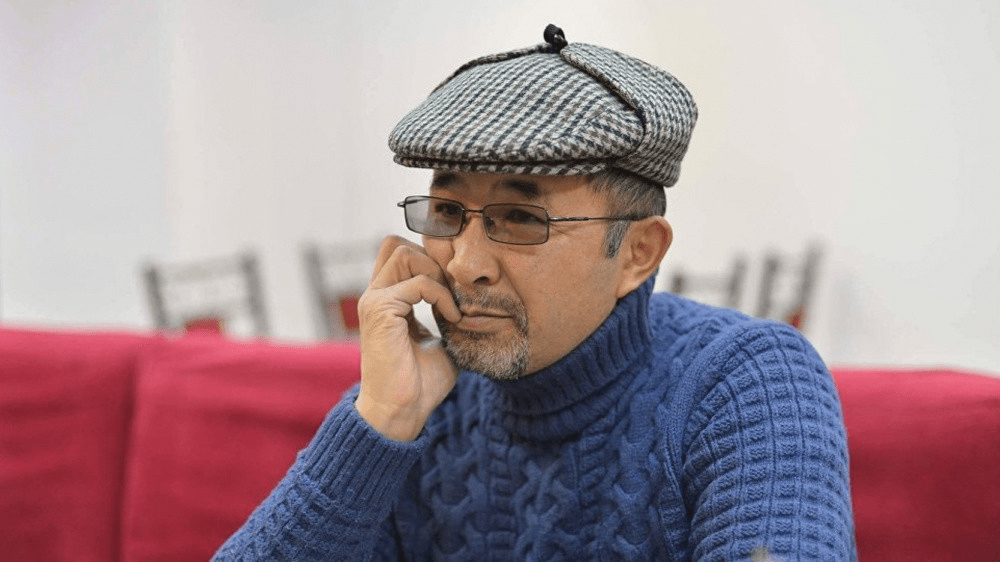
On 14 May, the Alameda District Court of the Chui Oblast in Kyrgyzstan sentenced 52-year-old activist and writer Oljobai Shakir to five years imprisonment for inciting mass riots on social media against the government. At the previous hearing, Shakir a frequent and popular blogger, pleaded not guilty to the charges of slander and argued that the aim of his posts was to encourage open dialogue  between the country's leadership and its people on how the government is run. During the trial, the writer's lawyer, Akmat Alagushev, demanded the acquittal of his client and announced his intention to appeal. Olzhobai Shakir has been held in the pre-trial detention center of the SCNS since August 2023 on account of the “provocative nature” of material he posted on Facebook, TikTok and YouTube. Throughout his incarceration, the writer has denied the validity of the criminal charges against him. Renowned for his critical statements against the authorities, Shakir was arrested shortly after he had publicly scrutinized the government’s controversial transfer of four hotels on the shores of Lake Issyk-Kul to Uzbekistan. In a period when the government is increasingly clamping down on political opposition through social media, neither President Sadyr Japarov nor GKNB head Kamchybek Tashiev accepted Shakir’s invitation to be interviewed on the issue. Shakir is a well-established author and supporter of contemporary Kyrgyz literature, but like his activities on social media, his own work at times has proved highly controversial. Published in 2021 in a country where open discussion of LGBT+ rights is still taboo, his novel “Adam+” caused public outcry by relating the emotional challenges he faced during his daughter’s transgender transition.

Uzbekistan Ranked Fifth for Number of Students Studying Abroad

According to Statista, based on UNESCO data, Uzbekistan ranked fifth globally in terms of the number of students studying abroad in 2021. Chinese and Indian students top the list. The number of Chinese students studying abroad was one million, and Indian students, 508,000. Vietnam, Germany and Uzbekistan are next on the list, with 137,000 students from Vietnam, 126,000 from Germany, 110,000 from Uzbekistan, 106,000 from France, 103,000 from the U.S., and 99,000 from Syria studying abroad. The U.S. has become the main country receiving foreign students, enrolling 833,000 in 2021, with Britain in second place with 601,000. The figures are part of the World Migration Report 2024. UNESCO has reported that international students numbered 2.2 million in 2001, and this had increased to 6.39 million by 2021.

Learning English: A Growing Trend in Kazakhstan

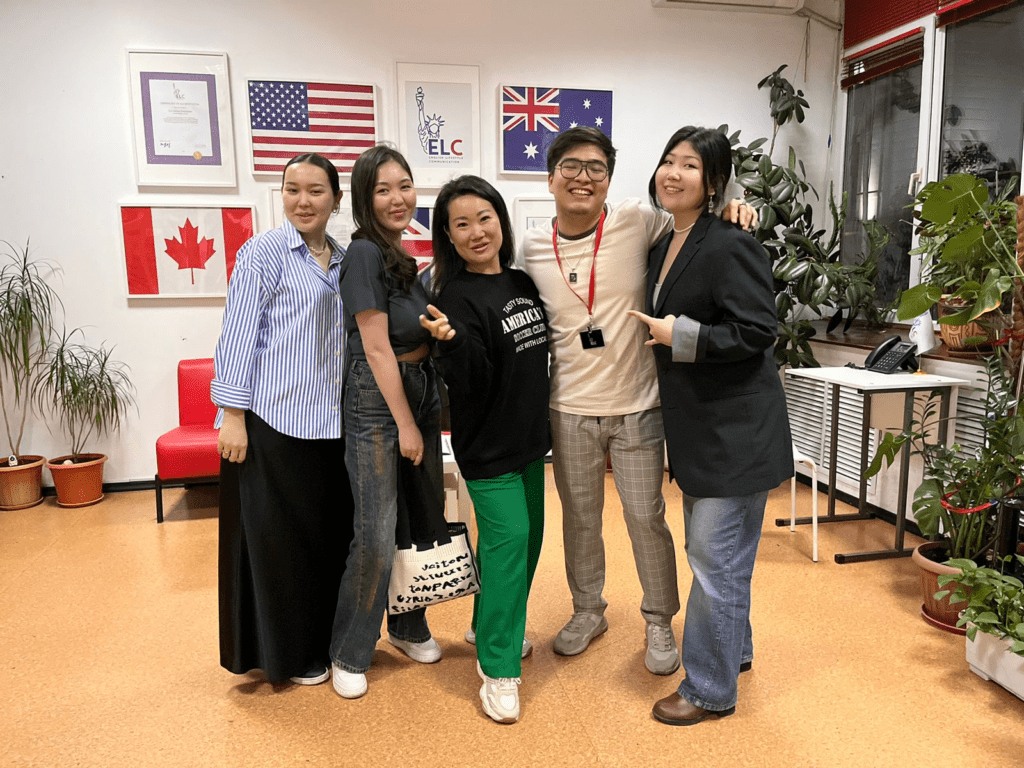
In 2023, the international company Education First conducted a survey to assess the level of English language proficiency in 113 countries. Ranked 104th, proficiency in Kazakhstan was deemed startlingly low. This year however, the situation is set to change with a growing trend to embrace the English language. What are the reasons behind this and what factors have contributed to the increased interest in English? TCA talked to young teacher and polyglot, Sanzhar Uvashev to learn more.   TCA: How would you rate the level of English language skills among the younger generation in Kazakhstan today? Uvashev: I would state that the level of English proficiency amongst our youth alone is at six out of ten. However, parents, increasingly aware of its importance, are investing in English courses, and teenagers themselves are reaching out, wanting to learn the language. It’s also worth noting that courses at one of the best universities in Kazakhstan, Nazarbayev University, are taught almost entirely in English.   TCA: What factors, in your opinion, are contributing to this growing interest in learning English? Uvashev: American pop culture plays a very big role, particularly memes and popular TV shows. Netflix, for example, dubs TV series into Russian less and less often. As a consequence, I’ve noticed that among my friends, almost everyone watches either in the original language or with subtitles. Anglicisms are fast becoming integral to everyday conversations, especially in Almaty, so much so that it’s now impossible to imagine conversing without using English phrases.   TCA: Can you describe the main changes or trends in English language learning among students over the last few years? Uvashev: Over the past few years, many people have become more proactive in learning English in order to go abroad. We also we have more tourists, so communication with foreigners on our soil adds to the level of interest.   TCA: What are the main advantages of English language skills for young people in Kazakhstan today? Uvashev: English opens up opportunities for young people wishing to go abroad. In addition, learning a new language expands boundaries, making people more tolerant and open-minded.   TCA: What difficulties do students face in learning English and how can they be overcome? Uvashev: Even though many of us know English, it’s not our first means of communication. As a result, everyone has problems practicing their language skills and many find it hard to overcome their shyness.   TCA: What, in your view, are the most effective methods of learning English, especially with reference to Kazakh culture and language? Uvashev: To my mind, exposure to pop culture, engaging with videos that match the interests of students, and playing video games are the most effective and modern methods of learning English. But the most universal of all, of course, is practice in speaking the language.

Healing Properties of Uzbekistan’s Chashma Spring Draw Curious Tourists

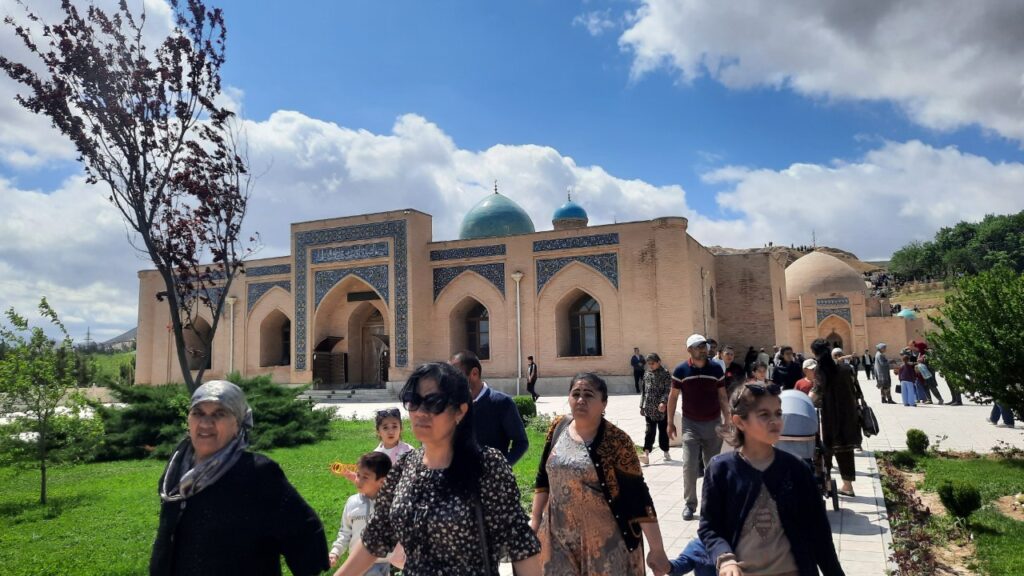
It’s Sunday morning, and a nice breeze is blowing. Due to favorable weather, many people are paying a visit to the Chashma complex in Nurota, in the Navoi region of Uzbekistan. The complex is one of the most visited holy places by Central Asian Muslims, and thousands of tourists from all over the world flock here every year. The Times of Central Asia decided to see how popular the tourist spot is. This historical complex includes the Chilustun Mosque, the Chashma Spring, the Panjab (Beshpanja) Well, the Panjvaqta Mosque, and Sheikh Abul Husan Nuri Mausoleum. The people of Nurota district mainly speak Tajik, in which the word Chashma means "holy spring."   In the 9th century, the Chilustun Mosque was built at Chashma; it was rebuilt in the 16th century during the rule of Amir Timur. The mosque, erected near the holy spring, has a dome-shaped sundial with cylindrical windows, which sits in the heart of the mosque. In addition, the art of wood carving and other examples of Central Asian national decoration were skillfully used in the construction of the mosque. Panjvaqta Mosque is located next to Chilustun. This mosque was built between 1570 and 1582 upon orders from Abdullah Khan II, the Emir of Bukhara. Today, the building consists of a large dome with two-sided porticos. All of its columns are made of mulberry and elm wood, and the base is made of marble. The main focus of visitors is the Chashma Spring. Local resident, Zilola Safarova has said that 40,000 years ago, a meteorite fell from the sky in this place and radiated light for a hundred days. As a result of the meteorite, a crater was formed and a holy spring with healing properties appeared. The people of Nurota believe this legend, and many are of the opinion that the name Nurota is related to this event. Chashma's water flows through thousands of kilometers of underground passages at a rate of 290 liters per second, and the temperature of its water remains constant in all seasons of the year at 19.5° Celsius. The spring's highest recorded flow rate was 400 liters per second. Furthermore, Chashma's water is said to have healing properties. It was found that it contains trace amounts of gold, which is said to be a cure for gastrointestinal diseases. It has long been known that iodine in water is a cure for goiters, and rare bromine is known as a cure for nervous disorders. Meanwhile, silver contained in the water ensures that its mineral composition is well preserved. Microbiologists say that this holy water contains 15 useful trace elements which have the ability to calm a person and may have a positive effect on the body. If one pays attention to the entire picture here, there are fish in the Chashma, which are called river marinka. These fish have an average lifespan of 17 years, and clean the streams from which spring water emerges out of sand. That sand ensures a moderate flow...

Case Documents for 11 Temirov Live Journalists Submitted to Court in Kyrgyzstan

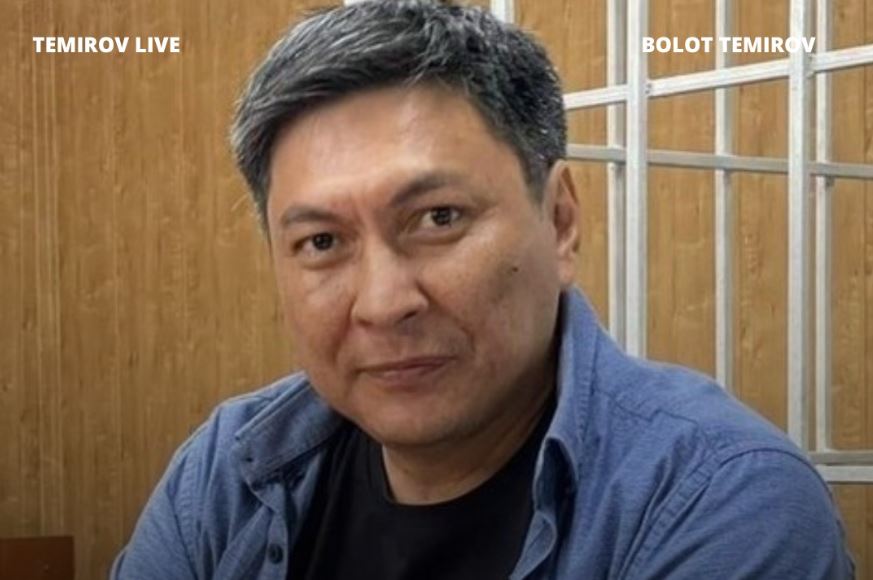
Legal documents regarding the cases of eleven current and former journalists of the Temirov Live project, who are accused of calling for mass riots, have been handed over to the court. According to the Pervomaisky District Court of Bishkek, the criminal case was received by the court office and will be handed over to the judge through the automatic distribution of cases of the AIS system, 24.kg news agency has stated. As previously reported by the Times of Central Asia, on January 16, Interior Ministry officers searched the office of Temirov Live and confiscated its editorial equipment. The police also searched the journalists' homes and detained eleven current and former employees of the publication. The motivation behind the case was one of Temirov's projects called "Ait, Ait Dese," which was published on YouTube in the fall of 2023, which the authorities claim called for mass disorder. At the time, Kyrgyz Interior Minister Ulanbek Niyazbekov said the detainees weren't journalists. "We cannot [help] but respond when they disseminate inaccurate information and engage in vilification. There are those who do not know the laws of journalism and do not have the relevant knowledge. They do not know and spread misleading information, sowing confusion among the people. I believe that we should not consider them as journalists," news agencies quoted the Interior Minister as saying. The detainees were Makhabat Tazhibek kyzy, Sapar Akunbekov, Azamat Ishenbekov, Saipidin Sultanaliyev, Aktilek Kaparov, Tynystan Asypbekov, Maksat Tazhibek uulu, Joodar Buzumov, Zhumabek Turdaliyev, Aike Beishekeeva and Akyl Orozbekov. They were all taken into custody in January for two months, until March 13. Later, the court released some of the detained journalists under house arrest and on their own recognizance. Already facing a backlash over its so-called "foreign agents law," Bishkek has pushed back against international criticism of the high-profile prosecution, saying the case is not politically motivated and that those facing charges are poorly educated people masquerading as journalists. In late 2022, Kyrgyzstan deported Bolot Temirov, an investigative reporter with dual Kyrgyz and Russian nationality. "Temirov was sent to Russia by force with no belongings, no phone, no money or international passport, and in violation of deportation procedures,” the head of Reporters Without Bordfers Eastern Europe and Central Asia desk, Jeanne Cavelier stated at the time.