• KGS/USD = 0.01143 -0%
  • KZT/USD = 0.00198 -0%
  • TJS/USD = 0.10899 0.93%
  • UZS/USD = 0.00008 0%
  • TMT/USD = 0.28490 -0.28%
  • KGS/USD = 0.01143 -0%
  • KZT/USD = 0.00198 -0%
  • TJS/USD = 0.10899 0.93%
  • UZS/USD = 0.00008 0%
  • TMT/USD = 0.28490 -0.28%
  • KGS/USD = 0.01143 -0%
  • KZT/USD = 0.00198 -0%
  • TJS/USD = 0.10899 0.93%
  • UZS/USD = 0.00008 0%
  • TMT/USD = 0.28490 -0.28%
  • KGS/USD = 0.01143 -0%
  • KZT/USD = 0.00198 -0%
  • TJS/USD = 0.10899 0.93%
  • UZS/USD = 0.00008 0%
  • TMT/USD = 0.28490 -0.28%
  • KGS/USD = 0.01143 -0%
  • KZT/USD = 0.00198 -0%
  • TJS/USD = 0.10899 0.93%
  • UZS/USD = 0.00008 0%
  • TMT/USD = 0.28490 -0.28%
  • KGS/USD = 0.01143 -0%
  • KZT/USD = 0.00198 -0%
  • TJS/USD = 0.10899 0.93%
  • UZS/USD = 0.00008 0%
  • TMT/USD = 0.28490 -0.28%
  • KGS/USD = 0.01143 -0%
  • KZT/USD = 0.00198 -0%
  • TJS/USD = 0.10899 0.93%
  • UZS/USD = 0.00008 0%
  • TMT/USD = 0.28490 -0.28%
  • KGS/USD = 0.01143 -0%
  • KZT/USD = 0.00198 -0%
  • TJS/USD = 0.10899 0.93%
  • UZS/USD = 0.00008 0%
  • TMT/USD = 0.28490 -0.28%
07 December 2025

Viewing results 631 - 636 of 1034

Kyrgyzstan Seeks to Increase Production and Export of Fish

On August 23, Bakyt Torobayev,  Minister of Water Resources, Agriculture, and Processing Industry of Kyrgyzstan, attended ceremonies to launch the construction of two fish processing plants in the country’s northern Chui region. The first plant, to be built in the village of Leninskoye at the cost of over $4.3 million, will have an annual capacity is up to 3,000 tons of processed fish products (mainly trout) and up to 8,000 kg of black sturgeon caviar. When operational, the second in the village of Ak-Jol, will create 45 new jobs and have an annual production capacity of 1,000 tons of chilled trout, 1,000 tons of frozen trout, 800 tons of smoked fish, and 400 tons of dried fish. Kyrgyzstan currently produces about 30,000 tons of fish annually, of which only  5,000 tons are exported. Citing the fact that the country had conditions to produce 105 thousand tons and export 50 thousand tons of fish,  Torobayev recommended that emphasis be placed on the construction of processing enterprises. According to official statistics, in 2023, Kyrgyzstan produced 33,600 tons of fish and exported 5,556 tons of fish and fish products, mainly to Russia, Kazakhstan, Uzbekistan, and Lithuania. Fish (mainly trout) are produced in Kyrgyzstan at artificial ponds and fishery farms at lakes Issyk-Kul and Son-Kul.

Who Will Benefit if Kazakhstan Refuses To Build Nuclear Power Plants?

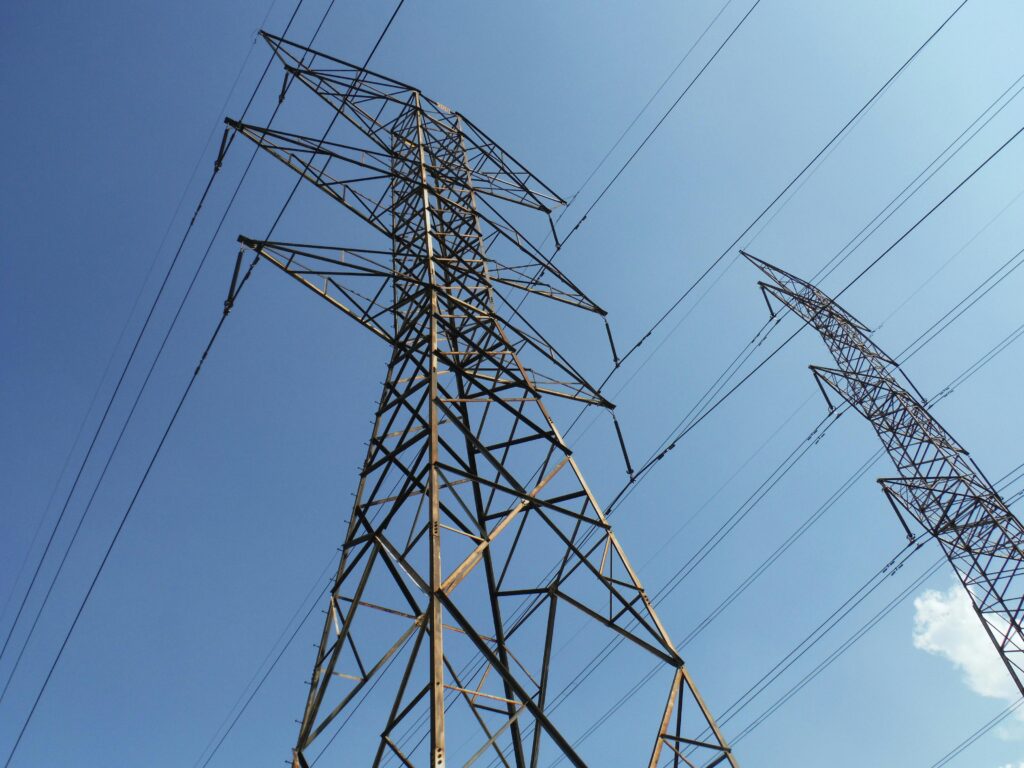
Kazakhstan is facing a growing energy deficit while having large reserves of uranium which would allow the country to develop its nuclear power industry. However, so far, uranium mined in the country is used solely for export, and every year difficulties with supply chains only increase. All these problems can be solved in one elegant way, but this solution is what a part of the Kazakhstani public actively opposes.   Difficulties with production and supplies Kazakhstan ranks second in the world in terms of proven reserves of natural uranium. About 14% of the world's proven reserves are concentrated in the country's subsoil. According to estimates, the country's explored reserves contain more than 700,000 tons of uranium. In 2009, Kazakhstan became the world's largest uranium producer and continues to maintain its leading position in the global market, producing approximately 40% of the world's uranium. In 2021, uranium production in Kazakhstan amounted to 21,800 tons, but by 2023 this had decreased to 21,112 tons. Moreover, due to difficulties related to the availability of sulfuric acid, the national company Kazatomprom reduced production plans for 2024. According to the initial plan, between 25,000 and 25,500 tons were to be produced; now, the plan is to produce 21,000 to 22,500 tons. Kazatomprom has also stated that if limited access to sulfuric acid continues through 2024 and the company fails to reduce the construction backlog at new sites, it could have a negative impact on production plans for 2025. Uranium mining in Kazakhstan is carried out solely by in-situ leaching, the most environmentally safe and lowest-cost method available. The Russia-Ukraine conflict could not help but affect this area of Kazakhstan's exports. This year, it became known that Kazakhstan is working on diversifying its uranium export routes, bypassing Russia. This is stated in the report on implementing the concept of development of Kazakhstan's fuel and energy complex for 2023. As part of this, Kazatomprom is working on an agreement with the Chinese companies CNUS, CNEIC, and CNNC to provide uranium transit services through China. Kazakhstan currently transports uranium products to customers in North America and Europe through the port of St. Petersburg. An alternative way is to use the Trans-Caspian international transportation route, with shipments through the ports of Aktau (Kazakhstan), Alyat (Azerbaijan), and Poti (Georgia).   Nuclear deadlock Obviously, some of the concerns of Kazakhstan's leadership and Kazatomprom regarding the sale of uranium products could be alleviated by developing the country's own nuclear industry, meaning that uranium mined in the country would feed its own nuclear power plants. Talks about the need to build nuclear plants in the country have regularly been raised since the beginning of the 2000s. Kazakhstani nuclear physicists and nuclear specialists, with the persistence of a Don Quixote have periodically rush to attack the windmills of Kazakhstani radio-phobia, which, however, did not arise without reason. The Semipalatinsk Nuclear Test Site (SNTS) and the Chernobyl disaster are two significant elements of this phobia. In the early 1990s, when the SNTP was closed, the...

New Neural Network for Kazakh Study of Snow Leopards

Kazakhstan has launched an innovative project to study and protect snow leopards supported by a new neural navigation network, Yandex Qazaqstan. The network, developed with Kazakh-British Technical University students, scientists from the Institute of Zoology of the Republic of Kazakhstan, and the Snow Leopard Foundation, will significantly accelerate and simplify data analysis from camera traps and other sources, enabling a more effective means of tracking these rare animals' behavior and migration routes. The snow leopard, a symbol of Kazakhstan's mountain ecosystems, is found in regions such as Altai, Zhetysu Alatau, Saur, and Tien Shan. Although  Kazakhstan's leopard population has doubled over the past 30 years, to between 141-183, their existence remains under threat from human activities and climate change, making conservation projects essential. Yandex Qazaqstan will help optimize the monitoring of snow leopards by automatically analyzing images from camera traps and quickly identifying the presence of the animals. As a result, scientists will be able to more accurately and quickly track changes in these rare predators' populations and migration routes. This collaboration between scientists, students, and IT specialists demonstrates Kazakhstan's commitment to protecting its nature and sustainable development and moreover, provide a template for the application of similar technologies in other conservation projects.

Banker’s Murder: Former-FBI Director Speaks in Kazakhstan Over High-Stakes Tokmadi Parole Case

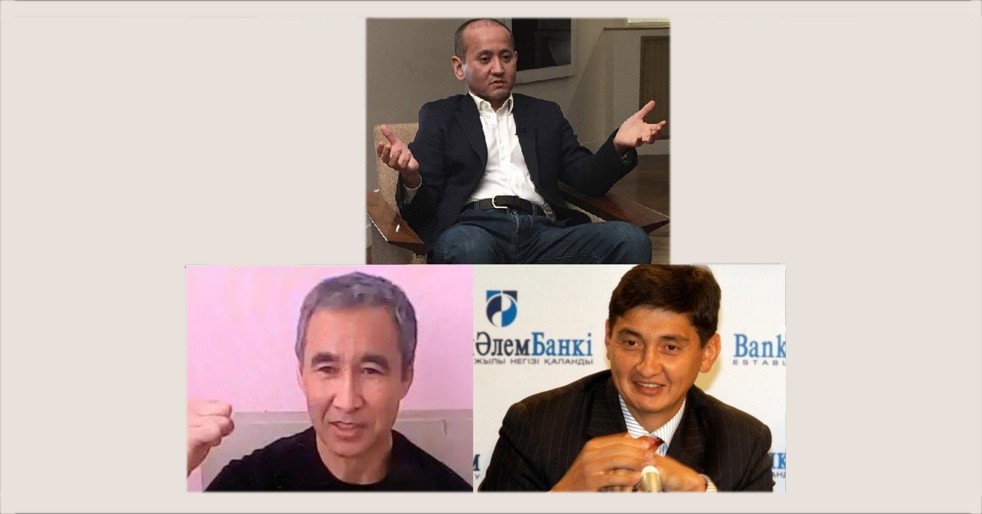
Louis Freeh, former director of the U.S. Federal Bureau of Investigation (FBI), will speak at a hearing of the Almaty Oblast Court on August 23 on the case to review the early release of businessman Muratkhan Tokmadi, who in 2018 was sentenced to ten and a half years for the 2004 murder of the BTA Bank chair, Yerzhan Tatishev. On August 9, it was ruled that Tokmadi should be released on parole after serving six and a half years. In 2017, Freeh led a team of U.S. investigators and forensic experts who were brought in by the Tatishev family to look into the death of Yerzhan Tatishev, one of the founders and co-owners of what was at the time Kazakhstan's largest bank. On the morning of the 23rd, Freeh, who served as a U.S. district judge before becoming the fifth director of the FBI, leading the agency from September 1993 to June 2001, shared details of his investigation with the media in Kazakhstan. "In 2018, Murakhan Tokmadi admitted that he killed Tatishev and said that he did it because Mukhtar Ablyazov promised to pay four million dollars. Ablyazov's goal was to gain control of BTA Bank," Freeh told reporters. "His accidental shooting is impossible... The gun didn't go off by itself." The probe and the findings of investigative firm Freeh Group International Solutions (FGIS), part of the law firm Freeh Sporkin & Sullivan LLP (FSS), since acquired by Alix Partners LLP, formed the basis of the original indictment against Tokmadi, after FSS and FGIS staff accessed documents which proved the banker's death was willful. The court hearing into Tokmadi's parole was initiated by the family of the deceased. On December 19, 2004, Yerzhan Tatishev died on a hunting trip whilst driving an SUV in the Zhambyl Region. At the car's wheel pursuing prey across the steppe, Tatishev handed a 12-gauge shotgun to Tokmadi, who was sitting beside him. According to the defense, the SUV suddenly hit a bump, and the gun fired accidentally, with Tatishev receiving a gunshot wound to the head, the bullet passing through his left eye. At the time, the killing was ruled to be an “accident,” with Tokmadi sentenced to one and a half years for manslaughter. One of the witnesses to the incident was the banker's security guard, Sergei Kozlikin, who swiftly fled Kazakhstan, saying he feared for his life. In 2017, the case was reopened, and Tokmadi was charged with extortion and the illegal possession of firearms. In his 2018 testimony, Tokmadi stated that he was fulfilling an order from fugitive oligarch Mukhtar Ablyazov, who was the co-owner of BTA Bank at the time. “Each time I met [Ablyazov] he argued that Yerzhan could not at any instant keep or sustain his word," Tokmadi testified. "He proposed to deal with the problem through the physical elimination of Yerzhan. This would happen during a hunting trip and look like an accidental death. And so it happened.” Some of the documents relating to the investigation -  which...

Tajikistan Urged to Reconsider Ban on ‘Alien’ Clothing

The International Partnership for Human Rights (IPHR) has called on the Tajik authorities to repeal recent amendments to the law imposing restrictions on “foreign” clothing. According to activists, such restrictions violate international human rights, particularly the right to freedom of expression and freedom of religion. In a statement issued on August 19, IPHR emphasized that since clothing is an important element of personal identity as well as religious and cultural beliefs, states have an obligation to protect people's right to choose what they wear. According to amendments to the law “On the Ordering of Traditions, Celebrations and Rites”, enforced in June this year, Tajikistan prohibits “importing, propagandizing and selling clothes that do not correspond to the national culture.” Although a precise definition of such has  yet to be provided, there has been a clear focus by authorities on “Islamic” clothing, and in particular, the issue of a fatwa by Tajikistan's Ulema Council urging women to avoid wearing “tight, black or see-through clothing.” Violations of the law are punishable by heavy fines or imprisonment for up to three years. IPHR continues to stress that restrictions based on religious, cultural, or traditional values cannot justify the violation of human rights The amendments were earlier condemned by The League of Muslim Scholars and other international organizations, and the Taliban even declared “jihad” against Tajikistan. In response to international criticism, Tajik authorities reiterated that the new law aims to protect national values and prevent extremism.

Poll Shows Over Half of Kazakhstanis Support Proposed Nuclear Plant

The Kazakhstan Institute for Strategic Studies has announced the results of a telephone survey concerning the proposed construction of a nuclear power plant in Kazakhstan. In his address to the nation on September 1, 2023, President Kassym-Jomart Tokayev emphasized the economic and political importance of the development of nuclear energy, and proposed resolving the issue of building the country’s first nuclear power plant through a nationwide referendum. In June 2024, Tokayev announced that the referendum on building a nuclear power plant would be held this fall, adding that the Cabinet of Ministers would set the exact date. The survey was conducted from August 7 to August 18 this year, among 1,200 respondents aged 18 and older from Kazakhstan’s 17 regions and the cities of Astana, Almaty, and Shymkent. Over half of respondents (53.1%) supported building a nuclear power plant, agreeing that it will help solve the problem of electricity shortages by 2030. 32.5% of the respondents oppose the construction of nuclear power plants, mainly because they fear possible accidents and their environmental consequences. 14.4% were uncertain of their stance. During the survey, 42.6% of the respondents expressed a firm intention to participate in a referendum on the issue of nuclear power plant construction, 16.4% said they are likely to participate, 25.3% do not plan to take part, 8.9% are unlikely to participate, and 6.8% are unsure. The Ministry of Energy estimates the cost of building a nuclear power plant at $10-12 billion. Energy Minister Almasadam Satkaliyev said that the nuclear power plant would be built by a foreign company that wins the tender — providing that the issue is approved in the referendum. In addition to companies from China, Russia, France, and South Korea, the ministry is considering companies from the United States and Japan as potential bidders. The proposed location of the nuclear power plant is the village of Ulken in the Karaganda region.