• KGS/USD = 0.01143 -0%
  • KZT/USD = 0.00198 -0%
  • TJS/USD = 0.10899 0.93%
  • UZS/USD = 0.00008 0%
  • TMT/USD = 0.28490 -0.28%
  • KGS/USD = 0.01143 -0%
  • KZT/USD = 0.00198 -0%
  • TJS/USD = 0.10899 0.93%
  • UZS/USD = 0.00008 0%
  • TMT/USD = 0.28490 -0.28%
  • KGS/USD = 0.01143 -0%
  • KZT/USD = 0.00198 -0%
  • TJS/USD = 0.10899 0.93%
  • UZS/USD = 0.00008 0%
  • TMT/USD = 0.28490 -0.28%
  • KGS/USD = 0.01143 -0%
  • KZT/USD = 0.00198 -0%
  • TJS/USD = 0.10899 0.93%
  • UZS/USD = 0.00008 0%
  • TMT/USD = 0.28490 -0.28%
  • KGS/USD = 0.01143 -0%
  • KZT/USD = 0.00198 -0%
  • TJS/USD = 0.10899 0.93%
  • UZS/USD = 0.00008 0%
  • TMT/USD = 0.28490 -0.28%
  • KGS/USD = 0.01143 -0%
  • KZT/USD = 0.00198 -0%
  • TJS/USD = 0.10899 0.93%
  • UZS/USD = 0.00008 0%
  • TMT/USD = 0.28490 -0.28%
  • KGS/USD = 0.01143 -0%
  • KZT/USD = 0.00198 -0%
  • TJS/USD = 0.10899 0.93%
  • UZS/USD = 0.00008 0%
  • TMT/USD = 0.28490 -0.28%
  • KGS/USD = 0.01143 -0%
  • KZT/USD = 0.00198 -0%
  • TJS/USD = 0.10899 0.93%
  • UZS/USD = 0.00008 0%
  • TMT/USD = 0.28490 -0.28%
07 December 2025

Viewing results 775 - 780 of 1034

Kazakhstan Changing Its Labor Laws to Better Reflect the Country’s Needs

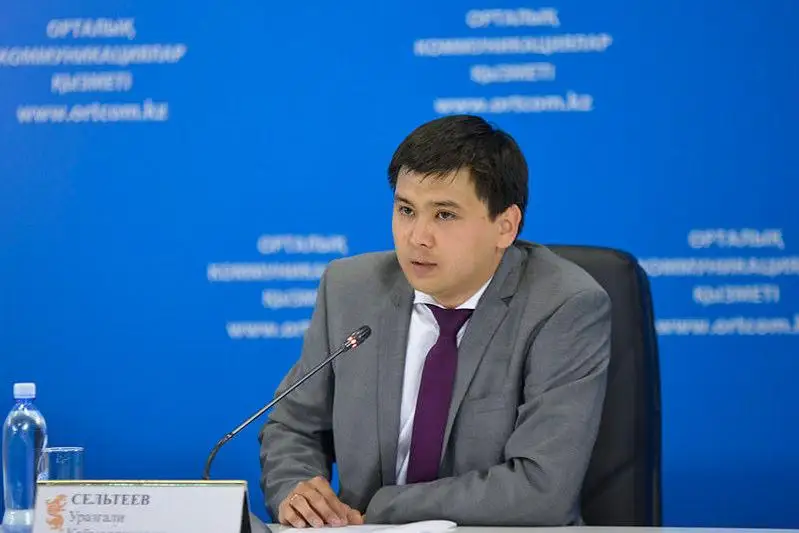
Kazakhstan has recently adopted regulations that make it more difficult for migrants and citizenship-seekers to enter the country. Urazgali Selteyev, a political scientist and director of the Institute for Eurasian Integration, told The Times of Central Asia that the legislation is being streamlined rather than tightened. According to some experts, Kazakhstan is the most attractive country in Central Asia for migrants. For many years, foreign workers have been entering the country, and illegal migration is high, as residents of neighboring countries are hired in the agricultural and construction sectors and are involved in transportation and services. In recent years, cases of detection and deportation of illegal migrants from the farthest regions, including Africa, have become more frequent. In addition, since 1991, more than one million 'kandas' (formerly known as oralmans) have arrived in Kazakhstan -- persons of Kazakh nationality resettling in the country according to established quotas. Often, kandas arrive from Uzbekistan, Kyrgyzstan, Turkmenistan, China, and Russia. Also, after the partial mobilization for Russia's war in Ukraine announced in September 2022 by Russian president Vladimir Putin, an unspecified number of draft evaders and their family members entered Kazakhstan. This situation forces the Kazakh authorities to take a stricter approach to regulating migration flows. Just the other day, the website “Open Normative Legal Acts” (“Open NLA”) posted a document highlighting the discussion that began two years ago. The document states that Kazakhstan will develop rules to determine whether kandas have a right to claim Kazakh nationality. In May this year, Kazakhstan's president Kassym-Jomart Tokayev signed the law “On introducing amendments and additions to some legislative acts of the Republic of Kazakhstan on the improvement of legislation in the field of migration and penal system.” This law provides new grounds for refusal of admission and restoration of Kazakh citizenship, such as ignorance of the state language at the elementary level, the basics of the Constitution of Kazakhstan, and a certain level of national history determined by an authorized body in the field of science and higher education. Simply put, applicants for citizenship will have to pass the exam. As explained by the Minister of Science and Higher Education Sayasat Nurbek, the test will include three components: the first is knowledge of the Kazakh language, the second is the basics of the Constitution, and the third is the basics of the history of Kazakhstan. “These tests will be required to be taken by persons who apply for citizenship. There are reservations on a separate list of honored: on the presidential list, minors and people with disabilities will be exempted,” explained Nurbek. According to the new migration rules, EAEU citizens can stay in the country for no more than 90 days within 180 days; other foreigners can stay for no more than 30 days, and a maximum of 90 days in six months. In the previous version of legislative acts, there were no restrictions concerning the 180 days, thus, foreigners lost the opportunity to repeatedly renew the terms of stay, leaving the country for...

Ten Thousand Hectares of Land in Tajikistan Left Without Water

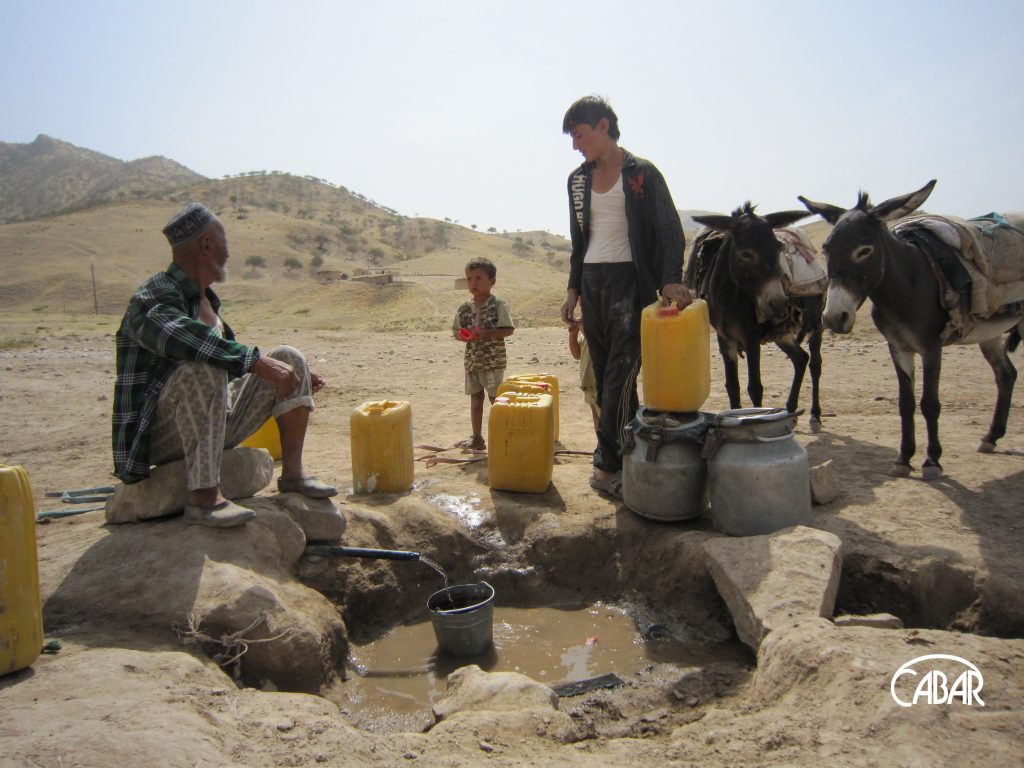
Asia-Plus reports that more than 10,000 hectares of irrigated land in Tajikistan's Khatlon region have not been irrigated due to the failure of pumping stations. Almost 900 hectares of irrigated land have fallen out of agricultural use. This situation was criticized by the country's president, Emomali Rahmon, at a meeting with leaders and civic figures from Khatlon region on May 25 . At the meeting in Dangara district Rahmon said: “We must increase the production of agriculture and agricultural products year by year, supply the consumer market of our country with food products at any time of the year, and constantly reduce the dependence of our country’s economy on the import of food products.” He also called on agriculture workers to fill the domestic consumer market with the most necessary goods, organizing its adequate backup, preventing unjustified price increases, establishing continuous operation of all sectors of the national economy, leaders, and responsible persons to approach with serious attitude and high responsibility. According to Rahmon, 18 pumping stations are not working in the Khatlon region, which has led to the dehydration of more than 5,000 hectares of land.

China and Central Asian Countries to Jointly Respond to Emergencies

China and the five Central Asian countries plan to sign a memorandum of understanding to establish a mechanism of cooperation in the field of emergency management, Wang Manda, head of the International Cooperation Department of China's Ministry of Emergency Management, said at a press conference in Beijing, Xinhua reports. Manda specified that the signing of the memorandum is expected to take place during a ministerial meeting between China and the Central Asian countries on emergency management to be held on May 30 in Urumqi, the administrative center of Xinjiang Uyghur Autonomous Region. “Both China and the five Central Asian countries, namely Kazakhstan, Kyrgyzstan, Tajikistan, Turkmenistan, and Uzbekistan, are at high risk of natural disasters, including earthquakes, floods, forest, and steppe fires. The upcoming meeting will review cooperation between the two sides in areas such as disaster prevention, damage mitigation, disaster management, industrial safety supervision, and comprehensive rescue work, and put forward new proposals to deepen practical cooperation,” Wang said. The two sides will also hold drills on emergency responses to accidents at oil and gas pipelines. Following the first China-Central Asia summit in May 2023, the emergency management agencies of China and the Central Asian states pledged to establish a new platform for regional cooperation and deepen cross-border cooperation in rescue operations. Over the past year, the Chinese side has held several events within the framework of cooperation on emergency management in the “China-Central Asia” format. Among them are forums of high-level think tanks on emergency management, seminars on improving industrial safety, and the exchange of experience in safety risks.

Fight Against Corruption Allows Kyrgyzstan to Increase State Budget

The head of the Kyrgyz Cabinet of Ministers, Akylbek Japarov, has said that thanks to the fruitful work of the government, “a new era in the financial sector of the Kyrgyz Republic has begun.” During a conference, which was attended by ministers, deputies, officials of various levels, representatives of the World Bank, Asian Development Bank, and other international organizations, Japarov spoke about the new monetary policy. According to him, in 2020, the consolidated budget amounted to 247.8 billion KGS ($2.8 billion), whereas in 2024, the budget is estimated at 670 billion KGS ($7.6 billion). In four years, the authorities were able to increase the state budget by almost 400 billion som ($4.5 billion). “The reason for such achievements was the elimination of corruption. The main disease was the Kumtor deposit. Dividends received from it from 1994 to May 2021 amounted to $100 million. Over the past two and a half years, we have made a profit of $300 million,” Japarov said. The head of the Cabinet emphasized that Kyrgyzstan's GDP has reached 1.4 trillion som ($15.9 billion), while at the time of the collapse of the USSR and independence, the republic's GDP was only 100 million som ($1.1 billion). “The growth of state budget revenues has become a solid basis for the implementation of policies to improve the socioeconomic situation of citizens,” Japarov summarized.  

The Geography of Labor: Where Do Central Asian Migrants Travel To?

Since February 2022, international observers have been predicting changes in labor migration in Central Asia. It is no secret that for 30 years Russia was the main attraction for labor resources in the region, and in the "noughties," Kazakhstan joined as a viable alternative. Over the past two years, the geography of labor migration from Central Asia has expanded somewhat, but still not to the extent that one could say that the region is slipping away from Moscow's economic influence. In Russia itself, despite growing anti-migrant sentiment after the terrorist attack at the Crocus City concert hall, the country's leadership has no intention of refusing to accept migrants from Central Asia. The current phase of Russia's economic development requires a constant inflow of labor resources, so Moscow is even talking about expanding the geography of sources of labor on an industrial scale, particularly to African countries. However, the movement of labor resources from Central Asia to the outside world is a process that benefits both the countries of origin of migrants and those who receive them. The region's countries shed their excess population, thus avoiding possible social explosions, while the receiving countries get workers willing to do low-paid and low-skilled labor. This is true for three of the five Central Asian countries. We do not consider Turkmenistan -- a republic closed to the outside world -- but labor migration from Kazakhstan is more like a "brain drain," which puts it on a par with Russia, which is experiencing similar problems. In the Central Asian republics, the topic of labor migration is still victimized, and the pejorative term "gastarbeiters" remains in common use. Thus, research on these processes is not permanent, which makes it difficult to work with statistical data. And since the largest receiving country is Russia, where chaos reigns regarding labor migration, we can only operate with approximate data. Uzbekistan Let us start with Uzbekistan, the most populous republic in Central Asia. Uzbekistan does not have the same opportunities as Kazakhstan with mineral resources, primarily oil. In Uzbekistan, the rate of labor migration abroad remains the fastest; only the pandemic has been able to affect it. Before the pandemic, in 2019, according to official data, more than 2.5 million Uzbek citizens were listed as labor migrants. In 2021, this number dropped to 1.67 million people, but now, the number of those who left for work has recovered. The main labor migration flows come from Russia - 71%, Kazakhstan - 12%, South Korea - 4% and Turkey - 3%. In the first quarter of 2024, cross-border remittances to Uzbekistan increased from $2.3 billion to $2.5 billion. Russia's share dropped to 68% (78-87% in previous years). Kyrgyzstan Russia, Turkey, and Kazakhstan are also the main destinations for migrants from Kyrgyzstan. South Korea and the UK have been added to the list recently. According to open-source data, in 2022, 1.2 million labor migrants from Kyrgyzstan were registered in Russia, with about 30,000 in Turkey and Kazakhstan. In Kyrgyzstan, labor migration has become important...

World Economic Forum Names Kazakhstan Best Tourism Destination in Central Asia

The World Economic Forum recently announced the Travel and Tourism Development Index for 2024. In this rating, the USA took first place, followed by Spain and Japan, which took second and third place respectively. France, Australia, Germany, Great Britain, China, Italy, and Switzerland completed the top ten. The Times of Central Asia has reviewed this report on the scale of Central Asian countries. When compiling the rating, 119 countries were considered in several categories: enabling environment, policy and condition, infrastructure and service, resources, and sustainability. In this rating, Kazakhstan takes 52nd place with a score of 4.07. Kazakhstan’s healthcare infrastructure, accessibility, and health security are rated at 5.98 points; it occupies 23rd place in this category. Another high indicator of the country is its socio-economic impact, in which Kazakhstan took 5th place. According to Kazakhstan's Ministry of Tourism, 1,084,800 foreign tourists visited the country in 2023. This is 156,800 more people than last year. “Our goal to develop the tourism sector in terms of quality is reflected in the rating improvement according to various criteria, including price competitiveness, quality of service, and socio-economic impact,” said Ermek Marjikpayev, minister of tourism and sports. Uzbekistan takes 78th place in the rating, up from 94th in 2019. The indicators' growth indicates that the country's tourism initiatives are gradually improving. Uzbekistan records relatively good indicators in terms of price competitiveness (25), safety and security (26), socio-economic impact (33), and demand sustainability (40). The lowest indicator is the prioritization of travel and tourism. Uzbekistan’s potential in this regard is estimated at 3.30, occupying 105th place. According to the Statistics Agency of Uzbekistan, 6.6 million tourists visited the country in 2023. During the year, citizens of the neighboring republics of Tajikistan, Kyrgyzstan, and Kazakhstan recorded the largest number of visits. The Central Asian countries record a good result in terms of price competitiveness. Tajikistan takes 10th place in this direction; its overall capabilities are estimated at 3.42 points, and it takes 99th place among 119 countries. We can also see that the country’s capabilities are relatively good in the categories of demand sustainability (21), safety, and security (33). The lowest results are non-leisure resources (113) and openness to travel and tourism (111). For reference, 1 million 256 thousand tourists visited Tajikistan in 2023, with 92.5% of them being citizens of the CIS. This is 20.2% more than in 2022. Kyrgyzstan recorded the lowest indicator in the region with 3.38 points, occupying 102nd place. Although its results are low compared to those of the other countries in the region, it ranks 11th in terms of price competitiveness. According to Nurgozi Toychuyev, the Kyrgyz representative for the economy ministry's tourism department, the republic's situation in the field of tourism is stable. “If we do not consider the coronavirus period, the number of tourists is increasing yearly. For example, at the end of 2023, Kyrgyzstan received 8 million 557 thousand foreign citizens,” he said.