• KGS/USD = 0.01143 -0%
  • KZT/USD = 0.00198 -0%
  • TJS/USD = 0.10899 0.93%
  • UZS/USD = 0.00008 0%
  • TMT/USD = 0.28490 -0.28%
  • KGS/USD = 0.01143 -0%
  • KZT/USD = 0.00198 -0%
  • TJS/USD = 0.10899 0.93%
  • UZS/USD = 0.00008 0%
  • TMT/USD = 0.28490 -0.28%
  • KGS/USD = 0.01143 -0%
  • KZT/USD = 0.00198 -0%
  • TJS/USD = 0.10899 0.93%
  • UZS/USD = 0.00008 0%
  • TMT/USD = 0.28490 -0.28%
  • KGS/USD = 0.01143 -0%
  • KZT/USD = 0.00198 -0%
  • TJS/USD = 0.10899 0.93%
  • UZS/USD = 0.00008 0%
  • TMT/USD = 0.28490 -0.28%
  • KGS/USD = 0.01143 -0%
  • KZT/USD = 0.00198 -0%
  • TJS/USD = 0.10899 0.93%
  • UZS/USD = 0.00008 0%
  • TMT/USD = 0.28490 -0.28%
  • KGS/USD = 0.01143 -0%
  • KZT/USD = 0.00198 -0%
  • TJS/USD = 0.10899 0.93%
  • UZS/USD = 0.00008 0%
  • TMT/USD = 0.28490 -0.28%
  • KGS/USD = 0.01143 -0%
  • KZT/USD = 0.00198 -0%
  • TJS/USD = 0.10899 0.93%
  • UZS/USD = 0.00008 0%
  • TMT/USD = 0.28490 -0.28%
  • KGS/USD = 0.01143 -0%
  • KZT/USD = 0.00198 -0%
  • TJS/USD = 0.10899 0.93%
  • UZS/USD = 0.00008 0%
  • TMT/USD = 0.28490 -0.28%
07 December 2025

Viewing results 787 - 792 of 1034

Kazakhstani Movies No Longer Playing Just a Supporting Role

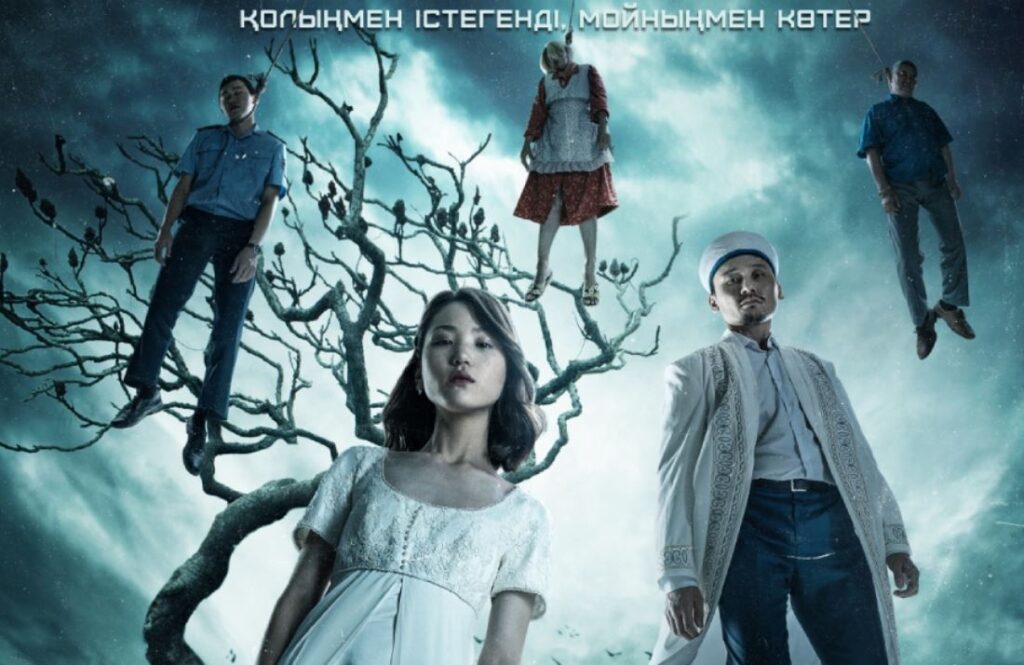
Until recently, the idea of Kazakhstani movies grossing a billion tenge ($2.5m) was a pipe dream. But in the last two years several films have earned this amount. The number of films being co-produced with world-leading studios is growing. However, domestic cinema still struggles to overcome funding and content quality problems. At the end of last year, the romantic comedy Taptym au seni (I Found You) earned more than a billion tenge in just 10 days of screenings. But the real shock came later, when the box office receipts of the suspense film Dastur (Tradition) exceeded a billion tenge after only a week of distribution. In one weekend alone it significantly outperformed Hollywood's Aquaman. In just the second half of last year, Kazakhstani films at the domestic box office earned over $14 million. One of the highest-grossing films was Kazakhstani Business in India, directed by Nurlan Koyanbayev. The film grossed over 1.25 billion tenge, and it was followed by Maghan Nazar Audar (Look at Me). The top ten includes Zhaidarman (Cordial), Zhynim Sol (My Gene) and Azhyrasam (Divorced). Domestic films now account for 30% of total box office receipts in Kazakhstan. Domestic analysts are confident that in the near future Kazakhstani cinema will overtake Uzbekistan to become the leader in Central Asia. In addition to the national Kazakhfilm studio and private studios, production is being driven forward by the State Center for Support of National Cinema. The Center allocates grants to industry figures on a competitive basis, and although there are heated discussions around the terms of the competition and the awardees, state support has a significant impact on the release of films. As for the subject matter, comedies are usually the leaders at the box office. They are often devoted to crime, drug trafficking, fraud, dishonest business, and corruption. Romance and historical figure movies remain popular as well. There is also a growing trend of condemning violence against women in the industry. Dastur, for example, tells the story of a rape victim who violently avenges not only the offender but also his neighbors, with whose tacit consent her life and dignity were devalued. Some sources are speculating that there will soon be a film adaptation of the story of the murder of Saltanat Nukenova by former minister Kuandyk Bishimbayev, which has attracted worldwide attention. A decline in the popularity of western and Russian films, which have led the box office in past decades, is also helping the growth of domestic movies. The share of international projects in the Kazakhstani film industry is growing. In March, the series Assassins Beginning, produced in Egypt, showed spectacular locations across Kazakhstan, including Charyn Canyon and Kolsai Lakes. In January Kazakhstan and Nigeria's 'Nollywood' joined forces for the first time to create a movie called Adam Bol. The film will be shown in both countries, with Nigeria steadily taking over movie markets in Africa and Asia. Joint production helps to not only create jobs in the film industry, but to support businesses as well....
Why Have Women’s Carriages Become So Popular in Kazakhstan?

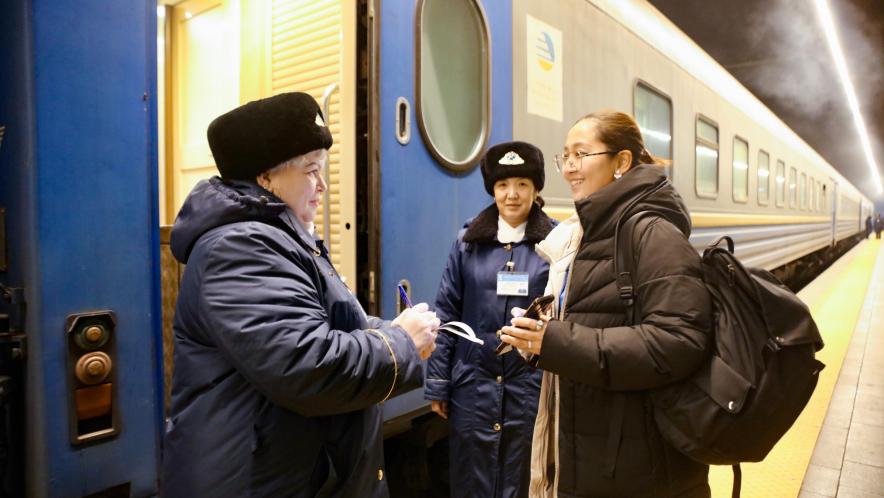
Kazakhstani women have already had time to appreciate women-only cars in trains - an innovation that seemed unthinkable in the secular country a few years ago. However, the special carriages did not appear as an indulgence to traditionalist views. Kazakhstani women now have a choice: they can ride in a regular carriage, or they can ride in a carriage that is practically closed to men - and demand for the latter service is increasing year by year. In May, the statistics of Kazakhstan Temir Zholy (KTZ), a railroad monopoly, were published, which revealed that women twice as often choose women's cars. Since 2021, more than 359,000 women have chosen this option, and since the beginning of 2024 alone, the service has been used by about 70,000 women, whereas in 2023, only 34,000 did so. Today, women's cars run in eight long-distance passenger trains, with only female conductors working in them. Male children up to seven-years-old are allowed, whilst men can go enter for a short period of time, but overnight stays are strictly prohibited. The need to ensure the safety of women in trains began to be discussed after the scandal that broke out in the fall of 2018, when two conductors raped a female passenger on the high-speed train "Talgo" on the Astana-Aktobe route. This crime resonated widely, and led to loud demands for the authorities to take action. Conductors Zhetes Umbetaliev and Kolkanat Kurmaniyazov were found guilty of rape in July 2019 and were sentenced to just 2.3 and 2.5 years, respectively, whilst Kanat Almagambetov, first deputy chairman of KTZ, apologized on behalf of the company. The first women-only cars were launched in October 2021. "This is being done primarily for the safety of women... If demand for the service increases, our company is ready to expand the geography of these routes. Apart from the female conductors, these carriages are no different from the others. They have the same pricing policy," KTZ explained at the time. The current routes were chosen because of their length, company representatives said. Kazakhstan is a large country and a trip from Almaty to Mangistau, for example, takes several days. Ainagul Kasenova, a resident of Mangistau Oblast, travels to see relatives in Almaty several times a year, and for her, women's cars have become a solution. "Now I try to buy tickets only in a separate car. You travel for a long time, so it's much more comfortable if there are only women and children around. I used to encounter men talking to me, paying me unnecessary attention; it was unpleasant. When the news about the rape of a female passenger by conductors broke, my parents didn't even want to let me go to Almaty. Now they let me go without any problem," Kasenova told TCA. According to her, both students and pensioners are comfortable in women's carriages, especially those who have to travel often, which increases the risk. "The women's carriage is always quiet, friendly atmosphere, without drinking and noise," she added....

Tajikistan Doubles Down on Fines for Wearing “Foreign Clothes”

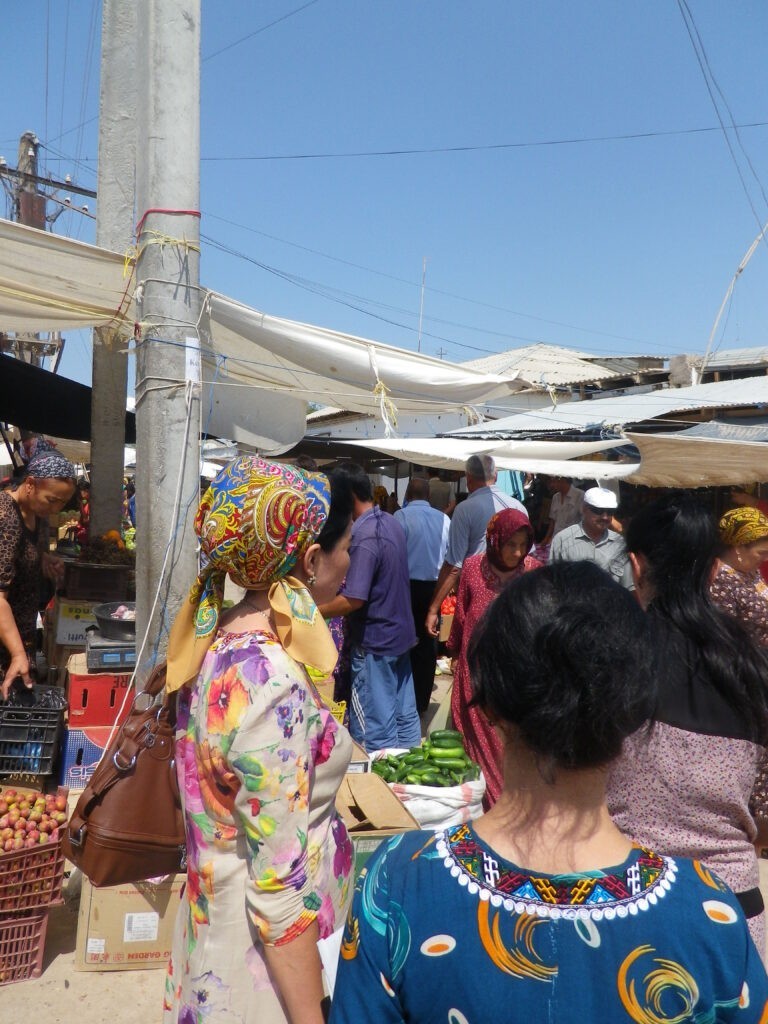
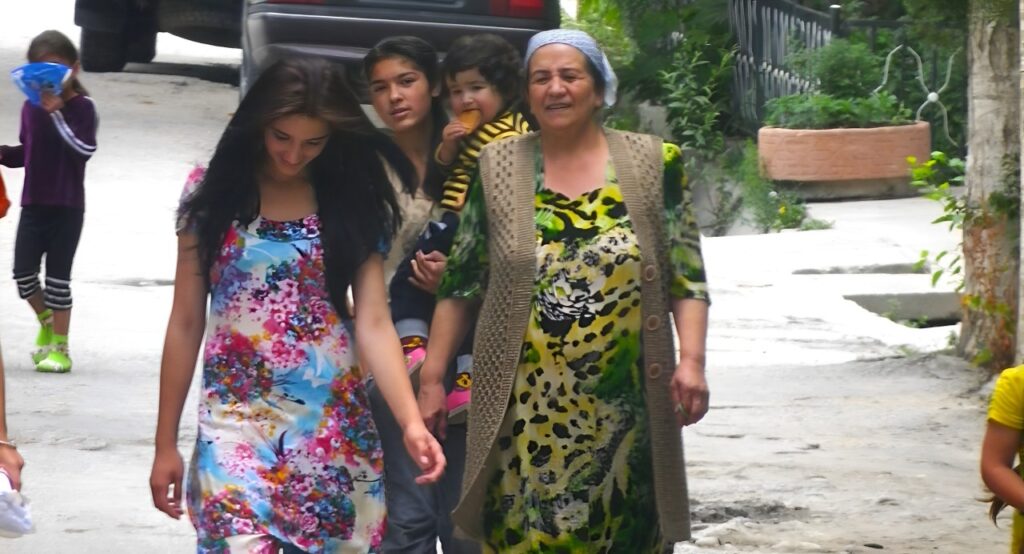
Residents of Tajikistan will face fines ranging from 8,000 to 65,000 somoni for "importing and selling clothes that do not correspond to the national culture" and for wearing such clothes in public places, as reported by Radio Ozodi. These regulations are outlined in Article 18 of the new version of the law "On Regulation of Traditions and Rites" and the Code of Administrative Offenses. The drafts were adopted by parliamentarians on May 8 this year. "In the draft law 'On the Regulation of Traditions and Rites,' a corresponding prohibiting norm is included in part two of Article 18. For its violation, amendments and additions to Article 481 of the Code of Administrative Offenses provide for administrative responsibility," explained Mavludakhon Mirzozoda, a deputy of the lower house of Tajikistan's parliament. Article 481 of the current Code of Administrative Offenses addresses not only Article 18, but also broader non-compliance with the norms of the Law on the Regulation of Traditions and Rites. According to this article: Individuals will be fined 7,920 somoni ($733). Officials will be fined 39,600 somoni ($3,665). Legal entities will be fined 57,600 somoni ($5,333). Individual entrepreneurs, scientists, and religious figures will be fined 54,000 somoni ($4,998). For repeated violations, fines will range from 46,000 to 86,000 somoni. The recent amendments have updated this article, although changes to the fine amounts are yet to be confirmed. The average wage in Tajikistan is approximately $172 a month. According to the current legislation, the amendments to the law come into force upon publication in the official press after approval by the Majlisi Milli (lower house) and the president's signature. However, citizens are already being compelled to comply with these new regulations. The current law does not specify which clothing is considered alien to Tajik national culture. Experts suggest that the law likely pertains to women's national dress, although the text itself does not differentiate between men's and women's clothing. Reactions within Tajik society have been mixed. Some residents of Dushanbe, during a street survey, expressed their opinion that people should have the freedom to choose their own attire without compulsion. Tajik authorities have long campaigned to encourage the wearing of national dress and to discourage the adoption of foreign styles. They prohibit women from wearing black clothing, black headscarves, and hijabs, considering them alien to Tajik culture and traditions. Although mini-skirts, sweaters, dresses with cleavage, tops, and transparent fabrics were also banned at one point, these restrictions were quickly "forgotten."

Central Asia’s Combined ‘Army of Turan’: Could a Hypothesis Become a Reality?

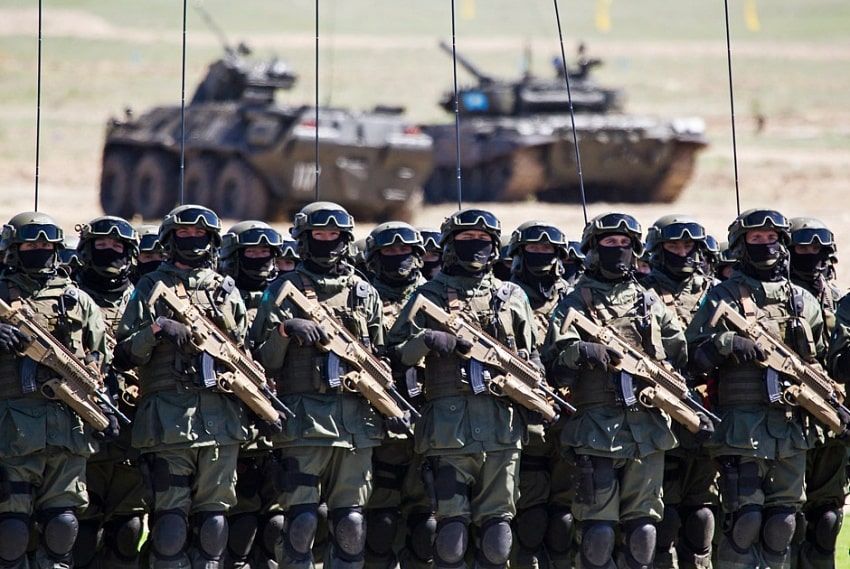
Kazakhstan will host the military exercise, "Birlestik-2024" in July of this year. Notably, this became known from the press service of the Ministry of Defense of Azerbaijan. The exercises will be jointly held by the Armed Forces of Azerbaijan, Kazakhstan, Kyrgyzstan, Tajikistan, and Uzbekistan. It is a convenient occasion to refresh the topic of the 'Army of Turan', which is periodically raised by experts both in Central Asia and neighboring countries. The Army of Turan is a hypothetical military bloc of Turkic-speaking countries. Its ideas have become relevant in the context of global geopolitical turbulence.   I hear the thunder of cannons... Most military analysts consider Azerbaijan to be Turkey's proxy in the South Caucasus. In general, Baku's rapprochement with the capitals of Turkic states (plus Dushanbe) meets Ankara's interests in creating a unified cultural and economic space: Turan. However, does the integration of Turkic states mean that they will eventually be able to create a NATO-style security pact in Central Asia? Such initiatives have resumed with renewed vigor after the end of the Azerbaijani-Armenian conflict, during which Turkey has shown the capability of its weapons. Indeed, in 2022, against the backdrop of the Russian invasion of Ukraine, Kazakhstan - the only country of the participants to share a land border with the Russian Federation - pondered how to protect itself from further expansion of the northern empire's borders. But in the run-up to the summer of 2024, fears have mostly subsided. Many were sobered by the obvious fact that loud declarations of assistance from strong states at best mean the delivery of obsolete weapons, but no more. At worst, your offender will be censured from high podiums, and you will be sympathized with. For example, Turkey, the most likely to defend Central Asia from outsider aggression, did not risk helping the Palestinians, its brothers in faith, and got away with accusing Israel of fascism. So, the 'Army of Turan' exists in the heads of fantasists and pan-Turkics, but in reality, something ordinary is going on — the arms trade. Let's see what the armies of the Central Asian republics are armed with, excluding Turkmenistan, which has declared neutrality.   Tajikistan and Kyrgyzstan The most troublesome neighbors in the region have not been able to complete their border delimitation process. As a result, quarrels periodically erupt, in which border guards from both sides intervene, staging mini-warfare. The cause of discord is usually the same: water. The Tajik and Kyrgyz militaries gain some combat experience in these micro-quarrels. Despite or based on this experience, Dushanbe relies on agreements with other countries -- Russia, China, India, Iran, and CSTO partners -- for its defense capability. Tajikistan's armed forces number only 9,000 men. They have 38 tanks (T-62 and T-72 modifications), 114 armored vehicles (APCs, BMPs, BRDMs), 40 artillery systems, and several short- and medium-range air defense units. The Air Force has four Czechoslovakian L-39 Albatross, combat trainers. Kyrgyzstan does not have much more power in the number of its troops, at around...

Construction of First IT Town in Uzbekistan Begins

The construction of the first IT town in Uzbekistan is underway in the Parkent district of the Tashkent region, the press service of the Ministry of Digital Development has reported. The launch ceremony was held last week, on May 18, with the “Villayat Samsarak: Creative Eco-IT Village” project being presented. The IT town will serve the development of “green” and creative sectors in the Tashkent region, it was stated. On May 15, President Miziyoyev's decree “On the organization of the activities of IT-towns aimed at creating additional conditions for digitization and learning foreign languages for young people in the regions” was accepted. The construction and modernization of such educational centers are to be financed by public-private partnerships, sponsors, and other sources. The Foundation for the Development of Digital Technologies is responsible for the provision of educational materials. The construction of IT- towns in some regions of Uzbekistan is also to be carried out at the expense of the State Fund for Youth Policy Support.

Only Turkmen Graduates Allowed to Participate in “Last Call”

In Balkan velayat (administrative district) this year, only graduates of Turkmen nationality will be able to participate in the "last call" -  the secondary-school graduation ceremony held throughout the CIS, which is held annually in front of the Central Library of Balkanabad. This decision by the local authorities caused bewilderment among the residents of the velayat, where representatives of many nationalities live. This is the second known case in the last four months when the authorities of the western velayat have infringed on the rights of ethnic minorities. In early February, it was reported that in Balkanabad and Turkmenbashi, only Turkmen music was allowed at weddings, whilst songs in the languages of other ethnicities were prohibited. Violations of the rights of ethnic minorities, limiting their opportunities for education in their native language, and observance of cultural traditions is a long-standing problem. Turkmenistan says it "condemns racial discrimination and constantly pursues a policy of mutual understanding between peoples." However, members of minorities complain of systematic restrictions of their rights on ethnic grounds.