• KGS/USD = 0.01143 -0%
  • KZT/USD = 0.00198 -0%
  • TJS/USD = 0.10899 0.65%
  • UZS/USD = 0.00008 -0%
  • TMT/USD = 0.28490 -0.28%
  • KGS/USD = 0.01143 -0%
  • KZT/USD = 0.00198 -0%
  • TJS/USD = 0.10899 0.65%
  • UZS/USD = 0.00008 -0%
  • TMT/USD = 0.28490 -0.28%
  • KGS/USD = 0.01143 -0%
  • KZT/USD = 0.00198 -0%
  • TJS/USD = 0.10899 0.65%
  • UZS/USD = 0.00008 -0%
  • TMT/USD = 0.28490 -0.28%
  • KGS/USD = 0.01143 -0%
  • KZT/USD = 0.00198 -0%
  • TJS/USD = 0.10899 0.65%
  • UZS/USD = 0.00008 -0%
  • TMT/USD = 0.28490 -0.28%
  • KGS/USD = 0.01143 -0%
  • KZT/USD = 0.00198 -0%
  • TJS/USD = 0.10899 0.65%
  • UZS/USD = 0.00008 -0%
  • TMT/USD = 0.28490 -0.28%
  • KGS/USD = 0.01143 -0%
  • KZT/USD = 0.00198 -0%
  • TJS/USD = 0.10899 0.65%
  • UZS/USD = 0.00008 -0%
  • TMT/USD = 0.28490 -0.28%
  • KGS/USD = 0.01143 -0%
  • KZT/USD = 0.00198 -0%
  • TJS/USD = 0.10899 0.65%
  • UZS/USD = 0.00008 -0%
  • TMT/USD = 0.28490 -0.28%
  • KGS/USD = 0.01143 -0%
  • KZT/USD = 0.00198 -0%
  • TJS/USD = 0.10899 0.65%
  • UZS/USD = 0.00008 -0%
  • TMT/USD = 0.28490 -0.28%
07 December 2025

Viewing results 787 - 792 of 1312

Why Does Energy-Rich Kazakhstan Want Tajikistan’s Uranium?

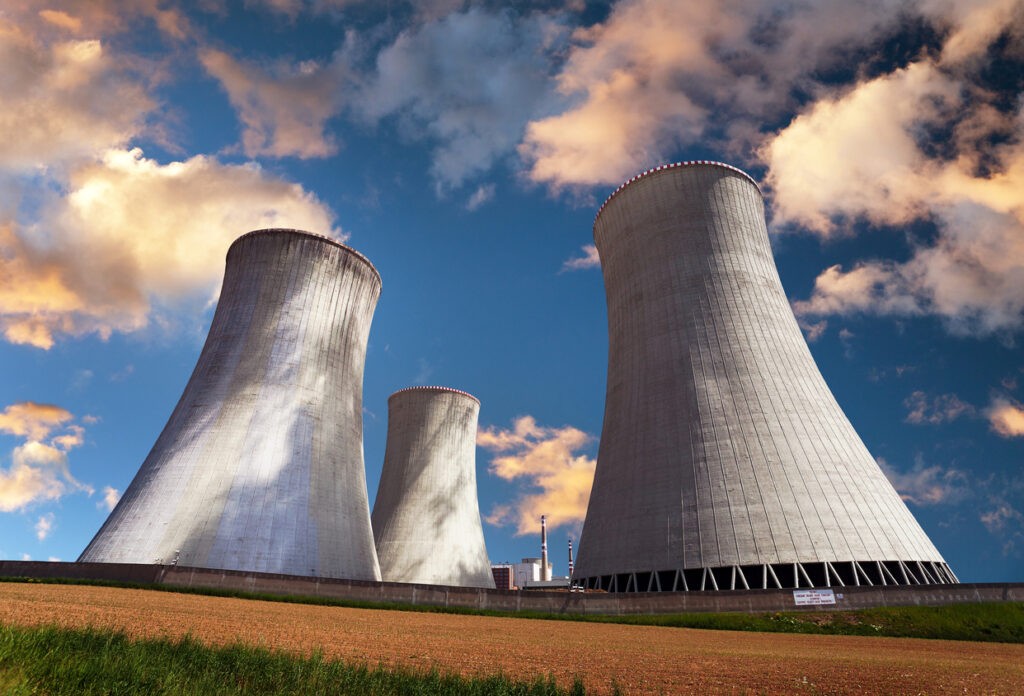
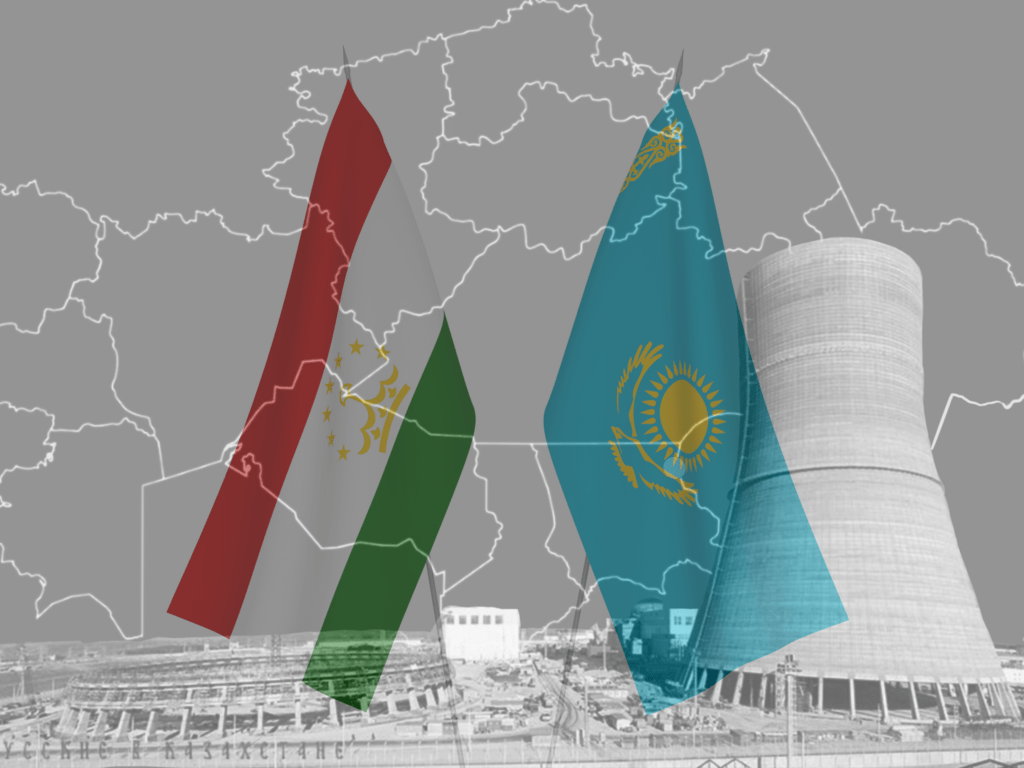
Despite having significant uranium resources, Tajikistan does not plan to build a nuclear plant anytime soon, if it all. Quite aware of that, Kazakhstan – Dushanbe’s ally in the Russian-dominated Collective Security Treaty Organization (CSTO) – is reportedly eyeing Tajikistan’s uranium. But why? "I would rather earn a profit from the resources of others than my own," John D. Rockefeller, a prominent industrialist, is often paraphrased as saying. Policymakers in Astana could soon begin implementing such a strategy in regard to uranium. Kazakhstan is the largest producer of natural uranium worldwide. In 2022, the energy-rich nation produced the largest share of uranium from mines (43% of world supply), followed by Canada (15%) and Namibia (11%) (ref). In spite of that, Astana could eventually start purchasing the radioactive element from Tajikistan. On August 22, following Kazakh President Kassym-Jomart Tokayev’s visit to Dushanbe, the Tajik Rare-Earth Metals Company, TajRedMet, and Kazakhstan’s national atomic company, Kazatomprom, signed a memorandum of understanding and cooperation in the extraction and processing of uranium and rare-earth metals. Signing such a protocol aligns with Astana’s ambitions to build a nuclear power plant in the country. In that context, Kazatomprom – the world's largest uranium producer – is likely seeking to play an active role in producing uranium fuel for the proposed nuclear plant. Given the global resurgence of nuclear energy and the ensuing “race for uranium,” Kazatomprom is keen to assess the current status of Tajikistan's uranium reserves, and, if feasible, expand its resource base. Uranium is considered one of the main natural resources of Tajikistan. It is believed that the first atomic bomb developed by the Soviet Union contained raw materials from Tajikistan. But after the collapse of the USSR, uranium mining was curtailed in the mountainous country. According to various estimates, 14% of the world's reserves of uranium are located on the territory of the landlocked country of around 10 million people. But compared to other nations, Tajikistan does not have significant uranium mining operations, meaning its uranium deposits remain underdeveloped. However, the fact that Russian companies are interested in exploration and mining of uranium in the Tajikistan suggests that Kazatomprom might have serious competition. It is entirely possible that other foreign corporations will also eventually join the “race for uranium” in Tajikistan. Meanwhile, Kazakhstan will almost certainly be inclined to consolidate its own uranium market. In terms of uranium production in the largest Central Asian state, the Russian State Nuclear Energy Corporation Rosatom is the leader due to its shares in five enterprises operating in Kazakhstan. Since Astana aims to develop closer ties with the West, it is no surprise that France is looking to strengthen its position in the energy-rich country, particularly in its nuclear and uranium sectors. Russia and China are unlikely to give up easily on their ambitions to preserve their influence in the Central Asian nation, however. In 2022, Kazakhstan exported around half of its uranium to China. From January to October 2023, Astana shipped uranium worth $922.7 million to the...
Mehrdad Mozart : A Model’s View of Kazakhstan’s Fashion Industry

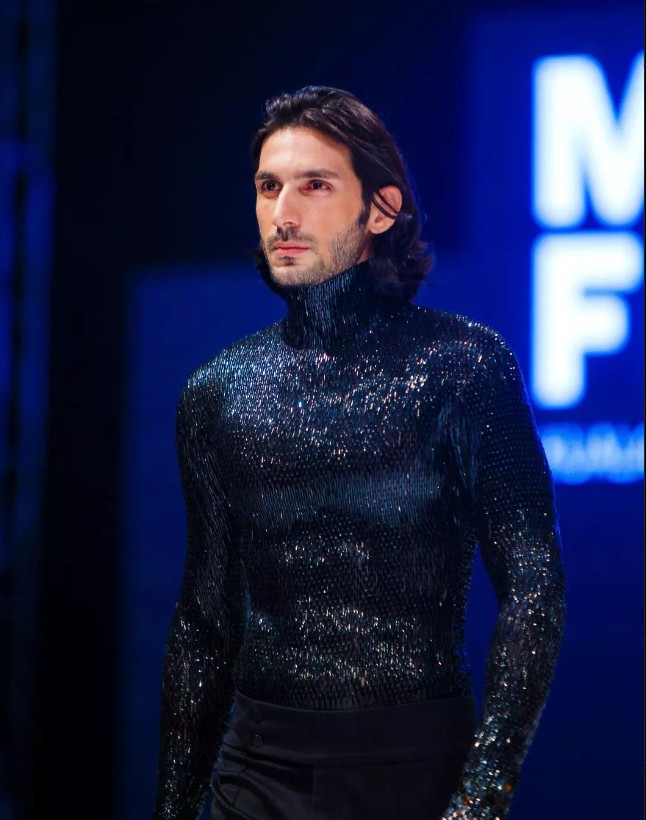
Kazakhstan's fashion industry is rapidly growing, and increasingly, attracting global attention. Within its dynamic environment, new faces, talented designers, and unique projects are emerging which promise to elevate its international status. One such talent is Mehrdad Mozart, a professional model with a wealth of international experience, now living and working in Kazakhstan. Originally from Iran, Mehrdad has enjoyed a chequered career from playing in a rock band to hosting radio & TV shows, and from acting in commercials and movies to judging modeling and talent shows. A model since 2009, he has worked with several global brands including Dolce & Gabbana, Versace and Gucci, and has mentored young people entering the profession. In an exclusive interview with TCA, Mehrdad spoke about his modeling career, his perception of the fashion industry in Kazakhstan, and his personal aspirations. [caption id="attachment_22748" align="aligncenter" width="785"] photo: mehrdadmozart.com -Mehrdad Mozart[/caption] TCA: What inspired you to enter the fashion industry? I think the allure of fashion itself inspired me. I used to get lost in magazines, dreaming of becoming a model and representing high-end brands. Fashion TV became a regular escape, where I absorbed every detail and admired the work of iconic male models like David Gandy, Sean O’Pry, and Tyson Beckford.The influence of legendary brands like Tom Ford, Dior, Hermès, Burberry, and D&G played a huge role in shaping my aspirations. They were the very definition of style and sophistication, fueling my desire to be a part of that world. TCA: How did you get into modeling?  My modeling career began when I moved to Malaysia. I didn’t have a portfolio or any connections, so I joined a Facebook group for talents, most of whom were working as extras in films and commercials. That gave me my first break and after a slow start, my modest portfolio eventually caught the attention of talent directors, photographers, stylists, and then, modeling agencies. TCA: What challenges have you had to overcome to get to where you are now? In the beginning, breaking into the industry was challenging. I faced constant rejections from modeling agencies, had no connections, and had to deal with criticism. Staying in shape required intense discipline, and coping with the competitive, high-pressure environment was tough. Unfortunately, diversity remains a significant issue in the fashion world. Middle Eastern models, in particular, encounter additional barriers, making it even more difficult to succeed. Given these challenges, perseverance and determination proved essential to navigating and eventually thriving in this demanding industry.   [caption id="attachment_22749" align="aligncenter" width="803"] photo:mehrdadmozart.com -the catwalk[/caption]   TCA: You now live in Kazakhstan: What are your initial impressions of its fashion industry? I had heard of renowned Kazakh designers such as Aigerim Akenova and Aida Kaumenova. However, when I first arrived in the capital city, Astana, the fashion scene  still felt fairly underdeveloped, with little activity apart from the odd fashion show or commercial shoot. Almaty however, is a different story. The fashion industry here is vibrant and rapidly expanding. Since moving to the city, I've become...

Kazakhstan as an Emerging Middle Power

Earlier this year, the Paris-based Institut Montaigne and the Berlin-based Institute of Security and International Affairs separately published studies identifying Kazakhstan as a significant "middle power". They correctly make the case that Kazakhstan, leveraging its vast natural resources, particularly in energy, and a multi-vector foreign policy, has positioned itself as a key player in regional and global affairs. A middle power is a state wielding significant regional influence and influencing international affairs through diplomacy, economic strength, and strategic alliances, but which is not a superpower. With relatively stable political systems, growing economies, and proactive foreign policies, these states frequently act as mediators or bridge-builders in global conflicts. At the same time, they can pursue their own interests efficiently through a combination of soft power and multi-lateralism to balance relationships amongst external powers. To be a middle power, a nation should also demonstrate resilience, adaptability, and a commitment to international norms. Since gaining independence in 1991, Kazakhstan has attracted substantial foreign investment, leveraging its vast energy resources to build a robust economy, and using this to enhance its regional and global influence. Its geographical position makes it a key player in Central Asia. The country's leadership pioneered the "multi-vector" foreign policy that has become a model for many nations seeking to balance relations with major powers. Kazakhstan’s contributions to global nuclear non-proliferation have further solidified its status as a rising middle power. Its foreign-policy strategy deploys a careful balancing act between larger global powers and regional neighbors. Thus, its multi-vector approach allows it to maintain strong ties with Russia, China, and the West, while avoiding over-dependence on any single partner. The country participates in organizations like the Shanghai Cooperation Organization and the Organization of Turkic States while also pursuing relationships with the European Union and the United States. This strategy secures Kazakhstan's sovereignty while enhancing its role as a mediator in international conflicts. Since independence, the country has taken the lead in promoting regional integration, energy cooperation, and security, often acting as a mediator in regional disputes. Its leadership roles in regional organizations and initiatives represent a recognition of its efforts to foster stability and economic development in the region. Kazakhstan’s championing of regional cooperation and the “demonstration effect” of its model of political and economic stability have reinforced its position as a leader in Central Asia. Kazakhstan has actively engaged in various international initiatives that bolster its reputation as a responsible and influential middle power. Notably, the country has played a pivotal role in global nuclear non-proliferation, voluntarily relinquishing its Soviet-era nuclear arsenal and advocating for disarmament through platforms like the Conference on Interaction and Confidence-Building Measures in Asia (CICA). Kazakhstan has also hosted peace talks, such as the Astana Process for Syria, and contributed to UN peacekeeping missions. These initiatives reflect Kazakhstan’s commitment to global stability, positioning it as a proactive player in international diplomacy and a respected advocate for the peaceful resolution of conflicts. Kazakhstan's internal reform agenda is crucial for its continued growth and its evolving role...

Empowering Kazakhstan’s Future: Navigating Diplomatic, Energy, and Geopolitical Challenges in the Nuclear Power Referendum

Never short of diplomatic acumen, on September 2, President Kassym-Jomart Tokayev signed a decree on holding a referendum on the construction of a nuclear power plant (NPP) in Kazakhstan. Tokayev’s goal is to ensure that arguments for nuclear energy are compelling and to involve citizens, scientists, and government officials in the decision-making process. However, it's crucial that the public are fully informed about these plans as Kazakhstan finalizes the first stage of its new nuclear development. With demand for electricity soaring, it can be argued that the case for the NPP is compelling. Officials forecast that electricity deficits are set to worsen, leading to a reliance on imports, such as was the case in the 1990s. In the first three months of 2024 alone, tariffs rose by 26%. Electricity in Kazakhstan is currently generated by 222 power plants under various forms of ownership, with 84% coming from fossil fuels, hydropower accounting for 12%, and less than 2% coming from solar and wind installations as of 2019. Renewables had expanded to 5.92% by 2023, but the deficit continues to grow.   Old-Timers and Newcomers On October 6 of this year, the Kazakhstani people will give the final answer in a referendum on whether nuclear power will become a component of their everyday lives or whether nuclear-phobia, connecting both the memory of atomic testing at Semipalatinsk and persistent distrust in the ability of officials to build something grandiose without embezzlement, will prevail. The example of the LRT (the project for elevated light-rail transportation in Astana, which was to be implemented back in 2013) stands as a stark monument to corruption which has even penetrated the cultural code of today's youth. One of the first episodes of a then-popular show hosted by politician and businessman, Bulat Abilov, was devoted to nuclear energy and the need to build nuclear power plants. Abilov's inspiration for this topic was Mukhtar Dzhakishev. The former Head of Kazatomprom and Deputy Minister of Energy and Mineral Resources, on November 10, 2009, Dzhakishev was charged with the theft of Kazatomprom property and the receipt of bribes, and was sentenced to fourteen years imprisonment. Subsequently found guilty on separate charges related to embezzlement, fraud, involvement in organized crime and the abuse of power, he was sentenced to a further ten years to run concurrent to his prior sentence. Dzhakishev was released in March 2020, but this episode has led neither man to change their position - nuclear power plants are the best thing for Kazakhstan in light of coming energy shortfalls. Agitators for the NPP, who also include the General Director of Kazakhstan Nuclear Power Plants JSC, Timur Zhantikin, and specialists from the Institute of Nuclear Physics of the Ministry of Energy, have, however, encountered vociferous opposition. Some still oppose the NPP, such as ecologist Mels Yeleusizov. The arguments among those resistant to construction of the NPP have long remained unchanged, with seismic hazards, radiophobia, and corruption at the forefront. The pressure on emotions has also remained unwavering, with slogans such...

Special Report: Prospects Look Good for Kazakh Wheat Exports

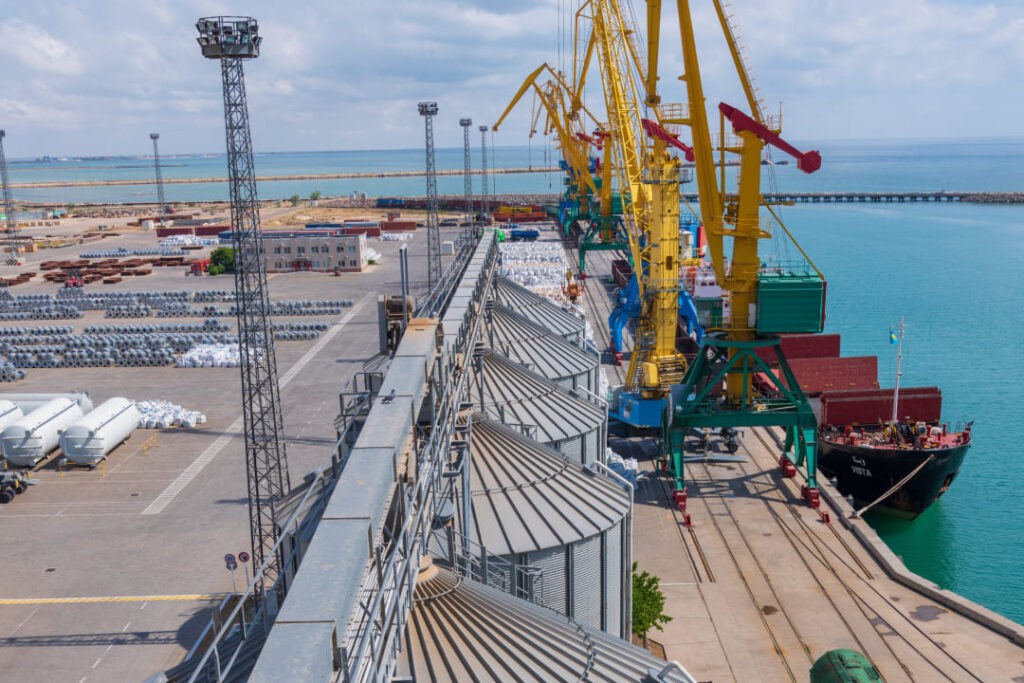
According to the International Grains Council, Kazakhstan's wheat harvest for the 2024/2025 season is expected to reach 16 million tons. As the harvesting campaign begins, the country's lack of elevator capacity and the problem of mainline railroads are concerns. Idle trains are still a problem, which leads to the introduction of regular restrictions and bans on the acceptance and shipment of wheat due to congestion on the railroad. Market participants note that the railroad cannot cope with the volume of shipments during the autumn rush, with its infrastructural ceiling on shipments at only 1 million tons of grain per month. This leads to a collapse at border railroad crossings and, consequently, a price drop in the domestic market. One obvious solution is to expand Kazakhstan's elevator capacity and grain storage facilities; this is one of the reasons for the increased load on the railroad infrastructure. Thus, according to the Ministry of Agriculture, 191 licensed grain-receiving enterprises have a total storage capacity of more than 13.2 million tons. In addition, agricultural producers have storage capacities for 15.8 million tons of grain, which, as the ministry assures, is enough to store grain considering the projected harvest. Also, according to the ministry, the construction of new grain storage facilities and the expansion of existing ones are envisaged. In 2024-2026, it plans to operate five granaries with a capacity of 30,200 tons. The national railway company Kazakhstan Temir Zholy (KTZ) has already established a grain headquarters, involving representatives from local executive bodies, the National Chamber of Entrepreneurs "Atameken," and shippers. This headquarters ensures adequate transportation for the upcoming season's harvest. As Salamat Abzhaliyev, Deputy General Director for Marketing and Planning of KTZ-Gruzovye Transportations LLP, noted during the briefing held at the end of August, for seven months of the current year, the total volume of grain loading on the network of railroads of the country amounted to 4.7 million tons. Only in Kazakhstan did wheat transportation increase by 3%, amounting to 1.1 million tons. An important factor affecting the efficiency of transporting grain and milling products is the availability of specialized wagons. In addition to boxcars, grain carriers are designed to transport these specific cargoes. Today, the total fleet of boxcars and grain cars on the railroad is about 16,000 and 12,000, respectively. According to KTZ, this fleet is sufficient to fulfill all agreed transportation plans. According to forecasts of the International Grain Council, the export of Kazakhstani wheat in the 2024/2025 season is projected at 10 million tons. During the first six months of the year, 2.4 million tons of wheat have already been shipped. The main buyers of domestic grain are traditionally Uzbekistan, China, Tajikistan, Italy, and Afghanistan. Grain exports to China have grown 5.7 times in the last three years, which makes China a key export destination. China is ready to accept large volumes of grain from Kazakhstan. Today, the country buys about 10 million tons of wheat worldwide, including from Kazakhstan. However, further development of trade is constrained by limited transportation...

Kazakhstan: Tokayev Delivers Address to the Nation

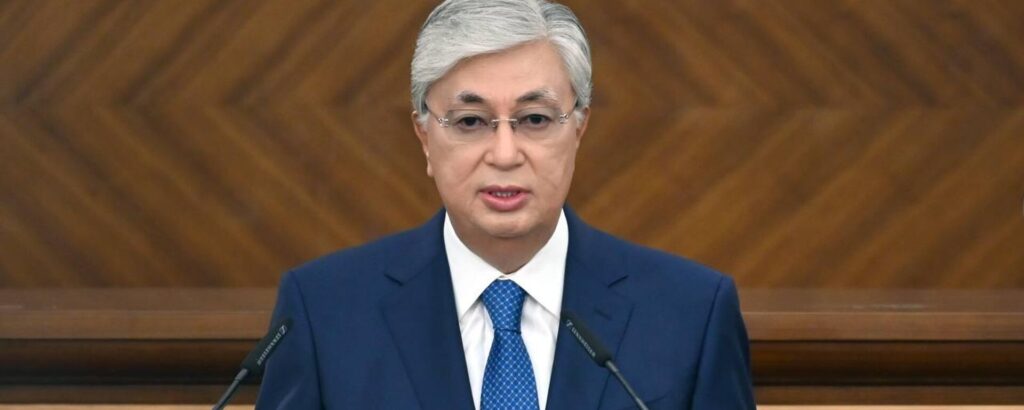
A new political season has started in Kazakhstan. Following tradition, it opened with a joint session of the chambers of Kazakhstan's parliament, at which the head of state, Kassym-Jomart Tokayev, delivered his regular Address to the Nation, this year entitled: Fair Kazakhstan: Law and Order, Economic Growth, Social Optimism. As predicted by State Counselor, Yerlan Karin, the president's new address contained over a hundred initiatives, instructions, and proposals that “develop the line of reforms laid out in his previous messages and election platform.” Tokayev began his address by mentioning the parliament's adoption of 102 laws in the previous session, including norms on public control, countering human trafficking, science and technology policy, heat and energy, etc. Social issues, especially child protection, remain a top priority and whilst many systematic steps have been taken to improve people's welfare, the president emphasized that much work lay ahead. “The people of Kazakhstan today live in a completely new political reality," he stated. "Over the past five years, large-scale reforms have been implemented; the political system has radically transformed. Fundamental changes are taking place in public consciousness; the level of legal culture of citizens is increasing, and new models of behavior and new values are taking root in society. The renewal of political and public life, as well as the mentality and cultural norms of the nation, has begun. The construction of "Fair Kazakhstan" is underway, and what is especially important is that all this fully corresponds to the people's aspirations. Therefore, we will continue to follow our course steadfastly and not turn off the path." Expanding on how the past five years have changed the country, Tokayev explained, "Since 2021, about 2.5 thousand akims of villages have been elected, which is ninety percent of the total number of heads of rural settlements. In the remaining villages, elections will be held after the expiration of the terms of office of their akims. The average age of newly elected akims is 46 years. Sixty percent will have no previous experience of working in public service, and their number includes entrepreneurs and members of various parties. The corps of akims elected by the people has been largely renewed." The head of state recalled that in the fall of last year, Kazakhstan began to hold elections for the first time for akims of districts and cities of regional significance. Under the new rules, 45 akims were elected in all oblasts. According to the president, the latest election system will go even further. “After a comprehensive study of the election results and analysis of the work of elected akims, it was decided to finally switch to the new system from next year. In the future, akims of districts and regional cities will be elected only through direct elections, which will be held as the powers (i.e., rotation terms) of incumbent akims expire,” Tokayev emphasized, calling it another essential step in the transformation of the political system and stressing that if required for the development of the state, reforms will...