• KGS/USD = 0.01143 -0%
  • KZT/USD = 0.00198 -0%
  • TJS/USD = 0.10899 0.65%
  • UZS/USD = 0.00008 -0%
  • TMT/USD = 0.28490 -0.28%
  • KGS/USD = 0.01143 -0%
  • KZT/USD = 0.00198 -0%
  • TJS/USD = 0.10899 0.65%
  • UZS/USD = 0.00008 -0%
  • TMT/USD = 0.28490 -0.28%
  • KGS/USD = 0.01143 -0%
  • KZT/USD = 0.00198 -0%
  • TJS/USD = 0.10899 0.65%
  • UZS/USD = 0.00008 -0%
  • TMT/USD = 0.28490 -0.28%
  • KGS/USD = 0.01143 -0%
  • KZT/USD = 0.00198 -0%
  • TJS/USD = 0.10899 0.65%
  • UZS/USD = 0.00008 -0%
  • TMT/USD = 0.28490 -0.28%
  • KGS/USD = 0.01143 -0%
  • KZT/USD = 0.00198 -0%
  • TJS/USD = 0.10899 0.65%
  • UZS/USD = 0.00008 -0%
  • TMT/USD = 0.28490 -0.28%
  • KGS/USD = 0.01143 -0%
  • KZT/USD = 0.00198 -0%
  • TJS/USD = 0.10899 0.65%
  • UZS/USD = 0.00008 -0%
  • TMT/USD = 0.28490 -0.28%
  • KGS/USD = 0.01143 -0%
  • KZT/USD = 0.00198 -0%
  • TJS/USD = 0.10899 0.65%
  • UZS/USD = 0.00008 -0%
  • TMT/USD = 0.28490 -0.28%
  • KGS/USD = 0.01143 -0%
  • KZT/USD = 0.00198 -0%
  • TJS/USD = 0.10899 0.65%
  • UZS/USD = 0.00008 -0%
  • TMT/USD = 0.28490 -0.28%
07 December 2025

Viewing results 805 - 810 of 1034

Men in Kazakhstan Paid Almost One-Third More than Women

In Kazakhstan, men are paid 27% higher salaries than women in similar positions, as reported in a study conducted by analysts, Finprom.kz. The authors state that in a regional context, the largest gap in 2023 was observed in the Atyrau region: 85.8% (in 2022 - 77.2%), followed by Mangistau and Ulytau: 72.8% and 52.4%, respectively. The smallest gap was noted in the Zhambyl Oblast: 1,8%. "Only in two out of 20 regions of the RK women on average received more than men. Thus, in Zhetysu region men earned 6.1% less, in Turkestan region 0.8% less than women. By way of comparison: in 2022, the average monthly nominal salary of women was higher than men in five of the 18 regions of the country at that time," the analysts stated. The analysts noted that the largest gap was observed in the field of information and communication: 36.5% in favor of men, followed by the spheres of art, entertainment and recreation (36.1%), construction (28.5%), healthcare and social services (24.1%), transportation and warehousing (23.4%). "Only women working as farmers and workers in agriculture, forestry, fisheries and fishing received more than men: the gap in favor of women was 7.6%," the analysts concluded.

Real Estate Worth $8 Million Found in Dubai Belonging to Son of Ex-Prosecutor General of Uzbekistan

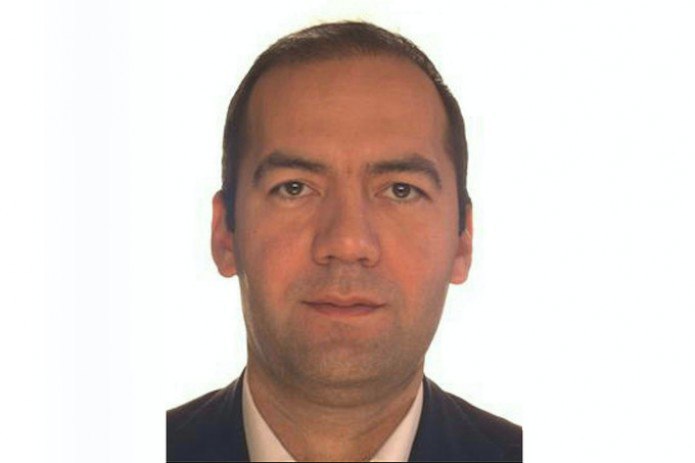
The Organized Crime and Corruption Reporting Project (OCCRP) and 75 media partners worldwide have released an investigation, Dubai Unlocked, which uncovers the foreign owners of real estate in Dubai. According to the report, the son of former Uzbek Prosecutor General, Alisherbek Kadirov, has commercial real estate in Dubai with an estimated value of approximately $8 million. According to Gazeta.uz, the investigation is based on leaked data on real estate in Dubai from 2020 and 2022, mostly from the Dubai Land Department, as well as from state-owned utility companies. The authors note that they only included people whose identities are of public interest. "Among the participants of the list is one representative of Uzbekistan. This is Alisherbek Kadirov, son of former Prosecutor General Rashitjon Kadirov. In 2018, shortly after the detention of Rashitjon Kadirov, the Interior Ministry declared Alisherbek Kadirov a wanted man. According to the investigation, he owns four offices in the business center, Marina Plaza, the total cost of which is estimated at $ 7.97 million," stated the report. Rashitjon Kadirov headed the Prosecutor General's office of Uzbekistan from 2000-2015, and was then elected judge of the Constitutional Court (2015-2017). In February 2018, the initiation of criminal proceedings against him became known. In June 2019, he was sentenced to ten years imprisonment on charges of bribery, incitement to bribery, fraud, willful evasion of taxes and other mandatory payments, interference in investigation, and other crimes. He was released on parole in January 2023.

UN Special Rapporteurs Denounce Repressions of Independent Media in Kyrgyzstan

A number of UN Special Rapporteurs have denounced the repression of independent media in Kyrgyzstan and sent a letter to the authorities of the country. In the letter, they mentioned recent events related to the publications Kloop, 24.kg and Temirov Live, Vesti.kg  reports. The UN Special Rapporteurs called on the Kyrgyz authorities to fully respect international norms and standards regarding freedom of expression. "We are concerned that attacks on independent journalists and news outlets appear to be a direct result of their independent journalistic investigations. We are concerned that independent media and human rights defenders are worried that they will not be able to exercise their rights to freedom of expression and peaceful assembly, and associations to do their legitimate work without intimidation or reprisal," the letter states. The authors of the letter also ask the Kyrgyz authorities to provide detailed information on the charges against Kloop, 24.kg and Temirov Live. Earlier TCA reported that evidence regarding the case of 11 current and former journalists of Temirov Live, arrested on charges of calling for mass riots, were transferred to the court and will soon be handed over to the judge.

Uzbek Politician Decries Dominance of Russian Language in Country

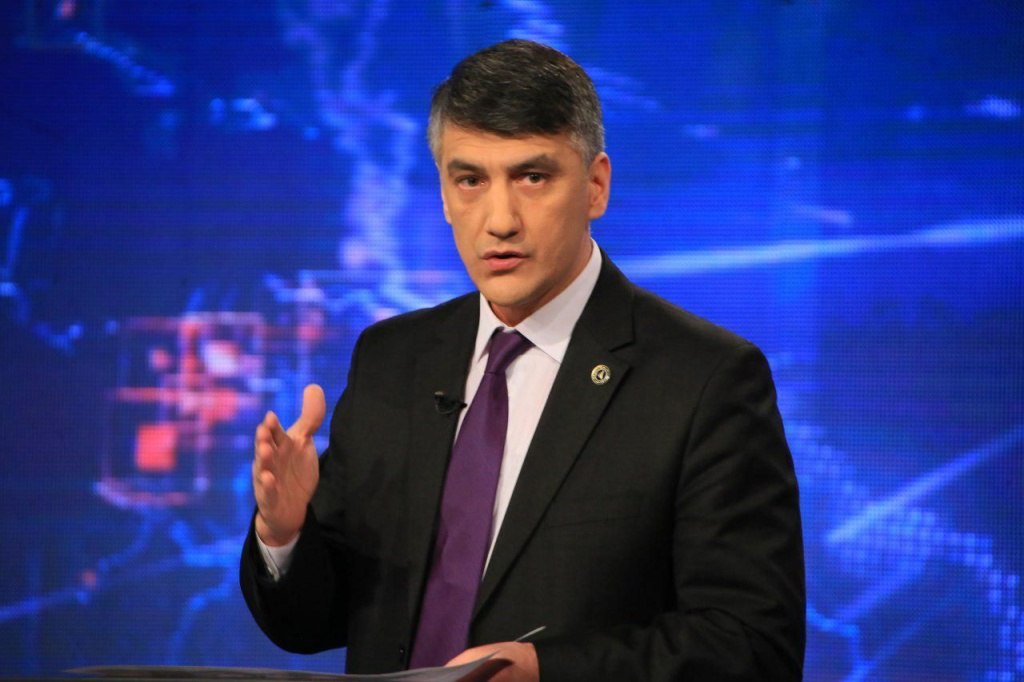
Alisher Qodirov, leader of the Milliy Tiklanish Party and Vice-Speaker of the Legislative Chamber of the Oliy Majlis of Uzbekistan, has proposed a ban on the provision of public services to persons who don't speak the Uzbek language. He expressed this opinion in response to a statement by the chairman of the Russian State Duma, Vyacheslav Volodin. Qodirov said that the Uzbek language should be defined in legislation as a mandatory language. "In our laws, in addition to creating conditions for citizens of other nationalities to study their native language and values in kindergarten and at school, the Uzbek language should be defined as compulsory," he wrote in his Telegram channel. The politician stated that he believes it should be impossible for a person who doesn't know Uzbek to be employed in the civil service or use state services. Earlier, Qodirov suggested limiting the use of Russian on Uzbek television and in education. The party leader stated that a norm on teaching primary education in Uzbek should be introduced into legislation. "We have not been able to teach Russian compatriots the Uzbek language for 100 years. On the contrary, it has become customary that Uzbeks send their children to be educated in Russian. In Tashkent, the number of schools where education is not in Uzbek has grown. Unfortunately, more than 90% of pupils at such schools are Uzbeks," the Vice-Speaker wrote. Qodirov's statements run counter to Article 19 of the Uzbek Constitution, which states that "all citizens have the same rights and freedoms and are equal before the law regardless of sex, race, nationality, language, religion, beliefs, social origin, or social status."

Kyrgyz Sugar Farmers Being Ruined By Imports

Favorable weather conditions will allow Kyrgyz farmers to harvest a large beet crop this year. However, this will not stop the flow of imported sugar, as local production capacity covers only 65% of domestic needs. Cheap sugar imported from Russia and Kazakhstan could bankrupt farms. The sugar beet harvest in Kyrgyzstan usually begins in October-November, when processing begins. According to the ministry of agriculture, local farmers do not fully supply sugar beets to processing plants. Therefore, sugar has to be imported from Russia and Kazakhstan, jeopardizing the country's food security. Farmers themselves argue that cheap imports make beet cultivation unprofitable. Today there are about 3,000 beet farms in Kyrgyzstan, but their number is rapidly decreasing as it is becoming increasingly difficult to survive in the market. Nevertheless, the government is trying to rectify the situation by giving farmers 7 billion som ($78.6m) in soft loans. "If we talk about crops, they are not bad now. Only the lazy will be able to spoil the harvest. The weather conditions are excellent this year: there is moisture, not much heat, but enough, and beet is doing well. I think the harvest will be above average this year," Chui region farmer Mirgasym Allakhveranov told The Times of Central Asia. Kyrgyzstan should stop importing sugar from abroad and rely only on its own production, he said. The situation, he thinks, is exacerbated by the actions of resellers who export beets out of the country. "For the farmer it is very good, when they export beets (abroad), it means that the price will increase. But for the population it is not very good, because then the price of sugar rises. There is less sugar in the country and deficit begins. Naturally, traders, who have a special nose for these things, immediately raise prices," Allakhveranov added. According to official data, since the beginning of 2024, Kyrgyz authorities have already imported 10,800 tons of sugar worth $6.4m. The figures show that Kyrgyz stocks of the product are dwindling. Earlier, the ministry of agriculture submitted for public discussion a draft law proposing a ban on sugar exports until early fall. "The population's demand for the year is 145.7 thousand tons, in order to avoid a market price frenzy, as well as taking into account the temporary bans on the export of cane or beet sugar from Russia and Kazakhstan, it is necessary to establish a temporary ban on exports until the new harvest," reads the draft government resolution. To fully supply Kyrgyzstan with granulated sugar, about 20,000 hectares of beets must be planted each year, processing plant owners say. This year, 15,000 hectares were planted despite government subsidies. Farmer Mirgasym Allakhveranov said that in the 1960s, Kyrgyz beet was considered the best in Central Asia. Scientists worked to create a root crop that yielded a good harvest. But the methods they developed no longer exist – farmers buy seeds in Europe that are not always suitable for the local climate. This affects beet yields and leads to a...

Liberalizing Kazakhstan’s Economy Must Not Become Uncontrolled Privatization, Expert Warns

Last week, President Kassym-Jomart Tokayev signed a decree on reducing the state’s participation in the economy, aiming to help develop competition and private business. This could be a significant boost to the economy, financial analyst Rassul Rysmambetov, an Almaty-based expert in distressed assets and Director of the Financial Freedom Public Foundation, told The Times of Central Asia, though everything will depend on how the decree is implemented. Firstly, the decree envisages creating a National Office for Privatization under the Agency for the Protection and Promotion of Competition. This office is to develop criteria for state assets subject to privatization and create a list of them. In addition, measures are provided to increase the autonomy, quality, and independence of corporate governance at Samruk-Kazyna, the National Welfare Fund, and its subsidiaries. “The government must establish a specific list of large entities that will offer major stakes in the next two years in IPOs,” President Tokayev explained. According to Tokayev, the quasi-public sector – bloated and often ridden with debt – needs serious reform. “We need to put an end to the question of where state participation should continue and where competition can be developed. The largest share of the state in the economy is represented by the group of companies held by the Samruk-Kazyna fund, so that is where this work must start. New, systemic measures are required to fundamentally rehabilitate the fund,” the president stated. A separate section of the decree presents measures aimed at protecting the rights and legitimate interests of business, including decriminalizing offenses related to economic activity and coordinating with prosecutors on prohibitive and restrictive measures initiated by government agencies. This is not the first time Kazakhstan has tried to liberalize its economy – it has even privatized social institutions, such as hospitals, schools, and creative centers for children before – but previous attempts yielded no tangible successes. “We need to continue to work to improve the quality of services, consistently reduce state participation and eliminate excessive regulation and restrictions. This applies to all sectors of the economy,” Tokayev stressed. “Uncontrolled monopolies, unequal access to resources and unfair trade practices must be eliminated at the root. A pillar of economic liberalization will be effective privatization. There have been so many privatization plans, but every time we make the same mistakes.” Rysmambetov believes that professionals should take the lead. “Liberalizing the economy is a process. By no means can it be limited to a single decree – it is a strategic course. I see here dozens, if not hundreds of by-laws, industry reference documents and possibly new laws and codes. I'm afraid that parliament will prove unable to keep up with the pace at which these reforms should be carried out,” he stated. According to Rysmambetov, Samruk-Kazyna could be dissolved tomorrow, but the holding has taken on a lot of debt for its subsidiaries, meaning that in the near term its assets can only be partially privatized. In general, each Samruk-Kazyna company has a related supervising ministry, so, to...