• KGS/USD = 0.01143 -0%
  • KZT/USD = 0.00198 -0%
  • TJS/USD = 0.10899 0.65%
  • UZS/USD = 0.00008 -0%
  • TMT/USD = 0.28490 -0.28%
  • KGS/USD = 0.01143 -0%
  • KZT/USD = 0.00198 -0%
  • TJS/USD = 0.10899 0.65%
  • UZS/USD = 0.00008 -0%
  • TMT/USD = 0.28490 -0.28%
  • KGS/USD = 0.01143 -0%
  • KZT/USD = 0.00198 -0%
  • TJS/USD = 0.10899 0.65%
  • UZS/USD = 0.00008 -0%
  • TMT/USD = 0.28490 -0.28%
  • KGS/USD = 0.01143 -0%
  • KZT/USD = 0.00198 -0%
  • TJS/USD = 0.10899 0.65%
  • UZS/USD = 0.00008 -0%
  • TMT/USD = 0.28490 -0.28%
  • KGS/USD = 0.01143 -0%
  • KZT/USD = 0.00198 -0%
  • TJS/USD = 0.10899 0.65%
  • UZS/USD = 0.00008 -0%
  • TMT/USD = 0.28490 -0.28%
  • KGS/USD = 0.01143 -0%
  • KZT/USD = 0.00198 -0%
  • TJS/USD = 0.10899 0.65%
  • UZS/USD = 0.00008 -0%
  • TMT/USD = 0.28490 -0.28%
  • KGS/USD = 0.01143 -0%
  • KZT/USD = 0.00198 -0%
  • TJS/USD = 0.10899 0.65%
  • UZS/USD = 0.00008 -0%
  • TMT/USD = 0.28490 -0.28%
  • KGS/USD = 0.01143 -0%
  • KZT/USD = 0.00198 -0%
  • TJS/USD = 0.10899 0.65%
  • UZS/USD = 0.00008 -0%
  • TMT/USD = 0.28490 -0.28%
07 December 2025

Viewing results 271 - 276 of 489

Tajikistan Urged to Reconsider Ban on ‘Alien’ Clothing

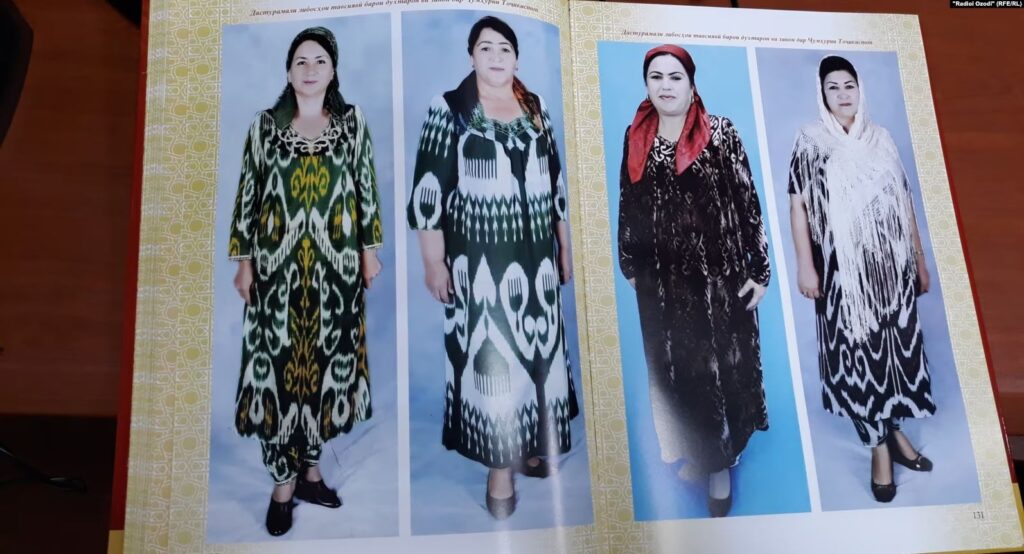
The International Partnership for Human Rights (IPHR) has called on the Tajik authorities to repeal recent amendments to the law imposing restrictions on “foreign” clothing. According to activists, such restrictions violate international human rights, particularly the right to freedom of expression and freedom of religion. In a statement issued on August 19, IPHR emphasized that since clothing is an important element of personal identity as well as religious and cultural beliefs, states have an obligation to protect people's right to choose what they wear. According to amendments to the law “On the Ordering of Traditions, Celebrations and Rites”, enforced in June this year, Tajikistan prohibits “importing, propagandizing and selling clothes that do not correspond to the national culture.” Although a precise definition of such has  yet to be provided, there has been a clear focus by authorities on “Islamic” clothing, and in particular, the issue of a fatwa by Tajikistan's Ulema Council urging women to avoid wearing “tight, black or see-through clothing.” Violations of the law are punishable by heavy fines or imprisonment for up to three years. IPHR continues to stress that restrictions based on religious, cultural, or traditional values cannot justify the violation of human rights The amendments were earlier condemned by The League of Muslim Scholars and other international organizations, and the Taliban even declared “jihad” against Tajikistan. In response to international criticism, Tajik authorities reiterated that the new law aims to protect national values and prevent extremism.
Gods and Demons of Central Asia

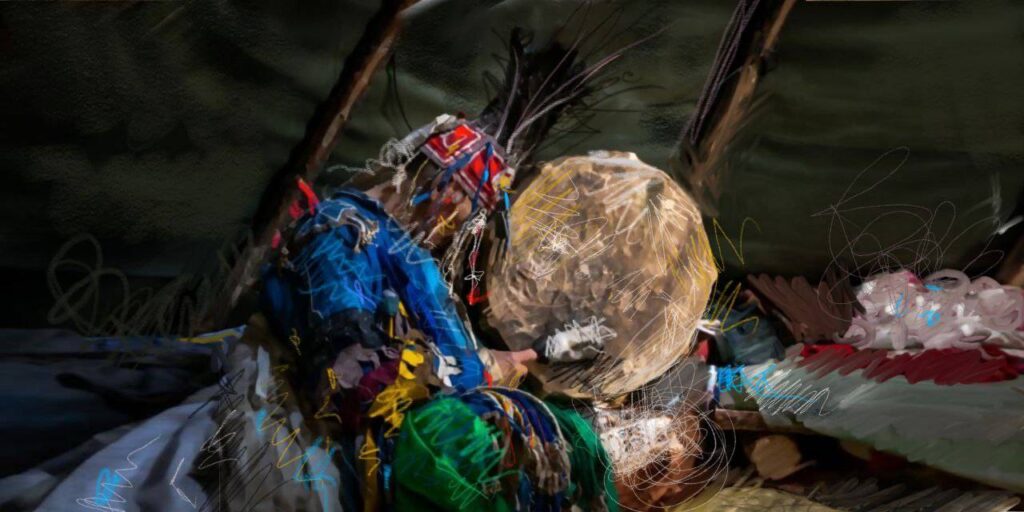
In today's dynamic world, Central Asia is emerging as a trendsetter in fashion, culture, lifestyle, and worldview. The ancient Tengrian faith, deeply rooted in Central Asian mythology and superstitions, may soon resurface creatively among the region's people, though it is unlikely to be reinstated as an official religion. While some in Kazakhstan attempt to distance themselves from Abrahamic religions, Tengrism remains a vital part of the cultural heritage, featuring gods, demigods, and dark entities that shaped the beliefs of our ancestors during the pre-Islamic era.   [caption id="attachment_22010" align="aligncenter" width="167"] photo: pininterest: Tengri's domain[/caption]   Divine entities According to Tatar scientist and writer Gali Rahim, shamanism attributes significant roles to various spirits and deities. Among the Turkic peoples, the supreme deity is Tengri, the eternal blue sky. Rahim's lectures on “The Folklore of the Kazan Tatars,” presented at the East Pedagogical Institute in the 1920s, describe Tengri as the primary god in Turkic cosmology, with the earth and humanity emerging from the union of the sky and the earth. Umai, the goddess associated with motherhood and children, stands next in importance. Ancient Turkic inscriptions and symbolic artifacts, such as the stone carving discovered in 2012 in the Zhambyl district of Almaty, Kazakhstan, depict her as a protective figure for children. Teleut pagans represented her as a silver-haired, young woman who descended from heaven on a rainbow to guard children with a golden bow, and the Kyrgyz appealed for her help during childbirth and when children fell ill. Motifs dedicated to Umai by Shorian shamans, were positioned around cradles. Boys' cradles were pierced with an arrow,  girls' with a spindle, and wooden arrows were placed within the those of both. Another prominent character common to Turkic, Mongolian, and Altaic mythology is Erlik or Yerlik Khan. Ruler of the underworld, the horned deity presides over the realm of the dead from a palace of black mud or blue-black iron on the bank of the Toibodym, a river of human tears. A single horsehair bridge is guarded by monsters known as dyutpa whilst the palace is protected by Erlik’s sentries or elchi, brandishing pike poles known as karmak. His breath, carried by a tan, a light warm breeze, was believed to paralyze anyone who inhaled it, which is why the Khakas term for paralysis, tan sapkhany, literally means “wind blow.” Kudai (Khudai), also known as Ulgen, is another central deity who, alongside his brother Erlik, created the land, its vegetation, mountains, and seas. Kudai created man from clay, and Erlik gave him his soul. Kudai created a dog but it was Erlik who clothed it in hair. Whilst Kudai created the first animals, the horse, the sheep, and the cow, Erlik created the camel, the bear, the badger, and the mole. Kudai brought down lightning from the sky and commanded thunder. In a dispute over who was the mightiest creator, Kudai won. The brothers parted ways, and after producing nine sons, from whom the tribes of Kpchak, Mayman, Todosh, Tonjaan, Komdosh, Tyus, Togus,...

Countries of Central Asia Team up as Threat of Natural Disasters Grows

Central Asia is vulnerable to a panoply of natural hazards: Floods, landslides, droughts, sandstorms, avalanches and earthquakes. Countries in the region increasingly seek to collaborate on early warning systems and other emergency precautions, especially since disasters can spill across borders and because the effects of climate change are intensifying. To that end, the heads of the national emergency departments of Kyrgyzstan, Kazakhstan, Tajikistan and Uzbekistan met last week in Cholpon-Ata, a lakeside resort town in northern Kyrgyzstan whose attractions include ancient petroglyphs showing deer, leopards and hunting scenes. Turkmenistan´s flag – green expanse, red stripe with designs and white crescent and stars - was on display in the conference hall, though official announcements did not mention the presence of any delegation from the reclusive Turkmen government. The goal was to share information and experience, and deepen cooperation among the emergency agencies of those Central Asian countries, said Maj. Gen. Boobek Azhikeev, Kyrgyzstan’s minister of emergency situations. The five nations, which have a total of approximately 75 million people and encompass four million square kilometers, face growing risks from natural disasters, and the region has been warming faster than the global average according to a report released in May by the U.N. agency for the coordination of disaster risk reduction and the U.N. Development Programme. The two U.N. bodies, which helped to support the Central Asia meeting on the shores of Kyrgyzstan’s Lake Issyk-Kul on Aug. 15, also mentioned human-made hazards, such as industrial accidents, chemical waste facilities in densely populated areas, and severe air pollution in major cities in all the countries. “Many disaster risk management systems are still reactive, not proactive. Early warning processes are often fragmented, and poorly integrated into countries' development strategies and policies for risk-informed decision-making,” the U.N. agencies said. “There is a lack of anticipation of new and emerging risks, insufficient monitoring and forecasting, and limited financial and technological support. Early warning communication and dissemination are often unclear, especially for the most vulnerable.” The private sector and media can also get more involved in ways of reducing the risk from disasters, they said. The U.N. agencies also noted progress, saying Tajikistan had taken the lead in Central Asia in rolling out an early warning system focused on monitoring, forecasting, communication and other measures. Earlier this month TCA reported that the head of Tajikistan’s committee for emergency situations and civil defense, Rustam Nazarzada, stated that the economic damage caused by natural disasters in the country has amounted to over $12 million in this year alone. Additionally, Uzbekistan is updating an early warning system in the populous, economically important Ferghana valley that will promptly disseminate weather forecasts. Central Asian countries have sought to coordinate on environmental issues in the past, sometimes with mixed results. But the sense of urgency is growing. Earlier this year, Kyrgyzstan was among countries that sent aid to Kazakhstan after floods there that the Kazakh president described as the worst natural disaster in 80 years. Kazakhstan, in turn, sent tons of humanitarian aid to Kyrgyzstan after...

Tajik President: Accelerated Melting of Glaciers Threatening Central Asia’s Water Resources

Over the past few decades, more than a thousand of Tajikistan’s 13,000 glaciers have completely melted—a threatening trend given that Tajikistan's glaciers are the main source of up to 60% of Central Asia’s water resources. Tajik President Emomali Rahmon announced this on August 17 at the third Voice of Global South Summit, which was held virtually under the chairmanship of Prime Minister of India, Narendra Modi. In his speech, Rahmon said that Tajikistan's initiative to declare 2025 the International Year of Glacier Preservation has received the full support of the international community. According to a UN General Assembly resolution, March 21 will be celebrated annually as World Glaciers’ Day from next year. Based on this resolution, in 2025, Tajikistan will host the International High-Level Conference on Glaciers’ Preservation. President Rahmon continued that with 93% of its territory covered by mountains, Tajikistan is considered one of the most vulnerable countries of the Global South in terms of adverse climate change impacts. Every year, the country faces floods, landslides, avalanches, and other natural disasters that cause great material damage, and, in many cases, human casualties. Earlier this month TCA reported that the head of Tajikistan’s committee for emergency situations and civil defense, Rustam Nazarzada, said at a press conference that the economic damage caused by natural disasters in the country this year has amounted to over $12 million. The government of Tajikistan is therefore implementing a National Strategy for Adaptation to Climate Change until 2030, with the goal of reducing the negative impacts of climate change on the country's social and economic spheres. Regarding green energy production, Rahmon stated that Tajikistan currently produces 98% of its electricity from hydropower. “We have decided to increase this figure to 100% by 2032, that is, to produce electricity entirely from green energy resources, and to turn Tajikistan into a ‘green country’ by 2037,” the Tajik leader stated.

Tajikistan-Kyrgyzstan Border Demarcation Completed

Tajikistan and Kyrgyzstan have completed negotiations to demarcate their common border, which had been disputed for many years. The final meeting of the two countries' topographic-legal working groups was completed in the town of Batken in Kyrgyzstan on August 11-17. This has been reported by the State Committee for National Security of Tajikistan. "During this meeting, the parties continued the discussion and exchanged proposals on the description of the passage of the Tajik-Kyrgyz state border line in the remaining sections," the Committee commented. At the end of June, The Times of Central Asia reported that 94% of the borderline between Tajikistan and Kyrgyzstan had been fully delineated. The conflict was caused by uncertainties regarding the exact demarcation of the border between the two republics, which spans some 980 kilometers. With its scant natural resources and dwindling water supplies, the border between Kyrgyzstan and Tajikistan has been the scene of numerous armed conflicts. This situation arose after the collapse of the USSR – the parties could not agree on the ownership of dozens of disputed territories. The borderless areas have become a zone of conflict between the local population and the border troops of the other country. The last major conflict took place on September 16, 2022, as a result of which hundreds of people were killed and injured on both sides. Huge material damage was caused to the infrastructure of the border areas of the regions of Sogd (Tajikistan) and Batken (Kyrgyzstan).

Central Asians Beaten and Deported from Russia

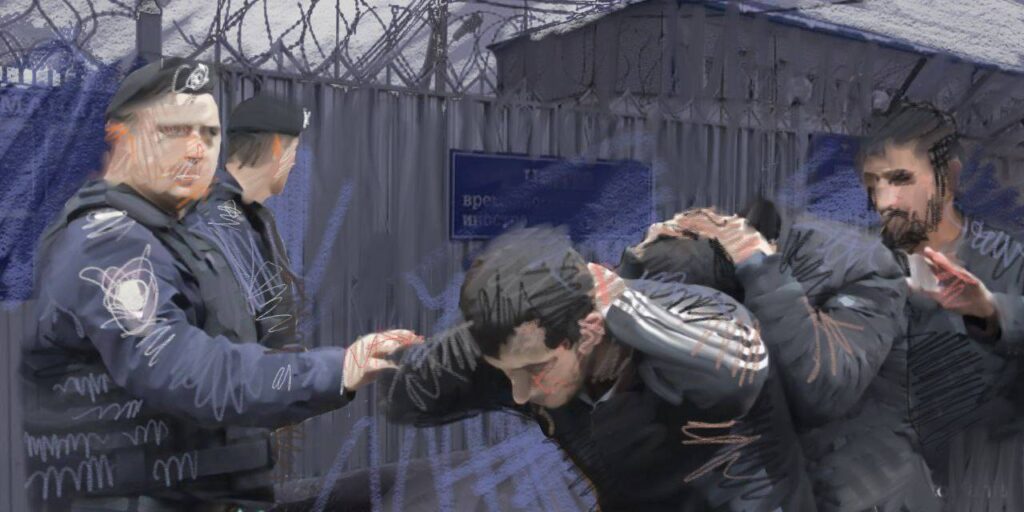
The punishment for many Central Asians in Russia whose work or residency documents are not in order is pain and humiliation, and then possibly deportation. Xenophobia targeting Central Asians in Russia has been on the rise since the March 22 terrorist attack on Moscow’s Crocus City Hall that left more than 140 people dead. Russian authorities apprehended a group of ethnic Tajiks who allegedly carried out the attack and after that the level of prejudice against Central Asians in Russia, which has always existed, dramatically worsened. The treatment of Central Asians at the Sakharovo migration center on the outskirts of Moscow is an example. Moscow courts are likely to send Central Asians caught with document problems to the Sakharovo center. Radio Free Europe’s Kyrgyz Service interviewed several people who passed through the Sakharovo center. Their descriptions shed light on the conditions inside. One man who spent 18 days in the center said, “The day we entered there, they intimidated us, forced us to walk in single file, run fast… then they examined us and beat us with a stun gun.” That jibes with another man’s description. “They call your last name, then you go out into the corridor and run. There they hit you on the back of the head and tell you to ‘run.’” Then, the man continued, “They made me face the wall, forced me to raise my arms up, spread my legs, and started hitting me with a stun gun.” There is an anti-Islamic element to the treatment of detainees at Sakharovo. A different person remembered this about his detention. “They fed us food with pork. Since we were hungry, we removed the meat and ate what was left.” He said there were some people who recited their daily prayers in their rooms. “When one guy was saying namaz, the guards entered. Then one of them (the guards) hit him in the face twice.” When the person continued saying his prayers, the guards said, “Let him go to Kyrgyzstan, Tajikistan, Uzbekistan, and read his prayer there.” Some of the detainees with beards were forcibly shaved. Batygul Moldobayeva is from Kyrgyzstan. She was detained in Moscow this summer with an expired work permit and sent to Sakharovo. Moldobayeva said the guards yelled at women detainees and were rude to them. She added that sometimes the guards “asked them to be their ‘temporary wives.’” Moldobayeva said there were pregnant women in the center, some as far along as six months, and the guards did not pay any attention to their condition. According to Moldobayeva, there were some Kyrgyz citizens at Sakharovo who had been there for three or four months. Askar Uskenbayev is another Kyrgyz citizen who was detained in Moscow in mid-June and sent to Sakharovo. He said he met fellow Kyrgyz citizens who had been there six months. After being deported back to Kyrgyzstan, Moldobayeva posted about her experience on social media and warned Kyrgyz citizens to be sure all their documents were in order if they...