• KGS/USD = 0.01143 -0%
  • KZT/USD = 0.00198 -0%
  • TJS/USD = 0.10899 0.93%
  • UZS/USD = 0.00008 0%
  • TMT/USD = 0.28490 -0.28%
  • KGS/USD = 0.01143 -0%
  • KZT/USD = 0.00198 -0%
  • TJS/USD = 0.10899 0.93%
  • UZS/USD = 0.00008 0%
  • TMT/USD = 0.28490 -0.28%
  • KGS/USD = 0.01143 -0%
  • KZT/USD = 0.00198 -0%
  • TJS/USD = 0.10899 0.93%
  • UZS/USD = 0.00008 0%
  • TMT/USD = 0.28490 -0.28%
  • KGS/USD = 0.01143 -0%
  • KZT/USD = 0.00198 -0%
  • TJS/USD = 0.10899 0.93%
  • UZS/USD = 0.00008 0%
  • TMT/USD = 0.28490 -0.28%
  • KGS/USD = 0.01143 -0%
  • KZT/USD = 0.00198 -0%
  • TJS/USD = 0.10899 0.93%
  • UZS/USD = 0.00008 0%
  • TMT/USD = 0.28490 -0.28%
  • KGS/USD = 0.01143 -0%
  • KZT/USD = 0.00198 -0%
  • TJS/USD = 0.10899 0.93%
  • UZS/USD = 0.00008 0%
  • TMT/USD = 0.28490 -0.28%
  • KGS/USD = 0.01143 -0%
  • KZT/USD = 0.00198 -0%
  • TJS/USD = 0.10899 0.93%
  • UZS/USD = 0.00008 0%
  • TMT/USD = 0.28490 -0.28%
  • KGS/USD = 0.01143 -0%
  • KZT/USD = 0.00198 -0%
  • TJS/USD = 0.10899 0.93%
  • UZS/USD = 0.00008 0%
  • TMT/USD = 0.28490 -0.28%
07 December 2025

Viewing results 277 - 282 of 489

World Bank Considers Loan for Tajikistan’s Rogun Hydropower Plant

Tajikistan's Deputy Minister for Finance, Yusuf Majidi, has announced that the World Bank will consider financing the development of the Rogun hydroelectric power plant. According to him, the bank can allocate $650 million for this project in September this year. $250 million has been allocated as preferential loans; starting in 2025, the station's construction will be financed by other investments. Majidi specified that the construction of the hydroelectric power plant (HPP) is also financed by the Islamic Development Bank and Arab funds; according to preliminary data, this is about $550 million. When the Rogun HPP reaches full capacity, about 70% of the electricity produced will be exported to other Central Asian countries. According to the Eurasian Fund for Stabilization and Development (EFSD), financing the Rogun HPP is one of the main risks to Tajikistan’s budget and debt sustainability. The EFSD notes that a possible increase in the cost of hydropower construction could reduce funding for other critical infrastructure projects and social spending. Rogun is located 110km from Dushanbe on the Vakhsh River, and is the largest in the region. Its construction began in 1976, but it was destroyed after the collapse of the USSR. Later, Tajikistan continued work on the construction of hydroelectric power plants at its own expense and with the help of international funds and organizations, and so far, two of the six units with a capacity of 600 MW provided for in the project have been put into operation. The third is scheduled for 2025.

Olympic Success Nudges Central Asians Closer Together in Paris

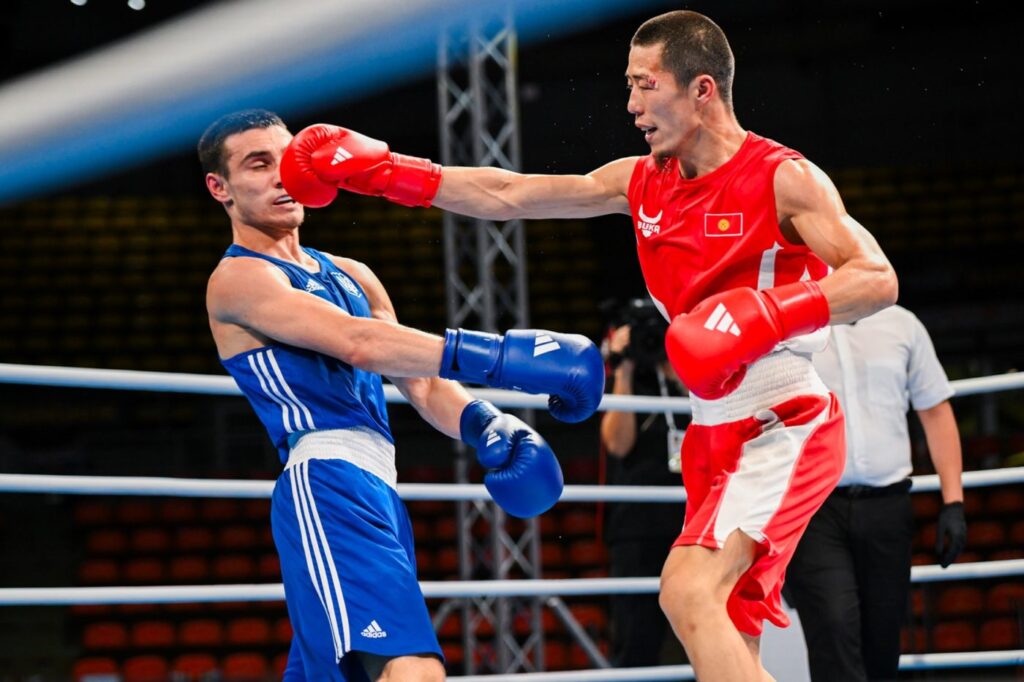
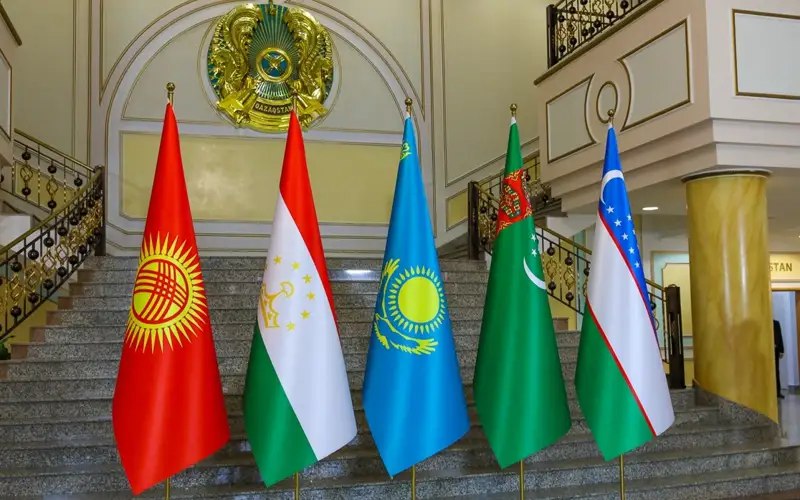
Uzbekistan’s athletes grabbed the most glory for Central Asia at the Olympic Games, delivering eight gold medals, mostly in boxing, and propelling the nation to 13th on the medal table in Paris. But the occasional displays of solidarity among competitors, coaches and fans from Central Asia were just as inspiring for those who want the region’s countries to draw closer together – at a time when the world seems increasingly perilous. One video clip from the games showed ebullient Uzbek fans in the stands with the flags of Uzbekistan, Turkmenistan, Tajikistan, Kyrgyzstan and Kazakhstan held aloft in the background. “This moment reflects the shared bonds of our region, showcasing Central Asia’s presence on the global stage at Paris 2024,” said the International Institute of Central Asia, a state-run center in Tashkent, Uzbekistan, that promotes regional cooperation. Then there was Uzbek coach Akmal Hasanov, who helped out Kyrgyz boxer Munarbek Seyitbek uulu because his personal trainer and head coach were absent. Competing in the 57kg category, Seyitbek uulu lost to Uzbekistan’s Abdumalik Khalokov in the final, but it was the first Olympic medal for a Kyrgyz boxer. “Unprecedented unity of fans from all five countries. Love, mutual cheering. Before it wasn't like this at all. I hope politicians will see a potential and will speed up integrational processes. People want it,” Nikita Makarenko, a journalist and producer from Uzbekistan, said on the X platform. The politicians see that potential, judging by recent meetings. On Thursday, Kazakh President Kassym-Jomart Tokayev and Uzbek counterpart Shavkat Mirziyoyev met in Kazakhstan and the leaders talked about cooperation, especially in trade. There are plans, for example, for an industrial facility on the border between the two countries that will speed up cargo delivery and reduce logistics costs. On Friday, Kazakhstan hosted a meeting with the leaders of Uzbekistan, Kyrgyzstan, Tajikistan and Turkmenistan, all former Soviet republics that today seek to balance their relationships with neighboring powers Russia and China, the United States and Europe, as well as relatively new partners in the Middle East and elsewhere. The goal of Central Asian solidarity – and regional security – is getting more attention as geopolitical tensions simmer, and the war in Ukraine, another former Soviet republic, shows little sign of resolution well into its third year. “Today we notice that the fundamental foundations of the system of international relations have changed. This is a dangerous phenomenon,” Tokayev said at the regional meeting. “It is clear that the current challenges can be overcome only through political dialogue and strengthening measures of mutual trust between our states.” There are moves to translate rhetoric into action. The forces of Kyrgyzstan and Tajikistan clashed as recently as 2022 over a border dispute, but negotiators of the two countries have pushed methodically toward resolution of the dispute. Last month, several Central Asian countries, plus Azerbaijan, held joint military exercises – Russia, the erstwhile security guarantor in the region, was absent. Water scarcity is acute in Central Asia, whose governments acknowledge they need to collaborate...

Sixth Consultative Meeting of Heads of Central Asian States Takes Place in Astana

On August 9, 2024, Astana will host the Sixth Consultative Meeting of Heads of State of Central Asia, bringing together the leaders of Kazakhstan, Kyrgyzstan, Tajikistan, Turkmenistan, and Uzbekistan. This event has become an important platform for discussing critical issues of regional cooperation, strengthening economic ties, and addressing everyday challenges. This year’s guests of honor were the President of Azerbaijan, Ilham Aliyev, and the head of the UN Regional Center for Preventive Diplomacy for Central Asian countries, Kakha Imnadze. The main topics of this year's meeting will be economic cooperation, regional security and cooperation, water resources, and energy. Special attention will be paid to water resources management, which is critical to the region's sustainable development. The leaders will also discuss strengthening trade and economic ties, which has become especially important given the growing indicators of mutual trade, which have grown 2.5 times over the past ten years, reaching almost $11 billion. Another important topic will be ensuring regional stability, including fighting terrorism and extremism, and developing joint measures to strengthen border security. The summit is also expected to adopt the "Strategy for the Development of Regional Cooperation in Central Asia-2024", which aims to expand the five-party interaction and strengthen the international role of the region. These consultative meetings of Central Asian leaders, which began in 2018, have become an important tradition and serve as a constructive platform to discuss and address common challenges. The 2024 meeting emphasizes Central Asia's growing importance in the international arena and the readiness of the region's countries to address current challenges and seize opportunities for joint development jointly. On August 9, 2024, a meeting of Central Asian foreign ministers was also held in Astana. Kazakh Foreign Minister, Murat Nurtleu opening the meeting, emphasizing that the event demonstrates the strong commitment of Central Asian countries to strengthening cooperation in all spheres, and that the region's governments have all made significant progress in economic and political interaction in recent years. The total GDP of the Central Asian countries now stands at about $450 billion, and mutual trade has grown by 80% over the past five years, reaching $11 billion. The meeting focused on strengthening regional cooperation in the key areas of energy, transportation, logistics, industry. Kazakhstan proposed developing a long-term comprehensive mechanism of collaboration in the area of water resources and hydropower that would consider the interests of all countries in the region. On the same day, the summit, Central Asia + Japan was to be attended by Japanese Prime Minister Fumio Kishida; however, Kishida cancelled his visit to Kazakhstan due to a powerful earthquake which struck off the coast of Japan.

Steel Highways: The State of Central Asia’s Railways

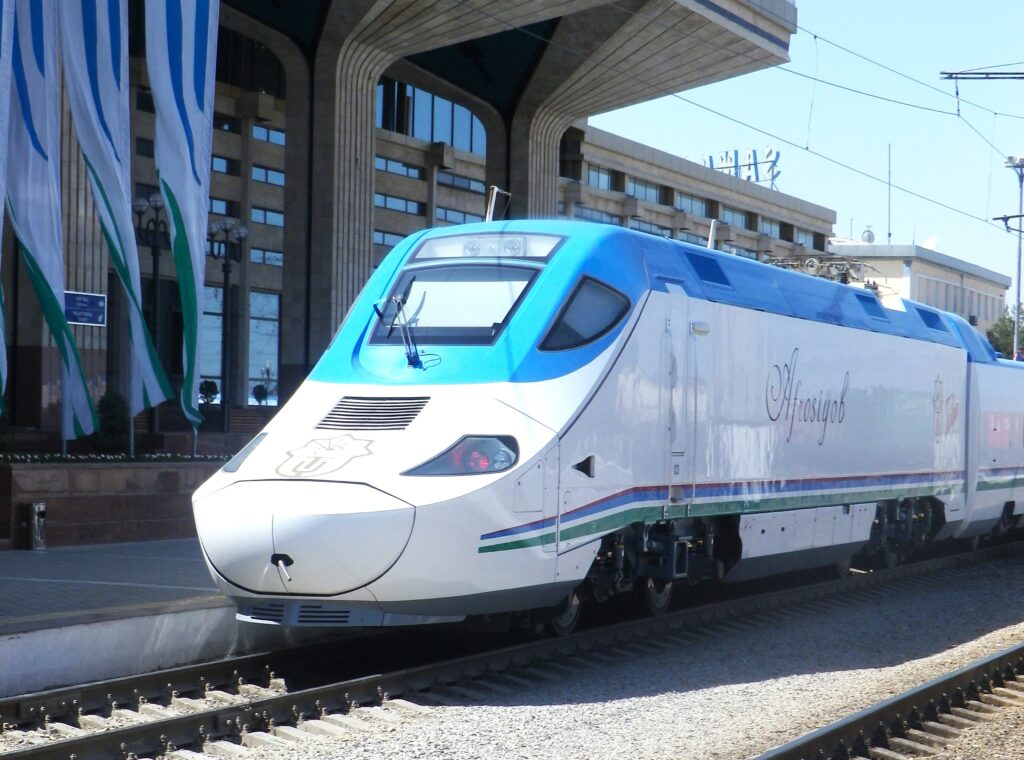
Railways in Central Asia have always played an important political and economic role, but amid the current geopolitical turbulence, they have become a crucial means of  transporting  goods from China to Europe and the Middle East, bypassing sanctioned Russia. But what is the state of  Central Asia's railway industry, and is it up to the new challenges? The history of rail transport in Central Asia dates back to the end of the 19th century. In 1874, a special commission of the Russian Empire recognized the need to construct a line from Orenburg to Tashkent. Later, however, strategic considerations forced a change of plan and to ensure a stable connection between the Turkestan and Caucasus regions, the first steel highway in Central Asia would be built to connect Tashkent with the eastern coast of the Caspian Sea. This was an active period of the so-called Great Game, when Russia and Great Britain competed in Central Asia. Since then, the geopolitical importance of railways in the region, which lacks access to oceans, has not decreased whatsoever. Indeed, amid armed conflicts in the Middle East and between Russia and Ukraine, railways have become even more important given their role in ensuring the movement of goods along the Trans-Caspian International Transport Route (TITR) and the International North-South Transport Corridor (INSTC). Against this backdrop, Kazakhstan's President Kassym-Jomart Tokayev has tasked the national railway company Kazakhstan Temir Zholy (KTZ) with leading the transformation of the country into a transport and logistics hub.   Kazakhstan: A story of steady development The length of Kazakhstan's mainline rail network is over 16,000 km, with over 800 stations and crossing points. The freight car fleet exceeds 120,000 units, while locomotives number more than 1,700. Kazakhstan’s railways account for 70% of freight traffic, and 60% of passenger traffic in the country. Just under 1% of the country’s population is employed in the rail industry. According to the KTZ's annual report in 2023, container transit rose 14% year-over-year to 1.282 million TEU (twenty-foot equivalent units), which drove a 30.6% year-on-year rise in operating income to KZT1.934 trillion, while net profit came in at KZT136.8 billion ($286.8 million). The volume of freight transported between Kazakhstan and China was also up 22% to 28 million tons. In addition, KTZ reported the completion of large-scale track repairs in 2023, with 1,443 km of railway track repaired, double the figure achieved in 2022. The start of large infrastructure projects was also noted. In particular, construction was launched of the Darbaza–Maktaaral and Bakhty–Ayagoz lines (with a third border crossing with China set to be opened in 2027), while construction of the bypass line around Almaty also commenced. Over 300 km of the second track was laid on the Dostyk-Moyynty railway section. Finally, a Kazakh transport and logistics terminal was opened in the Chinese dry port of Xi'an.   Uzbekistan: First high-speed rail in Central Asia O’zbekiston Temir Yo’llari (UTY), Uzbekistan's national rail carrier, was founded on November 7, 1994, taking over the lines of the Soviet-era Middle...

Tajikistan and Uzbekistan Discuss Using Lake Sarez For Drinking Water

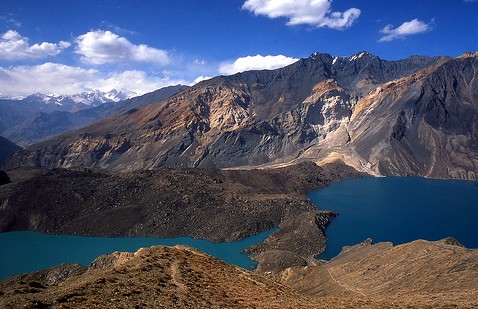
On August 3, a Tajik-Uzbek working group on the shared use of water from Central Asia's transboundary rivers met in Dushanbe. Participants discussed the potential for using the water from Lake Sarez, in the Tajik National Park in the east of the country, to provide Central Asian countries with clean drinking water. Other potential joint projects between Tajikistan and Uzbekistan in the field of water management were also considered. In 2018, the presidents of Tajikistan and Uzbekistan, Emomali Rahmon and Shavkat Mirziyoyev, first discussed using the Sarez freshwater as drinking water, during a visit by Rahmon to Uzbekistan. The nations subsequently commissioned a feasibility study from the Intergovernmental Joint Commission on Trade and Economic Cooperation. Rahmon has repeatedly emphasized that Tajikistan has ample freshwater resources, and has previously used speeches at political forums to suggest using the Sarez mountain lake to provide Central Asian countries with drinking water. The Tajik government has also offered to supply drinking water from Sarez to Iran, Jordan, and the United Arab Emirates. The Times of Central Asia has previously written that Central Asia will face severe water shortages in the coming years. More than 80% of the available water in Central Asia is used for irrigation, 40% of which is lost during delivery in the fields. With the commissioning of the Qosh Tepa canal in Afghanistan, the water shortage will become even more serious from 2028. The chairman of the Eurasian Development Bank, Nikolay Podguzov, has warned that the Qosh Tepa's construction could threaten Central Asia's water balance.

SCO and Afghanistan on the Cusp of a New Relationship

The hype surrounding the recent summit of the Shanghai Cooperation Organization Council of Heads of State in Astana has died down, and the expert community has offered differing takeaways, with some experts optimistic and others cautious. Few, however, have considered what new this summit delivered on Afghanistan. In general, what is the role of the Shanghai Cooperation Organization (SCO) in resolving the political issues around long-suffering Afghanistan and rebuilding its economy? Despite the SCO’s previous hands-off approach to Afghan affairs, the issue of Taliban-ruled Afghanistan was raised for the first time at the highest level of the SCO in Astana, which gives hope that the organization will expand its role. In their remarks, almost every SCO head of state touched on Afghanistan in essentially the same vein, stating the need for peace, stability and security, while underlining the fact that Afghanistan is an integral part of Central Asia. Indeed, Afghanistan was mentioned in the final declaration of the Astana summit, with Member States “reaffirming their commitment to asserting Afghanistan as an independent, neutral and peaceful state free from terrorism, war, and narcotic drugs [and voicing] their readiness to support the international community’s efforts to facilitate peace and development in that country.” At the same time, there was a clear message to the Taliban that “the establishment of an inclusive government involving multiple representatives of all ethnic and political groups of Afghan society is the only way toward attaining lasting peace and stability in that country.” These statements represent a rather big step, considering that previously the SCO failed to find a consensus on Afghanistan and develop its own mechanisms to interact with Kabul. The creation of the SCO-Afghanistan Contact Group back in 2005 was rather a spontaneous reaction to the US-led coalition's Operation Enduring Freedom in the wake of the 9/11 terrorist attack. The SCO itself says the contact group was created because of the "concerns of the SCO countries about the negative development of the situation in Afghanistan and the intention of the SCO to establish a specific consultative dialogue with Kabul." While the contact group included the members’ permanent representatives to the SCO, only a few events were ever held. Indeed, interest in the contact group was only really apparent from the Afghan side, which was looking for SCO assistance in rebuilding the Afghan economy and SCO participation in implementing various energy and transport infrastructure projects and creating favorable conditions for Afghan goods to access the markets of SCO countries. However, none of this was realized. The SCO states preferred, as they still do, to conduct relations with Afghanistan bilaterally, and did not support the efforts of the SCO Secretariat to intensify the work of the contact group. In 2010, Uzbekistan directly indicated its interest in building relations with Afghanistan exclusively on a bilateral basis and stated that it would no longer take part in the contact group. In June 2012, Afghanistan’s application for SCO observer status was granted. Yet this step was more symbolic and failed to...