• KGS/USD = 0.01143 -0%
  • KZT/USD = 0.00198 -0%
  • TJS/USD = 0.10899 0.93%
  • UZS/USD = 0.00008 0%
  • TMT/USD = 0.28490 -0.28%
  • KGS/USD = 0.01143 -0%
  • KZT/USD = 0.00198 -0%
  • TJS/USD = 0.10899 0.93%
  • UZS/USD = 0.00008 0%
  • TMT/USD = 0.28490 -0.28%
  • KGS/USD = 0.01143 -0%
  • KZT/USD = 0.00198 -0%
  • TJS/USD = 0.10899 0.93%
  • UZS/USD = 0.00008 0%
  • TMT/USD = 0.28490 -0.28%
  • KGS/USD = 0.01143 -0%
  • KZT/USD = 0.00198 -0%
  • TJS/USD = 0.10899 0.93%
  • UZS/USD = 0.00008 0%
  • TMT/USD = 0.28490 -0.28%
  • KGS/USD = 0.01143 -0%
  • KZT/USD = 0.00198 -0%
  • TJS/USD = 0.10899 0.93%
  • UZS/USD = 0.00008 0%
  • TMT/USD = 0.28490 -0.28%
  • KGS/USD = 0.01143 -0%
  • KZT/USD = 0.00198 -0%
  • TJS/USD = 0.10899 0.93%
  • UZS/USD = 0.00008 0%
  • TMT/USD = 0.28490 -0.28%
  • KGS/USD = 0.01143 -0%
  • KZT/USD = 0.00198 -0%
  • TJS/USD = 0.10899 0.93%
  • UZS/USD = 0.00008 0%
  • TMT/USD = 0.28490 -0.28%
  • KGS/USD = 0.01143 -0%
  • KZT/USD = 0.00198 -0%
  • TJS/USD = 0.10899 0.93%
  • UZS/USD = 0.00008 0%
  • TMT/USD = 0.28490 -0.28%
07 December 2025

Viewing results 289 - 294 of 489

Astana Hosts SCO Summit: A New Platform for Kazakh Diplomacy

With the first events of the Shanghai Cooperation Organization (SCO) Summit taking place this morning in Kazakhstan’s capital, Astana, conversations are beginning about what the host country will be discussing – and with whom. The SCO is a political, security and economic alliance in the wider Eurasia region, aimed at promoting trade and investments between member states, as well as global security. Its nine full members are Kazakhstan, Kyrgyzstan, Tajikistan, Uzbekistan, China, Russia, Iran, India and Pakistan. The Organization – which includes four observer states and 14 dialogue partners – covers half of the world’s population, and almost a third of global GDP. Kazakhstan’s multi-vector approach to its foreign policy has seen the country combining its role within the SCO with cooperation with Western governments, through dialogue with the European Union and the United States’ C5+1 platform. President Tokayev recently commented that: “Kazakhstan is committed to multilateral cooperation. In our foreign policy we proceed from the national interests, and are in favor of solving all disputable issues on the basis of rational compromise. In addition to the SCO, this year our country is chairing five other international organizations. This is an unprecedented case, one could say an achievement in the history of Kazakh diplomacy.” This multi-vector approach is key to Kazakhstan’s international diplomacy. Indeed, ‘mutually beneficial cooperation’ and ‘mutually beneficial strategic partnership’ have become the watchwords of Tokayev’s presidency. Over the past decade, Kazakhstan has become an increasingly important land-bridge between East and West, both in terms of trade and diplomacy. Due to projects such as the Belt and Road Initiative and the Middle Corridor, Kazakhstan’s location has made it an indispensable ally to China, whilst playing a pivotal role in the expansion of transcontinental trade has led to Central Asia, in the words of Tokayev, “become a global stakeholder.” In the opinion of experts, more of the same can be expected at this week’s SCO Summit. In an interview conducted by the Kazinform news agency, local political analyst Valery Volodin stressed that: “It goes without saying that each government will be defending its own interests [at the Summit]. But Kazakhstan will be placing an emphasis on regional stability, which will allow countries to implement a host of joint projects with China and Russia. Besides this, Kassym-Jomart Tokayev’s gift for diplomacy will push the SCO to become not just a discussion club, but a real mechanism to solve problems in Eurasia using dialogue between governments.” In an article in The Geopolitics, Michael Rossi, a professor of political science at Long Island University, posited that Kazakhstan is not playing the so-called ‘Great Game’ between East and West, but rather pointing out the scope for "Big Opportunities". “Kazakhstan’s positive relations with countries often in conflict, such as Russia and Ukraine, China and the United States, Azerbaijan and Armenia, and Israel and the Palestinian territories, grant Astana legitimacy,” Rossi writes, “to act as a buffer and stabilizing force among major powers. This positioning allows Kazakhstan to reduce tensions and potentially mediate conflicts. Under...
SCO Summit: Tokayev and Xi Laud Kazakhstan-China Ties

On the eve of the 2024 Shanghai Cooperation Organization (SCO) Summit, hosted this year by Kazakhstan in its capital Astana, the leaders of Kazakhstan and China were keen to highlight the strength of their countries’ partnership. The SCO is a political, security and economic alliance in the wider Eurasia region, aimed at promoting trade and investments between member states, as well as global security. The Organization – which includes nine full members, four observer states and 14 dialogue partners – covers half of the world’s population, and almost a third of global GDP.  In comments to China’s Xinhua news agency, Kazakh President Kassym-Jomart Tokayev spoke of a “close political dialogue” between the two countries, supported by the SCO, thanks to which “China is consolidating its position as Kazakhstan’s leading trade and investment partner”.  Mutual trade between the countries reached a historic record of $41 billion in 2023. Tokayev added that “China became one of the top four foreign investors in Kazakhstan in 2023, investing around $2 billion in direct investments, a year-on-year growth of 16.4%. The total volume of Chinese investment in the Kazakh economy is over $25 billion. Around 4,700 Kazakh-Chinese enterprises operate in our country.” In his comments to Xinhua Tokayev also highlighted Kazakhstan’s growing cultural ties with China, mentioning a new agreement on a visa-free regime between the countries, the creation of cultural centers in both nations, and the fact that 2024 has been named the “Year of Kazakhstan tourism in China”. The president himself lived in China for eight years, where he studied Chinese in Beijing before working for the Soviet Union’s embassy to China. In turn, in a letter published by the Kazinform news agency, China’s leader Xi Jinping noted: “China is now Kazakhstan’s largest trading partner and its top export destination. Major strategic projects including the Zhanatas wind farm, Turgusun hydropower station, and the modernization of Shymkent Oil Refinery have been completed and commissioned. China-Kazakhstan crude oil and natural gas pipelines are operating in a safe and stable manner. The ‘green lanes’ for fast customs clearance of agricultural products are available at all border ports between the two countries, which makes green agri-products of high quality from Kazakhstan easily accessible for Chinese consumers. The potential for cooperation in new energy and transportation infrastructure has been unleashed. The transport and logistics terminal in Xi’an, the Western Europe-Western China Highway, and the China-Europe Railway Express all operate smoothly, providing a strong boost to the development of both China and Kazakhstan.” Kazakhstan has a multi-vector approach to its foreign policy; its role within the SCO complements the country's cooperation with the United States through the C5+1 platform, and a constant dialogue with the European Union. In a recent speech about Kazakhstan's chairmanship of the Shanghai Cooperation Organization this year, President Tokayev commented: "Kazakhstan is committed to multilateral cooperation. In our foreign policy we proceed from the national interests, and are in favor of solving all disputable issues on the basis of rational compromise. In addition to the...

SCO Summit in Astana: Correspondents from China Global Television Network, Times of Central Asia Discuss Upcoming Meeting

National leaders and other dignitaries from over 20 countries will be in the Kazakh capital of Astana this week for the annual summit of the Shanghai Cooperation Organization (SCO). The Times of Central Asia will be covering the SCO Summit live on 3 and 4 July from the city’s Palace of Peace and Reconciliation. The SCO is a political, security and economic alliance in the wider Eurasia region. This year’s Summit host Kazakhstan was a founding member of the Organization in 2001, alongside China and Russia, and its Central Asian neighbors Kyrgyzstan, Tajikistan and Uzbekistan. The last time the Summit was held in Astana, in 2017, India and Pakistan became full members. There are currently nine full member states, four observer states, and 14 dialogue partners, covering half of the world’s population, and almost a third of global GDP. This year's Summit will have significant implications for regional and global affairs. It is likely to produce initiatives aimed at reducing trade barriers, and promoting investments between SCO member states. High on the agenda will be the Belt and Road Initiative (BRI) – a crucial framework for enhancing connectivity and economic ties between China and its Central Asian partners. Other anticipated outcomes include new initiatives on climate change and sustainable development, as well as strengthened cultural and educational exchanges. Upon the initiative of Kazakhstan’s President Kassym-Jomart Tokayev, 2024 has been named the SCO “Year of Ecology”. Ahead of the Astana Summit, The Times of Central Asia’s senior editor Jonathan Campion spoke with an anchor from China Global Television Network, Mr Zhong Shi, about the role of the Shanghai Cooperation Organization plays in the Central Asia region. Their talk can be viewed in full in the videos below. In response to The Times of Central Asia’s question about what makes the SCO different from other alliances that the countries of Central Asia are aligned with, Mr Zhong explained that: “The SCO has been truly effective in combatting what we call the three enemies of all members, namely terrorism, extremism and separatism. There have been joint military drills conducted to enhance the coordination among armed forces”. Listen to Mr Zhong’s full response below: [video width="1920" height="1080" mp4="https://timesca.com/wp-content/uploads/2024/06/fullscreen-Zhong-Shi-answer-2-questions.mp4"][/video]   [video width="1920" height="1080" mp4="https://timesca.com/wp-content/uploads/2024/06/tw0-windows-Zhong-Shi-answer-2-questions.mp4"][/video] In turn, Mr Campion gave The Times of Central Asia’s perspective on the upcoming Summit. Asked about the impact that the Belt and Road Initiative has had on Central Asia, he replied: "Central Asia is evolving as a land bridge component to the Belt and Road Initiative linking China to the Caspian Sea. We’re seeing that investments in transport infrastructure are unlocking the region’s vast natural resources. With the world making a green transition, Kazakhstan stands out, as it has an abundance of critical materials – or green metals as they are known – that are used in the components of green technologies.” Listen to Mr Campion’s full response below: [video width="1920" height="1080" mp4="https://timesca.com/wp-content/uploads/2024/06/Jonathon-answer-Q2.mp4"][/video]   [video width="1920" height="1080" mp4="https://timesca.com/wp-content/uploads/2024/06/Jonathon-answer-Q3.mp4"][/video]  

Islamic State Khorasan Province as Part of the Struggle for Central Asia

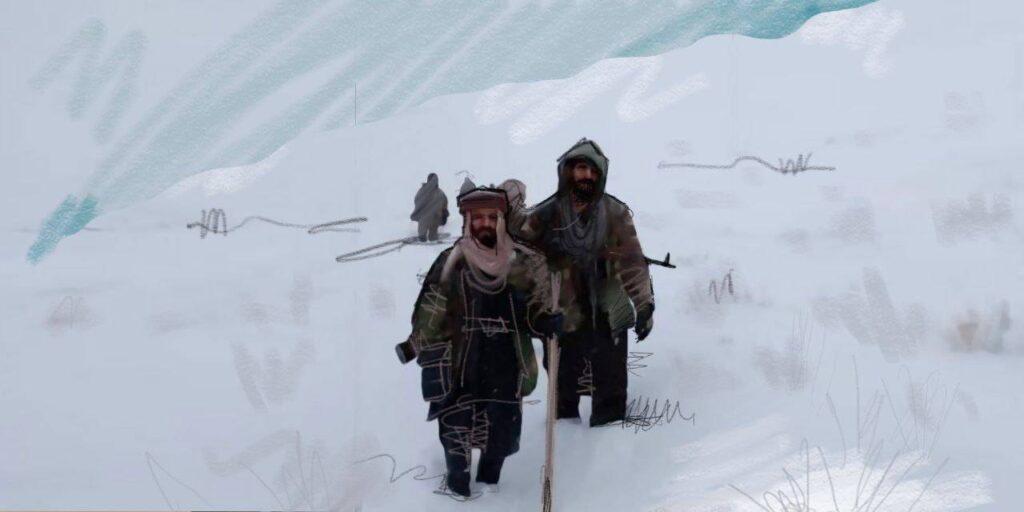
Following the high-profile terrorist attack at Moscow’s Crocus City Hall in March and reports that eight Tajik immigrants were arrested in the U.S., the media spotlight has once again fallen on Islamic State Khorasan Province (ISKP), also known as "Wilayat Khorasan", and the "Khorasan Project.” Many observers link ISKP to the countries of Central Asia, even though the terrorist organization, as it has been designated for a long time, has purely Afghanistani roots. In addition, there is a lot of talk about its geopolitical ambitions for “recreating” the state of “Khorasan.” Where this region’s boundaries lie is the subject of debate. The most expansive definitions include northeastern Iran, western and northern Afghanistan, eastern Turkmenistan, and parts of Tajikistan and Uzbekistan. It is important to understand, however, that clear boundaries have never existed, and neither has a state with that name. In modern times, the term “Khorasan” has only historical and cultural connotations, with no political meaning attached to it. ISKP has suffered a clear military defeat in the borderlands of Afghanistan and Pakistan, and faces significant opposition there. Still, weakening and even destroying the Taliban remains an important goal for the organization. It continues to fight in several regions of Afghamistan, which has prompted the Taliban to intensify their counter-terrorism efforts. [caption id="attachment_19644" align="alignnone" width="1920"] Sanaullah Ghafari, Emir of ISIS-K has a U$10 million bounty on his head; image: rewardsforjustice.net[/caption] The countries of Central Asia, having emerged out of the Soviet Union, are attractive for ISKP ideologists in the sense that they share a common historical and cultural past, while there are even linguistic similarities with Afghanistan (between the Persian languages). The Russian internet portal and analytical agency, TAdviser, points out that ISKP, through its online propaganda publication, announced the start of a new campaign against the countries of the post-Soviet space in April 2022. In June of that year, the ISKP publication, written in the Uzbek language, declared that the countries of Central and South Asia would be united under the flag of the “Islamic Caliphate.” TAdviser highlights that Turkmenistan has a special place in ISKP propaganda because according to the group a large part of what is now Turkmenistan was previously part of “Greater Khorasan,” while the foreign policy of the Turkmen authorities of actively cooperating with the Taliban is wholly at odds with the core goals of ISKP. The Lapis Lazuli corridor linking Afghanistan to Turkey, along with the Turkmenistan-Afghanistan-Pakistan-India gas pipeline (TAPI) which is being developed, are identified as priority targets for ISKP. But what in fact is ISKP? As previously noted by The Times of Central Asia, the answer to this question is known by only a very narrow circle. Indeed, no one can provide objective data on the qualitative and quantitative composition of ISKP. Nevertheless, the group is taking on real dimensions in the media. The threat to Central Asia from ISKP looks more virtual than real at this point. Any small group of terrorists can declare themselves part of ISKP, and, without any...

Border Dispute No More: Are Bishkek and Dushanbe Ready to Make Peace?

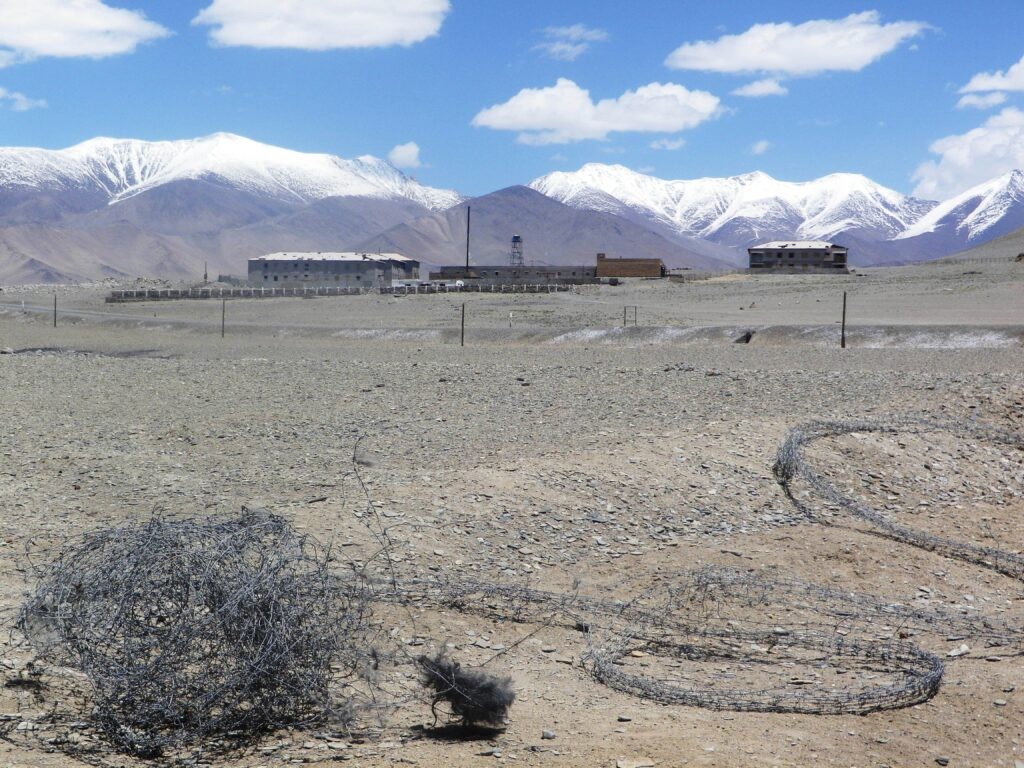
Kyrgyzstan and Tajikistan have long been restless neighbors from Tashkent and Astana's point of view. In many respects, Kazakhstan and Uzbekistan forced the current rapprochement of the Central Asian republics, as expressed on the outer perimeter in the C5+1 format, where the region strives to put forward a consolidated position. After all, investment does not come to problematic areas. The problem border The main sticking point in relations between Bishkek and Dushanbe stretches for almost a thousand kilometers - the border between the two states - the demarcation of which, following the collapse of the USSR, neither the government of Kyrgyzstan or Tajikistan was concerned about. There were enough problems to deal with: falling living standards, civil war in Tajikistan, and endless revolutions in Kyrgyzstan. To date, the border has still not been fully demarcated, causing problems for residents of both states over access to water, pastures, and roads. Disputed territories accounted for about 30% of the border between the two countries. The first alarm bells sounded back in 2014 - in January and May of that year there were armed incidents on the border between northern Tajikistan's in Sughd Province and Kyrgyzstan's Batken Province. Tajiks and Kyrgyz have lived compactly in this densely populated area for centuries. Tajik villages neighbor Kyrgyz villages, there are exclaves such as Vorukh, and the border can crisscross roads, presenting difficulties for traveling. "In Soviet times, people moved around quietly when the borders were conditional. Residents on both sides had free access to pastures and arable land. There were no problems along the watershed. If lands were given by the republics to each other for some purpose, local authorities knew where and whose land was located. With the collapse of the Union, the whole system ceased to function. And the problems of open unmarked borders became more acute," political observer Negmatullo Mirsaidov explained in a commentary for the BBC Russian Service after the January 2014 clash. Time passed, but the situation did not change, and a new aggravation occurred in the first year of the COVID-19 pandemic. Then, clashes were repeated with depressing regularity, and in 2022 came a military incursion by Tajik soldiers into a Kyrgyz border village with the seizure of administrative buildings. Armed clashes broke out all along the border and Russia intervened, forcing the parties to negotiate. Central Asia then picked up the baton, trying to melt the ice of hostility between the skirmishing neighbors. In early February, Tajik President Emomali Rahmon met with Kyrgyz Foreign Minister, Zheenbek Kulubaev, in Dushanbe. According to the press service of the head of Tajikistan, "Over the past four months, the parties have agreed on the design and working description of about 196 kilometers of the state border and to date have determined about 90% of the line of its passage." Considering that the Tajik-Kyrgyz border is about 980 kilometers long, about 100 kilometers remain to be agreed upon. Before the clash in 2022, more than 300 kilometers of the border were considered disputed....

Tajikistan Killings Happened in Isolated Area with Volatile History

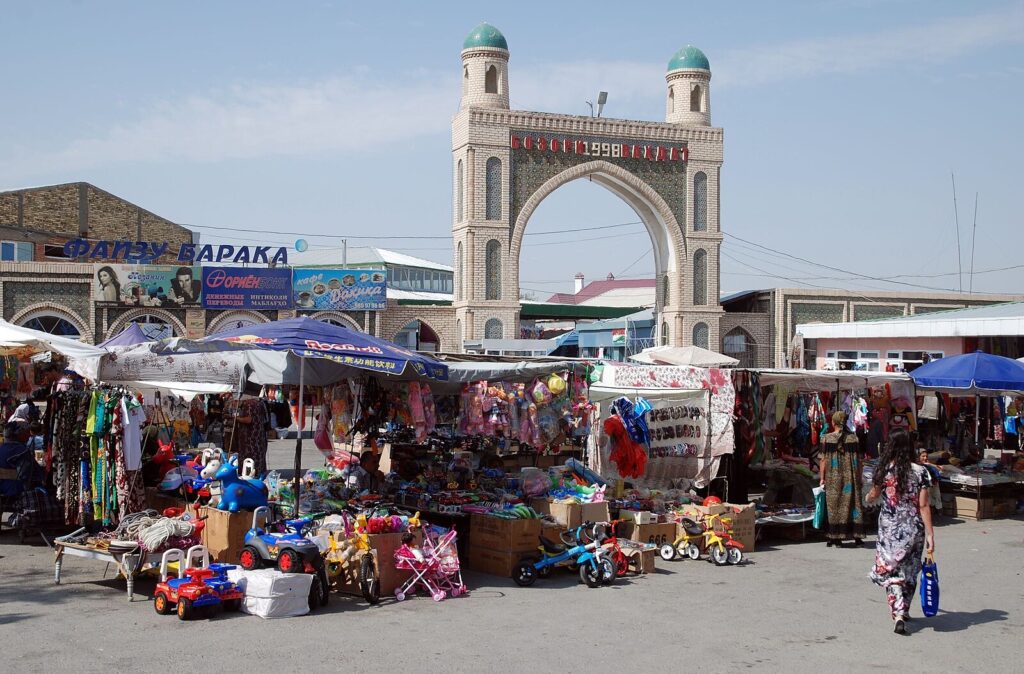
A part of northern Tajikistan where a series of mysterious killings has happened in the last few months lies in the Ferghana Valley, a fertile, ethnically mixed region that is shared with neighboring Uzbekistan and Kyrgyzstan and has been prone to border tensions and periodic concerns over religious extremism.Police investigators and journalists have gathered accounts from terrified residents of a man or men dressed in black and trying to break into homes at night. So far, there are no suggestions that the 13 murders reported in and around the Ferghana town of Konibodom since late March are connected to wider social or political fault lines in one of Central Asia’s poorest countries. Still, the killings evoke the volatile history of an isolated area of Tajikistan, separated from the rest of the country by mountains and the sliver-like shape of the northern part of the country, jammed between Uzbekistan and Kyrgyzstan. The biggest portion of the Ferghana Valley lies to the east in Uzbekistan; Tajikistan received its section of it a century ago when rulers in Moscow were divvying up territory among the new Soviet republics. People used to move with relative ease around the valley but the borders hardened over the years, especially after independence from the Soviet Union in 1991. There were numerous border clashes between Tajikistan and Kyrgyzstan in the Ferghana Valley in recent years, though the two sides are now negotiating. Tajikistan’s part of the Ferghana Valley is in the country’s Sughd region and the main city is Khujand, a transit point on the ancient “Silk Road” trading network that was conquered by Alexander the Great. Konibodom is an agricultural center, known for almonds, cotton and other products – as well as, according to authorities, a rise in the recruitment of young people into extremist groups. “It was noted that terrorist and extremist crimes have increased by 17.5% in the Sughd region, and the majority of such undesirable incidents, including the involvement of young people in extremist parties and movements, have been registered in the cities of Konibodom and Isfara compared to other cities and districts of the country,” the office of Tajik Prosecutor-General Yusuf Rahmon said after he visited Konibodom in April 2023. Concerns that Tajikistan is vulnerable to terrorist recruiters are longstanding. They appear to have been validated by the alleged involvement of several Tajik citizens in a March 22 attack on a Moscow venue that killed about 145 people. The Islamic State group claimed responsibility for the mass killings in Russia. This month, U.S. media reported the arrests in New York, Philadelphia and Los Angeles of eight Tajik nationals with possible terror links.The Tajik government has downplayed questions about whether some of its severe internal restrictions, including on expressions of Islamic piethy, might be contributing to radicalization. In 2021, Tajik President Emomali Rahmon made the trip to Konibodom to preside over 21st anniversary commemorations of the accord that ended Tajikistan’s civil war after the Soviet disintegration. He denounced political Islam and recalled the cost...