• KGS/USD = 0.01143 0%
  • KZT/USD = 0.00212 0%
  • TJS/USD = 0.10718 -0.09%
  • UZS/USD = 0.00008 0%
  • TMT/USD = 0.28571 0%
  • KGS/USD = 0.01143 0%
  • KZT/USD = 0.00212 0%
  • TJS/USD = 0.10718 -0.09%
  • UZS/USD = 0.00008 0%
  • TMT/USD = 0.28571 0%
  • KGS/USD = 0.01143 0%
  • KZT/USD = 0.00212 0%
  • TJS/USD = 0.10718 -0.09%
  • UZS/USD = 0.00008 0%
  • TMT/USD = 0.28571 0%
  • KGS/USD = 0.01143 0%
  • KZT/USD = 0.00212 0%
  • TJS/USD = 0.10718 -0.09%
  • UZS/USD = 0.00008 0%
  • TMT/USD = 0.28571 0%
  • KGS/USD = 0.01143 0%
  • KZT/USD = 0.00212 0%
  • TJS/USD = 0.10718 -0.09%
  • UZS/USD = 0.00008 0%
  • TMT/USD = 0.28571 0%
  • KGS/USD = 0.01143 0%
  • KZT/USD = 0.00212 0%
  • TJS/USD = 0.10718 -0.09%
  • UZS/USD = 0.00008 0%
  • TMT/USD = 0.28571 0%
  • KGS/USD = 0.01143 0%
  • KZT/USD = 0.00212 0%
  • TJS/USD = 0.10718 -0.09%
  • UZS/USD = 0.00008 0%
  • TMT/USD = 0.28571 0%
  • KGS/USD = 0.01143 0%
  • KZT/USD = 0.00212 0%
  • TJS/USD = 0.10718 -0.09%
  • UZS/USD = 0.00008 0%
  • TMT/USD = 0.28571 0%

Viewing results 7 - 12 of 545

Tajikistan to Gain Access to Emergency Financing Under New World Bank Project

The World Bank Group has approved a Contingent Emergency Response Project (CERP) for Tajikistan, providing the country with a financial instrument designed to enable the rapid reallocation of resources in the event of crises and emergencies. According to Tajikistan’s Ministry of Finance, the mechanism allows up to 10% of undisbursed funds from the World Bank’s current investment portfolio to be redirected annually to emergency needs. This gives the government additional flexibility in managing already allocated resources. The mechanism can be activated following an official declaration of a state of emergency. However, preparations for its use are carried out in advance. Experts note that CERP eliminates the need to seek new funding sources by enabling the rapid redeployment of existing funds. These resources can be used to procure food, water, and medical supplies, provide emergency services with necessary protective equipment, and support the agricultural sector. Assistance to households affected by crises is also provided. The mechanism forms part of the broader Rapid Response Option (RRO) framework, which allows governments to swiftly reallocate funds from ongoing projects to respond to emergencies. Tajikistan has already formally adopted this instrument. The Ministry of Finance also noted that CERP will operate in conjunction with the existing Tajikistan Preparedness and Resilience to Disasters Project. According to officials, the combined use of these instruments is expected to strengthen the country’s capacity to respond to potential risks.

Water in Central Asia: Between Reality and Alarmism

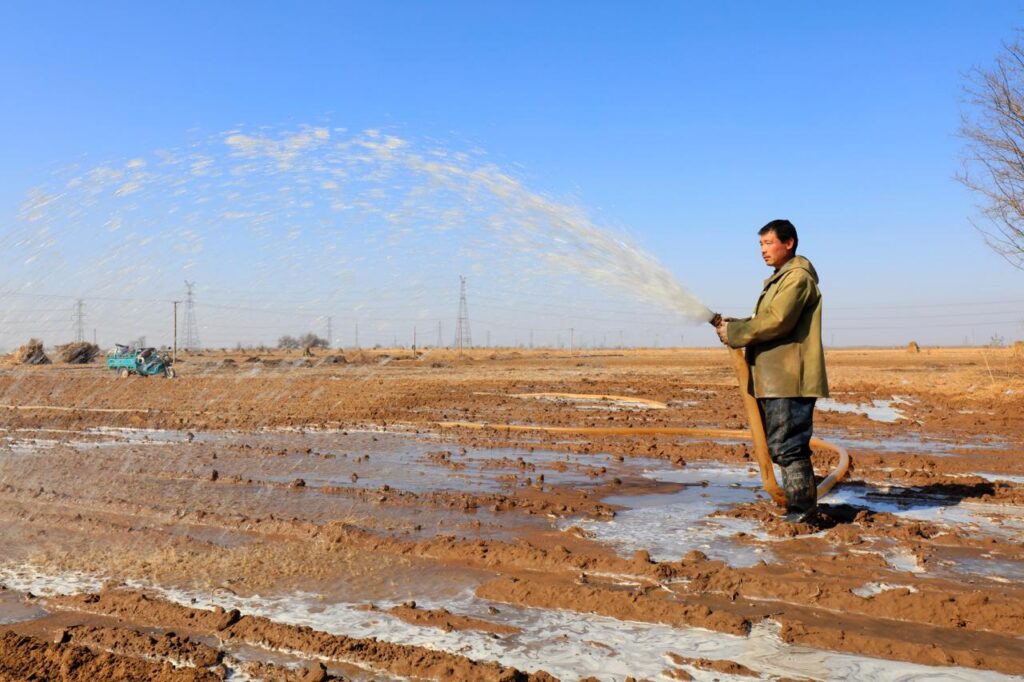
The Regional Ecological Summit 2026 will take place in Astana on April 22-24. The event is intended to elevate Central Asia’s water and environmental agenda to the level of systemic solutions. Alongside preparations for the summit, however, an increasingly alarmist narrative is gaining traction among some experts. In this framing, water resources in Central Asia are presented as being in crisis, with predictions of shortages, threats to food security, and even potential conflict. Phrases such as “there is not enough water,” “the harvest is at risk,” and “the region is on the brink” are used with growing frequency. Such assessments are typically based on generalized and dramatized claims that fail to differentiate between countries or specific river basins. This creates the impression of a single, simultaneous crisis, whereas in reality the situation is far more complex. Yes, there is a problem, but it is not sudden or one-dimensional. Water scarcity in Central Asia is real. However, it must be interpreted accurately and objectively. According to expert estimates, up to 40% of water in the region is lost through deteriorating irrigation infrastructure, while more than 80% of water consumption is accounted for by agriculture. Current practice supports these figures. In southern Kazakhstan, seasonal water supply restrictions are regularly imposed. This year, for example, the government approved consumption limits for southern regions due to an expected shortage during the growing season. Uzbekistan has said, in joining the World Bank’s Water Forward initiative, that it aims to introduce water-saving technologies across its 4.1 million hectares of irrigated land and reduce irrigation losses by 25%. Equally important are developments in upstream countries, Kyrgyzstan and Tajikistan. According to a study by the Organisation for Economic Co-operation and Development, the region exhibits a structural interdependence between water and energy. More than 80% of electricity in these countries is generated by hydropower, meaning water resources are used simultaneously for energy production and irrigation. This creates systemic interdependencies. At the same time, coordination of water releases and electricity generation remains suboptimal, and the absence of long-term regulatory mechanisms has already led to water shortages during certain summer periods. This is a key point: the issue is not so much an absolute lack of water, but the complexity of coordination between upstream and downstream countries, as well as between sectors within individual states. In other words, water shortages in Central Asia are often driven less by natural conditions than by how water is distributed and managed. Particular attention in alarmist narratives is given to Afghanistan and the Kushtepa Canal. Estimates commonly suggest that the Qosh Tepa Canal could eventually divert around 6-10 km³ of water per year from the Amu Darya, although projections vary and depend on how fully the canal is completed and operated. While the canal is not yet fully operational, regional officials already treat it as a serious medium-term risk, with the precise scale of future withdrawals still under discussion. Countries in the region, especially Uzbekistan, have been pursuing dialogue with Afghanistan over the canal and...

Tajikistan to Receive Nearly €50 Million from the EBRD to Reduce Electricity Losses

The European Bank for Reconstruction and Development (EBRD) will provide Tajikistan with a loan and grant package totalling approximately €50 million to help reduce electricity losses in two regions of the country. According to the Ministry of Finance, total financing amounts to €49.6 million, including €28 million in loans, with the remainder provided as a grant. The loan terms are highly concessional. The interest rate is set at 0.5% per annum plus Euribor, meaning a fixed margin is added to the benchmark rate, which fluctuates based on market conditions. For example, if Euribor stands at 0.2% at the time of disbursement, the total interest rate would be 0.7%. The loan will be repaid over 20 years. During the first six years, only interest payments will be required, while the principal will be repaid over the remaining 14 years. Presenting the agreement to parliament, First Deputy Minister of Finance Yusuf Majidi said the primary objective is to reduce energy losses, replace outdated infrastructure, introduce modern metering systems, and improve billing and revenue collection. The project involves modernisation of electricity distribution networks across nine regional branches in the Sughd and Khatlon regions. The need to address electricity losses has also been highlighted by President Emomali Rahmon. In an address to parliament, he cited figures showing that during the first 11 months of 2025, electricity losses totalled 3 billion kWh-500 million kWh less than in the same period a year earlier.

Russia Seeks Transfer of 200 Tajik Women Prisoners After Dushanbe Approval

Russia’s human rights commissioner Tatyana Moskalkova has received a positive response from Emomali Rahmon regarding the possible transfer of around 200 Tajik women currently serving sentences in Russian prisons, according to TASS. Moskalkova said she had written to the Tajik president requesting that the women be allowed to continue serving their sentences in Tajikistan on humanitarian grounds. “In each case, we must carefully weigh issues of justice, mercy, and humanism,” she said in an interview with TASS. She noted that while most cases confirm that crimes were committed, the severity of punishment should not always be maximal. “Sometimes leniency helps a person reform, repent, and change for the better. That is why we try in each case to find arguments that could support leniency, especially for women,” she said. According to Moskalkova, foreign women prisoners face additional challenges, including limited access to family visits and difficulties receiving parcels from relatives. These factors were among the reasons behind her appeal to Tajik authorities. She also pointed to broader policy developments in Russia’s penal system, citing improvements in detention conditions under the country’s penal reform strategy through 2030. Moskalkova highlighted recent legislation limiting pretrial detention for women with young children who have committed non-violent offenses. In addition, she said she has repeatedly asked courts to grant deferrals of sentences for women with children under the age of 14, thanking the judiciary for what she described as “understanding and positive decisions” in such cases. Earlier this month, Moskalkova said Russia was prepared to facilitate the transfer of more than 3,000 Uzbek nationals convicted in Russia to serve their sentences in Uzbekistan. However, she noted that the process remains stalled due to legal constraints, including Uzbekistan’s failure to ratify the 1998 Convention on the Transfer of Sentenced Persons.

Central Asia’s Climate Risks Could Cost Up to 130% of GDP by 2080

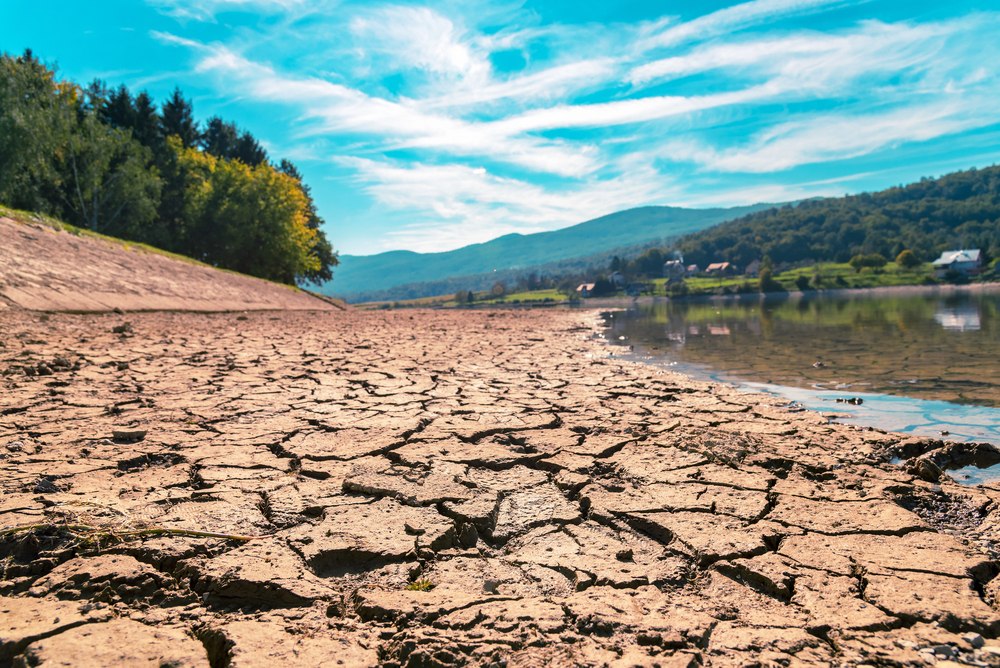
By 2080, climate change is expected to have a profound impact on the economies of Central Asian countries, with potential losses ranging from 20% to 130% of GDP. The most severe effects are projected for mountainous nations. These estimates were presented at a CAREC technology forum by Iskandar Abdullaev, a senior research fellow at the International Water Management Institute in Uzbekistan. According to Abdullaev, climate change is no longer solely an environmental issue but an increasingly significant economic factor. Key risks include droughts and water scarcity, floods, heatwaves, and glacier melt. The projected economic impact varies across the region. Tajikistan could face losses of between 80% and 130% of GDP, Kyrgyzstan 70% to 120%, Kazakhstan 40% to 80%, Uzbekistan 30% to 45%, and Turkmenistan 20% to 60%. Abdullaev emphasized that mountainous countries – Tajikistan and Kyrgyzstan – are particularly vulnerable, as climate change directly affects water resources. Glacier melt reduces river flows, creating challenges for both energy production and water supply. Droughts and extreme heat are already placing pressure on agriculture, with declining crop yields and reduced pasture productivity. Without adaptation measures, the region’s long-term sustainability could be at risk. Experts stress that mitigation and adaptation efforts are essential to reduce these risks. These include modernizing irrigation systems, adopting climate-resilient agricultural technologies, and expanding renewable energy capacity. This is not the only warning. According to the World Bank, natural disasters are already causing significant economic damage in Central Asia.  Losses from extreme events, including floods and earthquakes, can reach up to 6% of GDP, with earthquakes alone accounting for up to $2 billion in damages. At the same time, countries in the region face substantial financing gaps following major disasters. In Tajikistan, this gap could reach up to $1.5 billion. Experts warn that climate change is likely to intensify these risks, further increasing the economic burden on the region.

Tajikistan Didn´t Qualify for World Cup, But Its Young Players Are Winning

Uzbekistan have qualified for this year's FIFA World Cup, while Tajikistan didn’t make it to the tournament. But their fortunes were reversed in a Central Asian junior event, suggesting that Tajik football is poised for a brighter future. Coached by Jafar Akhmedov, Tajikistan’s team won the Central Asian Football Association U17 championship on Monday, securing the title with a 0-0 draw with second-placed Uzbekistan in Tashkent. Tajikistan was top of the field with 10 points, while Uzbekistan had eight. Previously, Tajikistan’s team beat Turkmenistan (5-1), Kyrgyzstan (4-0) and Afghanistan (3-2). Two players on the Tajik team were recognized individually by the tournament. Bihisti Rajabzod was awarded the prize of most valuable player, or MVP, and the top scorer was Sioyosh Nazarov with four goals. The headquarters of the Central Asia Football Association, a sub-group of the Asian Football Confederation, is in Dushanbe, Tajikistan. Its six members are Afghanistan, Iran, Kyrgyzstan, Tajikistan, Turkmenistan and Uzbekistan. Kazakhstan has been a member of the Union of European Football Associations, or UEFA, since 2002. Uzbekistan will compete in the World Cup for the first time this year and faces Colombia, Portugal and Democratic Republic of Congo in Group K. Uzbekistan’s team is led by coach Fabio Cannavaro, captain of Italy’s winning team in the 2006 World Cup in Germany. Tajikistan turned in some solid performances in World Cup qualifying games, including a 1-1 draw against Saudi Arabia and a 3-0 win over Pakistan. Although Tajikistan didn’t manage to qualify for this year’s expanded tournament, it has qualified for the AFC Asian Cup in Saudi Arabia next year.