• KGS/USD = 0.01143 -0%
  • KZT/USD = 0.00198 -0%
  • TJS/USD = 0.10899 0.65%
  • UZS/USD = 0.00008 -0%
  • TMT/USD = 0.28490 -0.28%
  • KGS/USD = 0.01143 -0%
  • KZT/USD = 0.00198 -0%
  • TJS/USD = 0.10899 0.65%
  • UZS/USD = 0.00008 -0%
  • TMT/USD = 0.28490 -0.28%
  • KGS/USD = 0.01143 -0%
  • KZT/USD = 0.00198 -0%
  • TJS/USD = 0.10899 0.65%
  • UZS/USD = 0.00008 -0%
  • TMT/USD = 0.28490 -0.28%
  • KGS/USD = 0.01143 -0%
  • KZT/USD = 0.00198 -0%
  • TJS/USD = 0.10899 0.65%
  • UZS/USD = 0.00008 -0%
  • TMT/USD = 0.28490 -0.28%
  • KGS/USD = 0.01143 -0%
  • KZT/USD = 0.00198 -0%
  • TJS/USD = 0.10899 0.65%
  • UZS/USD = 0.00008 -0%
  • TMT/USD = 0.28490 -0.28%
  • KGS/USD = 0.01143 -0%
  • KZT/USD = 0.00198 -0%
  • TJS/USD = 0.10899 0.65%
  • UZS/USD = 0.00008 -0%
  • TMT/USD = 0.28490 -0.28%
  • KGS/USD = 0.01143 -0%
  • KZT/USD = 0.00198 -0%
  • TJS/USD = 0.10899 0.65%
  • UZS/USD = 0.00008 -0%
  • TMT/USD = 0.28490 -0.28%
  • KGS/USD = 0.01143 -0%
  • KZT/USD = 0.00198 -0%
  • TJS/USD = 0.10899 0.65%
  • UZS/USD = 0.00008 -0%
  • TMT/USD = 0.28490 -0.28%
07 December 2025

Viewing results 181 - 186 of 241

Iraq in Negotiation with Iran to Transfer Gas from Turkmenistan

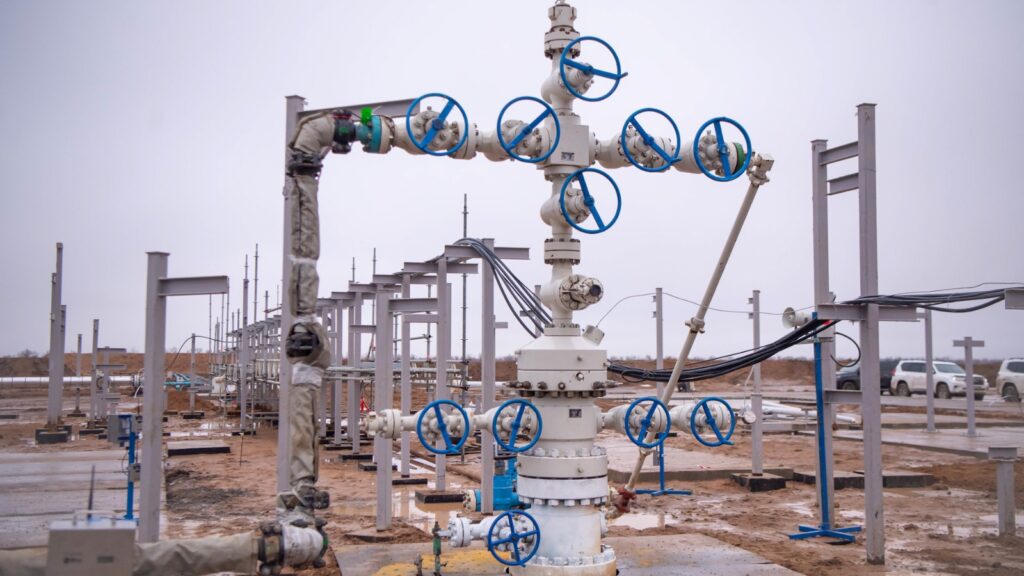
Iraq Minister of Electricity Ziad Ali Fadel has announced ongoing negotiations regarding the transit of gas from Turkmenistan through Iran to Iraq and according to a report by Iran Oil Gas, Iraq may receive Turkmen gas as early as this summer if agreed by the partners concerned. In November 2023, representatives of Turkmenistan and Iraq signed a protocol outlining the principal commercial terms of the agreement to enable the shipment of 9 billion cubic meters of Turkmen gas to Iraq through Iran within five years. In January 2024 it was reported that Iraq had completed all the steps necessary to begin importing gas from Turkmenistan. The main reason for postponement of delivery as scheduled lies with the need for a comprehensive agreement to be reached with the transit country Iran. With reference to the country’s gas debt with Iran, the Iraq Ministry of Energy stated, “The Ministry of Electric Energy has paid all gas payments to the Iranian side and deposited them in a special account in [an] Iraqi commercial bank. But the payment process has not been completed due to international sanctions. Now, based on the agreement between the two sides, Iranian gas is being replaced by Iraqi crude oil.”
The C5+1 Concept: The Idea Behind This Week’s B5+1 Forum in Almaty

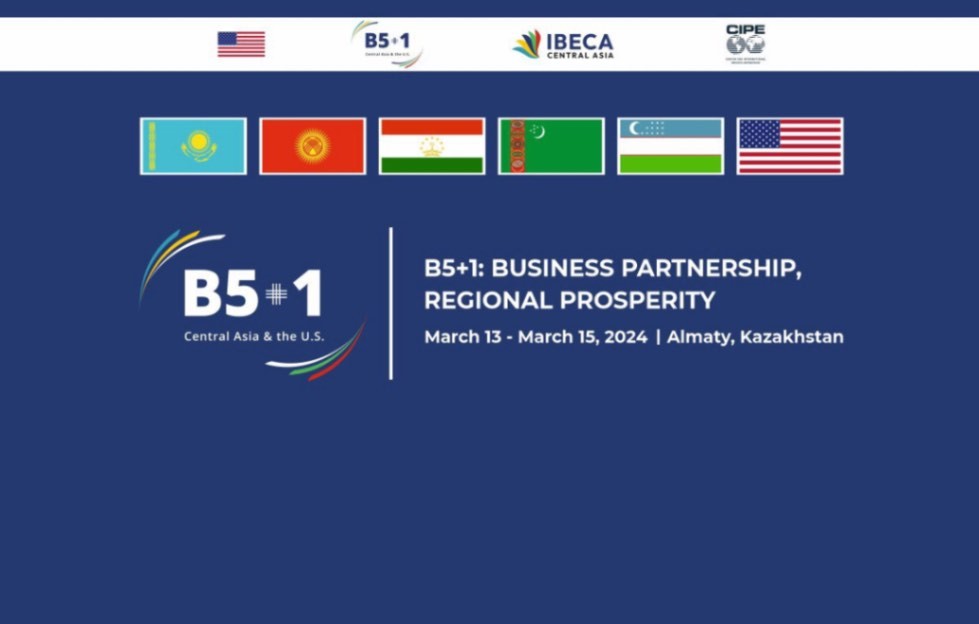
Recognizing that the Central Asia region could benefit more from initiatives in global security, business and trade if its countries strengthened their cooperation in key areas, the Center for International Private Enterprise (CIPE) created the ‘C5+1’ platform last year for just this purpose. The Center’s 5+1 group features the governments of the five Central Asian republics – Kazakhstan, Uzbekistan, Kyrgyzstan, Tajikistan and Turkmenistan – plus the United States, whose State Department and international chambers of commerce are central to the platform’s work. An inaugural C5+1 Summit was held in September 2023, on the sidelines of the 78th session of the UN General Assembly in New York. At this high-level meeting, the presidents of each of the Central Asian nations joined US president Joe Biden in dialog on enhancing the region’s stability and prosperity through economic, energy, and security partnerships within the C5+1 framework.  Building on this start made by C5+1, CIPE is now launching the ‘B5+1’ format, focused on cooperation in the global business context. The inaugural B5+1 Forum will take place this week in Kazakhstan’s business capital of Almaty, and will include presentations and panel discussions with policy makers from the United States, Central Asia and several other countries. On 14 and 15 March leaders from the public sector will discuss Central Asia’s economic integration, international trade and investment alongside dozens of influential private companies.  The B5+1 Forum will pick up where the C5+1 Summit left off in exploring opportunities for American companies in Central Asia. This potential lies in key sectors such as critical minerals, renewable energy and manufacturing. The Almaty event will also continue the conversation on enhancing regional connectivity via the Trans-Caspian International Transport Route, also known as the Trans-Caspian Corridor. At a time of geopolitical upheaval and disruption of existing supply chains, international investment in this trade route is being sought through the Partnership for Global Infrastructure and Investment. The B5+1 Forum forms part of CIPE’s program called “Improving the Business Environment in Central Asia” (IBECA). CIPE themselves are affiliated to the US Chamber of Commerce – the catalyst behind the B7 and B20 platforms – and receive funding from the US Department of State.  The establishment of B5+1 is closely aligned with commitments made during the C5+1 Summit last September, and outlined in a document called the New York Declaration. The upcoming Forum aims to deliver on two key commitments in the declaration.   The Times of Central Asia will be in attendance at the B5+1 Forum on 14-15 March, and will be publishing insight and analysis from the event.

Turkmenistan Border Seeing Illegal Economic Activities Committed From Afghanistan’s Side

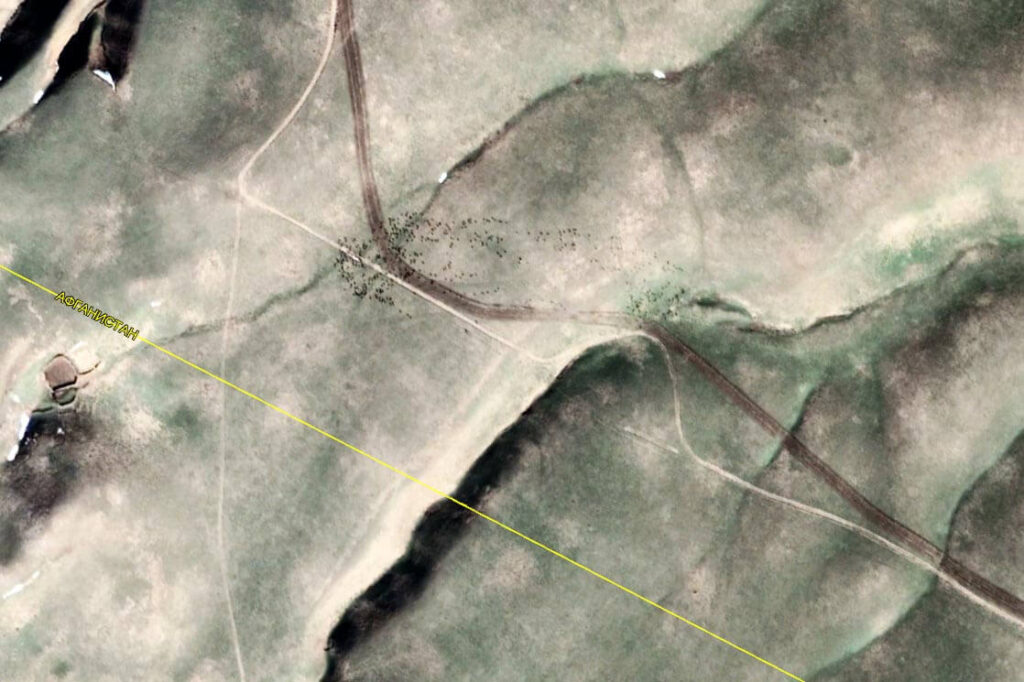
Citizens of Afghanistan are using thousands of square kilometers of territory that border Turkmenistan for illicit economic purposes. Specifically, Afghans graze on the land illegally, engage in unrestrained hunting, and gather fruits from wild trees, according to a report by the Chronicles of Turkmenistan, which cited a MeteoJournal.ru story that analyzed satellite photos of the region. The Turkmenistan-Afghanistan border region is a control zone, which is a section of any border with restricted access that is between a few meters and several kilometers deep. It's also commonly referred to as a “neutral” zone. According to MeteoJournal, satellite images show that Afghans are freely entering this area of Turkmenistan, mostly for the purpose of raising livestock. One photo depicts a herd of sheep, as well as a sudden change in the density of vegetation along the line of engineering structures that delimit the border zone within the territory of Turkmenistan. Where the herds graze in front of the engineering structures, there is hardly any vegetation. Additionally, Turkmenistan’s border zone experiences regular fires, according to MeteoJournal. Environmentalist Andrey Zatoka speculated that intentional grass burning may have caused the fires. Intentional burning of lands used for grazing by livestock is a common tool used by farmers around the world to cultivate vegetation for their animals. According to the publication’s Telegram channel, a powerful DDoS (distributed denial-of-service) attack started after this content was posted on the MeteoJournal website --and has been ongoing for the past few days.

US Policymakers and Central Asian Business Leaders Gather in Almaty for the CIPE B5+1 Forum

Cooperation and trade with Central Asia still holds much unrealized potential. The region is developing fast and offers opportunities for companies and agencies, both international and local. As the global geopolitical landscape changes and supply chains are disrupted, the importance of Central Asia as a business and transit hub, through initiatives such as the Trans-Caspian Corridor, is growing.  There are therefore great incentives for the five countries of the region – Kazakhstan, Uzbekistan, Kyrgyzstan, Tajikistan and Turkmenistan – to find ways to function as a single integrated market, in order to capitalize on opportunities for foreign and local companies, and attract more international investment and business.  For this reason the Center for International Private Enterprise (CIPE) is inviting policymakers from Central Asia, the United States and other countries to its B5+1 Forum this week. On 14 and 15 March in Kazakhstan’s business capital of Almaty, leading minds from the public sector will discuss Central Asia’s economic integration, international trade and investment, alongside dozens of high-profile private companies.  An event on 14 March entitled “Looking within Central Asia” will introduce the objectives and expected outcomes of the B5+1 format. Presentations by representatives of Kazakhstan’s Ministry of National Economy, the Caspian Policy Center, the US Department of State and Kyrgyzstan’s Ministry of Economy and Commerce will give business-focused perspectives on improving economic integration and the investment climate.  The discussion on 15 March will center on the theme of “Central Asia’s place in the world economy”. Talks from representatives of the US-Kazakhstan Business Council, the American-Uzbekistan Chamber of Commerce and the European Bank for Reconstruction and Development (EBRD) will give an international perspective on promoting trade and investment flows in Central Asia. The B5+1 Forum forms part of CIPE’s program “Improving the Business Environment in Central Asia” (IBECA). CIPE themselves are affiliated to the US Chamber of Commerce – the catalyst behind the B7 and B20 platforms – and receive funding from the US Department of State.  The establishment of B5+1 is closely aligned with commitments outlined in a document called the New York Declaration to strengthen the republics' economic relations, and improve the business environment for regional economic integration and investments. The upcoming Forum aims to deliver on two key commitments in the declaration.   The Times of Central Asia will be in attendance at the B5+1 Forum on 14-15 March, and will be publishing insight and analysis from the event.

Central Asian Energy Trading May Soon Include Iran

According to the Iran.ru news agency, Iranian Minister of Energy Ali-Akbar Mehrabian has said that his country is open to trading electricity with Turkmenistan, Tajikistan and Uzbekistan. Iran currently exchanges electricity with the majority of its neighbors, according to Mehrabian, who made the statement in Tehran during a meeting with Uzbek Minister of Energy Zhorabek Mirzamakhmudov on March 4. Mehrabian paid particular attention to the growth of cooperation between Iran, Turkmenistan, Uzbekistan and Tajikistan in the area of electricity markets and trading. As part of the Unified Energy System of Central Asia (UESCA), which was established during the Soviet era, the energy systems of Kyrgyzstan, Kazakhstan, and Uzbekistan currently operate separately. Turkmenistan exited the system in 2003, which was a direct result of Uzbekistan’s refusal to allow electricity from Turkmenistan to transit across Uzbek grid infrastructure. Tajikistan was automatically disqualified from the UESCA when Uzbekistan unilaterally withdrew following a significant accident in Tajikistan’s energy system in November 2009 -- a catastrophe that also led Kazakhstan to accuse Tajikistan in that same month of stealing power from the grid. In 2018, the regional system was rebooted with the return of Uzbekistan to UESCA. In 2019 Tajikistan began work to rejoin the unified energy grid ring of Central Asia, with financial assistance from the Asian Development Bank. Tajikistan’s Ministry of Energy declared last summer that the country would like to become a member of the regional system by the end of 2023, but little progress has been made up to the present. One positive sign of note is that since 2018, Tajikistan has been supplying electricity to some districts of Uzbekistan's Surkhandarya region -- because those districts aren't connected to the Uzbek central power distribution grid.

Global Environment Facility to Aid Ecosystem Restoration in Central Asian Countries

The Global Environment Facility (GEF) Trust Fund will provide almost $5.4m to Tajikistan, Turkmenistan and Uzbekistan to support their efforts to strengthen integrated water resources management in the Amu Darya, Zarafshan and Panj river basins. This funding is part of the Central Asia Water-Land Linkages (CAWLN) program, implemented by the United Nations (UN) Food and Agriculture Organization (FAO) and supported by the GEF Trust Fund. Under this initiative, GEF will provide financing for projects totaling over $26m across Central Asia. The project will run until August 2025. The financing will be used to restore 5,350 hectares of land and ecosystems, and also to introduce improved cultivation practices on 1.3 million hectares of land. It also aims to reduce greenhouse gas emissions by over 11 million tons, and improve co-management of shared ecosystems. The program is projected to improve the lives of 487,000 people. Central Asia's complex river systems are the main sources of water for the region's 60 million people, agriculture, and energy production. They also support diverse ecosystems and livelihoods in these countries. However, unsustainable water use and soil degradation have led to water scarcity and upset the ecological balance of the region. The program aimed at addressing these negative impacts consists of seven projects, including individual projects in Kazakhstan, Kyrgyzstan, Turkmenistan and Uzbekistan. They aim to improve agriculture and natural resource management by addressing issues such as tree felling, land degradation and loss of biodiversity. In addition, there is a regional project to coordinate efforts and share knowledge across basins. Although there is no separate program for Tajikistan, the country will be involved in projects on ecosystem restoration and sustainable agriculture. The Central Asia Water and Land Resources Complex Program, recently approved by the GEF council and overseen by FAO, will provide $26m (with co-financing from the World Bank of $335.5m) to restore the ecosystems of the Amu Darya and Syr Darya river basins. It will also aim to improve water security, resilience and livelihoods of rural communities in Kazakhstan, Kyrgyzstan, Tajikistan, Turkmenistan and Uzbekistan. Since 1994 Uzbekistan has participated in the implementation of more than 50 GEF projects at the national, regional and international level.