Drought Triggers Power Rationing at Nurek Hydro Station
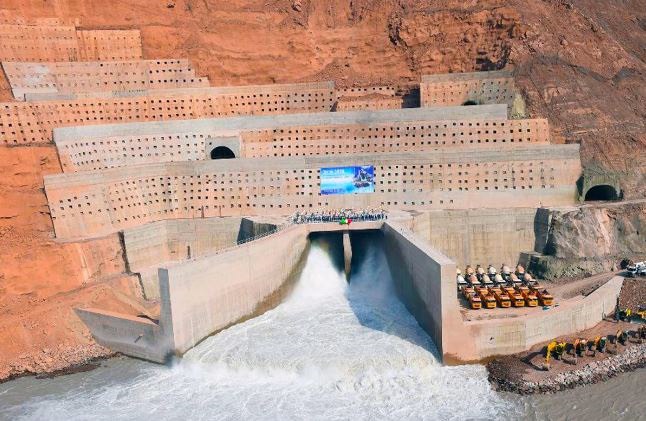
In early December, the Tajik government reintroduced electricity rationing after reservoir levels at the Nurek Hydroelectric Power Station fell sharply, due to an unusually dry autumn. The station normally supplies around 70% of the national grid, but current water levels are significantly below last year’s benchmark, affecting both domestic consumption and exports. According to Reuters, water levels have dropped more than three meters in the past month.
With shortages now affecting many regions, authorities have ordered public buildings to cut electricity outside of working hours and have switched off most street lighting. Tajikistan is seeking emergency imports from Uzbekistan, Turkmenistan and Kazakhstan to stabilize supply.
The crisis highlights vulnerabilities in a system dominated by hydropower. While Tajikistan has invested heavily in modernizing Nurek and other plants to improve winter reliability, lower precipitation remains a persistent threat. For regional energy markets, particularly those looking at cross-border electricity trade, the situation demonstrates how even large renewable systems are becoming more unpredictable under climate stress.
Rogun: Progress, Profits, and Persistent Disputes
Ambition continues to define the Rogun hydropower project, intended to make Tajikistan a top electricity exporter in the Eurasia region. With a projected capacity of 3,780 MW, Rogun is designed to host the world’s tallest dam. Financing momentum is building: the Asian Infrastructure Investment Bank has launched a $500 million multi-phase initiative, and Tajikistan has signed an energy-sale agreement with Uzbekistan at 3.4 US cents per kWh, paving the way for long-term regional integration.
But Rogun’s size continues to attract scrutiny, especially downstream. An investigation has been approved by the World Bank’s Inspection Panel into claims from Uzbekistan and Turkmenistan that altered flows on the Amu Darya river could damage farmland and ecosystems. The project’s social footprint is also expanding, with resettlement estimates reaching as high as 60,000 people.
Development banks have slowed some financing, pending stricter environmental and regional safeguards. Local environmental researchers and activists argue that international oversight is still insufficient, warning that the cumulative ecological impact of Central Asian dam-building could become irreversible if accountability is delayed.
Digital “Likes” Decriminalised, But Restrictions Remain
President Emomali Rahmon has signed amendments to remove criminal penalties for “liking” or otherwise reacting to online content labelled as “extremist”. Under previous legislation, social media users could face up to 15 years in prison for interacting with banned material. More than 1,500 people have been prosecuted under those rules, according to Reuters.
The government presented the reform as a correction of overly zealous enforcement, following Rahmon’s public criticism of harsh prosecutions. Yet rights monitors see only minimal change. The latest Human Rights Watch report on Tajikistan notes a continued clampdown on media, opposition figures and citizen journalists. The Committee to Protect Journalists ranks Tajikistan among the most restrictive media environments in Eurasia.
European officials have echoed these concerns. An OSCE-backed statement by European embassies denounced the opaque eight-year treason conviction of journalist Rukhshona Khakimova, reportedly linked to analysis of Chinese policy. For many observers, the relaxed online “like” regulations are an incremental change overshadowed by broader structural controls over speech.
Glacier Diplomacy and the Fight for Water Security
Tajikistan’s climate diplomacy is drawing global attention. The UN has designated 2025 as the International Year of Glaciers’ Preservation following a proposal from Dushanbe, with March 21 now marked as World Glacier Day. This year, Tajikistan hosted a High-Level International Conference on Glaciers’ Preservation co-organized with UNESCO and the World Meteorological Organization, producing the “Dushanbe Glacier Declaration” to expand global ice monitoring and climate finance for mountain regions.
Scientific collaboration is growing alongside diplomacy. Researchers working with the Ice Memory Foundation have completed deep drilling in the Pamirs, extracting two 100-meter frost cores that will be archived for long-term climate study. These samples are especially valuable because the Pamirs contain some of Central Asia’s last relatively stable ice formations, even as Tajikistan has already lost over 1,000 glaciers.
Given that the region’s water supply depends heavily on mountain ice, Tajikistan’s leadership in this area has global ripple effects. As a recent Glacier-loss study reported by The Guardian warns that nearly 40% of glaciers worldwide are already “doomed” to melt, Central Asian water security may increasingly influence geopolitics, agriculture and energy production across Eurasia.