• KGS/USD = 0.01143 -0%
  • KZT/USD = 0.00198 -0%
  • TJS/USD = 0.10899 0.65%
  • UZS/USD = 0.00008 -0%
  • TMT/USD = 0.28490 -0.28%
  • KGS/USD = 0.01143 -0%
  • KZT/USD = 0.00198 -0%
  • TJS/USD = 0.10899 0.65%
  • UZS/USD = 0.00008 -0%
  • TMT/USD = 0.28490 -0.28%
  • KGS/USD = 0.01143 -0%
  • KZT/USD = 0.00198 -0%
  • TJS/USD = 0.10899 0.65%
  • UZS/USD = 0.00008 -0%
  • TMT/USD = 0.28490 -0.28%
  • KGS/USD = 0.01143 -0%
  • KZT/USD = 0.00198 -0%
  • TJS/USD = 0.10899 0.65%
  • UZS/USD = 0.00008 -0%
  • TMT/USD = 0.28490 -0.28%
  • KGS/USD = 0.01143 -0%
  • KZT/USD = 0.00198 -0%
  • TJS/USD = 0.10899 0.65%
  • UZS/USD = 0.00008 -0%
  • TMT/USD = 0.28490 -0.28%
  • KGS/USD = 0.01143 -0%
  • KZT/USD = 0.00198 -0%
  • TJS/USD = 0.10899 0.65%
  • UZS/USD = 0.00008 -0%
  • TMT/USD = 0.28490 -0.28%
  • KGS/USD = 0.01143 -0%
  • KZT/USD = 0.00198 -0%
  • TJS/USD = 0.10899 0.65%
  • UZS/USD = 0.00008 -0%
  • TMT/USD = 0.28490 -0.28%
  • KGS/USD = 0.01143 -0%
  • KZT/USD = 0.00198 -0%
  • TJS/USD = 0.10899 0.65%
  • UZS/USD = 0.00008 -0%
  • TMT/USD = 0.28490 -0.28%
07 December 2025

Our People > Manon Madec

Manon Madec's Avatar

Manon Madec

Journalist

Manon is a French journalist covering Central Asia and its neighbouring countries. A graduate in International Economics from the University of Paris Dauphine, she explores the region’s cultural and social dynamics through long-form reporting and field investigations.

Articles

Planting Trees to Heal Old Wounds: Can a Desert Forest Save the Aral’s Last Residents?

In the Aralkum Desert, afforestation campaigns have multiplied since the early 2000s. They are meant to slow the sandstorms, temper a rapidly warming climate, and protect the health of those still living in the shadow of the Aral Sea. But the promised results have not appeared yet. The road from Aralsk to Aiteke Bi cuts through a palette of ochre and dust. Trucks drift forward in pale clouds, dragging the desert behind them like a long train. In these villages scattered along the former shoreline of the Aral Sea, the wind never leaves. It is abrasive, restless, and a witness to a vanished water body that once cooled the hottest corner of Kazakhstan. Respiratory diseases now run through family histories, and doctors say they can recognize lungs shaped by ecological collapse. At the polyclinic in Aiteke Bi, patients describe the same symptoms with weary precision: breath shortening too quickly, coughs that never fully recede, a fatigue that never seems to lift. Nuralay, 52, says the storms “get into the house, into the throat, into everything.” She admits she cannot remember a season without irritation in her chest. For Dr. Kuanyshqar Assilov, who has watched the pattern deepen for years, the cause is unmistakable: decades of airborne salts, pesticide residues, and industrial chemicals lifted from the dried seabed of the Aral Sea. [caption id="attachment_39897" align="aligncenter" width="1378"] In Aralsk, sand covers everything[/caption] Marat Narbaev, executive director of the International Fund to Save the Aral Sea (IFAS), recounts the disaster’s origins with a mixture of resignation and habit. He traces it back to the 1960s, when Soviet planners diverted the Amu Darya and Syr Darya to feed cotton monocultures. “The cotton was used to make clothing for soldiers and ammunition,” he says. Today, he argues, the basin faces two pressures: “climate change and demographic growth. Fifty million inhabitants… soon seventy.” In this landscape, the promise of restoring the region through afforestation has acquired symbolic weight. Saxaul trees - hardy, grey-green, capable of surviving in brackish soils - are planted by the millions on the exposed seabed. Officially, they are meant to stabilize sand, calm storms, and cool the surface. Unofficially, they carry the hope that life here might once be breathable again. Survivalist tree? On paper, the saxaul is a biological survivalist: roots plunging more than 30 feet deep, the ability to stabilize dunes, lower surface salinity, and grow dense enough within a few years to slow the wind. In Aralkum, a village east of Aralsk, residents praise the planting that lines a dozen houses. “It really worked, the storms became more bearable,” a man says. Then he shrugs: more trees should have been planted. “We asked for the other side of the village, but there’s no funding left.” Nowadays, half of the trees have died, and the rest lie buried beneath the dunes. [caption id="attachment_39896" align="aligncenter" width="1378"] In Aralkum village, half of the surviving trees barely emerge from the sand[/caption] Sometimes, past plantations have almost zero trees left. According to a 2021...

2 weeks ago

Q-Pop Is Back. Is Kazakhstan Ready This Time?

Around 2015, Kazakhstan saw the rise of Q-pop, led by the boy band Ninety One. A decade on, the cultural tension remains: while youth artists enjoy greater visibility, many observers argue that freedom of expression is still shaped by a silent boundary — ‘you can make music, but not stir too much controversy. A little over a decade ago, five young men in earrings and pastel clothes released “Aıyptama!” (“Don’t blame me”) - a slick, catchy track in Kazakh, with a video that looked like it came straight out of Seoul. The group, Ninety One, was born out of a reality TV show modeled on the K-pop system. At the time, Kazakh-language pop had little presence on mainstream radio or TV, where Russian-language and Western hits dominated. Much of the Kazakh-language music most people heard came from weddings and folk performances rather than commercial pop charts. Occidental pop, rock and Russian-language hip hop ruled the charts. So, when Azamat Zenkaev (AZ), Dulat Mukhamedkaliev (Zaq), Daniyar Kulumshin (Bala), Batyrkhan Malikov (Alem), and Azamat Ashmakyn (Ace) debuted as a group, they looked and sounded like nothing the local music scene had ever seen. Their appearance sparked outrage. In Karaganda, a 2016 concert was canceled after protests. “We are against them because they dye their hair and wear earrings!” a demonstrator shouted, captured in the 2021 documentary Men Sen Emes (Sing Your Own Songs) by Katerina Suvorova. “No parent would want their son to look like a woman,” a conservative activist added. Even their producer, Yerbolat Bedelkhan, noted, “They shook up Kazakh show business with their unusual looks.” And yet, their rise was unstoppable. Despite boycotts and online abuse, Ninety One topped national charts. Each video release became an event. Over time, their success helped make gender-fluid aesthetics more visible in Kazakhstan’s pop scene — and made singing in Kazakh fashionable again among young audiences. But their aesthetics stood in sharp contrast to the state-promoted model of Kazakh masculinity. [caption id="attachment_37776" align="aligncenter" width="770"] Ninety One; image: JUZ Entertainment[/caption] Revival and Restriction: The State’s Masculine Ideal In 2017, then-President Nursultan Nazarbayev launched Rukhani Zhangyru – a sweeping state program for “spiritual renewal.” Its goal was to forge a unified Kazakh national identity after decades of Soviet domination, largely by reigniting traditional values. Streets were renamed after historical khans, a National Dombra Day was established, and the country began shifting from Cyrillic to the Latin alphabet. But the cultural revival came with a gender script. School textbooks were rewritten, according to a 2021 Rutgers University study, to cast masculinity as a blend of strength, rationality, and emotional restraint. The ideal Kazakh man - the Batyr - was reimagined as a stoic warrior of the steppes. In this context, Ninety One’s aesthetics didn’t fit in. “Many thought Q-pop artists didn’t act like ‘real Kazakhs’,” Merey Otan, a musician and PhD candidate at Nazarbayev University told The Times of Central Asia. “Wearing makeup, earrings, or bright clothes, expressing emotions or sexuality – these all clashed with a...

2 months ago

Opinion: Ghosts of the Gulag: Kazakhstan’s Uneasy Dance With Memory and Moscow

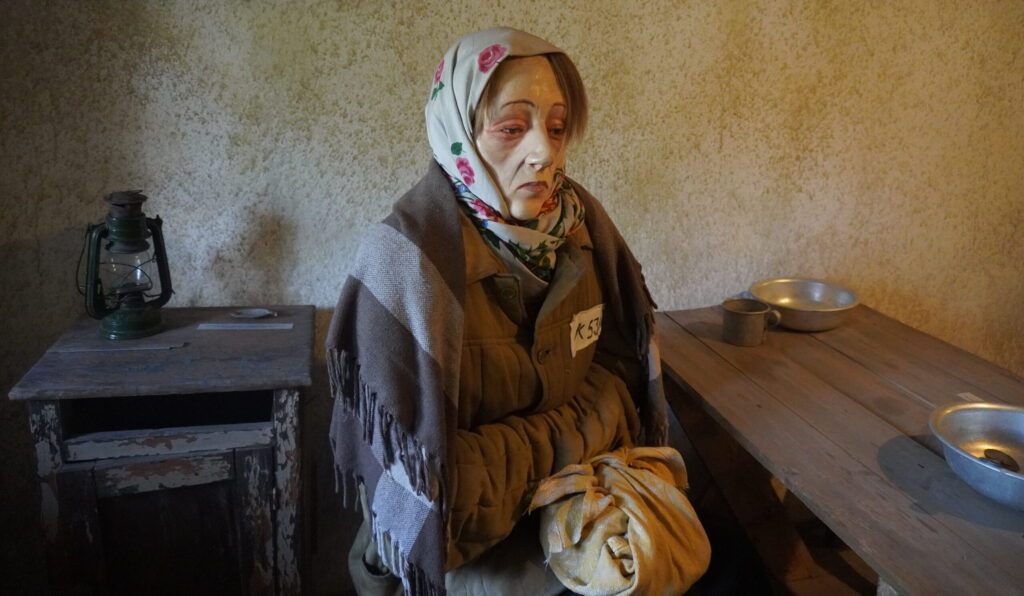
In May 2025, the authorities in Moscow unveiled a life-size bas‑relief sculpture of Josef Stalin in the Taganskaya metro station. The next month, a statue of Lenin was pulled down in Osh, Kyrgyzstan. Between these two symbolic acts lies Kazakhstan, caught in a tug-of-war over the memory of Soviet-era repression. Between 1920 and 1960, millions of prisoners were deported to more than fifty labor camps across what was later to become the Republic of Kazakhstan. Those who weren’t executed on the spot — political opponents, intellectuals, artists — were forced to work in mines, construction sites, or collective farms feeding Soviet industrial expansion. The death toll remains unknown but is believed to be in the millions. Today, this dark past draws in history buffs and thrill-seekers. But darktourism.com, the go-to website on the topic, warns them: forgotten cemeteries, ghost villages, crumbling camps — this gulag archipelago is well hidden in the steppes. No sign points the way to the Museum of Political Repression in Dolinka, housed in the former headquarters of Karlag, one of the largest camps of the Soviet Gulag system. The only other gulag transformed into a museum is ALZHIR, built on the ruins of the Akmola camp near Astana. It commemorates the 18,000 women imprisoned between 1939 and 1953 for being the wives of “traitors to the motherland.” These two museums now stand as official symbols of Soviet repression in Kazakhstan, and, more subtly, as frontline sites in a broader memory war across the former Soviet Union. Selective Memory When the museums were nationalized in the 2000s, their message became tightly controlled. Portraits and quotes from former president Nursultan Nazarbayev began to cover the walls. Guillaume Tiberghien, a specialist in dark tourism at the University of Glasgow, calls it a “selective interpretation of history.” The goal? To unify the country’s 160 ethnic groups under a shared narrative of collective suffering. At both Karlag and ALZHIR, guides emphasize acts of solidarity between Kazakh villagers and deportees — hospitality, compassion, bits of cheese tossed over barbed wire fences to feed the starving. [caption id="attachment_34338" align="aligncenter" width="2560"] Execution scene recreated at the Karlag museum; image: Manon Madec.[/caption] The past is staged. Between wax statues with sunken faces, sound effects mimicking heartbeats, and torture room reconstructions, the visitor is drawn into a visceral experience, sometimes at the cost of accuracy. “You wonder if the museum overdoes it to trigger emotion,” Tiberghien remarks. Margaret Comer, a memory studies expert at the University of Warsaw, explains: “It’s sometimes easier to mourn victims than to identify perpetrators.” [caption id="attachment_34337" align="aligncenter" width="2560"] Execution scene and fake blood, reconstructed in the Dolinka museum; image: Manon Madec.[/caption] The complicity of local Kazakhs is never addressed. Russian responsibility is blurred behind vague terms like “NKVD” or “Stalinist repression.” At ALZHIR, visitors learn only about Sergey Barinov — a Russian commandant described as cultured, discreet, and caring toward the women detained. The other two camp directors are never mentioned. In other former Soviet republics — Ukraine, the Baltics, Georgia — such...

4 months ago