Weekly Digest of Central Asia
-
By
 TCA
TCA
BISHKEK (TCA) — The Publisher’s note: Throughout the 19th and 20th centuries, Central Asia was the scene of intense geopolitical struggle and the Great Game between the British and Russian Empires, and later between the Soviet Union and the West, over Afghanistan and neighboring territories. Into the 21st century, Central Asia has become the area of a renewed geopolitical interest, dubbed the New Great Game, largely based on the region’s hydrocarbon and mineral wealth. On top of that, the region now is perhaps the most important node in the implementation of China’s One Belt, One Road initiative through which Beijing aims to get direct access to Western markets. Every week thousands of news appears in the world’s printed and online media and many of them may escape the attention of busy readers. At The Times of Central Asia, we strongly believe that more information can better contribute to peaceful development and better knowledge of this unique region. So we are presenting this Weekly Digest which compiles what other media have reported on Central Asia over the past week.
KAZAKHSTAN
Smooth Transition: New Kazakh Leader Pushes Photoshopped Pictures
The aim of the photoshopping of the interim President’s pictures may be to digitally smooth his appearance — and possibly ease his path to a five-year term as Kazakhstan prepares for its snap presidential election in June
April 30 — “Kazakhstan’s interim president, Qasym-Zhomart Toqaev, may be finding life in the spotlight a little too harsh since the surprise resignation of longtime President Nursultan Nazarbaev in March. RFE/RL has discovered that official pictures of the new Kazakh leader have been dramatically altered with photo-editing software.” READ MORE: https://www.rferl.org/a/new-kazakh-leader-employs-heavy-retouching-to-photographs/29912137.html
Kazakhstan’s Xinjiang Dilemma
China’s crackdown on Muslims in its far west Xinjiang region has become a domestic issue for the Kazakh government
May 1 — “Kazakhstan and China have developed strong economic and political ties over the last few decades. But the Xinjiang crisis, involving ethnic Kazakh people in addition to Uyghurs and other Muslim groups, could have long-lasting and wide-ranging impacts on the Kazakhstan-China relationship. Kazakhstan may be particularly vulnerable given the power transition process playing out at present.” READ MORE: https://thediplomat.com/2019/04/kazakhstans-xinjiang-dilemma/
Moonlight Madness: For Clues To How Well Kazakhstan Is Managing Wages, Just Ask Its Civil Servants
Statistics says that Kazakhs spend some 46 percent of their household incomes on groceries, and only 1.9 percent for leisure and culture
May 1 — “For civil servant Nurzhan Sadirbekuly, a pay raise couldn’t come soon enough. “Couldn’t” as in it’s too late. In more than a decade of work at a government agency in southern Kazakhstan, the 36-year-old father of two young children says he has seen colleagues try just about anything to make ends meet. They frequently seek outside income or even second jobs, something he says his 9-to-5 workday makes virtually impossible.” READ MORE: https://www.rferl.org/a/moonlight-madness-kazakhstan-wages-civil-servants/29914586.html
Kazakhstan government sides with banks in rogue fees scandal
In Kazakhstan, known for its unhealthy banking sector, taking out a loan involves a whole array of hidden costs, which causes outrage of citizens that borrow from the banks
May 3 — “For a short while, the courts in Kazakhstan were siding with borrowers drowning under specious banking charges. Now, the authorities have had a change of heart. Assel Isaliyeva, a 35-year-old anesthesiologist at an Almaty hospital, is anxious about what this means for her. In 2014, she borrowed 700,000 tenge (about $4,600 at the time) from Forte Bank to refinance an earlier, more expensive loan, from Kaspi Bank. The original loan had been to pay for career-boosting training. The cash injection was supposed to be a leg-up, but it just about buried her.” READ MORE: https://www.timesca2stg.wpenginepowered.com/index.php/news/21125-kazakhstan-government-sides-with-banks-in-rogue-fees-scandal
KYRGYZSTAN
China’s belt and road extends to Kyrgyzstan, but are new transport links worth all that debt?
There is much China-backed development in Central Asia – and much concern over whether Kyrgyzstan will pay back the billions it has borrowed from China
Apr 27 — “The new Chinese-built highway from Bishkek, the capital of Kyrgyzstan, to Naryn winds its way some 350km through stunning mountain scenery. But that’s not the only appeal of the new route; according to the local driver, the journey used to take more than eight hours, but now he says it takes just half that time.” READ MORE: https://www.scmp.com/week-asia/geopolitics/article/3007918/chinas-belt-and-road-extends-kyrgyzstan-are-new-transport
Kyrgyzstan: Passport tender scandal casts doubts on country’s digitalization drive
The passport tender scandal has caused a wide resonance and drew the attention of the international community
Apr 28 — “ “I greatly respect the opinion of the civil sector, but I urge you not to make hasty conclusions,” Kyrgyzstan President Sooronbai Jeenbekov said at the recent telecommunications forum commenting on the situation over the tender for production of new biometric passports. The head of state stressed that digitalization remains a priority for his presidential activities, so he pays careful attention to all issues in this area.” READ MORE: https://www.timesca2stg.wpenginepowered.com/index.php/news/21105-kyrgyzstan-passport-tender-scandal-casts-doubts-on-country-s-digitalization-drive
Can China Dislodge Russia in Central Asia?
Beijing is expanding economic and political influence in Kyrgyzstan
Apr 29 — “A trip to the picturesque capital of this mountainous landlocked republic in Central Asia feels a bit like traveling through time. The brutalist architecture and the monumental scale of the avenues and city squares show just how deeply the Soviet Union left its imprint, and the scarcity of Western-style shopping malls and food chains shows how slowly the local economy has grown since the Soviet collapse.” READ MORE: https://www.wsj.com/articles/can-china-dislodge-russia-in-central-asia-11556577788
Will Kyrgyzstan call time on uranium mining?
Soviet-era mining dumps pose threats to communities in Kyrgyzstan and the wider region
Apr 30 — “As citizens of a former Soviet state still living with the stains from Moscow’s aggressive nuclear programme, many Kyrgyz want to see uranium mines consigned to the past. It is not surprising then, that the prospect of a new mine in the province that surrounds the Central Asian country’s treasured Lake Issyk-Kul prompted an angry public backlash. On April 26, the anniversary of the Chernobyl power plant disaster, some 200 people turned out for a colourful protest in the country’s capital Bishkek to support a ban on uranium mining.” READ MORE: https://globalvoices.org/2019/04/30/will-kyrgyzstan-call-time-on-uranium-mining/
TAJIKISTAN
National Platform for Disaster Risk Reduction in Tajikistan Meets to Introduce Priorities for the Upcoming Decade
The platform members emphasized the importance of integrated efforts in predicting possible risk of floods, conducting aero-visual survey and analysis of the epidemiological situation in Tajikistan
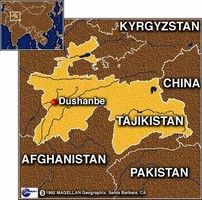
Apr 30 — “Gender sensitivity has been identified among other challenges listed in the National Disaster Risk Reduction Strategy for 2019-2030, presented at the meeting of the National Platform for Risk Reduction today in Dushanbe Plaza. Other challenges to tackle within the framework of this document, which aims to strengthen institutional and legal framework of the disaster risk management system on the national level, are unsustainable ecosystem management, leading to deforestation and land degradation, lack of coordination between different actors, working in the disaster risk reduction field, and unplanned and unregulated construction activities in disaster prone areas.” READ MORE: https://reliefweb.int/report/tajikistan/national-platform-disaster-risk-reduction-tajikistan-meets-introduce-priorities
More than 80 children of IS members returned to Tajikistan
The fall of the Islamic State’s caliphate in Iraq and Syria has left many countries grappling with what to do with the jihadists and their relatives who want to return
May 2 — “More than 80 children have arrived in Tajikistan from Iraq where their parents were sentenced for joining IS and other militant outfits, Tajikistan’s foreign ministry said online Wednesday. Eighty-four children, all Tajik citizens, had been “forced to join the ranks” of the militant groups after their parents were recruited, according to the statement on the ministry’s website.” READ MORE: https://www.sbs.com.au/news/more-than-80-children-of-is-members-returned-to-tajikistan
Tajikistan, Pakistan discuss cooperation in transportation of goods
Pakistan has supported the accession of Tajikistan to international routes through the Pakistani seaports
May 3 — “For many years, Pakistan and Tajikistan have been successfully cooperation in many areas. Today, Pakistan is one of the main investors in the Tajik economy. The two countries have discussed issues of cooperation in the field of transport. Tajik Ambassador Ismatullo Nasreddin discussed with Murod Saeed, Pakistan’s Federal Minister of Communications, the development of mutually beneficial cooperation between the two countries, in particular in the field of transportation of goods.” READ MORE: https://www.azernews.az/region/150048.html
TURKMENISTAN
Turkmenistan president all singing and dancing in bizarre video ‘dedicated to his horse’
Berdymukhamedov is no stranger to publicity stunts, as he has been seen singing and dancing in the past, which cynics claim is a ploy to loosen up his country’s repressive reputation
Apr 30 — “The President of Turkmenistan and his grandson have appeared together in a bizarre music video dedicated to the leader’s favourite horse. Wearing dark sunglasses and a popped collared-white shirt, Gurbanguly Berdymukhamedov was joined by his grandson, Kerimguly, 14, who played the keyboard and sang on the track, which was broadcast on state media.” READ MORE: https://www.itv.com/news/2019-04-30/turkmenistan-president-gurbanguly-berdymukhamedov-singing-grandson-horse/
Turkmenistan: Glasses half empty
In its ‘Akhal-Teke: A Turkmenistan Bulletin’, Eurasianet reviews the main news and events in the Central Asian country for the previous week
Apr 30 — “The world once more united in derisive laughter this week as Turkmenistan’s president performed a song dedicated to his favorite horse. For those unused to such things, the sight of Gurbanguly Berdymukhamedov decked out in shades and singing while accompanied on the keyboard by his 14-year-old grandson, Kerimguly, looks like a titter-inducing novelty. Those more habituated to these antics may well be growing weary of them.” READ MORE: https://eurasianet.org/turkmenistan-glasses-half-empty
According to “Chronicles of Turkmenistan” surveys, the number of smokers in Turkmenistan has not reduced despite the WHO statement
In 2025, Turkmenistan intends to become the first smoking-free nation
Apr 30 — “In early April the state-information agency TDH, referring to experts of the World health Organization (WHO), reported that only 3,4% of smokers were recorded in Turkmenistan in 2018. According to the WHO, in previous years, the number was consistently recorded at about 8%. Correspondents of “Chronicles of Turkmenistan” tried to find out the reason, which allegedly caused the 50% reduction in the number of smokers within the course of a year.” READ MORE: https://en.hronikatm.com/2019/04/according-to-chronicles-of-turkmenistan-surveys-the-number-of-smokers-in-turkmenistan-has-not-reduced-despite-the-who-statement/
UZBEKISTAN
Uzbekistan Seeks Lifting of Cotton Boycott
Uzbek cotton was recently removed from a U.S. government list of goods produced with forced child labor, but it remains on the list for the use of forced adult labor
Apr 30 — “In light of recent reports highlighting progress in eliminating child and forced labor from the Uzbek cotton industry, Uzbekistan has pushed for the lifting of the Cotton Campaign’s pledge in which more than 300 companies are committed to boycotting Uzbek cotton.” READ MORE: https://thediplomat.com/2019/04/uzbekistan-seeks-lifting-of-cotton-boycott/
Ambassador Touts ‘New Face’ of Uzbekistan During Atlanta Visit
Uzbek Ambassador visited Atlanta to recruit investment and drive trade
May 1 — “It’s not a country that many Americans can find on a map, but Uzbekistan’s ambassador to the U.S. says that a raft of reforms enacted since 2016 make it worth another glance, especially from investors. Already, companies like Honeywell, Coca-Cola and General Electric are expanding production in the Central Asian nation of 33 million people, which constitutes about half the population of the resource-rich region, the country’s ambassador to the U.S. said in Atlanta.” READ MORE: https://www.globalatlanta.com/ambassador-touts-new-face-of-uzbekistan-during-atlanta-visit/
Here’s Why Uzbekistan’s Tourism Industry Has Seen a Five-fold Growth
About 1.4 million tourists visited Uzbekistan in the first quarter of 2019 — 972 thousand people more compared to the same period last year
May 1 — “Uzbekistan has seen a fivefold increase in tourism for over three years. If the country had over 1 million tourists in 2016, state policy aimed at development of tourism saw their numbers reach 5 million by the end of 2018, according to an international conference on the development of tourism in Uzbekistan.” READ MORE: https://www.news18.com/news/world/heres-why-uzbekistans-tourism-industry-has-seen-a-five-fold-growth-2124515.html
Uzbekistan, Russia agree on site for nuclear plant
Russia and Uzbekistan reached an agreement on the $11 billion nuclear power plant during President Vladimir Putin’s visit to Tashkent last October
May 2 — “A site has been chosen for construction of Uzbekistan’s first nuclear power plant, Russia’s Foreign Minister said on May 2 during a visit to the Central Asian nation. The plant may become the first of its kind in Central Asia. “[Uzbek President Shavkat] Mirziyoyev today expressed satisfaction with how this project was coming along and said that we have managed to come to an agreement about a site. This was an important stage in this operation,” Sergei Lavrov was reported as saying by Sputnik news website.” READ MORE: https://eurasianet.org/uzbekistan-russia-agree-on-site-for-nuclear-plant
AFGHANISTAN
In Afghan Blood Sports, the Animals Aren’t the Only Ones Fighting
Afghan blood sports of many kinds take place unchecked, despite the opposition of mullahs who denounce them as sinful, and growing criticism from an educated younger generation
Apr 30 — “A boy about 8 years old, sitting cross-legged on the cab of a truck, shouted at the top of his lungs: “Go John Cena, go boy, give it to him, I want to take all your pain on myself!” John Cena in this case was not the American professional wrestler but a mangy, tawny shepherd dog who at that moment had his head stuck in the jaws of a rival in a blood-spattered fight, one of 13 held in a stadium on a single day late last month as part of Nowruz, or Persian New Year festivities.” READ MORE: https://www.nytimes.com/2019/04/30/world/asia/afghanistan-dogfighting.html
Afghanistan and America’s ‘Indispensable Nation’ Hubris
The U.S. can maintain its modest achievements in Afghanistan, support the Afghan government’s counterterrorism efforts, and help promote stability in the country without a big military commitment and an annual infusion of $45 billion
Apr 30 — “Nearly 20 years into our war in Afghanistan, we are no closer to winning than we were when the first U.S. airstrikes were launched on October 7, 2001. So ill-defined and amorphous is our situation that Congress has consistently failed to recognize the conflict for what it is: a stalemate with no military victory in sight. In fact, there is no consensus on what victory in Afghanistan will look like or whether it’s even possible.” READ MORE: https://www.theamericanconservative.com/articles/afghanistan-and-americas-indispensable-nation-hubris/
The War in Afghanistan is going even worse than you think
American taxpayers are being asked to pay for a military campaign without being given the type of information that is critical to determining how the campaign is going and whether their money is being spent wisely
May 2 — “The latest quarterly report from the Special Inspector General for Afghanistan Reconstruction is out, and it yet again makes for a disturbing read. The forever war in Afghanistan, 18 years and counting, is not going particularly well. In fact, “not going well” would a gross understatement.” READ MORE: https://www.washingtonexaminer.com/opinion/the-war-in-afghanistan-is-going-even-worse-than-you-think
WORLD
Central Asia: The Land of CyberCrime?
Central Asia currently has one of the highest global rates of cyber-criminal activities
Apr 29 — “The development of the telecommunications infrastructure in Central Asia has increased the online presence of the region dramatically. It has also exposed cybercrime weaknesses. Unfortunately, there has been little education and development of regional expertise around the dangers of information technology. Central Asia as a whole is now facing a growing threat from attacks by cyber-criminal gangs.” READ MORE: https://globalriskinsights.com/2019/04/central-asia-cybercrime-land/
When Soviets met Stans: the tower blocks of central Asia – in pictures
Two Italian photographers, Roberto Conte and Stefano Perego, documented Soviet-era buildings in Kazakhstan, Kyrgyzstan, Uzbekistan and Tajikistan – and saw how Eastern characteristics crept into the brutal USSR designs
May 3 — “In central Asia, the monolithic designs normally associated with Soviet-era architecture were adapted with eastern characteristics. Influenced by Persian and Islamic architecture, many central Asian apartment blocks built during the Soviet era used pattern and mosaic motifs, while grey concrete slabs were juxtaposed with colourful tiling, and rectilinear shapes broken by ornate curved forms.” READ MORE: https://www.theguardian.com/cities/gallery/2019/may/03/when-soviets-met-stans-the-tower-blocks-of-central-asia-in-pictures
Central Asia: Little Free Media, Lots of Russian Propaganda
An assessment of the state of press freedom in each country in Central Asia
May 3 — “If we look at freedom of speech in Central Asia, the countries have many things in common – not least their vulnerability to Russian propaganda – but all have to be considered separately. In Uzbekistan, there is hope for change and there has been some real movement since President Shavkat Mirziyoyev took power in late 2016.” READ MORE: https://iwpr.net/global-voices/central-asia-little-free-media-lots-russian