• KGS/USD = 0.01144 0%
  • KZT/USD = 0.00196 -0%
  • TJS/USD = 0.10899 0%
  • UZS/USD = 0.00008 0%
  • TMT/USD = 0.28490 0%
  • KGS/USD = 0.01144 0%
  • KZT/USD = 0.00196 -0%
  • TJS/USD = 0.10899 0%
  • UZS/USD = 0.00008 0%
  • TMT/USD = 0.28490 0%
  • KGS/USD = 0.01144 0%
  • KZT/USD = 0.00196 -0%
  • TJS/USD = 0.10899 0%
  • UZS/USD = 0.00008 0%
  • TMT/USD = 0.28490 0%
  • KGS/USD = 0.01144 0%
  • KZT/USD = 0.00196 -0%
  • TJS/USD = 0.10899 0%
  • UZS/USD = 0.00008 0%
  • TMT/USD = 0.28490 0%
  • KGS/USD = 0.01144 0%
  • KZT/USD = 0.00196 -0%
  • TJS/USD = 0.10899 0%
  • UZS/USD = 0.00008 0%
  • TMT/USD = 0.28490 0%
  • KGS/USD = 0.01144 0%
  • KZT/USD = 0.00196 -0%
  • TJS/USD = 0.10899 0%
  • UZS/USD = 0.00008 0%
  • TMT/USD = 0.28490 0%
  • KGS/USD = 0.01144 0%
  • KZT/USD = 0.00196 -0%
  • TJS/USD = 0.10899 0%
  • UZS/USD = 0.00008 0%
  • TMT/USD = 0.28490 0%
  • KGS/USD = 0.01144 0%
  • KZT/USD = 0.00196 -0%
  • TJS/USD = 0.10899 0%
  • UZS/USD = 0.00008 0%
  • TMT/USD = 0.28490 0%
09 December 2025

Why Attacks on the Caspian Pipeline Consortium Could Alter Kazakhstan’s Strategic Plans

Attacks on the infrastructure of the Caspian Pipeline Consortium (CPC), reduced export flows, and volatility in commodity markets are generating serious pressures for Kazakhstan. In the coming years, both the country’s financial system and its domestic political balance may face significant tests.

A number of experts warn that disruptions in oil logistics via the CPC, which remains the main artery for Kazakh crude exports, could depress budget revenues, strain national companies, and worsen the sovereign outlook. Kazakhstan pumps roughly 80% of its oil exports through the CPC system, and oil revenues account for more than half of the country’s total export earnings. Because CPC Blend is Kazakhstan’s primary export-grade crude, even short interruptions can reverberate through the state budget, the National Fund, and the balance sheets of national companies. This could trigger a domino effect, destabilizing broad swathes of the economy and undermining public finances. Already, the recent rounds of disruption around Black Sea oil shipping are eroding a substantial source of tax revenue for the state.

Continued Risk of Strikes

Political scientist Dosym Satpaev argues that Kazakhstan may be underestimating the intensity and persistence of the conflict surrounding Ukraine. He contends that both sides in that conflict have used strikes on energy infrastructure as key tools, a tactic that will likely continue.

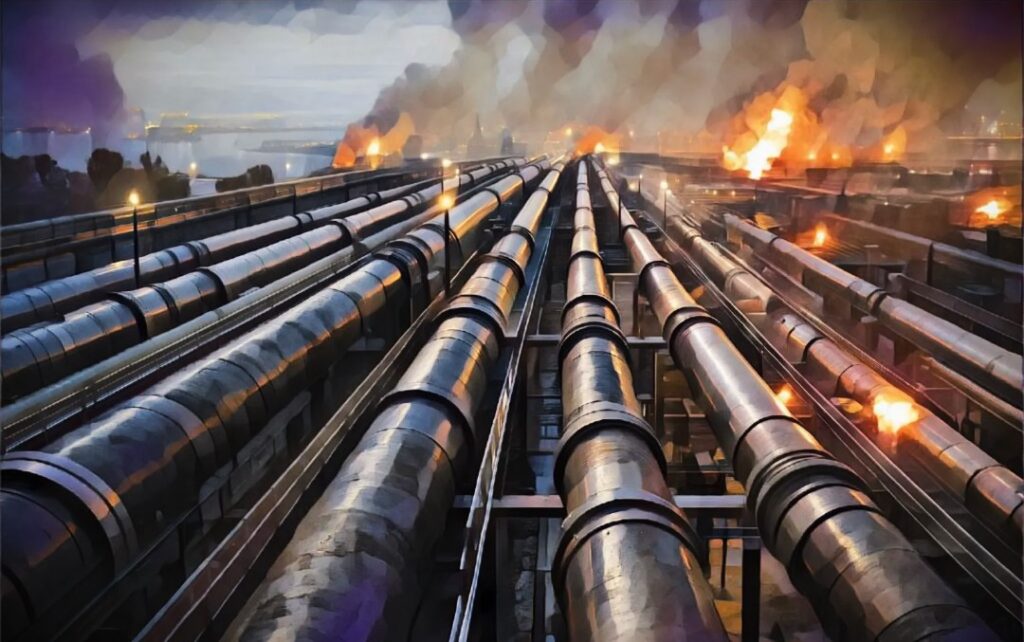
The recent strike targeted the CPC’s single-point moorings (SPMs) at Novorossiysk, a coastal terminal on the Russian Black Sea. These offshore loading points sit in relatively shallow waters and are physically exposed, making them susceptible to the naval drones Ukraine has increasingly deployed against Russian maritime infrastructure. Although the attack officially targeted Russian facilities, the collateral implications for Kazakh oil exports were immediate.

According to Satpaev, that means further risks for the CPC. The fact that Kazakhstan remains heavily dependent on this single pipeline reflects a broader failure to diversify exports and reduce reliance on raw material transit. 

The vulnerability is magnified by the CPC’s ownership structure: although Kazakhstan relies on it for most of its exports, the pipeline network and the Novorossiysk terminal lie on Russian territory and operate under Russian regulatory oversight. Russia holds a majority stake in the consortium, while U.S. firms such as Chevron and Exxon also have significant shares, creating a complex web of interests that limits Astana’s room for manoeuvre.

Kazakhstan has already experienced how this dependence can be leveraged. In 2022, Russian regulators repeatedly halted CPC operations over alleged “environmental violations,” moves widely interpreted as political pressure at a moment of diplomatic friction. That precedent underscores how strategic vulnerability to CPC disruptions predates the current wave of attacks.

Satpaev is skeptical that alternative export routes, such as via pipelines through the Caspian Sea to Baku-Tbilisi-Ceyhan or transit to China, can substitute for the CPC in the near term. Given the global trend toward reduced oil demand, he believes this leaves Kazakhstan exposed to long-term structural risks. 

At the same time, Satpaev views as unlikely the possibility that Ukraine would attempt to directly stop the CPC’s operations, given the broader consequences such action would have for European energy consumers and international oil firms that rely on the pipeline. 

Strategic Divergence and Diplomatic Vulnerabilities

Another political analyst, Daniyar Ashimbayev, warns that the attacks raise questions not only about economic security, but also about the broader coherence of Kazakhstan’s foreign policy posture. According to him, Kazakhstan’s long-standing model built on stability, moderation, and multi-vectorism now faces stress. While some voices inside and outside the country have called for diversification of export routes, others argue that the geography and technical challenges make alternatives impractical. 

Ashimbayev further contends that the mounting risk to CPC operations and thus to exports exposes Kazakhstan to external pressure. He suggests some actors may deliberately target Kazakhstan’s neutrality or use infrastructure risks to influence its geopolitical behaviour. Ashimbayev adds that Astana does indeed have contingency scenarios to safeguard its interests, but the crisis could force a deeper strategic review than originally planned. 

Economic Pain and Financial Fallout

The stakes extend beyond Kazakhstan. CPC Blend is a key feedstock for European refiners, and interruptions to Novorossiysk loadings have already widened differentials in Mediterranean crude markets. As one of the few large non-OPEC suppliers still accessible to Europe, Kazakhstan’s stability has become increasingly important for global price dynamics — magnifying the international consequences of any prolonged disruption.

Oil-and-gas analyst Olzhas Baidildinov warns that the damage to CPC could soon hit Kazakhstan’s national energy company (KazMunayGas), and through it, the broader economy. He estimates that, within 36 months, redirecting oil via alternative routes could prove technically difficult and more expensive. That, he says, could significantly reduce revenue as well as cash flow for the company.

If disruptions persist into spring 2026, Baidildinov suggests, KazMunayGas might face the difficult choice of cutting or even suspending dividend payments, with knock-on consequences for investor confidence and the broader financial sector. In an interview with RTVI, Baidildinov projected that Kazakhstan’s losses from the attack on CPC infrastructure could reach approximately 20% of its oil exports, and that the financial damage could amount to at least $1.5 billion – an amount comparable to the annual budgets of Astana or Almaty.

Baidildinov warns that a weakening fiscal position could trigger a downgrade of Kazakhstan’s sovereign rating by major international agencies, making foreign borrowing more expensive and weighing on the domestic economy. In parallel, logistic bottlenecks and rising demand for rail freight could push up prices for rail transport and consumer goods, compounding inflationary pressures. 

What This Means for Kazakhstan’s Strategic Priorities

The recent attacks on CPC underline a painful reality: for now, Kazakhstan remains deeply dependent on a single export corridor. As the geopolitical conflict escalates, this dependency has become a strategic vulnerability.

China, too, is watching closely. Although Kazakhstan already ships some crude eastward via the Atasu–Alashankou pipeline, current capacity is far too limited to replace CPC volumes. Beijing has long pushed for expanded eastbound flows to enhance its own energy security, but infrastructure constraints mean Kazakhstan cannot pivot quickly. This leaves Astana caught between its two largest neighbours at a moment of mounting geopolitical strain.

Moving forward, the government in Astana may be forced to accelerate plans to diversify export routes, including pipelines across the Caspian Sea, expansion of rail corridors, and other logistical solutions. At the same time, maintaining neutrality in foreign policy and avoiding entanglement may become more expensive, as economic stability increasingly hinges on global energy market dynamics and international security developments.

The internal political dimension is equally significant. Tokayev’s reform agenda, from public-sector wage policies to regional development spending, depends heavily on reliable oil income. A prolonged disruption could slow social programs, reduce fiscal buffers, and heighten public sensitivity to inflation — challenging the government’s long-standing narrative of stability and competent economic stewardship.

In this context, the CPC attacks may mark not just a disruption in oil supply but a turning point in how Kazakhstan defines its long-term economic and geopolitical strategy.

AIIB Provides $500 Million to Support Uzbekistan’s Green Economy Reforms

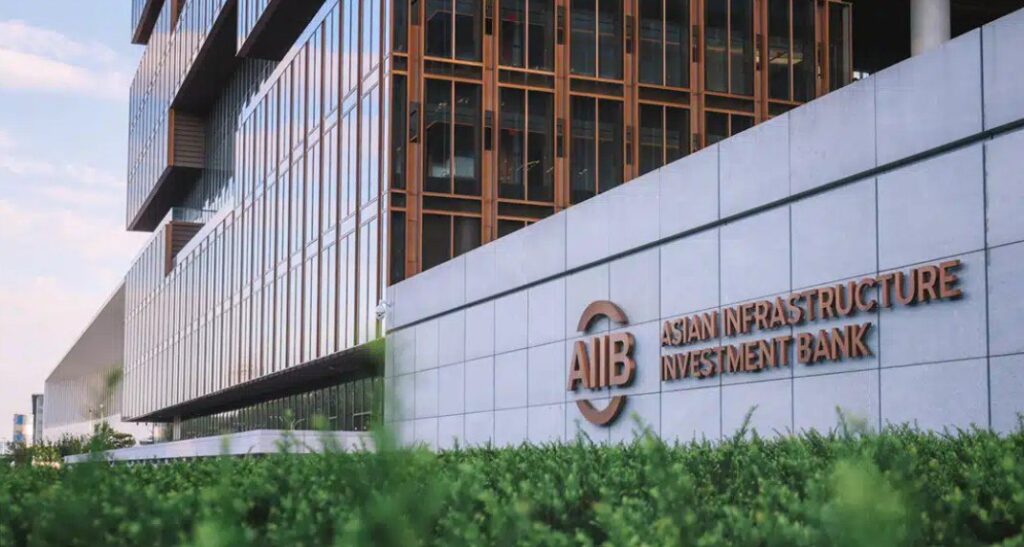
The Asian Infrastructure Investment Bank (AIIB) and the Government of Uzbekistan have signed a $500 million financing agreement to support the country’s Green and Resilient Market Economy Program, the Bank announced on November 28. The initiative is designed to accelerate Uzbekistan’s transition toward a greener, more resilient, and market-oriented economy through a comprehensive package of policy and institutional reforms.

According to AIIB, the funding will assist the Uzbek government in strengthening the policy and governance frameworks necessary for low-carbon development, improved public-sector efficiency, and greater resilience to climate-related risks. The initiative falls under AIIB’s Climate-Focused Policy-Based Financing approach, which supports systemic reforms that have economy-wide climate impacts.

The reforms backed by the new financing include measures to enhance efficiency and governance in the energy sector and state-owned enterprises, expand climate-responsive public procurement, and establish transparent systems for carbon-credit development and trading. The program also highlights the development of a robust Measurement, Reporting, and Verification (MRV) system to attract greater private capital for climate investments.

“This operation reflects AIIB’s commitment to supporting Uzbekistan’s reform agenda through measures that can deliver lasting climate and economic gains,” said Konstantin Limitovskiy, AIIB’s Chief Investment Officer for Region 2 and Project and Corporate Finance Clients. He noted that the program is expected to foster conditions conducive to increased climate finance and stronger private-sector engagement in Uzbekistan’s green transition.

The program is co-financed by the World Bank Group and is aligned with several national strategies, including Uzbekistan’s Strategy for Transition to a Green Economy for 2019-2030, its second Nationally Determined Contribution under the Paris Agreement, and the broader Uzbekistan-2030 development strategy. These frameworks stress clean energy, resource efficiency, and long-term economic resilience.

AIIB projects that the reforms will generate substantial environmental and social benefits over time. More efficient resource use, the scaling up of clean energy solutions, and improved climate regulation are expected to reduce greenhouse gas emissions, enhance air quality, and strengthen the country’s capacity to withstand climate shocks. The adoption of cleaner technologies could also lower energy costs and improve living conditions, particularly for vulnerable communities.

In a separate agreement earlier this year, AIIB provided a $71.1 million loan to Uzbekistan to modernize rural roads in Khorezm and Karakalpakstan. That project aims to enhance climate resilience and improve access to markets and public services for rural populations.

Human Rights Groups Urge Turkmenistan to Release Activists Ahead of Neutrality Anniversary

As Turkmenistan prepares to mark the 30th anniversary of its policy of permanent neutrality, international human rights organizations are urging the government to commemorate the occasion by releasing civil society activists imprisoned for peacefully expressing their views.

In a joint appeal, the International Partnership for Human Rights (IPHR), the Turkmen Initiative for Human Rights (TIHR), Turkmen.News, and the Norwegian Helsinki Committee (NHC) called on Turkmen authorities to use the milestone as an opportunity to take a humanitarian step by pardoning activists jailed on politically motivated charges.

The organizations emphasized that presidential pardons remain the only available legal mechanism for early release in Turkmenistan. Including these cases in the official pardon process, they argue, would demonstrate the country’s willingness to align with international human rights standards.

Among the prisoners named in the appeal is Mansur Mingelov, a human rights activist who has been incarcerated since 2012. He is serving a 22 year sentence after publicly denouncing the abuse of ethnic Baloch people. Another activist, Murat Dushemov, was sentenced to four years for publicly criticizing the government and its handling of the COVID-19 pandemic. He was expected to be released in the summer of 2025.

The rights groups also expressed growing concern about activists and citizen journalists who were detained abroad and reportedly subjected to forced return to Turkmenistan, where they face prosecution under opaque legal processes.

Citizen journalists Alisher Sakhatov and Abdulla Orusov were detained in Turkey in April 2025 on charges of “threatening public safety.” Farhat Meymankuliev was deported from Turkey in 2023 and, according to human rights monitors, subsequently imprisoned following a closed trial. In another case, Malikberdy Allamyrradov was secretly transferred from Russia to Turkmenistan in December 2023 and later charged with assaulting a cellmate. Saddam Gulamov was also forcibly returned from Russia and sentenced to a prison colony in the Lebap region.

The human rights groups argue that freeing these individuals would send a strong message of goodwill during a major national celebration and offer a concrete signal of Turkmenistan’s readiness to uphold its international obligations.

Kyrgyzstan Seeks to Deepen Economic Ties with Germany

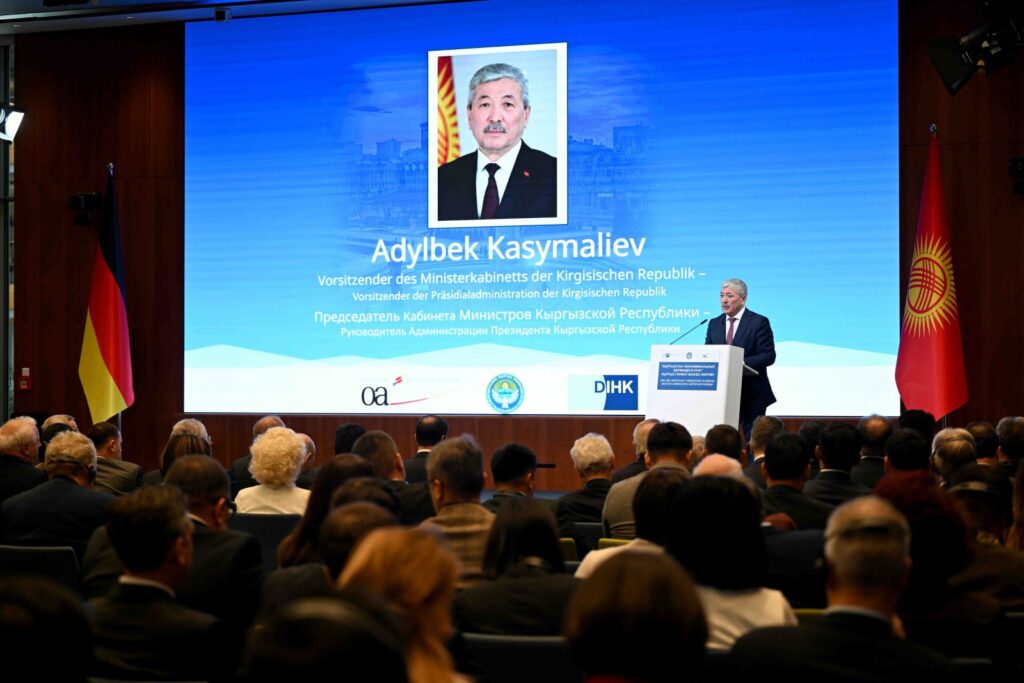
On November 28, Berlin hosted the Kyrgyz-German Business Forum and the fifth meeting of the Kyrgyz-German Business Council, with the participation of Adylbek Kasymaliev, Chairman of the Cabinet of Ministers of Kyrgyzstan.

The event was organized by Kyrgyzstan’s National Investment Agency, the Eastern Committee of the German Economy, and the German Chamber of Commerce and Industry. It brought together over 300 participants from government agencies, financial institutions, and business sectors of both countries. Key areas of cooperation included the implementation of a dual vocational education system based on the German model, legal and organized labor migration from Kyrgyzstan to Germany, and joint projects in energy, green technologies, information technology, and agriculture.

During the forum, Kasymaliev called on German companies to deepen engagement with Kyrgyzstan, from supplying equipment to investing in sustainable and green development initiatives.

The primary purpose of Kasymaliev’s visit was to launch the second cycle of the “Days of the Economy of Kyrgyzstan and Germany,” a bilateral initiative aimed at strengthening economic cooperation and attracting foreign investment.

At the Business Council meeting, Kasymaliev outlined three priority areas for collaboration.

The first is financial and banking integration. He proposed establishing direct correspondent banking relationships between Kyrgyz and German financial institutions to enhance trade transparency, expedite transactions, and ensure greater security in bilateral trade.

The second priority is cooperation in education and vocational training. Kyrgyzstan seeks to expand partnerships between universities, vocational schools, and industry centers, as well as to develop academic exchange and joint educational programs modeled on Germany’s experience.

The third area of focus is labor migration. “Kyrgyzstan proposes to jointly develop targeted training programs, including professional and language training, as well as mechanisms for recognizing professional qualifications,” Kasymaliev stated. He emphasized that such cooperation would ensure fair working conditions and safeguard the rights of Kyrgyz citizens while addressing labor shortages in Germany.

On November 29, Kasymaliev also visited the international postal exchange center of Kyrgyz Pochtasy (Kyrgyz Post) OJSC in Berlin. He noted that the establishment of such a center in the heart of Europe represents an important step toward boosting Kyrgyzstan’s export potential and expanding access for Kyrgyz businesses to European markets.

Samarkand’s CoP20 Opens with High-Stakes Debates on Wildlife Trade and Species Protection

The world’s largest conference on wildlife trade opened last week in Samarkand, drawing nearly 3,000 delegates to Uzbekistan for two weeks of critical negotiations that could reshape global conservation policy. The 20th meeting of the Conference of the Parties to the Convention on International Trade in Endangered Species of Wild Fauna and Flora (CITES CoP20) is being held in Central Asia for the first time, a region increasingly impacted by transcontinental wildlife trafficking routes connecting Africa and Asia.

Hosted by Uzbekistan’s National Committee on Ecology and Climate Change, CoP20 carries the theme “CITES at 50 in Samarkand: Bridging Nature and People,” commemorating five decades of global conservation under the Convention and echoing the city’s legacy as a historic crossroads of commerce and ideas.

One of the central issues dominating this year’s meeting is a series of proposals concerning African megafauna, particularly elephants, rhinos, and giraffes. These proposals, submitted by several African range states, challenge the extent to which legal trade in vulnerable species should be permitted, given decades of poaching and habitat degradation.

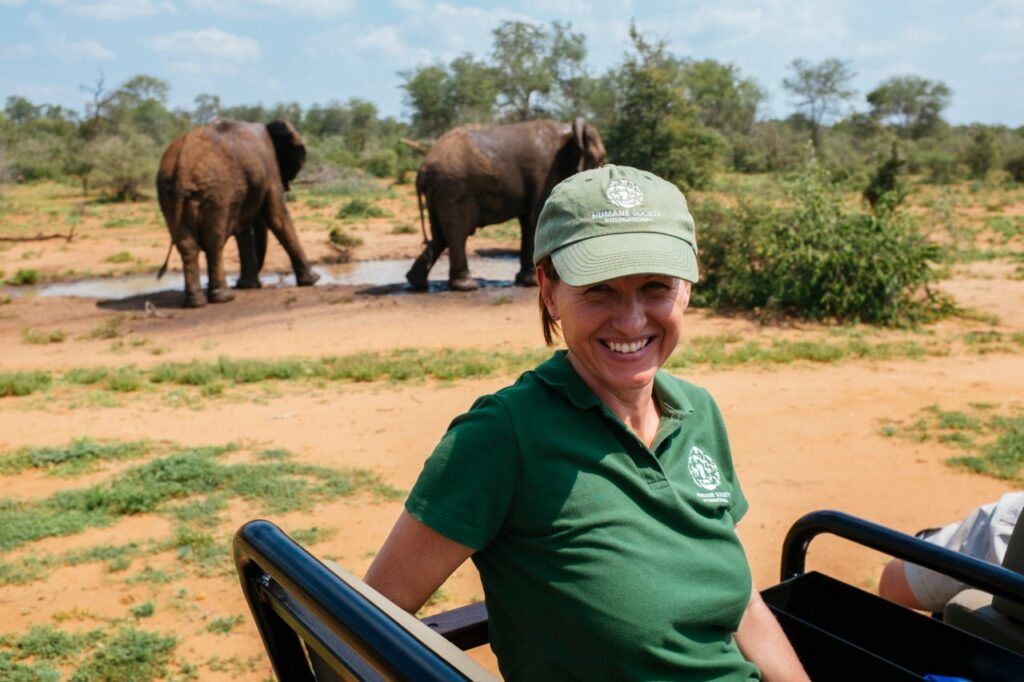
Audrey Delsink, Senior Director at Humane World for Animals, warned of the dangers these proposals pose. “All the species proposals concerning African megafauna are highly concerning because of the impact they will have on the respective species and the repercussions on illegal trade should the proposals be accepted,” she told The Times of Central Asia.

Among the most controversial is a joint proposal by Namibia, South Africa, Tanzania, and Zimbabwe to remove most southern African giraffe populations from CITES Appendix II. Delsink cautioned that this would create a fragmented regulatory regime, complicating enforcement. “It is very difficult to differentiate bones and pelts of the different species and subspecies, making it easy to launder endangered giraffe species through the system,” she said. With wild giraffe populations estimated at fewer than 120,000, any weakening of controls could prove disastrous.

Similar concerns surround Namibia’s proposal to sell ivory from registered government stockpiles. Delsink warned that the legal ivory trade has historically masked illicit flows and could trigger renewed poaching. “Legal trade provides a cover for illegal ivory and fuels illegal trade, poaching, and consumer demand,” she said, noting that CITES members have rejected such proposals for nearly two decades.

Central Asian countries, increasingly used as transit corridors for high-value wildlife contraband, are becoming key players in enforcement. Smuggling networks exploit Eurasian air, rail, and road links to move products such as ivory, rhino horn, and exotic animals.

Delsink highlighted the “Samarkand Declaration and Action Plan (2025-2032),” signed this week by Kazakhstan, Kyrgyzstan, Tajikistan, Turkmenistan, and Uzbekistan, as a major step toward regional coordination. The agreement commits signatories to harmonize laws and improve intelligence-sharing mechanisms.

Image: National Committee on Ecology of Uzbekistan

“Intelligence-led operations and rapid information exchange between agencies can disrupt organized crime networks that exploit porous borders,” Delsink said. She also underscored the need for customs modernization and officer training, supported by organizations such as TRAFFIC and the UN Office on Drugs and Crime.

Beyond enforcement, Delsink advocated for community-based conservation approaches adapted from African models. These include beehive fences to deter elephants from crop-raiding, chili-based repellents, and local ranger initiatives. “These methods empower local leadership and deliver economic benefits to communities,” she said.

Rhinos remain under intense scrutiny. On November 29, CITES delegates in Samarkand rejected Namibia’s proposals to relax trade protections for Southern white and critically endangered black rhinos, choosing instead to maintain maximum safeguards.

Meanwhile, landmark decisions were reached on marine species. Whale sharks, gulper sharks, manta rays, and devil rays, all affected by severe population declines, received stronger protections.

Whale sharks were uplisted to Appendix I, banning nearly all international commercial trade. Their numbers have plummeted by 92% globally due to overfishing, vessel collisions, and demand for fins and meat. Gulper sharks, valued for their liver oil used in cosmetics and pharmaceuticals, were added to Appendix II. Manta and devil rays, which reproduce slowly and are heavily targeted for their gill plates and fins, also received Appendix I status.

Lawrence Chlebeck, marine program manager at Humane World for Animals Australia; image: TCA

“These sharks are victims of a veracious trade,” said Lawrence Chlebeck, Marine Program Manager at Humane World for Animals Australia. “The new protections throw them a vital lifeline.”

Chlebeck warned that without these measures, “future oceans without these beautiful animals is sadly an inevitability.” He praised the international coalition backing the proposals, which reflect growing global awareness that many shark and ray species are approaching ecological collapse.

Asked about the role of landlocked countries like Uzbekistan, Chlebeck stressed that non-coastal states play a critical role in enforcement and supply-chain regulation. “They can strengthen import controls and ensure that products derived from sharks and rays originate only from sustainable and legal sources,” he said.

Other items on the CoP20 agenda include proposed loosening of giraffe trade restrictions despite a 40% drop in wild populations over three decades; attempts to reintroduce commercial trade in live elephants and rhino horn; and new protections for critically endangered vultures, Galápagos land iguanas, and gecko species vulnerable to the exotic pet trade.

Qazaq Gourmet Draws Global Gastronomic Spotlight

In late November, Paris hosted the anniversary ceremony of La Liste 2025, one of the world’s most prestigious gastronomic events. This year’s ceremony held special significance for Kazakhstan: Qazaq Gourmet, a restaurant specializing in haute Kazakh cuisine, not only represented the country at the French Ministry of Foreign Affairs but also received a special honor, the La Liste 2026 Plate.

For the QazElles community in France, this recognition marked the continuation of a journey that began last year when Qazaq Gourmet was first included in La Liste’s global ranking of the best restaurants. That initial listing signaled international recognition; this year’s award reflects growing interest in Kazakh cuisine among the global culinary elite.

@Madina Kulman

Throughout the evening, chefs and representatives from leading restaurants in Japan, France, Spain, and Italy visited the Qazaq Gourmet table. Many were encountering elevated Kazakh cuisine for the first time, a novelty that sparked considerable curiosity. Guests asked about preparation techniques, native ingredients, and the cultural heritage of the dishes, exchanging impressions and expressing delight at discovering unfamiliar flavors.

Kazakhstan’s ambassador to France, Gulsara Arystankulova, was in attendance, lending diplomatic weight to the occasion and highlighting the country’s commitment to promoting its national cuisine on the international stage.

With Head Chef Artem Kantsev, @Madina Kulman

The La Liste 2026 Plate is awarded to restaurants that demonstrate consistent quality, make use of local products, and show potential for international influence. This recognition is particularly significant for Qazaq Gourmet at a time when La Liste is increasing its focus on Asian gastronomy. Kazakh cuisine is now firmly on the radar of global culinary experts. La Liste’s methodology combines expert reviews, critical ratings, and data-driven analysis, making its awards a credible benchmark in the culinary world.

For Kazakhstan, the recognition marks a step forward in gastronomic diplomacy. For Qazaq Gourmet, it affirms that its modern interpretation of national cuisine resonates on the global stage and suggests that further accomplishments are within reach.