Weekly Digest of Central Asia
-
By
 TCA
TCA
BISHKEK (TCA) — The Publisher’s note: Throughout the 19th and 20th centuries, Central Asia was the scene of intense geopolitical struggle and the Great Game between the British and Russian Empires, and later between the Soviet Union and the West, over Afghanistan and neighboring territories. Into the 21st century, Central Asia has become the area of a renewed geopolitical interest, dubbed the New Great Game, largely based on the region’s hydrocarbon and mineral wealth. On top of that, the region now is perhaps the most important node in the implementation of China’s One Belt, One Road initiative through which Beijing aims to get direct access to Western markets. Every week thousands of news appears in the world’s printed and online media and many of them may escape the attention of busy readers. At The Times of Central Asia, we strongly believe that more information can better contribute to peaceful development and better knowledge of this unique region. So we are presenting this Weekly Digest which compiles what other media have reported on Central Asia over the past week.
KAZAKHSTAN
Kazakhstan sells its first ever euro bond
Kazakhstan is looking at expanding the geography of its borrowing, with plans also including yuan-denominated securities
Nov 7 — “Kazakhstan has sold a dual tranche transaction consisting of €525mn of a 1.55% eurobond due in November 2023 and €525mn of a 2.375% bond due in November 2028. The combined order books exceeded €3.3bn compared to the €1.05bn allocation. The move marked the first time ever that a euro-denominated transaction came from the Kazakh sovereign. The Central Asian country is among many emerging market nations that have switched to euros due to the growing gap between US and European interest rates.” READ MORE: http://www.intellinews.com/kazakhstan-sells-its-first-ever-euro-bond-151560/?source=kazakhstan
Kazakhstan: MPs take aim at ArcelorMittal Temirtau
Lawmakers say that ArcelorMittal Temirtau is skirting its obligations by outsourcing low-skilled work to employees of unrelated companies, which enables the company to avoid paying additional payment for certain kinds of work
Nov 8 — “Parliamentarians in Kazakhstan’s usually somnolent legislature have accused a major foreign investor of using legal loopholes to exploit workers and economize on salaries. On November 7, a group of Majlis deputies reportedly addressed the prime minister and the general prosecutor with pleas to file an investigation into employment practices at ArcelorMittal Temirtau.” READ MORE: https://eurasianet.org/kazakhstan-mps-take-aim-at-arcelormittal-temirtau
Goldman Sachs Follows China Into Kazakhstan
Kazakhstan is the Central Asia buckle of China’s Belt and Road initiative and the Astana International Exchange could become a financial hub in the region
Nov 8 — “It’s not for the long freezing winters or the haute cuisine, but Goldman Sachs is heading to Astana, the capital of the ex-Soviet republic of Kazakhstan. Goldman announced on October 1 that it was joining the Astana International Exchange (AIX). Kazakhstan’s reformist-minded financial market is the first of its kind in Central Asia and counts the Shanghai Stock Exchange and China’s Silk Road Fund as shareholders, and the Nasdaq as a technology partner.” READ MORE: https://www.forbes.com/sites/kenrapoza/2018/11/08/goldman-sachs-follows-china-into-kazakhstan/#3bf6dc807869
Kazatomprom IPO to test-drive Kazakhstan’s privatization plan
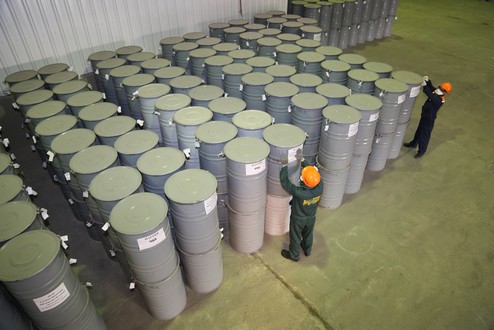
The government of Kazakhstan is planning to privatize state-owned stakes in a number of major companies, including the national uranium company
Nov 9 — “Kazakhstan’s national uranium company Kazatomprom said, on October 15, that it was ready to go public by selling a portion of its issued shares on the London Stock Exchange and on the trading platform of the Astana International Financial Center (AIFC). The AIFC was officially launched without much fanfare in January 2018.” READ MORE: https://timesca.com/index.php/news/20473-kazatomprom-ipo-to-test-drive-kazakhstan-s-privatization-plan
KYRGYZSTAN
To achieve ambitious goals, Kyrgyzstan seeks international assistance
The President hopes that international partners would provide possible assistance in the implementation of ambitious goals pursued by Kyrgyzstan
Nov 4 — “Corruption hinders economic development and the attraction of foreign investment in Kyrgyzstan. Anti-corruption measures taken by the State are fragmented and uncoordinated, and staff replacement does not make anti-corruption measures more effective. Frequent replacements of key persons in Kyrgyzstan’s state bodies create difficulties in the effective implementation of donor programs.” READ MORE: https://timesca.com/index.php/news/26-opinion-head/20451-to-achieve-ambitious-goals-kyrgyzstan-seeks-international-assistance
Young Women Build Kyrgyzstan’s First Satellite
The construction and launch of Kyrgyzstan’s first CubeSat will cost up to $150,000
Nov 6 — “Reaching for the stars will no longer be impossible for girls and young women in Kyrgyzstan, who aim to build and launch the country’s first satellite before 2020. A dozen budding female scientists have been tinkering with computers, 3-D printers and soldering irons since March to build a CubeSat, which U.S. space agency NASA describes as being the smallest and cheapest satellite used for space exploration.” READ MORE: https://www.voanews.com/a/young-women-build-kyrgyzstan-s-first-satellite-/4647893.html
To Adapt to a Changing Climate, Kyrgyzstan Revives Its Nomadic Past
In Kyrgyzstan, the weather is always changing — now it’s colder in summer and warmer in winter
Nov 7 — “A PRELUDE TO the growing season, the last week of May usually marks the onset of summer in Kyrgyzstan, a mountainous Central Asian republic about the size of Nebraska. In preparation for the hotter months ahead, flock-owners gather their sheep and shave off their wooly winter fleeces. Farmers and herders make up a third of the country’s labor force, and their seasonal rhythms are essential to the survival of millions of people — and their animals.” READ MORE: https://undark.org/article/climate-change-kyrgyzstan-nomads/
In Kyrgyzstan, warming brings less water – and more conflict
Irrigation water is a real treasure and a source of potential conflicts in Kyrgyzstan and the entire Central Asia
Nov 9 — “In the Kyrgyz village of Kok Tal, it is the jarring sound of Bahadyr Mamatgapirov’s mobile phone that breaks the serenity of dawn. “Get here soon if you need water for your farm,” he abruptly tells one caller. Within moments it rings again. “Wake up and come take care of your water,” he insists. A small group of men emerge from the village, a cloud of dust pursuing their weary footsteps.” READ MORE: https://in.reuters.com/article/kyrgyzstan-water-climatechange/corrected-feature-in-kyrgyzstan-warming-brings-less-water-and-more-conflict-idINL8N1X34I1
TAJIKISTAN
Since Tajikistan’s President Asked…
The president of Tajikistan seems to have in mind a rosy picture of his impoverished country
Nov 3 — “On October 25, during a visit to the country’s northern Sughd region, Tajik President Emomali Rahmon called on the media to stop praising the authorities. “The impression is being created that everything is ideal, and we lack for nothing,” he said. Rahmon suggested an absence of criticism risks encouraging serious mistakes, and he urged television and radio broadcasters to “expose the defects of authorities and look for ways to correct mistakes.” READ MORE: https://www.rferl.org/a/since-tajikistan-s-president-asked-/29580475.html
Tajikistan: Rally in Pamirs ups the ante in confrontation with government
The situation remains tense in Tajikistan’s remote, and restive, Gorno-Badakhshan Autonomous Region
Nov 6 — “Residents in Tajikistan’s Pamiri town of Khorog mustered for a rare protest rally on November 6 in a demand for a deescalation of the security sweep targeting their region. Nerves in the Gorno-Badakhshan Autonomous Region, or GBAO, have been strained since a reported police shooting over the weekend that left at least two people wounded. A series of photos of the rally posted on social media showed what appeared to be many dozens or possibly a few hundred in attendance.” READ MORE: https://eurasianet.org/tajikistan-rally-in-pamirs-ups-the-ante-in-confrontation-with-government
U.S., Europe eye to purchase Tajik’s dried fruits
Due to international certification, foreign countries wish to buy dried fruits and nuts from Tajikistan
Nov 6 — “Dried apricots are a national pride in Tajikistan, as well as a kind of alternative currency. The production of dried apricots is simple but painstaking: first, the fruits are harvested, then they are fumigated with sulfur, dried for two days under the sun, then a bone is squeezed out of each apricot, they are dried again for two days, and only after that can they be packaged.” READ MORE: https://www.azernews.az/region/140385.html
TURKMENISTAN
Turkmenistan: Good things come to those who weightlift
In its ‘Akhal-Teke: A Turkmenistan Bulletin’, Eurasianet reviews the main news and events in the Central Asian country for the previous week
Nov 6 — “Ashgabat, the capital of Turkmenistan, is hellbent on earning a reputation as Central Asia’s premier venue for sporting events. In that spirit, it is now hosting the 2018 World Weightlifting Championships. Adulation-hungry President Gurbanguly Berdymukhamedov seized the opportunity in characteristically showy style to draw more attention to himself.” READ MORE: https://eurasianet.org/turkmenistan-good-things-come-to-those-who-weightlift
The tragic tale of Turkmenistan’s missing poet
Batyr Berdyev went from diplomat to prisoner in one of the world’s most oppressive states. Now his poems, smuggled out of jail, have been published in English
Nov 6 — “How do over 121 people just disappear? In Turkmenistan, the answer is “all too easily”. Turkmenistan is one of the least free places in the world; a Stalinoid, paranoid state that to the outsider most closely resembles North Korea; leader cults, parades and vicious repression.” READ MORE: http://littleatoms.com/tragic-tale-turkmenistans-missing-poet
Turkmenistan threatens Belarusian company with international arbitration
A giant Belarusian-built potash plant in Turkmenistan is producing much less products than it should, which caused discontent of the Turkmen leader
Nov 6 — “The president of Turkmenistan has ordered his government to file arbitration proceedings against a Belarusian company that built a giant but woefully under-performing $1 billion potash fertilizer plant. Gurbanguly Berdymukhamedov’s instructions are striking as Belarus is one of a very select club of nations with which Turkmenistan has steady and regular economic relations.” READ MORE: https://eurasianet.org/turkmenistan-threatens-belarusian-company-with-international-arbitration
UZBEKISTAN
Cabernet Mirziyoev: Uzbek President Sets Sights On Making World-Class Wine
President Shavkat Mirziyoev wants to uncork the Fergana Valley’s winegrowing potential once again
Nov 5 — “The bounteous vineyards of the Ferghana Valley once created a wine that had Marco Polo singing their praises. Or so the story goes. “Samarkand, Bukhara, and other magnificent cities are places decorated with gardens and vineyards,” one source quotes the 13th-century Venetian explorer as saying, although the quote could be apocryphal. “I had to drink wine from the local population…and it amazed with its excellent quality.” READ MORE: https://www.rferl.org/a/cabernet-mirziyoev-uzbek-president-sets-sights-on-world-class-winemaking/29584135.html
Unexpected problems to delay launch of Uzbekistan’s first mountain resort?
Uzbekistan’s ambitious mountain ski resort project faces problems with local infrastructure
Nov 7 — “Andorran PGI Management, managing the project of the Amirsoy Mountain Resort – the first ski resort in Uzbekistan, faced a number of problems, namely the lack of electricity and roads, Uzbek media reported. According to the Uzbekistan 24 TV channel, there are problems with the lack of a normal road access. The only road to the resort turns to slush in rainy weather.” READ MORE: https://www.azernews.az/region/140525.html
Frozen French Fries plant in Uzbekistan first in Central Asia
The first potato processing plant in Central Asia will start production of frozen french fries this month in Uzbekistan
Nov 7 — “Potato company Agrover in Uzbekistan will start industrial production of frozen french fries and potato flakes this month, according to news media in the region. The plant with a capacity 20,000 tonnes of finished product per year is the first potato processing plant in Uzbekistan, in fact, the first such plant in all of Central Asia.” READ MORE: https://www.potatopro.com/news/2018/frozen-french-fries-plant-uzbekistan-first-central-asia
Pride and fears for Uzbekistan’s ‘Louvre of the Steppes’
The Friends of Nukus Museum, a Dutch-registered charity that has provided thousands of dollars in support to the museum annually since 2001, is expected to disband at the end of this year
Nov 8 — “More than 50 years after its founding, the Nukus Museum of Art in Uzbekistan’s remote Karakalpakstan region still startles and charms visitors in the spirit of its eccentric late founder. But having survived Soviet censorship and predatory foreign art dealers in the 1990s, some fear the world’s second-largest collection of Russian avant-garde art, faces a fresh threat.” READ MORE: https://borneobulletin.com.bn/pride-and-fears-for-uzbekistans-louvre-of-the-steppes/
AFGHANISTAN
How War and Politics Have Threatened Afghanistan’s Economic Prospects
Analyst believes that if the U.S. and its allies believe Afghanistan is not yet ready to withdraw from, they must take direct control of Afghanistan’s reconstruction and economy. Otherwise, they must pay for that country’s expenses until the cows come home
Nov 5 — “Thinking about Afghanistan’s economic prospects, I checked some figures and found that Afghans constitute about 2.3 percent of humanity. I also discovered that Afghanistan’s economy amounts to about 0.03 percent of the world economy. In terms of the global economic activity, Afghanistan’s is a drop in the ocean.” READ MORE: https://www.newsmax.com/finance/nasirshansab/afghanistan-economic-prospects-war/2018/11/05/id/889367/
Taliban tax collectors help tighten insurgents’ grip in Afghanistan
The Taliban has tended to take over two traditional Islamic levies: zakat, an obligation on Muslims to donate 2.5 percent of their income to the poor; and ushur, a 10 percent tax on harvests or produce taken to market
Nov 6 — “Every two months, Mohammaddin visits a tax collector in Chardara district, in northern Afghanistan, and is given receipts to show he has paid his tax and utility bills. The service is professional, he says, though the paperwork he receives does not bear the name of state-owned power company Da Afghanistan Breshna Sherkat, which provides the electricity, but instead carries the printed logo of the Taliban.” READ MORE: https://www.reuters.com/article/us-afghanistan-taliban-finance/taliban-tax-collectors-help-tighten-insurgents-grip-in-afghanistan-idUSKCN1NB19Y
Billions in aid to Afghanistan wasted, including money from Canada, U.S. agency finds
Endemic corruption makes foreign aid to Afghanistan inefficient
Nov 8 — “Billions of dollars in Western foreign aid to Afghanistan, including from Canada, has been lost to widespread waste, lax oversight and endemic corruption, a U.S. watchdog agency says. The U.S. Special Inspector-General for Afghanistan Reconstruction said in a report to Congress that aid money has gone to build medical clinics without electricity or water, schools without children and buildings that literally melted away in the rain.” READ MORE: https://www.theglobeandmail.com/politics/article-billions-in-aid-money-for-afghanistan-wasted-us-agency-finds/
Afghanistan: historic arena for great games
Analyst explains why has Afghanistan repeatedly remained victim of invasions, infighting and Great Games
Nov 8 — “During an intellectual discussion with a large number of regional and subject experts from Western and Central Asian Republics, I posed a question to the participants, “can someone comment why Afghanistan has repeatedly remained victim of invasions, infighting and Great Games?” No one came out with a clear reply; supposedly, not for the reason that they didn’t know the answer, but perhaps it could touch certain sensitivities and expose the truth behind ongoing endless war on terrorism in Afghanistan.” READ MORE: https://dailytimes.com.pk/319517/afghanistan-historic-arena-for-great-games/
WORLD
Central Asia Gassing Up China
Kazakhstan looks to increase its natural gas exports to China, while Turkmenistan may be gaining an old customer — Russia — back
Nov 7 — “Last month, KazTransGaz, Kazakhstan’s national gas company, and PetroChina International signed a five-year contract that aims to see Kazakh natural gas exports to China double to 10 billion cubic meters (bcm) per year starting in 2019. The five-year contract built on a one-year deal that expired on October 14, which sought to export 5 bcm to China.” READ MORE: https://thediplomat.com/2018/11/central-asia-gassing-up-china/
Towards a Central Asia and Caucasus trade bloc for Belt and Road
The ongoing trade war between the U.S. and China could create a huge opportunity for Central Asia countries which could increase trade and economic cooperation with Beijing
Nov 8 — “In the trade war with the U.S., China has clearly shown that it is willing to reject Pacific trade partners based on political over economic considerations. Beijing’s wider policy to develop industrial and agroindustrial capacity in Central Asia, the Caucasus and the Middle East means that these economies can use short-term structural changes in global trade dynamics to their longer term advantage.” READ MORE: https://timesca.com/index.php/news/26-opinion-head/20468-towards-a-central-asia-and-caucasus-trade-bloc-for-belt-and-road