BISHKEK (TCA) — The Publisher’s note: Throughout the 19th and 20th centuries, Central Asia was the scene of intense geopolitical struggle and the Great Game between the British and Russian Empires, and later between the Soviet Union and the West, over Afghanistan and neighboring territories. Into the 21st century, Central Asia has become the area of a renewed geopolitical interest, dubbed the New Great Game, largely based on the region’s hydrocarbon and mineral wealth. On top of that, the region now is perhaps the most important node in the implementation of China’s One Belt, One Road initiative through which Beijing aims to get direct access to Western markets. Every week thousands of news appears in the world’s printed and online media and many of them may escape the attention of busy readers. At The Times of Central Asia, we strongly believe that more information can better contribute to peaceful development and better knowledge of this unique region. So we are presenting this Weekly Digest which compiles what other media have reported on Central Asia over the past week.
KAZAKHSTAN
Chinese investors eye Kazakh market as TCM becomes increasingly popular in Central Asia
Traditional Chinese medicine is becoming more popular in Kazakhstan and Central Asia
Sept 19 — “Kazakhstan, the Central Asian country where Chinese leaders put forward the Belt and Road initiative, is now witnessing the popularization of traditional Chinese medicine (TCM). The rising popularity is mostly thanks to the wider acceptance of TCM, as local perceptions of healthcare have shifted from being treatment-focused to prevention-driven, which is in line with TCM philosophy. While a number of domestic TCM manufacturers aim to tap Kazakhstan’s huge market, industry insiders are warning of several hurdles in terms of legal application and cultural acceptance.” READ MORE: http://www.globaltimes.cn/content/1120227.shtml
Why Kazakhstan should stop worshipping Tesla and Uber
Kazakhstan started by solving internal problems rather than importing Western solutions. The basis for this development was the country’s transformation program “Digital Kazakhstan”
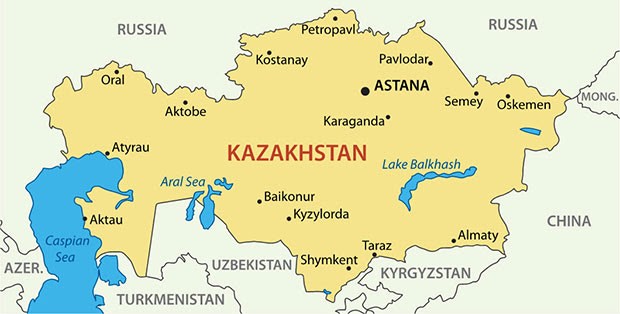
Sept 19 — “Imagine a country about five times the size of France with a population density of only six people per square kilometer. One could walk thousands of miles across the vast steppes without encountering a single human settlement. This country, Kazakhstan, is the largest country in Central Asia. 70 percent of Kazakhstan’s GDP is revenue from the sale of mineral resources such as oil, gas, and coal.” READ MORE: https://thenextweb.com/world/2018/09/18/kazakhstan-should-stop-worshipping-tesla-uber-resource-dependency/
Disney to develop more projects with Kazakhstan
Walt Disney, along with other world-famous film studios such as Paramount Pictures, 20th Century Fox and Warner Bros, will be ready to cooperate closer with Kazakhstan once the Kazakh Parliament passes the law “On cinema”
Sept 21 — “Walt Disney’s Commonwealth of Independent States’ (CIS) office is enthusiastic about Kazakhstan’s draft law “On cinema” and plans to cooperate with the country by assisting filmmakers and the local dubbing industry, said the company’s Director General Marina Zhigalova-Ozkan during the Sept. 15 roundtable at the Almaty Film Festival’s business site.” READ MORE: https://astanatimes.com/2018/09/disney-to-develop-more-projects-with-kazakhstan/
Kazakhstan: Government saves bank owned by ex-presidential chief of staff
The government in Kazakhstan has saved another troubled, private bank at taxpayers’ expense
Sept 22 — “Kazakhstan has once again acted to rescue a troubled bank torpedoed by the devaluation of the national currency, the tenge. This time, the lender happens to be controlled by one of President Nursultan Nazarbayev’s closest allies.” READ MORE: https://timesca.com/index.php/news/20282-kazakhstan-government-saves-bank-owned-by-ex-presidential-chief-of-staff
KYRGYZSTAN
Feminist song draws supporters and death threats in Kyrgyzstan
Pleas for civility and respect in a musical video of a female songwriter in Bishkek have been drowned by rage over her clothing
Sept 18 — “A feminist manifesto sung by a 19-year-old Kyrgyz student has rekindled debates over women’s rights in Kyrgyzstan. The spectrum of public reaction has ranged from a supportive social media campaign to death threats, the artist says. The Kyrgyz-language song, entitled Kyz (“Girl”), was released some two months ago, but the video appeared only on September 13.” READ MORE: https://eurasianet.org/feminist-song-draws-supporters-and-death-threats-in-kyrgyzstan
Kyrgyzstan: Entrepreneurs, tired of inspections and barriers, leave for other countries
The President and businesspeople discussed how to remove the factors that impede the development of entrepreneurship in the country
Sept 19 — “Kyrgyzstan should create a competitive economy applying innovative technologies and open to attract investments, Kyrgyz President Sooronbai Jeenbekov said at a meeting with representatives of the business community on September 17.” READ MORE: https://timesca.com/index.php/news/26-opinion-head/20270-kyrgyzstan-entrepreneurs-tired-of-inspections-and-barriers-leave-for-other-countries
In Kyrgyzstan, Babanov Cases Losing Steam
Former presidential hopeful Omurbek Babanov was the subject of two highly political investigations, one of which has now been suspended
Sept 20 — “At least one of the two criminal cases levied against former presidential contender Omurbek Babanov have been dropped, according to local media. Babanov, who served as prime minister from December 2011 to September 2012 during the first year of Almazbek Atambayev’s presidency, later joined his Respublika party with Ata Jurt and headed the faction in parliament. In early 2017, Babanov was nominated by his party to run for the presidency that following October.” READ MORE: https://thediplomat.com/2018/09/in-kyrgyzstan-babanov-cases-losing-steam/
Fear and loathing in Kyrgyzstan: how the LGBTQI community is fighting back against rising discrimination
LGBTQI people remain easy targets in Kyrgyzstan, with nowhere to turn for recourse
Sept 20 — “In September 2014, I visited Kyrgyzstan for the first time, to speak at the PEN International Congress in the capital, Bishkek. We had to keep our panel, which argued for the repeal of “anti-LGBTQI” (Lesbian, Gay, Bisexual, Transgender, Queer and Intersex) legislation that restricts the right to freedom of expression, secret. A few months earlier, the Kyrgyz parliament had introduced a bill that copied Russia’s legislation against “gay propaganda”, with additional jail sentences for people who “promote homosexual relations” through the media, so we feared that the entire Congress could be shut down if the authorities found out about it.” READ MORE: https://www.opendemocracy.net/od-russia/juliet-jacques/fear-and-loathing-in-kyrgyzstan
TAJIKISTAN
THIS DAM COULD CAUSE THE WORLD’S WORST NATURAL DISASTER AND IMPACT 5 MILLION
Tajikistan’s Lake Sarez is stunning, but some experts say it’s a ticking time bomb
Sept 14 — “In its very first moments of existence, the Usoi dam claimed the lives of an entire village. It was formed during a 1911 earthquake that saw the Usoi settlement buried by a massive landslide that blocked the Murghab River and formed Tajikistan’s Lake Sarez. At roughly 1,860 feet, the Usoi dam is the world’s highest natural dam. Lake Sarez is isolated now, but in 1911 it was even more so: It took six weeks for news of the disaster to reach civilization. Today there are at least 30 villages in the Bartang Valley, and more scattered across surrounding areas. And they’re all in mortal danger.” READ MORE: https://www.ozy.com/acumen/this-dam-could-cause-the-worlds-worst-natural-disaster-and-impact-5-million/88749
Time’s Up For Tajik Sex Pests
Catcallers in Dushanbe now face the prospect of up to two weeks in jail, community service, and the humiliation of having their pictures plastered on police websites as a warning to others
Sept 15 — “Women have grown accustomed to being harassed by strange men on the streets of Dushanbe: “Is your mom looking for a son-in-law?” “I’m speechless.” “Hey, $100 girl.” Overtures can range from unsolicited “compliments” to personal insults to physical assault. Whatever the case they are not welcomed.” READ MORE: https://www.rferl.org/a/time-s-up-for-tajik-sex-pests/29491776.html
Tajikistan: What is going on in the Pamirs?
The recent government reshuffle and strengthening of military presence in Tajikistan’s remote Gorno-Badakhshan Autonomous Region indicate that President Rahmon’s government is extending its control of this potentially restive area
Sept 21 — “For around a week, reports have been trickling out of Tajikistan’s remote eastern Pamir region of a looming security crackdown by government forces. The first public hints that not all was well emerged on September 15, when President Emomali Rahmon stated during a visit to Khorog, the capital of the mountainous Gorno-Badakhshan Autonomous Region, or GBAO, that he was growing fed up with lawlessness in the province.” READ MORE: https://timesca.com/index.php/news/20279-tajikistan-what-is-going-on-in-the-pamirs
TURKMENISTAN
Turkmenistan: Planes, grain and automobiles
In its ‘Akhal-Teke: A Turkmenistan Bulletin’, Eurasianet reviews the main news and events in the Central Asian country for the previous week
Sept 19 — “After a long hiatus, Turkmenistan has rejoined the community of nations that buy grain from Kazakhstan. According to Astana-based state news agency Khabar, the sales have amounted to 100,000 tons since the start of the year. The purchases are an implicit admission that Turkmenistan is not as self-reliant as it would like. Import substitution is the cornerstone of Turkmenistan’s economic model, but in reality the government struggles to meet demand for even basic staples.” READ MORE: https://eurasianet.org/turkmenistan-planes-grain-and-automobiles
Turkmenistan Should Immediately End Practice of Enforced Disappearances
Turkmenistan still has an appalling human rights record
Sept 20 — “For the first time ever, Turkmenistan has accepted many of the recommendations made by almost 20 states during its Universal Periodic Review, including those related to enforced disappearances, a persistent and grave violation in the country. Human Rights Watch and the Prove They Are Alive campaign welcome this development.” READ MORE: https://www.hrw.org/news/2018/09/20/turkmenistan-should-immediately-end-practice-enforced-disappearances
Photos of chicken mockups at counters of Ashgabat bazaars
Crisis-hit Turkmenistan is experiencing shortages of some food products, and instead of real chicken, mockups filled with cotton wool are displayed at some retail outlets
Sept 20 — “On 19 September “Chronicles of Turkmenistan” reported that fake counters with chicken mockups had appeared in Ashgabat bazaars. Our correspondents managed to take photos of them. There are official retail outlets of the poultry farm “Gush toplumy” which occasionally sell cheap chicken drumsticks at 8 manats per kilo (the photo features the queue lining up for them).” READ MORE: https://en.hronikatm.com/2018/09/photos-of-chicken-mockups-at-counters-of-ashgabat-bazaars/
UZBEKISTAN
Uzbekistan’s president rebrands his administration, but keeps stalwarts
Along with political and economic reforms, Uzbekistan’s President has made some changes in his administration in an effort to redistribute executive powers and make the country’s governance more effective
Sept 15 — “The president of Uzbekistan, Shavkat Mirziyoyev, issued a decree, on August 27, changing the official name of the 27-year-old “Presidential Executive Office” (Devon in Uzbek and Apparat Russian) to the “Presidential Administration.” Along with the new name, the Administration saw some personnel changes and possibly limitation of powers of certain advisors. Overall, these reforms are largely superficial as the Presidential Administration inherited not only the same departments and functions from the Executive Office, but maintains all the major stalwarts of the previous government structure.” READ MORE: https://timesca.com/index.php/news/20256-uzbekistan-s-president-rebrands-his-administration-but-keeps-stalwarts
Uzbekistan: Land of a thousand shrines
Uzbekistan boasts hundreds of holy places and shrines attracting pilgrims from home and abroad
Sept 16 — “Uzbekistan has aspirations to become a second Mecca, a destination for pilgrims from all over the world. Central Asia’s most populous country boasts a wealth of well-preserved mosques and shrines in famous silk road cities like Samarkand and Bukhara. For millions of Uzbeks these are sacred places. But for the Uzbek government they also represent an opportunity to boost tourism as the country opens up after decades of isolationist, authoritarian rule.” READ MORE: https://www.bbc.com/news/world-asia-44685414
Double discrimination: why Uzbek women in Kyrgyzstan are a minority within a minority
In the aftermath of Kyrgyzstan’s 2010 revolution, the country’s Uzbek minority population has seen their position worsen — and Uzbek women have been marginalised most of all
Sept 17 — “Echoes of the 2010 conflict between Kyrgyz and Uzbeks continue to be heard in the Osh region in southern Kyrgyzstan. The four days of clashes between the two communities left hundreds dead and thousands injured, and came on the heels of the violent change of government in the country in April 2010. Today, it is clear these events have strengthened nationalism and re-traditionalisation among the Kyrgyz people.” READ MORE: https://www.opendemocracy.net/od-russia/zhyldyz-frank/double-discrimination-in-kyrgyzstan
South Korean company plans to produce electric cars in Uzbekistan
Uzbekistan is poised to become Central Asia’s leading manufacturer of electric cars
Sept 21 — “South Korean Rooper teikom Co. Ltd plans to start production of electric cars in Asaka, the company’s director, Sung Ying Song said, Uzbek media outlets reported. “The total cost of the project will be $2 million, and we plan to start manufacturing cars by the end of next year,” he told reporters. Chinese companies are actively seeking to cooperate with Uzbekistan in this direction. For example, the Changan Automobile Group reported that the company intends to organize the production of electric cars in the Fergana Valley.” READ MORE: https://www.azernews.az/region/137887.html
AFGHANISTAN
‘Live Free Or Die’: From Afghan Refugee To U.S. Political Hopeful
A 27-year-old Afghan refugee has won the Democratic Party primary for a seat in the state legislature and if she wins in the November general election, she would become the first former refugee to hold public office in New Hampshire
Sept 17 — “”Live free or die” is the official motto of the U.S. state of New Hampshire. It’s a mantra that resonates deeply with Safiya Wazir, an Afghan refugee who fled Taliban rule in the 1990s, resettled with her family in neighboring Uzbekistan, and is now a U.S. citizen vying to make political history in her adopted state.” READ MORE: https://www.rferl.org/a/live-free-or-die-from-afghan-refugee-to-u-s-political-hopeful/29494710.html
The Mafia That Threatens Afghanistan
Armed factions have overrun civil society in Afghanistan, but coming parliamentary elections offer a chance to root them out
Sept 19 — “Afghanistan will hold two crucial elections in the next seven months: a parliamentary vote in October and a presidential election in April. The outcomes could help sustain a steady course for the teenage democracy, and jockeying is under way among political factions. But a rise in organized political violence threatens to taint the elections and derail the nation’s progress toward stable governance.” READ MORE: https://www.wsj.com/articles/the-mafia-that-threatens-afghanistan-1537397750
My holiday with the Afghan mujahideen
In the late 1970s, John England, from High Wycombe, was befriended by his neighbour Rahmatullah Safi, originally from Afghanistan. In 1988, Rahmatullah invited John to visit a war zone in his home country and they embarked on an unconventional trip
Sept 20 — “John kept a diary and took photos of his three-week trip with Rahmatullah, self-publishing them in an e-book called Going Inside, for posterity and for his family and friends. The photos show a unique glimpse into life in Afghanistan 30 years ago. The two neighbours met when Rahmatullah moved into John’s street in 1978.” READ MORE: https://www.bbc.com/news/in-pictures-44469707
Afghanistan: Journalists dying in record numbers to report the war
Afghanistan is the deadliest country for the media workers in the world
Sept 21 — “Moments after Afghan journalist Samim Faramarz wrapped up his live report on the latest suicide attack in Kabul, a car bomb exploded just metres away, killing him and his cameraman Ramiz Ahmadi. Their colleagues at Tolo News choked back tears as they reported the deaths live on air — cracking open a divisive debate on how Afghan journalists should operate in such a dangerous environment.” READ MORE: https://www.financialexpress.com/world-news/afghan-journalists-dying-in-record-numbers-to-report-the-war/1321237/
WORLD
India’s Economic Opportunities in Central Asia
India is making economic inroads to Central Asia in attempts to counter the growing influence of China, and Pakistan, in the region
Sept 17 — “Shavkat Mirziyoyev, the new President of Uzbekistan, will pay a visit to New Delhi towards the end of this month, seemingly to give yet another shot for cementing strong economic ties with India. For the last two and a half decades, India has been citing obstructions of physical connectivity, Pakistan’s hostility and Afghan instability for its desultory attitude towards Central Asia.” READ MORE: https://idsa.in/policybrief/indias-economic-opportunities-in-central-asia-pstobdan-170918
EU counters China’s Silk Road Initiative
The adoption by the European Commission of a new ‘Connectivity Strategy’ linking Europe and Asia throws down the gauntlet to an increasingly assertive China, writes Bart Broer, a Research Fellow and Fraser Cameron Director of the EU-Asia Centre
Sept 19 — “The new strategy, released on Wednesday (19 September) will offer a different approach to that taken by Beijing with its flagship Belt and Road Initiative (BRI). The EU emphasis is on sustainability, proposing that investments should respect labour rights, not create political or financial dependencies, and guarantee a level playing field for businesses. Given the rapidity of China’s economic development in the past 30 years it has taken the EU some time to acknowledge the growing power and influence of Beijing.” READ MORE: https://www.euractiv.com/section/central-asia/opinion/eu-counters-chinas-silk-road-initiative/



 TCA
TCA