• KGS/USD = 0.01144 0%
  • KZT/USD = 0.00194 -0%
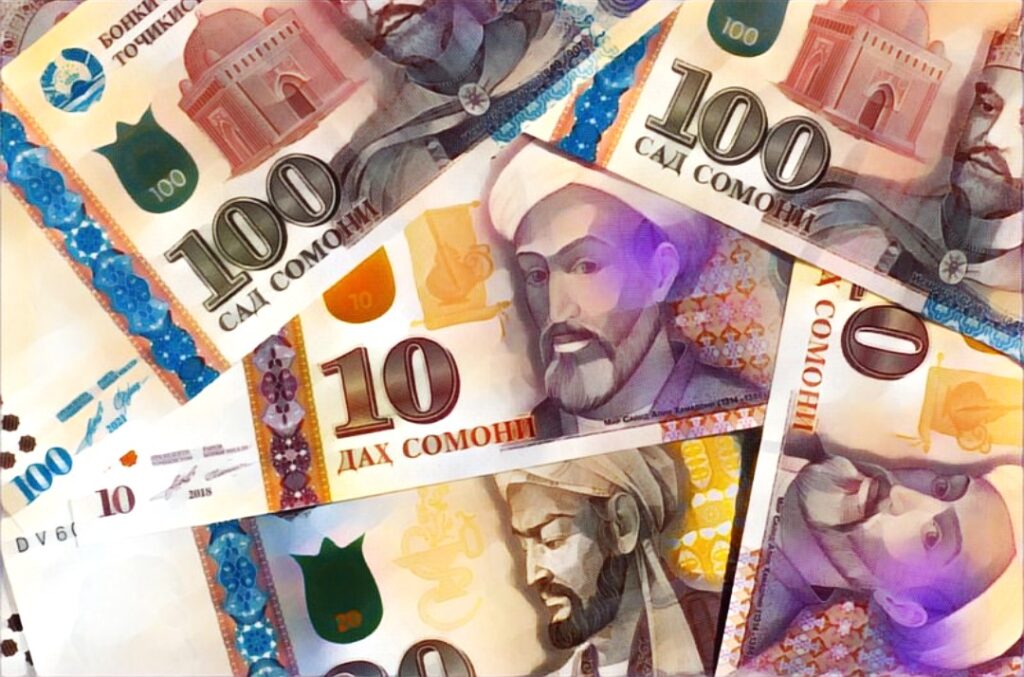
  • TJS/USD = 0.10844 -0.46%
  • UZS/USD = 0.00008 0%
  • TMT/USD = 0.28571 0.28%
  • KGS/USD = 0.01144 0%
  • KZT/USD = 0.00194 -0%
  • TJS/USD = 0.10844 -0.46%
  • UZS/USD = 0.00008 0%
  • TMT/USD = 0.28571 0.28%
  • KGS/USD = 0.01144 0%
  • KZT/USD = 0.00194 -0%
  • TJS/USD = 0.10844 -0.46%
  • UZS/USD = 0.00008 0%
  • TMT/USD = 0.28571 0.28%
  • KGS/USD = 0.01144 0%
  • KZT/USD = 0.00194 -0%
  • TJS/USD = 0.10844 -0.46%
  • UZS/USD = 0.00008 0%
  • TMT/USD = 0.28571 0.28%
  • KGS/USD = 0.01144 0%
  • KZT/USD = 0.00194 -0%
  • TJS/USD = 0.10844 -0.46%
  • UZS/USD = 0.00008 0%
  • TMT/USD = 0.28571 0.28%
  • KGS/USD = 0.01144 0%
  • KZT/USD = 0.00194 -0%
  • TJS/USD = 0.10844 -0.46%
  • UZS/USD = 0.00008 0%
  • TMT/USD = 0.28571 0.28%
  • KGS/USD = 0.01144 0%
  • KZT/USD = 0.00194 -0%
  • TJS/USD = 0.10844 -0.46%
  • UZS/USD = 0.00008 0%
  • TMT/USD = 0.28571 0.28%
  • KGS/USD = 0.01144 0%
  • KZT/USD = 0.00194 -0%
  • TJS/USD = 0.10844 -0.46%
  • UZS/USD = 0.00008 0%
  • TMT/USD = 0.28571 0.28%
09 December 2025

Chinese Mining Firm Lists on AIX in Landmark Belt and Road IPO

China’s Jiaxin International Resources Investment Limited, the world’s leading tungsten mining and production company, has successfully completed an offering of common shares on the Astana International Exchange (AIX) in Kazakhstan.

The listing ceremony took place on September 5 during Astana Finance Days 2025, marking a milestone for Kazakhstan’s capital market. According to the Ministry of Industry and Construction, the transaction represents the first IPO in Central Asia denominated in Chinese yuan (CNY) and the first IPO on AIX’s dedicated Belt and Road Initiative segment.

Strategic Importance of the Boguty Mine

Jiaxin International is currently developing the Boguty tungsten deposit in Kazakhstan’s Almaty region. With reserves of approximately 107 million tons of ore, Boguty is ranked as the fourth-largest tungsten deposit in the world, positioning Kazakhstan as a critical player in the global supply chain for this strategic metal.

At the listing ceremony, Minister of Industry and Construction Ersayin Nagaspayev emphasized the strategic value of the transaction:

“This event once again demonstrates the high level of investor confidence in the Astana International Financial Center. I am confident that the example of such a large and reputable company will significantly increase the investment attractiveness of Kazakhstan and attract new foreign participants.”

AIX, established in 2017 under the Astana International Financial Center (AIFC), counts among its shareholders the AIFC, Shanghai Stock Exchange, Silk Road Fund, and NASDAQ which also provides its trading platform.

Record-Breaking Demand

Ordinary shares of Jiaxin International were admitted to listing on August 28 on both AIX and the Hong Kong Stock Exchange (HKEX).

The final offer price was set at CNY 9.93. Global demand exceeded $34 billion, with the IPO more than 220 times oversubscribed compared to the targeted amount.

Confidence in Kazakhstan’s Market

Assel Mukazhanova, CEO of AIX, highlighted the significance of the deal:

“It has been about 10 years since Jiaxin first entered the Kazakh market with a tungsten investment project, and today we are proud to celebrate the inclusion of its shares into the AIX Official List. This achievement not only demonstrates the trust placed in our market but also sets a strong precedent for other issuers to follow.”

For Jiaxin International, the dual listing underscores the growing economic ties between China and Kazakhstan. Liu Liqiang, Chairman of Jiaxin International Resources Investment Limited, stated:

“This milestone not only marks a significant chapter in the company’s growth journey, but also reflects our solid step forward in deepening China-Kazakhstan economic cooperation in the context of High-Quality Belt and Road Cooperation.”

The Income Gap Between Rich and Poor Kazakhs Is Widening

Analysts at Ranking.kz note that the income gap in Kazakhstan has remained consistently high in recent years. According to the National Statistics Bureau (NSB), from 2019 to 2023, the incomes of the poorest 10% and the wealthiest 10% of Kazakhstani citizens differed by an average factor of 5.9 to 6. In 2024, the gap reached a record high of 6.2 times.

Who Are the Poor and Who Are the Rich?

The NSB divides the population into ten equal income groups, or deciles. Formally, not only the bottom 10% can be classified as poor, but also the four adjacent deciles. Their average per capita income does not even reach the minimum monthly wage of 85,000 KZT ($157). Collectively, this bottom half of the population receives only 30.2% of the country’s total income.

At the other end of the spectrum, the wealthiest 10% account for 24.1% of total income. This group includes individuals with monthly incomes ranging from 181,300 KZT ($336) to 1.6 million KZT ($2,963). However, this wide income range also includes many middle-class earners. Only a small fraction are truly wealthy.

Salaried Employees: Who Earns What

Among salaried employees (excluding the self-employed and those working in small businesses), income disparities remain stark. In 2024:

  • 3.3% of employees (112,100 people) earned over 1 million KZT ($1,852) per month.
  • 6.1% (210,600 people) earned less than 100,000 KZT ($185).

The largest share of employees fell into the following income brackets:

  • 100,000-200,000 KZT ($185-370) – 23.9%
  • 200,000-300,000 KZT ($370-555) – 23.2%

High salaries are more prevalent in sectors with higher nominal wages:

  • Finance and insurance – 13.9% of employees earned over 1 million KZT
  • Information and communications – 12.6%
  • Professional, scientific, and technical fields – 10.1%

Among civil servants, only 0.7% earn this amount.

Meanwhile, low-wage earners (earning under 100,000 KZT) are most concentrated in:

  • Administrative and support services – 18.4%
  • Agriculture – 12.2%

Across most industries, the most common salary level is between 200,000 and 400,000 KZT ($370-740).

Regional Disparities

Unsurprisingly, the highest concentration of “salary millionaires” is found in Kazakhstan’s oil-producing regions:

  • Mangistau – 14.5%
  • Atyrau – 11.5%

In major cities, the numbers are more modest:

  • Almaty – 6%
  • Astana – 4.8%

The regions with the lowest share of low-paid workers (earning under 100,000 KZT) are:

  • Turkestan – 11.1%
  • North Kazakhstan – 10.3%
  • Zhambyl – 10%

However, the Turkestan region remains one of the most economically vulnerable: in the first quarter of 2025, 8.1% of its population lived below the subsistence level, compared to the national average of 4.5%. More than 175,000 families survive on an income of just 52,500 KZT ($97) per person.

Spending Patterns: Common Ground and Divergence

Income inequality is also reflected in spending patterns. Despite the income gap, both poor and relatively affluent citizens spend a disproportionate share of their budgets on food. The lowest-income group spends 60.6% on food, while the wealthiest decile still spends 51.7%. For comparison, in developed European countries, the average is just 8-12%.

However, differences become clearer in other spending categories. Wealthier citizens spend 3.4% on cafes and restaurants and 0.9% on alcohol. Meanwhile, low-income households allocate 0.8% on ready-made food and 0.2% on alcohol.

Spending on paid services is nearly equal, 20.7% for the poorest, versus 21.8% for the wealthiest. However, debt burdens differ significantly. Wealthier individuals allocate 11.5% of their expenses to debt payments, compared to just 3.6% among the poor.

Why Tajikistan Cannot Give Up Remittances from Migrant Workers

Labor migration is no longer a temporary phenomenon in Tajikistan. Remittances from migrants now account for nearly half of the country’s GDP, supporting families, sustaining the national budget, and helping preserve social stability. But at the same time, the country has found itself dangerously dependent on external factors, factors that directly impact the welfare of millions of citizens.

Thirty Years On

Since gaining independence, Tajikistan has undergone a transformation in which labor migration has become a systemic feature of society. While the country remained predominantly agrarian during the Soviet era, over the past three decades, the word “Tajik” has become closely associated, particularly across the post-Soviet space, with low-skilled labor abroad.

This shift traces back to the 1990s, when Tajikistan, unlike its Central Asian neighbors, failed to restructure its economy and descended into civil war. With factories shuttered, jobs scarce, and political instability rampant, tens of thousands of people left the country. The early waves of migrants were mainly working-age men. Some educated professionals moved to Europe or the US, others to Kazakhstan, but most went to Russia, where cultural and linguistic ties remained strong and the labor market was more accessible.

Even after the peace agreement, migration continued and even intensified. Today, more than 30 years later, the annual outflow of the working-age population remains consistently high.

The Economy on the Migrant “Needle”

Official data record up to 600,000 migrant departures per year. However, the real number is likely higher: many migrants do not return home between seasons, and some have settled permanently in Russia. Since the war in Ukraine began in 2022, migration routes have shifted again, some now leave for Europe and the United States, sometimes under refugee status.

According to the World Bank, in 2024, remittances from migrant workers reached $5.8 billion, representing 45.3% of Tajikistan’s GDP, a global record. Over the past 17 years, this figure has dropped below 30% only three times. For the last three years, remittances have consistently made up nearly half of the national economy.

A Hushed-Up Contribution

Despite the critical role of labor migration, the topic is largely avoided by the Tajik authorities. As far back as 2013, then-head of the National Bank Abdujabbor Shirinov refused to disclose statistics, stating that “this issue could take on a political connotation.” In 2019, his successor, Jamshed Nurmahmadzoda, advised journalists “not to focus on migrants’ money.”

Today, the National Bank attributes the lack of up-to-date data to “technical difficulties” linked to electronic and online transfers. Meanwhile, the Ministry of Labor has not published migration figures for Russia in two years, citing discrepancies with Russian data. As a result, one of the main sources of economic stability remains unacknowledged at the official level.

What Keeps the Budget Afloat

Tajikistan’s economy remains structurally fragile. Its export potential is 3-4 times smaller than its import demand. Foreign currency earned through trade covers only about a quarter of the country’s imports, the rest is financed by remittances.

These funds support domestic consumption: families use them to buy food, clothing, medicine, and pay for education and transport. In turn, this spending fuels local businesses and services, which generate tax revenues. Taxes currently account for 70% of the national budget.

Remittances, therefore, play a direct role in funding public services like education, healthcare, and infrastructure. Any drop in remittances can trigger a domino effect: reduced spending, declining tax revenue, and cuts to social programs. The economy quickly slows.

The Price of Dependence

Tajikistan’s reliance on external income carries serious risks. The livelihoods of millions depend on foreign policy developments, shifts in migration rules, and economic conditions in host countries. Migrants in Russia are particularly vulnerable: xenophobia is on the rise, law enforcement pressure is intensifying, and cases of discrimination and violence are increasingly reported. Many workers live in poor conditions and skimp on basic needs just to send money home.

The Asian Development Bank (ADB) has described migration as both a “lifeline” for the economy and a source of high social vulnerability. Experts urge the government to improve consular protection, diversify labor markets, and invest in pre-departure training and education for citizens heading abroad.

Social Dimension

Migration is reshaping the social fabric of Tajik society. Hundreds of thousands of children are growing up without one or both parents, whose absence places significant strain on families. The main burden often falls on women and elderly relatives. While international NGOs are implementing support programs, the scope of the problem remains vast.

“Migration remains a vital means of subsistence for millions of Tajik citizens. Solving the existing problems will benefit not only migrants and their families, but also society and the state as a whole,” the ADB report notes.

Experts increasingly agree: migration is not a temporary compromise, but a deeply embedded economic institution. Until Tajikistan can provide enough decent jobs at home, migration will remain a pillar of survival.

The challenge now is for the state to formally recognize this reality and adopt a strategy, to protect its citizens abroad, ensure the continuity of remittance flows, and convert this financial lifeline from a tool for survival into a catalyst for development. Only then can Tajikistan move from a position of vulnerable dependence toward a sustainable, mature economic policy.

Kazakhstan Initiates International Program to Save the Caspian Sea

The ongoing shallowing of the Caspian Sea is no longer a national issue, it is emerging as a significant international challenge. Kazakh President Kassym-Jomart Tokayev emphasized that the crisis requires collective action and the adoption of an intergovernmental program.

Since the early 2000s, the Caspian Sea’s water level has been steadily declining. As previously reported by The Times of Central Asia, by the summer of 2025, the sea had fallen below 29 meters relative to global sea level, marking a historic low. The northern basin, which borders Russia and Kazakhstan, is drying up particularly rapidly, due in large part to decreased flow from the Volga River.

This is not the first time Kazakhstan has raised concerns about the Caspian Sea on the international stage. According to Tokayev, “the need to develop an intergovernmental program to preserve the Caspian Sea has matured.” The president believes that participation should extend beyond the five littoral states, Russia, Iran, Azerbaijan, Turkmenistan, and Kazakhstan, to include other nations invested in the region’s environmental health.

He recalled that during his visit to China in early September, he proposed the creation of a specialized international organization. “This is not only a problem for one country, but for a number of states,” Tokayev stressed in his annual address to the nation.

At the same time, the president acknowledged that Kazakhstan faces its own internal water management challenges. Losses in some irrigation and water channels reach 50-60%, and resource accounting is still being carried out using outdated technologies. “As for the culture of conserving natural resources, especially water, we must admit that we have big problems here: as they say, the horse didn’t lie down,” Tokayev remarked.

To address these issues, he proposed creating a unified digital platform for water resources, powered by artificial intelligence. This platform would enable accurate hydrogeological monitoring and the development of a national water balance. Tokayev said this system would provide the foundation for a long-term water policy and help attract investment into the sector.

Tokayev also stressed that environmental safety should become part of Kazakhstan’s national ideology. He highlighted the ongoing Taza Kazakhstan (“Clean Kazakhstan”) initiative, which began in 2024. Under this project, approximately 860,000 hectares of land have been cleaned and over 4 million trees planted.

“If such active work continues, Kazakhstan will become a truly green country, an inspiring example and a valuable legacy for future generations,” Tokayev said. He also called for the introduction of a unified standard for environmental education, from schools to universities.

Kazakhstan to Establish Ministry for AI Development, Digital Code, and Crypto Asset Fund

In his annual address to the people of Kazakhstan, President Kassym-Jomart Tokayev identified digitalization and artificial intelligence (AI) as key priorities for the country’s development. The president announced a series of institutional and legislative initiatives aimed at positioning Kazakhstan at the forefront of the global technological transformation.

Tokayev emphasized that digitalization and AI should form the foundation for modernizing both the national economy and the system of public administration.

He instructed the government to establish a dedicated ministry to oversee the development and regulation of artificial intelligence tools. “The new ministry should be headed by a specialist at the level of deputy prime minister,” Tokayev said.

Currently, the Ministry of Digital Development, Innovation, and Aerospace Industry is the state body responsible for digitalization in Kazakhstan. The new ministry is expected to be created on its basis.

In addition, Tokayev called for the development of a dedicated legal framework to support the large-scale adoption of AI. “The government is tasked with ensuring the total implementation of artificial intelligence to modernize all areas of the economy. As a first step, the adoption of the Digital Code should be accelerated,” Tokayev stated.

According to Tokayev, the Digital Code will serve as a foundational document outlining Kazakhstan’s strategic directions for digitalization. It will address issues related to artificial intelligence, the platform economy, big data usage, and other areas central to integrating Kazakhstan into the global digital economy.

Tokayev also announced plans to establish a state fund for digital assets, based on the investment corporation of the National Bank. “This fund will accumulate a strategic crypto reserve from the most promising assets of the new digital financial order,” he explained.

He stressed the urgency of building a comprehensive ecosystem for digital assets and highlighted the importance of integrating the digital tenge, recently launched in Kazakhstan, into financing mechanisms provided by the National Fund.

“Despite global instability, we have taken a decisive step into the era of total digitalization and artificial intelligence. My main mission is to ensure the stable socio-economic development and security of Kazakhstan in these turbulent and dangerous times,” Tokayev said. “The rapid development of artificial intelligence is already influencing people’s worldviews and behavior, especially among young people. There is no alternative, as this process is radically changing the world order and the way of life of all humanity. Therefore, I have set the strategically important task of transforming Kazakhstan into a fully-fledged digital country within three years.”

As previously reported by The Times of Central Asia, Kazakhstan in July launched alem.cloud, the most powerful supercomputer cluster in Central Asia, designed to support the development and implementation of artificial intelligence technologies.

Kinship Clans in Modern Kazakhstan: Historical Continuity and New Realities

Ancestral ties are seemingly embedded in the DNA of every Kazakh. This tradition, rooted in antiquity, reflects the clan structure that historically shaped Kazakh society. The notions of zhuz (a set of clans) and ru (clan) largely determined the social organization of the nomadic lifestyle. Kazakh society traditionally consisted of three zhuzes, the Older, Middle, and Younger which in turn united many clans.

The zhuzes were large tribal unions, a kind of higher-level “horde” that included dozens or even hundreds of distinct clan groups (ru), while ru referred specifically to a group of close blood relatives. Such clan structures formed the basis of traditional society.

Historical Roots: The System of Zhuzes and Shezhire

The origin of the three Kazakh zhuzes remains a subject of historical debate. In early written sources from the 17th century, the names of the zhuzes had not yet been formalized. Chronicles described only a geographic custom: those living in the upper reaches of a river were called the “Big zhuz,” those in the middle the “Middle zhuz,” and those in the lower reaches the “Younger zhuz.”

The 16th-century work Majmu al-Garaib mentions Kazakhs but notes that the terms Uly zhuz, Orta zhuz, and Kishi zhuz were not yet in use.

The classical three-zhuz system only fully formed by the late 17th to early 18th century, during the reign of Tauke Khan (1680-1715), when the Kazakhs united under a single Kazakh Khanate. According to a legend recorded by traveler G. N. Potanin, one ruler gathered 300 warriors and divided them into three groups: the first hundred, Uly zhuz, were settled upstream along the Syr Darya; the second hundred, Orta zhuz, in the middle; and the last hundred, led by the chief Alshin, downstream as Kishi zhuz.

These legends provide a cultural explanation for the emergence of the zhuzes, though historians stress there is no single agreed version. Hypotheses range from military-administrative divisions into “wings” to the influence of geography and climate across Semirechye, Saryarka, and Western Kazakhstan.

Alongside the zhuz system, clan identity was reinforced through genealogical chronicles, shezhire, in which Kazakhs recorded their ancestors’ names and clan history. Knowledge of seven generations (jeti ata) was obligatory for every Kazakh and was absorbed “with mother’s milk”.

These genealogies had practical implications: knowing one’s lineage helped determine kinship laws, including prohibitions on marrying within the same clan.

The clan was not just a social structure, but a fundamental part of identity. As publicist Khakim Omar wrote: “The main idea of the shezhire is revealed in the close connection of ancestors’ and descendants’ names, in the continuity of generations,” allowing a person, through genealogy, “to define their place in the world”.

Transformation of Tradition in the Soviet Era

Under Soviet rule, internationalism and a break from “tribalism” were officially promoted. Yet in practice, the clan system continued to operate informally as a mechanism of social mobility and legitimacy. While divisions into zhuzes and clans were no longer legally recognized, they endured as a way of thinking, a cultural filter through which many Kazakhs understood the world.

Historian Nurbulat Masanov noted: “Zhuzes – clans – tribes in Kazakhstan never functioned as organizational structures… In Kazakhstan, this was primarily a way of interpreting processes through kinship ties”. In other words, kinship continued to play the role of an “invisible hand,” particularly in informal settings.

Perceptions of leaders were often shaped by clan affiliation. For instance, Dinmukhamed Kunaev, First Secretary of the Communist Party of Kazakhstan in the 1960s-1980s, was seen by many as “their own” because he came from the Older zhuz, ysty clan. Many in that zhuz felt pride that “their” person led the republic, while others felt less connection.

Informal patronage also persisted: historians note that Kunaev often surrounded himself with trusted associates from similar regional or clan backgrounds.

Even though kinship was not openly discussed in Soviet times, the practice of agaiynshylyk (nepotism) quietly endured.

Modern Perception: How Kinship Ties Live Today

To understand how zhuzes and clans are viewed today, The Times of Central Asia, spoke with citizens from different regions of Kazakhstan. Despite globalization, many still see these traditional affiliations as an important part of personal and collective identity, even as their meanings evolve.

Aigerim Ospanova, 24, lawyer:

“When I studied at university in Aktobe, I often heard the question: ‘What clan are you from?’ It wasn’t about connections or privileges, more a way to quickly find common ground. Clan is like a password in the system: it opens access to trust.”

In larger cities like Almaty and Astana, young people generally pay less attention to formal clan affiliation, seeing it more as cultural knowledge, a link to the past.

Daniyar Olkhabek, 20, IT specialist (Astana):

“My grandmother still asks what ru my friends are from. While I don’t give it much importance, I understand that for the older generation it’s a way to preserve tradition. It doesn’t bother me, on the contrary, it reminds me where I come from.”

In western and southern Kazakhstan, especially in rural areas, kinship ties remain visible. However, even here, the meaning is shifting from exclusion to informal networks of trust and support.

Yerlan Baktybaev, 31, logistics specialist (Atyrau region):

“If someone is from my ru, it doesn’t mean I’ll promote him at work through connections. But we’ll likely be friends, if he’s really competent. It’s simply part of our culture of mutual support.”

For many young Kazakhs, especially those abroad, knowledge of genealogy remains a source of pride and solidarity. Shared ancestry can quickly build bridges between strangers.

Alen Ismailov, 25, master’s student (Almaty):

“When I went to study in Turkey, I met a guy from my ru. We instantly felt kinship, even though we were complete strangers. In a foreign country, that became a point of support, a very valuable feeling.”

Today’s youth tend to approach clan identity with flexibility. For most, it is a part of cultural heritage, not a rigid social label. Many prioritize personal achievement, education, and professional success over lineage.

Assel Akhmetova, 22, student (Taraz):

“I like knowing my zhuz and ru, it’s part of my identity. But I believe a person should be defined by their actions, not their clan. It’s good to know who you are and where you’re from, but you need to live with your own mind.”

Modern Kazakh youth stand at a crossroads between tradition and a globalized future. On one hand, they are raised to respect family and elders. On the other, post-Soviet generations are increasingly individualistic and ambition-driven. Research confirms this duality: many young Kazakhs simultaneously uphold family traditions and seek independence.

According to official surveys, 88% of young people say they trust their family members the most, demonstrating the enduring strength of traditional family values.

Yet, there is also a strong emphasis on competitiveness. Young people aspire to quality education, language skills, career advancement, and fair competition both at home and abroad.

In practice, this shift is evident in job-seeking behavior: young people rarely rely on relatives’ connections, instead trusting their own merit. Surveys show that more than 80% of urban youth oppose using zhuz or ru ties for employment, skills and professionalism matter more. At the same time, even the most “progressive” youth retain traditional knowledge: many still know their shezhire up to the seventh generation, respect marriage taboos within clans, and honor elders.

Today, two value systems coexist and are gradually reconciling in Kazakhstan. One is the traditional collectivist model, with its deep-rooted family and clan networks, ethnocultural codes, and the principle of ozimizdin adam (“our person”). The other is a modern individualist ethos, emphasizing education, mobility, and openness to the wider world.

These models are not mutually exclusive. Respect for ancestral heritage can go hand in hand with a pursuit of personal achievement in the 21st century. Perhaps in this synthesis, where a young Kazakh knows their roots but builds their future on their own merit, lies the formula for the country’s ongoing development.