• KGS/USD = 0.01144 0%
  • KZT/USD = 0.00196 -0%
  • TJS/USD = 0.10896 -0%
  • UZS/USD = 0.00008 0%
  • TMT/USD = 0.28571 0.28%
  • KGS/USD = 0.01144 0%
  • KZT/USD = 0.00196 -0%
  • TJS/USD = 0.10896 -0%
  • UZS/USD = 0.00008 0%
  • TMT/USD = 0.28571 0.28%
  • KGS/USD = 0.01144 0%
  • KZT/USD = 0.00196 -0%
  • TJS/USD = 0.10896 -0%
  • UZS/USD = 0.00008 0%
  • TMT/USD = 0.28571 0.28%
  • KGS/USD = 0.01144 0%
  • KZT/USD = 0.00196 -0%
  • TJS/USD = 0.10896 -0%
  • UZS/USD = 0.00008 0%
  • TMT/USD = 0.28571 0.28%
  • KGS/USD = 0.01144 0%
  • KZT/USD = 0.00196 -0%
  • TJS/USD = 0.10896 -0%
  • UZS/USD = 0.00008 0%
  • TMT/USD = 0.28571 0.28%
  • KGS/USD = 0.01144 0%
  • KZT/USD = 0.00196 -0%
  • TJS/USD = 0.10896 -0%
  • UZS/USD = 0.00008 0%
  • TMT/USD = 0.28571 0.28%
  • KGS/USD = 0.01144 0%
  • KZT/USD = 0.00196 -0%
  • TJS/USD = 0.10896 -0%
  • UZS/USD = 0.00008 0%
  • TMT/USD = 0.28571 0.28%
  • KGS/USD = 0.01144 0%
  • KZT/USD = 0.00196 -0%
  • TJS/USD = 0.10896 -0%
  • UZS/USD = 0.00008 0%
  • TMT/USD = 0.28571 0.28%
09 December 2025

Kazakhstan Considers Criminal Penalties for Dual Citizenship

Kazakhstan may soon introduce criminal liability for holding dual citizenship, a significant escalation from the current administrative penalties. The proposal was raised by Mazhilis deputy Bolatbek Nazhmetdinuly during the opening plenary session of the lower house of parliament’s new legislative term.

Under Article 10, paragraph 3 of the Constitution and Article 3 of the Law “On Citizenship of the Republic of Kazakhstan,” Kazakh citizens are prohibited from holding citizenship of another country. Currently, violations are treated as administrative offenses and are punishable by fines of up to 300 Monthly Calculation Indexes (MRP), equivalent to nearly 1.2 million tenge (approximately $2,200) or administrative expulsion.

Deputy Nazhmetdinuly argued that these measures are inadequate.

“Those who hold second citizenship are no longer Kazakhstani. They do not feel a part of this country; they enjoy rights without fulfilling obligations. Often, they are beyond the reach of law enforcement due to extradition restrictions. We are aware of many such cases. That is why I will advocate for tougher penalties, up to and including criminal liability. I am confident my colleagues will support this initiative. Is the Ministry of Internal Affairs ready to back it?” he asked Interior Minister Yerzhan Sadenov.

Minister Sadenov responded that the ministry would act in accordance with any new legal norms adopted by parliament.

According to the Border Service of the National Security Committee (NSC), 1,190 cases of dual citizenship were identified at Kazakhstan’s borders in 2024, including 91 cases in January 2025 alone.

Domestically, the Ministry of Internal Affairs (MIA) held 675 individuals administratively accountable for dual citizenship in 2024. Of these, 565 had acquired Russian citizenship, while others held citizenship from Turkey (26 cases), the United States (22), and Germany (11).

Of those charged, 526 paid fines, while 149 were expelled from Kazakhstan. In January 2025, another 66 individuals were penalized, including 64 for acquiring Russian citizenship and one each for German and Kyrgyz citizenship.

As previously reported by The Times of Central Asia, the government continues to support the repatriation of ethnic Kazakhs. As of early 2025, 65 ethnic Kazakhs holding foreign citizenship had received “Ata Zholy” cards, which grant the right to live and work in Kazakhstan for up to ten years.

Pamir Loses Its “Ice Shield”: Scientists Confirm End of Glacier Stability Anomaly

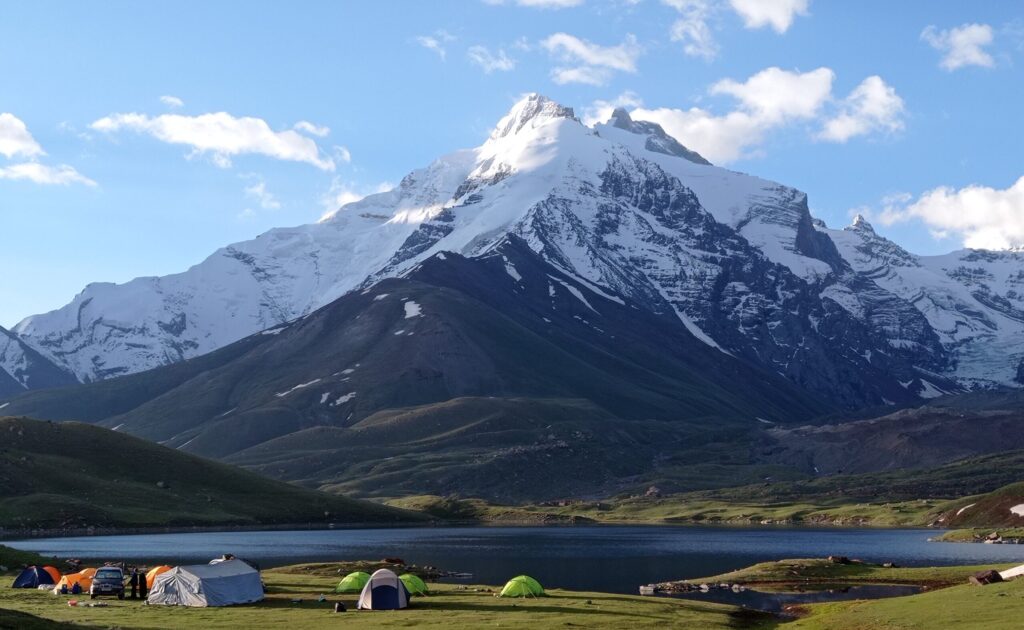
For years, the Pamir-Karakoram anomaly stood as a rare outlier in global climate trends: a region where glaciers remained relatively stable despite accelerating global warming. Now, new research from the Institute of Science and Technology Austria (ISTA) confirms that even these “last strongholds” have begun to lose mass at an alarming rate.

Snow Deficit and Rising Heat

Data collected from a climate monitoring station on the Kyzylsu glacier in the northwestern Pamirs, active from 1999 to 2023, reveals a sharp shift. According to an international research team led by Francesca Pelliccotti, the tipping point came in 2018, when a significant decline in snow cover and precipitation irreversibly altered the glaciers’ mass balance.

Once past this “point of no return,” glaciers began rapidly depleting their own reserves to compensate for the lack of new snowfall, a process accelerating their melt.

Since 2018, the region has experienced a persistent snow deficit. Snow depth has fallen by approximately 40 cm, and annual precipitation has declined by 328 mm, about one-third of the historical average. Seasonal snow melts earlier, is less stable in spring, and is no longer sufficient to replenish glacier mass.

July 2022 was the hottest month on record, and during this period, the Kyzylsu glacier recorded unprecedented mass loss, melting at a rate eight times faster than the 1999-2018 average. Scientists identify increasingly hot summers and a lack of precipitation as the primary causes.

Even the intensified ice melt has not made up for reduced snowfall: water inflow into rivers dropped by roughly 189 mm in water equivalent. The contribution of glacial runoff to total river flow rose from 19% to 31%, but this increase was still insufficient to offset the overall decline in water volume.

The situation is most severe at altitudes above 4,000 meters, where solid precipitation has declined sharply. Snow from avalanches, which previously helped sustain the glaciers, has dropped nearly threefold from 0.21 to 0.08 m per year.

Implications for Central Asia

Experts warn that this is not a localized issue. The Pamir and Karakoram glaciers feed the Amu Darya and Syr Darya rivers, lifelines for millions across Central Asia. Diminishing glacial mass threatens freshwater availability, agriculture, hydropower generation, and overall socio-economic stability.

“Due to the lack of accurate forecasts, we cannot yet say definitively whether the Pamir glaciers have passed the point of no return. However, since 2018, the processes have changed dramatically, and the reduction in precipitation has had a critical impact on their stability,” said ISTA researcher Achille Joubert.

Data Gaps and New Monitoring Efforts

Following the collapse of the Soviet Union, glacier monitoring in the region was largely suspended for nearly two decades. Systematic observations resumed only in 2021, when international researchers reinstalled instruments on the Kyzylsu glacier, one of the Vakhsh River’s primary sources.

These new measurements confirmed a drastic drop in precipitation and snow thickness starting in 2018, with consistently unfavorable conditions persisting since.

Compared to the late 1990s, spring and summer snow now melts much faster, and the “cold reserves” that once preserved glacier stability are disappearing rapidly.

The study’s findings were published in Communications Earth & Environment, reinforcing that even the most resilient glaciers in Central Asia are succumbing to climate change.

“The disappearance of glaciers means not only a shortage of water, but also a threat to climate stability,” the researchers warn.

The loss of these natural freshwater reserves could trigger cascading effects from reduced electricity generation to ecosystem degradation.

The end of the Pamir-Karakoram anomaly is not just a regional alarm bell. It signals the urgency of coordinated international climate action. Without it, scientists say, the process may already be beyond reversal.

For Central Asia, this carries profound geopolitical and economic implications. Water stress is already a driver of tension between upstream and downstream states, and shrinking glaciers will exacerbate disputes over allocation and dam construction. Governments are under pressure to accelerate adaptation strategies – modernizing irrigation, investing in alternative energy, and expanding regional cooperation on water-sharing agreements.

Researchers also stress the importance of filling data gaps with sustained monitoring. Long-term, high-resolution observations are critical for forecasting river flow and planning infrastructure. International support, they argue, could help countries like Tajikistan and Kyrgyzstan upgrade their hydrological networks, while linking local data into global climate models.

Ultimately, the fate of the Pamir and Karakoram glaciers will not be decided in the mountains alone. Their survival, or disappearance, depends on global emissions trajectories and the political will to implement serious mitigation measures. What happens here, at the heart of Asia’s water towers, will ripple far downstream into the lives of millions.

China’s Luban Workshops in Kazakhstan: Skills-Building or Strategic Leverage?

At the recent Shanghai Cooperation Organization summit in Tianjin, China inaugurated two new vocational centers in Kazakhstan under the Luban Workshop initiative. The move highlights the growing emphasis on technical education and skills development across the region. Kazakhstan’s first Luban Workshop was launched in 2023 at Serikbayev East Kazakhstan Technical University, creating a platform to advance engineering and technical training.

The program has since expanded with a second workshop at the Gumilyov Eurasian National University in Astana and a third at the Academy of Logistics and Transport in Almaty. This China-led program aims to share China’s educational expertise and technical resources with partner countries, with a particular focus on cultivating a new generation of skilled workers in developing economies.

The workshops are not only a vehicle for workforce training but also a symbol of the Belt and Road Initiative’s people-to-people exchange dimension. By encouraging social and educational connections, China is seeking to complement government-to-government cooperation with deeper societal ties.

The choice of Tianjin for the ceremony is not a coincidence. The Luban Workshop concept originated in this city and has been actively promoted by the Tianjin municipal government. Equally notable is Kazakhstan’s central role in the program’s expansion. The Kazakh government has expressed consistent support for Chinese-led educational partnerships, underlining the importance of vocational training to its national development agenda.

During his visit to a Luban Workshop in Kazakhstan in February 2024, President Kassym-Jomart Tokayev praised the initiative, saying, “I am deeply appreciative of the contributions made by Chinese universities. They have executed exemplary work. I hope to see more workshops like this in Kazakhstan.”

The expansion of China’s Luban Workshop initiative offers distinct benefits for both China and Kazakhstan. For China, the workshops help shift perceptions of its educational initiatives. Unlike the Confucius Institutes, which focus on cultural and language promotion, the Luban Workshops emphasize practical, in-demand skills in fields such as manufacturing and technology. This approach allows China to project a more pragmatic and development-oriented image, fostering goodwill in a way that is less vulnerable to geopolitical criticism.

A second key benefit lies in the realm of soft power. By delivering tangible skills and opportunities, Luban Workshops can positively influence public attitudes toward China in Central Asia. In Kazakhstan, such initiatives not only support technical education but also help frame Chinese investments as beneficial for local communities. Over time, this contributes to strengthening government-to-government ties and broader people-to-people connections, enhancing China’s long-term influence in the region.

For Kazakhstan, the Luban Workshops provide benefits by helping to build a pool of technically skilled human capital. This directly supports the country’s industrial goals and broader economic development agenda. A more qualified workforce also enables local citizens to participate more actively in Chinese-backed projects in Kazakhstan, thereby boosting local employment.

One of the recurring criticisms of China’s overseas investment projects has been the limited transfer of knowledge and skills. In many cases, local workers are confined to low-skilled, manual roles, while Chinese nationals occupy managerial and technical positions. The Luban Workshops aim to bridge this gap by offering specialized vocational training that equips Kazakh workers with the competencies to enter Chinese companies and progress into higher-skilled, potentially managerial roles over time.

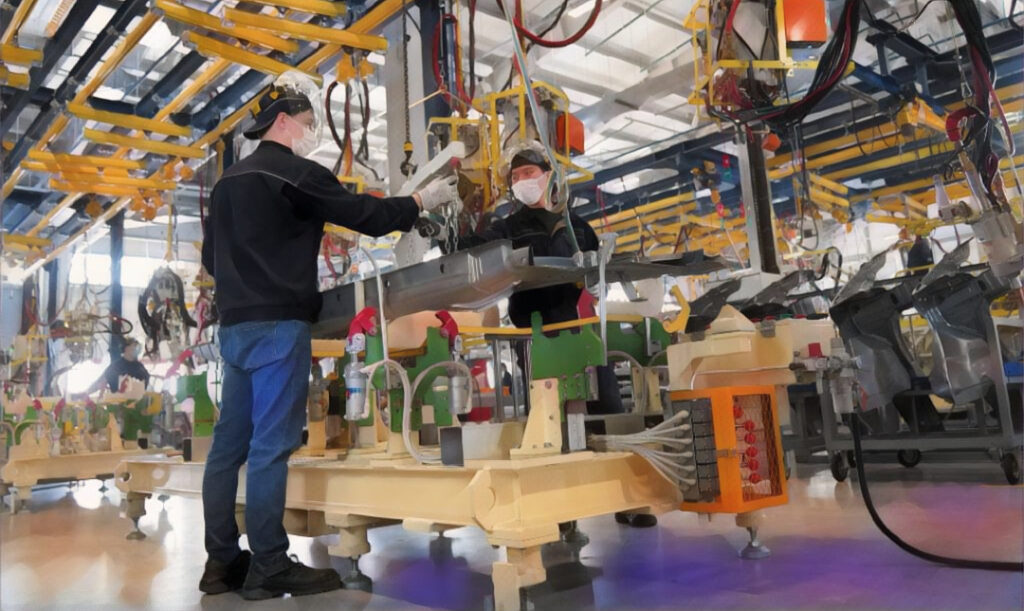
The most distinctive advantage of the Luban Workshops is that they do not follow a one-size-fits-all curriculum. Instead, training programs are tailored to align with the host country’s national priorities. For example, Kazakhstan’s first Luban Workshop introduced courses in vehicle maintenance, electric vehicle technology, automotive engines, and advanced driver assistance systems

These fields align closely with Kazakhstan’s industrial development plan, which prioritizes investment in vehicle manufacturing and the localization of production. In this way, the workshops train skilled technicians while also building a broader pool of human capital that supports Kazakhstan’s long-term development strategies.

Despite the clear benefits, the expansion of the Luban Workshops also presents certain risks for Kazakhstan. The workshops are built around Chinese technologies, equipment, and technical standards. While this enables local trainees to gain hands-on experience with advanced tools, it simultaneously embeds Chinese technological frameworks within Kazakhstan’s educational and industrial systems.

Given the scale of Chinese investment across multiple sectors in Kazakhstan—ranging from renewable energy to critical minerals and waste management—this dynamic could, over time, lock the country into a Chinese-dominated technological ecosystem. Training a workforce to operate, maintain, and innovate specifically on Chinese platforms may further increase demand for Chinese products, spare parts, and critical technologies.

This can create a self-reinforcing cycle that, as more Kazakh industries adopt Chinese systems, reliance on Chinese suppliers and expertise deepens. While this dynamic strengthens China’s position as a key economic partner, it also risks fostering a form of technological dependency that could constrain Kazakhstan’s long-term autonomy in industrial and technological decision-making.

In the short to medium term, the expansion of the Luban Workshops offers Kazakhstan valuable opportunities to strengthen human capital, support economic development, and ease public concerns about Chinese investment by demonstrating tangible local benefits. 

The central challenge for Kazakhstan, therefore, is to harness the advantages of skills development and vocational training while carefully managing the strategic risks of overreliance on a single external partner.

Indian Gold Miners Enter Kyrgyz Market for the First Time

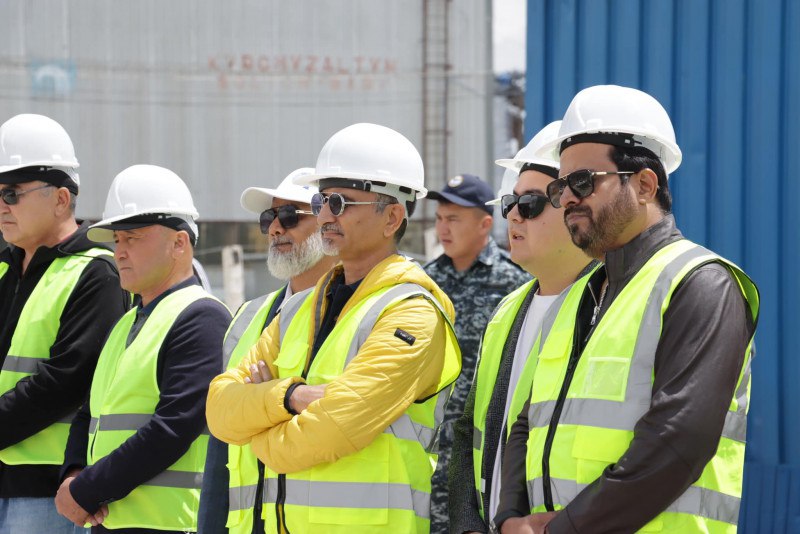
Indian mining firm Deccan Gold Mines has launched operations at the Altyn Tor gold deposit in Kyrgyzstan’s Naryn region, marking the first overseas venture by an Indian gold mining company, according to Indian media reports.

The project is being developed through Deccan’s local subsidiary, Avelum Partners LLC, which holds a 60% stake in the mine. Production of doré bars is scheduled to begin in October 2025.

Geological assessments estimate the Altyn Tor deposit contains approximately 4.6 million tons of gold-bearing ore with an average grade of 1.2 grams per ton, translating to roughly 60 tons of total gold reserves.

Hanuma Prasad Modali, CEO of Deccan Gold Mines, said preparations are progressing on schedule.

“Eleven conveyor systems have been installed at the site, and the crushing complex has been tested. In early September, the ball mill, one of the key components of the processing plant, will go online, enabling us to reach design capacity as planned,” Modali stated.

The company has positioned the project as a model of responsible mining, aiming to strengthen bilateral ties between India and Kyrgyzstan. Despite challenging climatic conditions at the site’s 3,300-meter elevation, year-round production is planned.

Altyn Tor forms part of the larger Solton-Sary gold deposit, originally discovered by Soviet geologists in the 1940s. Mining activity at the site was active through the 1990s and early 2000s but later ceased due to insufficient investment.

Deccan Gold Mines is also evaluating the potential for processing materials in the tailings pond, where residual gold remains.

The company remains the only publicly listed gold mining firm on the Indian stock exchange. News of its overseas expansion triggered a surge in share prices.

Earlier, Kyrgyzaltyn, the state-owned holding company, confirmed that production at the site was expected to commence in the second half of 2024.

Kazakhstan’s Higher Education Transformation – Minister Sayasat Nurbek on Attracting Global Talent and Driving Innovation

Kazakhstan is moving quickly to reposition its universities for a more competitive, tech-driven future and to become Central Asia’s study destination of choice. In an interview with The Times of Central Asia, Minister of Science and Higher Education of Kazakhstan, Sayasat Nurbek, explained that a flagship target captures this ambition: to attract 150,000 international students by 2029, nearly five times today’s level, while deepening partnerships with global universities, expanding research in critical minerals, and backing student entrepreneurship and AI talent pipelines.

Kazakhstan as an Emerging Education Hub in Eurasia

Government strategies and institutional partnerships frame Kazakhstan not only as Central Asia’s study destination of choice, but as a new nexus for education in Eurasia. The country’s location at the crossroads of Europe and Asia positions it to serve diverse regional markets, while rapidly multiplying branch campuses and partnerships with leading universities demonstrate how this ambition is taking shape.

Inside the system, the reform agenda is anchored in greater university autonomy, modular and English-medium programs, stronger international accreditation, and a shift from rote learning to research-led, industry-connected education. As Sayasat Nurbek, Kazakhstan’s Minister of Science and Higher Education, told The Times of Central Asia: “Kazakhstan is not only Central Asia’s education leader – we are becoming a new Eurasian hub. Our partnerships with global universities and the growth of world-class campuses show that students no longer need to leave the region to access international-quality education.”

Capturing Demographic Shifts and International Demand

Demographics are one reason why this might work. Central Asia and the broader Eurasian neighborhood together have over a billion people under the age of 25 – a cohort that will strain capacity in nearby systems as the demand for higher education surges. Kazakhstan’s bet is to meet that need locally, in English, at global standards, and at a cost point that undercuts Western destinations. In this sense, the country is explicitly targeting an opportunity to capture demographic shifts and attract students from abroad, while positioning itself as a credible, accessible alternative to saturated or costly Western markets. Minister Nurbek emphasized this point: “With more than a billion young people across Central Asia and our neighboring regions, the demand for higher education is exploding. Kazakhstan is seizing this demographic opportunity by offering English-medium programs at global standards, and at a cost that is far more accessible than traditional destinations.”

This change is visible on the ground through a rapid expansion of foreign branch campuses and deep partnerships. In September 2025, Cardiff University officially opened in Astana – the first Russell Group presence in the country. Branches of the British De Montfort and Coventry universities have already opened their doors in Almaty and Astana, whilst a campus of the South Korean university, Woosong, is set to launch in Turkestan this month. Ministerial briefings and project sheets describe a broader pipeline that includes operating collaborations as well as branches at varying stages – from Penn State and the University of Arizona to SeoulTech, TU Berlin, Queen’s University Belfast, New York Film Academy, and others, alongside planned arrivals such as a KAIST-backed university and Grenoble INP – Phelma at Satbayev University. The effect is two-way: global brands gain access to a strategically located market, while Kazakhstani students and faculty get world-standard curricula, laboratories, and degree pathways without leaving home.

Gaining Traction on the Ground

These developments show that Kazakhstan has growing momentum. Dozens of partnerships are already operational, new branch campuses are opening yearly, and enrollment numbers are beginning to reflect strong international interest. Government scholarship quotas, new dormitory builds, and investments in smart campuses and research clusters are reinforcing this growth. Recognition has followed: Kazakhstan posted a record 35 institutions in the QS Asia University Rankings 2025, with Al-Farabi Kazakh National University, L.N. Gumilyov Eurasian National University, and Satbayev University all placed in Asia’s Top 100 – a signal of steady gains in academic and employer reputation.

AI Training Becoming Reality

Kazakhstan’s ambitions in artificial intelligence are no longer just a vision. The AI-SANA program is already training tens of thousands of students, seeding hundreds of startups, and embedding AI into national education standards.

Kazakhstan has launched the most powerful supercomputer in Central Asia, a 2-exaflop machine equipped with NVIDIA H200 processors, designed for AI and high-performance computing. Installed at the Ministry of Digital Development’s Tier 3 data center, the system will provide computing-as-a-service for startups, universities, and research institutions across the region. Albeit Kazakhstan’s own academic cluster is in a nascent stage, supercomputing clusters with a combined capacity of 42 PFLOPS are being deployed at major universities. The arrival of this national supercomputing resource is therefore a significant step forward, positioning the country as a regional leader in AI and data-driven innovation.

Partnerships with Huawei, Coursera, and Astana Hub are delivering hands-on courses and industry pathways. In parallel, AI has been introduced as a compulsory element of the higher education curriculum, ensuring that every graduate acquires baseline competencies in the field. Ultimately, this is building a large pool of AI-skilled technicians and specialists to serve industry and research. As Minister Nurbek told The Times of Central Asia, this blend of talent development, infrastructure, and international collaboration is making AI training both tangible and transformative for Kazakhstan’s innovation system.

Strong Government Backing

The country’s ascent as an academic hub is underpinned by strong government support. The Ministry of Science and Higher Education is not only co-signing MOUs with global players such as Huawei on AI and supercomputing clusters, but also financing scholarship quotas, incentivizing private investment, and staging international forums. The upcoming Strategic Partners Forum 2025 in Astana will convene global stakeholders under the theme “Global Partnerships and Digital Transformation: A New Landscape of Higher Education,” signaling Kazakhstan’s intent to anchor itself firmly in the global higher education ecosystem. Minister Nurbek underscored this momentum: “We are not speaking in future tense,” he told TCA, “this transformation is already underway. Dozens of new campuses, record scholarship allocations, and major international rankings gains prove that Kazakhstan’s higher education system is getting traction. And the government is fully committed, with new laws, funding mechanisms, and partnerships to sustain the momentum.”

Kazakhstan Gifts 1,500 Saiga Antelopes to China

Kazakhstan has gifted 1,500 saiga antelopes to China, stepping in to support China’s own efforts to restore the species beyond Central Asia.

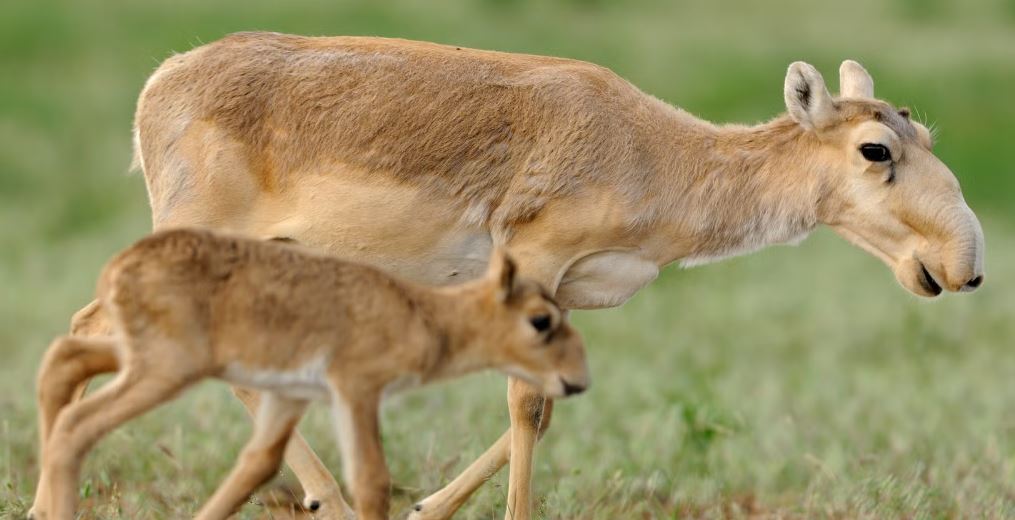
Loved for its handsome, bulbous nose, the saiga is found in large numbers across the Kazakh steppe. Once endangered in Kazakhstan, numbering as few as 40,000 in 2005, the antelope is in fact now overpopulated, as numbers have reached a record 4.1 million in 2025.

As such, Kazakhstan has been looking for ways to reduce its population while nurturing environmental and diplomatic ties with China.

In turn, China has long been interested in reviving the saiga, but previous attempts have not been successful.

Dastan Kusmanov, an ecologist and PhD candidate at the Nazarbayev University Graduate School of Public Policy, told The Times of Central Asia: “I believe that the saiga being gifted to China is an environmental measure. If a new saiga population is established in China, this is an overall benefit for the species’ survival, because if anything happens to the existing saiga population in Kazakhstan, the species still has a chance to survive elsewhere.”

Kusmanov added, “It’s also beneficial for the environment in China. Saigas are an officially extinct species in China, but you need ungulate animals for the benefit of the environment. Ungulates are animals that eat grass and trample soil to make it softer. Through their diet, they then take seeds from one place to another through their excrement. Saigas also serve as a food source for wolves and eagles, so they are a vital part of the ecosystem and food chain.”

The ecologist emphasized that losing 1500 animals from Kazakhstan’s steppe will not harm the species in the country: “As the gift of 1,500 saigas is less than 0.04% of over 4 million saigas in Kazakhstan, it will not have a negative impact on the existing Kazakhstan population.”

Dr. Kanat Baigarin, Chief Officer for Sustainable Development at Nazarbayev University, agreed with Kusmatov that this new herd would help to protect the saiga species as a whole. “The more widely the saiga population is distributed,” Baigarin told The Times of Central Asia, “the more resilient it becomes to epidemics and other threats. This is a unique example of how countries can work together to restore endangered species.”

“It’s important to plan ahead for food resources, animal adaptation, and transboundary protection: this way, the project can serve as a foundation for broader environmental cooperation.”

Meanwhile, neighboring Kyrgyzstan is focusing on species recovery. The Times of Central Asia previously reported that in May this year, Kyrgyzstan launched a conservation initiative to reintroduce another ungulate species, the jayran or goitered gazelle, along the southern shore of Lake Issyk-Kul.