• KGS/USD = 0.01144 0%
  • KZT/USD = 0.00196 -0%
  • TJS/USD = 0.10899 0%
  • UZS/USD = 0.00008 0%
  • TMT/USD = 0.28571 0.28%
  • KGS/USD = 0.01144 0%
  • KZT/USD = 0.00196 -0%
  • TJS/USD = 0.10899 0%
  • UZS/USD = 0.00008 0%
  • TMT/USD = 0.28571 0.28%
  • KGS/USD = 0.01144 0%
  • KZT/USD = 0.00196 -0%
  • TJS/USD = 0.10899 0%
  • UZS/USD = 0.00008 0%
  • TMT/USD = 0.28571 0.28%
  • KGS/USD = 0.01144 0%
  • KZT/USD = 0.00196 -0%
  • TJS/USD = 0.10899 0%
  • UZS/USD = 0.00008 0%
  • TMT/USD = 0.28571 0.28%
  • KGS/USD = 0.01144 0%
  • KZT/USD = 0.00196 -0%
  • TJS/USD = 0.10899 0%
  • UZS/USD = 0.00008 0%
  • TMT/USD = 0.28571 0.28%
  • KGS/USD = 0.01144 0%
  • KZT/USD = 0.00196 -0%
  • TJS/USD = 0.10899 0%
  • UZS/USD = 0.00008 0%
  • TMT/USD = 0.28571 0.28%
  • KGS/USD = 0.01144 0%
  • KZT/USD = 0.00196 -0%
  • TJS/USD = 0.10899 0%
  • UZS/USD = 0.00008 0%
  • TMT/USD = 0.28571 0.28%
  • KGS/USD = 0.01144 0%
  • KZT/USD = 0.00196 -0%
  • TJS/USD = 0.10899 0%
  • UZS/USD = 0.00008 0%
  • TMT/USD = 0.28571 0.28%
09 December 2025

Opinion: China’s Diplomatic Power Play Unfolds in Tianjin

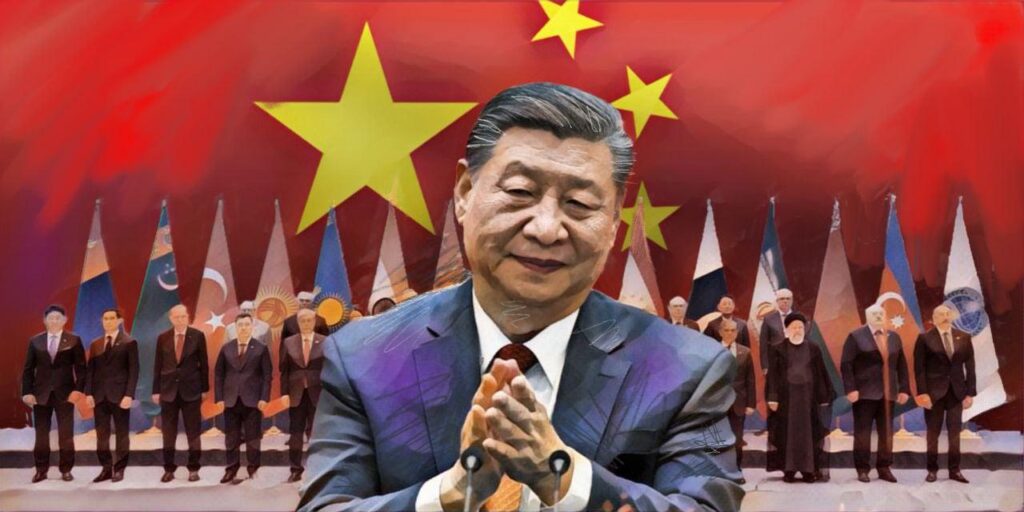
On August 31, the next SCO Plus summit will begin in the Chinese city of Tianjin and run through to September 1. Judging by the list of participants, China, under Chairman Xi Jinping, is positioning itself to challenge the United States for influence over the global geopolitical agenda. As part of the Shanghai Cooperation Organization (SCO) summit, Xi will host a formal banquet for the attending heads of state, according to the Chinese Foreign Ministry. Xi is also scheduled to chair the 25th meeting of the SCO Council of Heads of State and lead the expanded SCO Plus session – the largest since the establishment of the organization – where he will deliver a keynote address.

Clues to the themes of Xi’s speech can be found in the diverse array of leaders expected to attend. Chinese Deputy Foreign Minister Liu Bin confirmed at a Beijing press conference that among the SCO member states, participants will include Russian President Vladimir Putin, Indian Prime Minister Narendra Modi, Pakistani Prime Minister Shahbaz Sharif, Iranian President Masoud Pezeshkian, Belarusian President Alexander Lukashenko, Kazakh President Kassym-Jomart Tokayev, Kyrgyz President Sadyr Japarov, Tajik President Emomali Rahmon, and Uzbek President Shavkat Mirziyoyev.

Several leaders from non-member states will also join, including Turkish President Recep Tayyip Erdoğan; Mongolian President Ukhnaagiin Khurelsukh; Azerbaijani President Ilham Aliyev; Indonesian President Prabowo Subianto; and Turkmen President Serdar Berdimuhamedov, whose participation suggests Ashgabat’s cautious but growing interest in regional dialogue.

Also in attendance will be the prime ministers of Armenia (Nikol Pashinyan), Cambodia (Hun Manet), Nepal (Khadga Prasad Sharma Oli), Egypt (Mostafa Madbouly), Malaysia (Anwar Ibrahim), and Vietnam (Pham Minh Chinh).

The summit will also host key international institutional leaders, including UN Secretary-General António Guterres; SCO Secretary-General Nurlan Yermekbayev; CIS Secretary-General Sergey Lebedev; ASEAN Secretary-General Kao Kim Hourn; CSTO Secretary-General Imangali Tasmagambetov; EAEU Chairman Bakytzhan Sagintayev; and AIIB President Zhou Ji.

Kazakhstan will be prominently represented. In addition to President Tokayev, three high-profile Kazakhs mentioned above – Yermekbayev, Tasmagambetov, and Sagintayev – will attend in their capacities as heads of international organizations. Their presence signals Astana’s growing diplomatic weight and reflects the strategic outreach led by Tokayev, himself a former UN Deputy Secretary-General. This background likely contributes to the rapport between Kazakhstan and Guterres.

The summit will also inevitably draw attention due to the presence of the Armenian and Azerbaijani leaders, figures central to the ongoing realignment in the South Caucasus. Both Baku and Yerevan have increasingly distanced themselves from Moscow, favoring closer ties with Turkey and the United States. The recent peace agreement between Aliyev and Pashinyan, signed in the presence of President Trump, underscored the growing American role in the region and the diminishing influence of Russia.

While Moscow appears willing to tolerate this shift, Tehran views it with deep concern, especially after its recent 12-day conflict with Israel. Russia, for its part, seems to be signaling disengagement from the region. Its silence in response to Baku and Yerevan’s Western overtures suggests strategic apathy, if not withdrawal.

Beijing, of course, is acutely aware of these tensions. Xi’s decision to host such a complex and potentially divisive gathering in Tianjin may reflect a broader ambition: to position China as a central node in an evolving multipolar world order.

Tianjin itself is a symbolically rich location. Once part of a prehistoric ocean bed, it is now China’s third-largest urban area. Its growth began under the Ming dynasty in the late 14th century, when it served as a key gateway to Beijing. Today, its well-preserved temples stand alongside ultramodern infrastructure, offering a visual metaphor for China’s global aspirations.

Among these historic and technological landmarks, Xi is expected to stage a high-level diplomatic performance, one aimed at seizing the initiative in any future talks about the global balance of power.


The views expressed in this article are those of the author and do not necessarily reflect the official policy or position of the publication, its affiliates, or any other organizations mentioned.

“Recipes for Broken Hearts”: Bukhara Launches First Art Biennale

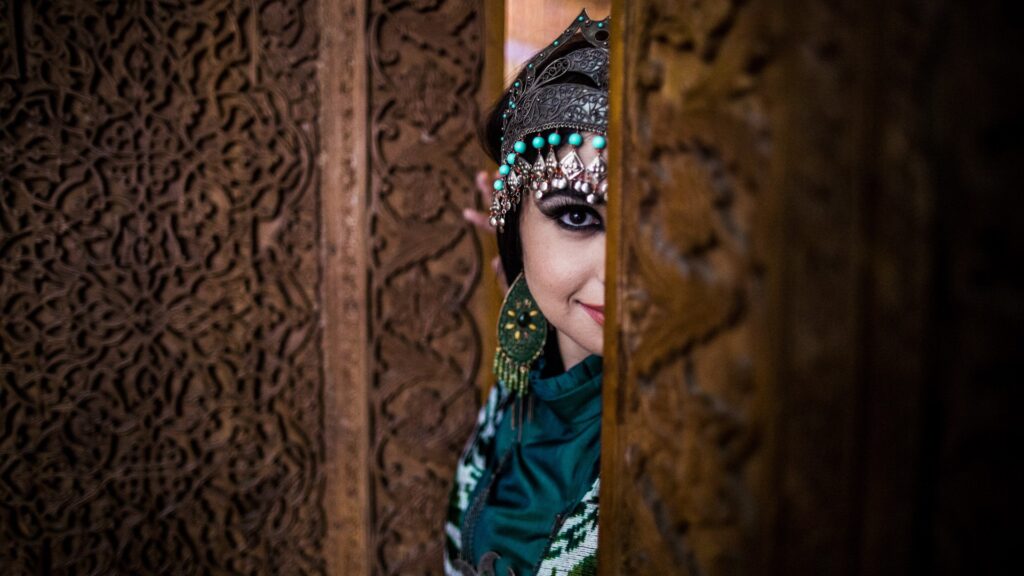
This autumn, the ancient Silk Road city of Bukhara is poised to reemerge as a global cultural destination, hosting its first-ever international art biennale, Recipes for Broken Hearts.

Running from September 5 to November 20, the ten-week festival will transform Bukhara, a UNESCO Creative City, into a vibrant arena for contemporary art, community rituals, and culinary experiences. The initiative is spearheaded by Gayane Umerova, chair of the Uzbekistan Arts and Culture Development Foundation (ACDF), with renowned curator Diana Campbell at the helm.

More than 70 new works, created in Uzbekistan, will be displayed in historic madrasas and caravanserais, reimagined as immersive exhibition spaces. The event promises to be among the region’s largest cultural gatherings, aiming to reclaim Bukhara’s place on the global cultural map.

Not Just an Exhibition, A Sensory Ritual

Recipes for Broken Hearts is not a traditional exhibition. Designed as a “ritual for the senses,” it invites audiences to engage with art not just visually but through touch, scent, sound, and taste. Sculptures, textiles, music, and food converge into an experimental space for “emotional healing.”

Visitors become participants rather than spectators. At the opening ceremony, instead of a red carpet, guests will be welcomed by the scent of fermentation. Korean Buddhist nun and chef Jeon Kwan will prepare kimchi, place it in a clay pot, and bury it. Ten weeks later, the fermented dish will be unearthed and shared with the public, symbolizing transformation and healing through time.

A Dialogue Between Cultures

The biennale’s installations span a wide geographic and cultural range. Egyptian-American artist Laila Gohar will craft navata, a crystal made from grape juice and saffron. Colombian artist Delcy Morelos will construct a dome of clay, sand, and spices to symbolize human connection to the earth. Uzbek artist Oizhon Khairullaeva and ceramist Abdurauf Tahirov will create “organs of the city,” including a beating ceramic heart and a “stomach” integrated into historic architecture. Indian sculptor Subodh Gupta will build a giant dome from enamel teapots and bowls, shaped like a yurt, where guests will be served fusion cuisine.

Central to the project is the in situ approach: every piece is created in Bukhara with the support of local artisans, potters, weavers, and carpet makers, infusing contemporary works with traditional skills. “This isn’t an art fair,” explained the curators. “Each piece speaks from this land, even if the whole world sees it.”

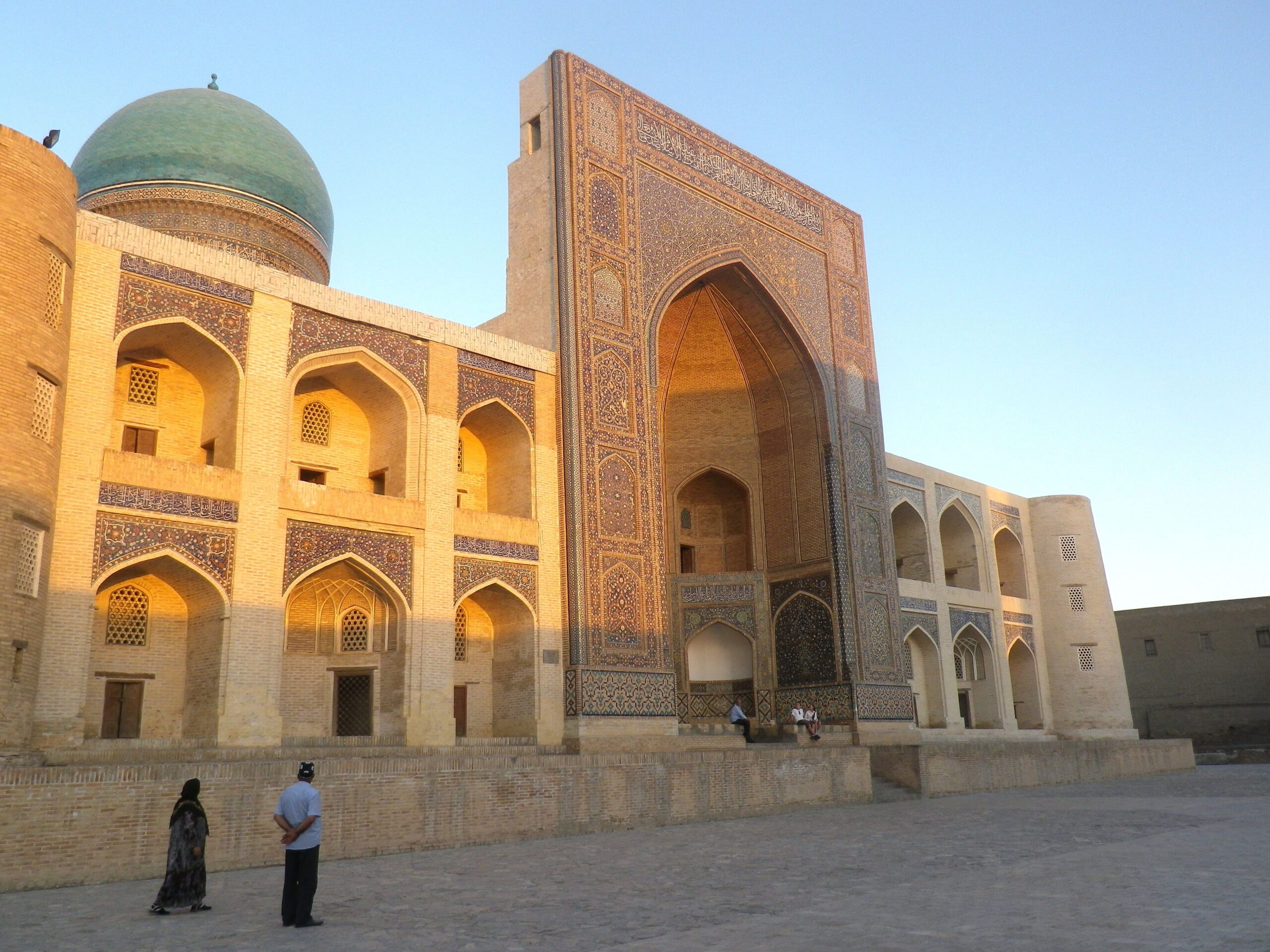
The Kalon Mosque, Bukhara; image: TCA, Stephen M. Bland

Bukhara as a Living Gallery

Festival venues are dispersed throughout Bukhara’s historic core, effectively turning the city into an open-air gallery. Four restored caravanserais symbolize the emotional journey from grief to hope. The 16th-century Gavkushon madrasa, repurposed as the “House of Softness,” will host workshops, public readings, and a symposium titled The Craft of Mending. There, artists and scholars will explore the “culture of repair”, from object restoration to the preservation of historical memory.

“Erasing history is also a form of pain. Restoration is resistance to oblivion,” notes Harvard-based art historian Aziza Izamova. Concurrently, Bukhara will host a curatorial workshop for emerging professionals from across Asia, focused on creating new, future-forward art projects.

Music, Food, and Collective Healing

Music will serve as a thread connecting the biennale’s events. At every full moon, the city will resonate with the sounds of the karnaim, a traditional Uzbek horn believed to summon water in the desert. These performances, blending local ritual with environmental commentary, are led by the duo Himali Singh Soyin and David Soyin Tappezier. They will be joined by the Bukhara Philharmonic Orchestra and experimental musicians like Lebanese sound artist Tarek Atoui, who fuses Arabic and Central Asian motifs.

In the final week, the Rice Culture Festival will take place outdoors, showcasing global rice-based dishes: Uzbek plov, Spanish paella, Indian pulao, and West African jollof. These meals will be cooked live and accompanied by stories and songs. “This isn’t about haute cuisine,” explains curator Saodat Umerova. “It’s about gathering, healing, and preserving memory through food.”

A Cultural Breakthrough for Central Asia

More than a local event, the Bukhara Biennale is being hailed as a milestone for Central Asia. Kazakh art historian Raushan Kazbaeva told The Times of Central Asia: “We’ve long awaited a cultural initiative of this scale in our region. That it begins in Bukhara, a historic bridge between East and West, is fitting. This biennale shows that contemporary art is deeply rooted in everyday culture and offers a new language for Central Asia to engage with the world.”

Kazbaeva added that the project helps shift international perceptions of the region, historically seen only through geopolitical or economic lenses. “Now we’re proving that world-class art is being made here, and our artists can shape global conversations.”

She believes Uzbekistan’s lead may inspire neighboring countries to develop similar platforms, art forums, festivals, and residencies that strengthen cultural identity and promote regional collaboration. “The more such initiatives emerge, the stronger Central Asia’s cultural authority will become,” she concluded.

A City Ready to Welcome the World

Bukhara is preparing for an influx of international visitors. The city is accessible by high-speed train from Tashkent and Samarkand, and its UNESCO-listed old town offers boutique hotels and guesthouses nestled among historic streets.

Tajik Cotton Farming in Crisis: Why Production Is Falling and What the Government Is Doing About It

Tajikistan’s cotton industry is facing a deepening crisis. Production has plummeted, costs have outstripped prices, and a lack of qualified specialists is further straining the sector’s viability. Once a cornerstone of the national economy, cotton is becoming increasingly unprofitable for farmers, prompting government efforts to reverse the decline.

Harvest and Export Decline

Over the past two years, cotton production has dropped dramatically. The 2022 harvest totaled 404,700 tons, but by 2024 this figure had fallen nearly 40% to 253,200 tons. Cotton fiber processing also decreased, from 127,100 tons in 2022 to 106,900 tons in 2024.

This contraction has impacted exports. In 2024, Tajikistan exported 100,500 tons of fiber worth $170.1 million, $28.5 million less than the previous year. The average export price fell to $1,692 per ton.

Iran remains the primary buyer, accounting for 68% of Tajik cotton exports. Other destinations include Turkey (15%), China (8.4%), Russia (4.4%), Pakistan (3%), Georgia (1%), Bangladesh (0.2%), and Latvia (0.1%).

Strategic Resource Under Pressure

On August 26, the Ministry of Economic Development and Trade hosted a meeting of the Interdepartmental Headquarters for Macroeconomic Policy. First Deputy Minister Ashurboy Solehzoda reaffirmed that cotton cultivation and processing remain “strategic directions” for the country. He emphasized the crop’s importance not only for economic stability but also for maintaining Tajikistan’s export potential.

However, authorities acknowledge that without modernization and deeper processing, the country risks losing its position in the global cotton market.

What’s Behind the Decline?

Multiple factors have contributed to the sector’s downturn in 2025.

Abnormal spring rainfall delayed sowing by 65 days, shifting ripening schedules and reducing overall crop quality. Summer heatwaves and premature irrigation by farmers led to widespread root rot, compounding losses.

Economic factors have also played a key role. The average purchase price for cotton remains at 6-7 somoni per kilogram, while production costs range from 7-8 somoni, making cultivation unprofitable and discouraging continued investment by farmers.

A severe shortage of qualified personnel is another critical issue. Approximately 200,000 farms lack agronomists, and many textile enterprises struggle to find staff trained to operate modern machinery.

The cost of electricity further burdens the sector, accounting for up to 15% of cotton yarn production costs. Processors receive no seasonal discounts to mitigate expenses.

Additionally, limited access to affordable credit has prevented enterprises from upgrading equipment or expanding capacity.

Government Response

The government has introduced a set of tariff and non-tariff incentives aimed at stimulating processing and expanding textile production. However, experts argue that these measures are underutilized and have yet to make a meaningful impact on domestic supply or budget revenues.

Underground Gold Mining Officially Launched at Kumtor

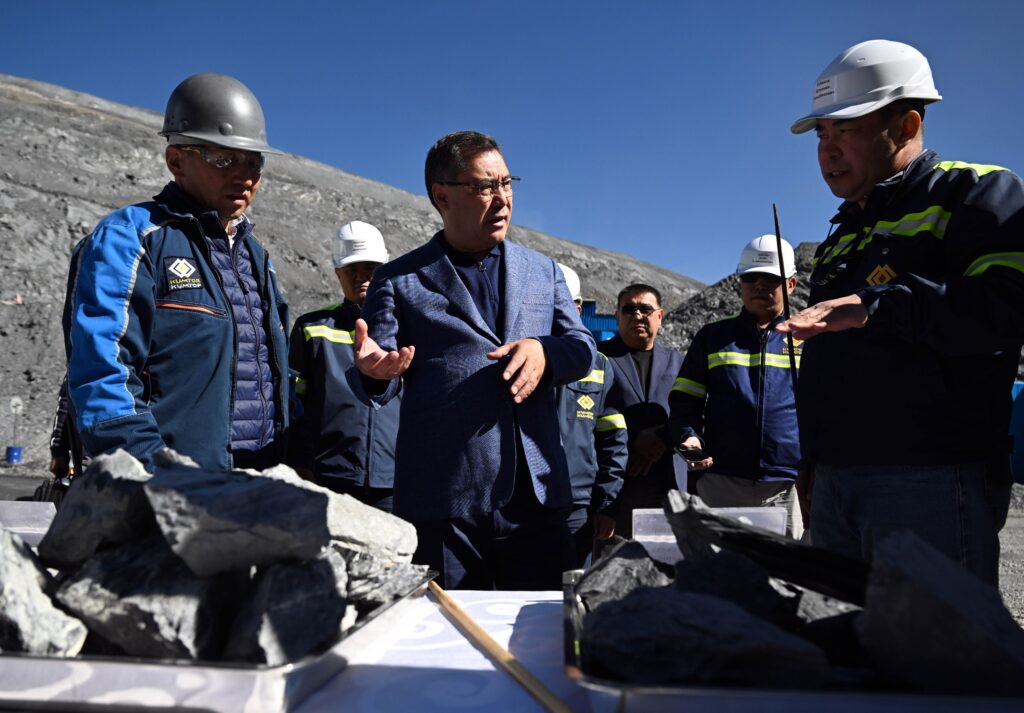
Kyrgyz President Sadyr Japarov has inaugurated underground mining operations at the high-altitude Kumtor gold mine during a working visit to the Issyk-Kul region.

According to Japarov, underground development at Kumtor should have started two decades ago. However, the mine’s former operator, Canadian company Centerra Gold, opted instead for open-pit mining, which was less costly but had serious environmental consequences. He said the dumping of waste rock onto the Davydov and Lysyi glaciers resulted in their degradation.

“The launch of underground gold mining at Kumtor is a crucial step toward environmental protection and glacier preservation,” Japarov stated. He reported that approximately 1,600 meters of tunnels have already been excavated, and ore with a gold content exceeding five grams per ton is ready for extraction. The underground operation is projected to continue for 17 years, with proven reserves estimated at 147 tons of gold.

While Centerra Gold had previously explored underground mining, low global gold prices over a decade ago rendered the project financially unviable. The open-pit method yielded between five and seven grams of gold per ton of ore, then considered the threshold for profitability. As gold content declined over time, the possibility of mine closure loomed.

That outlook changed with rising gold prices. Following the nationalization of Kumtor in 2021, the mine’s profitability increased substantially. According to Japarov, since May 2021 the mine has produced 54 tons of gold, generating $3.5 billion in revenue. Of that, $891 million was paid into the state budget through taxes and other contributions. By contrast, the president noted, Kyrgyzstan received just $100 million during the 28 years the mine was under foreign ownership.

Speaking to The Times of Central Asia, veteran Kyrgyz geologist Rozalia Djenchuraeva suggested Kumtor’s reserves may be even larger. “Even on Soviet maps, one can see that there is a lot of gold in this area. Gold-bearing veins run under the glaciers from the Kyrgyz-Chinese border through Kumtor and extend westward for many kilometers,” she said. Djenchuraeva added that with modern technologies, especially underground extraction, it is possible to mine gold efficiently while adhering to environmental standards.

Russian Organization Builds Amusement Park in Bishkek

On August 28, a new amusement park named Eurasia officially opened in Bishkek.

Covering approximately 10 hectares, the park offers free admission and features around 30 amusement rides, sports facilities, and a food court. The project began in 2024 as part of a collaboration between Kyrgyzstan’s Cabinet of Ministers and Russia’s non-profit organization for international cooperation, Eurasia.

Total investment in the park reached $35 million. The initiative commemorates the 10th anniversary of the Eurasian Economic Union (EAEU), a regional integration bloc comprising Armenia, Belarus, Kazakhstan, Kyrgyzstan, and Russia. All construction and equipment costs were funded by the Eurasia organization.

Expanding Russia’s Soft Power

Since 2024, Eurasia has been active in Kyrgyzstan through various social and humanitarian projects. In partnership with Russia’s Ministry of Education, the organization has deployed young Russian teachers to secondary schools across Kyrgyzstan to instruct in specialized subjects taught in Russian.

Eurasia has also donated 100 school buses to rural Kyrgyz villages and funded renovations of schools in Bishkek and Kyzyl-Kyya.

On August 26, the organization opened its first social store, also named Eurasia, in Bishkek. The store aims to support vulnerable populations, including pensioners, veterans, large families, and people with disabilities, by offering essential food items at reduced prices.

Uzbekistan Responds After Migrant Taxi Driver Insulted in Moscow

A video filmed in the Moscow region has sparked public outrage after a Russian man verbally assaulted a taxi driver from Uzbekistan, calling him a “slave of Russians.” According to Minval, the incident took place in the courtyard of a residential complex in the town of Khimki, where the resident told the driver that he was “not at home” and had come to Russia “because there is nothing in Uzbekistan.”

The footage has triggered a wave of discussion in both Russia and Uzbekistan, where labor migration remains a vital economic issue. In response, Uzbekistan’s Ministry of Foreign Affairs issued a statement, without directly referencing the video, reaffirming that all Uzbek citizens are under the protection of the state, regardless of their location.

“The Republic of Uzbekistan, in accordance with its Constitution, national legislation, and international obligations, has a duty to safeguard the rights, freedoms, and dignity of its citizens abroad,” the ministry stated.

Authorities also urged Uzbeks whose rights are violated abroad to immediately report incidents to local law enforcement and to seek assistance from Uzbek diplomatic missions or consulates. “Protecting the rights and interests of our citizens abroad is a key priority of our state policy,” the ministry emphasized.

The incident comes amid broader policy shifts in Russia concerning foreign nationals. Starting September 1, authorities in Moscow and the surrounding region will roll out a new digital monitoring system for migrants. According to the Multifunctional Migration Center in Sakharovo, citizens from Central Asia and other countries will be required to install a mobile application called Amina, which will manage functions such as residence registration, address changes, and work permit payments.