• KGS/USD = 0.01144 0%
  • KZT/USD = 0.00196 -0%
  • TJS/USD = 0.10899 0%
  • UZS/USD = 0.00008 0%
  • TMT/USD = 0.28571 0.28%
  • KGS/USD = 0.01144 0%
  • KZT/USD = 0.00196 -0%
  • TJS/USD = 0.10899 0%
  • UZS/USD = 0.00008 0%
  • TMT/USD = 0.28571 0.28%
  • KGS/USD = 0.01144 0%
  • KZT/USD = 0.00196 -0%
  • TJS/USD = 0.10899 0%
  • UZS/USD = 0.00008 0%
  • TMT/USD = 0.28571 0.28%
  • KGS/USD = 0.01144 0%
  • KZT/USD = 0.00196 -0%
  • TJS/USD = 0.10899 0%
  • UZS/USD = 0.00008 0%
  • TMT/USD = 0.28571 0.28%
  • KGS/USD = 0.01144 0%
  • KZT/USD = 0.00196 -0%
  • TJS/USD = 0.10899 0%
  • UZS/USD = 0.00008 0%
  • TMT/USD = 0.28571 0.28%
  • KGS/USD = 0.01144 0%
  • KZT/USD = 0.00196 -0%
  • TJS/USD = 0.10899 0%
  • UZS/USD = 0.00008 0%
  • TMT/USD = 0.28571 0.28%
  • KGS/USD = 0.01144 0%
  • KZT/USD = 0.00196 -0%
  • TJS/USD = 0.10899 0%
  • UZS/USD = 0.00008 0%
  • TMT/USD = 0.28571 0.28%
  • KGS/USD = 0.01144 0%
  • KZT/USD = 0.00196 -0%
  • TJS/USD = 0.10899 0%
  • UZS/USD = 0.00008 0%
  • TMT/USD = 0.28571 0.28%
09 December 2025

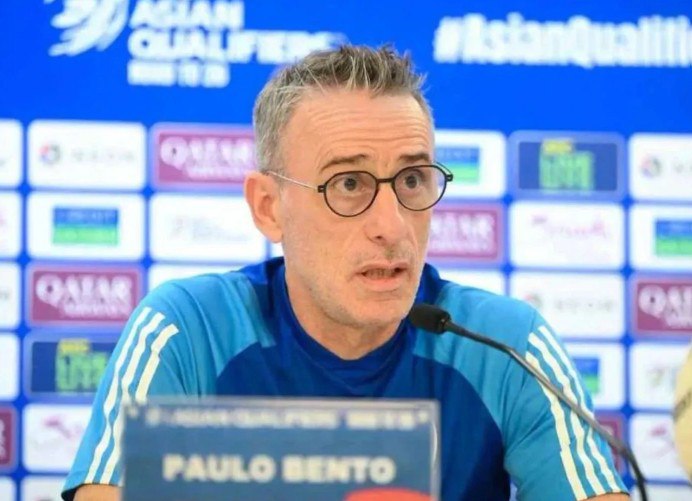
Uzbekistan Eyes Paulo Bento as National Team Coach Amid Ambitious Football Reforms

Reports regarding Uzbekistan’s search for a new head coach for its national football team have taken a significant turn, with Paulo Bento, former manager of South Korea and Portugal, emerging as a leading candidate, according to Football-Asian.

The Uzbekistan Football Association (UFA) is seeking a seasoned tactician to lead the team during its landmark debut at the 2026 FIFA World Cup. Initial approaches to high-profile names such as Germany’s 2014 World Cup-winning coach Joachim Löw and veteran Turkish manager Fatih Terim failed to yield results. Attention has since shifted to Bento, a 56-year-old Portuguese coach with a strong international and club-level résumé.

Bento previously guided Portugal to the semi-finals of Euro 2012 and led South Korea to the Round of 16 at the 2022 World Cup in Qatar. His coaching career also includes stints with clubs in Portugal, Brazil, Greece, and China, as well as a recent tenure with the UAE national team. For Uzbekistan, which qualified for the World Cup for the first time this year, Bento’s tournament experience and tactical acumen are considered valuable assets.

“Whether Bento accepts the challenge of leading Central Asia’s standard-bearers remains to be seen, but the very fact he is in the frame underlines Uzbekistan’s determination to think big,” Football-Asian reported.

Current manager, Timur Kapadze, who led Uzbekistan to their first World Cup finals appearance, has dismissed rumors that he is to be replaced. “No one from the Football Association has informed me of anything. There was no talk about bringing someone in. It’s hard for me to comment on this news,” Kapadze stated.

Domestic Football Reforms Underway

In parallel with their reported search for a new coach, Uzbekistan is undertaking structural reforms to strengthen its football development pipeline. A recent presidential decree mandates the creation of a “Legionnaires’ Club” under the UFA, aimed at uniting Uzbek footballers and specialists with experience abroad.

These members will collaborate with local academies and football schools to share their expertise. In support of these efforts, state-owned land plots will be allocated under public-private partnerships to help them establish football academies and clubs throughout the country.

Tajikistan Average Salary Rises but Trails Behind Central Asia

Tajikistan has recorded a rise in both nominal and real average wages, yet the country continues to report the lowest salary levels in Central Asia. The income gap with Kazakhstan and Russia remains especially pronounced.

Nominal and Real Wages

In June 2025, the average nominal monthly wage in Tajikistan reached 3,136.12 somoni ($314), marking a 21.4% year-on-year increase, according to the Statistics Agency under the President of Tajikistan. However, the minimum wage remained unchanged at 800 somoni ($88).

Adjusted for inflation and purchasing power, real wages grew by 17.2% compared to June 2024.

Economists stress the importance of distinguishing between nominal and real wages: while nominal wages reflect contractual earnings, real wages indicate actual purchasing capacity.

Agricultural workers remained the lowest-paid group, with an average income of 1,082.31 somoni ($119). In contrast, employees in financial intermediation and insurance earned the highest wages, averaging 7,703.32 somoni ($847) per month.

Regional Comparisons

Despite the wage increases, Tajikistan lags behind its neighbors.

In Kyrgyzstan, the average salary between January and June 2025 was 42,020 soms ($481), a 19.6% increase over the previous year.

In Uzbekistan, the average wage reached 5.98 million soums ($484) by mid-year, up 17.2% from the same period in 2024.

Kazakhstan reported an average monthly salary of 423,133 tenge ($790) in the first quarter of 2025, reflecting a 10.7% increase.

Meanwhile, in Russia, average wages stood at 99,422 rubles ($1,231) as of May 2025.

Tajikistan’s average salary is nearly four times lower than Russia’s and less than half of Kazakhstan’s, highlighting its continued economic disparity within the region.

Russian Climber Stranded on Kyrgyzstan’s Pobeda Peak is Feared Dead

In 2021, Russian climber Natalia Nagovitsina stayed with her sick husband overnight on one of Kyrgyzstan’s highest mountains and later recounted the ordeal in which he died in a documentary titled  “Stay with Khan Tengri: Tragedy on the Mountain.”

Now rescue workers and experienced climbers believe it is likely that Nagovitsina is dead after she became immobilized with a broken leg on the upper reaches of another mountain in Kyrgyzstan and efforts to bring her down in bad weather failed. Her story, and the deaths of others who scaled Pobeda Peak this year, have made for a grim high-altitude climbing season within the Central Asian country, which is celebrating its best-known climber, Eduard Kubatov, for recently reaching the summit of K2 in Pakistan without supplementary oxygen.   

Various accounts have described Nagovitsina’s ordeal since she broke a leg on August 12 on Pobeda, Kyrygzstan’s highest mountain at 7,439 meters above sea level. It lies on the border between Kyrgyzstan and China and is also known by the Kyrgyz name Jengish Chokusu (Victory Peak).

Italian climber and friend Luca Sinigaglia helped to bring food, a tent and a sleeping bag to Nagovitsina several days later, but he then fell ill and died. Subsequently, on August 16, a Kyrgyz helicopter involved in rescue operations made a hard landing, injuring some on board. On August 19, a drone filmed movement at Nagovitsina’ sleeping bag on the ridge where she was stranded, but few climbing veterans believe she could have since survived extended exposure to the brutally cold conditions on the mountain. 

“There is practically no chance” that Nagovitsina is alive after nearly two weeks on the mountain, wrote Anna Piunova, editor of Mountain.RU, a Russian website that covers climbing news.

Some climbers, including Bishkek-based Kadyr Saydilkan, bristled at any online commentators who suggested that Nagovitsina, who was in her late 40s, was to blame for the disaster, or didn’t deserve to be rescued, or shouldn’t have been on the mountain in the first place because she was a woman. 

Nagovitsina, Saydilkan said on Facebook, “fought with death for ten days and survived as long as she could. She dreamed, set goals, lived freely, with love, and pursued her dream!!! And you?”

Melon Pyramids and Empty Pantries: Tajik and Turkmen Feasts Amid Everyday Shortages

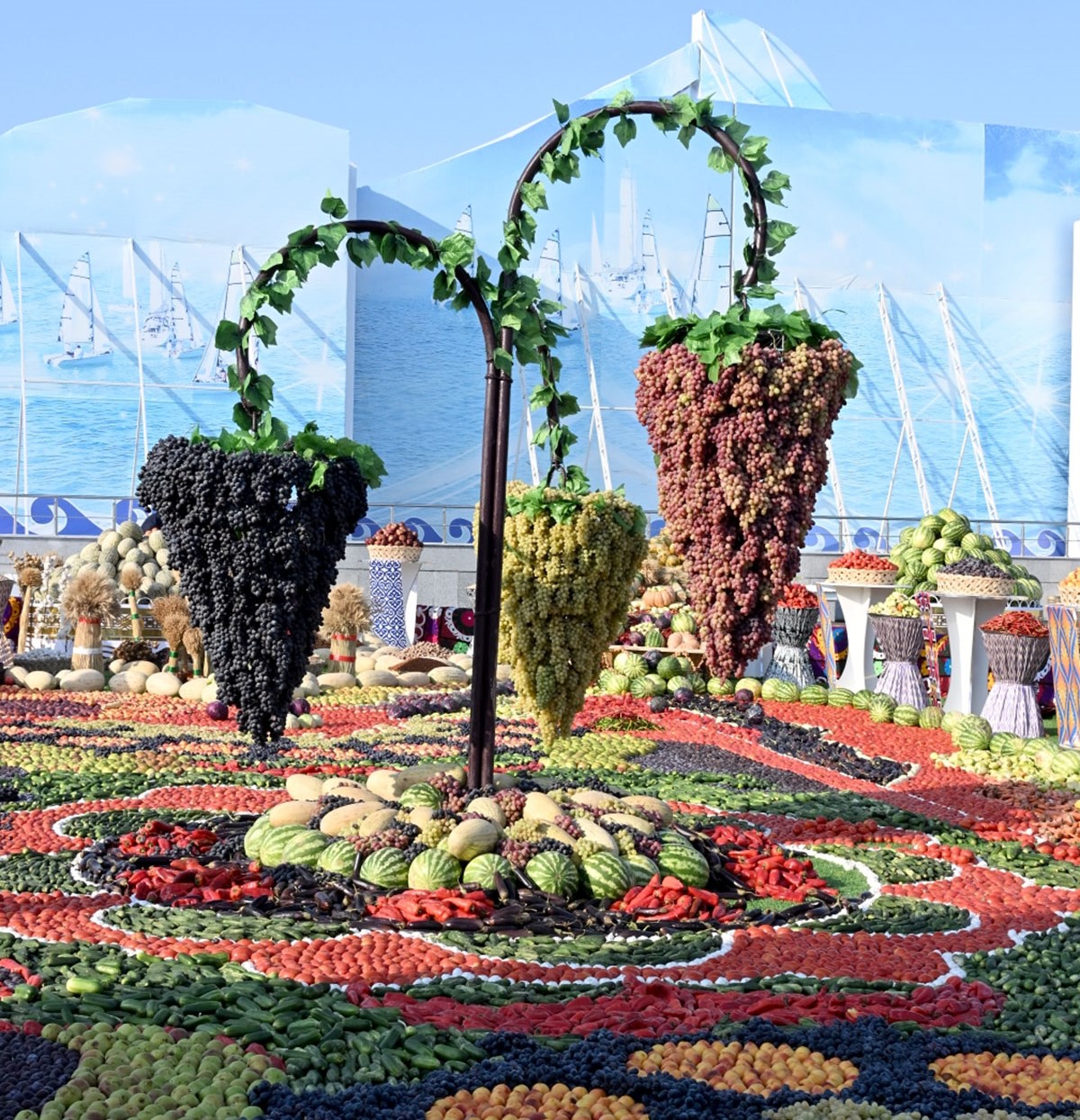
Pyramids of various kinds of melons, fruits laid across the ground to form intricate, traditional patterns, as well as an abundance of fruit, dried fruit, nuts, and bread overflowing from tables, and even fountains, surrounding the edible ground arrangement, and grapes hanging from poles.

As an advertisement for national products, a background for international events, or a gift for an ally, Tajikistan is gaining fame for elaborate displays of fruit. It is an amazing sight, with fruits and nuts arranged in patterns that cover large areas of the pavilions and gardens where foreign guests are being entertained.

However, as good as these lavish presentations look and taste, these cornucopias are being exhibited in some of Central Asia’s poorest countries, and, unsurprisingly, there has been some discontent and some scandals.

For Sale

On August 16-17, there was an exhibition of Tajikistan’s products and crafts in the Kazakh capital, Astana, with melon pyramids taking center stage in an exhibition that also featured “over a thousand tons of products: fresh fruits and vegetables, nuts, [and] dried fruits.“It was a return performance for the Tajik “masters” who arrange the exhibitions. Astana hosted a fair of Tajik products in August 2023 that drew a big crowd, some of whom were overly anxious to get their hands on the goods. Dozens of people started taking melons and grapes from the pyramids, breaking shelves and decorations in the process.

Tajik fair in Astana, 2023; image: public domain

Impress the Guests

One of the most memorable grand displays of fruit occurred when Tajikistan hosted the summit of leaders from the Commonwealth of Independent States (CIS) on September 27, 2018. On the eve of the summit, Tajik President Emomali Rahmon walked his guests through a garden flanked by enough food to feed a small town for a month. It was the first time such a spread had been laid out for guests at an international gathering, with Rahmon seeming to appreciate having an agricultural background when hosting a diplomatic event.

In July 2019, Rahmon met with then-Kyrgyz President Sooronbai Jeenbekov in the northern Tajik town of Isfara. Conflicts along the Kyrgyz-Tajik border were becoming increasingly deadly, and the two presidents met to discuss ways to ease tensions and resolve the festering problems along the frontier.

While the two presidents talked, Rahmon guided Jeenbekov through “6 pyramids… of watermelons and melons, as well as almost 20 types of national breads.“

Sooronbay Jeenbekov and Emomali Rahmon in Isfara; image: press service of the President of the Republic of Tajikistan

When Dushanbe hosted the Shanghai Cooperation Organization (SCO) summit in September 2021, the feast on the eve of the summit was every bit the equal of the CIS summit in 2018 and featured “huge pyramids of fragrant melons and watermelons, carpets of fresh fruit, grapes cascading like a waterfall, and even fountains of melons.”

Rahmon brought his fruit feast to St. Petersburg in October 2022 when CIS leaders gathered for an informal CIS summit that coincided with Russian President Vladimir Putin’s 70th birthday. The colorful and edible display was again present when Tajikistan hosted the meeting of Central Asian leaders in September 2023.

Someone in Turkmenistan seems to think the Tajik fruit decoration created a good atmosphere for an international event.

UN Conference in Awaza; image: tdh.gov.tm

Turkmenistan just hosted the UN conference on Landlocked Developing Countries at the Caspian resort city of Awaza on August 5-8. Turkmen state media reported that guests were treated to the “ecologically clean and high-quality vegetables, fruits, greens and berries grown in the favorable climatic conditions of the country” in a display that rivaled those seen in Tajikistan during the CIS and SCO summits. Turkmen state media reports added that the abundance of produce “indicates the successful implementation of modern agricultural technologies aimed at increasing crop yields.”

Let Them Eat Cake

The question every time the melon pyramids, fruit carpets, and hanging grapes appear at these events is, how, or why are these governments doing this when so many people in Tajikistan and Turkmenistan are going hungry?

The reported average monthly wage in Tajikistan is the equivalent of about $279, but many people earn less than half that. If it were not for the remittances sent back to families in Tajikistan by the hundreds of thousands of Tajiks working abroad, many people in the country would have a difficult time making ends meet.

The economic situation in Turkmenistan, meanwhile, has deteriorated so much in the last decade that some people are forced to beg for money or rummage through garbage looking for something to sell, or even something to eat. The Turkmen authorities’ response to this development has been to order police to chase away beggars and people sifting through garbage piles.

One resident of Balkan Province, where Avaza is located, expressed their feelings about the lavish fruit display at the UN conference to Radio Liberty’s Turkmen service. Speaking under the condition of anonymity, the person said. “Guests enjoy all these benefits, and are convinced that Turkmenistan is a beautiful and rich country.” The Balkanabad resident added that this “abundance hides the extreme poverty and humiliation of the Turkmen people.”

UN Conference in Awaza; image: tdh.gov.tm

It turned out that not much of the produce at the UN event in Avaza came from Turkmenistan. Turkmen opposition website Hronika Turkmenistana reported that nine tons of melons came from Uzbekistan, the grapes, pomegranates, and dried fruits from Tajikistan, and the bread and confectionery items were from Kazakhstan.

The amount of fruit used in these decorative arrangements is far more than guests can eat, so what happens to all the leftover fruit, nuts, and bread when the festivities are over? It’s often unclear.

In the case of the gifts to Putin on his birthday, six truckloads of the Tajik produce were reportedly distributed to orphanages in St. Petersburg.

That was also the plan for the excess food at Awaza. It was supposed to be given to orphanages and old folks’ homes, but instead, officials from nearby Turkmenbashi city and Balkanabad Province were taken into custody after they sold the fruit and bread to merchants who then resold it at local bazaars.

Turkmenistan’s emulation of the Tajik fruit arrangement shows the idea is spreading, and, in the future, the importance Central Asian leaders place on meetings and conferences they host could be measured by the number and height of melon pyramids and the length of fruit carpets. *But until prosperity reaches ordinary households, these edible spectacles will read as much mirror as mask – projecting national pride while spotlighting the gap between summit pageantry and everyday needs.

ArtSkin: Prosthetics with a Sense of Touch from Kyrgyzstan

The Kyrgyz startup ecosystem is still in its nascent stages and can’t boast an endless number of founders pursuing their dreams. But those focused on building hardware startups, which is generally significantly more challenging, are even a rarer breed. Despite all of that, there is an ambitious attempt to build artificial skin for prosthetics. Meet ArtSkin.


Not like a human hand

“Since childhood, I was mad about science and tech, and the first big thing that I made was a prototype of the first airplane by the Wright brothers. I dropped it from the second floor, and it was crushed after flying four meters. Later, when I was twelve, I saw a TV program about robot battles, and it was crazy! Since then, I have wanted to be able to make any kind of robots, and my dream has come true,” says Iliias Dzheentaev’s biography on LinkedIn. Dzheentaev is the CEO and Founder of ArtSkin. 

ArtSkin is a hardware startup from Kyrgyzstan that develops artificial skin for prosthetic limbs. It was launched by Dzheentaev in 2024. Before that, he spent three years studying how human skin, the nervous system, and receptors work to understand how to design a device allowing proper touch sensations. The process was time-consuming and challenging due to the lack of relevant information.

“My initial prototype was a robotic arm manipulator. I encountered a challenge with grasping flexible objects – figuring out how to make the robot recognize when its claw had squeezed tightly enough to hold the object securely. To solve this, I developed a mechanism that overcomes the resistance of different materials, enabling the robot to firmly grasp objects of various shapes, textures, and densities. Although the mechanism was simple, it made me realize how important this problem is for robotics. This insight then led me to thinking about people who use prosthetics and whether they actually feel anything when wearing them”, Dzheentaev tells The Times of Central Asia.

He was not happy with the contemporary prosthetic solutions – basic body-powered mechanical prosthetics rely on physical motions, and more advanced bionic prosthetics translate electrical signals generated by muscle activity into movements, both of which lack feedback. And without the latter, control is incomplete, while with a human hand, one can easily understand its position as well as feel touch and pressure. With this in mind, Dzheentaev built his prototype with a single sensor to test the device on himself.


First steps

Things got serious when Dzheentaev visited the High Technology Park of the Kyrgyz Republic (HTP), where he was inspired by other founders pitching and raising funds for their startups. At the time, unfamiliar with this environment, Dzheentaev was using his salary to buy electronic components, order materials, and do designs.

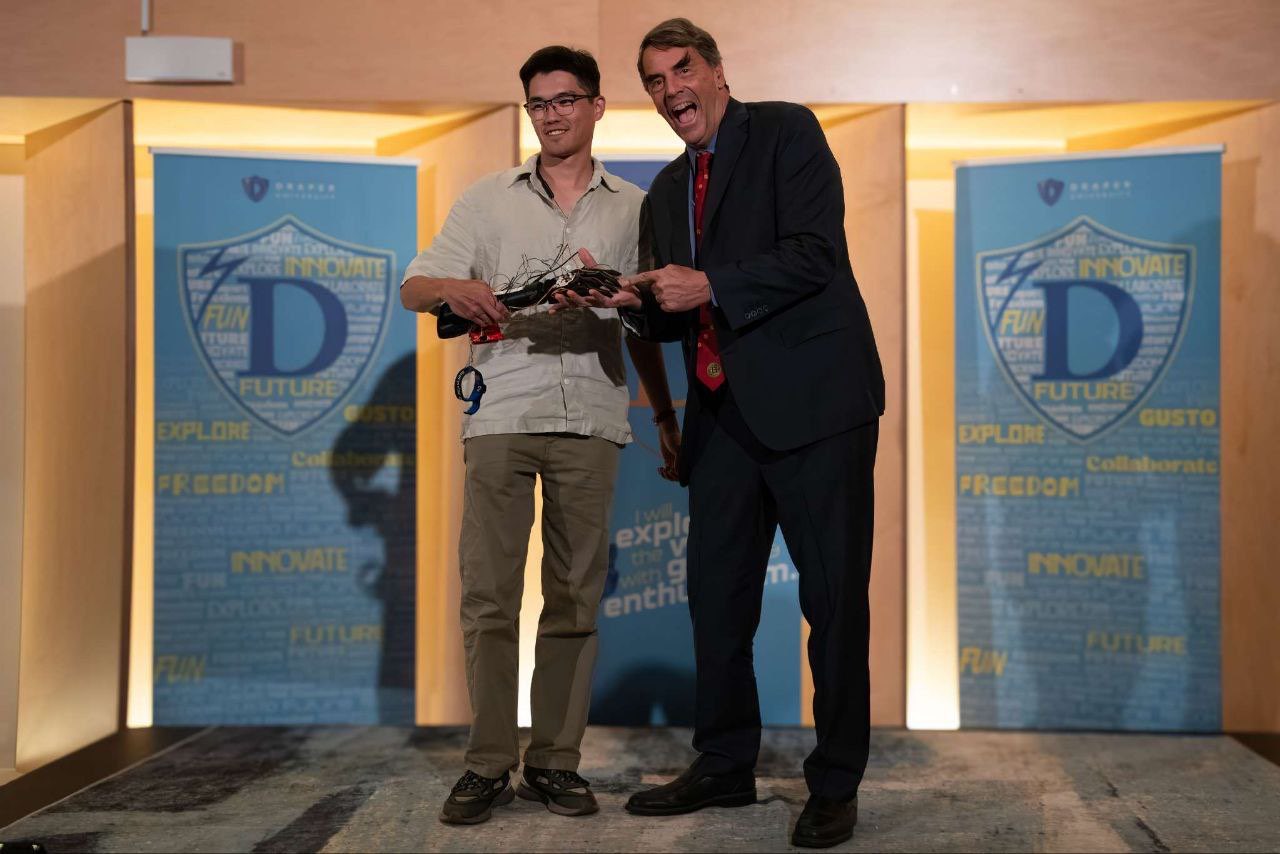
Not long after, Dzheentaev took part in HTP’s two programs: Dive into Silicon Valley and Unicorn from KG. The finalists for the first one were selected in February 2024. Dive into Silicon Valley in an entry-level incubation program, which sends founders to spend two weeks in Silicon Valley during which they meet founders, venture capitalists, prospective customers, take part in hackathons and pitch sessions, and visit the headquarters of leading tech companies and top universities. Dhzeentaev had quality networking during this visit, meeting Stanford professors and fellow founders from the region, like Doszhan Zhussupov, CEO of the leading Kazakh AI-medtech startup, which creates AI solutions that are essential in emergency medicine.

Later the same year, Dzheentaev was admitted to a more advanced program, Unicorn from KG, which runs in partnership with Draper University’s Hero Training Program. The program is an intensive five-week pre-accelerator based in Silicon Valley. In April 2025, Dzheentaev won a $10,000 equity-free cash prize at the largest local tech conference, Central Asia Startup Cup.

Apart from taking part in various programs, Dzheentaev found himself a Co-Founder. Sultan Tukeshov, the President of the Association of Surgeons of the Kyrgyz Republic, with 20 years of experience in surgery, joined Dzheentaev on his journey to build ArtSkin. The partner was a good fit as he and his team were the first in the country to start fitting patients with bionic prostheses.


Global ambitions

In March 2025, Dzheentaev was admitted to Stanford’s Summer Session. Last month, ArtSkin was selected for the MIT DeepTech Program, a joint program of the High Technology Park and Kuo-Sharper Center for Prosperity and Entrepreneurship at Massachusetts Institute of Technology. Last week, ArtSkin was named fourth out of 400 startups in the Road to Battlefield Regional Final regional pitching round of the TechCrunch Disrupt 2025 selection by Silkroad Innovation Hub. Now he will pitch in the global lineup during TechCrunch Disrupt 2025, where he plans to present the prototype – a unified solution that can be adapted to different types of prostheses and integrated with VR – to show how the same technology can be applied in different areas. TechCrunch Disrupt is one of the largest global tech conferences and is held annually in Silicon Valley.

Dzheentaev has also received a grant of $50,000 from the High Technology Park to build a technical laboratory for developing an advanced version, testing, and preparing for clinical trials. By January 2026, Dzheentaev plans to develop a flexible prototype, which will have 16 sensors and operate similarly to human skin, including object temperature transmission, with a target to obtain a patent in the summer of 2026. Dzheentaev also plans to take part in accelerators and raise investments to cover the operating expenses since the team is working on enthusiasm alone.

“The biggest goal for us is to give people with prosthetic limbs back their natural touch sensations, because through them we feel the world around us. We also plan to integrate with virtual reality technologies, where people can not only see digital objects, but also feel and interact with them. I see great potential in our project, and who knows where this journey will take us?” Dzheentaev told The Times of Central Asia.

‘Orange Angels’: Aviators of Eastern Kazakhstan Fly Daily Rescue Missions

When there is no help left on the ground, they take to the skies: orange fuselages, the roar of propellers, and salvation descending from above. The Aviation Division of the East Kazakhstan Region – the ‘Orange Angels’ – is more than a state enterprise; it is a vital lifeline, operating when every minute counts.

No Margin For Error

Since its founding in 2003, the division has become an indispensable part of the region’s emergency response system. Its 114 full-time specialists conduct medical flights, firefighting operations, evacuations, and rescues.

Yet staffing remains a challenge. “We are short 12-13 personnel. Ideally, we should have around 120,” Kalikan Baigonusov, Director of the East Kazakhstan Aviation Division, told The Times of Central Asia. “Young people prefer big airlines, foreign skies, and big paychecks. Our salaries are decent, between $1,300 and $2,900, but the profession lacks visibility and appeal. It’s a calling, not just a job.”
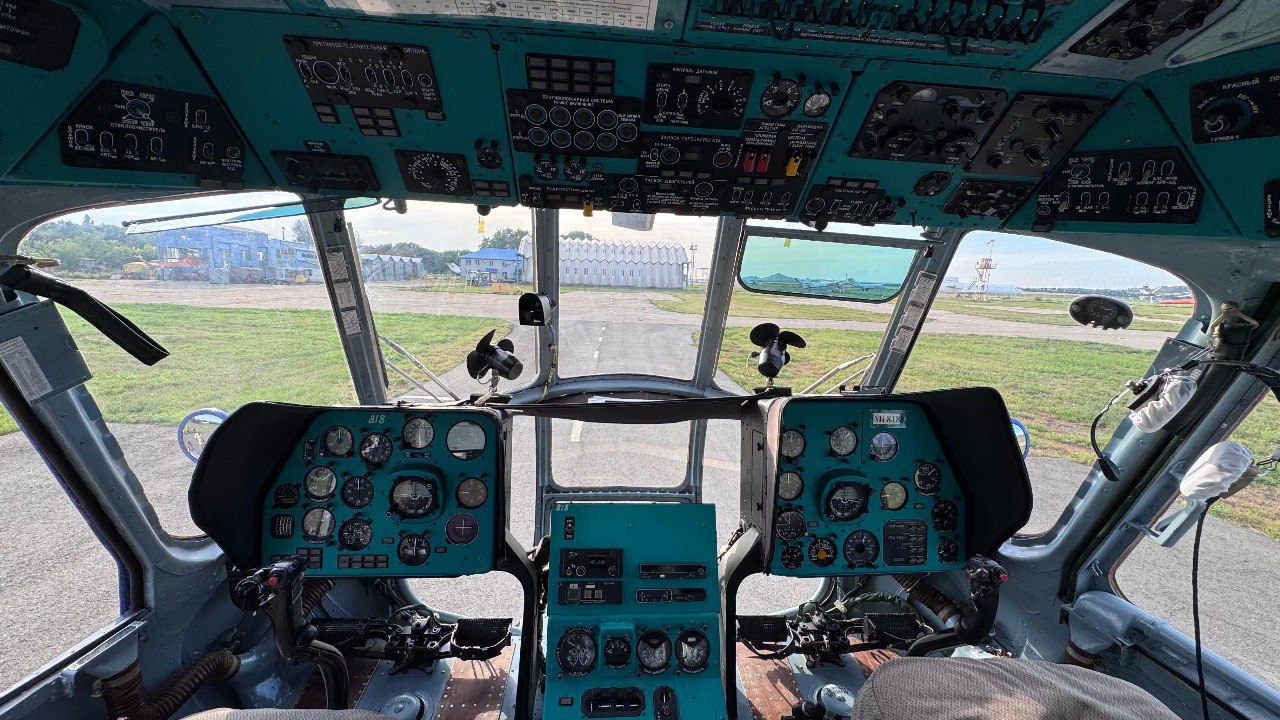
Image: TCA

Baigonusov hopes more young people will be drawn to aviation through education. His division is now organizing practical MI-2 helicopter training for students from the Civil Aviation Academy JSC. There is also close cooperation with the East Kazakhstan Multidisciplinary College, which, with support from the regional governor, launched new specialties in aviation engineering and mechanics on September 1, 2024. Therein, students undergo practical training with the air squadron, learning directly from experienced pilots and engineers.

Still, Baigonusov believes Kazakhstan’s personnel training system needs urgent reform. “I’ve knocked on every door, the academy, the rector, the department head,” he told TCA. “We need to train our people locally. Sending a student to Russia costs $47,000. That’s simply out of reach. We need to promote dual education here, so people can study and work at home.”

Many of the division’s specialists are graduates of now-diminished Soviet-era aviation schools in Kachinsk, Omsk, Kyiv, and Riga. Each year, their ranks grow thinner.

Engineering, Maintenance, and a Race Against Time

Despite operating from aging facilities built in the 1970s and 1980s, the team is working to modernize and extend the lifespan of its equipment. The aircraft fleet, averaging 35 years in age, has undergone extensive inspections and upgrades. Standardization tests have been passed, and all certifications are in place.

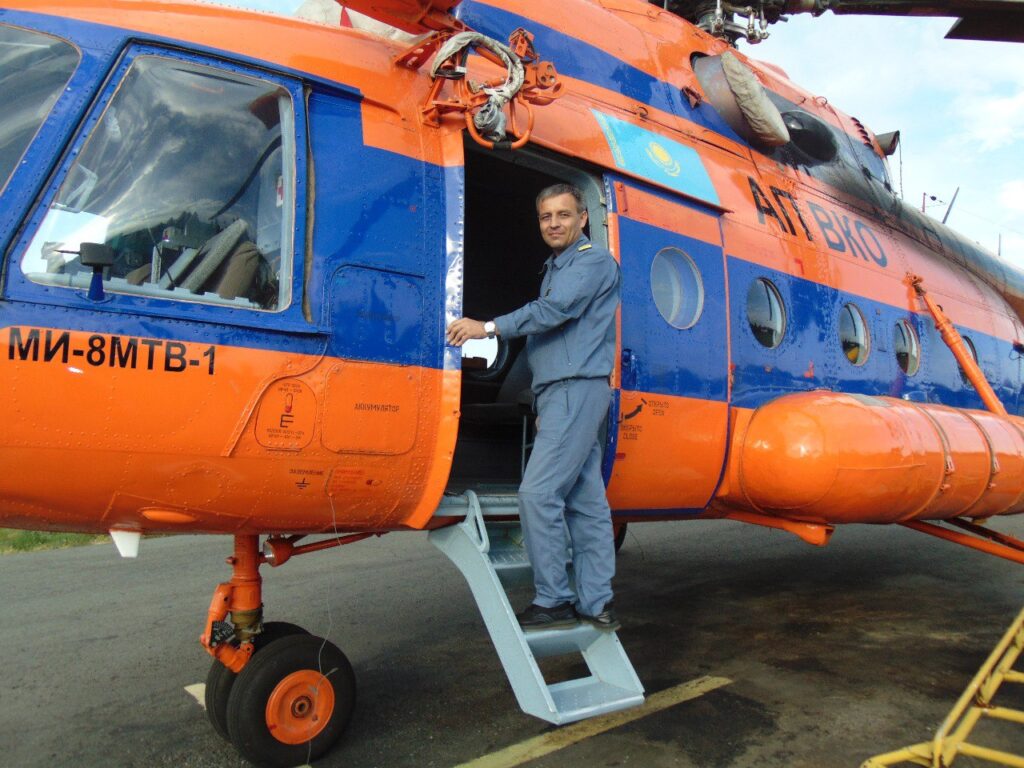
Thanks to the expertise of the engineering team, the division recently secured certification for maintaining YAK-40 and YAK-42 aircraft and Mi-8 and Mi-2 helicopters.

Image: TCA

“Before, we relied on outside companies for repairs. Now we do everything ourselves,” says Baigonusov. “That saves time and money and makes us more self-reliant.”

Deputy for the Engineering and Aviation Service (IAS) Lobanov leads a team dedicated to his work, although he, like many in the unit, is already over 55. Baigonusov is determined to attract the younger generation.

“We need to show how important and beautiful this profession is. It’s demanding, but it’s also deeply meaningful.”

Rescuing the Stranded in Kalbatau

Chief pilot Denis Grunsky recalled one of the most dramatic missions of his career to TCA.

“Over 100 people were stuck in a snowdrift near Kalbatau in Kokpekty district. Rescuers couldn’t get through. It was snowing hard, freezing cold… We made three Mi-8 flights to evacuate women and children. Winds were strong, fuel was running low, and the sun was setting; you can’t fly in the mountains at night. But we did it.”

For this team, days off are rare. Technically, they can’t work more than seven days in a row. But as Grunsky puts it: “If we’re not flying, it doesn’t mean we’re not working.”

They also genuinely love their equipment.
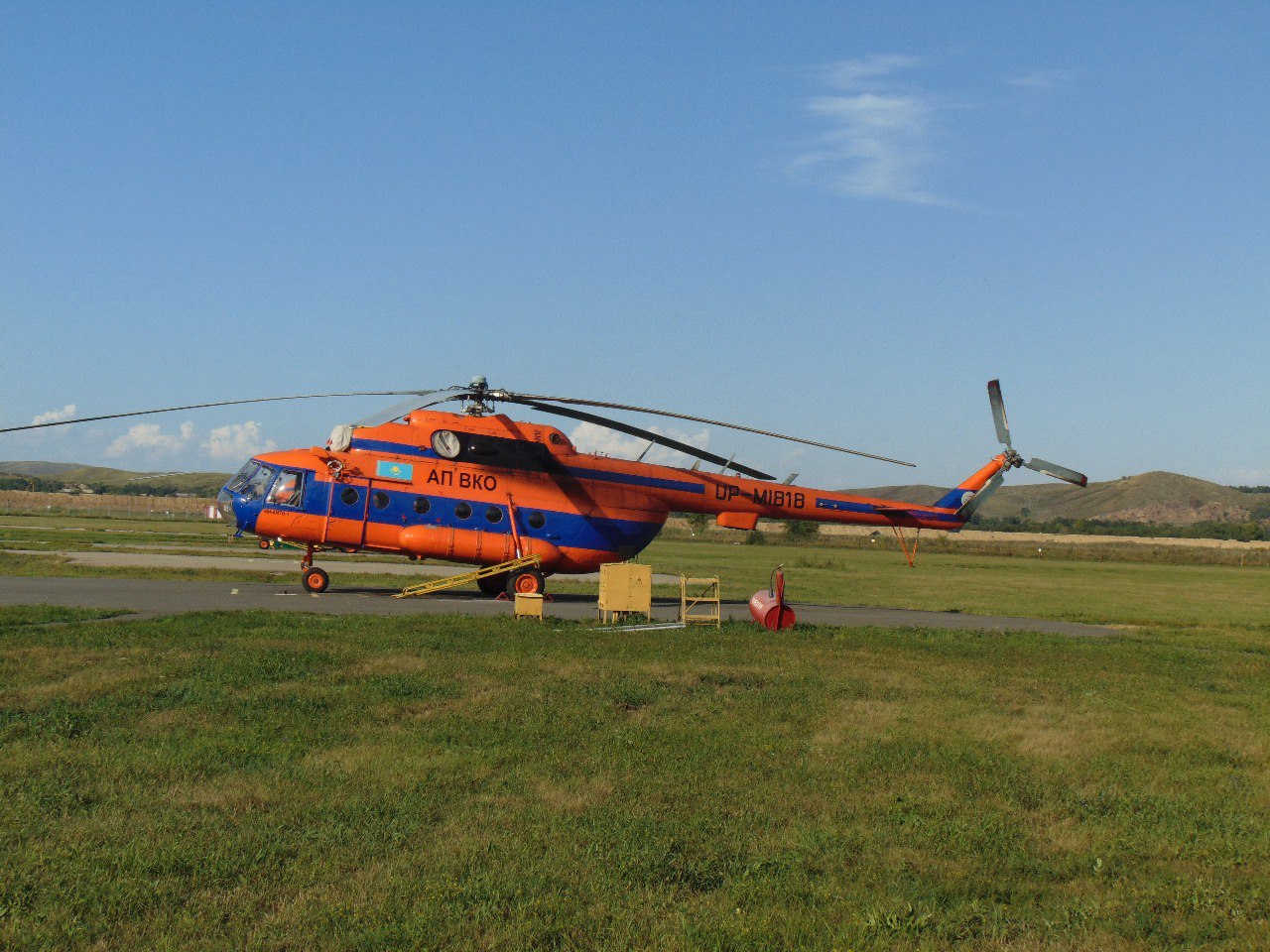
Image: TCA

“Our Machine”: The Mi-8 Helicopter

“The Mi-8 is our legendary machine – the team’s workhorse,” Grunsky told TCA. “It handles temperatures from -50°C to +50°C. You can start it even in the freezing cold with little preheating. It doesn’t need hangars and can carry 22 passengers, plus animals, if needed. It’s not just a tool, it’s our partner.”

While Western helicopters may be sleek, the Mi-8 and Mi-2 remain ideally suited for Kazakhstan’s harsh environments.

“The Mi-2 even has an anti-icing system, which many newer models lack,” Grunsky adds.

The People Behind the Missions

A typical crew includes a captain, co-pilot, and flight engineer, with the co-pilot training to become a future captain. The flight engineer acts as the captain’s eyes, managing water discharge for firefighting and checking the helicopter’s condition.

Grunsky, a father of three, acknowledges the demands of the job: “It looks romantic, but it’s intense: constant medical checks, a strict regime, and physical limits due to pressure changes. It’s not just a job, it’s a lifestyle. I won’t push my kids into this, but if one of them chooses this path, I won’t stop them.”
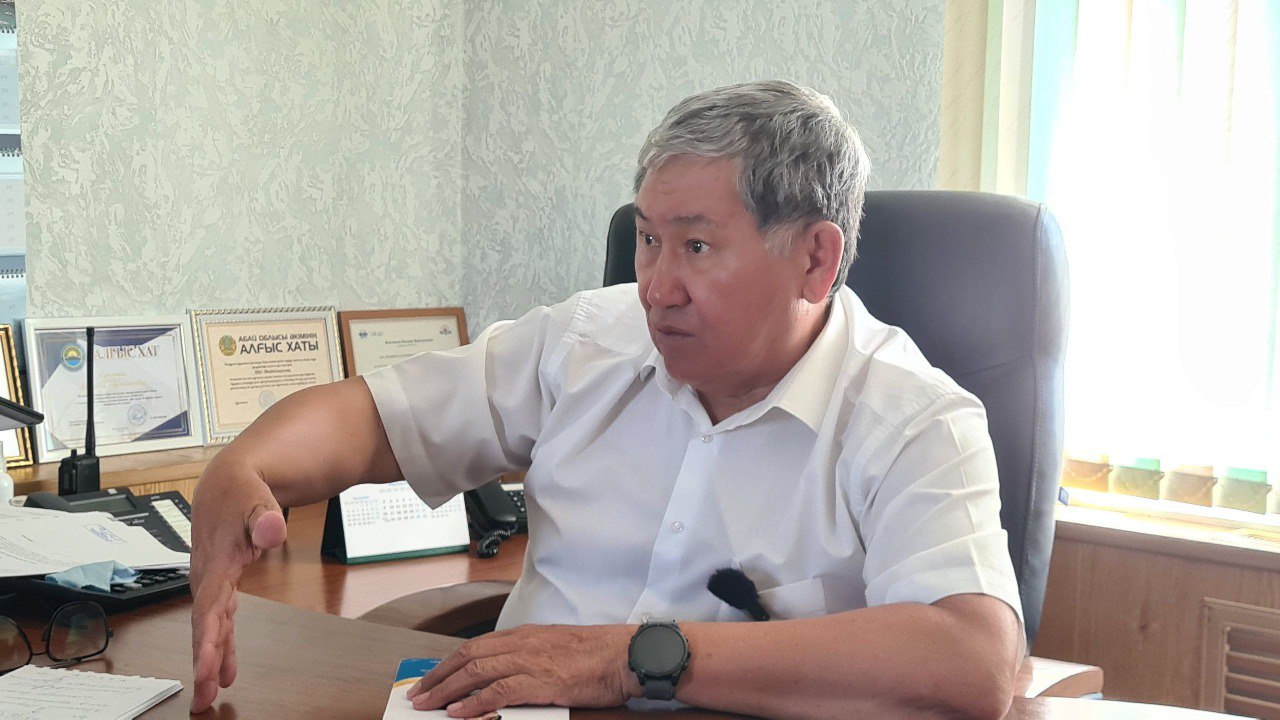
Director of the Aviation Division of the EKR Kalikan Baigonusov; image: TCA

Dispelling Rumors, Building Legacy

Despite their life-saving work, the team faces damaging rumors, such as claims that their helicopters are used by regional officials.

“It’s simply not true,” says Baigonusov. “We operate under strict regulations; every flight is documented with reports and protocols. We’re public servants, not a private airline.”

Private aviation companies with far larger budgets may covet their niche, but Baigonusov remains focused on preserving the division’s mission and legacy: “If there’s no one to pass on the knowledge, everything will be lost. Continuity is what matters most.”