• KGS/USD = 0.01144 0%
  • KZT/USD = 0.00194 -0%
  • TJS/USD = 0.10844 -0.46%
  • UZS/USD = 0.00008 0%
  • TMT/USD = 0.28571 0.28%
  • KGS/USD = 0.01144 0%
  • KZT/USD = 0.00194 -0%
  • TJS/USD = 0.10844 -0.46%
  • UZS/USD = 0.00008 0%
  • TMT/USD = 0.28571 0.28%
  • KGS/USD = 0.01144 0%
  • KZT/USD = 0.00194 -0%
  • TJS/USD = 0.10844 -0.46%
  • UZS/USD = 0.00008 0%
  • TMT/USD = 0.28571 0.28%
  • KGS/USD = 0.01144 0%
  • KZT/USD = 0.00194 -0%
  • TJS/USD = 0.10844 -0.46%
  • UZS/USD = 0.00008 0%
  • TMT/USD = 0.28571 0.28%
  • KGS/USD = 0.01144 0%
  • KZT/USD = 0.00194 -0%
  • TJS/USD = 0.10844 -0.46%
  • UZS/USD = 0.00008 0%
  • TMT/USD = 0.28571 0.28%
  • KGS/USD = 0.01144 0%
  • KZT/USD = 0.00194 -0%
  • TJS/USD = 0.10844 -0.46%
  • UZS/USD = 0.00008 0%
  • TMT/USD = 0.28571 0.28%
  • KGS/USD = 0.01144 0%
  • KZT/USD = 0.00194 -0%
  • TJS/USD = 0.10844 -0.46%
  • UZS/USD = 0.00008 0%
  • TMT/USD = 0.28571 0.28%
  • KGS/USD = 0.01144 0%
  • KZT/USD = 0.00194 -0%
  • TJS/USD = 0.10844 -0.46%
  • UZS/USD = 0.00008 0%
  • TMT/USD = 0.28571 0.28%
09 December 2025

Has Kyrgyzstan Benefited From Its Membership of the EAEU?

On the sunlit shores of Lake Issyk-Kul this August, Kyrgyzstan played host to leaders from across the Eurasian Economic Union (EAEU). On August 14-15, officials from Armenia, Belarus, Kazakhstan, and Russia descended on the resort town of Cholpon-Ata for a meeting of the Eurasian Intergovernmental Council, accompanied by ceremonies to mark a decade since Kyrgyzstan joined the Moscow-led economic bloc.

The Kyrgyz government issued a commemorative stamp to celebrate the anniversary, while the guest of honor, Russian Prime Minister Mikhail Mishustin, arrived with pledges of deeper integration. Rosatom, Moscow’s nuclear agency, signed agreements to build Kyrgyzstan’s first wind farm near Issyk-Kul, while the union’s five governments also agreed to recognize each other’s digital documents, and talks continued on a long-awaited gas union.

Mishustin also caused a stir on social media by addressing the Kyrgyz honor guard in their own language. The words “Salam Asker” (hello, soldiers) were enough to draw appreciation from a Kyrgyz society unused to hearing Russian politicians use any language but Russian in its former colonies.

The flattery was all part of the choreography: in return, Kyrgyz government officials and state media fell in line to proclaim the benefits of EAEU membership.

But have these benefits been worth it? Or has the EAEU merely tethered Bishkek to a partner whose grip is more suffocating than supportive?
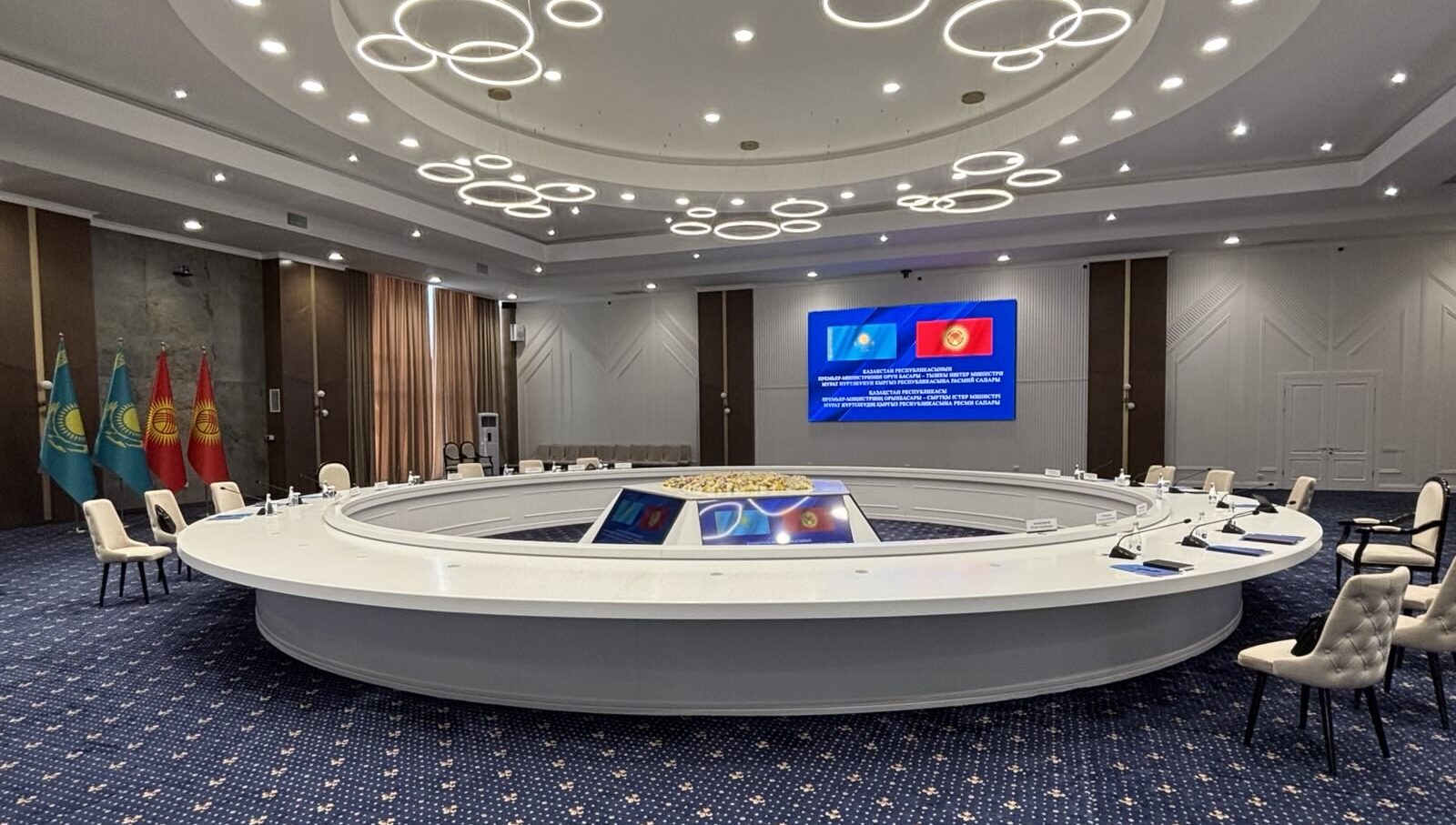
The Conference Hall at Cholpon-Ata, where the council meeting took place; image: Joe Luc Barnes

The Case for the Union

Kyrgyz officials are keen to emphasize the upsides. In an interview with state mouthpiece Slovo.kg, former economic minister Arzybek Kozhoshev said that joining the bloc had eased conditions for Kyrgyz migrant laborers in Russia and Kazakhstan.

“With the accession of the Kyrgyz Republic to the EAEU, the conditions of stay and work of citizens of the Kyrgyz Republic in other EAEU countries have changed significantly,” Kozhoshev said, highlighting simplified entry, no requirement to take a Russian language exam, equal access to health insurance, and even the right to draw pensions on par with local workers.

For a country where remittances have accounted for around 25% GDP over the past decade, these measures are not insignificant. Kyrgyz drivers, once barred from operating commercial vehicles in Russia, now enjoy full rights. Digital labor platforms like Work Without Borders make it easier to find jobs, and migrant workers in Russia pay the same flat 13% tax as local workers.

In short, for the hundreds of thousands of Kyrgyz toiling in Moscow, Novosibirsk, and Almaty, the EAEU has meant fewer hurdles and more predictability. It’s worth bearing in mind that other potential labor destinations, such as Korea, the United States, or the European Union, are not handing out hundreds of thousands of visas to Kyrgyz citizens every year.

Kremlin officials have also stressed that Kyrgyzstan pays lower tariffs on Russian gas – only $150 per 1,000 cubic meters, due to its EAEU membership. That said, given Russia’s current oversupply of gas with the closure of the European market, this is not as beneficial as it once was. Neighboring Uzbekistan is not an EAEU member and has been paying around $160 per 1,000 cubic meters since 2023.

The Kyrgyz government is also keen to link the country’s recent economic growth to EAEU membership. In his interview with Slovo, Kozhoshev unleashed a blizzard of statistics in an attempt to correlate recent economic growth with union membership.

“The average annual GDP growth in the period 2015-2023 is 3.9%, nominal GDP growth has increased threefold, namely from 401.0 billion som to 1.2 trillion som. Budget revenues increased 3.3 times to 391.9 billion som. GDP per capita is equal to $1,163 in 2015, and $1,969in 2023, an increase of 1.7 times,” he said.

While this argument can be questioned (are there not other factors which have led to growth?) it seems EAEU membership has offered a significant tailwind in recent years, particularly with Kyrgyzstan benefiting from what might be called “sanctions arbitrage”.

Unsanctioned Growth

Since Russia invaded Ukraine and the subsequent Western sanctions, Kyrgyzstan has become a significant re-export hub for Moscow. In the auto sector, for example, with Western companies refusing to sell to Russia, entrepreneurial Kyrgyz businesses have been importing BMWs from Germany or Toyotas from Japan before selling them on to the Russian market for a healthy profit.

Many Russians in search of a new vehicle have turned to China, and even here, Kyrgyzstan has benefited. Upon accession in 2015, Bishkek negotiated temporary exceptions to EAEU customs duties on vehicles. By 2023, these duties were 15%, compared to up to 25% in Russia, in addition to a lower rate of VAT. These two factors led to the widespread funneling of Chinese car purchases through Kyrgyzstan. This loophole was closed to an extent in 2024, with the Kremlin putting pressure on Bishkek to raise its customs duties, but that did not stop an estimated 60,000 Chinese vehicles from being purchased through Kyrgyzstan in early 2023 alone.

Cars are just one example; the dramatic rise in the import and export of sanctioned dual-use goods has led many to conclude that Kyrgyzstan has been one of the key enablers of Russia’s war machine.

The World Bank estimated that the VAT alone from the “transit trade” contributed around KGS 25.2 billion ($300 million) to the government coffers in 2022, and KGS 37.9 billion ($433 million) in 2023, the latter figure representing around 3.3% of the country’s entire GDP.

While critics call it sanctions-busting, Bishkek sees it as opportunistic trade. In June 2023, the Kyrgyz government changed the way it records export statistics in an attempt to mask some of the more brazen deals, but this has not prevented numerous sanctions monitoring visits by EU officials and sanctions on several banks and companies by the United States.

However, from an economic perspective, the fact that no severe penalties have materialized has made this somewhat of a bonanza period for the Kyrgyz economy, and all linked to its customs-free EAEU membership.
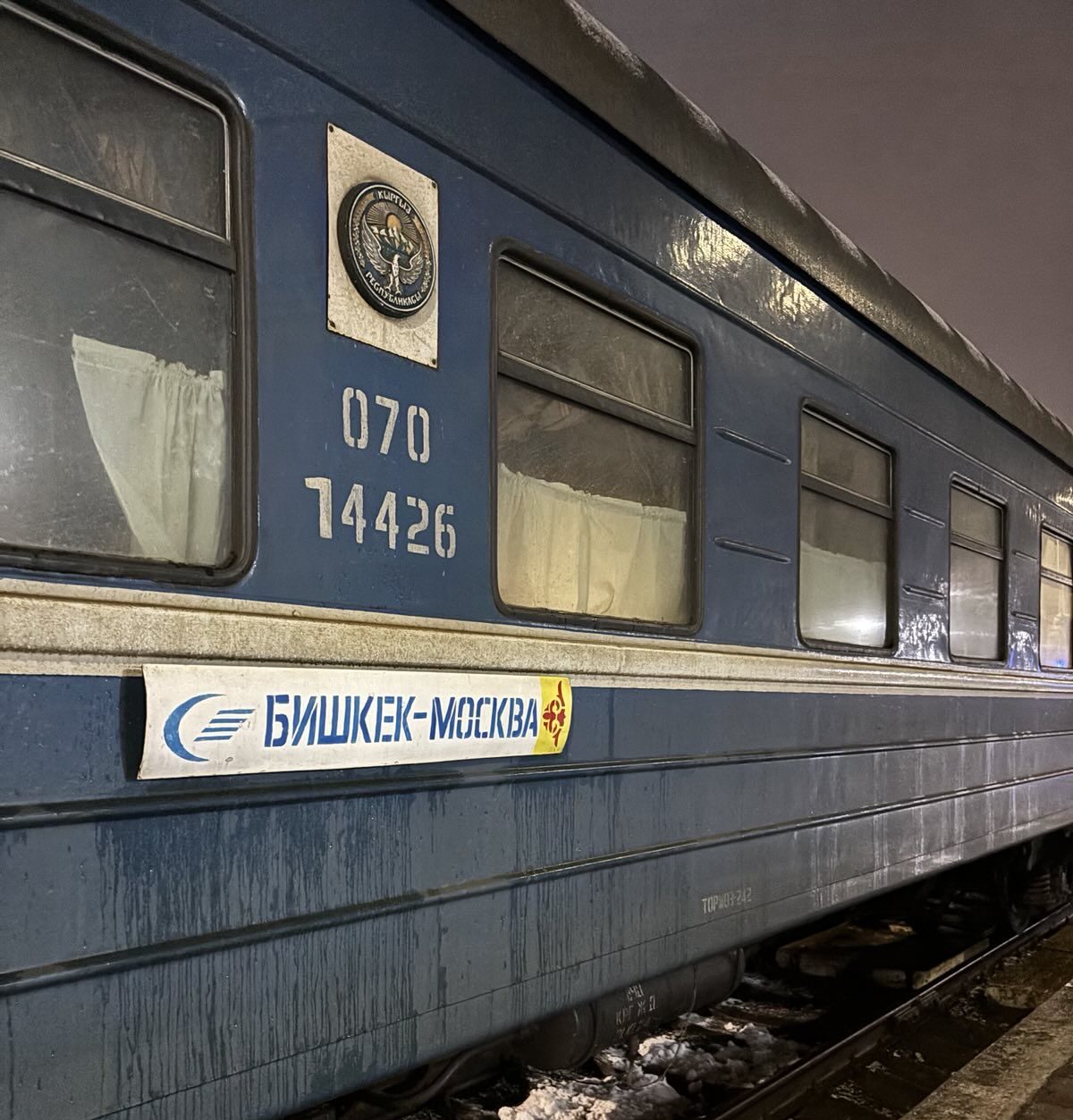
A Bishkek train bound for Moscow; image:: Joe Luc Barnes

The Limits of Integration

There are, nevertheless, some serious flaws in the architecture of the union. First, the migrant question cuts both ways. Access to the Russian labor market may be easier, but in some ways, that is a disadvantage: some unscrupulous employers prefer to hire cheaper illegal migrants or expect Kyrgyz citizens to work for less, due to the extra costs and bureaucracy involved with taxes and social security payments.

Kyrgyz workers also face racism, police harassment, and sudden deportations. A 2024 poll by the Levada Center showed that 56% of Russians believed people from Central Asia should only be allowed to enter Russia temporarily.

Such stigma has fueled periodic campaigns targeting Central Asian migrants by the Russian authorities. Purported EAEU benefits matter little to those forced to crawl half-naked across the floor of a Moscow bathhouse by overzealous immigration police.

The long-term economic benefits of migrant labor are also questionable – while they bring in quick cash, it means families are divided, children grow up with absent parents, and migrants can find their professional development stymied for the short-term gains from seasonal labor.

Second, the principle of a single market is often abandoned when its larger members seek to exert political pressure. Moscow and Astana will often employ “phytosanitary failings” or “pipeline maintenance” for throttling each other’s exports, while Kazakhstan has a habit of delaying crossings over the Kyrgyz border, sometimes even closing it completely, as it did most famously in 2017, jamming Bishkek’s trade overnight. Such actions undermine the bloc’s founding promise as a free trade union.

Finally, the union acts as a geopolitical bind. By serving as a conduit for sanctioned goods, Bishkek risks alienating Western partners and deepening its reliance on Russia, while also limiting the prospects of deeper integration with its other neighbors. Uzbekistan, Tajikistan, and, most importantly, China, are all outside the bloc, and while the former two have long flirted with joining, there is little sign of a trade deal in sight. Should any future deals materialize, they are likely to serve the interests of Russia, the EAEU’s largest member.

A Double-Edged Decade

On balance, the EAEU has delivered tangible gains: easier migration, expanded trade, and a huge boost to GDP and tax revenues through re-exporting sanctioned goods to Russia. For a landlocked country of seven million, such outcomes are not trivial. As such, dismissing the EAEU as a project that only benefits Moscow overlooks much of the nuance.

Nevertheless, Kyrgyz government policy could be argued as short-sighted: re-exports that may be lucrative today but could trigger headaches tomorrow if Western scrutiny intensifies, or indeed crumble to dust if sanctions on Russia are lifted.

Bishkek’s EAEU commitment has left Kyrgyzstan hanging onto the coattails of Moscow’s rollercoaster economy. This exposes the country to negative shocks, such as the oil price collapse of 2014, as well as the current sanctions-busting benefits. For now, Kyrgyzstan is booming, but what lies next on this wild ride is largely out of Bishkek’s control.


Kazakhstan Aims to Redefine the Role and Status of Teachers

Kazakhstan is preparing sweeping changes to the role of teachers, aiming to significantly strengthen their legal protections and professional autonomy. The proposals, announced at an educators’ conference in August, are being described by experts as revolutionary for the country’s education system.

Protecting Teachers’ Rights

President Kassym-Jomart Tokayev participated in the conference and proposed amendments to the Law on the Status of Teachers to shield educators from non-core responsibilities.

“The issue of protecting teachers’ rights should always be a priority,” said Tokayev. “Teachers must be exempt from tasks unrelated to their primary duties. Unfortunately, local authorities often grossly violate the law in this regard. The Prosecutor’s Office must take strict action against such violations.”

In many post-Soviet countries, it has been common for teachers to be assigned duties unrelated to education. In Kazakhstan, for instance, teachers are often tasked with running polling stations during elections or referendums, ensuring voter turnout, cleaning school premises, organizing community celebrations, and more.

Tokayev also spoke out against holding teachers accountable for incidents outside school grounds. “It is inappropriate to immediately punish teachers for any accident involving children,” he stated. “If an incident occurs outside school or due to parental negligence, the teacher should not be held responsible.”

He referred to a recent case in the Almaty region, where a graduate died in a fight at a private residence. The school’s principal and teachers were dismissed, but the Ministry of Education later intervened on their behalf.

Responsibility Within the School

While calling for greater protections, Tokayev also emphasized the critical role of teachers within school walls. He urged educators to take active roles in combating social issues such as drug and gambling addiction, domestic violence, bullying, vandalism, and dependency.

Teaching has long been one of Kazakhstan’s least attractive professions due to high workloads and low pay. However, since 2019, the education budget has tripled, 1,200 new schools have opened, and teacher salaries have doubled. More than 500,000 teachers now receive performance-based bonuses.

Fighting Dependency and Exploitation

Kazakh political analyst Marat Shibutov emphasized the importance of ending the exploitation of teachers and addressing broader societal issues such as dependency.

“At a meeting with teachers, the president spoke out against parasitism, which has become widespread, especially in rural areas, where social benefits discourage work and promote idleness,” Shibutov said. “Some families even avoid treating disabled children to retain their benefits.”

He added that around 60 children had fallen from windows in Astana since the start of the year, yet the blame is often shifted to the state rather than to parents, who bear responsibility for safety at home. “Dependency is more than just a lifestyle, it’s an ideology of aggressive laziness eating away at youth,” he said.

On the issue of non-core assignments, Shibutov remarked: “It’s time to get rid of Soviet relics, teachers are not free labor or child supervisors”.

A Remedy in Mathematics

Political analyst Gaziz Abishev called for deeper educational reforms to address the psychological and cognitive vulnerabilities of young people in the digital age.

“To counter manipulation, we must equip students with fundamental tools, starting with mathematics and logical thinking,” he said. “Mathematics develops the foundations of logic and makes minds more resistant to manipulation.”

He also emphasized the importance of reading quality literature and introducing competitive debate formats in schools. “Debating techniques, working with arguments, framing, and evidence, greatly enhance critical thinking and the ability to detect manipulation,” Abishev concluded.

Mice in “Miniature Hotel” Poised for Space Launch from Baikonur

A crew of mice, flies, and ants, to be used for biomedical research in space, are on board a spacecraft that Russia is preparing to launch from the Baikonur Cosmodrome in Kazakhstan.

On other missions, the rocket typically rolls to the launch pad a few days before launch. On this one, however, a Soyuz rocket that will hoist the Bion-M No. 2 biosatellite into orbit rolled out on Tuesday, one day ahead of the scheduled lift-off.

“This is due to the preservation of the biological samples on board,” said Roscosmos, Russia’s space agency. “The goal is to reach weightlessness as quickly as possible.”

The purpose of sending mice to space is to evaluate the impact of radiation and zero gravity on the rodents, including whether time in space affects their hormonal balance, immunity, reproductive processes, and metabolism. Russia has conducted similar missions in the past, including the Bion-M No.1 satellite launch in 2013 that ferried mice, gerbils, snails, and fish to space. The Bion-M No. 2 mission has been delayed multiple times in recent years.

Such experiments could help prepare humans for long-term space travel. Mice have a genetic similarity to humans, and their short life cycle allows for the tracking of changes across generations, according to Roscosmos.

During the 30-day mission of the Bion-M No. 2, “scientists will receive real-time data on the rodents’ condition using special cameras and sensors inside the mouse boxes. Moreover, some individuals will have implanted chips,” the space agency said.

It said the living conditions of the dozens of mice on the satellite resemble a “miniature hotel” in which they have feeding, lighting, ventilation, and waste disposal systems. The accommodation is more spacious than it was for the mice on the Bion-M No. 1 satellite more than a decade ago.

Fruit flies, ants, tomato seeds and fungi are also on this week’s space-bound mission. The tomato seeds, part of an experiment being conducted by Russian and Belarusian schoolchildren, will be planted on Earth after the space mission to see how they grow.

Splitting the Flow: How Central Asia Can Bypass Russia in Internet Connectivity

In today’s world, reliable mobile communications and internet access are indispensable, and Central Asia is no exception. Digital infrastructure has become a core component of development across the region. Yet, the architecture of internet connectivity in Central Asia has been shaped not only by global technological progress but also by the geopolitical upheavals of the early 2020s, a decade already recognized as historically transformative.

Recent developments have renewed focus on this issue. On August 13, Kazakhstan officially joined over 100 countries utilizing Starlink’s satellite internet services, following a June 12, 2025, agreement that confirmed SpaceX’s compliance with national laws. The Kazakh Ministry of Digital Development emphasized that Starlink offers stable connectivity “even in the most remote and inaccessible areas,” expanding access to digital services for underserved populations.

While Starlink’s rates are higher than local norms, 23,000 KZT ($42.50) a month for home users and 26,000 KZT ($48) for mobile users, the launch signals a broader shift in Kazakhstan’s internet policy. For decades, the country maintained strict control over online access. As late as 2019, the authorities blocked social networks during live streams by exiled oligarch Mukhtar Ablyazov. The 2020 pandemic further exposed infrastructure gaps, with students in remote areas forced to climb rooftops and trees for mobile signals. These stark images, along with a gradual political thaw, likely spurred the momentum for reform.

Another catalyst is the war in Ukraine. A recent report by the Internet Society highlights Kazakhstan’s efforts to reduce reliance on Russian internet infrastructure and enhance regional digital resilience. Central Asia’s landlocked geography means it depends heavily on terrestrial fiber optic cables connected to countries with undersea landing stations. Approximately 95% of Kazakhstan’s international internet traffic flows through Russia, posing strategic vulnerabilities amid heightened geopolitical tensions.

To address this, Kazakhstan is investing in low Earth orbit (LEO) satellite systems and exploring alternative terrestrial fiber routes, including a long-discussed cable under the Caspian Sea connecting to Europe.

As of January 2024, Kazakhstan had 18.2 million internet users, 92.3% of the population, with average fixed-line speeds of 53.86 Mbps, ranking 94th globally, according to Ookla’s Speedtest Index.

Uzbekistan Follows Suit

Uzbekistan, the region’s second-largest economy, is also seeking to diversify its digital dependencies. In March 2025, Tashkent signed agreements with the European Union on a satellite internet project and the “Connectivity for Central Asia” program, both aimed at extending access to remote communities and modernizing digital infrastructure. These initiatives are part of the EU’s Global Gateway strategy.

“By investing in digital connectivity, we are bridging gaps, creating opportunities, and ensuring that Central Asia has access to the benefits of the digital economy,” said European Commissioner for International Partnerships, Jutta Urpilainen.

As of early 2024, Uzbekistan had 34.2 million mobile subscribers and 29.5 million internet users, an 83.3% penetration rate. Basic fixed-line internet packages cost 55,000 UZS ($4.40) per month for 6 Mbps daytime speeds; premium plans offer 50 Mbps for about $8.

As reported by The Times of Central Asia, Starlink is expected to launch in Uzbekistan in 2026.

Lagging Behind: Kyrgyzstan, Tajikistan, and Turkmenistan

Elsewhere in Central Asia, digital development remains uneven.

In Kyrgyzstan, 5.4 million people, 79.8% of the seven million population, were internet users in early 2024. Yet 1.4 million residents remained offline. Tajikistan reported 8.3 million mobile subscribers in 2023, though only 5.6 million were active. With an internet penetration rate of 41.6%, nearly 60% of Tajiks lack regular access.

Turkmenistan’s internet statistics are even worse. Only 2.6 million of the country’s seven million people use the internet, and speeds are among the world’s slowest. According to Speedtest, Turkmenistan ranks 161st out of 162 countries, with average download speeds of just 4.31 Mbps. Internet tariffs are set by presidential decree, and prices remain prohibitively high despite limited service quality.

A Regional Crossroads

Central Asia’s digital future hinges on Kazakhstan and Uzbekistan’s ability to diversify internet traffic and reduce dependency on Russia. Kazakhstan’s Starlink rollout is a tangible step in this direction. However, broader regional transformation will depend on infrastructure investment, regulatory reform, and sustained international partnerships.

The open question now is how Moscow and, increasingly, Beijing will respond to these efforts to reshape digital connectivity across Central Asia.

Young Uzbek Engineers Set Guinness World Record with 1,946 Robots

Uzbekistan has entered the Guinness World Records after 1,946 young engineers simultaneously assembled mini-robots at a public event in Tashkent. The Ministry of Higher Education, Science and Innovation announced the achievement via its official Telegram channel.

The record-setting event took place in Yangi O‘zbekiston Park, where each participant built a robot in unison, surpassing the previous record set in India in 2023, when 1,459 students completed a similar task.

Describing the achievement as a “historic milestone,” the ministry said: “Our youth achieved it, Uzbekistan has broken a Guinness World Record! This success once again inscribes our country’s name in the Guinness Book of Records. It demonstrates the scientific-technical potential, creativity, and teamwork of Uzbek youth, opening the door to new achievements in technology and innovation.”

The event served as both a technical showcase and a celebration of collaboration, innovation, and national pride.

The accomplishment adds to a growing list of Guinness World Records from across Central Asia. In May, acrobats Batyr Zhanuzak and Marlen Maratov from the Almaty Circus earned a record in Milan for the “Fastest time climbing and descending two ladders with a person standing on their hands on the head.”

Kyrgyzstan’s New Investment Law Favors Large-Scale Investors

Kyrgyzstan has enacted a new investment law offering substantial benefits to major investors, both foreign and domestic. Under the Law “On Investments in the Kyrgyz Republic,” investors who commit at least $10 million and possess a strong international reputation and track record in large-scale projects may now sign individual investment agreements directly with the Cabinet of Ministers, according to the National Investment Agency under the President of the Kyrgyz Republic.

These agreements grant investors access to a suite of incentives, including tax and customs benefits, visa support for key personnel, and assistance with selecting and registering land plots for investment projects. The initiative aims to boost foreign direct investment by attracting high-caliber investors.

President Sadyr Japarov signed the law on August 14, 2025. It is intended to create a more transparent and competitive investment climate and strengthen institutional protections for businesses.

The legislation defines the state’s investment policy principles, guarantees the protection of investor rights, and introduces mechanisms to safeguard those interests. It also aligns with the presidential decree “On the National Development Program of the Kyrgyz Republic until 2026,” which sets out key national targets:

  • Average annual economic growth of 5%
  • GDP per capita of at least $1,500
  • Unemployment rate reduced to 5%
  • Annual foreign direct investment inflow of at least 13% of GDP

With this legal framework, Kyrgyzstan aims to position itself as a stable, predictable partner for investors and as an emerging hub for investment in Central Asia.