• KGS/USD = 0.01144 0%
  • KZT/USD = 0.00196 -0%
  • TJS/USD = 0.10899 0%
  • UZS/USD = 0.00008 0%
  • TMT/USD = 0.28571 0.28%
  • KGS/USD = 0.01144 0%
  • KZT/USD = 0.00196 -0%
  • TJS/USD = 0.10899 0%
  • UZS/USD = 0.00008 0%
  • TMT/USD = 0.28571 0.28%
  • KGS/USD = 0.01144 0%
  • KZT/USD = 0.00196 -0%
  • TJS/USD = 0.10899 0%
  • UZS/USD = 0.00008 0%
  • TMT/USD = 0.28571 0.28%
  • KGS/USD = 0.01144 0%
  • KZT/USD = 0.00196 -0%
  • TJS/USD = 0.10899 0%
  • UZS/USD = 0.00008 0%
  • TMT/USD = 0.28571 0.28%
  • KGS/USD = 0.01144 0%
  • KZT/USD = 0.00196 -0%
  • TJS/USD = 0.10899 0%
  • UZS/USD = 0.00008 0%
  • TMT/USD = 0.28571 0.28%
  • KGS/USD = 0.01144 0%
  • KZT/USD = 0.00196 -0%
  • TJS/USD = 0.10899 0%
  • UZS/USD = 0.00008 0%
  • TMT/USD = 0.28571 0.28%
  • KGS/USD = 0.01144 0%
  • KZT/USD = 0.00196 -0%
  • TJS/USD = 0.10899 0%
  • UZS/USD = 0.00008 0%
  • TMT/USD = 0.28571 0.28%
  • KGS/USD = 0.01144 0%
  • KZT/USD = 0.00196 -0%
  • TJS/USD = 0.10899 0%
  • UZS/USD = 0.00008 0%
  • TMT/USD = 0.28571 0.28%
09 December 2025

Uzbekistan and Afghanistan Sign $243 Million Power Transmission Deal

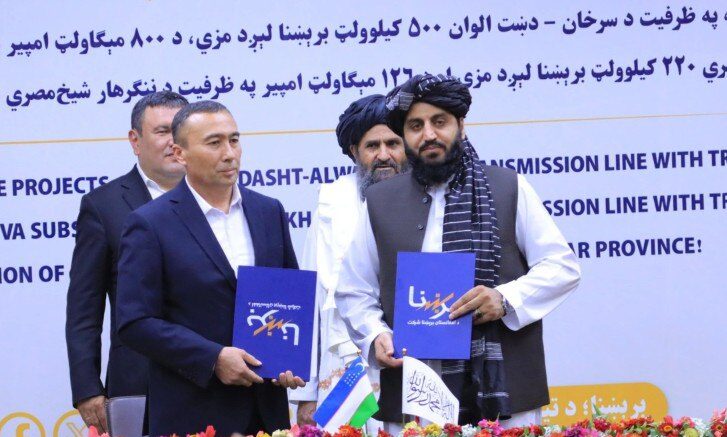
Afghanistan and Uzbekistan have signed four contracts worth $243 million aimed at expanding power transmission infrastructure and building new substations, according to Da Afghanistan Breshna Sherkat (DABS), Afghanistan’s state-owned utility company.

The agreements were concluded between DABS and Uzbekistan’s Ministry of Energy, represented by Nego Energy and Uz Energy. Key components of the project include the extension of the 500-kilovolt Surkhan-Dasht Alwan transmission line, designed to carry up to 1,000 megawatts, the expansion of the Arghandeh substation to 800 megavolt-amperes (MVA), the construction of a new Sheikh Mesri substation in Nangarhar Province, and the extension of the 220-kilovolt Kabul-Nangarhar (Sheikh Mesri) line.

The signing ceremony took place in Kabul and was attended by high-ranking officials, including Deputy Prime Minister for Economic Affairs Mullah Abdul Ghani Baradar Akhund, Head of the General Directorate of State-Owned Corporations Mawlawi Ahmad Jan Bilal, and members of the press.

Describing the projects as “vital for ensuring reliable electricity services,” DABS CEO Dr. Abdul Bari Omar said the upgrades would support Afghanistan’s commercial, industrial, and agricultural development. Uzbekistan’s Minister of Energy, Jurabek Mirzamakhmudov, stressed that the initiative demonstrates “strong joint cooperation and continuous efforts by the leaders of the two friendly nations,” and pledged close collaboration on the implementation phase.

In addition to the infrastructure deals, DABS also signed a separate long-term agreement with Uzbek companies to purchase electricity over a ten-year period, helping to stabilize Afghanistan’s power grid.

As previously reported by The Times of Central Asia, DABS has entered into or prepared agreements for domestic energy generation projects totaling 1,070 megawatts over the past 11 months. Foreign partners are financing 70% of the estimated $1.01 billion investment.

Afghanistan currently generates approximately 250 MW of electricity domestically and imports 800 MW from neighboring countries, Turkmenistan, Iran, Uzbekistan, and Tajikistan, at an annual cost of $250-280 million. Officials estimate national electricity demand at 6,000 to 7,000 MW, with the potential to reach 10,000 MW as industrial output grows.


Kyrgyzstan Restricts Livestock Exports to Stabilize Meat Prices

In early 2025, Kyrgyzstan temporarily suspended livestock exports in a bid to curb rising meat prices on the domestic market. The measure has resulted in a significant reduction in export volumes.

According to the Ministry of Water Resources, Agriculture and Processing Industry, between January and mid-August 2025, Kyrgyzstan exported 30,493 cattle, 31,781 sheep and goats, and 1,636 horses. This marks a sharp decline compared to the same period in 2024, when the country exported 77,907 cattle, 70,392 sheep and goats, and 5,113 horses.

Kyrgyz livestock is primarily exported to neighboring Central Asian countries.

Officials say the suspension has helped prevent meat shortages and price surges domestically. To further bolster local meat production and supply, the ministry has proposed extending the export ban for an additional six months.

In the first half of 2025, Kyrgyzstan produced 115,400 tons of meat, an increase of 3,900 tons compared to the same period in 2024. However, demand continues to outpace supply. National meat consumption stood at 309,400 tons in 2024 and reached 157,300 tons in the first half of 2025.

In 2024, Kyrgyzstan met 86.2% of domestic meat demand through local production. That figure dropped to 79.7% in the first half of 2025, underscoring the country’s ongoing reliance on imports to bridge the supply gap.

To contain prices, the government implemented temporary state control over retail meat prices beginning August 11. For a 90-day period, the price of beef and mutton has been capped at 700 Kyrgyz soms ($8) per kilogram.

Kyrgyzstan Draws International Attention to Glacier Meltdown

Kyrgyzstan is intensifying efforts to combat climate change and safeguard its rapidly melting glaciers through continued collaboration with the United Nations and international partners. Officials emphasize that glacier preservation is key to ensuring long-term water security for the region.

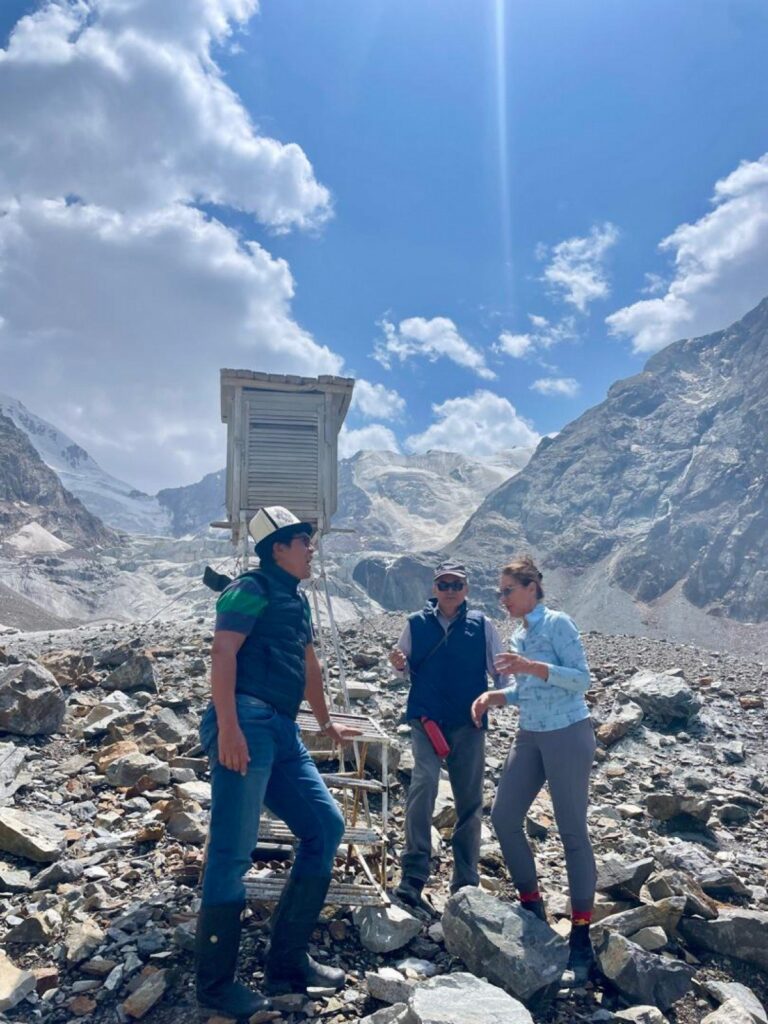
On August 15, Deputy Chairman of the Cabinet of Ministers Edil Baisalov and UN Resident Coordinator in the Kyrgyz Republic Antje Grawe visited the Tien-Shan High-Altitude Physical and Geographical Station of Kyrgyzstan’s National Academy of Sciences. The joint expedition aimed to raise both domestic and global awareness of the alarming retreat of Kyrgyz glaciers, particularly the Kara-Batkak glacier, a vital source of freshwater for Kyrgyzstan and the broader Central Asian region.

Located in the Terskey Ala-Too range of the Inner Tien Shan mountains, south of Lake Issyk-Kul, the Kara-Batkak glacier has long served as a key indicator of climate change. At the research station, Baisalov and Grawe reviewed decades of scientific observations and discussed policies for climate adaptation, biodiversity protection, and water resource management.

“Kyrgyzstan is a land of glaciers, and it is our duty to safeguard this unique resource,” Baisalov said. “The shrinking of our glaciers is not just an environmental concern, it is a matter of national security, water stability, and the country’s future development.”

Grawe underscored the broader global significance of Kyrgyz scientific research and stressed the urgency of climate finance for mountain nations:

“Research on the Kara-Batkak glacier matters far beyond Kyrgyzstan. It guides national strategies and strengthens global climate action. Protecting glaciers also preserves biodiversity and sustains the ecosystems communities rely on. Therefore, climate finance must reach mountain countries like Kyrgyzstan to scale up adaptation, safeguard nature, and secure the water future of millions in Kyrgyzstan and beyond.”

Also present was Rysbek Satylkanov, Director of the Institute of Water Problems and Hydropower, who presented the latest scientific data on glacial retreat and its impact on national water systems.

Established in 1957, the Tien-Shan station is a unique high-altitude research facility conducting glaciological, meteorological, and hydrological monitoring. The Kara-Batkak glacier, within its observation zone, remains a crucial barometer of climate change in Central Asia.

According to the World Meteorological Organization and the World Glacier Monitoring Service, five of the past six years have witnessed the fastest glacier retreat ever recorded. The years 2022-2024 marked the most significant three-year loss of glacier mass in history. Glaciers once considered “eternal ice” may not survive the 21st century.

There are over 275,000 glaciers worldwide, covering approximately 700,000 square kilometers and storing about 70% of the Earth’s freshwater. Their disappearance poses a severe threat to water supplies for hundreds of millions of people.

In response, the UN General Assembly has declared 2025 the International Year of Glaciers’ Preservation and designated March 21 as the annual World Day for Glaciers. The initiative aims to raise awareness of the essential role glaciers play in global climate and hydrological systems, and their significance to ecological and economic stability.

Starlink Expected to Launch in Uzbekistan in 2026

The U.S.-based satellite internet provider Starlink is expected to begin operations in Uzbekistan in 2026, according to information published on the company’s official service availability website.

Developed and operated by SpaceX, the aerospace company founded by Elon Musk, Starlink is designed to deliver high-speed internet access to underserved and remote areas around the world. Typical download speeds range between 50 and 250 megabits per second, making it an attractive option for regions with limited digital infrastructure.

In neighboring Kazakhstan, Starlink officially launched earlier this month following a pilot phase during which the system primarily served rural schools. With the commercial rollout now complete, the service is available to all users across Kazakhstan, signaling Central Asia’s increasing integration into global next-generation connectivity networks.

Meanwhile, Uzbekistan’s national space agency, Uzbekcosmos, has submitted a proposal to host the International Astronautical Congress in Samarkand in 2028. As part of the evaluation process, Christian Feichtinger, Executive Director of the International Astronautical Federation, recently visited Samarkand and Tashkent to assess infrastructure, security, and organizational capabilities.

If successful, Uzbekistan’s bid could bring global space industry leaders and potentially Elon Musk himself, to the historic Silk Road city.

Tokayev Urges Equal Education Standards Across Urban and Rural Kazakhstan

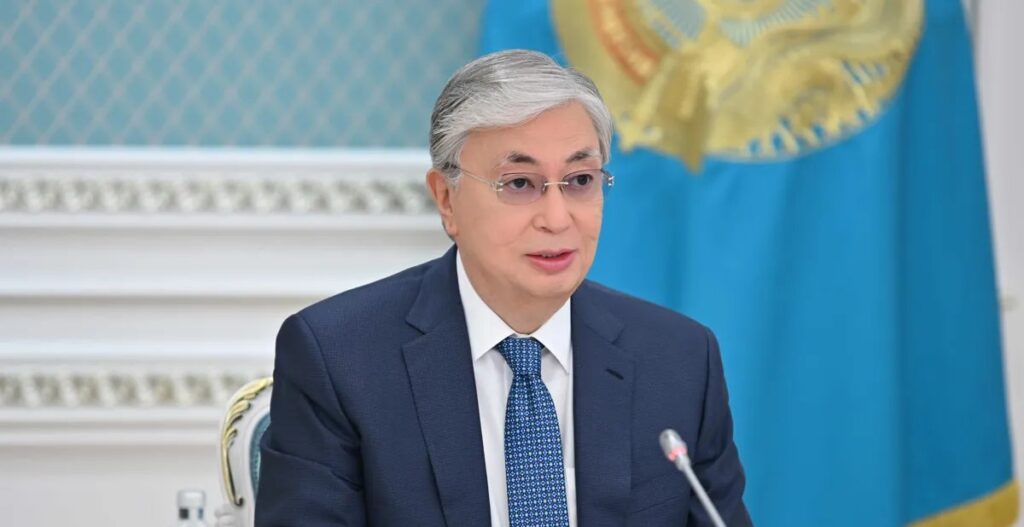
Kazakhstan’s President Kassym-Jomart Tokayev has called for narrowing the gap in education quality between urban and rural schools and accelerating the integration of digital technologies and artificial intelligence (AI) into the country’s education system.

Speaking at the annual August Teachers’ Conference, Tokayev emphasized that building a modern, inclusive nation requires equal opportunities for all children, regardless of geography. “All children must have equal opportunities. Therefore, an important task is to eliminate inequality in the quality of education in cities and villages,” he stated.

Over the past four years, the material and technical infrastructure of more than 4,000 rural schools has been upgraded. Still, Tokayev stressed that this progress must be complemented by digital transformation, including the introduction of AI into the curriculum. “The concepts of ‘progressive nation’ and ‘technological nation’ are synonymous today,” he said, adding that digitalization is central to improving educational outcomes.

Currently, over 95% of schools in Kazakhstan are connected to high-speed internet. Tokayev has instructed that this figure reach 100%, potentially through the use of Starlink satellite technology. “This is not just a technical issue, but a principle of social justice,” he added.

The president also noted that advanced technologies will support the development of an inclusive education environment, particularly benefiting children with special needs.

Several core educational services in Kazakhstan have already been digitized, including school and college admissions, inter-school transfers, and the Bilim service on the eGov mobile platform. However, Tokayev underscored the need to further equip schools with interactive tools and ensure universal access to digital platforms and electronic textbooks.

The president placed particular emphasis on early instruction in AI technologies and continuous professional development for teachers. “Teachers must not only know their subject, but also be able to apply new technologies,” he said.

As previously reported by The Times of Central Asia, the latest PISA assessment noted improvements in education access across Central Asia but highlighted a decline in academic performance among students in the region.

Ancient Water Pipeline Unearthed on 65-Meter Hill in Tajikistan

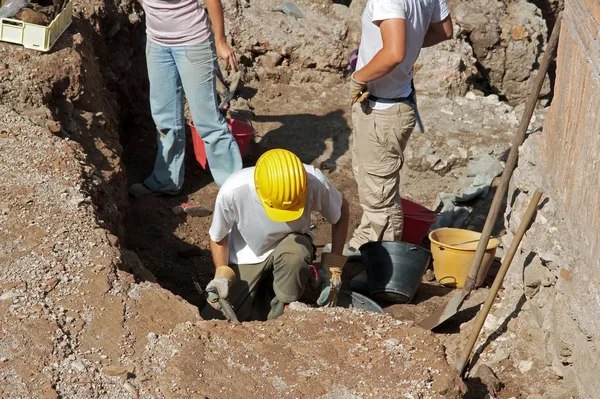
Archaeologists in Tajikistan have uncovered a remarkable ancient water pipeline system atop a 65-meter hill at the Mugtepa settlement, believed to have been constructed approximately 1,500 years ago.

The site, towering above the city at the height of a modern twenty-storey building, once hosted fortresses of the rulers of Uratyube across various historical periods. For nearly three decades, however, the archaeological site remained neglected. Construction in 2017-2018 further compromised its integrity, leading many to assume its secrets were lost forever.

That changed in the summer of 2025, when an expedition from the Department of Archaeology, Ethnography, and Religious Studies at Khujand State University, led by Professor Nabijon Rakhimov, began new excavations. The project, supported by staff from the Kalai Mug Historical and Cultural Complex under Mirzo Olimov, proceeded without official funding but succeeded thanks to the contributions of students and specialists.

Between June 18 and July 18, the team examined three segments of the aqueduct system. Water was drawn from a spring at the base of a nearby hill and transported via ceramic pipes known as kuburs, each approximately 40 cm in length. The pipes were joined using waterproof alabaster mortar and laid in trenches 85 cm wide and 20 cm deep. Small pools, or hauzes, were found along the route, likely used for water collection.

All components of the system were uniformly manufactured, suggesting the existence of specialized production workshops.

Unearthing Everyday Life

In soil layers dating to the 5th to 8th centuries, researchers discovered pottery, stone grain grinders, and spindle whorls, evidence of a thriving agricultural and textile economy. Deeper strata revealed artifacts from earlier eras, ranging from the 1st-3rd centuries CE to the Achaemenid and Hellenistic periods (6th-1st centuries BCE). Notable finds included fragments of tall-stemmed goblets, cup-shaped vessels, and red-slip bowls.

“Archaeological monuments are not just stones and shards; they are material evidence of our history. Without protection and careful treatment, they can disappear,” said Rakhimov.

The team now plans to petition the Agency for the Protection of Monuments under the Government of Tajikistan to secure official support for continued excavations and preservation efforts at Mugtepa.

Other Significant Finds in the Region

This discovery follows several notable archaeological breakthroughs in Tajikistan in recent years.

In 2023, a 7th-century sewer system was uncovered in Istaravshan by architect Amindjonov Khomid and Professor Rakhim Nabiev. The structure, approximately 1,300 years old, highlights the advanced engineering of the period. A rare 6th-century jug, made of concrete and coated in clay, was found nearby.

In May 2025, archaeologists from the National Museum of Tajikistan discovered a Kushan-era clay vessel near the village of Sarband, inscribed in the Bactrian language. The inscription read, “This water jug belongs to a woman named Sagkina,” offering a rare glimpse into ancient literacy and social life.

And in November 2024, an international team led by Professor Yossi Zeidner of the Hebrew University reported the discovery of artifacts dating back 150,000 years at the Soyi Khavzak site in the Zeravshan Valley. Finds included stone tools, animal bones, and plant remains, reinforcing the theory that the region served as a migration corridor for early humans, including Homo sapiens and Neanderthals.

The preservation of organic material at the site raises the possibility of uncovering human remains, which could significantly deepen understanding of prehistoric human presence in Central Asia.