• KGS/USD = 0.01144 0%
  • KZT/USD = 0.00194 -0%
  • TJS/USD = 0.10844 -0.46%
  • UZS/USD = 0.00008 0%
  • TMT/USD = 0.28571 0.28%
  • KGS/USD = 0.01144 0%
  • KZT/USD = 0.00194 -0%
  • TJS/USD = 0.10844 -0.46%
  • UZS/USD = 0.00008 0%
  • TMT/USD = 0.28571 0.28%
  • KGS/USD = 0.01144 0%
  • KZT/USD = 0.00194 -0%
  • TJS/USD = 0.10844 -0.46%
  • UZS/USD = 0.00008 0%
  • TMT/USD = 0.28571 0.28%
  • KGS/USD = 0.01144 0%
  • KZT/USD = 0.00194 -0%
  • TJS/USD = 0.10844 -0.46%
  • UZS/USD = 0.00008 0%
  • TMT/USD = 0.28571 0.28%
  • KGS/USD = 0.01144 0%
  • KZT/USD = 0.00194 -0%
  • TJS/USD = 0.10844 -0.46%
  • UZS/USD = 0.00008 0%
  • TMT/USD = 0.28571 0.28%
  • KGS/USD = 0.01144 0%
  • KZT/USD = 0.00194 -0%
  • TJS/USD = 0.10844 -0.46%
  • UZS/USD = 0.00008 0%
  • TMT/USD = 0.28571 0.28%
  • KGS/USD = 0.01144 0%
  • KZT/USD = 0.00194 -0%
  • TJS/USD = 0.10844 -0.46%
  • UZS/USD = 0.00008 0%
  • TMT/USD = 0.28571 0.28%
  • KGS/USD = 0.01144 0%
  • KZT/USD = 0.00194 -0%
  • TJS/USD = 0.10844 -0.46%
  • UZS/USD = 0.00008 0%
  • TMT/USD = 0.28571 0.28%
09 December 2025

Kyrgyzstan and Russia Sign $270 Million in Agreements at Issyk-Kul Forum

At the seventh Kyrgyz-Russian Economic Forum on the shores of Issyk-Kul, Kyrgyzstan and Russia signed nearly 30 agreements worth about US $270 million. The forum brought together around 1,000 representatives from government agencies, investment funds, businesses, and public organizations across member states of the Eurasian Economic Union (EAEU).

In his address, President Sadyr Japarov said Kyrgyzstan has maintained average annual economic growth of 9 per cent since 2022, the highest rate among countries in the Commonwealth of Independent States and the EAEU. He described the forum as a vital platform for strengthening cooperation, exchanging experience, and fostering direct business ties. He also stressed the importance of technological independence, protection of digital data, and the development of national IT infrastructure.

The agreements span energy, industry, transport, aviation, agriculture, the digital economy, education, and logistics. They include a US $55 million contract for Airports of Kyrgyzstan to acquire aircraft from a Russian manufacturer, a US $2.8 million memorandum for the purchase of an electric cruise ship, supply agreements for tractors, trucks, metal products, and machine tools, and plans for a milk processing complex. Additional deals cover financing arrangements for Kyrgyz companies to issue securities on the Russian market, an investment agreement with the Eurasian Development Bank to support projects through the Russian-Kyrgyz Development Fund, and a commitment by the Kyrgyz Green Energy Fund to purchase electricity from Russian suppliers. Roscosmos and the Kyrgyz Ministry of Digital Development also signed a memorandum on the peaceful exploration of space.

First Deputy Prime Minister Daniyar Amangeldiev noted that during Kyrgyzstan’s decade as an EAEU member, the country has seen improvements in socioeconomic indicators, a decline in unemployment, and continued growth in priority sectors.

Uzbekistan Targets Premium Global Brands with U.S. Cotton Imports

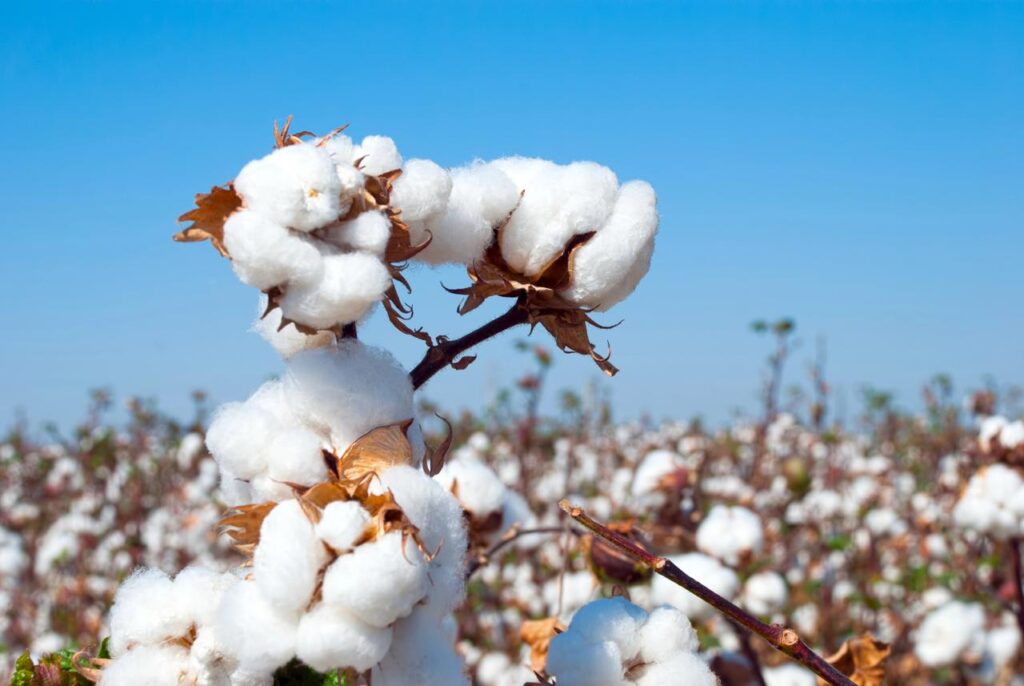
Uzbekistan, one of the world’s largest cotton producers, may begin importing cotton from the United States, a move that has prompted public debate. Inomjon Abdurakhmonov, Head of the Foreign Trade Department at the Ministry of Investment, Industry and Trade, explained that the decision is aimed at helping Uzbekistan secure a foothold in premium global markets and boost the reputation of its textile exports.

A rapidly growing textile sector

Over the past seven years, Uzbekistan’s textile industry has expanded dramatically. Since 2017, cotton yarn output has more than doubled from 412,000 to 970,000 tons, knitted fabric production has risen from 68,000 to 312,000 tons, and ready-made garment output has jumped from 960 million to 3.1 billion pieces. Exports have grown from about $1.1 billion in 2016 to $2.8 billion in 2024.

This growth stems from a deliberate policy shift away from exporting raw cotton in favor of domestic processing. Today, 100% of the national harvest is used locally, feeding factories that now export finished goods to more than 50 countries.

Why import cotton?

Abdurakhmonov emphasized that imports would supplement, not replace, domestic supply. “Uzbek cotton is fully consumed domestically, but our factories still operate at about 75% capacity,” he said. “Premium-grade imports allow us to expand production and meet the strict quality standards of top global brands.”

Similar strategies are used by other textile leaders such as Turkey, India, Vietnam, and China, all of which import high-grade cotton to meet market requirements.

The U.S. advantage

The plan focuses on importing Strict Middling, a high-grade U.S. fiber recognized for its consistency, strength, and sustainability credentials under the U.S. Cotton Trust Protocol. “For major brands like Levi’s, Ralph Lauren, Puma, and Gap, ‘Made with U.S. Cotton’ is not optional, it’s a prerequisite,” Abdurakhmonov explained.

Such quality cannot easily be replicated in Uzbekistan’s climate, and producing comparable fiber locally would take at least five years.

Financing the imports

Purchases will be supported by the U.S. Department of Agriculture’s GSM-102 program, which offers credit guarantees and deferred repayment terms of 12-18 months. This allows Uzbek manufacturers to sell finished goods before paying for the raw cotton, covering up to 98% of the deal value.

Long-term benefits

While U.S. cotton costs 15-20% more than domestic fiber, it will be used selectively for contracts where premium quality is mandatory, with higher margins offsetting the expense.

Beyond immediate production gains, Uzbekistan aims to enhance its global textile reputation and strengthen its position in supply chains. Preferential access under the EU’s GSP+ system has already nearly doubled exports to Europe, from $74 million to $140 million and similar results are expected from U.S. partnerships.

“Importing U.S. cotton is not about shortages, it’s about credibility,” Abdurakhmonov said. “This strategy will secure our place in premium markets and create long-term opportunities for our economy.”

EDB to Fund Feasibility Study for Railway in Kyrgyzstan’s Issyk-Kul Region

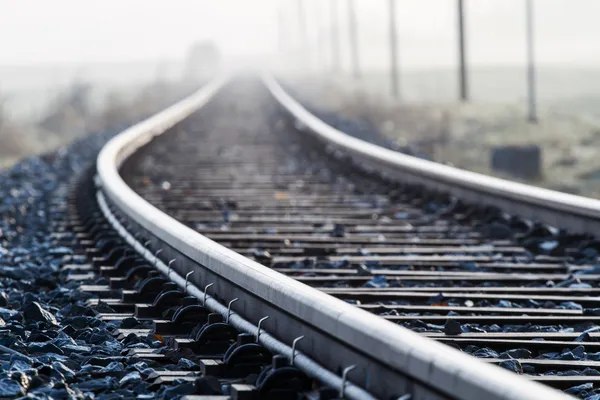
The Eurasian Development Bank (EDB) will provide a grant to Kyrgyzstan’s national railway company, Kyrgyz Temir Jolu, to prepare a preliminary feasibility study for a new railway line connecting the cities of Balykchy and Cholpon-Ata in the Issyk-Kul region.

Balykchy and Cholpon-Ata are located 79 km apart. At present, the railway linking Kyrgyzstan’s capital, Bishkek, with Lake Issyk-Kul ends in Balykchy. The planned section would extend the line to Cholpon-Ata, the main resort city on the lake’s northern shore.

A technical assistance agreement for financing the study was signed on August 14 by Azamat Sakiev, General Director of Kyrgyz Temir Jolu, and Iaroslav Mandron, Vice Chairman of the EDB Management Board.

According to the EDB, the Balykchy-Cholpon-Ata project aims to boost both tourism and freight connectivity in the Issyk-Kul region, linking its resorts to the railway networks of Kazakhstan and Uzbekistan. It is also expected to support mineral resource development and expand freight operations by creating more reliable logistics routes.

The preliminary feasibility study will compare technical and economic options, determine the optimal construction approach, develop a high-level financial and economic model, and provide recommendations for implementation and financing.

“The new Balykchy-Cholpon-Ata railway section is crucial not only for strengthening Kyrgyzstan’s domestic transport system but also for advancing international logistics,” said Mandron. “The project will integrate with Tamchy Airport, about 40 km from Cholpon-Ata, helping increase both tourist and cargo traffic. The feasibility study is a strategic step that will allow the parties to move from intentions to concrete implementation mechanisms for a project estimated at around $500 million.”

Kazakhstan Presses Oil Giants as Kashagan Revenues Face Scrutiny

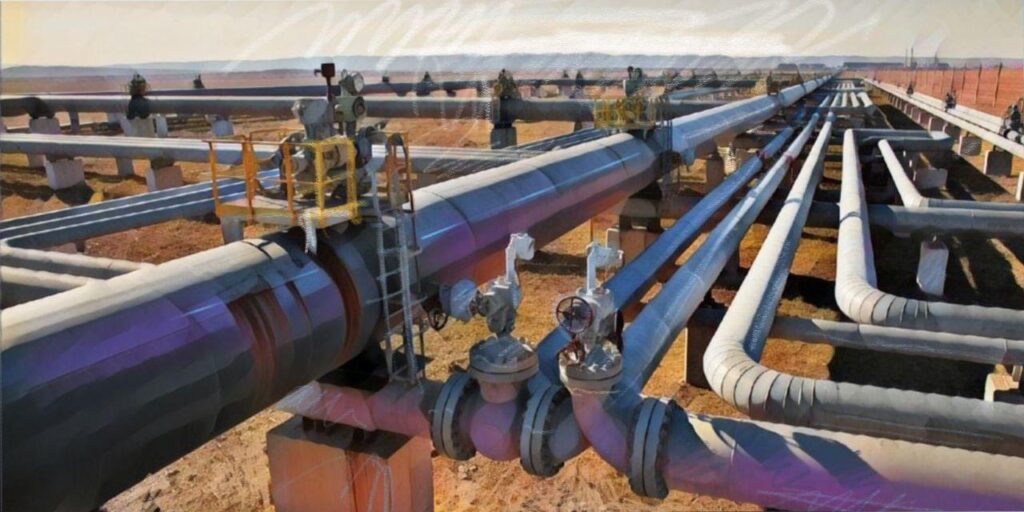
The media in Kazakhstan is once again debating the revision of production sharing agreements (PSAs) with foreign companies in the country’s major oil consortia. PSA LLP, the state-owned operator authorized by the Ministry of Energy to represent Kazakhstan’s interests in the North Caspian Production Sharing Agreement, has released new data on revenues from the Kashagan field, information expected to reignite calls to amend agreements with major Western oil producers in Kazakhstan’s favor.

President Kassym-Jomart Tokayev has publicly backed the discussion. In January, he instructed the government to intensify negotiations with foreign investors. “The implementation of production-sharing agreements for large fields has allowed Kazakhstan to become a reliable supplier of energy to the global market. These projects have made a great contribution to the country’s socio-economic development. However, large investments require a long-term planning horizon. Therefore, the government must intensify negotiations on extending PSA contracts, possibly on revised terms that are more favorable for Kazakhstan,” Tokayev said at an expanded government meeting.

The PSA company, headed by Tokayev’s nephew, Beket Izbastin, reported that in 2024, the Kashagan consortium’s total revenue from oil, gas, and sulfur sales exceeded $11 billion. Of this, 80% covered capital and operating costs (“Cost Oil”), while only 20% came from “Profit Oil,” amounting to $2.2 billion. Kazakhstan’s share was 10%, or $220 million. Including the $430 million in taxes paid by the operator, NCOC, the country’s total revenue was $650 million.

“With revenues of $11 billion, the republic’s share, including taxes, was only 6%, the lowest among oil companies not only in Kazakhstan but globally,” PSA said.

Under the current terms, Kazakhstan’s share of Profit Oil will not increase until three billion barrels have been extracted from Kashagan. Only the first billion has been produced over the past decade. Shareholders are expected to begin paying a 30% income tax soon; KazMunayGas has already transferred an initial $45 million payment from the Kashagan profits.

The fairness of this revenue distribution is now a central point of debate. Some observers believe the renewed focus ahead of the next parliamentary session could signal that Tokayev will again raise the issue in his annual address, alongside agreements for Karachaganak and Tengiz, the other pillars of Kazakhstan’s oil sector. Tengiz operates under a contract expiring in 2033, earlier than Karachaganak (2037) and Kashagan (2041).

At his press conference in Astana last month, Prime Minister Olzhas Bektenov confirmed that negotiations with major oil companies had only just begun. “Indeed, there is a view that the country’s interests are significantly infringed upon. We are starting negotiations with our consortium partners to conclude new PSAs for a new period. This will be done in a measured and balanced manner, without sudden moves, while defending the national interests of our country,” Bektenov stated.

The question of what exactly constitutes “national interests” remains open. In February, Mazhilis deputy Edil Zhanbirshin linked the issue to Kazakhstan’s dependence on imported fuel. Despite the $3.7 billion spent on modernizing the country’s three oil refineries, annual processing volumes remain below 18 million tons and are declining, causing recurring shortages of gasoline, aviation fuel, and diesel. Over the past seven years, Kazakhstan has imported more than six million tons of petroleum products, most from Russia.

“We cover this deficit with imports. This is nonsense for a country with such oil reserves. The time has come to solve this problem,” Zhanbirshin said.

How Kazakhstan Compares Internationally

Field / Country Contract Expiry Annual Revenue (latest available) State Take (incl. taxes) Notes
Kashagan (Kazakhstan) 2041 $11B (2024) 6% Operated under the North Caspian PSA. High cost-recovery ceiling (80%) delays profit share growth until 3B barrels extracted; only ~1B produced so far.
Tengiz (Kazakhstan) 2033 $20B (est. 2023) 18–20% One of the largest onshore oil fields. Operated under long-term concession; earlier expiry than Kashagan or Karachaganak may give Kazakhstan earlier leverage in renegotiations.
Karachaganak (Kazakhstan) 2037 $10B (est. 2023) 22% Gas-condensate field; PSA terms revised in 2012 to increase Kazakhstan’s share.
Norway (North Sea) N/A (licensing) Varies 75–78% A combination of a 78% marginal tax rate and state participation ensures a high state take.
UAE (Abu Dhabi) N/A (concession) Varies 65–70% ADNOC maintains a majority stake; a low-cost recovery share compared to Kazakhstan PSAs.
Nigeria (Deepwater PSAs) 2030s Varies 50–55% Earlier PSAs gave lower returns, but the 2019 amendments improved the state’s share of deepwater projects.

Globally, many major oil producers under PSAs secure far higher effective state takes. According to industry benchmarks, countries like Norway and the UAE often retain 60–80% of net oil revenues, while even more investor-friendly regimes such as Nigeria typically see 50–55%. In contrast, Kazakhstan’s current 6% take from Kashagan in 2024 — even when factoring in taxes — is exceptionally low. This gap reflects the heavy cost-recovery clauses and production thresholds built into the original contracts, signed in the 1990s and early 2000s, when the country sought to attract massive foreign investment to develop technically challenging offshore fields.

The debate over revising PSAs reflects both external and internal priorities: reducing dependence on Russian fuel imports for the Western audience, and ensuring fairer returns on natural resources for the domestic public. Whether this dual strategy will help Kazakhstan move beyond its role as a raw material supplier, however, remains to be seen.

A Tale of Two Mountain Climbers in Asia: One Prevails, Another Succumbs

 The line between triumph and disaster is sometimes thin in the world of mountain climbing.

On Aug. 11, Eduard Kubatov of Kyrgyzstan reached the summit of K2 in Pakistan without supplemental oxygen, part of his bid to climb the 14 mountains internationally recognized as “eight-thousanders,” or peaks that are more than 8,000 meters above sea level.

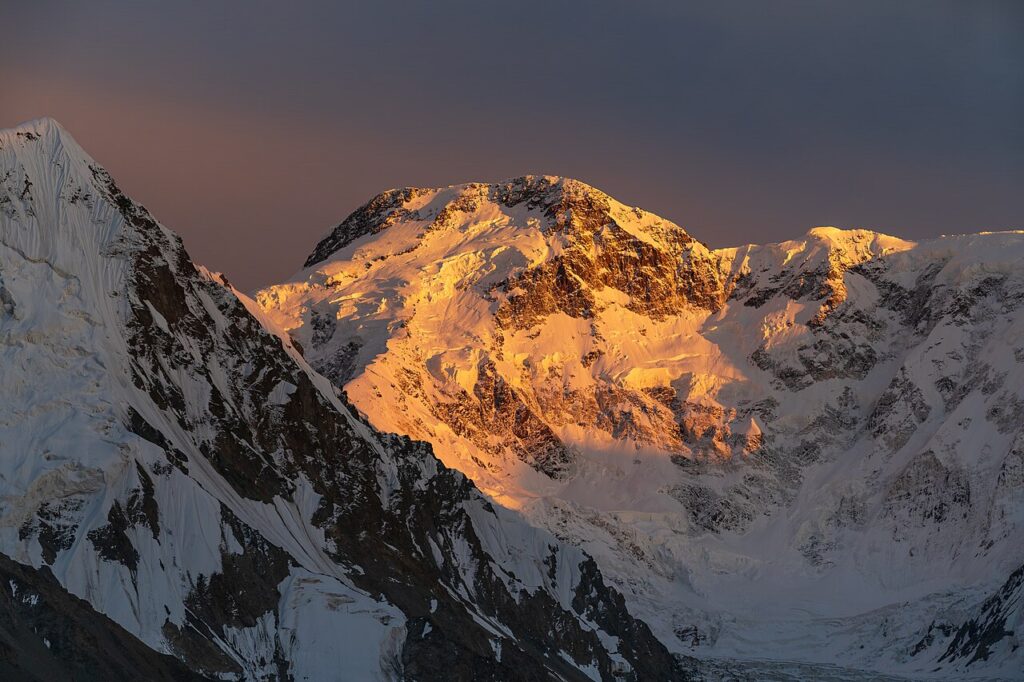
On the same day, hundreds of kilometers to the north, Russian Nikolay Totmyanin, 66, died after ascending another extremely challenging mountain – Pobeda Peak, which lies on the border between Kyrgyzstan and China and is 7,439 meters above sea level. It is also known by the Kyrgyz name Jengish Chokusu (Victory Peak).

Totmyanin made the summit but then fell ill on the way down.

“He came down on his own, pushing hard, knowing he had to get lower as quickly as possible. On the evening of August 10, 2025, he was admitted to intensive care in Bishkek. By morning, he was gone,” said Anna Piunova, editor of Mountain.RU, a Russian website that covers climbing news.

“His climbing resumé is staggering, hard to believe a single lifetime could hold so much,” Piunova said on Instagram. “More than 200 ascents in the Caucasus, Pamirs, Tien Shan, Alps, Himalayas, Karakoram, and North America, including 63 big-wall climbs.”

Piunova did not go into detail about Totmyanin’s illness, but the lack of oxygen at such heights can have lethal effects.

Both K2 and Pobeda Peak can be approached from the Chinese side of the borders, but the difficulty of access and logistical challenges deter most international climbers from a route via China.

While Totmyanin was a more recognized figure on the international climbing scene, Kubatov, the 53-year-old head of Kyrgyzstan’s Mountaineering Federation, has been building an impressive record and enjoys wide appreciation in Central Asia. Kubatov has scaled several of the eight-thousanders without supplemental oxygen. He celebrated the K2 achievement with a message on Facebook on Thursday that acknowledged the dangers of the mountain, where climbers faced an especially tough environment this season because of low snowfall and an increased threat of rockfalls.

“Friends, K2 is ours! On August 11 at 17:00, I was on this great summit without using oxygen!” the Kyrgyz climber said. “Friends, yesterday, August 13 at 5 a.m., I descended from the summit of K2 — 8,611 meters! Unfortunately, during the descent, many suffered severe injuries, and one female climber died.”

The climber, Guan Jing of China, died on Aug. 12 while descending from the K2 peak with an expedition led by Imagine Nepal, a company founded by Sherpas. The Tourism Times, a publication based in Kathmandu, reported on Wednesday that efforts were underway to recover her body.

Kubatov was with a joint team from Seven Summit Treks and 14 Peaks Expedition, which are also based in the Himalayan country. The climber, who will surely receive a big welcome on his return to Kyrgyzstan, said he was “slightly unwell” but looking forward to going home.

Totmyanin, the Russian climber known in some mountaineering circles as “Iron Uncle Kolya,” climbed K2 nearly two decades ago. Like Kubatov, he did it without bottled oxygen. His funeral is scheduled for Sunday in Smolensk, Russia.

World Bank: Central Asia’s Growth to Slow but Remain Resilient

Central Asia is set to remain one of the world’s fastest-growing regions, although its economic momentum is expected to moderate in the coming years, according to the World Bank’s Spring 2025 Europe & Central Asia Economic Update. The region posted a growth rate of 5.5% in 2024, with projections of 5.0% for 2025 and 4.4% for 2026 as oil output normalizes in Kazakhstan, re-exports fade, and remittance inflows settle. The World Bank also revised its 2024 forecast upward by 0.8 percentage points, citing stronger-than-anticipated domestic demand. The forecasts incorporate data available through April 10, 2025.

Country-Level Outlook

Uzbekistan is forecast to grow by 6.5% in 2024, followed by 5.9% in both 2025 and 2026. Kyrgyzstan is expected to expand by 9.0% in 2024 and 6.8% in 2025. Tajikistan will grow by 8.4% in 2024 and 6.5% in 2025. Kazakhstan’s growth is projected to be more moderate, at 4.8% in 2024 and 4.5% in 2025.

The World Bank attributes much of the region’s expansion to robust domestic demand, including household consumption, investment, and government spending, rather than export performance. Remittances continue to play a vital role in economic stability: they account for nearly 40% of GDP in Tajikistan, over 20% in Kyrgyzstan, and are critical in reducing poverty in Uzbekistan, where poverty rates would nearly double in their absence.

Investment and Long-Term Prospects

With investment comprising about 26% of GDP, Central Asia boasts one of the highest investment-to-GDP ratios among developing regions. This is largely driven by construction and large-scale infrastructure projects, particularly in the energy and transport sectors.

However, the road to high-income status remains long. According to the Bank, based on current trajectories, it would take Kazakhstan and Turkmenistan approximately 40 years, Kyrgyzstan 70 years, and Uzbekistan and Tajikistan over 100 years to reach the high-income threshold of $14,005 in per capita income, a benchmark set for 2023.

Risks and Policy Recommendations

These forecasts are based on data available through April 10, 2025, and reflect persistent challenges stemming from the COVID-19 pandemic, ongoing cost-of-living pressures, and regional trade disruptions since 2022.

To sustain momentum, the World Bank urges policymakers to pursue structural reforms and channel investment into productivity enhancements, technology adoption, and innovation. Without such efforts, growth could fall below potential in the years ahead.