
• KGS/USD = 0.01144 0%
  • KZT/USD = 0.00194 -0%
  • TJS/USD = 0.10844 -0.46%
  • UZS/USD = 0.00008 0%
  • TMT/USD = 0.28571 0.28%
  • KGS/USD = 0.01144 0%
  • KZT/USD = 0.00194 -0%
  • TJS/USD = 0.10844 -0.46%
  • UZS/USD = 0.00008 0%
  • TMT/USD = 0.28571 0.28%
  • KGS/USD = 0.01144 0%
  • KZT/USD = 0.00194 -0%
  • TJS/USD = 0.10844 -0.46%
  • UZS/USD = 0.00008 0%
  • TMT/USD = 0.28571 0.28%
  • KGS/USD = 0.01144 0%
  • KZT/USD = 0.00194 -0%
  • TJS/USD = 0.10844 -0.46%
  • UZS/USD = 0.00008 0%
  • TMT/USD = 0.28571 0.28%
  • KGS/USD = 0.01144 0%
  • KZT/USD = 0.00194 -0%
  • TJS/USD = 0.10844 -0.46%
  • UZS/USD = 0.00008 0%
  • TMT/USD = 0.28571 0.28%
  • KGS/USD = 0.01144 0%
  • KZT/USD = 0.00194 -0%
  • TJS/USD = 0.10844 -0.46%
  • UZS/USD = 0.00008 0%
  • TMT/USD = 0.28571 0.28%
  • KGS/USD = 0.01144 0%
  • KZT/USD = 0.00194 -0%
  • TJS/USD = 0.10844 -0.46%
  • UZS/USD = 0.00008 0%
  • TMT/USD = 0.28571 0.28%
  • KGS/USD = 0.01144 0%
  • KZT/USD = 0.00194 -0%
  • TJS/USD = 0.10844 -0.46%
  • UZS/USD = 0.00008 0%
  • TMT/USD = 0.28571 0.28%
09 December 2025

Turkmenistan’s Strategic Reentry into Gas Diplomacy

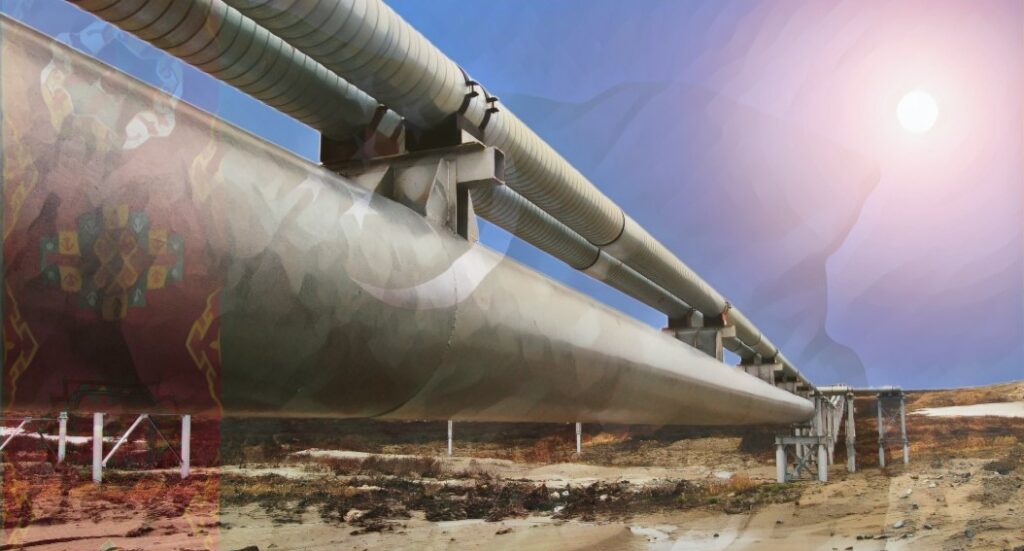
Turkmenistan holds the world’s fourth-largest proven gas reserves. And yet, its energy diplomacy has until quite recently remained inert. The paradox is systemic: it possesses more gas than infrastructural escape routes; yet as demand for non-Russian energy rises across Eurasia’s westward axis, Ashgabat’s relevance grows, not so much because it radically evolves but because the system around it does.

Historically, 80–90% of Turkmen gas has flowed east through the Central Asia–China pipeline, sometimes called the Turkmenistan–China corridor. The dependency is acute, and the pricing asymmetrical. Previous efforts to increase flows in other directions — across Iran, via Azerbaijan, southward to South Asia, or across the Caspian Sea — have been dashed on the rocks of logistics and geopolitics. The early 2000s were especially pivotal, when Turkmenistan’s delay in engaging with the EU’s Southern Gas Corridor initiative shaped a decade of missed leverage. What we are seeing now is not a late start but a late modulation of the country’s energy vectors across weakly emerging paths.

Geoeconomic Constraints as Strategic Catalysts

Dependency on China as a monopsonist (sole purchaser) implies not just limited diversification but two deeper vulnerabilities. First, price-setting mechanisms remain inscrutably opaque. Second, the lack of alternative outlets structurally reinforces the asymmetry. Attempts to broaden options through Iran or Azerbaijan, though nominally ongoing, rely more on swaps than corridors, and even these are uneven.

The Dauletabad–Sarakhs–Khangiran pipeline, completed in 2010, should have represented a minor second axis. However, it operates at a trickle, if at all, due to Iran’s past failure to pay contracted sums in a timely fashion, requiring international arbitration. Another example is the Turkmenistan–Afghanistan–Pakistan–India (TAPI) pipeline, discussed since the 1990s, and in which India lost interest two decades ago. TAPI remains on hold, hampered by Afghanistan’s security volatility and a practical lack of commercial prospects that produce financing shortfalls.

The Trans-Caspian Gas Pipeline (TCGP) was long stalled by legal uncertainties over Caspian Sea seabed rights and opposition from Russia and Iran. Even since the sea’s status under international law was settled by the Caspian Convention, signed in 2018, planning for this pipeline remains somnolent, despite its removal of many legal barriers to TCGP construction.

Swap agreements are usually regarded as workaround tools, but for Turkmenistan, they have become more permanent structural mechanisms, allowing Ashgabat to insert itself into third‑party supply chains without transit risk. Iran’s infrastructure is unreliable but offers compression and metering; Azerbaijan’s network enables reverse flows and flexibility.

A modest but symbolically important addition is the Dostluk field, a previously disputed offshore deposit between Azerbaijan and Turkmenistan in the Caspian Sea. A 2021 Memorandum of Understanding resolved maritime delimitation and designated the field for joint development.

Even when summed all together, these vectors remain mainly null. Once seen as “backup” export routes, they have failed structurally. Turkmenistan, infrastructurally entangled yet geopolitically uncommitted, still lacks true backup and instead manages redundancy, maintaining multiple provisional export channels simultaneously. It must still respond adaptively to shifting constraints while balancing fragile options.

Turkmenistan’s Attempts to Rewire Its Client Network

Since 2023, Ashgabat’s behavior has shifted. Bilateral agendas have softened, and regulatory murmurings hinted at pragmatic change. In February 2025, Turkmenistan finalized a gas swap with Ankara whereby Turkmenistan would deliver up to 2 bcm/y to Iran while Türkiye received an equivalent volume via its northern pipeline grid. Flows began on March 1 this year, with Türkiye’s offtake volume by year’s end projected at 1.3 bcm. For a country that consumes 50 bcm annually, it’s marginal. For Turkmenistan, it’s a crossing.

Though small relative to Türkiye’s 50 bcm/y consumption, the swap symbolizes its diversification beyond Russia and Iran, even as Turkey develops domestic offshore production in the Sakarya gas field. A similar framing applies to Iraq. In 2024, an MOU was signed with Turkmenistan for five years of supply. Implementation, however, has stalled due to U.S. sanctions on Iran complicating Iraqi payments. Nonetheless, the architecture is important: Turkmen gas would help shore up Iraq’s north‑central grid amid Iranian shortages.

The EU remains marginal but attentive. Since 2023, high-level EU delegations have resumed consultations in Ashgabat. Hungary has lobbied for deeper engagement within the Turkic States format; Romania and Bulgaria have signaled quiet interest in Caspian–EU tie-ins via Georgian connectors. These include not only the Bulgaria–Romania–Hungary–Austria (BRUA) pipeline, but also the reverse-flow, which has just begun through the Trans-Balkan Pipeline (TBP) to Ukraine, from where larger volumes could eventually reach Europe itself.

Brussels’s 2024 update to its Central Asia Strategy emphasized energy interdependence, if cautiously. Meanwhile, companies like Eni and OMV have renewed dormant feasibility studies in Turkmenistan’s western fields. These engagements operate as symbolic client activation that expresses Ashgabat’s readiness to pre-structure possible corridors.

Changing Systemic Significance of Turkmenistan’s Neutrality

Turkmenistan’s long-standing rhetoric of “positive neutrality” is now less of an ideological posture and more of a practical mode of functioning. The attempt to implement it through the country’s gas diplomacy illustrates this shift, exhibiting three systemic properties. First, Ashgabat is trying to distribute its leverage. No longer really counting on one breakthrough pipeline (such as TAPI or TCGP), Turkmenistan is implementing a series of smaller, incremental linkages. Second, this strategy, where multiple channels operate in parallel, creates the principle of redundancy and optionality, reducing reliance on any one route and allowing for adaptive shifts. Third, swap diplomacy can adjust faster than large-scale infrastructure projects, also permitting swift diplomatic signaling.

Turkmenistan’s neutrality is ceasing to be an absence of alliances and becoming an ongoing reconfiguration of possibilities. The several corridors do not destabilize the overall field of geoeconomic constraints. Ashgabat cooperates with partners without aligning itself, not yet hedging but seeking strategic leverage. In this connection, it is very significant that Ashgabat has also increased its engagement in what may be called technical multilateralism: OSCE energy working groups, Turkic States logistics forums, and EU–Central Asia energy roundtables.

Turkmenistan’s Significance for the Evolving Caspian Sea System

Turkmenistan’s gas diplomacy in 2024–2025 continues to seek to rebalance its geoeconomic system. The economy is still trying to avoid betting on a single pipeline by investing in multiple, contextual, contingent connections. From Türkiye via Iran, to nascent Iraqi flows, to pipelines through Azerbaijan, Ashgabat is reframing its historic neutrality as flexibility.

Constrained by overreliance on China and stalled corridor projects like TAPI and TCGP, Ashgabat is now adopting a modular, multi-vector posture: leveraging swap arrangements, logistical intermediaries, and symbolic client activation across Türkiye, Iraq, and the EU. Turkmenistan’s “positive neutrality” has evolved into a method for modulating infrastructural connections in an attempt to manage constraints. In the Caspian system-of-systems, Turkmenistan emerges as an “interstitial” node mediating the network by redistributing its shifting tensions.

A mid-July 2025 meeting between the Chair of the Turkmenistan People’s Council, Gurbanguly Berdimuhamedov, and Azerbaijani President Ilham Aliyev in Baku gains significance in this context: it is emblematic not because of final deliverables, but because of its focus on corridor-building dynamics. Turkmenistan appears to be learning to live within system constraints, using gas diplomacy as a principal interface with its geopolitical environment.

Within the systems logic set out above, the Baku meeting marks a point of coupling between Turkmenistan’s flows and the Azerbaijani-Turkish node. Azerbaijan has also deepened institutional coordination outside the energy sector, as container traffic along the Turkmenbashi-Baku route has risen sharply, increasing bilateral logistical interdependence. Not a high-profile summit, the meeting marks routine energy planning, with the routine itself signaling the operation and standardization of a modular multi-vectorism by Ashgabat.

This approach confirmed a phase shift in Turkmenistan’s practice of neutrality from rigid nonalignment to selective entanglement. Ashgabat’s strategy is neither an abrupt realignment nor an overt turn to the West, but rather an adjustment in diplomatic posture whereby gas transit animates a dynamic system of geoeconomic extension within the broader configuration of policy issue-areas.

The meeting and its results underscore the general argument offered here, about how the Caspian Sea basin is becoming a “system-of-systems”: trade corridors, pipeline paths, financial architectures, and diplomatic cooperation within and beyond the region; these phenomena include Kazakhstan’s oil swaps through Azerbaijan, Georgia’s infrastructural dependability, and Russia’s tolerance of swaps but resistance to TCGP. Turkmenistan’s relevance lies not in its scale of activity or level of integration, but in how it modulates friction among larger actors by utilizing its gas resources as an instrument of differential connectivity.

EU Grants Kazakhstan Exemption to Transit Coal Through Sanctioned Russian Ports

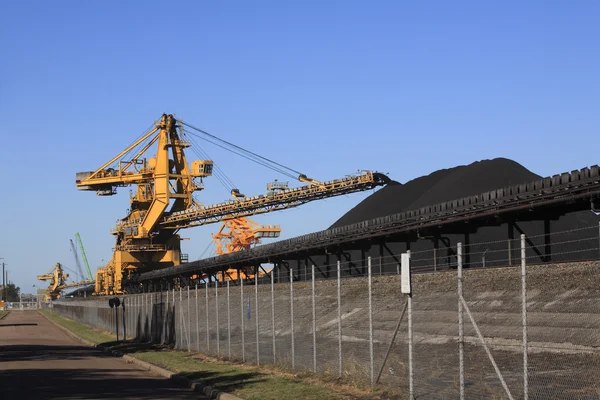
The European Union has granted Kazakhstan an exemption permitting the transit of Kazakh coal through select Russian ports previously restricted under EU sanctions. The decision, included in the EU’s 18th package of sanctions, aims to secure Kazakhstan’s coal exports to Europe.

The exemption follows months of negotiations led by the Ministry of Trade and Integration, the Ministry of Foreign Affairs, and Kazakhstan’s Permanent Mission to the EU. The talks were prompted by sanctions introduced in February 2024 under the 16th EU sanctions package, which included a ban on transactions with Ust-Luga port, one of the main routes for Kazakh coal shipments to the EU.

“To resolve the situation, work was carried out at various levels and an official request was sent to the European Commission asking for changes to the sanctions regime,” the ministry stated. “As a result, the 18th package of EU sanctions contains amendments allowing transactions with a number of Russian ports for the transit of coal of Kazakh origin.”

Conditions of the Exemption

The exemption is conditional and tightly regulated:

  • Only coal of Kazakh origin may be transited;
  • Ownership of the cargo must not involve entities from countries under EU sanctions, including Russia and Belarus;
  • The designated Russian ports may be used solely for transit purposes, specifically loading and dispatch, without any procurement or production activities on site.

Trade Impact

Kazakhstan remains a key coal supplier to the European market. In 2022, it exported 4.4 million tons of coal to the EU, generating $419.2 million, representing 45% of total coal exports. Although volume increased to 6.1 million tons in 2023 (54.3%), falling global prices reduced revenue to $382 million. In 2024, exports declined to 5.2 million tons worth $312.5 million (51.8%).

During the first five months of 2025, Kazakhstan exported 1.6 million tons to the EU, generating $82.9 million and accounting for 38.5% of total coal exports over that period.

“Despite the temporary decline in indicators, the measures taken are creating conditions for the restoration of export flows and increased stability of logistics routes,” the ministry said. “Kazakhstan will continue to work to protect trade interests, support national exports, and strengthen economic ties with key partners.”

As previously reported by The Times of Central Asia, domestic coal consumption in Kazakhstan is expected to decrease due to government plans to phase out pilot coal-fired power plants in favor of renewable energy and low-carbon technologies, including gas. 

ADB Raises Kazakhstan’s Economic Growth Forecast, Warns of Higher Inflation

The Asian Development Bank (ADB) has revised upward its economic growth forecast for Kazakhstan for both 2025 and 2026, while also raising its inflation projections. The updated outlook was published in the July edition of the Asian Development Outlook.

Growth Outlook Strengthened

According to the ADB’s latest report, Kazakhstan’s GDP is now expected to grow by 5.1% in 2025, up from the 4.9% forecast issued in April. The projection for 2026 has also been increased from 4.1% to 4.3%.

Key growth sectors include:

  • Transport: +21%
  • Construction: +16.9%
  • Manufacturing: +8.7%
  • Mining: +6.1%

Particular emphasis is placed on the early expansion of oil production at the Tengiz field, which launched ahead of schedule. This, combined with Kazakhstan’s increasing oil exports within the framework of OPEC+ quotas, has bolstered the growth outlook. As previously reported by The Times of Central Asia, in June, Kazakhstan raised production for the third consecutive month, contributing positively to GDP growth.

“Growth in tax revenues has allowed for increased government investment in capital projects and the social sector,” the ADB commented. “The early launch of the Tengiz expansion has strengthened prospects for the extractive industry. OPEC+’s May 31 decision to continue raising production supports this trend, as Kazakhstan is utilizing its full capacity.”

Inflation Pressures Intensify

Despite the improved growth outlook, the ADB now expects inflation to reach 10.2% by the end of 2025, up from the 8.2% forecast in April. For 2026, inflation is projected at 8.4% (previously 6.5%).

Data from Kazakhstan’s National Statistics Bureau indicates that annual inflation reached 11.3% in May and 11.8% in June. Paid services remain the primary inflation driver, though monthly price increases slowed modestly from 0.9% in May to 0.8% in June.

The ADB notes rising inflationary pressure across the broader Caucasus and Central Asia subregion. The regional average is now expected to hit 7.8% in 2025 and 6.7% in 2026 both higher than the previous forecasts of 6.9% and 5.9%, respectively.

Supporting Forecasts

The Eurasian Development Bank (EDB) also anticipates robust economic expansion in Kazakhstan, projecting GDP growth of 5.5% in 2025, up from 4.8% in 2024, with sustained momentum through 2026-2027. However, the EDB likewise foresees persistent inflation, expecting it to reach 11.9% by year-end.

Earlier, Deputy Prime Minister Serik Zhumangarin reported that the Kazakh economy grew by 6.2% in the first half of 2025, the country’s fastest growth rate since 2011.

Vietnamese Company to Build Solar Power Plant in Kyrgyzstan

Kyrgyzstan’s Cabinet of Ministers has signed an investment agreement with Vietnam’s RECA LLC, Rox Energy Global for the construction and operation of a solar power plant in the village of Kyzyl-Oruk, located in the Issyk-Kul region.

The agreement was signed by Kyrgyz Energy Minister Taalaibek Ibrayev and senior representatives of the Vietnamese firms, which are part of ROX Group, one of Vietnam’s leading conglomerates. Discussions covered key implementation stages, including land allocation by the Kyrgyz government, grid integration, and state-supported incentives for the project .

The solar plant is designed to have a capacity of 1,900 MW and is scheduled for completion in 2027. The project will be financed through foreign direct investment.

Founded in 1996, ROX Group operates across several sectors including real estate, technology, hospitality, and financial services, and is actively expanding into international markets, particularly in Europe.

In Kyrgyzstan, the company is also behind the construction of the Royal Central Park residential complex in Bishkek.

The solar power initiative is fully aligned with Kyrgyzstan’s national strategy to diversify its energy portfolio, increase electricity generation from renewable sources, and address persistent energy shortages across the country.

Kazakhstan’s Birth Rate Continues to Fall Amid Demographic Concerns

Kazakhstan is witnessing a sustained decline in its birth rate despite government efforts to stimulate demographic growth. In their latest report, analysts at Ranking.kz have explored why more Kazakhstanis are choosing to have fewer or no children, and what factors are driving this downward trend.

Sharp Decline in Newborn Numbers

According to official data, 77,300 children were born in the first quarter of 2025, a 15.8% decrease compared to the same period in 2024. This continues a multi-year decline: annual births dropped from 446,500 in 2021 to 365,900 in 2024.

Kazakhstan’s total fertility rate also reflects this trend. After peaking at 23.5 births per 1,000 people in 2021, the rate has steadily fallen to 18.2 in 2024 and further to 15.4 in early 2025.

Regionally, Mangistau and Turkestan remain the most fertile areas, with 21.3 births per 1,000 people, followed by Shymkent (19.7). The lowest rates are in North Kazakhstan (8.5), Kostanay (9.5), and East Kazakhstan (9.6).

Changing Attitudes Toward Parenthood

A 2024 national survey shows a growing reluctance among citizens to expand their families. Over half (51.3%) of respondents said they already have children and do not plan to have more. Only 13% hoped to have two children, 9.1% three, and 10.5% four or more. Meanwhile, 3.9% said they do not intend to have children at all, a sentiment more common in urban areas (4.5%) than in rural regions (3%).

Among urban parents, 52.4% said they would not have more children, compared to 49.5% in rural communities.

UN projections suggest Kazakhstan’s demographic decline will persist. The fertility rate is expected to dip to 19 in 2025, 17.6 in 2034, and continue falling to 11.4 by 2100, raising concerns about aging and the growing demographic burden.

Economic and Medical Challenges

According to the platform “Children of Kazakhstan”, economic hardship remains a central factor. Rising costs for housing, healthcare, and education have made child-rearing increasingly unaffordable, prompting many to delay or reconsider parenthood altogether.

Societal values are also shifting. More young Kazakhs are prioritizing education, careers, and personal development. Women, in particular, are pursuing higher education and professional goals before starting families.

Healthcare issues have further exacerbated the trend. The number of women diagnosed with infertility rose to 29,100 in the first half of 2024, surpassing the total for all of 2023 (28,500). This figure has climbed steadily from just 10,000 in 2019.

Male infertility is also rising, though the numbers are significantly lower. Reported cases increased from 36 in 2019 to 119 in 2021, before fluctuating slightly to 108 in 2023.

Most Uzbeks Recognize Human Trafficking Risks, Survey Shows

July 30 marks World Day against Trafficking in Persons, a United Nations-designated observance established in 2013 to raise awareness about one of the most severe human rights violations globally. In conjunction with this date, Uzbekistan’s Ijtimoiy Fikr Center for Public Opinion Research has released the findings of a nationwide survey assessing public awareness of human trafficking and its associated risks.

According to the 2025 data, 61.3% of respondents reported being well informed about human trafficking. An additional 29.5% of respondents said they were familiar with the issue but lacked detailed knowledge. Experts caution that such informational gaps can foster misinformation if not addressed through credible sources. Encouragingly, the share of respondents unaware of trafficking risks has declined, reflecting the impact of ongoing awareness initiatives.

Television remains the primary source of information for 76.8% of respondents, followed by social media at 54.1%. While digital platforms are increasingly influential, the report underscored the importance of improving media literacy to curb the spread of disinformation. Traditional print media also remains relevant, particularly among older demographics, with 24% citing newspapers or magazines as their main source.

When asked how they would respond to a trafficking incident, 78.3% of respondents said they would report it to the police. Other authorities named included the Prosecutor’s Office (47.1%) and the Ombudsman (37.2%), while more than 27% said they would contact an anti-trafficking hotline.

Respondents identified the most common forms of trafficking as labor exploitation (68.9%), sexual exploitation (42.1%), illegal organ trade (24.3%), forced begging (23.2%), and child trafficking for adoption (21.3%).

Unemployment, economic hardship, and the promise of quick financial gain were cited as the main drivers behind trafficking. Job offers abroad, often made through acquaintances or online platforms, remain the most prevalent method of recruitment.

Reassuringly, 91.9% of respondents said they knew of cases where victims had been rescued and successfully reintegrated. Experts view this as a sign that current rescue and rehabilitation programs are making an impact.

While 73.1% believe the situation has improved over the past five years, Ijtimoiy Fikr emphasized that human trafficking remains a significant threat in Uzbekistan. The report calls for enhanced legal protections, expanded public education, and deeper international collaboration to maintain momentum.

The Center concluded that raising awareness, preventing exploitation, and supporting survivors must remain the core pillars of the national anti-trafficking strategy.



