• KGS/USD = 0.01144 0%
  • KZT/USD = 0.00194 -0%
  • TJS/USD = 0.10844 -0.46%
  • UZS/USD = 0.00008 0%
  • TMT/USD = 0.28571 0.28%
  • KGS/USD = 0.01144 0%
  • KZT/USD = 0.00194 -0%
  • TJS/USD = 0.10844 -0.46%
  • UZS/USD = 0.00008 0%
  • TMT/USD = 0.28571 0.28%
  • KGS/USD = 0.01144 0%
  • KZT/USD = 0.00194 -0%
  • TJS/USD = 0.10844 -0.46%
  • UZS/USD = 0.00008 0%
  • TMT/USD = 0.28571 0.28%
  • KGS/USD = 0.01144 0%
  • KZT/USD = 0.00194 -0%
  • TJS/USD = 0.10844 -0.46%
  • UZS/USD = 0.00008 0%
  • TMT/USD = 0.28571 0.28%
  • KGS/USD = 0.01144 0%
  • KZT/USD = 0.00194 -0%
  • TJS/USD = 0.10844 -0.46%
  • UZS/USD = 0.00008 0%
  • TMT/USD = 0.28571 0.28%
  • KGS/USD = 0.01144 0%
  • KZT/USD = 0.00194 -0%
  • TJS/USD = 0.10844 -0.46%
  • UZS/USD = 0.00008 0%
  • TMT/USD = 0.28571 0.28%
  • KGS/USD = 0.01144 0%
  • KZT/USD = 0.00194 -0%
  • TJS/USD = 0.10844 -0.46%
  • UZS/USD = 0.00008 0%
  • TMT/USD = 0.28571 0.28%
  • KGS/USD = 0.01144 0%
  • KZT/USD = 0.00194 -0%
  • TJS/USD = 0.10844 -0.46%
  • UZS/USD = 0.00008 0%
  • TMT/USD = 0.28571 0.28%
09 December 2025

Four Sentenced to Life Over Killings That Terrorized Tajikistan’s Konibodom

Four men have been sentenced to life imprisonment in connection with a series of murders that terrorized the northern Tajik city of Konibodom and surrounding areas throughout 2024. The announcement was made by Konibodom Chairman Davron Zokhidzoda at a press conference, as reported by Asia-Plus. However, he did not disclose the date of sentencing or provide further details, citing a lack of familiarity with the full investigation.

On December 21, 2024, Tajikistan’s General Prosecutor’s Office announced the arrest of four suspects: 26-year-old Solehjon Khudoyberdiev, 27-year-old Akhadjon Tukhtaev, 36-year-old Bakhtiyor Ravshanov, and 28-year-old Manuchehr Odilov, all residents of Konibodom and nearby villages.

As previously reported by The Times of Central Asia, between March and December 2024, a total of 23 people from seven families were killed in a wave of violent incidents that shook the region. The killings began on the night of March 28–29, when five members of the Sharifov family were found dead in their home. Authorities initially suspected the family patriarch, 65-year-old Mukhiddin Sharifov, but this theory was later dismissed. His son, Kabir Sharifov, told Asia-Plus that his father was ultimately recognized as one of the victims.

The violence escalated in April with the murder of elderly couple Muzaffar and Inoyat Urmonov. Their relative, Sharifjon Ashurov, was arrested and sentenced to 20 years in prison in December, despite his family insisting he was at home on the night of the murders.

In May, six people from two families, one Tajik and one Kyrgyz, were found murdered in the village of Sanchidzor. Authorities held Marat Sattarov, a 42-year-old school security guard, responsible. He was sentenced to life in prison by the Supreme Court in November.

Tragedy struck again in December when six members of the Nematov family, including four children, were discovered dead in their home in Shurobqala. The father, Naimdjon Nematov, was found hanged in a nearby tree, while his wife and children showed signs of strangulation.

Just days later, four more people from two families were killed in the village of Khisorak.

The string of murders plunged Konibodom into panic. Reports of masked individuals seen at night stoked public fear, prompting residents to form watch groups and light fires for protection.

Four Convicted for Hotel Gas Leak That Killed Journalist Inessa Papernaya

A court in Tashkent has sentenced four men in connection with the deaths of Russian journalist Inessa Papernaya and her companion, Maxim Radchenko, who died of carbon monoxide poisoning at a city hotel in October 2024. The verdict was reported by a RIA Novosti correspondent present at the hearing.

The incident occurred at the Karaman Palace Hotel on October 22, 2024. Papernaya, 47, and Radchenko died alongside an unidentified Uzbek man found in a separate room. Investigators concluded that gas entered the hotel’s ventilation system following a pool cleaning, leading to fatal carbon monoxide exposure. However, none of the hotel’s promotional materials mention a swimming pool, and some sources explicitly state that the facility does not have one. A worker involved in construction at the site confirmed the absence of a pool.

Forensic analysis revealed the presence of carbon monoxide bound to hemoglobin in Papernaya’s blood.

The Yakkasaray District Criminal Court opened proceedings on May 26, after the investigation concluded in late April. The four defendants were charged with providing services that failed to meet safety standards and operating without proper authorization, crimes punishable by up to 12 years in prison.

Judge Bahodir Kayumov found hotel owner Azamat Khuzhakulov guilty under Part 4, Article 186 of Uzbekistan’s Criminal Code. He was sentenced to eight years and one month in prison.

The three co-defendants, plumber Nodirbek Kurbanov and heating equipment vendors Zayniddin Jamoliddinov and Abdurashul Yusupov, were each sentenced to three years in prison. Prosecutors had sought sentences of seven to eight years.

The court also ordered compensation payments: 67.58 million UZS (approximately $5,358) to Papernaya’s family and 60.68 million UZS (approximately $4,811) to Radchenko’s relatives. The payments will cover expert examination fees and the repatriation of the victims’ remains.

All four men have ten days to appeal the verdict.

During the trial, Khuzhakulov admitted partial guilt. The other three defendants denied any wrongdoing. According to the indictment, the deaths resulted from a faulty, outdated boiler that had not undergone technical inspection, lacked certification, and should have been decommissioned in 2021.

Inessa Papernaya was a veteran journalist who worked for several major Russian media outlets. She was an editor at Lenta.ru and deputy editor-in-chief at Profil magazine. She also collaborated with the Center for Strategic Research, a Moscow-based think tank specializing in economic policy and long-term strategy development. Her death has fueled speculation and conspiracy theories in segments of the Russian media.

UN Adopts AI Resolution for Central Asia at Tajikistan’s Initiative

On July 25, 2025, the United Nations General Assembly unanimously adopted a resolution titled “The Role of Artificial Intelligence in Creating New Opportunities for Sustainable Development in Central Asia.” The resolution was spearheaded by Tajikistan.

A Historic Decision by the General Assembly

According to Tajikistan’s Ministry of Foreign Affairs, the resolution sets a “historic precedent” in shaping a global framework for the ethical and secure use of artificial intelligence. It also emphasizes the importance of responsible governance, including mechanisms for national and regional self-regulation and oversight of AI technologies.

Regional AI Center to Be Established in Dushanbe

A central component of the resolution is the proposal to establish a Regional Artificial Intelligence Center in Dushanbe. The center will coordinate AI-related efforts across Central Asian countries, facilitating joint research, startup development, specialist training, and regulatory alignment.

The center’s key objectives include:

  • Launching joint educational initiatives and supporting AI start-ups via regional technology parks;
  • Promoting scientific and applied research at universities, laboratories, and research institutes throughout Central Asia;
  • Creating a unified data center network to improve access to computational resources;
  • Harmonizing national monitoring and self-regulation systems in AI;
  • Advancing international cooperation with global partners and specialized organizations.

Tajikistan Steps onto the Global AI Stage

The resolution stresses the need to develop “safe, trustworthy, and transparent AI systems,” promoting a balance between innovation and regulatory oversight. This, it states, will support sustainable development and digital transformation across the region.

Tajikistan’s initiative, culminating in this UN resolution, marks a significant step in the country’s aspirations to position itself as a regional hub for artificial intelligence.

Kazakh Scientists Unveil Facility Capable of Preserving Agricultural Products for 50 Years

Researchers at Al-Farabi Kazakh National University have developed a mobile unit capable of processing and storing agricultural products for up to 50 years. The unit, named “Dayar 20,” utilizes freeze-drying technology and is designed to be transported directly to fields and orchards, an essential advantage for remote agricultural operations.

Takeaway Food with a Half-Century Shelf Life

The underlying technology is lyophilization, which involves removing water from frozen products by evaporation under low pressure. The process allows food to retain its taste, color, aroma, shape, and nutritional content.

“Products dried using the Dayar 20 unit remain usable for a long time, retaining their taste, color, smell, shape, and vitamins,” said project manager Yerbol Ikhsanov, PhD in chemistry.

The unit can process a variety of goods, including fruits, vegetables, meat, dairy products, and ready-to-eat meals. Shelf life ranges from three years at room temperature to 10 to 50 years when vacuum-sealed. The innovation is expected to improve the sustainability of Kazakhstan’s agricultural sector and enhance its export potential.

Breakthrough in Hydrogen Production

This is not the only recent scientific achievement in Kazakhstan. Researchers at the Institute of Combustion Problems have developed a reactor that decomposes hydrocarbon gases into hydrogen and carbon using low-temperature plasma, without the need for catalysts and with minimal energy input.

Inside the plasma reactor, gases are heated to temperatures between 1,800 and 2,700°C, triggering pyrolysis. The result is hydrogen with a purity of up to 98.9% and technical carbon. Notably, scientists also identified giant carbon nanotubes, up to 100 nanometers in diameter, within the by-product. These nanotubes are considered a promising material for super-strong fibers and composites, far exceeding typical size expectations under normal conditions.

The method offers nearly 100% efficiency in hydrocarbon recycling and significantly accelerates hydrogen production.

Kazakh Anti-Cancer Drug Shows Early Promise

In another separate development, Kazakh scientists have made progress on an anti-cancer drug that has yielded promising results in early clinical trials. Dos Sarbasov, Vice President of the National Academy of Sciences, reported that tumor growth had ceased in six patients and shrunk by 30% in one case.

“After the first dose of the drug, the condition of fifteen cancer patients stabilized, and in six of them, the tumor stopped growing,” Sarbasov said.

The drug targets cells that actively absorb glucose and has shown no signs of toxicity. Clinical testing began two years ago and has already passed two phases. The trials, conducted at the Kazakh Institute of Oncology and Radiology, are expected to conclude within the next two to three years. The drug has received international patent protection.

Kazakhstan PM Urges Joint Action to Save the Caspian Sea

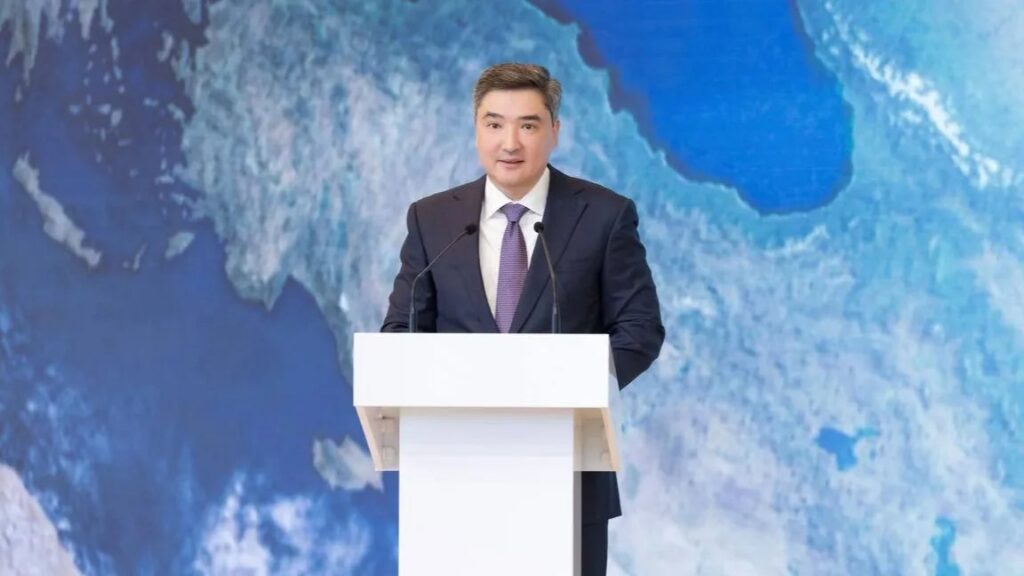
Kazakh Prime Minister Olzhas Bektenov has urged the five Caspian littoral states to coordinate efforts in response to the steadily declining water levels of the Caspian Sea, describing it as one of the region’s most pressing environmental threats.

Speaking at the inaugural International Environmental Conference in Manzherok, Russia, Bektenov emphasized the urgency of a collective response.

“Since the early 2000s, the water level in the Caspian Sea has been steadily declining. To study this and other challenges, Kazakhstan has established the Caspian Sea Research Institute. Scientists’ forecasts are alarming. We need decisive joint measures,” Bektenov stated, according to his press service.

The Caspian Sea is bordered by Kazakhstan, Russia, Iran, Azerbaijan, and Turkmenistan. As previously reported by The Times of Central Asia, the sea’s water level dropped to less than 29 meters below sea level by summer 2025, a historic low. The northern Caspian, which borders Kazakhstan and Russia, is experiencing the most rapid desiccation.

In addition to the Caspian issue, Bektenov addressed other major environmental concerns. He highlighted Kazakhstan’s work in the Aral Sea region, where the country currently chairs the International Fund for Saving the Aral Sea. Key priorities include reinforcing the Kokaral Dam, restoring the Syr Darya delta, revitalizing the fishing industry, and reforesting the dried seabed.

Kazakhstan is also establishing a saxaul nursery on the desiccated Aral seabed to produce 1.5 million seedlings annually. The goal is to cover up to 40% of Kazakhstan’s portion of the former sea with saxaul forests.

Bektenov also underscored the growing threat of glacier melt. Experts warn that Central Asia’s glaciers could shrink significantly by 2100. The UNESCO Central Asian Regional Glaciological Center, based in Almaty, is already serving as a key platform for research and monitoring.

Kazakhstan, he added, is ready to implement joint hydrotechnical initiatives, including reservoir regulation and the introduction of automated water accounting systems.

Bektenov concluded by noting the symbolic importance of the forum’s location in the Altai region, often regarded as the cradle of Turkic civilization and a cornerstone of cultural and humanitarian cooperation.

Kyrgyzstan Grows Toward Food Security with Surplus Potato and Carrot Harvests

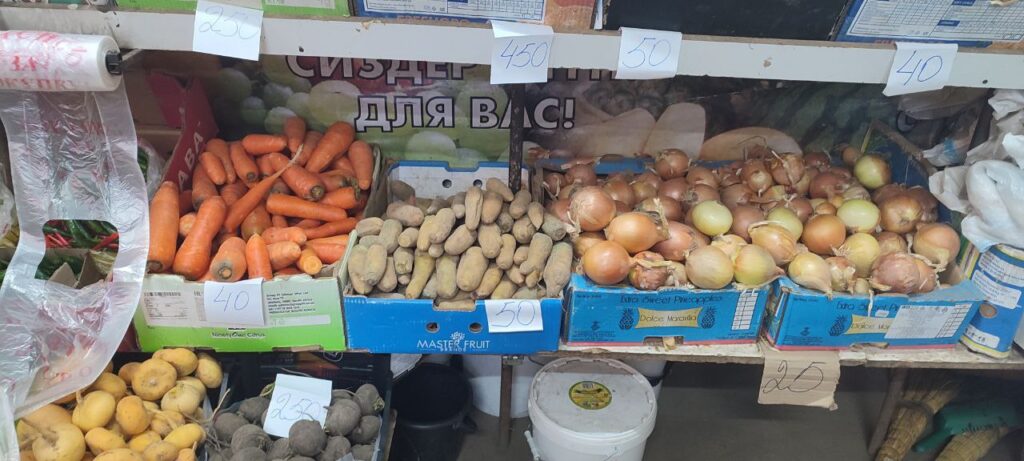
The Kyrgyz government is stepping up efforts to ensure food security and stabilize prices for socially important goods, including staple vegetables such as potatoes and carrots. In response to rising prices, the Ministry of Water Resources, Agriculture, and Processing Industry has decided to maintain existing potato crop volumes while expanding carrot cultivation.

According to the ministry, the active open-field growing season is currently underway. In 2025, potato planting areas reached over 64,000 hectares, with a projected harvest exceeding 1.1 million tons. Domestic demand is estimated at approximately 760,000 tons annually, allowing for surplus exports. However, the ministry cautioned farmers against indiscriminately expanding potato acreage in pursuit of higher profits, warning that an oversupply could depress prices and reduce incomes.

“To prevent unjustified price increases for socially significant products, the Ministry of Agriculture continues to monitor market prices daily. If risks of domestic shortages arise due to excessive exports or speculative practices by intermediaries, temporary export restrictions will be considered,” the ministry stated.

Amid recent price surges for carrots, the government has expanded carrot cultivation by 223 hectares in the Chui region.

“The second carrot harvest will ensure a stable domestic supply and help contain price increases,” said Agriculture Minister Bakyt Torobaev.

The ministry attributes the current price increases to heightened demand for Kyrgyz vegetables from member states of the Eurasian Economic Union (EAEU) and neighboring countries. Uzbekistan remains the largest importer of Kyrgyz potatoes. In 2024, Kyrgyz exports to Uzbekistan doubled to 68,500 tons, prompting state intervention and temporary export restrictions to prevent domestic shortages and inflation.

In addition to Uzbekistan, Kyrgyzstan annually exports over 10,000 tons of potatoes to Kazakhstan, as well as smaller volumes to Russia and Azerbaijan.