• KGS/USD = 0.01144 0%
  • KZT/USD = 0.00194 -0%
  • TJS/USD = 0.10896 -0%
  • UZS/USD = 0.00008 0%
  • TMT/USD = 0.28571 0.28%
  • KGS/USD = 0.01144 0%
  • KZT/USD = 0.00194 -0%
  • TJS/USD = 0.10896 -0%
  • UZS/USD = 0.00008 0%
  • TMT/USD = 0.28571 0.28%
  • KGS/USD = 0.01144 0%
  • KZT/USD = 0.00194 -0%
  • TJS/USD = 0.10896 -0%
  • UZS/USD = 0.00008 0%
  • TMT/USD = 0.28571 0.28%
  • KGS/USD = 0.01144 0%
  • KZT/USD = 0.00194 -0%
  • TJS/USD = 0.10896 -0%
  • UZS/USD = 0.00008 0%
  • TMT/USD = 0.28571 0.28%
  • KGS/USD = 0.01144 0%
  • KZT/USD = 0.00194 -0%
  • TJS/USD = 0.10896 -0%
  • UZS/USD = 0.00008 0%
  • TMT/USD = 0.28571 0.28%
  • KGS/USD = 0.01144 0%
  • KZT/USD = 0.00194 -0%
  • TJS/USD = 0.10896 -0%
  • UZS/USD = 0.00008 0%
  • TMT/USD = 0.28571 0.28%
  • KGS/USD = 0.01144 0%
  • KZT/USD = 0.00194 -0%
  • TJS/USD = 0.10896 -0%
  • UZS/USD = 0.00008 0%
  • TMT/USD = 0.28571 0.28%
  • KGS/USD = 0.01144 0%
  • KZT/USD = 0.00194 -0%
  • TJS/USD = 0.10896 -0%
  • UZS/USD = 0.00008 0%
  • TMT/USD = 0.28571 0.28%
09 December 2025

UN Urges More Vaccinations; Kyrgyzstan Reports Drop in New Measles Cases

More children are vulnerable to disease and the risk of outbreaks is higher in Europe and Central Asia because coverage of childhood vaccines in 2024 remained below pre-pandemic levels, according to United Nations agencies. Still, some countries have pushed hard on vaccination campaigns and are currently reporting a slowdown in the spread of some infectious diseases – Kyrgyzstan, for example, said on Wednesday that measles cases are dropping. 

Data released this week by the World Health Organization and UNICEF reveal a “stagnated recovery” for childhood vaccinations against measles, whooping cough and other diseases in 53 countries in Europe and Central Asia.  

The average coverage of those vaccines remained the same or dropped by 1% in 2024 compared to the previous year, according to the agencies. They cited examples of the declines between 2019 and 2024, including 92% to 91% with the second dose of measles/mumps/rubella (MMR) vaccine, 95% to 93% with the third dose of diphtheria/tetanus/pertussis (DTP) vaccine and 95% to 93% with the third dose of the polio vaccine.

“In many ways, vaccination has been a victim of its own success across Europe and Central Asia,” said Regina De Dominicis, UNICEF’s regional director. “Today’s generation has not witnessed the devastating impact of vaccine-preventable diseases – leading to complacency and making it easier for misinformation to take hold.”

There was some progress in the coverage of newer vaccines, including against human papillomavirus (HPV), according to the U.N. data. Authors of the report urged governments to invest in health systems and make vaccines available. 

Kyrgyzstan, in particular, has struggled with measles outbreaks. The Ministry of Health, however, says a massive vaccination campaign that reached up to 1 million children has borne results since what it called the “rampant” spread of measles last autumn and winter. 

“From the beginning of the year to July 15, 8,672 confirmed cases of measles were registered in the republic,” the ministry said. But it said the number of new cases is gradually falling, with just 109 confirmed cases in the first two weeks of July. 

Kazakhstan, which has also battled measles outbreaks, said this week that the number of infectious disease cases is slowing, according to the state Kazinform News Agency.

Central Asia Charts New Course as Russian Aviation Falters

Sanctions against Russia may intensify if U.S. President Donald Trump escalates pressure on the Kremlin and Vladimir Putin. But even without additional measures, several sectors of Russia’s economy are already buckling under strain. Among the most vulnerable is civil aviation, now grappling with “fleet cannibalization”, a practice born of scarcity and isolation.

In this context, alarmist claims from Russian aviation analysts that Central Asian airlines might soon replace Russian carriers not only on international routes but potentially within Russia itself are being reassessed. So, what is actually happening and why?

Squeezing Russia Out

One of the most overlooked aviation developments of 2024 was the announcement at the Central Asian Aviation Summit in Astana that regional countries were forming their own civil aviation regulatory body. As Amir Akhmetov, senior advisor to the director of the Aviation Administration of Kazakhstan, put it: “In the changing geopolitical environment of the republics of Central Asia and the South Caucasus, together with like-minded countries, they are creating their own regional civil aviation organization, the Eurasian Civil Aviation Conference (EACAC).”

This initiative, first proposed by Astana in 2023, includes Kazakhstan, Kyrgyzstan, Uzbekistan, Tajikistan, and Turkmenistan, as well as Armenia, Azerbaijan, Georgia, Moldova, and Mongolia. Although initially scheduled for 2025, the first EACAC meeting took place in Almaty in November 2024.

Russian observers have taken note. The publication Versiya, which had predicted Russia’s marginalization in the Central Asian aviation market as early as 2016, commented on the development in stark terms: “It is hard not to notice that this is truly a momentous event in the field of civil aviation regulation within the EAEU member states, aimed precisely at pushing Russia out of the process… which, after the formation of the announced structure, will de facto exist and be managed under direct Anglo-American influence.”

However alarmist the tone, the underlying concern is not unfounded. Russia’s aviation sector is increasingly isolated and dependent. By December 2024, it was confirmed that a new aircraft maintenance hub would be built in Aktau, one of Kazakhstan’s four major aviation centers. The project, spearheaded by Turkish Technic, YDA, and ASFAT, will serve civil and military aircraft from Kazakhstan, Russia, Uzbekistan, Turkmenistan, Kyrgyzstan, and Tajikistan.

According to then-Minister of Transport Marat Karabayev, “The center will serve 411 civil aircraft… As a result of the project, the airport’s cargo handling capacity will increase to 200,000 tons per year, with an annual turnover of 520 billion tenge ($996.7 million).”

Aviation in Central Asia: A Regional Snapshot

In Kazakhstan, liberalization and competition have allowed the civil aviation sector to flourish. National carrier Air Astana operates hubs in Almaty and Astana and is widely considered among the best airlines in the post-Soviet space. Its low-cost subsidiary, FlyArystan, has grown rapidly, fueled by a strong Airbus fleet, now over 60 aircraft, with new A320 and A321 deliveries annually.

Private airline SCAT flies across the former USSR and Asia, while Qazaq Air, now rebranded as Vietjet Qazaqstan, entered into a strategic partnership in 2025 with Vietnam’s Sovico Group, owner of Vietjet Air. Fleet expansion plans include 20 Boeing 737 MAX or Airbus A321s.

Kazakhstan’s airport infrastructure, Almaty (ALA), Astana (NQZ), Shymkent, and Aktau, is undergoing modernization under the management of global operators such as TAV, Fraport, and Limak. The Open Skies policy now applies to 14 airports, and the country is actively working to align with EASA (European Aviation Safety Agency) standards.

Uzbekistan is not far behind. Its national carrier, Uzbekistan Airways, is modernizing with Airbus A321neo and Boeing 787s. New private carriers, Qanot Sharq, Silk Avia, and Center Avia, are expanding, while major airports like Tashkent and Samarkand are being upgraded. The country also offers fifth freedom rights on selected routes and plans to privatize shares in its national airline.

Kyrgyzstan and Tajikistan have minimal domestic aviation and are heavily reliant on foreign carriers. Meanwhile, Turkmenistan, despite its isolationist stance, operates Boeing 777 and 737 MAX aircraft through state-run Turkmenistan Airlines, which has regained EU flight permission after a 2019 ban.

Capturing the Russian Market: In Theory and Practice

Kazakhstan is now poised to replace Russia in key regional aviation segments, not out of hostility, but necessity. The dangers of fleet cannibalization, now commonplace in Russia due to sanctions and spare parts shortages, are well known in Kazakhstan. A tragic incident involving a cannibalized aircraft crashing shortly after takeoff, killing the entire crew, left a lasting impact. The country has since moved to ensure that such practices never recur.

And while Russian protectionism will prevent Central Asian airlines from fully replacing Russian carriers on domestic routes, opportunities exist on border routes, diaspora services, and transit corridors. Kazakhstan, Uzbekistan, and others are moving to fill the vacuum, safely and efficiently.

Conspiracy theories that paint these moves as orchestrated by London or Washington reflect what many analysts identify as a lingering post-imperial mindset. As the article in Versiya reveals, Russian narratives often deny their neighbors the capacity for independent decision-making, even on critical matters like aviation safety.

Yet the shift is real. And it is hard to argue against it when images of dismantled Russian aircraft parked on remote runways offer visual proof of a system in decline.

Attacks on Doctors Surge in Kyrgyzstan Amid Systemic Failures

A recent spate of violent assaults on doctors in Kyrgyzstan has sparked growing concern within the healthcare sector. Over the past week alone, multiple incidents of medical staff being physically attacked have been reported at the National Hospital in Bishkek, with relatives of patients identified as the primary perpetrators.

The first major incident involved a young resident doctor who was providing emergency treatment to a patient suffering from a severe nosebleed. According to local media reports, the patient’s relatives attempted to interfere during the treatment and later assaulted the doctor as he accompanied the patient to a hospital ward. The doctor sustained a concussion, and his uniform was torn during the altercation.

In a controversial move, police officers responding to the scene did not detain the attackers. Instead, they arrested the injured doctor, citing his use of obscene language. A court later sentenced him to three days of administrative detention.

Human rights advocates say the doctor was denied legal counsel. Despite mobile phone video footage recorded by the doctor and corroborating statements from hospital staff, law enforcement agencies reportedly ignored this evidence.

“The patient is much better, he received the necessary treatment and has been stable since. His relatives, however, acted with arrogance and cruelty toward medical personnel, seemingly convinced of their own impunity,” said Barmet Baryktabasova, chair of the Medical Trade Union.

Just days later, a second assault occurred at the same hospital, this time targeting an emergency department physician. Although the attack was captured on CCTV, police again refrained from detaining the perpetrators, issuing only vague statements.

The Medical Trade Union has announced plans to file formal appeals to the President’s Office, the Ministry of Health, the Prosecutor General, and the State Committee for National Security. The union argues that violence against medical professionals is becoming systemic and poses a threat to the integrity of Kyrgyzstan’s already strained healthcare infrastructure.

Health Minister Erkin Checheibaev condemned the assaults in a public Facebook post:

“There is lawlessness against doctors! The man who attacked the doctor must be punished. This sets a dangerous precedent when attackers face no consequences.”

He emphasized the urgent need to protect the dignity and physical safety of medical personnel, warning that failure to act could lead to a severe staffing crisis in the coming years.

This is not the first wave of violence against healthcare workers in Kyrgyzstan. In 2023, following several incidents, the National Hospital briefly enhanced security by installing panic buttons, surveillance cameras, and hiring private guards. However, these measures were later rolled back due to budget constraints.

Currently, the average salary for public sector healthcare workers in Kyrgyzstan ranges from $300 to $400 per month. Combined with long hours and frequent high-stress situations, poor compensation is prompting many experienced professionals to exit the system. The government has pledged to implement healthcare funding reforms over the next three to four years, but many in the medical community fear those changes will come too late.

Water Level in Lake Balkhash Continues to Rise

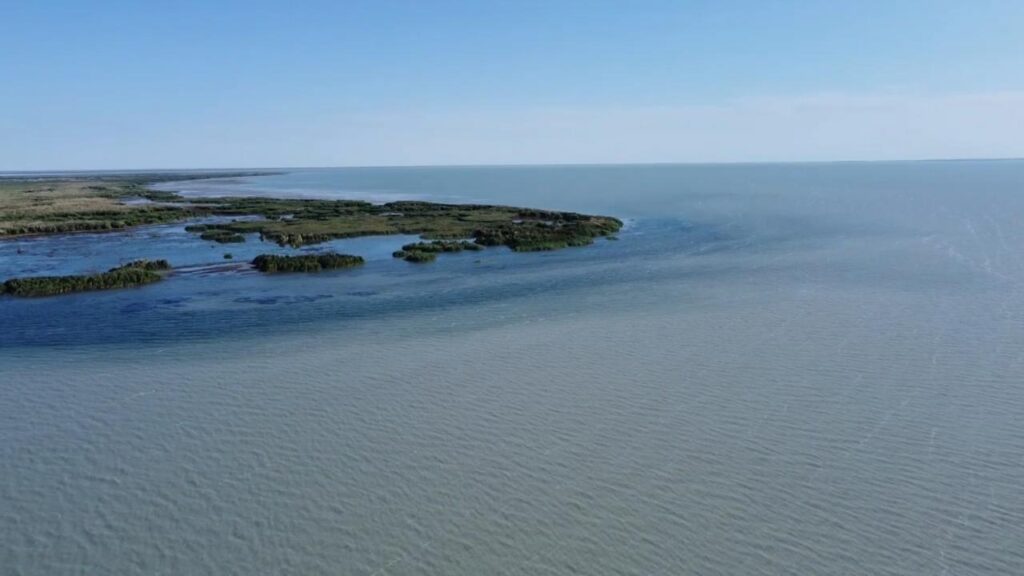
The water level in Kazakhstan’s Lake Balkhash has increased by 32 centimeters during the first half of 2025, rising from 341.55 to 341.87 meters above sea level, based on the Baltic height system, according to data released by Kazakhstan’s Ministry of Water Resources and Irrigation.

Located approximately 280 kilometers northwest of Almaty, Lake Balkhash is one of Asia’s largest inland bodies of water and ranks as the fifteenth-largest lake in the world by surface area.

Since the beginning of 2025, 8.52 billion cubic meters of water have been discharged from the Kapchagay Reservoir in the Almaty region into Lake Balkhash. This marks an increase from 8 billion cubic meters over the same period in 2024. Officials expect total inflow from the reservoir to reach approximately 12 billion cubic meters by year-end.

The lake’s hydrological health is closely tied to the transboundary Ili River, which originates in China and supplies nearly 70% of Lake Balkhash’s total inflow. The Ili’s flow is regulated by the Kapchagay Reservoir, which in 2025 is at full capacity for the second consecutive year, a milestone not seen in over a decade. The reservoir had previously reached full capacity in 2024 for the first time in ten years.

In December 2024, Kazakhstan signed a cooperation agreement with the French Development Agency (AFD) and the French Geological Survey (BRGM) to support a long-term conservation effort for Lake Balkhash. The agreement outlines a comprehensive study of the lake basin and the development of a sustainability strategy through 2040, aiming to safeguard one of Central Asia’s most ecologically and economically significant water bodies.

Tajikistan to Supply Rogun Hydropower to Uzbekistan at 3.4 Cents per kWh

Tajikistan and Uzbekistan have agreed to a new phase of energy cooperation that will see electricity from Tajikistan’s Rogun Hydropower Plant (HPP) exported to Uzbekistan at an initial price of 3.4 US cents per kilowatt-hour, according to Tajikistan’s Ministry of Justice legal information portal.

The price, which includes a zero-rated VAT, will increase by 1% annually starting in the second year of supply. Deliveries are scheduled primarily during periods of planned shortages in Uzbekistan’s energy system and will follow an approved schedule coordinated by the countries’ respective system operators.

The volume and technical details of the supply arrangement will be formalized in a separate electricity purchase agreement between Rogun HPP and Uzbekistan’s Uzenergosotish company. Electricity will be transmitted via interstate power lines, supplementing ongoing exports from Tajikistan’s national utility Barki Tojik.

Regional Energy Integration

The Rogun HPP, a key component of Tajikistan’s long-term energy strategy, is also drawing interest from Kazakhstan, which recently announced its intent to purchase electricity from the plant. The price for Kazakhstan is likewise set at $0.034 per kWh, excluding VAT, and subject to an additional transit fee based on seller-incurred costs. Payments are to be made within 35 days of each delivery period.

During the plant’s current construction phase, electricity exports will occur only during the vegetation season (April 1 to September 30). Once Rogun reaches full operational capacity, deliveries will expand to year-round.

Agreement Terms and Project Outlook

The bilateral agreement will enter into force once both governments complete their domestic legal procedures and confirm implementation via diplomatic channels. The initial agreement term is 20 years, with automatic 10-year extensions, unless one party opts out by notifying the other at least six months prior to expiration.

Tajikistan has exported electricity to Uzbekistan every summer since 2018, strengthening energy ties in a region historically marked by infrastructure fragmentation.

Upon completion, Rogun HPP will be the largest hydropower facility in Central Asia, with an installed capacity of 3,780 megawatts (MW) and estimated annual output of 14.4 billion kWh.

Currently, two of the plant’s six turbines are operating at partial capacity, having come online in 2018 and 2019. Full commissioning of the sixth unit is expected by 2029. In 2024, Rogun generated 1.22 billion kWh, contributing 5.5% of Tajikistan’s total electricity production, according to the Ministry of Energy.

Uzbekistan Faces Criticism Over Charvak Tourism Project

As previously reported by The Times of Central Asia, a major tourism development project on the shores of Uzbekistan’s Charvak Reservoir has sparked public criticism and environmental concern. The proposed resort complex, Sea Breeze Uzbekistan, has come under fire for proceeding without open public consultation, prompting a wave of backlash on social media. The hashtag #SaveChorvoq has emerged as a rallying cry for those demanding transparency and environmental accountability.

Local Discontent and Environmental Concerns

According to climatologist Erkin Abdulakhatov, preliminary construction activity has already begun along the reservoir’s shoreline. He warned that large-scale development near the water could negatively impact the local ecosystem and alter weather patterns.

“If these promises are not fulfilled, the public has the right to organize a petition against mega construction based on the Aarhus Convention,” Abdulakhatov stated.

His comments were later shared by Rasul Kusherbayev, an adviser to the Minister of Ecology, on his Telegram channel. However, Kusherbayev added that no official confirmation of construction has been released.

Investor Response and Environmental Commitments

Investor Emin Agalarov, the driving force behind the Sea Breeze brand, attempted to reassure the public during a press event in Baku. He emphasized that no construction would begin until full public consultations, environmental impact assessments, and technical planning are completed.

“We will carry out construction only after these steps,” Agalarov said.

During a joint press tour to Azerbaijan on July 8-9, Uzbek officials and journalists visited the Sea Breeze complex near Baku to observe the project’s environmental safeguards. Hosted by Uzbekistan’s Ministry of Ecology and the State Center for Environmental Expertise, the visit aimed to assess compliance with international standards for water, soil, and engineering practices.

“I want Sea Breeze to become the most environmentally friendly project in any country, whether Azerbaijan, Uzbekistan, Montenegro, or Kazakhstan,” Agalarov told the delegation, noting the project’s planned infrastructure, clean beaches, and green public spaces.

Project Specifications and Safeguards

Sea Breeze Baku was connected to a centralized sewage system in 2024, replacing more than 100 small treatment plants with a modern collection network that serves a 50-kilometer coastal area. A similar system is now proposed for Charvak.

To protect the reservoir’s shoreline, project planners intend to shift the development zone 400 to 500 meters away from the water, significantly exceeding the legal minimum buffer of 50 meters. The area in between would feature parks, walking paths, public beaches, and recreational infrastructure.

Agalarov also proposed a ring collector system for wastewater treatment along the entire Charvak coastline, a move he said would benefit both the resort and the wider ecosystem.

Government Oversight and Expert Involvement

Uzbekistan’s Minister of Ecology, Aziz Abdukhakimov, has expressed cautious support, stating:

“Partners must follow Green-Based Solutions. We will fully support projects that meet ecological standards. Special attention must go to protecting water resources. All risks must be assessed by qualified experts.”

To ensure accountability, the ministry has announced the formation of an International Environmental Council for Charvak, which will include independent specialists tasked with overseeing public dialogue, environmental assessments, and project monitoring.

Dr. Firuze Sultan-Zade, head of EcoSphere and founder of Azerbaijan’s Green Network, praised the model:

“Involving foreign specialists will ensure transparency and accountability. If fully implemented, this project could set the standard for green tourism in Central Asia.”

The proposed zoning plan includes measures to map and relocate existing trees, plant new vegetation, and build green corridors. Eco-certified building materials and energy-efficient technologies will be used, while ecological trails, boulevards, and promenades are intended to link the resort with neighboring communities.