• KGS/USD = 0.01144 0%
  • KZT/USD = 0.00194 -0%
  • TJS/USD = 0.10844 -0.46%
  • UZS/USD = 0.00008 0%
  • TMT/USD = 0.28571 0.28%
  • KGS/USD = 0.01144 0%
  • KZT/USD = 0.00194 -0%
  • TJS/USD = 0.10844 -0.46%
  • UZS/USD = 0.00008 0%
  • TMT/USD = 0.28571 0.28%
  • KGS/USD = 0.01144 0%
  • KZT/USD = 0.00194 -0%
  • TJS/USD = 0.10844 -0.46%
  • UZS/USD = 0.00008 0%
  • TMT/USD = 0.28571 0.28%
  • KGS/USD = 0.01144 0%
  • KZT/USD = 0.00194 -0%
  • TJS/USD = 0.10844 -0.46%
  • UZS/USD = 0.00008 0%
  • TMT/USD = 0.28571 0.28%
  • KGS/USD = 0.01144 0%
  • KZT/USD = 0.00194 -0%
  • TJS/USD = 0.10844 -0.46%
  • UZS/USD = 0.00008 0%
  • TMT/USD = 0.28571 0.28%
  • KGS/USD = 0.01144 0%
  • KZT/USD = 0.00194 -0%
  • TJS/USD = 0.10844 -0.46%
  • UZS/USD = 0.00008 0%
  • TMT/USD = 0.28571 0.28%
  • KGS/USD = 0.01144 0%
  • KZT/USD = 0.00194 -0%
  • TJS/USD = 0.10844 -0.46%
  • UZS/USD = 0.00008 0%
  • TMT/USD = 0.28571 0.28%
  • KGS/USD = 0.01144 0%
  • KZT/USD = 0.00194 -0%
  • TJS/USD = 0.10844 -0.46%
  • UZS/USD = 0.00008 0%
  • TMT/USD = 0.28571 0.28%
09 December 2025

Kazakh Dancer Recounts Miraculous Escape from Deadly Goa Fire

A Kazakh artist’s narrow escape from a deadly nightclub fire in the Indian state of Goa has become one of the most widely discussed accounts of the tragedy. The dancer credits her survival to a warning from a colleague, whom she later called her “Indian god.”

Footage of Kristina, a professional belly dancer from Kazakhstan, performing on stage at the Birch by Romeo Lane nightclub circulated rapidly on social media. The video shows her finishing her routine, unaware that a fire had already begun backstage. Moments later, flames erupted in the dressing room she was about to enter.

It was Kristina’s second performance of the evening. The fire ultimately claimed 26 lives and injured many more. According to local authorities, most victims died from suffocation after becoming trapped on the first floor and in the kitchen.

Speaking to India Today, Kristina said she is still shaken by the experience. She recalled that during her performance, the music suddenly stopped due to a power failure caused by a short circuit.

“The fire started during my performance. I was in shock. The music suddenly stopped, and I didn’t understand what had happened. I started looking for a way out. I just cried, my hand is still shaking,” she said.

Just moments before she entered the dressing room, where the fire was rapidly spreading, a shout from a crew member altered her course.

“My first impulse was to go to the dressing room. But one of the crew members said, ‘Don’t go there.’ The fire was already there. That saved my life,” Kristina recounted.

Shaken and grateful, she later referred to the man who warned her as an “Indian god.” It wasn’t until she returned home and embraced her daughter that the full weight of what she had narrowly escaped hit her.

“When I got home and hugged my daughter, I was grateful to be alive,” she told reporters.

Kristina’s testimony has become one of the most widely quoted among survivors and has helped draw attention to the causes of the fire.

The blaze occurred at a popular nightclub in northern Goa. According to preliminary investigations, the fire was triggered by electric firecrackers used during a show. Goa Chief Minister Pramod Sawant confirmed the venue had violated fire safety regulations.

Five individuals have been arrested in connection with the incident, including the nightclub’s general manager, Rajiv Modak; manager Vivek Singh; bar manager Rajiv Singhania; and entrance staffer Riyanshu Takur. Authorities have also shut down the beach house and another club operating under the Romeo Lane chain.

Police have issued warrants for the arrest of the club’s owners, revealing that its operating license was granted despite incomplete documentation.


Kazakhstan to Train Nuclear Energy Specialists Abroad Through Bolashak Program

Kazakhstan will begin training specialists for its nuclear energy sector at leading international universities through a new track within the Bolashak international scholarship program, the Ministry of Science and Higher Education announced this week.

The Bolashak scholarship, launched in 1993, supports education, retraining, and professional development for specialists in priority economic sectors. Initially limited to four countries, the United States, the United Kingdom, Germany, and France, it now allows recipients to study in nearly 30 countries worldwide.

More than 13,000 Kazakh citizens have participated in the program to date. The latest initiative adds future nuclear energy professionals to its ranks, aiming to build domestic capacity ahead of Kazakhstan’s planned entry into the nuclear power sector.

This week, Minister of Science and Higher Education Sayasat Nurbek signed a four-party memorandum launching the new program. Other signatories included Almasadam Satkaliev, Chairman of the Atomic Energy Agency; Adil Kusmanov, Chairman of the Board of JSC “Center for International Programs”; and Yernat Berdigulov, General Director of LLP “Kazakhstan Atomic Power Plants.”

“The initiative will attract specialists in engineering, technical, and scientific fields, which will be key to the development of Kazakhstan’s nuclear energy sector,” the ministry stated.

The program will provide 20 pilot grants in 2026, with similar allocations expected annually. It will cover international internships, as well as master’s and doctoral programs at top universities around the world.

A key requirement will be cooperation with potential employers and guaranteed job placement for graduates. Tripartite agreements are being signed between scholarship recipients, nuclear sector enterprises, and the Bolashak program’s administrator to ensure employment pathways.

Work is already underway to finalize agreements with several foreign institutions, including Pennsylvania State University (U.S.), Grenoble INP-UGA (France), Shanghai Jiao Tong University (China), City University of Hong Kong, and the National Research Nuclear University MEPhI (Russia).

“The creation of a dedicated training track for the nuclear sector within Bolashak will help form a skilled pool of engineers, technologists, operators, and other specialists with international-level qualifications,” the ministry noted.

Earlier this year, President Kassym-Jomart Tokayev announced plans to establish two “science cities” in Almaty and Kurchatov to support the development of nuclear energy and nuclear medicine. Kazakh universities have also launched domestic training programs to prepare personnel for the country’s first nuclear power plant, which is currently under development.

Kazakhstan Prepares Road Infrastructure for Driverless Transport

Kazakhstan is developing a system of digital passports for its inter-city highways as part of broader efforts to prepare the country’s infrastructure for the eventual integration of autonomous vehicles. The initiative was announced by Minister of Transport Nurlan Sauranbayev during a recent government meeting.

“Digital road passports are being developed, which will allow for the introduction of driverless cars in the future,” Sauranbayev said. “Road diagnostics are carried out annually using artificial intelligence technologies. In particular, the installation of automated measuring stations is continuing, up to 220 units, to preserve the road surface. To date, 71 units of such equipment have been put into operation.”

Sauranbayev highlighted a related pilot project, “Smart Customs,” launched this summer at the Kazakhstan-China border crossing between Bakhty (Kazakhstan) and Pokitu (China). The initiative enables cargo to cross the border in unmanned trucks, a move expected to increase cargo throughput and speed up customs procedures. According to Sauranbayev, digital tools are expected to increase road capacity by 20% and reduce border crossing times to around 10 minutes.

Speaking at a later briefing, Sauranbayev clarified that the driverless truck pilot, currently limited to select border crossings, is intended to be expanded across Kazakhstan’s entire external border by 2027. This includes crossings with EAEU member states such as Russia and Kyrgyzstan. “We have such a program. I think it will be very significant for Kazakhstan’s transit potential,” he said.

Sauranbayev added that the use of unmanned trucks will help reduce logistics costs, as autonomous vehicles can operate continuously, potentially tripling delivery speeds.

“Driverless taxis are already in use globally, and the transition to autonomous freight transport is only a matter of time,” he noted. “That is why, when we build roads, we are already integrating the necessary sensors to allow driverless vehicles to travel freely across Kazakhstan.”

Simultaneously, the government is upgrading internal border checkpoints. Work on 37 facilities is scheduled for completion by the end of 2027. So far this year, 13,000 kilometers of road have undergone construction or repairs, part of a national network that spans approximately 95,000 kilometers.

To alleviate pressure on the state budget, Kazakhstan is expanding its toll road network. The KazToll system has collected $156.5 million to date.

The Ministry of Transport reported a 20.7% year-on-year increase in transport services in the first ten months of 2025. Road transport accounted for 288 million tons of cargo, up 1.7% from the same period last year. Transit traffic rose 5% to 29.4 million tons. Currently, transport companies from 42 countries operate transit routes through Kazakhstan.

“Automated load measurement stations on highways have increased both the detection of violations and budget revenues tenfold,” Sauranbayev added. “As a result of integration with the General Prosecutor’s Office, more than 10,000 fine payment orders were issued in the first five months of this year.”

In 2024, Kazakhstan launched two major infrastructure projects: the Trans-Kazakhstan railway corridor and the Center-West highway, which will connect Astana to the country’s western regions.

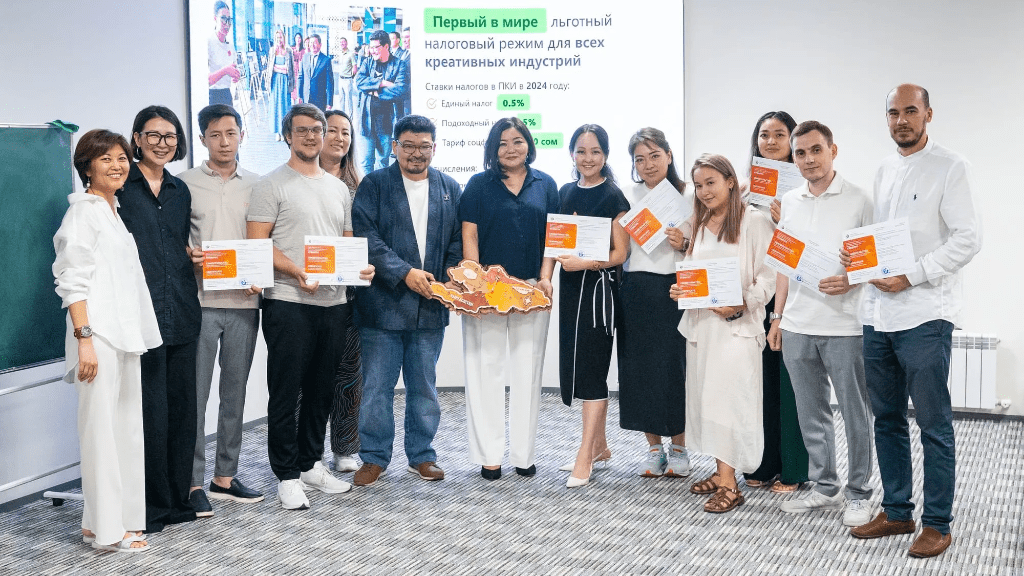
Kyrgyzstan’s Creative Industries Park: Inside the Country’s Latest Artistic “Miracle”

Kyrgyz cinema in the 1960s to 1970s was sometimes referred to as the ‘Kyrgyz Miracle’, for the number of great pieces that were made during this time. This is still symbolic today, as the country is now in another ‘miracle’ era for the creative industries, which is setting an example not just for the Central Asia region, but globally. 

In 2023 Daniyar Amanaliev, Co-Founder of an art studio named ololo and Chairman of the Supervisory Board of the Creative Industries Park, told Deutsche Welle: “We have a very small country. When you start a business here, it’s very difficult to start making money because the market is so small. And our innovators are people who are involved in creative businesses. Almost all of these companies have intangible products that cannot be stopped at customs or sealed in a warehouse. Everything is in people’s heads, on computers, in the cloud, and this is exactly the kind of business model that can thrive in the Kyrgyz Republic”.

This story starts with Ololo, a small art studio in Bishkek founded in 2016 by Daniar Amanaliev, Ainura Amanalieva, Atai Sadybakasov, and Victoria Yurtaeva. The initial idea was to change the lifestyle of Kyrgyz citizens, enriching their lives with different forms of art, and let them pursue the dreams of their youth. The studio provided a wide range of art classes with no age restrictions.

The company soon switched its business model to operating creative hubs. Yurtaeva soon left the project. Fast forward nine  years and in 2025 Ololo is the largest chain of creative hubs in Central Asia, with nine locations in Kyrgyzstan and an upcoming launch of their tenth location in Kazakhstan.

In October 2021 Ololo was crucial to the launch of the Association of Creative Industries of the Kyrgyz Republic, together with eight other companies from the creative industries. Starting as a modest group, the association is now among the most active associations in the country, with over 50 member companies representing over 20 creative industries.

In April 2022 the country’s President Sadyr Japarov signed an Order on the development of the creative industries. He even visited the very first Create4 creative industries festival later that year. Kyrgyzstan’s Creative Industries Park (CIP) came into being in summer 2022.

Almost a year later, the relevant amendments to the national Tax Code were approved. In June 2023 a government order regulating the operations of the Creative Industries Park was adopted. And, finally, the register of industries exempt from taxes under the Creative Industries Park were defined in December of 2023. 

While it may seem easy from the outside, the Association of Creative Industries had to deal with significant pushback from various government agencies and officials, who did not believe in the potential of the creative industries. It took almost three years to complete the process and only in 2024, three years after the association was founded, did the Creative Industries Park become operational. In February 2024 a Supervisory Board was appointed. CIP’s Management was registered in April 2024.

In July 2024 the first eight companies were approved to become residents of the Creative Industries Park. In April 2025 Bishkek marked the fifth anniversary of Create4, a creative industries festival, which this year was dedicated to cinema. 

The World’s First

Now the Creative Industries Park is the very first model globally for boosting creative industries in this way, which is a viable case for other countries to follow. Amanaliev is the only member from Central Asia in the Global Creative Economy Council, part of the UK’s Creative Industries Policy and Evidence Centre. His counterparts from different parts of the world are now carefully watching how this new model unfolds. It has been quite successful so far, and is only gaining momentum.

CIP provides a special tax regime for companies operating in the creative industries, offering significantly reduced tax rates. At the moment 72 creative sectors, from cinema and music to fashion and graphic arts, enjoy the benefits of the park. The Park has over 130 members already, which made over KGS 500 million (~$6 million) in revenue in Q3 2025, a more than ten-fold growth since Q3 2024. 

A similar special tax regime for IT outsourcing, the High Technology Park, saw a 500x growth in the revenue of its residents in its first decade from its launch in 2013 to 2023. CIP has all the potential to grow even further. 

In 2025 CIP launched its own Creative Industries Support Fund, which runs its grant program and started financially supporting promising initiatives, projects, and startups in the creative industries.

Last month CIP held its very first contest for companies operating in the creative industries, where participants could win equity-free cash prizes to further develop their companies. 

Speaking about the potential for his project, Amanaliev told The Times of Central Asia: “A Creative Industries Park is a good idea for any country in the Global South. I’m sure, in the nearest 5-10 years we will witness the adaptation of this idea in many places. It will become a great contribution of the Kyrgyz Republic to the development of the creative economy in the world!”

Uzbekistan’s External Debt Reaches $43.97 Billion

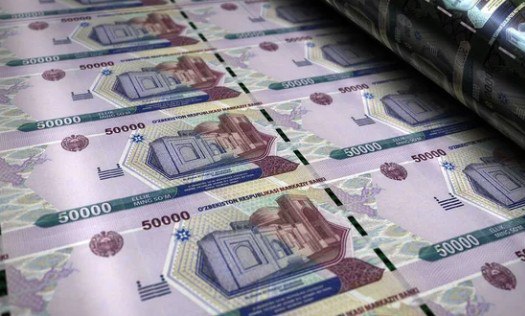
Uzbekistan’s external debt reached 43.97 billion dollars as of October 1, according to data released by the Ministry of Economy and Finance. The increase of 473 million dollars over the previous quarter reflects a slowdown in borrowing, even as the government continues to rely on foreign funding to sustain public spending and major infrastructure projects.

The country’s largest creditor remains the World Bank, which has extended 8 billion dollars in loans. This is followed by the Asian Development Bank with 7.5 billion dollars and international investors who hold 5.8 billion dollars in Eurobonds. Loans from Chinese financial institutions total 3.7 billion dollars, while Japanese lenders account for 3.1 billion dollars.

Additional borrowing includes 1.7 billion dollars from the Asian Infrastructure Investment Bank and 1.2 billion dollars from France. Multilateral lenders such as the Islamic Development Bank also contribute to the total, along with a group of smaller international creditors that collectively account for 2.5 billion dollars.

Debt denominated in U.S. dollars comprises 63% of Uzbekistan’s total external debt, while 12% is in Uzbek som, 8% in euros, and 6% in Japanese yen. The remainder is held in Special Drawing Rights and other currencies.

In a related development, RIA Novosti, citing World Bank figures, reported that Uzbekistan increased its debt to Russia by 39 million dollars in 2024. This small rise came amid a broader trend across 38 countries whose combined debt to Russia grew to 33.1 billion dollars last year, the highest level since 1998.

Kazakh Journalists Set to Ring in 2026 at the “JingleBendz” Media Party

On 12 December, Almaty will host the New Year’s edition of the professional media party “Day J,” titled JingleBendz 2025. The annual event brings together journalists, editors, public relations specialists, and media executives, and is regarded as one of the leading informal networking platforms in Kazakhstan’s communications industry.

According to the organizers, the evening will include informal awards for journalists and PR professionals. Since the project’s launch 11 years ago, more than 140 representatives of the media sector have received accolades.

This year, participants will also receive special gifts, including a separate award presented by the event’s general sponsor, Yandex Qazaqstan. The party is supported by several project partners, including Oriflame, KAZ Minerals, RG Brands, and First Brewery, all of which will provide prizes and New Year gifts.

Kazakhstan’s major media outlets are backing the event, among them The Times of Central Asia, Tribune, BesMedia, Kapital, Kursiv, Shishkin_like, BlueScreen, Profit, Finratings, CheckPoint, Newtimes.kz, and Aleminform.kz.

The Times of Central Asia editorial team will attend JingleBendz 2025 and report on the event’s key moments.