• KGS/USD = 0.01144 0%
  • KZT/USD = 0.00196 -0%
  • TJS/USD = 0.10899 0%
  • UZS/USD = 0.00008 0%
  • TMT/USD = 0.28571 0.28%
  • KGS/USD = 0.01144 0%
  • KZT/USD = 0.00196 -0%
  • TJS/USD = 0.10899 0%
  • UZS/USD = 0.00008 0%
  • TMT/USD = 0.28571 0.28%
  • KGS/USD = 0.01144 0%
  • KZT/USD = 0.00196 -0%
  • TJS/USD = 0.10899 0%
  • UZS/USD = 0.00008 0%
  • TMT/USD = 0.28571 0.28%
  • KGS/USD = 0.01144 0%
  • KZT/USD = 0.00196 -0%
  • TJS/USD = 0.10899 0%
  • UZS/USD = 0.00008 0%
  • TMT/USD = 0.28571 0.28%
  • KGS/USD = 0.01144 0%
  • KZT/USD = 0.00196 -0%
  • TJS/USD = 0.10899 0%
  • UZS/USD = 0.00008 0%
  • TMT/USD = 0.28571 0.28%
  • KGS/USD = 0.01144 0%
  • KZT/USD = 0.00196 -0%
  • TJS/USD = 0.10899 0%
  • UZS/USD = 0.00008 0%
  • TMT/USD = 0.28571 0.28%
  • KGS/USD = 0.01144 0%
  • KZT/USD = 0.00196 -0%
  • TJS/USD = 0.10899 0%
  • UZS/USD = 0.00008 0%
  • TMT/USD = 0.28571 0.28%
  • KGS/USD = 0.01144 0%
  • KZT/USD = 0.00196 -0%
  • TJS/USD = 0.10899 0%
  • UZS/USD = 0.00008 0%
  • TMT/USD = 0.28571 0.28%
09 December 2025

Kazakhstan’s ECOJER Association Granted UN Consultative Status

The Kazakhstan Association of Regional Environmental Initiatives, ECOJER, has been granted special consultative status with the United Nations Economic and Social Council (ECOSOC), the organization’s press service announced.

This designation allows ECOJER to participate in UN sessions and conferences held in New York, Geneva, and Vienna. The association can now submit written and oral statements, and engage in direct dialogue with ECOSOC bodies and the UN Secretariat. The recognition significantly enhances ECOJER’s international presence and influence in advancing sustainable development and environmental policy.

“Obtaining this status significantly expands our opportunities. Now we can convey the consolidated position of the Kazakh expert community and responsible businesses at the international level. Our task is to demonstrate how Kazakhstan is seeking and finding a balance between industrial development and environmental sustainability,” said ECOJER CEO Rustem Kabzhanov.

Expanding Environmental Influence

Founded in 2017, ECOJER focuses on promoting environmentally sustainable economic growth and formulating policy recommendations for government agencies. The organization has pursued a range of practical initiatives, including becoming an authorized issuer for the International REC Foundation (I-REC) in Kazakhstan in 2022. I-REC certificates verify the origin of green electricity. In 2024, ECOJER issued 2.6 million such certificates, up sharply from 200,000 the previous year.

With its new ECOSOC status, ECOJER joins a select group of organizations in Central Asia with direct access to UN consultative mechanisms. This development marks a milestone in Kazakhstan’s growing role in the global environmental dialogue and reflects international recognition of its contributions to the Sustainable Development Goals (SDGs).

In March 2025, the UN Green Climate Fund allocated $280 million to Kazakhstan for environmental projects, as previously reported by The Times of Central Asia.


Turkmenistan Attracts Renewed Attention from Washington and Moscow Amid Regional Tensions

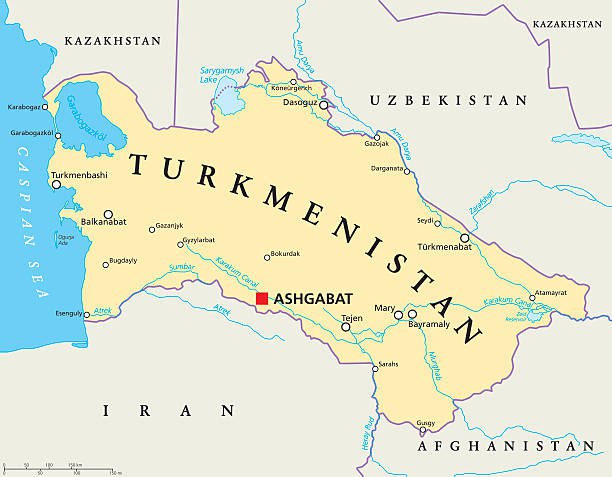
Turkmenistan has become the focus of intensified diplomatic engagement from both Russia and the United States, as geopolitical tensions in the broader region escalate, particularly following recent clashes between Iran and Israel.

On June 25, Russian Foreign Minister Sergei Lavrov concluded a two-day visit to Ashgabat, where he emphasized expanding economic ties but also made clear Russia’s intention to preserve its cultural and political influence in Turkmenistan. Lavrov announced plans to open a joint Russian-Turkmen university and called for increased youth exchanges.

“We suggest expanding the productive interaction between the Institute of International Relations under Turkmenistan’ Ministry of Foreign Affairs and the MGIMO University under the Russian Foreign Ministry and developing ties between budding diplomats of the both countries with the assistance of our Council of Young Diplomats,” Lavrov said, according to a Russian Foreign Ministry transcript.

In parallel, Lavrov took aim at U.S. regional policy. While condemning U.S. strikes on Iranian nuclear infrastructure under the Trump administration, he nonetheless praised its “realism and common sense,” in contrast to what he termed the Biden administration’s “neoliberal hegemonic plans.”

U.S. Diplomatic Overtures

The United States has also stepped up its outreach. On the same day Lavrov arrived in Ashgabat, U.S. Secretary of State Marco Rubio held a phone call with Turkmen Foreign Minister Rashid Meredov. Two days earlier, Deputy Secretary of State Christopher Landau also spoke with Meredov. According to a State Department readout, Rubio thanked Turkmenistan for facilitating the transit of U.S. citizens out of Iran during the recent Iranian-Israeli crisis and expressed interest in expanding economic and commercial cooperation.

Though historically neutral and cautious in its diplomacy, Turkmenistan has shown recent signs of greater engagement with Western partners. Earlier this year, it launched a gas-swap deal involving Turkey and Iran to supply natural gas to the European Union, a move some analysts suggest may have raised concerns in Moscow.

Strategic Infrastructure and U.S. Interest

Adding to speculation over increased Western interest, on June 23, Nezavisimaya Gazeta reported the opening of a new airport in Jebel, near the Caspian Sea. The airport, built on the site of a former Soviet military airfield, features a 3,200-meter runway and modern navigation systems. The publication suggested that such infrastructure could be of interest to the U.S. military.

Despite recent overtures, Turkmenistan’s relations with Washington have faced challenges. As previously reported by The Times of Central Asia, citizens of Turkmenistan are among those affected by new travel restrictions under an executive order signed by President Donald Trump. The order, which took effect on June 9, aims to curb visa overstays and enhance national security. Critics argue that the measure is overly broad and risks being discriminatory.

“Day J”: Kazakhstan’s Top Journalists Honored in Almaty

On June 27, Almaty hosted the annual “Day J” celebration, marking Kazakhstan’s professional holiday for media workers. Organized by the communications company, 2BAgency, the event brought together journalists, PR professionals, and media representatives to recognize excellence across the country’s media and communications industry.

The highlight of the evening was the presentation of the “Day J” Awards, which featured five primary categories. Both nominees and jury members were selected through open voting on social media by members of the media community.

2025 “Day J” Award Winners:

  • Best Reporter – Pyotr Trotsenko
  • Best Business Journalist – Olga Fominskikh
  • Best Investigative Journalist – Altynshash Smagulova
  • Best Blogger – Rashit Ilyasov
  • Best Host – Marzhan Elshibayeva

Image: Mikhail Karpov

The event also featured a special Grand Prix category, awarded annually to a media figure whose work has made a lasting impact. This year’s Grand Prix went to Nadezhda Plyaskina, a journalist, director, blogger, and actress with over 30 years of experience.

“The Grand Prix is our way of honoring remarkable talent and professional excellence,” said Tatiana Bendz, Director of 2BAgency. “Nadya Plyaskina is a journalist, blogger, actress, and director, a true master of transformation. She’s one of the most vibrant creative figures in Kazakhstan’s media scene, and we’re proud to award her this year’s Grand Prix.”

Special Contests and Media Recognition

In addition to the main awards, two special contests were held during the evening. Earlier this year, Eurasia Insurance Company and 2BAgency launched a competition for the best media coverage of CASCO auto insurance. The winners were announced at the June 27 event:

  • Best Publication in Kazakh – Gaziza Uzak
  • Best Publications in Russian – Irina Ledovskikh, Zhadyra Turgumbayeva, and Tatyana Batisheva

Image: Mikhail Karpov

Media Partners

The event was supported by a wide range of media outlets, including: Tribune, CheckPoint, BesMedia, Shishkin_like, Profit, BlueScreen, Finratings, The Times of Central Asia, Newtimes, Offside, Aleminform, Optimism, and Bizmedia.

Kazakhstan’s Telecommunications Market Set to Slow in Coming Years

Kazakhstan’s telecommunications market is projected to experience a slowdown in the coming years, with average annual growth expected to hover around 6% for 2025-2027, nearly half the rate seen over the past two years. According to a joint study by Russian firm Nexign and the TelecomDaily agency, the sector grew by 11% in 2024, reaching $2.4 billion, the highest figure in three years.

However, analysts attribute this recent surge not to organic market expansion, but to a sharp rise in communication tariffs, which increased by an average of 20%. The price hikes were largely driven by infrastructure modernization costs, the rollout of 5G networks, and increased mobile data usage.

Looking ahead, sector growth is expected to be fueled by expanding the customer base, rising service consumption, and the development of digital offerings. Mobile communications accounted for 17% of telecom revenues in 2024, while internet access comprised a dominant 53%.

In the past two years, mobile data consumption in Kazakhstan has doubled, placing the country among the global top ten for mobile internet usage per capita. As of March 2025, Kazakhstan had 26 million active SIM cards, more than the total population of approximately 20 million, indicating widespread use of multiple connections. Over 18 million people now have access to mobile internet, and another 3.2 million are connected to fixed broadband. The only segment in decline is fixed-line telephony, which saw a 10% drop in subscribers over the past year, falling to 2.3 million.

The study notes that telecom operators will concentrate on expanding 5G coverage, enhancing service quality, and deploying fixed wireless access (FWA) technologies, seen as a more affordable alternative to fiber-optic infrastructure in rural areas.

Kazakhstan is also advancing in satellite communications. In 2024, 750 rural schools were connected to the internet via Starlink, while OneWeb launched a ground control center in the country. The Times of Central Asia previously reported that Starlink’s commercial rollout in Kazakhstan is scheduled for the third quarter of 2025.

The sector could also benefit from the integration of artificial intelligence in public services and various industries, offering potential new avenues for growth.

Nonetheless, key challenges remain for the 2025-2027 period. These include the high costs of extending network coverage to remote areas, escalating prices for imported telecom equipment amid ongoing geopolitical tensions, and intensifying competition among major players.

The primary operators in Kazakhstan’s telecom market include Kazakhtelecom JSC (and its subsidiary Kcell JSC), Beeline Kazakhstan (Kar-Tel LLP), Tele2/Altel (Mobile Telecom Service LLP), Transtelecom JSC, Alma TV (AlmaTel Kazakhstan JSC), and Jusan Mobile JSC (KazTransCom).

AIIB and Uzbekistan Finalize $71.1 Million Loan for Climate-Resilient Rural Roads

Uzbekistan and the Asian Infrastructure Investment Bank (AIIB) have concluded a $71.1 million loan agreement to upgrade rural roads in the Khorezm and Karakalpakstan regions. The deal was finalized during the AIIB’s 10th Annual Meeting in Beijing.

The loan will finance the first phase of the Karakalpakstan and Khorezm Local Roads Network Reconstruction Project, which aims to modernize rural road infrastructure to improve climate resilience and community accessibility. The project is expected to facilitate better access to markets and essential public services for rural populations.

The total cost of the project is projected at $173.4 million, with a second loan tranche planned to cover the remaining amount. The initial phase will prioritize road improvements in Khorezm, while the second tranche will address road upgrades in the Republic of Karakalpakstan.

According to the AIIB, a phased approach will allow Uzbekistan to better manage its fiscal resources and enhance project planning and execution. This method also enables the bank to provide tailored technical assistance and integrate lessons learned from earlier phases into subsequent work.

This initiative builds on a broader partnership between Uzbekistan and the AIIB. In 2024, the bank approved a $250 million program to support the country’s transition to a greener economy. That package includes measures to reduce greenhouse gas emissions, reform climate-related policies, and promote sustainable land and water management, as well as low-carbon transportation and energy solutions.

The AIIB also backs Uzbekistan’s efforts to boost energy efficiency, expand renewable energy capacity, promote e-mobility, and encourage state-owned enterprises to adopt climate risk reporting practices.

The rural roads project aligns with Uzbekistan’s wider development agenda, which includes modernizing infrastructure, revitalizing underserved regions, and fostering long-term sustainability.

Leading French Engineering School to Open Branch in Kazakhstan

The Kazakh Ministry of Science and Higher Education has finalized an agreement with Grenoble INP-Phelma, UGA – France’s premier engineering school specializing in physics, electronics, and materials science, to open a branch campus in Almaty in 2026. The new campus will operate in partnership with Satbayev University, one of Kazakhstan’s top technical institutions.

The agreement was signed by vice presidents of both universities in the presence of Kazakhstan’s Minister of Science and Higher Education Sayasat Nurbek and French Ambassador to Kazakhstan Sylvain Guiguet.

Grenoble INP-Phelma, located in the city of Grenoble, is part of the Grenoble Institute of Technology and is internationally recognized for its excellence in engineering education.

The Kazakhstan branch of Phelma will offer dual degree programs in Nuclear Engineering, Renewable Engineering, and Advanced Studies. The initiative aims to train highly qualified specialists in nuclear and renewable energy, fields of growing strategic importance as Kazakhstan prepares to construct its first nuclear power plant.

Participating students will have the opportunity to undergo practical training at French nuclear power facilities, which operate 56 reactors and supply more than 70% of France’s electricity. This hands-on experience is expected to prepare graduates for careers in Kazakhstan’s evolving energy sector.

The Times of Central Asia previously reported that the Colorado School of Mines will also open its first international campus in Kazakhstan in 2026. That campus will be located in Zhezkazgan, the center of the country’s geological industry.

The Colorado School of Mines has already established a dual degree partnership with Satbayev University in geology, petroleum engineering, and mining, which includes joint research collaborations.