• KGS/USD = 0.01144 0%
  • KZT/USD = 0.00196 -0%
  • TJS/USD = 0.10899 0%
  • UZS/USD = 0.00008 0%
  • TMT/USD = 0.28490 0%
  • KGS/USD = 0.01144 0%
  • KZT/USD = 0.00196 -0%
  • TJS/USD = 0.10899 0%
  • UZS/USD = 0.00008 0%
  • TMT/USD = 0.28490 0%
  • KGS/USD = 0.01144 0%
  • KZT/USD = 0.00196 -0%
  • TJS/USD = 0.10899 0%
  • UZS/USD = 0.00008 0%
  • TMT/USD = 0.28490 0%
  • KGS/USD = 0.01144 0%
  • KZT/USD = 0.00196 -0%
  • TJS/USD = 0.10899 0%
  • UZS/USD = 0.00008 0%
  • TMT/USD = 0.28490 0%
  • KGS/USD = 0.01144 0%
  • KZT/USD = 0.00196 -0%
  • TJS/USD = 0.10899 0%
  • UZS/USD = 0.00008 0%
  • TMT/USD = 0.28490 0%
  • KGS/USD = 0.01144 0%
  • KZT/USD = 0.00196 -0%
  • TJS/USD = 0.10899 0%
  • UZS/USD = 0.00008 0%
  • TMT/USD = 0.28490 0%
  • KGS/USD = 0.01144 0%
  • KZT/USD = 0.00196 -0%
  • TJS/USD = 0.10899 0%
  • UZS/USD = 0.00008 0%
  • TMT/USD = 0.28490 0%
  • KGS/USD = 0.01144 0%
  • KZT/USD = 0.00196 -0%
  • TJS/USD = 0.10899 0%
  • UZS/USD = 0.00008 0%
  • TMT/USD = 0.28490 0%
08 December 2025

Proton Plans to Launch Electric Vehicle Production in Kazakhstan

Malaysian automotive manufacturer Proton Holdings Berhad is exploring the possibility of launching electric vehicle (EV) production in Kazakhstan. The announcement followed a meeting between Proton representatives and Yersayin Nagaspayev, Kazakhstan’s Minister of Industry and Construction.

Proton, Malaysia’s largest automotive group, began operations in 1985 by producing cars under license from Mitsubishi. Since the late 1990s, the company has developed its own models, including the e.MAS line of electric vehicles, which it now proposes to localize in Kazakhstan.

“The company presented plans to produce electric cars under the e.MAS brand. Discussions focused on potential production sites, export opportunities, and ensuring compliance with the technical and environmental standards of the Eurasian Economic Union (EAEU),” the Ministry of Industry and Construction reported.

Following the meeting, the parties agreed to establish a joint working group tasked with developing a roadmap for localizing production and launching joint investment projects.

Kazakhstan’s Growing Automotive Sector

Minister Nagaspayev highlighted that more than 134,000 passenger cars were produced in Kazakhstan in 2024. Major international brands, including KIA, Hyundai, Chevrolet, JAC, and Jetour, are already manufacturing in the country. In 2025, two new automotive plants are scheduled to open in Almaty and Kostanay, with a combined annual capacity of up to 190,000 vehicles.

The EV segment is currently the fastest-growing portion of the Kazakh automotive market. According to the Association of the Automobile Industry of Kazakhstan (AKAB), the number of registered electric vehicles grew from about 1,500 in early 2023 to 3,200 by the end of that year. As of May 2025, that figure has surged to 9,400.

This rapid growth is attributed in part to a government policy introduced in 2023 that exempts citizens from import duties and taxes on one electric vehicle per person, valid through the end of 2025. Analysts also cite rising oil prices and the expansion of EV charging infrastructure as key drivers of demand.

As previously reported by The Times of Central Asia, Kazakhstan is on track to produce approximately 150,000 vehicles in 2025, a record for the country.

Kazakh Doctors Among Lowest Paid in Economy

As Kazakhstan marks Medical Workers’ Day, celebrated annually on the third Sunday of June, new data highlights the challenging financial reality for those in the healthcare sector. According to a recent report by Energyprom.kz, medical professionals remain among the lowest-paid workers in the country.

Healthcare Among Lowest-Paid Sectors

In the first quarter of 2024, the average monthly nominal salary in Kazakhstan’s “Health and Social Services” sector stood at 312,800 tenge (approx. $605), according to the National Statistics Bureau. This figure is 26.1% lower than the national average across all economic sectors.

Healthcare ranks among the bottom five sectors for wages, joined by agriculture (248,900 KZT / $481), culture and arts (284,900 KZT / $551), and education (302,400 KZT / $584). Utility services also report low salaries at around 286,000 KZT ($553).

This is not a new trend: the healthcare sector has remained at or near the bottom of the wage rankings for over two years. In 2021, it ranked tenth from the bottom. By contrast, the mining industry leads with an average salary of 981,400 KZT ($1,898), followed by IT (859,800 KZT / $1,663) and finance and insurance (855,500 KZT / $1,654).

Post-Pandemic Stagnation

While healthcare salaries surged during the COVID-19 pandemic, growing 20-30% annually in 2020-2021, wage growth has since slowed markedly. Since 2022, real income growth has remained modest, peaking at 2.3%, with some quarters seeing declines of up to 4.6%.

Since 2019, nominal wages in healthcare have more than doubled, rising from 133,500 KZT ($258) to 315,400 KZT ($610). Yet, once inflation is factored in, the gains appear far less significant.

Analysts stress that nominal wages only provide a partial picture. In 2023, the median salary in healthcare was 250,700 KZT ($485), compared to a national median of 285,700 KZT ($553). The modal (most common) wage in healthcare was even lower.

Income Disparities Within the Profession

There is considerable wage variation among medical specialties. In 2024, the average monthly salaries were as follows:

  • Therapists: 460,200 KZT ($890)
  • Pediatricians: 425,900 KZT ($824)
  • Surgeons: 505,700 KZT ($978)
  • Cardiologists: 475,000 KZT ($919)

At the upper end of the spectrum, an interventional arrhythmologist, who performs pacemaker implantations, earns around 1.1 million KZT ($2,128) per month. Embryologists (IVF specialists) and cardiac surgeons also command high salaries, averaging 860,100 KZT ($1,664) and 768,800 KZT ($1,487), respectively.

Conversely, specialists in support roles often earn significantly less. Parasitologists receive around 200,000 KZT ($387), and occupational health physicians average 210,000 KZT ($406). Other low-paid professions include massage therapists, nurses, forensic medical experts, and microbiologists.

XI Jinping’s Five Points: How China Is Looking To Reshape Central Asia

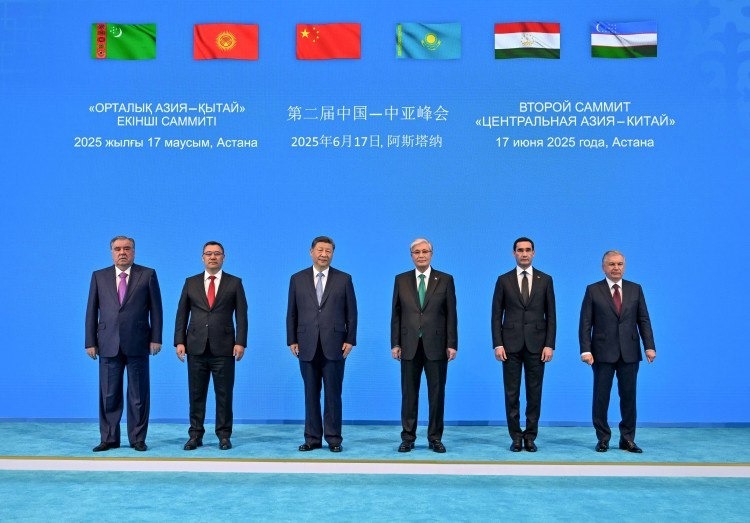
The second China-Central Asia summit on June 17, held in Astana, Kazakhstan, underscored the strengthening ties between China and the region. This event marked a significant milestone in solidifying the China-Central Asia cooperation framework with the signing of the Treaty on Eternal Good-Neighborliness, Friendship, and Cooperation. Experts note that Central Asian countries, once unable to adopt an intra-regional treaty, collectively reached this broader agreement with China.

The summit also featured a range of side events, including the Energy Forum “Energy of Central Asia – China,” the Forum on Humanitarian Exchange, the Second Forum on Industrial and Investment Cooperation, and the Central Asia-China Business Council meeting, among others. These gatherings highlighted cooperation in energy, trade, and cultural exchange, reflecting China’s deepening influence in the region.

Kazakh President Kassym-Jomart Tokayev praised China’s approach to equal partnership, stating that relations between the two nations are “stable and free from the negative impacts of geopolitical challenges and shocks as well as the international circumstances. China has never imposed any political conditions regarding cooperation with Kazakhstan.”

“This is a very important point, Kazakhstani Sinologist Adil Kaukenov explained, “as the head of state, being at the forefront of Kazakhstan’s foreign and domestic policies, faces political games, manipulation, and pressure at various levels, which require considerable restraint, experience as a statesman, and popular support to overcome.”

During the summit, the heads of the Central Asian states articulated their priorities for cooperation with China. Kazakhstan emphasized projects like the creation of a joint cargo terminal in the port of Kuryk on the Caspian Sea, cooperation in the fields of nuclear energy and artificial intelligence, and counteracting international cybercrime. Kyrgyzstan focused on security, transport, e-commerce, energy, and tourism. Tajikistan prioritized industrial development, trade, food security, and green economy initiatives. Uzbekistan, meanwhile, sought the further integration of Afghanistan into the region, and proposed an “Electronic Silk Road” trade platform, and the development of a long-term strategy called the “Central Asia-China Industrial and Infrastructure Belt.”

Chinese President Xi Jinping used his address to outline five key points that shape China’s vision for the future of its relationship with Central Asia.

“Our cooperation is rooted in more than two thousand years of friendly relations, consolidated by the solidarity and mutual trust that has been established for 30 years since the establishment of diplomatic relations, and has made great progress thanks to mutually beneficial cooperation in the new era,” Xi stated in his keynote speech. According to Xi, China considers Central Asia one of the priorities of its foreign policy, and this building of peaceful, inclusive partnerships was marked by the historical milestone of the signing of the treaty at the summit.

“We will improve the architecture of cooperation, which is characterized by pragmatism, efficiency, and deep integration,” the Chinese president said, adding that 2025–2026 have been declared the Years of High-Quality Development of China-Central Asia Cooperation. This initiative will focus on trade, transport connectivity, green energy, agriculture, and technology. Notably, China pledged 1.5 billion yuan ($208 million) in grants for projects aimed at improving infrastructure, public welfare, and vocational training.

China, according to its leader, is ready to share its latest technological achievements with Central Asia, promote digital infrastructure communication, expand cooperation in the field of artificial intelligence, and cultivate new productive endeavors.

“In order to enhance cooperation in relevant areas, China has decided to establish a poverty alleviation center, an education exchange and cooperation center, a desertification control center, and a platform for creating favorable conditions for trade within the China-Central Asia framework,” Xi stated.

Security cooperation was highlighted as a priority, with China committing to support the modernization of defense and law enforcement capabilities in Central Asia. Xi also highlighted combating terrorism, cyber threats, and transnational crime, alongside aiding Afghanistan’s stability and development.

Strengthening cultural bonds was another key aspect, with Xi proposing the establishment of more Chinese cultural centers, university branches, and language programs in Central Asia. He also stressed educational exchanges to foster closer connections. Finally, Xi reiterated China’s focus on establishing a just global framework. We must “safeguard a fair, rational, equitable and orderly international order.  China supports the growing role of Central Asian states in international affairs, and is ready to join forces with all partners in upholding international justice, in the fight against hegemony and power politics, and in promoting an equitable and orderly multipolar world, and accessible and inclusive economic globalization,” he told those in attendance.

The summit concluded with the signing of the Astana Declaration, reaffirming China’s commitment to strengthening ties with Central Asia.

Digitizing Central Asia: Interview with Ainura Umaeva, Thought Leader in Communications and Media

This week The Times of Central Asia will be attending the CAMCA Regional Forum, which this year is being held in Ulaanbaatar, Mongolia. 

The CAMCA network is a collection of professionals and policymakers dedicated to developing Eurasia by sharing ideas, knowledge and inspiration; its name stands for Central Asia, Mongolia, the Caucasus and Afghanistan.

Ahead of the Forum, The Times of Central Asia spoke with Ainura Umaeva, the Owner and CEO of TIDAM Communications Agency in Almaty — and a leader in strategic communications and advisory — about what the CAMCA program means for the Eurasian communications and digital industries, and what the future might hold for women doing business in Central Asia.

TCA: What condition do you feel the digital and information spaces are currently in – in Kazakhstan, and elsewhere in the Eurasia region?

AU: Kazakhstan has made remarkable progress in digitalizing public services and fintech. For many of us, it’s now second nature to access government or commercial services instantly through a smartphone. This level of convenience has become so embedded in our daily lives that we often take it for granted.

However, when we look deeper, we notice a different reality. Despite this visible digital infrastructure, there’s a significant lack of digital literacy — especially in the private sector. Many businesses are still not leveraging the full potential of digital technologies, including AI, data analytics, or automation. While we appear digitally advanced on the surface, in practice the digital transformation often remains quite superficial. The real challenge now is to deepen that transformation — to build not only user-facing digital tools but also internal digital capacity and data culture.

In what areas do you think CAMCA initiatives can help them improve?

One of the greatest strengths of CAMCA is its ability to bridge regional fragmentation. Although the CAMCA region is often perceived by the outside world as a cohesive bloc, internally we remain deeply segmented — informationally, economically, and culturally. Many countries in the region lack awareness of one another’s realities, opportunities, and success stories.

Several years ago, I worked with a client on a cross-regional study, and it became clear to me how little we actually know about our neighbors. This informational disconnect leads to missed opportunities for collaboration and shared growth. Initiatives like the CAMCA Forum are essential because they foster not just dialogue, but a sense of common regional identity. Paradoxically, it often takes an external initiative to help us better recognize how much we share.

Being born and raised in Kazakhstan, with roots in the Caucasus, I constantly reflect on the contrast between the two regions. Despite its political and linguistic diversity, the Caucasus is often perceived — and perceives itself — as more cohesive than Central Asia. In our region, we are still discovering our collective identity.

You’re speaking in a session dedicated to women’s networks. How will women’s authority in Eurasian business look in 10 years compared to now?

In our work with the She Business Women Community — a regional network supporting women entrepreneurs — we focus on helping women-led businesses grow and scale. Right now, women make up a substantial portion of small business owners and startup founders in the region. However, they receive less than 10% of available investment capital. What’s even more concerning is that women-led businesses rarely scale, even when data shows that companies with women in leadership are more stable and resilient.

Today, many women-run businesses remain small, informal, and aimed primarily at survival. My hope — and what we are working toward — is that in the next 10 years we will see a very different landscape: one where women-led businesses are larger, more visible, more digital, and far more influential in shaping our economies. I truly believe we are on that path.

In which ways do you feel the CAMCA Forum brings together businesses from all of its member regions and countries?

I answer this with a smile — because one of the main reasons I’m traveling to Mongolia for CAMCA is precisely this opportunity to connect. I’ve never been to Mongolia before, and I’m genuinely curious and excited to discover the country and its people. But more importantly, I see CAMCA as a platform to meet fellow entrepreneurs, potential partners, and peers from across Central Asia and the Caucasus.

This forum creates the kind of setting that fosters long-term partnerships. It’s not just about attending sessions — it’s about building trust, finding shared interests, and laying the foundation for future projects together. In that sense, CAMCA plays a vital role in knitting our region more tightly — one relationship at a time. 

Artificial Glacier Technology to Support Kyrgyz Farmers Amid Climate Change

Artificial glacier technology is emerging as a promising solution to help Kyrgyz farmers adapt to the growing challenges of climate change. By enhancing irrigation efficiency and ensuring a more reliable water supply, these innovations aim to strengthen the resilience of mountain communities dependent on agriculture.

The technology was the focus of a roundtable discussion held on June 17 in Bishkek, titled “Technical Solutions for Improving Water Availability in Irrigation Systems for Mountain Communities in Kyrgyzstan Under Climate Change.”

At the event, Oleg Guchgeldiyev, the Food and Agriculture Organization (FAO) Representative in Kyrgyzstan, presented a new FAO initiative to develop and expand artificial glacier infrastructure in the country. The project is being implemented in partnership with the Ministry of Water Resources, Agriculture and Processing Industry of Kyrgyzstan.

With natural glaciers rapidly retreating due to global warming, water scarcity during the summer months has become a critical concern for Kyrgyz farmers. Artificial glaciers, engineered ice structures formed in winter and melted during warmer periods, offer a low-cost, scalable method of ensuring water availability during the growing season.

“Artificial glaciers are not just a technological solution,” Guchgeldiyev said. “These innovations serve as a pillar of resilience for rural communities in a changing climate. Such projects strengthen food security and promote long-term agricultural development.”

How the Technology Works

The FAO’s “Glacier – Reservoir – Farmer” system combines artificial glaciers with small water reservoirs and modern irrigation methods such as drip systems. Water is collected from mountain springs and funneled through a pipeline to a vertical outlet pipe, 10 to 15 meters high. The elevation difference generates pressure that sprays water into the air. In winter, this spray freezes, gradually forming an ice cone. In summer, the stored ice melts and is directed to nearby reservoirs, from which it is distributed to fields for irrigation and livestock use.

“Location is critical for glacier construction,” noted Matraim Jusupov, an FAO expert in agriculture and water management. “On average, one artificial glacier can supply water for 300 to 500 hectares of land.”

The integration of reservoirs and pipeline systems minimizes water loss and enhances distribution efficiency, improving crop yields and rural livelihoods.

Early Implementation and Expansion

Kyrgyzstan already has over 30 artificial glaciers, with early projects implemented in the Uzgen, Kochkor, and Aksy districts. 

As previously reported by The Times of Central Asia, In autumn 2024, seven more artificial glaciers were constructed in villages across the Batken region as part of the FAO’s broader climate adaptation strategy.

These initiatives are part of Kyrgyzstan’s growing efforts to modernize its water infrastructure and build resilience against the intensifying impacts of climate change on its agriculture-dependent economy.

Citizens of Central Asia Face New Entry Restrictions To Russia and the U.S.

Citizens of Central Asian countries are encountering a wave of new travel restrictions from two major global powers, Russia and the United States. In recent weeks, Moscow and Washington have both introduced or expanded measures that complicate entry for citizens of the region, raising concerns about migration rights, bilateral relations, and regional security.

Russia Tightens Border Rules

Starting June 30, 2025, citizens from visa-free countries, including Kazakhstan, will be required to obtain a special QR code to enter Russia. The code must be secured in advance via the Gosuslugi RuID app, at least 72 hours before travel, or four hours in emergency cases. The app is not yet operational, but Russian Prime Minister Mikhail Mishustin has confirmed its planned launch on the same date.

While Russia maintains visa-free arrangements with over 30 countries, including Argentina, Brazil, Israel, and all CIS members, these new digital entry requirements apply broadly. Exceptions include citizens of countries already subject to visa regimes, diplomats, and citizens of Belarus, a Union State member.

Additionally, as of January 1, 2025, the allowable visa-free stay in Russia for citizens of these countries has been reduced from 90 days per half-year to 90 days per calendar year.

Many Kazakhstani travelers fear that the new rules will result in long queues and technical delays at border crossings. More broadly, critics point out that the move undermines the spirit of the Eurasian Economic Union (EAEU), whose member states, Kazakhstan, Kyrgyzstan, Armenia, Belarus, and Russia, are supposed to enjoy facilitated mobility.

Response to the Crocus City Hall Attack

The changes come in the wake of the March 22, 2024 terrorist attack at Moscow’s Crocus City Hall, which left at least 145 dead and more than 500 injured. The suspects in the attack were reportedly citizens of Tajikistan, sparking a wave of anti-migrant sentiment in Russia.

According to Temur Umarov, a Berlin-based political analyst at the Carnegie Center, Russian authorities are prioritizing security over economic necessity. “Russia is doing everything possible to reduce the number of migrants from Central Asia,” he said, noting the vital role these workers play in several Russian industries.

Regional Backlash

Public figures and officials in Kyrgyzstan, Uzbekistan, and Tajikistan have expressed frustration over Russia’s tightened migration policy. In Kyrgyzstan, the Ministry of Foreign Affairs lodged a formal protest with the Russian ambassador following a widely publicized incident in which Kyrgyz citizens were forcibly removed from a Moscow bathhouse.

Member of Parliament Zhana Akayev strongly condemned the treatment of Kyrgyz nationals: “Partners and allies do not behave like this. They are humiliating our citizens,” he said.

Tajik Foreign Minister Sirojiddin Muhriddin criticized Russia’s approach as inhumane and called for migration policies that respect mutual interests and fundamental rights. In Uzbekistan, several bloggers have gone further, calling for entry bans on Russian public figures, including Foreign Ministry spokeswoman Maria Zakharova, for alleged chauvinistic remarks.

Kazakhstan has taken a more measured stance. Aibek Smadiyarov, a spokesman for the Kazakh Foreign Ministry, emphasized that the QR code system does not constitute a visa regime. He also noted that biometric data collection, initiated by Russia in November 2024, is a standard international practice. As for reciprocal measures, Smadiyarov said the government is “carefully studying” its options.

U.S. Restrictions Expand

Meanwhile, the United States is also moving to restrict entry from certain Central Asian nations. On June 15, it was reported that Kyrgyzstan had been added to a watchlist of countries whose citizens may face entry restrictions.

A memorandum signed by U.S. Secretary of State Marco Rubio and sent to American diplomats outlines new immigration benchmarks. Affected countries have 60 days to demonstrate compliance, though no official communication has yet been received by Kyrgyz authorities.

“The criteria for this designation remain unclear,” the Kyrgyz Foreign Ministry said in a statement, adding that there is no confirmed imposition of restrictions as of yet.

Political analyst Igor Shestakov suggests the move is consistent with U.S. President Donald Trump’s campaign promises to curb illegal immigration. “Trump made it clear that America would not serve as a transit country,” he said. While migration from Kyrgyzstan increased during Joe Biden’s presidency, Shestakov noted that during Trump’s first term, even students faced difficulty securing visas.

“Now there will be a tightening of the screws,” Shestakov warned, advising Kyrgyz citizens without legal U.S. status to consider returning home.

On June 5, President Trump signed an executive order restricting entry for citizens of several countries, including Turkmenistan. The move was prompted by high visa overstay rates, 15.35% for business/tourist visa holders and 21.74% for student/exchange visa holders from Turkmenistan between October 2022 and September 2023.

Ashgabat has formally protested the decision. With Kyrgyzstan potentially joining Turkmenistan on the U.S. watchlist, concerns are growing in other Central Asian states, especially Uzbekistan, Tajikistan, and Kazakhstan, about their own future access to the U.S..