• KGS/USD = 0.01144 0%
  • KZT/USD = 0.00194 -0%
  • TJS/USD = 0.10844 -0.46%
  • UZS/USD = 0.00008 0%
  • TMT/USD = 0.28571 0.28%
  • KGS/USD = 0.01144 0%
  • KZT/USD = 0.00194 -0%
  • TJS/USD = 0.10844 -0.46%
  • UZS/USD = 0.00008 0%
  • TMT/USD = 0.28571 0.28%
  • KGS/USD = 0.01144 0%
  • KZT/USD = 0.00194 -0%
  • TJS/USD = 0.10844 -0.46%
  • UZS/USD = 0.00008 0%
  • TMT/USD = 0.28571 0.28%
  • KGS/USD = 0.01144 0%
  • KZT/USD = 0.00194 -0%
  • TJS/USD = 0.10844 -0.46%
  • UZS/USD = 0.00008 0%
  • TMT/USD = 0.28571 0.28%
  • KGS/USD = 0.01144 0%
  • KZT/USD = 0.00194 -0%
  • TJS/USD = 0.10844 -0.46%
  • UZS/USD = 0.00008 0%
  • TMT/USD = 0.28571 0.28%
  • KGS/USD = 0.01144 0%
  • KZT/USD = 0.00194 -0%
  • TJS/USD = 0.10844 -0.46%
  • UZS/USD = 0.00008 0%
  • TMT/USD = 0.28571 0.28%
  • KGS/USD = 0.01144 0%
  • KZT/USD = 0.00194 -0%
  • TJS/USD = 0.10844 -0.46%
  • UZS/USD = 0.00008 0%
  • TMT/USD = 0.28571 0.28%
  • KGS/USD = 0.01144 0%
  • KZT/USD = 0.00194 -0%
  • TJS/USD = 0.10844 -0.46%
  • UZS/USD = 0.00008 0%
  • TMT/USD = 0.28571 0.28%
09 December 2025

Majority of Kazakhstanis Are Religious, But Discrimination Persists, Studies Suggest

A recent study by analysts at Energyprom.kz sheds light on the religious landscape of Kazakhstan. According to data from the educational platform Jagran Josh, Kazakhstan’s population includes approximately 15.4 million believers. 

The majority, 11.3 million, identify as Muslim, while about 4 million identify as Christian. A smaller segment, approximately 670,000 individuals, comprise atheists, agnostics, and those with no religious affiliation. Additionally, there are around 5,000 Hindus, 40,000 Buddhists, and about 50,000 practitioners of traditional local beliefs.

It is important to note that these figures are compiled from various sources, some dating back to 2015 or earlier. Consequently, they are more suitable for broad international comparisons rather than a precise assessment of Kazakhstan’s current religious demographics.

Regional Characteristics of Religiosity

More recent data, based on a 2024 survey of 1,500 respondents (aged 18 to 65) conducted by the Committee on Religious Affairs of the Republic of Kazakhstan, provides deeper insights into domestic religiosity. The survey revealed that 24.1% of Kazakhstani citizens consider themselves practicing believers who strictly observe religious precepts. The majority, 62.7%, identify as believers but observe only some rituals and traditions.

About 9.2% of respondents stated they do not consider themselves believers yet still participate in certain rituals. A smaller proportion, 1.3%, reported no religious affiliation and no participation in rituals, while 0.9% identified as convinced atheists and 0.5% as agnostics.

Regionally, Shymkent recorded the largest share of conditionally religious people who observe only certain traditions, at 77.6%. The Atyrau region exhibited the highest proportion of strict practitioners, at 46%. Conversely, the Pavlodar region led in the number of non-believers who nevertheless participate in rituals, at 24.6%. Atyrau also had the highest proportion of complete non-believers, at 10%.

In terms of religious affiliation, 65.1% of respondents identified as followers of the Hanafi school of Islam, with another 11.6% belonging to other branches of Islam. Orthodox Christianity was practiced by 14.8% of respondents, Catholicism by 2.1%, and Protestantism by 1.8%. Hinduism, Buddhism, paganism, and Tengriism collectively accounted for less than 2%. An additional 0.8% reported believing but not identifying with any particular religion.

The proportion of daily prayers increased from 17.7% to 19.3% over the last quarter. However, 27.9% of respondents reported never praying. Regarding attendance at places of worship (mosques, churches, etc.), 6.2% visit regularly, 14.5% do so weekly, and 33.8% two to three times a year. Notably, 10.4% of respondents have never been to a place of worship.

Daily religious discussions with relatives were reported by 4.3% of Kazakhstani citizens, while 27.3% admitted that they never discuss religion within their families.

Religious Discrimination

Over the past three months, 41.3% of respondents reported experiencing discrimination on religious grounds. The most frequently cited incidents included the publication of offensive images (19.3%), negative comments on social media (11.5%), bans on visiting mosques or churches by the clergy (7.8%), and restrictions on education due to wearing a hijab (10.8%).

Although official statistics on incidents directly classified as religiously motivated are not maintained, 54 criminal offenses were recorded between January and April 2025 under the article “Inciting social, national, ethnic, racial, class, or religious discord.” This figure represents a 35% increase compared to the same period last year.


Bulgarian Ports Eye Middle Corridor Expansion

Kazakhstan and Bulgaria are exploring the integration of Bulgaria’s Black Sea ports of Burgas and Varna into the Trans-Caspian International Transport Corridor (TITC), a move that could significantly expand the reach of this crucial East-West trade route.

The Trans-Caspian International Transport Route (TITR), also known as the “Middle Corridor,” has been operational since 2017, connecting China, Kazakhstan, the Caspian Sea, Azerbaijan, Georgia, and ultimately, European countries. This multimodal corridor facilitates containerized cargo transport by rail and sea, primarily utilizing the Caspian Sea for maritime crossings.

Spanning 11,000 kilometers, the route saw a substantial increase in cargo volume last year, reaching 4.5 million tons compared to 2.76 million tons the previous year.

Astana anticipates further growth, projecting an annual freight traffic volume of 10 million tons on the TITR by 2028. This expansion is part of a broader strategy to broaden the Middle Corridor’s geographical scope.

The potential inclusion of Bulgarian ports was a key topic during Bulgarian President Rumen Radev’s official visit to Kazakhstan.

“Today, the Trans-Caspian International Transport Route has become one of the main international highways. We have agreed to consider the inclusion of the Bulgarian ports of Burgas and Varna in this corridor,” stated Kazakh President Kassym-Jomart Tokayev, following talks with Radev. 

The discussions culminated in a ceremony where heads of state exchanged signed bilateral documents, including a memorandum of understanding between the Ministry of Transport of Kazakhstan and the Ministry of Transport and Communications of Bulgaria, focusing on the development of the TITR.

Radev expressed optimism about the deepened cooperation. “I am confident that the talks will give new impetus to our cooperation. The signed memorandum on the further development of the Trans-Caspian Corridor is a reflection of our aspirations. It is necessary to make the most of the strategic geographical position of Kazakhstan and Bulgaria on this route, which connects Asia with Europe,” he said.

Later, at the Kazakhstan-Bulgaria Business Forum, Tokayev reiterated the target of 10 million tons per year for the TITR’s capacity, aiming for this to be achieved by 2028. 

Previously The Times of Central Asia reported how, during the Astana International Forum, Kazakhstan’s Deputy Foreign Minister Alibek Kuantyrov highlighted Kazakhstan’s perception of the Trans-Caspian International Transport Route as a cornerstone of sustainable logistics across Eurasia. 

Investors Push Back Against New Renewable Energy Bill in Kyrgyzstan

A new draft law proposed by Kyrgyzstan’s Ministry of Energy has sparked concern among renewable energy investors. The legislation, currently under public review until June 20, 2025, imposes new financial and technical obligations on owners of small hydropower plants as well as solar and wind power installations. Following the review period, the bill will be submitted to the president for approval.

Key Provisions and Investor Backlash

Under the proposed law, operators of small hydroelectric and other renewable energy facilities would be required to pay 1% of their electricity sales revenue to local authorities. Additionally, they must maintain the ability to accumulate at least 30% of the station’s installed capacity.

The draft also stipulates that electricity generated from renewable energy sources (RES), which is neither consumed by the producer nor sold under contract, will be priced at the average tariff of the previous year.

Lawmakers claim the bill ensures transmission support for RES providers, mandating that distribution companies and relevant organizations enable the smooth delivery of electricity from private generators to consumers, provided the infrastructure allows.

However, industry representatives argue that the legislation could stall growth in the sector. A letter from a consortium of small hydropower companies in the Chui and Issyk-Kul regions warns that the proposed changes create unnecessary obstacles and risk deterring both domestic and foreign investment.

“No domestic, let alone foreign, investor will be interested in implementing renewable energy projects if the payback period at a tariff of 1.71 KGS ($0.020) per kWh is extended to 20-25 years,” said Rakhatbek Irsaliyev, director of the consortium. “This is especially true given that such projects are not implemented for personal use or resale, but to cover the country’s growing electricity deficit.”

The consortium is urging the government to revisit its tariff policy. Specifically, they are calling for a system that allows energy producers to sell at updated, higher rates, rather than last year’s average. In Kyrgyzstan, electricity tariffs are typically adjusted annually on May 1.

Broader Energy Context

Kyrgyzstan has long touted its substantial energy potential, particularly in hydropower. With abundant rivers and glaciers, it ranks third in hydropower resources among CIS countries, following Russia and Tajikistan. Yet, less than 10% of this potential is currently being utilized.

Government efforts to address the energy shortfall include the commissioning of 18 small hydropower plants in 2025 and the expansion of wind and solar infrastructure nationwide. A major project, Kambarata HPP-1 on the Naryn River, is also in development, involving cooperation with neighboring countries. Meanwhile, the CASA-1000 initiative is nearing completion. This project aims to export summer surplus electricity from Kyrgyzstan and Tajikistan to Pakistan via Afghanistan.

Despite this progress, international organizations like the World Bank have urged Kyrgyzstan to raise electricity tariffs for both residential and commercial users. Since 2024, the government has begun implementing gradual tariff hikes, but experts argue that the pace is insufficient.

“The tariffs set for industrial and commercial consumers allow costs to be recouped. These categories pay a fair price,” said Katarina Gassner, a World Bank expert on Kyrgyzstan. “But tariffs for domestic consumers are leading to a deficit in the sector. As a result, the electricity sector covers only 20% of its own costs. Every kilowatt of energy produced does not cover its own cost.”

As the public consultation process continues, stakeholders in the renewable energy sector are urging lawmakers to revise the bill to ensure a more viable and attractive investment climate.

Ukrainian Children Arrive in Uzbekistan for Rest and Recovery

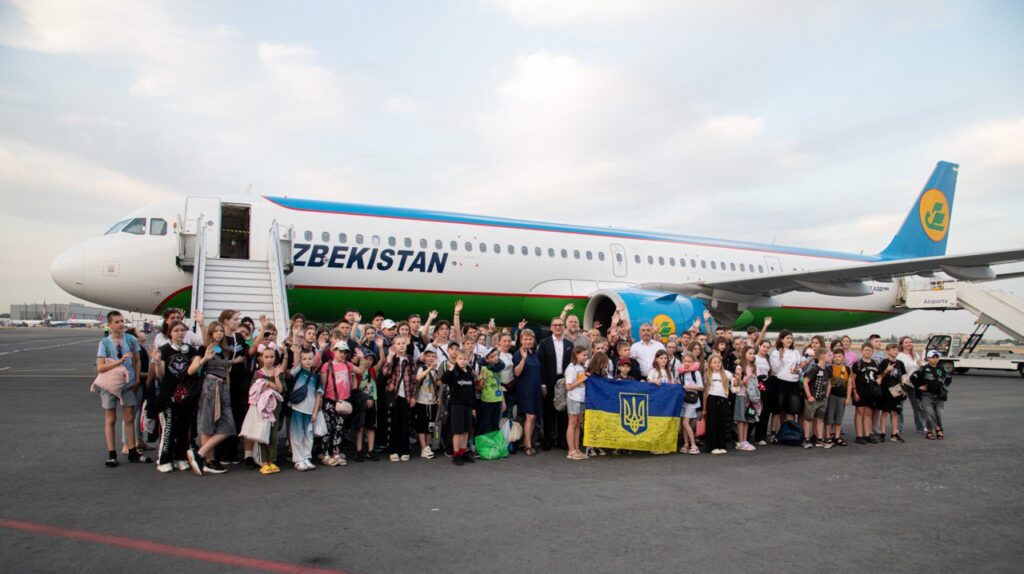
Just ahead of Eid al-Adha, a group of Ukrainian children have arrived in Tashkent for a 12-day program of rest and psychological rehabilitation. The Ukrainian Embassy in Uzbekistan reported that the visit was fully organized and funded by the Uzbek government.

The children, who come from war-affected regions including Kharkiv, Kherson, Mykolaiv, Zaporizhzhia, Sumy, Khmelnytskyi, Lviv, and Kyiv, received a warm welcome upon arrival at Tashkent International Airport. From there, they traveled to a mountain camp nestled in a valley near the Tien Shan range.

According to the embassy, the initiative was launched at the request of the Ukrainian side and is intended to help the children recover emotionally from the ongoing trauma of air raid sirens and missile strikes.

The camp offers a structured program of daily themed events, such as “National Values Day” and “Sports and Health Day,” along with creative competitions and excursions. Evenings are reserved for social gatherings. Ukrainian adults are present to supervise the children throughout their stay.

Nearly all major ministries and government agencies in Uzbekistan are participating in the effort, demonstrating strong coordination and compassion. The Ukrainian Embassy emphasized that the initiative reflects Uzbekistan’s genuine interest in supporting Ukrainian children during this difficult period.

The program aims not only to provide physical and emotional relief, but also to express solidarity and goodwill from the Uzbek people.

Uzbekistan previously provided similar humanitarian assistance to Palestinian civilians, evacuating 100 injured women and children, along with their guardians, from Rafah for medical treatment and care.

Uzbekistan’s response to Russia’s war in Ukraine has been cautious yet distinct, reflecting its careful balancing act in international diplomacy. Tashkent has refrained from openly condemning Moscow, a key economic and regional partner, but has also demonstrated a firm commitment to Ukraine’s sovereignty and territorial integrity within the framework of its foreign policy principles. Uzbekistan has supported UN General Assembly resolutions calling for an end to the conflict, signaling alignment with global norms, while urging a peaceful resolution through dialogue. Officials have consistently avoided taking sides but have voiced concerns about the war’s human cost and economic repercussions.

Beyond formal diplomatic statements, Uzbekistan’s humanitarian actions have highlighted its concern for those impacted by the war. The government’s decision to host Ukrainian children for rehabilitation reflects its broader efforts to provide tangible support to civilians in crisis zones.

Kazakhstan Launches First-Ever Cleanup of Astana Reservoir

For the first time in over half a century, Kazakhstan has begun a major cleanup of the Astana Reservoir, a key water source for the capital and surrounding villages.

Built in 1970, the reservoir has never undergone comprehensive dredging until now. According to the Ministry of Water Resources and Irrigation, the cleanup involves advanced equipment, including a large dredger equipped with a hydraulic ripper capable of processing up to 2,000 cubic meters per hour, and a self-propelled amphibious dredger with a capacity of up to 900 cubic meters per hour.

In 2025, authorities plan to remove 50,000 tons of sediment from the reservoir floor. The cleanup, which began in early June, is scheduled to continue annually for 13 years and is expected to significantly enhance the reservoir’s storage capacity.

Upon completion of this year’s work, the Astana Reservoir’s volume will increase by 47 million cubic meters, from its current capacity of 410.9 million cubic meters. This expansion will bolster the water supply for Astana and nearby communities.

“The Astana Reservoir is a strategic facility that plays a vital role in providing the capital with water,” said Minister of Water Resources and Irrigation Nurzhan Nurzhigitov. “The use of modern technology allows us to carry out the first cleanup of the reservoir in over 50 years both thoroughly and efficiently.”

The reservoir is located on the Yesil River. In 2010, a protective dam was constructed to shield the capital from spring floodwaters originating from the river.

Construction Begins on New British School Campus in Astana

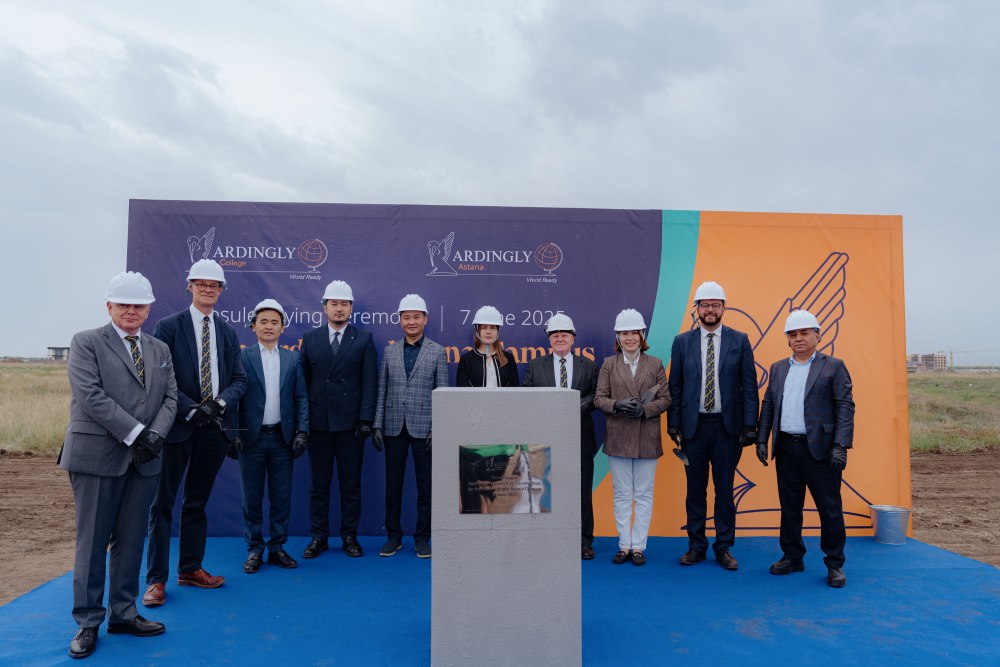
A capsule-laying ceremony on June 7 marked the official start of construction on the new Ardingly College campus in Astana, a major milestone in Kazakhstan-UK educational cooperation.

Ardingly Astana is a branch of Ardingly College, a prestigious British coeducational day and boarding school founded in 1858 in West Sussex, England. The Astana branch will follow the Cambridge curriculum, offering instruction in English and preparing students for A-Level examinations. The school’s faculty will include educators with international and UK-based teaching experience.

The first phase of the new campus is expected to open in 2026, with the capacity to accommodate up to 1,000 students. The campus will include state-of-the-art facilities such as a swimming pool, sports complexes, music and art studios, and science laboratories.

Designed as an educational hub for students from Kazakhstan and across Central Asia, Ardingly Astana aims to merge the British academic model with innovative teaching methods, equipping students for admission to leading universities worldwide. The project also seeks to attract international educators and promote cross-border knowledge exchange and educational integration.

The development is supported by Kazakh Invest, Kazakhstan’s national investment promotion agency. The capsule-laying ceremony was attended by representatives of the British Embassy in Kazakhstan, Ardingly College, Ardingly Astana, and Kazakh Invest.

Azamat Kozhanov, Deputy Chairman of Kazakh Invest, underscored the project’s significance: “The opening of a campus of one of the UK’s top educational institutions in the heart of Eurasia symbolizes trust, partnership, and a strategic vision for the future. It will be more than just a school, it will be an ecosystem for nurturing ideas and developing future leaders. Education remains a priority for investment, and we are ready to provide full support for such projects. We are confident that Ardingly Astana will attract talented students and educators from around the world.”

The project marks a significant step in advancing both educational and investment ties between Kazakhstan and the United Kingdom.