• KGS/USD = 0.01144 0%
  • KZT/USD = 0.00194 -0%
  • TJS/USD = 0.10844 -0.46%
  • UZS/USD = 0.00008 0%
  • TMT/USD = 0.28571 0.28%
  • KGS/USD = 0.01144 0%
  • KZT/USD = 0.00194 -0%
  • TJS/USD = 0.10844 -0.46%
  • UZS/USD = 0.00008 0%
  • TMT/USD = 0.28571 0.28%
  • KGS/USD = 0.01144 0%
  • KZT/USD = 0.00194 -0%
  • TJS/USD = 0.10844 -0.46%
  • UZS/USD = 0.00008 0%
  • TMT/USD = 0.28571 0.28%
  • KGS/USD = 0.01144 0%
  • KZT/USD = 0.00194 -0%
  • TJS/USD = 0.10844 -0.46%
  • UZS/USD = 0.00008 0%
  • TMT/USD = 0.28571 0.28%
  • KGS/USD = 0.01144 0%
  • KZT/USD = 0.00194 -0%
  • TJS/USD = 0.10844 -0.46%
  • UZS/USD = 0.00008 0%
  • TMT/USD = 0.28571 0.28%
  • KGS/USD = 0.01144 0%
  • KZT/USD = 0.00194 -0%
  • TJS/USD = 0.10844 -0.46%
  • UZS/USD = 0.00008 0%
  • TMT/USD = 0.28571 0.28%
  • KGS/USD = 0.01144 0%
  • KZT/USD = 0.00194 -0%
  • TJS/USD = 0.10844 -0.46%
  • UZS/USD = 0.00008 0%
  • TMT/USD = 0.28571 0.28%
  • KGS/USD = 0.01144 0%
  • KZT/USD = 0.00194 -0%
  • TJS/USD = 0.10844 -0.46%
  • UZS/USD = 0.00008 0%
  • TMT/USD = 0.28571 0.28%
09 December 2025

Two More Grandmasters for Kazakhstan, an Emerging Chess Power

A 14-year-old boy from Kazakhstan is awaiting confirmation that he is the country’s youngest chess grandmaster after he improved his rating at a tournament in the United Arab Emirates this month. Also, a 21-year-old woman is poised to become Kazakhstan’s second female grandmaster after the same contest.

The international results come as Kazakhstan pushes to develop homegrown chess talent and impart intellectual skills to young people, introducing chess into the curricula of hundreds of schools, training chess teachers and even supporting chess federations in some Asian countries, including Oman, Nepal, Cambodia, Jordan, Bhutan, Sri Lanka and Pakistan.

“Trainers, methods, equipment for chess classes – all this has become an export product of Kazakhstan,” the Kazakhstan Chess Federation said Wednesday as its congress of 50 delegates met in Astana to review 2024 accomplishments and plan for the future.

Kazakhstani player Edgar Mamedov, who turns 15 on June 18, achieved a rating of more than 2500 because of his results at the Sharjah Masters International Chess Championship, according to the federation. The 2500 rating is one of the requirements to secure the grandmaster title.

“All that remains is to wait for the official confirmation of the title,” it said.

Confirmation would come at the next meeting of the presidential council of FIDE, the Switzerland-based governing body of chess. The last meeting was held in April.

A 16-year-old player from Kazakhstan, Aldiyar Ansat, was close to grandmaster status at the start of the year and was touted as the frontrunner to become the Central Asian nation’s youngest GM. But Mamedov got there first.

The tournament in Sharjah also featured a woman from Kazakhstan who secured the grandmaster rating after a strong performance. Like Mamedov, Bibisara Asaubayeva is awaiting official confirmation that she has the title. She will be Kazakhstan’s second female grandmaster after Zhansaya Abdumalik.

Asaubayeva had the best result among women in Sharjah, beating Chinese player Zhu Jiner, the winner of the Women’s Grand Prix of the 2024–25 season, by one point, and Divya Deshmukh, the winner of the 2024 Chess Olympiad as part of the Indian team, by one and a half points, according to Kazakh chess officials.

“Finally, GM,” Asaubayeva wrote on Instagram after she got the grandmaster rating. She added a smiling emoji with sunglasses.

Kazakhstan currently has nine confirmed and active grandmasters, according to FIDE. One of them, Rinat Dzhumabayev, also participated in the May 17-25 contest in Sharjah. A total of 64 grandmasters and 17 international masters competed.

Player Nurassyl Primbetov, born in Kazakhstan in 2013, played the match of his life at a tournament in Astana last year. The young boy lost to former child prodigy and world No. 1 Magnus Carlsen.

Reflecting on his country’s chess accomplishments, Timur Turlov, president of the Kazakhstan Chess Federation, said the federation organized 92 tournaments in 2024, a threefold increase compared to the previous year. Chess players from Kazakhstan won 160 medals, including 55 gold, in 2024, Turlov said in a January post on the Medium platform.

“Chess plays a significant role in connecting countries and even continents, and I am happy to see Kazakhstan emerging as a leading country in this process,” Turlov said.

Kazakhstan’s Diplomatic Dance: Securing Power in Turbulent Times

For Kazakhstan, strengthening ties with neighboring Central Asian states – as well as with Russia, China, and the West – is a top foreign policy priority. That, however, does not mean that the energy-rich nation is not also seeking to build stronger relations with other actors on the international stage.

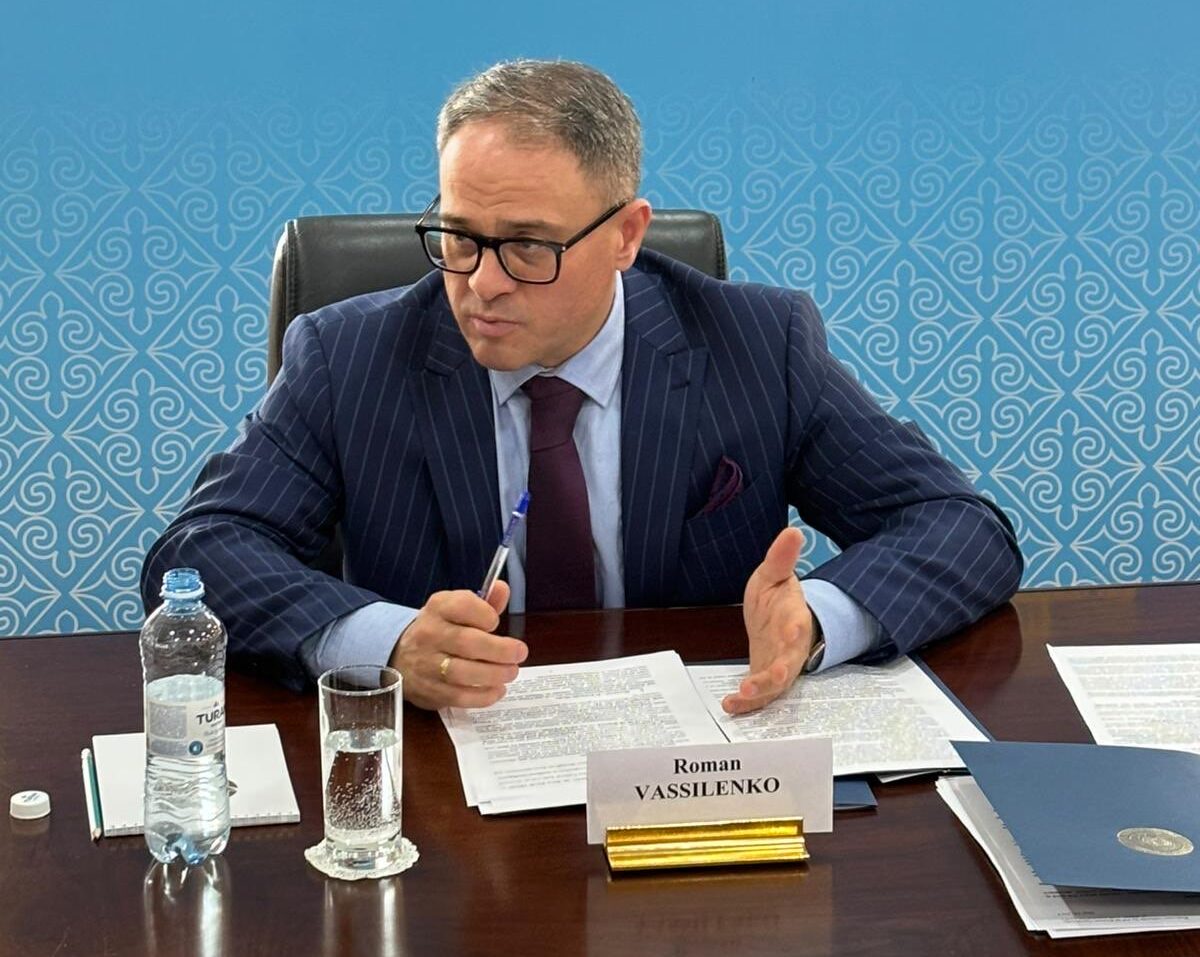
The largest regional country views itself as an aspiring middle power. As such, it intends to continue pursuing what Roman Vassilenko, Kazakhstan’s Deputy Foreign Ministry, describes as a “balanced, constructive and pragmatic foreign policy.” Yet, in an increasingly turbulent world, this approach comes with its own sets of challenges. One of them is undoubtedly the construction of the nation’s first nuclear power plant.

Kazakhstan’s President Kassym-Jomart Tokayev has repeatedly stated that an international consortium with participation by companies from China, France, Russia, and South Korea should be responsible for that. But how realistic is that under the current geopolitical circumstances?

“No decision of the composition of the consortium has been made yet, although we are actively negotiating with the companies interested in the construction,” Vassilenko told The Times of Central Asia, emphasizing that Tokayev has stressed that Kazakhstan will need more than one nuclear power plant.

That is why, in Vassilenko’s view, there will likely be different types of consortiums building different types of nuclear plants. Such an approach perfectly illustrates the Central Asian nation’s “multi-vector” foreign policy.

“As the ninth largest country in the world, with only 20 million people, and neighboring such superpowers as Russia and China, we can naturally depend only on the best diplomacy we can deploy,” Vassilenko stressed.

For that reason, Kazakhstan has initiated the Astana International Forum (AIF) – an event that reflects today’s interconnected global challenges, ranging from energy security and the climate crisis to technological innovation, sustainable development, and geopolitical cooperation. This year, the AIF – taking place in the Kazakh capital on May 29-30 – will host leaders from nations such as Rwanda, Qatar, Albania, Croatia, and North Macedonia, among others.

The fact that Astana will host leaders from several Balkan countries clearly suggests that Kazakhstan plans to strengthen ties with this part of Europe. According to Vassilenko, Kazakhstan’s policymakers view the Balkans as a “promising market” which is why the Central Asian nation plans to establish direct flights to Serbia later this year.

“We already have direct flights to Montenegro, and we aim to connect Kazakhstan with other European countries as well,” Vassilenko said, adding that his nation has recently opened embassies in Albania and North Macedonia.

This approach demonstrates that Astana sees not only the European Union but also the EU candidate countries as potential partners. Still, for Kazakhstan – a major oil and gas producer – energy plays an important role in its foreign policy strategy. Given that the Central Asian state supplies large quantities of crude oil and petroleum products to Europe via Croatia, it’s no surprise that the Prime Minister of the former Yugoslav Republic, Andrej Plenkovic, is among the major speakers at the Astana International Forum.

Italian Prime Minister Giorgia Meloni’s visit to Kazakhstan, which coincides with the Astana International Forum, also signals that Astana is eager to expand its business ties with the European Union. That, however, does not mean that it will neglect its relations with its giant neighbors – Russia and China.

According to Vassilenko, foreign direct investment in Kazakhstan also reflects the country’s foreign policy priorities. Last year, China replaced Russia as Kazakhstan’s biggest trade partner, although Russia became the top investor in the Kazakh economy. The Central Asian nation’s policymakers, therefore, cannot afford to ignore geography, as it plays a possibly crucial part in their foreign policy.

Roman Vassilenko; image: TCA, Nikola Mikovic

Having participated in multiple summits with major global players such as the European Union, the United States, China, the Gulf countries, India, and others, Kazakhstan is seeking to strengthen its role as a middle power in the international arena. In other words, by continuing to leverage its energy resources while embracing innovation and international cooperation, Kazakhstan is aiming to reinforce its position as a key player in Central Asia and beyond.

“If we use analogies from the realm of medicine and health, while great powers can be seen as bones holding the carcass of our world, the middle powers can be termed as cartilages without which bone rotations would be impossible,” Vassilenko concluded.

The problem, however, is that in the current tense geopolitical environment, both Kazakhstan and other middle powers are not immune to global economic shocks, including inflation and investor uncertainty. Overcoming these challenges will be critical for maintaining stability and fostering long-term growth.

Finally, by strengthening regional cooperation and exploring new markets, Kazakhstan will likely aim to ensure stability and continue its growth, solidifying its role as an important player on the world stage.


Follow our special coverage on the Astana International Forum here.

Kazakhstan Considers Handing Rare Earth Deposits to State Mining Firm Tau-Ken Samruk

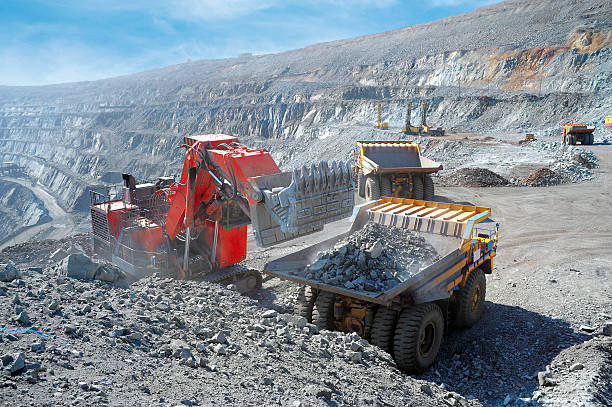
Kazakhstan may transfer a series of newly discovered rare earth metal deposits to the state-owned mining company Tau-Ken Samruk, according to Erlan Akbarov, Chairman of the Geology Committee under the Ministry of Industry and Construction.

Geological exploration initiated by the government in 2021 has covered 12 targeted areas, with exploration completed in 10 of them. These surveys led to the discovery of multiple rare earth metal deposits, including 17 rare earth elements such as tantalum, lithium, and niobium.

“The largest deposit we have discovered is the Kuyrektykol site, which has industrial reserves estimated at 1 million tons, with a projected reserve of 20 million tons. The remaining sites are located in eastern Kazakhstan (two), southern Kazakhstan (three), and northern Kazakhstan (three),” Akbarov said during a government briefing.

“We have completed exploration and evaluation at these sites, and specific investors will continue the development. One of the options under consideration is transferring these sites to Tau-Ken Samruk,” he added.

The National Mining Company Tau-Ken Samruk, a joint-stock company established in 2009, aims to unlock Kazakhstan’s mineral wealth by attracting leading partners and technologies. It is preparing to lead the next development phase of the Kuyrektykol site, which includes pre-investment groundwork, further geological assessments, and the selection of appropriate mining technologies.

Located in the Karaganda region in central Kazakhstan, initial exploration of Kuyrektykol began in 2022 and concluded in November 2024.

Kazakhstan currently extracts 19 of the 34 globally recognized rare earth elements, including beryllium, tantalum, niobium, and rhenium. More than 100 deposits of rare and rare earth elements have been identified nationwide.

Akbarov also noted that Tau-Ken Samruk might participate in a lithium mining project initiated by the Korea Institute of Geoscience and Mineral Resources (KIGAM) in eastern Kazakhstan.

“KIGAM conducted geological studies with us and discovered lithium deposits. Negotiations are ongoing, and our Korean colleagues are keen to proceed with further exploration. Tau-Ken Samruk may acquire a stake in this project,” Akbarov stated.

Earlier, The Times of Central Asia reported that in June this year, the Ministry of Industry and Construction will open electronic auctions granting private investors the right to explore and develop 50 gold and rare metal deposits.

A Resolution to Kyrgyzstan’s Last Border Problem?

In April, Kyrgyzstan signed a border delimitation agreement with southern neighbor Tajikistan, ending a long-running and at times violent feud along the two countries’ frontier. Now Kyrgyzstan is taking steps to resolve its border disagreements with its northern neighbor Kazakhstan.

The Joint Project

Representatives from Kazakhstan and Kyrgyzstan met in Bishkek on May 22 to discuss the impending construction of an industrial transport-logistics complex on their border. Kazakhstan is building similar complexes along its borders with other neighboring countries (China, Russia, Uzbekistan, and Kyrgyzstan).

The idea for the Kazakh-Kyrgyz facility was approved in May 2024, and work is scheduled to start next year. Economically, it is not a huge project, but symbolically, it could be a breakthrough ending years of aggravation connected to the country’s border crossings.

The aim of the complex is “to jointly produce, store and sell medicines, textiles, as well as dairy, meat, and vegetable products.”

In itself, the venture is laudable, but the location of the complex is what is interesting.

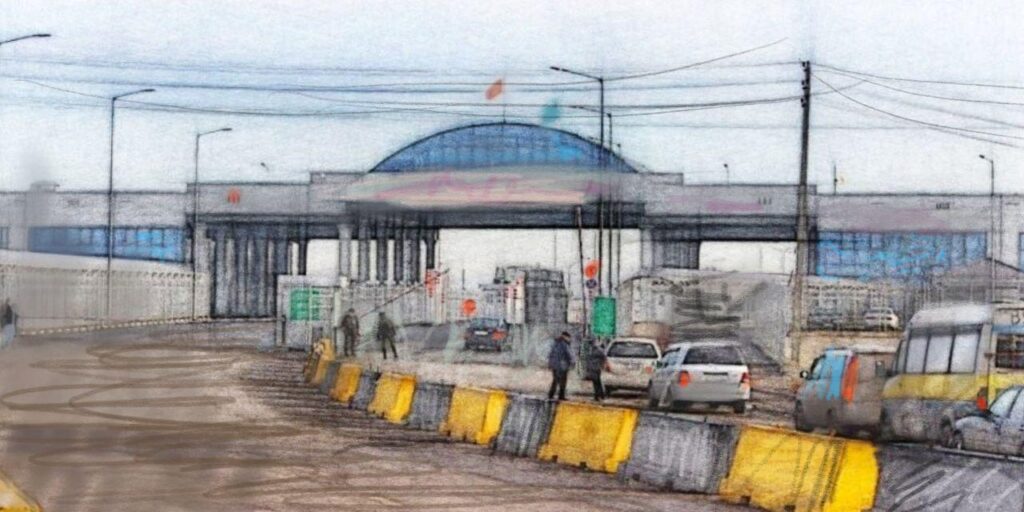
This trade and logistics complex will occupy 3.6 square kilometers of territory in Kazakhstan and 4 square kilometers in Kyrgyzstan at a place not far from the Ak-Tilek (Kyrgyzstan) – Karasu (Kazakhstan) border crossing. Kyrgyzstan’s Ak-Tilek and the other four border crossings with Kazakhstan have been in the news for more than seven years due to long lines of trucks on the Kyrgyz side waiting to cross into Kazakhstan. This has become a sore point in what have usually been good relations between the two countries.

The Legacy of Almazbek Atambayev

Ever since the Soviet Union disintegrated in late 1991 and the five Central Asian states became independent, relations between Kazakhstan and Kyrgyzstan have been the best among any two states in Central Asia. This was evident along their border, which compared to the others among the Central Asian states remained lightly guarded and relatively easy to cross.

That changed in autumn 2017, due to an incident that was unrelated to the actual Kazakh-Kyrgyz border.

Kyrgyzstan was preparing for a presidential election scheduled for October 15, 2017. The president at the time, Almazbek Atambayev, was leaving office, in accordance with the country’s constitution that permitted a president only a single term. Atambayev had picked a successor, Sooronbai Jeenbekov. The leading opponent was popular businessman Omurbek Babanov, who was polling ahead of Jeenbekov in the run-up to the election.

In mid-September, Babanov visited Kazakhstan and met with then-President Nursultan Nazarbayev.

Atambayev was furious. On October 7, he said that the “Kazakh authorities want to force their candidate on us.” Atambayev criticized the way Kazakhstan spent revenue, hinting that average Kazakh citizens did not seem to enjoy the fruits of the vast wealth of the country.

On October 10, without warning, Kazakhstan closed its crossing points to traffic from Kyrgyzstan. Later, Kazakhstan’s security service said the restrictions were part of a planned border operation and claimed to have registered 112 violations in less than 48 hours.

As the line of trucks grew on the Kyrgyz side of the border, Kyrgyz officials ordered special points be established near the border to distribute food and provide medical treatment for those stranded due to the border closure.

Atambayev refused to back down. On October 13, he said the Kyrgyz people have three millennia of history and wouldn’t be cowed by a three day blockade, and vowed that Kyrgyzstan would never elect the “flunky” of another country.

Traffic slowly started to move across the border into Kazakhstan again, but long lines remained. Jeenbekov won the election, though accusations of state interference and vote-rigging were rife.

None of that stopped Atambayev. Kyrgyzstan complained to the Russian-led Eurasian Economic Union (EAEU) in which both Kazakhstan and Kyrgyzstan are members. Kyrgyzstan also sent an official complaint to the World Trade Organization (WTO).

On October 18, Atambayev accused Kazakhstan of “cutting us off from Russia.” However, Atambayev shortly attempted to apologize, saying he earlier “emotionally spoke about Nazarbayev,” then blamed “[Kazakh] oligarchs who do not think about Kazakhstan and Nazarbayev.”

Kyrgyzstan was admitted to the EAEU in 2015, meaning that the other members (Russia, Armenia, Belarus, and Kazakhstan) were obligated to help meet EAEU regulations.

On October 20, 2017, at Atambayev’s urging, Kyrgyzstan’s parliament moved to reject the $100 million Kazakhstan was prepared to gift Kyrgyzstan to help the latter meet EAEU standards.

The Current Pattern

Prior to Atambayev’s undiplomatic outbursts, there had never been any serious or regular hold-ups moving goods across the Kazakh-Kyrgyzstan frontier. Since that time, there have been periods every year when trucks have been backed up for several kilometers on the Kyrgyz side of the border.

In September 2020, the Asian Development Bank said the average waiting time for trucks at the Ak-Tilek border crossing was 34.4 hours.

Kyrgyzstan has continued to complain to the WTO and EAEU. Kazakhstan countered that its heightened checks are warranted since Kazakh border guards continued to uncover numerous violations among the vehicles trying to cross the state line.

In August 2023, during the third straight summer of drought, Kazakhstan’s Ministry of Ecology and Natural Resources said the southern Zhambyl Province had stopped receiving water from Kyrgyzstan’s Kirov reservoir. Kyrgyzstan’s Agriculture Ministry replied that the water level at the Kirov reservoir was less than 20% of the normal amount.

A few days later, the process for trucks crossing from Kyrgyzstan into Kazakhstan slowed significantly (six per hour at the Ak-Tilek crossing point).

The Last Border

Kyrgyzstan has never had any serious border issues with China – at least after Kyrgyzstan ceded some 90,000 hectares of land to China in 1999.

The border with Uzbekistan was the most troublesome for Kyrgyzstan for a long time, until the two countries finally reached a delimitation agreement in 2022. The recent agreement with Tajikistan, meanwhile, holds the promise of ending tensions along a frontier that led to clashes between the two countries’ militaries in 2021 and 2022.

The occasional traffic problem along the Kazakh-Kyrgyz border paled in comparison with the earlier situations along the Kyrgyz-Uzbek and Kyrgyz-Tajik borders.

Now that issues along its western and southern borders seem to have been resolved, that leaves crossings with Kazakhstan as the last border where Kyrgyzstan has problems.

The choice of an area near the Ak-Tilek border crossing for the trade and logistics complex is seemingly no accident. While long lines of trucks have occasionally been reported at each of the five Kazakh-Kyrgyz border crossings since 2017, Ak-Tilek is the most frequently affected.

Kazakh-Kyrgyz cooperation on this new complex near one of the busiest crossings is a step toward resolving the problems of easing passage across state lines. Reports on the meeting in Bishkek noted that the two sides discussed “matters connected with modernizing” facilities at border crossings.

Kyrgyz officials have spoken publicly about the revenue the country has lost due to delays crossing the Kazakh border. Officials from the two countries have met many times to discuss the problem, but hold-ups persist.

Jointly produced goods in need of shipping from a facility on their common border near a major crossing point is a sign of increased cooperation on the border and seems to be a significant move toward ending a transit problem that has become a perennial sticking point in relations between the two nations.

Korea Backs Kyrgyzstan’s Transition to Smart Electricity Metering

Kyrgyzstan’s Ministry of Energy, in partnership with the Korea International Cooperation Agency (KOICA), has completed the construction of a Centralized Advanced Metering Infrastructure (AMI) System Operation Center, a milestone in the country’s energy sector modernization.

The completion ceremony, held last week, was attended by Kyrgyz Energy Minister Taalaibek Ibrayev, South Korean Ambassador Kim Kwang-jae, and KOICA Vice President Hong Seok-hwa.

According to the Ministry of Energy, the project began in 2023 with KOICA’s support. The agency provided approximately $10.5 million and donated 10,779 smart electricity meters under a grant agreement. The new centralized system is designed to manage up to 1.5 million smart meters nationwide.

“This ambitious project is the result of fruitful cooperation between the Kyrgyz Republic and the Republic of Korea,” said Minister Ibrayev. “Completion of the national Operation Center is a milestone in the digitalization of Kyrgyzstan’s energy sector. The Center will serve as a critical hub for managing the smart metering system, improving the reliability of electricity supply, enhancing distribution efficiency, ensuring billing transparency, reducing emergency shutdowns, and cutting power grid losses, an especially pressing need for our country.”

Ambassador Kim echoed this sentiment: “Kyrgyzstan has great potential in the energy sector, and Korea is proud to contribute to its energy future with our experience and technology. We hope this project lays a foundation for data-driven energy policies and reduced energy losses.”

Efficient electricity metering is vital for Kyrgyzstan, which suffers from recurring power shortages, particularly in winter. Although the country has the potential to produce up to 142 billion kilowatt-hours (kWh) annually, current production is just 14 billion kWh, roughly 10% of its hydropower capacity.

Kyrgyzstan currently generates 3,450 megawatts of electricity, while demand has climbed to 3,600 megawatts. In 2024, national consumption reached 18.3 billion kWh, up 1.1 billion kWh from the previous year. To meet the shortfall, Kyrgyzstan imported 3.63 billion kWh of electricity, an increase of 141.7 million kWh compared to 2023.

Kazakhstan’s Air Quality Stagnates Despite Emission Reforms

Over the past two decades, air pollution levels in Kazakhstan have remained persistently high, despite numerous reform pledges and reported reductions in specific emissions. This is the conclusion of a recent study by analysts at Ranking.kz.

Half the Country at Risk

According to 2025 data from the international service Numbeo, Kazakhstan ranked 30th out of 113 countries in urban air pollution, with an index of 73.2 out of 100. This marks only a modest improvement from a 2013 peak of 79.6. Neighboring Russia and Uzbekistan fared better, with scores of 59 and 54, respectively.

Kazhydromet, Kazakhstan’s meteorological service, reported that in 2023, only 23 of the 70 surveyed cities and towns were considered relatively environmentally friendly. Of these, just four were regional centers; the rest were smaller towns and villages. The remaining 47 locations displayed elevated or critically high pollution levels. Astana, Almaty, Karaganda, and Ust-Kamenogorsk were cited as the most concerning.

In these cities, pollution has either stagnated or worsened since 2005. Karaganda’s Air Pollution Index (API) rose from 13.9 in 2005 to 16 in 2023. Astana’s API nearly doubled, from 3.7 to 7. Although Almaty exited the “red” zone, it remains categorized as having elevated pollution.

In November 2023, Ust-Kamenogorsk authorities moved schoolchildren to remote learning due to thick smog, the first such decision on environmental grounds. Senators Olga Bulavkina and Shakarim Buktugutov proposed declaring the city an ecological disaster zone, but the government dismissed the need for a special commission.

The Emissions Paradox

According to the National Statistics Office, total pollutant emissions, comprising solid, liquid, and gaseous substances, declined from 3 million tons in 2005 to 2.3 million tons in 2023, a 24% decrease. However, greenhouse gas emissions increased by over 45% during the same period, rising from 233.8 million tons to 340 million tons, according to the international database OurWorldinData.

This surge contradicts Kazakhstan’s commitments under the Paris Agreement, which it joined in 2016. The primary culprits remain unchanged: coal-fired thermal power plants. In 2023, stationary sources accounted for 2.2 million tons of the 2.3 million total emissions. The number of such sources has more than doubled since 2005, reaching 233,800.

Between Optimism and Routine

In a bid to reverse the trend, Kazakhstan has approved a national strategy to achieve carbon neutrality by 2060. The plan targets a reduction in greenhouse gas emissions to 324.4 million tons by 2030, with full carbon neutrality by mid-century. Measures include expanding renewable energy, constructing nuclear power plants, and integrating low-carbon technologies in industry.

Despite these ambitions, emissions have yet to return even to 2005 levels. While some progress has been made, it is not enough to offset broader environmental deterioration. In the country’s largest cities, residents continue to breathe air laced with harmful pollutants, contributing to increased cancer rates and a declining quality of life.

If Kazakhstan succeeds in implementing even part of its environmental roadmap, then perhaps within the next decade, smog alerts, pollution spikes, and remote learning due to air quality may become rare exceptions rather than seasonal norms.