• KGS/USD = 0.01144 0%
  • KZT/USD = 0.00196 -0%
  • TJS/USD = 0.10899 0%
  • UZS/USD = 0.00008 0%
  • TMT/USD = 0.28490 0%
  • KGS/USD = 0.01144 0%
  • KZT/USD = 0.00196 -0%
  • TJS/USD = 0.10899 0%
  • UZS/USD = 0.00008 0%
  • TMT/USD = 0.28490 0%
  • KGS/USD = 0.01144 0%
  • KZT/USD = 0.00196 -0%
  • TJS/USD = 0.10899 0%
  • UZS/USD = 0.00008 0%
  • TMT/USD = 0.28490 0%
  • KGS/USD = 0.01144 0%
  • KZT/USD = 0.00196 -0%
  • TJS/USD = 0.10899 0%
  • UZS/USD = 0.00008 0%
  • TMT/USD = 0.28490 0%
  • KGS/USD = 0.01144 0%
  • KZT/USD = 0.00196 -0%
  • TJS/USD = 0.10899 0%
  • UZS/USD = 0.00008 0%
  • TMT/USD = 0.28490 0%
  • KGS/USD = 0.01144 0%
  • KZT/USD = 0.00196 -0%
  • TJS/USD = 0.10899 0%
  • UZS/USD = 0.00008 0%
  • TMT/USD = 0.28490 0%
  • KGS/USD = 0.01144 0%
  • KZT/USD = 0.00196 -0%
  • TJS/USD = 0.10899 0%
  • UZS/USD = 0.00008 0%
  • TMT/USD = 0.28490 0%
  • KGS/USD = 0.01144 0%
  • KZT/USD = 0.00196 -0%
  • TJS/USD = 0.10899 0%
  • UZS/USD = 0.00008 0%
  • TMT/USD = 0.28490 0%
09 December 2025

Large Resort to Be Built on Southern Shore of Kyrgyzstan’s Lake Issyk-Kul

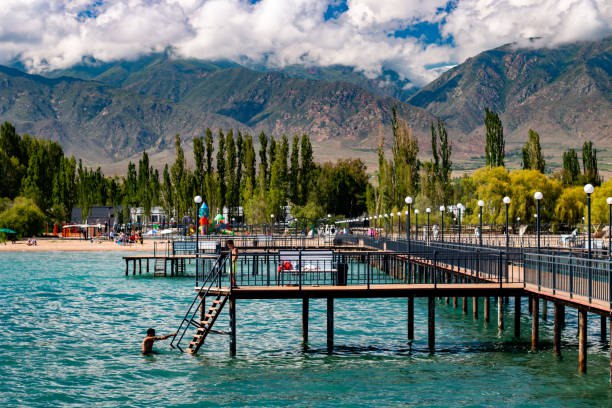
Kyrgyzstan’s Ministry of Economy and Commerce has signed an investment agreement with Kyrgyz-registered Jartash LLC for the construction of a major sports and hotel complex, Ramada Resort by Wyndham Issyk-Kul.

The resort will be developed on private land on the southern shore of Lake Issyk-Kul, the country’s most popular tourist destination. Ramada is part of Wyndham Hotels and Resorts, the U.S.-based company recognized as the world’s largest hotel franchisor, operating approximately 9,200 properties in 95 countries.

The project aligns with the State Program for Sustainable Tourism Development through 2030, which aims to strengthen Kyrgyzstan’s tourism infrastructure and establish the country as a regional hub for sports and recreational tourism.

Minister of Economy and Commerce Bakyt Sydykov hailed the agreement as a strategic milestone. “This is not just an investment agreement, it is a step toward the strategic transformation of the Issyk-Kul region. The new resort will become the flagship of our tourism industry, opening new horizons for attracting investment and international visitors to Kyrgyzstan,” he said.

The investor will receive tax and customs incentives under the agreement.

Ramada Resort by Wyndham Issyk-Kul will feature:

  • A hotel with 250-300 rooms across various categories
  • Olympic and training swimming pools
  • Gyms and rehabilitation facilities
  • Infrastructure for professional sports training
  • Recreation zones and venues for international events

The resort is expected to create over 200 jobs and generate more than $9 million in state revenue over the next decade. Officials anticipate that the project will serve as a model of effective public-private partnership and catalyze the development of a new tourism cluster along the southern shore of Lake Issyk-Kul.

New York Mayor Eric Adams Under Scrutiny for Ties to Uzbek Businessman

New York City Mayor Eric Adams is facing renewed federal scrutiny over alleged ties to a Brooklyn-based businessman with close links to the Uzbek government. As The Times of Central Asia reported last year, the investigation centers on whether Adams helped improve Uzbekistan’s public image in exchange for campaign contributions.

According to court documents reviewed by THE CITY, the businessman, Tolib Mansurov, a dual citizen of the United States and Uzbekistan, allegedly served as an intermediary for the Uzbek government while also helping to fund Adams’ mayoral campaigns. In return, Adams is said to have provided favorable public exposure that enhanced Uzbekistan’s reputation, despite the country’s record of human rights abuses.

Prosecutors describe Mansurov as a well-connected figure who maintained frequent communication with officials at Uzbekistan’s mission to the United Nations. He organized multiple events involving Adams and the Uzbek-American community in New York. One notable event was a flag-raising ceremony at Bowling Green on September 2, 2023, during which Adams became the first New York City mayor to raise the Uzbek flag in the financial district. “Happy Uzbekistan Independence Day!” Mansurov posted on social media. “Mayor Eric Adams made history by being the first to raise the Uzbek flag on Wall Street!”

Mansurov also arranged a roundtable at City Hall and hosted various cultural gatherings, including Ramadan dinners and community meetings, through the Silk Road Foundation, a nonprofit he founded. Prosecutors allege the foundation coordinated closely with Uzbekistan’s UN mission.

Alongside his community engagement, Mansurov reportedly funneled illegal straw donations into Adams’ campaign. In one instance, he allegedly reimbursed four employees who made individual contributions. He later arranged ten more donations of $1,000 each, again reimbursing at least one donor, according to investigators.

In private messages, Adams reportedly referred to Mansurov as “my strongest go-to person.” In May 2024, months after the FBI had seized Adams’ electronic devices, the mayor used a new phone and the encrypted app Signal to ask Mansurov for a favor. He requested that Mansurov quickly gather 20 donations of $250 each to meet the threshold for matching public campaign funds.

Mansurov has not been charged but is cooperating with investigators. He has denied any involvement in money laundering, though prosecutors say he received over $11 million from a Cyprus-based entity, which he allegedly used to purchase real estate in Brooklyn.

This is not the first time Adams’ campaign financing has come under legal scrutiny. Federal prosecutors have previously accused him of accepting illicit donations and perks from Turkish interests. The FBI is also examining his fundraising ties to individuals connected to China.

Commenting on the broader implications, exiled Uzbek journalist Shahida Yakub said, “The regime is trying to gain legitimacy in the West. They always want to be liked by the U.S. The mayor of New York is important.”

Federal investigators continue to probe Adams’ relationships with foreign governments and the role of campaign donations in potentially influencing his political conduct.

Olives, Oranges, and Mandarins to Be Grown in Southern Kyrgyzstan

Citrus seedlings imported from Turkey have been planted in southern Kyrgyzstan as part of an experimental initiative to evaluate their adaptability to the local climate. The Ministry of Agriculture is conducting the trial with a view to diversifying the country’s agricultural output and introducing high-value crops.

The seedlings, mandarin, orange, olive, and kunkuvat (a variety of orange), were delivered by ministry specialists for test cultivation. According to Minister of Agriculture Bakyt Torobaev, the trials are being carried out in the Batken region, where agroclimatic conditions are considered most suitable for heat-loving crops.

“If the seedlings take root successfully, local farmers will attempt to scale up cultivation and expand citrus production to other parts of southern Kyrgyzstan,” Torobaev said.

Bakyt Mambetov, Director of the Department of Agricultural Crops and Horticulture, added that the aim of the trials is to evaluate the plants’ resilience to climatic and soil conditions, as well as their productivity and resistance to diseases and pests. “If the results are positive, these crops will be recommended for both farm-level and private garden cultivation, to meet domestic demand and create export opportunities,” he said.

Mambetov emphasized that introducing such crops could significantly boost the profitability of Kyrgyz horticulture and expand the country’s agricultural export potential.

This is not the ministry’s first citrus initiative. Several years ago, Tashkent lemons were successfully cultivated in the mountainous northern regions of Kyrgyzstan, with the first harvest yielding promising results.

Central Asian and Pakistani Leaders Showcase Digital Future at GSMA Summit in Tashkent

The second day of the GSMA M360 Eurasia conference, held on May 21 in Tashkent, delivered a resounding message of partnership, innovation, and forward-looking digital strategies. Leaders from Kazakhstan, Uzbekistan, and Tajikistan, alongside delegates from other countries, shared insights on fostering resilient digital economies through collaboration and technology.

Kazakhstan: Digital Leadership and AI Strategy

Kazakhstan’s Minister of Digital Development, Innovation and Aerospace Industry, Zhaslan Madiyev, highlighted his country’s digital advancements. Over the past decade, Kazakhstan has ascended into the global top ten for online service quality and now ranks 24th in e-government development. “More than 90% of transactions are cashless,” he noted, “and over 35 personal documents are exclusively digital. Digital documents now carry the same legal weight as paper ones.” Citizens can even travel domestically using only a digital ID on their phones.

Madiyev spotlighted Astana Hub, Kazakhstan’s primary IT cluster, which hosts over 1,600 startups and global tech firms, with outposts in Silicon Valley, Singapore, Saudi Arabia, and the UK. “We recently signed an agreement with Uzbekistan’s IT Park,” he said, “and we will soon open a joint mobile lab with Tcell in Uzbekistan.” He emphasized that cross-border collaboration enables startups to access global markets.

Artificial intelligence (AI) featured prominently in Madiyev’s address. He announced the formation of a national AI committee and the adoption of a five-year strategy that includes ethical guidelines, product labeling, and a public AI platform. A newly acquired supercomputer, boasting two exaflops of processing power, will soon support universities, startups, and companies. Kazakhstan also plans to train one million individuals over five years, spanning schoolchildren to government employees. Madiyev invited Uzbekistan to join a regional AI collaboration centered around the forthcoming International Center of AI in Astana, which will host labs, exhibits, hackathons, and workspaces for startups and major tech firms.

Uzbekistan: Building a 5G Future

In an interview with The Times of Central Asia, Dmitriy Shukov, CEO of Perfectum, the first stand-alone 5G mobile network operator in Uzbekistan, discussed the company’s vision. Perfectum primarily serves the business sector with advanced network solutions. “We focus on B2B clients and will continue to develop cutting-edge services for a fast-growing economy,” Shukov stated.

On expanding 5G access nationwide, Shukov pointed to device compatibility. “People need access to 5G stand-alone service. We hope GSMA can facilitate discussions with handset manufacturers to unlock all 5G features here,” he said, underscoring that broader access is essential for digital inclusivity. Perfectum’s pioneering role in the region sets a benchmark for others.

Discussing Uzbekistan’s telecom infrastructure, Shukov expressed optimism. “Our population grows by 700,000 annually. Sixty percent are under 30, demanding high-speed, low-latency services. And the regulatory environment is now very favorable to investors,” he said. These dynamics, he concluded, set a strong foundation for the next three years.

Tajikistan: Rethinking Telecom Models

Tcell CEO Ozodkhon Davlatshoev, whose company serves over two million customers and is Tajikistan’s largest mobile operator, addressed the pressures facing the sector. “Our market share is about 14%, growing 7% annually, but with just 2% population growth, we add only around 60,000 new users per year, while investing millions to maintain infrastructure,” he said. He also noted rising competition and regulatory pressures to lower prices.

Davlatshoev advocated a shift from merely providing access to delivering value-added services. “Being just a gatekeeper is no longer viable. We can leverage our data and networks to offer personalized services, financial tools, even advertising,” he said. His vision includes expansion into fintech, digital advertising, and social media, which he claims has already yielded ten-fold increases in EBITDA in pilot regions. “Let’s make customers richer, not just our companies,” he quipped.

Pakistan: Financial Inclusion Through Digital Innovation

Murtaza Ali, President of JazzCash in Pakistan; image: Muhammad Khayyam Siddiqi

Murtaza Ali, President of JazzCash, highlighted Pakistan’s push toward digital finance. As one of the country’s leading mobile financial platforms, JazzCash serves over 20 million monthly users and collaborates with more than 285,000 agents and 485,000 merchants.

“Almost 40% of adults in Pakistan are unbanked,” Ali said. “We built a system that reaches people wherever they are.” JazzCash offers not just money transfers, but also micro-loans, insurance, and Shariah-compliant savings tools. In 2024 alone, it issued around 143,000 digital loans daily and insured two million individuals.

Ali emphasized the role of partnerships, with the government, Google Wallet, and retail providers, in driving financial inclusion. “We support government payment systems and are the only fintech in Pakistan compatible with Google Wallet,” he noted. As part of VEON Group, JazzCash collaborates with Simply in Kazakhstan and Beepul in Uzbekistan. Together, they processed over $40 billion in transactions in the past year.

Summit Takeaways: Cooperation and Shared Vision

Throughout the event, a consistent theme emerged: the need for cooperation among governments, telecom providers, and fintech innovators. From Kazakhstan’s AI strategy and Uzbekistan’s 5G ambitions to Tajikistan’s evolving business models and Pakistan’s digital finance breakthroughs, the shared goal was clear, deliver fast, affordable, and inclusive digital services.

By the close of May 22, participants had agreed on key objectives: bridging coverage gaps, supporting startups, advancing AI capacity, and strengthening regional partnerships. Working groups were established to address AI ethics, 5G deployment, and cross-border startup collaboration.

Kazakhstan Launches Central Asia’s Largest All-Season Tourism Project Near Almaty

Kazakhstan is embarking on the largest all-season tourism initiative in Central Asia with plans to develop a world-class ski resort near Almaty. The expansive project will stretch from Talgar in the east to Kaskelen in the west, creating an integrated mountain tourism corridor.

Ambitious Plans for the Almaty Mountain Cluster

The plan for the Almaty Mountain Cluster (AMC) envisions up to 700 kilometers of ski trails, 58 lifts, modern hotels, glamping sites, biking paths, and cable cars. By 2029, the project aims to accommodate up to 34,000 visitors daily and create more than 10,000 jobs, positioning the AMC as the region’s premier year-round destination.

International collaboration is central to the project, with concepts presented by global firms including Horwath HTL (U.S.), Stem International (France), and PGI Management (Andorra). French consultant Vincent Tassard stressed the value of year-round tourism and sustainable practices such as renewable energy and digital environmental monitoring. PGI President Joan Viladomat introduced the “Almaty SuperSki” concept, featuring 65 kilometers of trails across the Kok-Zhailau tract and Kumbel peak.

Environmental Sensitivities and Renewed Approaches

The inclusion of Kok-Zhailau revives a previously suspended development. In 2019, President Kassym-Jomart Tokayev halted construction following strong public and environmental opposition. The land was subsequently returned to Ile-Alatau National Park to protect its biodiversity and recreational value.

This time, developers promise greater environmental accountability. The AMC’s central zone, including Shymbulak, Butakovka, Kimasar, Oi-Karagai, and Pioneer, will serve as a pilot site for sustainable tourism design.

Inclusive Design and Eco-Tourism Expansion

The initiative also includes broader improvements to local tourist sites. The Medeu ECO Park concept has been introduced with facilities for family recreation and preserved landscapes. The Gorenlik visitor center and Jumbaq Jol trail are operational, and a suspension bridge, capable of accommodating 10,000 people daily, is slated to open in July.

Almaty SuperSki project leader Thomas Tor Jensen highlighted the fact that half of the ski runs will be suitable for beginners and the entire infrastructure will be accessible to people with disabilities.

Supporters such as Askar Valiev, Secretary General of the National Ski Association of Kazakhstan, and representatives from ECO Network and PANA ASIA, emphasized the importance of balancing economic goals with environmental protection. Valiev noted that Shymbulak is currently overburdened and in need of upgraded facilities for athletics training. Others stressed the need for transparency, compliance with ecological norms, and safe conditions for the increasing number of tourists.

Economic Growth and Government Backing

Prime Minister Olzhas Bektenov underscored the project’s strategic role in Kazakhstan’s modernization efforts. “This project will completely change the economic landscape not only of Almaty but of the entire country,” he stated, asserting that every dollar invested would yield double in tourism revenue.

Tourism currently accounts for 3.9% of Almaty’s gross regional product and employs more than 83,000 people. In 2024, the city welcomed over 2.3 million tourists, including 680,000 international visitors. The sector is growing rapidly: tourism revenues rose 30% last year, with tax contributions doubling.

Forced Labor Rampant in Turkmenistan’s 2024 Cotton Harvest, Say Rights Groups

Despite public pledges of reform and cooperation with the International Labor Organization (ILO), Turkmenistan’s government continues to enforce widespread forced labor during its annual cotton harvest. This is the core finding of a report released on May 19 by Turkmen.news, the Turkmen Initiative for Human Rights (TIHR), the Progres Foundation, and the Cotton Campaign coalition.

Systemic Abuse: The Role of the State

The report, titled “State-imposed Forced Labor in the 2024 Harvest and Links to Global Supply Chains, identifies the Turkmen state as the primary orchestrator of forced labor practices. Observers documented conditions in the country’s key cotton-producing regions, Balkan, Dashoguz, Lebap, and Mary, while withholding personal identifiers to protect sources.

Public sector workers, particularly junior staff from schools, healthcare facilities, and utilities, were either compelled to harvest cotton or to finance hired laborers from their own wages. Private entrepreneurs also faced coercive financial pressure. Although child labor remains officially banned, instances were reported, often incentivized by promises of payment.

Reforms on Paper, Resistance in Practice

While Ashgabat adopted a roadmap in 2024 for eradicating forced labor in coordination with the ILO, human rights defenders report negligible progress. Central to the issue is the state’s monopolistic control over every stage of the cotton supply chain, land allocation, seed distribution, pricing, and collection, enabling local officials to enforce arbitrary quotas and extort farmers.

“Boosting productivity or upgrading equipment is futile unless workers are shielded from coercion and can organize to defend their rights,” the report concludes.

Women disproportionately bear the burden, as they make up the majority of social sector employees and often lack the financial means to avoid fieldwork by hiring substitutes.

Supervised Compliance and Global Implications

The report also describes how Turkmen officials obstructed genuine engagement with the ILO. In Mary region, state workers were coached on how to respond to ILO queries, while others were excluded from meetings entirely.

International supply chains are not immune. As one of the world’s top 15 cotton producers, Turkmenistan exports textiles primarily to Turkey, Italy, and Pakistan. Turkish-made goods incorporating Turkmen cotton are subsequently sold in the EU, while firms from Germany and Italy supply industrial machinery to Turkmen producers.

Recommendations and Global Accountability

The report urges the Turkmen government to hold corrupt officials accountable, uphold labor laws, and guarantee fundamental freedoms, including the right to form independent trade unions. International actors are advised to enhance import scrutiny and exclude goods linked to forced labor from supply chains.

Foreign diplomats are encouraged to raise the issue during negotiations with Ashgabat and in investment discussions. The ILO, Turkmenistan’s Ombudsman, and international brands are called upon to maintain rigorous oversight and actively prevent labor violations.

In a rare move, ILO experts were permitted to monitor the 2024 cotton harvest. Despite limited access, they published critical findings on wage inadequacies, child labor persistence, and repercussions for public employees who resisted field assignments.