• KGS/USD = 0.01144 0%
  • KZT/USD = 0.00194 -0%
  • TJS/USD = 0.10844 -0.46%
  • UZS/USD = 0.00008 0%
  • TMT/USD = 0.28571 0.28%
  • KGS/USD = 0.01144 0%
  • KZT/USD = 0.00194 -0%
  • TJS/USD = 0.10844 -0.46%
  • UZS/USD = 0.00008 0%
  • TMT/USD = 0.28571 0.28%
  • KGS/USD = 0.01144 0%
  • KZT/USD = 0.00194 -0%
  • TJS/USD = 0.10844 -0.46%
  • UZS/USD = 0.00008 0%
  • TMT/USD = 0.28571 0.28%
  • KGS/USD = 0.01144 0%
  • KZT/USD = 0.00194 -0%
  • TJS/USD = 0.10844 -0.46%
  • UZS/USD = 0.00008 0%
  • TMT/USD = 0.28571 0.28%
  • KGS/USD = 0.01144 0%
  • KZT/USD = 0.00194 -0%
  • TJS/USD = 0.10844 -0.46%
  • UZS/USD = 0.00008 0%
  • TMT/USD = 0.28571 0.28%
  • KGS/USD = 0.01144 0%
  • KZT/USD = 0.00194 -0%
  • TJS/USD = 0.10844 -0.46%
  • UZS/USD = 0.00008 0%
  • TMT/USD = 0.28571 0.28%
  • KGS/USD = 0.01144 0%
  • KZT/USD = 0.00194 -0%
  • TJS/USD = 0.10844 -0.46%
  • UZS/USD = 0.00008 0%
  • TMT/USD = 0.28571 0.28%
  • KGS/USD = 0.01144 0%
  • KZT/USD = 0.00194 -0%
  • TJS/USD = 0.10844 -0.46%
  • UZS/USD = 0.00008 0%
  • TMT/USD = 0.28571 0.28%
09 December 2025

Astana Forum to Generate Over $5 Million as Global Delegates Flock to Kazakhstan

The 2025 Astana International Forum (AIF) is expected to generate over 2.6 billion KZT, approximately US$5.1 million for the Kazakh capital, largely driven by an influx of business tourism.

Record Influx of Business Tourists

According to organizers, most of the revenue will come from business guests, who spend on average 177,000 KZT (around $350) per day on accommodation, dining, transportation, entertainment, and shopping. Visitors typically stay for three days.

Scheduled for May 29-30, the forum will bring together over 5,000 attendees, including delegates, businesspeople, journalists, and accompanying guests. Hotel bookings have surged: five-star hotels in Astana are now 90-100% booked, while four-star hotels are at 50-90% capacity. By comparison, occupancy rates during the same period in 2024 were significantly lower, at 50-60% and 30-60%, respectively.

From Economic Forum to Global Platform

Launched in 2008 as the Astana Economic Forum, the event initially concentrated on macroeconomic issues and public sector reform. It primarily attracted regional financial experts, central bankers, and development institutions.

As Kazakhstan positioned itself more assertively in global affairs, the forum evolved. In 2023, it was relaunched as the Astana International Forum with a broader agenda in response to challenges in the global multilateral governance system. The 2024 edition, however, was cancelled due to historic flooding, the worst in 80 years, with President Kassym-Jomart Tokayev directing state resources toward disaster recovery.

Focus on Investment and Dialogue

This year’s forum will be held under the theme “Connecting Minds, Creating the Future.” It aims to foster open dialogue, promote strategic initiatives, and attract international investment. Tokayev is set to open the event.

Among the 600 international participants are political leaders, heads of international organizations, business executives, academics, and investors. The forum will focus on three core areas: international security and politics, energy and climate, and economics and finance. Organizers say the event reflects Kazakhstan’s ambition to modernize legally and economically, while competing globally for capital.

AIF 2025 also underscores Kazakhstan’s efforts to position itself as a diplomatic and economic bridge, particularly for countries of the Global South.

Two key business forums will be held on the sidelines: the Kazakhstan-France Investment Forum and the Kazakhstan-Italy Business Forum. Italian Prime Minister Giorgia Meloni will be in Astana to attend both the AIF and the Central Asia-Italy Summit.

As previously reported by The Times of Central Asia, Italy remains one of the most engaged EU countries in Central Asia, and the political and economic dimensions of the forum are expected to receive substantial international media coverage.
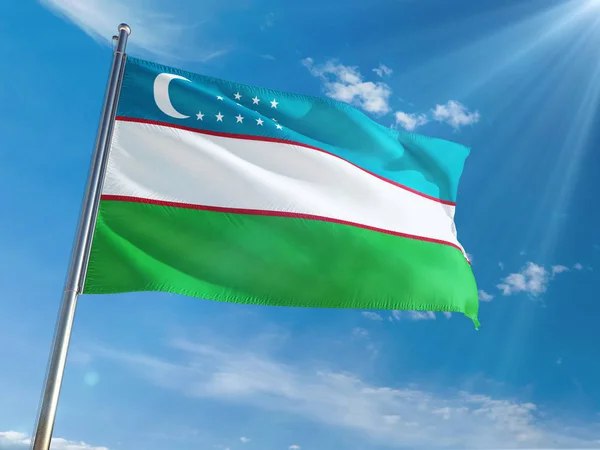

EDB Unveils New Forecasting Model for Uzbekistan’s Economy

The Eurasian Development Bank (EDB) has introduced a macroeconomic model designed to enhance the analysis and forecasting of Uzbekistan’s economic trends. Detailed in the working paper “Macroeconomic Model for Analysis and Forecasting of the Uzbekistan Economy,” the tool aims to improve the precision and depth of economic projections.

This model integrates into the EDB’s broader economic simulation framework, enabling it to account for the interconnected nature of member economies. It provides a clearer understanding of how Uzbekistan’s economy responds to both global and regional dynamics.

With this development, the EDB joins other international institutions engaged in forecasting Uzbekistan’s economic performance. The bank emphasizes that its collaboration with Uzbekistan’s government and development partners ensures the model’s practical application in policy-making.

Key functions of the model include evaluating the effects of internal and external shocks on the Uzbek economy, assessing fiscal and monetary policy impacts, and modeling exchange rate dynamics. It also allows for the construction of medium-term development scenarios and the identification of risks to economic stability.

Evgeny Vinokurov, Deputy Chairman of the EDB’s Management Board and the bank’s Chief Economist, highlighted the importance of cross-country economic linkages. “This is especially important for developing economies that are closely connected to each other,” he said. The model incorporates variables such as GDP, inflation, the exchange rate of the Uzbek som, interest rates, government expenditures, wage levels, trade volumes, and capital flows, offering researchers a comprehensive view of macroeconomic processes.

The bank plans to release its first official forecast for Uzbekistan within a month.

Uzbekistan became the seventh member of the EDB in April 2025, following President Shavkat Mirziyoyev’s ratification of the country’s accession to the Agreement Establishing the Eurasian Development Bank. With a 10% equity stake, Uzbekistan is now the bank’s third-largest shareholder.

Russian-Kyrgyz Development Fund Approves New Projects for 2025

The Russian-Kyrgyz Development Fund (RKDF) has approved a $150 million budget to support Kyrgyzstan’s economy in 2025, with six new projects already greenlit for more than $95 million in financing.

According to Artem Novikov, Chairman of the RKDF Board, the newly approved initiatives include industrial cooperation with the national railway company, Kyrgyz Temir Jolu, support for the domestic sugar industry, and the implementation of new trade financing mechanisms to enhance trade turnover between Kyrgyzstan and Russia.

Kyrgyzstan’s Minister of Economy and Commerce, Bakyt Sydykov, underscored the strategic role of the RKDF, calling it a key tool in the country’s economic development. “The RKDF remains Kyrgyzstan’s key partner in financing strategically important projects,” he said.

Sydykov also highlighted Kyrgyzstan’s recent industrial growth. In 2024, the country opened 102 new industrial enterprises, with plans to launch an additional 128 facilities this year.

The RKDF was established in 2014 by the governments of Kyrgyzstan and Russia to promote bilateral economic cooperation, modernize Kyrgyzstan’s economy, and capitalize on opportunities offered by regional integration within the Eurasian Economic Union (EAEU), which includes Armenia, Belarus, Kazakhstan, Kyrgyzstan, and Russia.

In a related development, the Azerbaijan-Kyrgyz Development Fund (AKDF) recently approved financing for two projects in Kyrgyzstan: the construction of a 9 MW small hydroelectric power plant and a modern sewing factory expected to create 300 jobs.

Uzbekistan Deploys Space Technology to Combat Environmental Violations

Uzbekistan’s Prosecutor General’s Office and the national space agency, Uzbekkosmos, have signed a memorandum of cooperation aimed at strengthening environmental protection through the use of space-based technologies.

According to Uzbekkosmos, the agreement facilitates the exchange of information and the use of satellite tools to monitor environmental conditions and investigate violations. The initiative will integrate aerospace technologies into environmental inspections, preliminary investigations, and monitoring activities, leveraging the State Space Monitoring System to provide more accurate and transparent data.

The partnership outlines joint actions to detect and prevent a range of ecological infractions, including the reduction of green spaces, illegal tree felling, unauthorized use of forest lands, and illicit construction activities.

The agreement also targets illegal excavation, particularly in riverbeds and protected water zones. The authorities will monitor compliance with regulations on riverbed cleaning and bank reinforcement, identifying any unauthorized digging operations.

Satellite data will further be used to assess the volume of materials extracted from mines, monitor compliance with waste storage regulations, and detect illegal dumping sites. The initiative also addresses post-harvest practices, such as the burning of crop residue, which negatively affects air quality and soil health.

Officials believe the partnership will enhance environmental oversight, promote public awareness, and improve the efficiency of ecological inspections. It is also expected to foster a stronger culture of environmental responsibility across the country.

This initiative follows President Shavkat Mirziyoyev’s 2024 ratification of Uzbekistan’s accession to the Outer Space Treaty, which governs the peaceful exploration and use of outer space, including the Moon and other celestial bodies. Originally signed in 1967 by the United Kingdom, Russia, and the United States, the treaty now includes 115 ratifying countries, with 22 additional signatories yet to ratify.

Rysgul Akimjanova Becomes Second Female Kyrgyz Mountaineer To Climb Everest

Rysgul Akimjanova has become the second woman from Kyrgyzstan to reach the summit of Mount Everest, the world’s highest peak at 8,848 meters.

Akimjanova reached the summit at 4:40 a.m. Nepal time on May 27 and has since begun her descent to a lower camp. Her success follows an earlier attempt just days prior, which was aborted at 8,400 meters due to a shortage of oxygen.

Earlier this month, The Times of Central Asia reported that Asel Baibagysheva became the first Kyrgyz woman to summit Everest, accomplishing the feat on May 11.

Baibagysheva is an experienced mountaineer, having previously summited Lenin Peak (7,134 m), Khan Tengri (7,010 m), and Pobeda Peak (7,439 m) in Kyrgyzstan, as well as Mount Elbrus (5,642 m) in Russia’s Caucasus region. She was also the first Kyrgyz woman to climb Manaslu in Nepal, the world’s eighth-highest mountain at 8,163 meters.

Dmitry Grekov was the first Kyrgyz man to summit Everest in 1997, followed by Eduard Kubatov in May 2021.

OpenAI Registers as a Taxpayer in Kazakhstan

OpenAI, the U.S.-based developer of the ChatGPT chatbot, has officially registered as a taxpayer in Kazakhstan and will now pay value-added tax (VAT), according to the State Revenue Committee (SRC) of the Ministry of Finance. The announcement comes as part of the government’s ongoing efforts to ensure equitable taxation of foreign digital service providers operating in the country’s market.

Kazakhstan introduced its digital services tax, commonly referred to as the “Google tax”, in 2022, becoming one of the first countries in Central Asia to do so. The policy aims to bring major international tech firms into the national tax framework.

“As part of improving interaction with global digital platforms, in May 2025, OpenAI, L.L.C., a leading American organization in the field of artificial intelligence and widely known as the developer of the ChatGPT intelligent system, was conditionally registered. Now, for providing services to individuals in Kazakhstan, the chatbot will pay VAT in accordance with tax legislation,” the SRC said in a statement.

ChatGPT is based on the GPT (Generative Pre-trained Transformer) language model. It can understand and respond to user queries, assist with translations, compose letters, generate code, and support learning and research tasks.

The digital services tax has become a significant revenue stream for Kazakhstan. In 2022, it contributed 16.4 billion KZT (approximately $32.1 million) to the state budget. Revenues increased to 26.3 billion KZT ($51.4 million) in 2023 and reached 26.4 billion KZT ($51.6 million) in 2024.

To date, around 100 international companies, including Google, Apple, Netflix, and Amazon, are registered as VAT payers under the digital services tax regime. The registration process for foreign companies has been streamlined to facilitate compliance.

As previously reported by The Times of Central Asia, OpenAI also registered as a taxpayer in Uzbekistan in April.