• KGS/USD = 0.01144 0%
  • KZT/USD = 0.00194 -0%
  • TJS/USD = 0.10896 -0%
  • UZS/USD = 0.00008 0%
  • TMT/USD = 0.28571 0.28%
  • KGS/USD = 0.01144 0%
  • KZT/USD = 0.00194 -0%
  • TJS/USD = 0.10896 -0%
  • UZS/USD = 0.00008 0%
  • TMT/USD = 0.28571 0.28%
  • KGS/USD = 0.01144 0%
  • KZT/USD = 0.00194 -0%
  • TJS/USD = 0.10896 -0%
  • UZS/USD = 0.00008 0%
  • TMT/USD = 0.28571 0.28%
  • KGS/USD = 0.01144 0%
  • KZT/USD = 0.00194 -0%
  • TJS/USD = 0.10896 -0%
  • UZS/USD = 0.00008 0%
  • TMT/USD = 0.28571 0.28%
  • KGS/USD = 0.01144 0%
  • KZT/USD = 0.00194 -0%
  • TJS/USD = 0.10896 -0%
  • UZS/USD = 0.00008 0%
  • TMT/USD = 0.28571 0.28%
  • KGS/USD = 0.01144 0%
  • KZT/USD = 0.00194 -0%
  • TJS/USD = 0.10896 -0%
  • UZS/USD = 0.00008 0%
  • TMT/USD = 0.28571 0.28%
  • KGS/USD = 0.01144 0%
  • KZT/USD = 0.00194 -0%
  • TJS/USD = 0.10896 -0%
  • UZS/USD = 0.00008 0%
  • TMT/USD = 0.28571 0.28%
  • KGS/USD = 0.01144 0%
  • KZT/USD = 0.00194 -0%
  • TJS/USD = 0.10896 -0%
  • UZS/USD = 0.00008 0%
  • TMT/USD = 0.28571 0.28%
09 December 2025

Rising Cement Prices in Kyrgyzstan Slow Economic Growth

In a bid to stabilize the construction market, the Cabinet of Ministers of Kyrgyzstan has lifted a temporary ban on cement imports. The decision is aimed at addressing soaring prices and growing demand for construction materials amid an ongoing nationwide building boom.

According to government officials, the move is intended to support market competition, prevent material shortages, and reduce pressure on prices. “The lifting of the temporary ban on cement imports will support healthy competition in the market, prevent shortages, and stabilize prices for construction materials,” the cabinet stated.

The ban had been introduced approximately one month earlier, following a surge in cement imports from neighboring countries. Officials argued that this influx had created unfair competitive conditions for domestic producers.

Construction Boom Meets Market Tensions

Kyrgyzstan’s construction sector has emerged as a key engine of economic growth in recent years. The government has made the development of this sector a priority, citing its importance for job creation, infrastructure expansion, and broader economic momentum.

The country is currently in the midst of a construction boom, with large-scale projects such as stadiums, airports, and affordable housing developments underway. These initiatives are being supported by new mortgage lending programs and infrastructure investments.

However, rapid growth has strained the supply of building materials, especially cement. Local media report that the construction of a new stadium in Bishkek, touted as the future largest in Central Asia, alone requires 135,000 cubic meters of cement.

Concerns have also been raised over alleged artificial price hikes. While officials deny any supply issues, reports suggest that some market players may be inflating prices to maximize profit amid the surge in demand.

Balancing Growth and Stability

The lifting of the import ban signals a shift in government policy toward greater market flexibility in the face of inflationary pressures. It reflects broader challenges facing Kyrgyzstan’s economy as it seeks to balance robust growth in the construction sector with price stability and fair market practices.

As the country continues its infrastructure push, the success of such measures will be critical not only to the construction industry but also to the broader trajectory of economic development in 2025.


Former Head of Astana Metro Project Detained in Turkey

Kazakhstan’s National Security Committee (KNB) has confirmed the detention of Talgat Ardan, the former head of the Astana Light Rail Transit (LRT) project, in Turkey. Ardan, who had been placed on an international wanted list, is accused of embezzling significant budgetary funds allocated for the capital’s metro system.

Legal proceedings against Ardan stem from a major corruption case that surfaced in 2020. A criminal trial launched in Astana that autumn revealed the alleged embezzlement of billions of tenge earmarked for the LRT’s construction. In May 2021, seven individuals were sentenced to prison terms ranging from seven to ten years. Two key figures, Ardan and former Astana deputy mayor Kanat Sultanbekov, were named as the scheme’s organizers and subsequently added to Interpol’s red notice list.

“In September 2019, the General Prosecutor’s Office of the Republic of Kazakhstan submitted an extradition request to Turkey’s Ministry of Justice. Following this, Turkish authorities initiated a search. This year, the KNB confirmed Ardan’s whereabouts, and he was detained by law enforcement in Antalya,” the committee’s press service reported. On May 9, a court in Antalya approved his deportation to Kazakhstan, where he remains in custody pending extradition proceedings.

An Astana court had previously found Ardan guilty in absentia under Articles 189, Part 4, and 361, Part 4 of the Criminal Code, covering the embezzlement of budget funds and abuse of office. He was sentenced to nine years in prison. Investigators reported that KZT 5.8 billion (approximately $11 million) was misappropriated during the construction of the LRT line. Ardan led the project from 2014 to 2017.

The Astana LRT was originally slated for completion before the Expo 2017 exhibition but suffered repeated delays due to financial shortfalls. In 2022, President Kassym-Jomart Tokayev questioned the viability of the project, pointing to its 22-kilometer route and limited utility. He suggested repurposing the already-installed infrastructure. Nevertheless, city authorities opted to continue construction. Then-Mayor Altai Kulginov argued that dismantling the partially built system would cost more than completing it.

As previously reported by The Times of Central Asia, the city’s current mayor, Zhenis Kasymbek, has pledged to open the first phase of the LRT by the end of this year.

Central Asia Startup Cup: A Call for Regional Unity Through Innovation

There has been a significant growth in tech events in Central Eurasia throughout the last few years. Several years back you would only see these on a national level, it is hard to find something that isn’t regional these days. There is the Central Eurasian Venture Forum, the largest regional venture capital forum, which will take place on June 5 this year in Kazakhstan, which is also home to Digital Almaty and Digital Bridge. Tashkent has its ICT Week on September 23-26, 2025. Tajikistan hosts the Startupstan Summit, Georgia has the Central Eurasia Venture Summit, Azerbaijan the Baku ID & INMerge, and the list goes on.

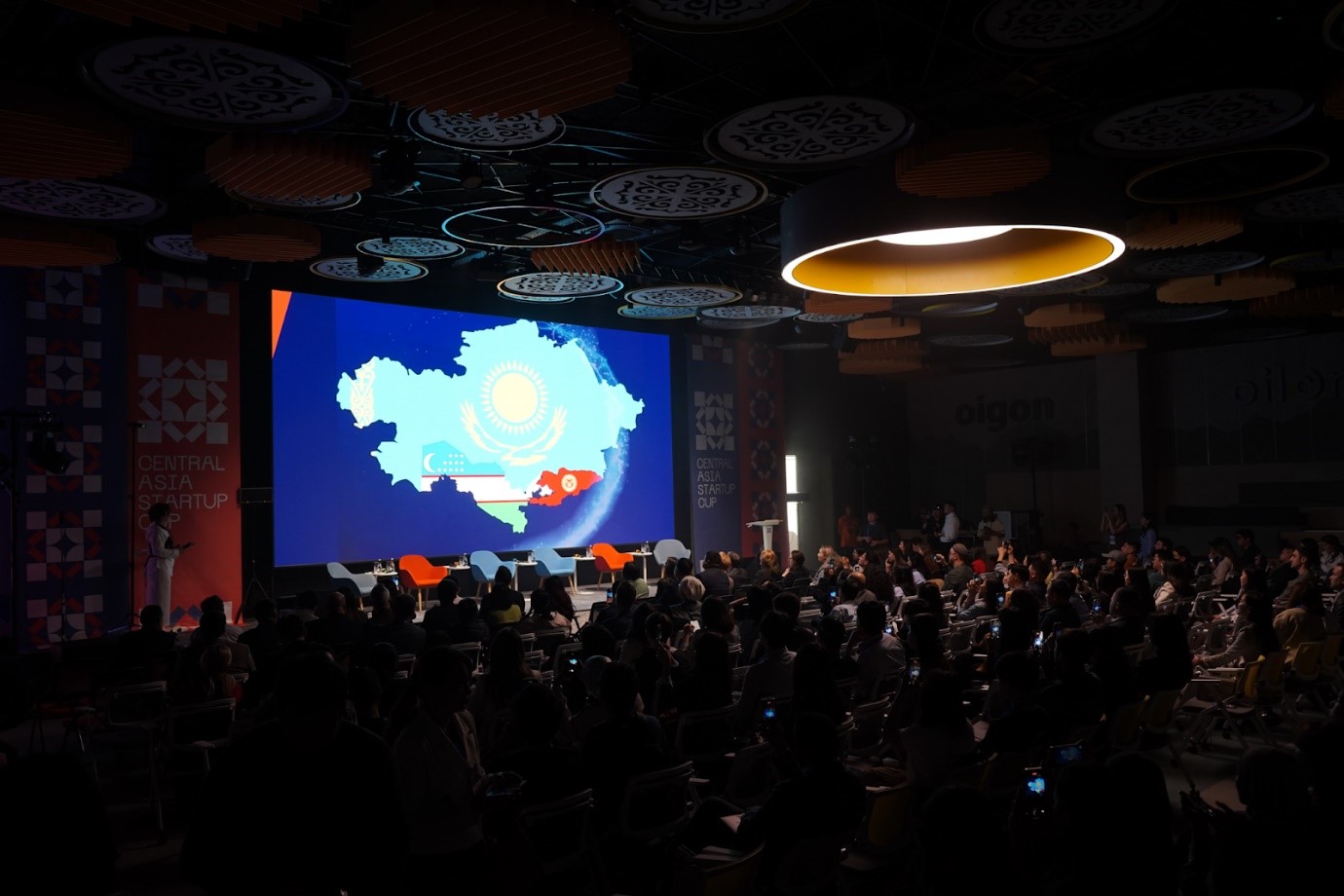
At the end of last month, Bishkek hosted the Central Asia Startup Cup, the largest tech conference to date in the Kyrgyz Republic focused on startups and venture capital. As reflected in the name of the event, the country is not an exception and is following the trend of regional cooperation.

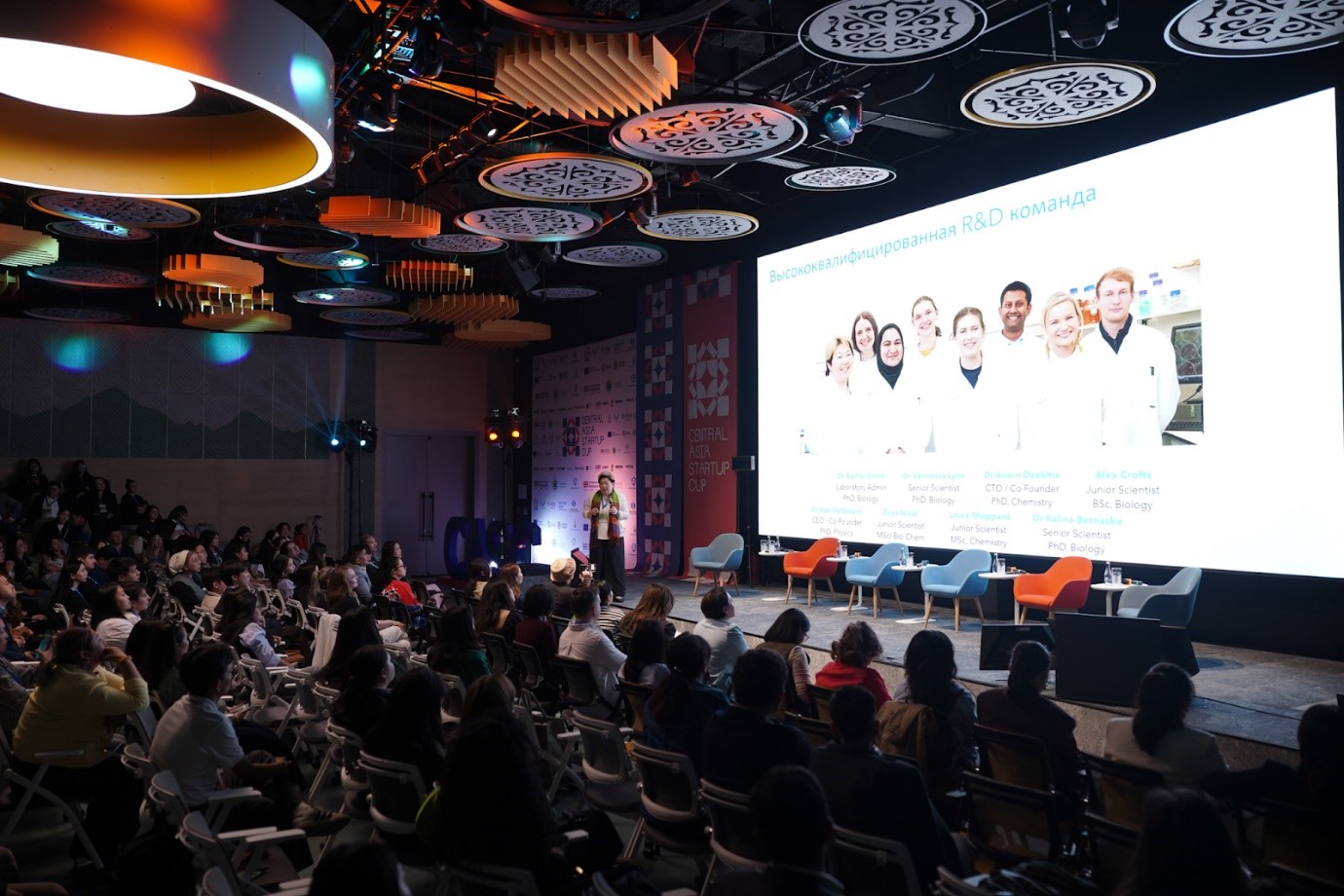
The keynote speaker came from the UK, Kyrgyz Republic-born Asel Sartbaeva, the CEO and Co-Founder of EnsiliTech, a startup with a technology that allows vaccines and other biopharmaceuticals to be stored and transported at room temperature. Aside from her keynote speech and presentation, Sartbaeva also participated in a panel session devoted to female founders.
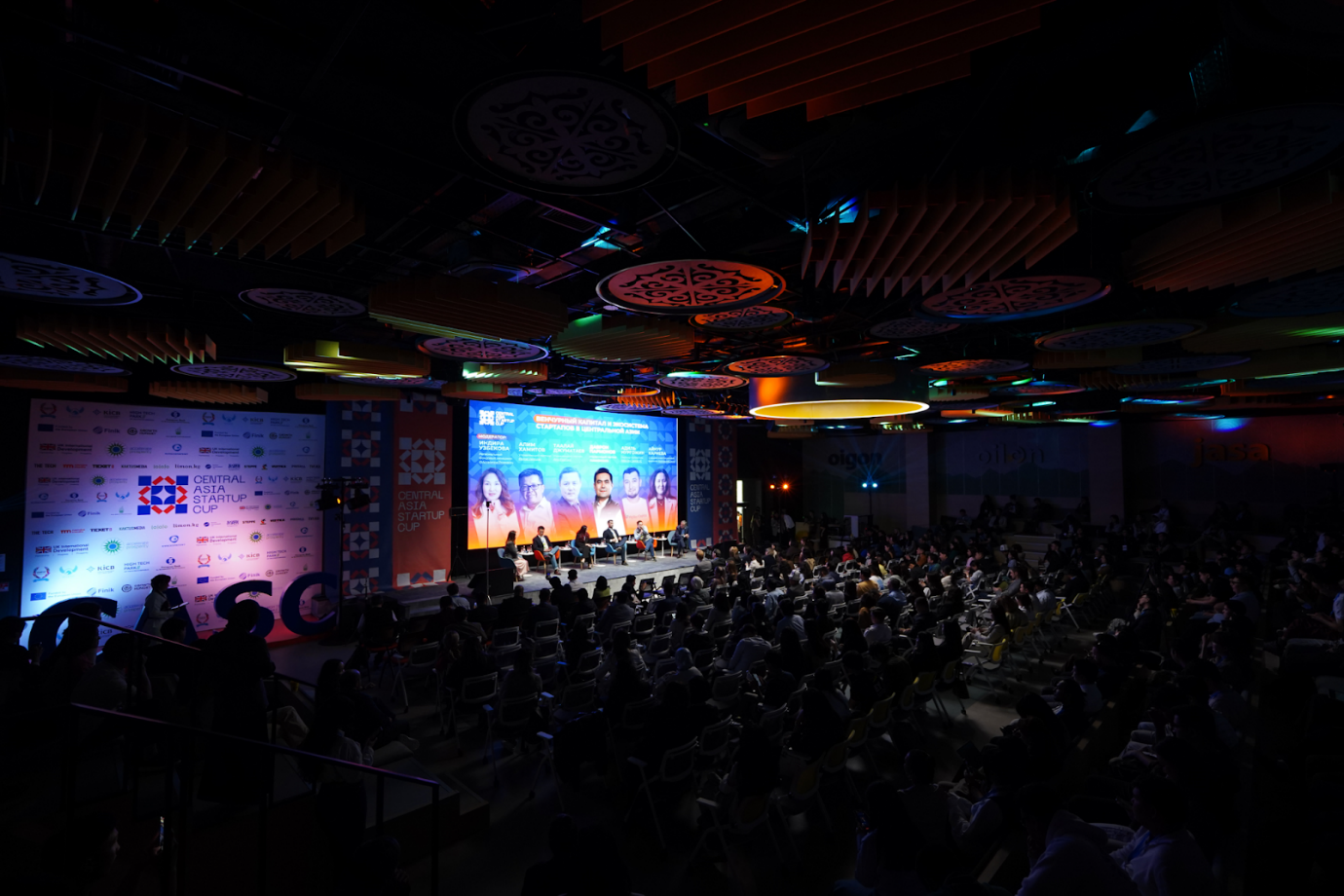
For the first time in the history of the Kyrgyz Republic, there were a huge array of venture capital investors — apart from domestic investors, the Central Asia Startup Cup hosted venture capital funds from Georgia, Kazakhstan, Tajikistan, Turkey, the UK, and Uzbekistan.
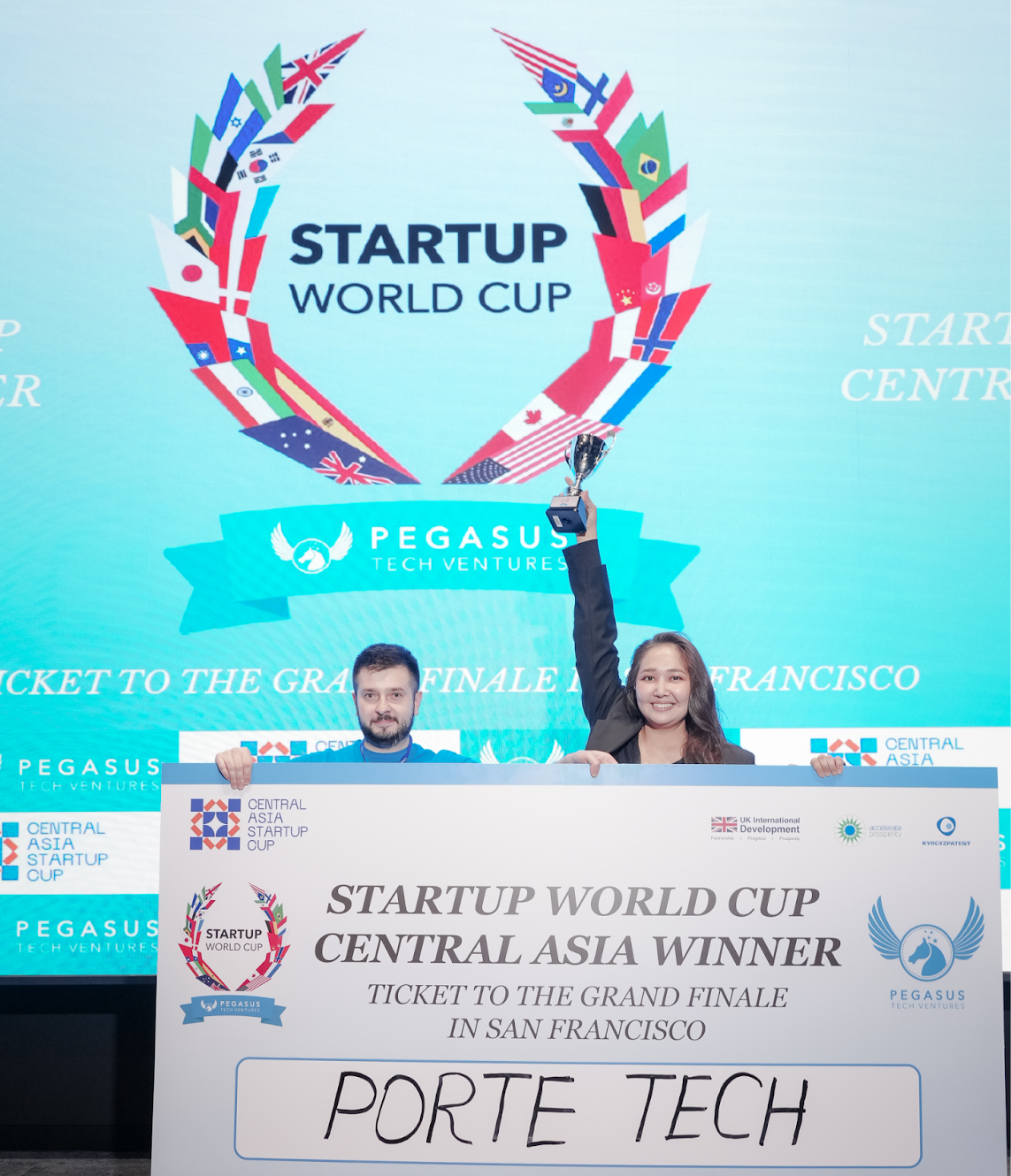
The government’s interest in the startup ecosystem is also growing — a memorandum of cooperation was signed between Accelerate Prosperity, the organizing party of the conference, and the Ministry of Digital Development of the Kyrgyz Republic. Also, for the first time, the regional final of the Startup World Cup, organized in partnership with Pegasus Tech Ventures (USA), was held as a part of the Central Asia Startup Cup. The latter is a global contest with 100+ regional events held across North America, South America, Europe, Africa, Asia, and Australia, with each regional winner competing in the final in Silicon Valley. Porte Tech, a startup from Kazakhstan providing digital concierge solutions for hotels, was selected for the Startup World Cup Grand Final in San Francisco and will compete in for a $1,000,000 investment fund in October 2025.
A traditional part of such tech conferences, the Startup Battle took place on the second day of the Central Asia Startup Cup, with eight teams reaching the finals. The Grand Prix of the conference and an equity-free prize of $10,000 were awarded to ArtSkin, a Kyrgyz hardware startup developing artificial skin for prosthetic limbs.
Seven teams were also recognized with cash prizes of €5,000 each from the European Union’s Last-mile Connectivity to Promote Digital Green Education Opportunities project: Nomado, Tez Jumush, Sound Vision, Edu Test, WeSave, TilZone, and The Tech. VoiceDiary, an AI companion for emotional support, received a trip to Silicon Valley as part of the Dive into Silicon Valley program from the Kyrgyz Republic’s High Technology Park.

According to organizers of the conference, “Accelerate Prosperity, are creating a bridge between Central Asia and the global startup scene. The Central Asia Startup Cup is not just a forum, it is an impetus for the entire ecosystem of the region. My team and I are proud to be its active participants and those who promote and develop Kyrgyz startups,” Jyldyz Isabekova, the Accelerate Prosperity country director stated.

Such cooperation inspires hope that the region will be integrated into the global innovation ecosystem in the near future, especially given how important innovation industries are to the economies of the region, and it is unlikely that any single country can do it alone.

Samarkand Issues Safety Warnings after Gas Explosion Kills Seven in Home

The Uzbek city of Samarkand is intensifying a home safety campaign following the death of seven people in what authorities call “a flash of a gas-air mixture” in a house last week.

Emergency officials in the Samarkand region have said an investigation is underway into the explosion in the city on the night of May 8-9.

“The kinetic impact of the flash caused the collapse of the reinforced concrete structures of the house, damaging the 1st, 2nd, and 3rd floors and the basement. There was no fire,” the regional emergency situations department said on Telegram. It reported six deaths, and several media outlets in Uzbekistan later reported a seventh death. The victims were found under the rubble.

Since the accident, regional emergency officials have issued appeals to residents to not install non-standard gas cylinders on gas stoves and gas appliances. They are also advising people to take other safety measures, including not connecting gas cylinders to equipment using rubber hoses that can’t operate under specific pressure; regularly checking for gas leaks by using soapy water on cylinder connections and valves; and ensuring that flammable items are at least 10 meters away from gas cylinders.

Following those rules “will prevent accidents that could happen to you and your loved ones!” the emergency situations department warned.

In a separate incident on May 7, two people were killed and one was injured in an explosion at a gas station in the Katakurgan district of Samarkand region. A fire broke out during the fueling of two diesel fuel storage tanks, according to reports on UzDaily.com and other Uzbek media. The reports attributed the information to the state Committee for Industrial, Radiation and Nuclear Safety.

Kazakhstan and the UAE Elevate Strategic and Economic Partnership

Kazakhstan and the United Arab Emirates (UAE) are taking their long-standing partnership to new heights. President Kassym-Jomart Tokayev hosted Abu Dhabi Crown Prince Sheikh Khalid bin Mohammed bin Zayed Al Nahyan at the Akorda presidential residence, underscoring the deepening ties between the two nations.

A Key Middle Eastern Partner

Sheikh Khalid’s official visit was marked by a ceremonial welcome and substantive high-level talks. President Tokayev emphasized the growing breadth of the Kazakh-Emirati relationship, which now extends well beyond economics into sectors such as energy, transport, digital technologies, and education.

“The UAE is among Kazakhstan’s top ten foreign investors,” Tokayev noted, citing a more than twofold increase in Emirati direct investment in 2024, a record high. During the Crown Prince’s visit, over 20 commercial agreements were signed, totaling approximately $5 billion. These projects are expected to further catalyze bilateral cooperation and open new avenues for mutual investment.

Strategic Agreements

Following the talks, an official document exchange ceremony was held. Key agreements included:

  1. Transport Cooperation – A memorandum between the Kazakh Ministry of Transport and the UAE Ministry of Energy and Infrastructure;
  2. Judicial Cooperation – A memorandum between the respective Ministries of Justice;
  3. Energy Infrastructure – An agreement between Samruk-Kazyna JSC and Masdar for continuous power supply (up to 500 MW) and energy storage (up to 2,000 MW);
  4. Digital Transformation – Agreements between Samruk-Kazyna JSC and AIQ, and QazaqGaz and AIQ, focusing on oil and gas sector digitalization;
  5. Financial Collaboration – A memorandum between Samruk-Kazyna JSC and Abu Dhabi Commercial Bank;
  6. High-Performance Computing – An agreement to establish a supercomputer cluster with Pre-sight;
  7. Maritime Expansion – A protocol between KazMunayGas and Abu Dhabi Ports Group on developing Kazakhstan’s merchant fleet;
  8. Healthcare Investment – A memorandum on financing and constructing a maternity hospital in Turkestan;
  9. Aviation Infrastructure – An agreement on investing in the Nursultan Nazarbayev International Airport and its surroundings;
  10. Green Energy – Announcement of the ratified agreement for a major wind power project.

Expanding Cooperation Horizons

President Tokayev and Sheikh Khalid also participated in the Kazakhstan-UAE Business Forum, where Tokayev reiterated the significance of expanding trade, economic, and investment ties. He highlighted the UAE’s role as Kazakhstan’s top partner in the Gulf, with cumulative Emirati investment exceeding $4.3 billion.

Tokayev underscored his administration’s economic reforms aimed at fostering a more attractive investment climate, including the establishment of the Investment Promotion Council to support foreign businesses. He identified energy, logistics, finance, high technology, and agriculture as priority areas for future cooperation.

Institutional and Cultural Engagement

During the visit, the leaders toured the Astana International Financial Centre (AIFC), where they were briefed on the operations of the Financial Services Regulatory Committee, the stock exchange, and the International Arbitration Center. Currently, 46 UAE companies are registered residents at the AIFC.

The delegation also visited the Sheikh Khalifa bin Zayed Al Nahyan Lyceum No. 84, where they observed students’ progress in Arabic language studies. Later, they attended the Ethnoaul exhibition, showcasing Kazakh cultural heritage.

The visit highlighted the shared commitment of Kazakhstan and the UAE to advancing both economic collaboration and cultural exchange. With nearly $5 billion in new agreements, the partnership stands poised for a new era of strategic cooperation and regional leadership.

Kazakh Lawmakers Advocate HPV Vaccination for Boys

Kazakh lawmakers are urging the government to expand its human papillomavirus (HPV) vaccination program to include boys, arguing that the virus poses serious health risks to both sexes.

Askhat Aimagambetov, a deputy of the Mazhilis (the lower house of parliament), announced the initiative on his Telegram channel, stating that the proposal reflects the concerns of Kazakhstani parents. Along with fellow parliamentarians, Aimagambetov has formally appealed to the Ministry of Health.

“Currently, girls in Kazakhstan can receive free HPV vaccinations. This is a major achievement and a decision that saves thousands of lives. But HPV is not a ‘female virus.’ It can cause not only cervical cancer, but also cancers of the larynx, mouth, rectum, and in men,” Aimagambetov wrote.

He emphasized that many countries already offer HPV vaccination to boys on an equal basis with girls. “That is why we have proposed to make the vaccine available voluntarily. It is hard to find in pharmacies, so the state must ensure access for all who want it. Boys are also at risk. Their health should not be overlooked,” he added.

Health Minister Akmaral Alnazaraeva recently stated that the ministry is considering expanding the eligibility list for HPV vaccination to include boys and adults.

Since September last year, Kazakhstan has offered voluntary HPV vaccination to 11-year-old girls as part of efforts to prevent cervical cancer.