• KGS/USD = 0.01144 0%
  • KZT/USD = 0.00194 -0%
  • TJS/USD = 0.10844 -0.46%
  • UZS/USD = 0.00008 0%
  • TMT/USD = 0.28571 0.28%
  • KGS/USD = 0.01144 0%
  • KZT/USD = 0.00194 -0%
  • TJS/USD = 0.10844 -0.46%
  • UZS/USD = 0.00008 0%
  • TMT/USD = 0.28571 0.28%
  • KGS/USD = 0.01144 0%
  • KZT/USD = 0.00194 -0%
  • TJS/USD = 0.10844 -0.46%
  • UZS/USD = 0.00008 0%
  • TMT/USD = 0.28571 0.28%
  • KGS/USD = 0.01144 0%
  • KZT/USD = 0.00194 -0%
  • TJS/USD = 0.10844 -0.46%
  • UZS/USD = 0.00008 0%
  • TMT/USD = 0.28571 0.28%
  • KGS/USD = 0.01144 0%
  • KZT/USD = 0.00194 -0%
  • TJS/USD = 0.10844 -0.46%
  • UZS/USD = 0.00008 0%
  • TMT/USD = 0.28571 0.28%
  • KGS/USD = 0.01144 0%
  • KZT/USD = 0.00194 -0%
  • TJS/USD = 0.10844 -0.46%
  • UZS/USD = 0.00008 0%
  • TMT/USD = 0.28571 0.28%
  • KGS/USD = 0.01144 0%
  • KZT/USD = 0.00194 -0%
  • TJS/USD = 0.10844 -0.46%
  • UZS/USD = 0.00008 0%
  • TMT/USD = 0.28571 0.28%
  • KGS/USD = 0.01144 0%
  • KZT/USD = 0.00194 -0%
  • TJS/USD = 0.10844 -0.46%
  • UZS/USD = 0.00008 0%
  • TMT/USD = 0.28571 0.28%
09 December 2025

Victory Day Diplomacy: Central Asia’s Balancing Act and Putin’s Diminished Spotlight

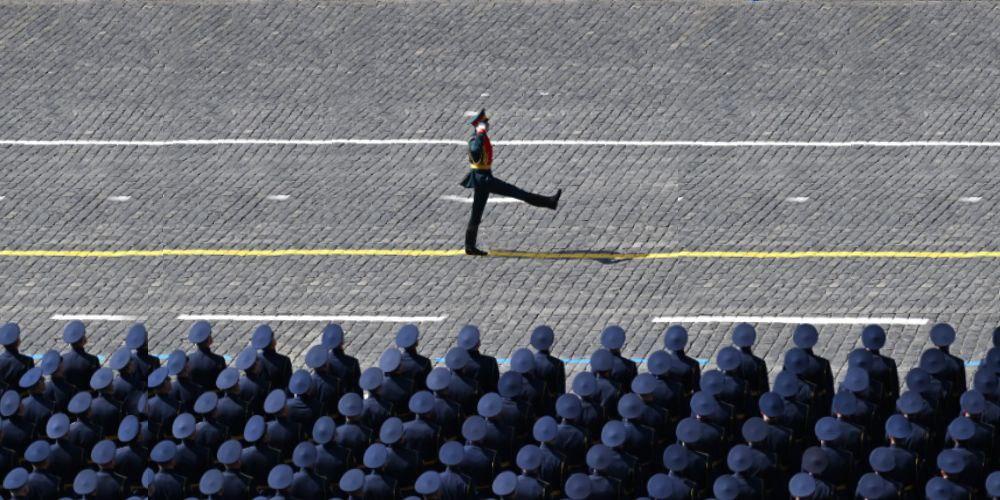
Every year, Moscow’s Red Square transforms into a stage for one of Russia’s most celebrated traditions: Victory Day, an event which marks the Soviet Union’s triumph over Nazi Germany in World War II. Yet, as tanks roll through the cobblestone streets and military bands echo under the Kremlin walls, the occasion feels more heavily laden with geopolitical undertones than historical reminiscence these days. Against the backdrop of ongoing conflicts and shifting alliances, the presence of Central Asian leaders at this year’s event speaks to the region’s delicate relationship with the Russian Federation. But the question remains: amidst the pomp and circumstance, is there much for Vladimir Putin to celebrate?

Central Asia’s Careful Balancing Act

The attendance of Central Asian leaders at the Victory Day parade is a striking show of diplomatic choreography. On the surface, their presence will underscore the shared historical legacy of the Soviet era, when the sacrifices of the Central Asian republics contributed to the Allied victory in the Second World War.

However, a more pragmatic lens reveals a balancing act that defines the region’s foreign policy. The region finds itself at the crossroads of global powers vying for influence in Central Asia. While Moscow leans on historical ties and cultural commonalities to retain its sway, Beijing’s economic clout continues to reshape the region’s trade networks and infrastructure projects. Meanwhile, as the inaugural EU-Central Asia Summit attests to, the European Union is eager to expand its reach, whilst hungry for Rare Earth Elements in which the region is rich, the U.S. is waiting in the wings.

For Central Asian leaders, participating in Victory Day celebrations signals a nod to Russia’s historic role but also keeps the door open for economic and security cooperation. Amidst the shifting architecture of global politics, their diplomatic strategy remains one of pragmatism, seeking benefits from multiple partners while avoiding any over-alignment.

What Does Russia Gain from the Optics?

The presence of 29 leaders from across the globe – including Chinese President Xi Jinping – offers Moscow valuable optics at a time when its international relationships face significant strain. Last year, only nine attended. Isolated by Western sanctions over the invasion of Ukraine and with much of the world’s media painting Russia as cut off from the global stage, the impression of a united front with Central Asia helps the Kremlin portray the opposite.

Victory Day, therefore, becomes a geopolitical tool, with the attendance of Central Asian leaders enabling Putin to send a message of shared unity within Russia’s historical sphere of influence. It tells both domestic and international audiences that Moscow retains significant allies, reinforcing the image of resilience despite ongoing challenges.

How Much Does Moscow Truly Celebrate?

The Victory Day parade is an event that is watched by an estimated three-quarters of the Russian public, drumming up patriotism as the state seeks to become the custodian of collective memory. Behind the spectacle, however, signs of disquiet are proving hard to ignore. Russia’s invasion of Ukraine has disrupted trade and migration flows central to its ties. The war has also starkly exposed the limits of Moscow’s power. Sanctions have weakened its economy, leaving Central Asia less dependent on Russian investments. Meanwhile, China continues to rise as the dominant force in the region’s economic development, chipping away at Russia’s influence.

Even as Central Asian leaders attend events in Moscow, therefore, they tread with caution. Kazakhstan, for example, has refused to recognize Russia’s annexation of Ukrainian territories. President Tokayev has voiced his support for Ukraine’s territorial integrity, making it clear that sovereignty and territorial integrity are also paramount concern for Kazakhstan. This serves to illustrate how the purported unity displayed at Victory Day parades is complicated. While maintaining relations with Russia remains important, Central Asian countries do not want to be drawn into Moscow’s geopolitical confrontations.

Central Asia’s Ascendant Voice

In the so-called ‘New Great Game,’ Central Asian nations find themselves in a stronger position than before. Their ability to engage both Russia and China while also exploring relationships with the U.S., Turkey, and the European Union, grants them leverage. Leaders in the region are increasingly pushing back when their sovereignty is questioned, as seen in Kazakhstan’s refusal to accede to all of Russia’s demands related to sanctions enforcement and its cautious neutrality over the Ukraine war. A bold stance was also taken by Uzbekistan in its summoning of the Russian Ambassador over annexation comments made by the far right in Moscow.

The Real Takeaway from Victory Day

For Central Asia, Victory Day celebrations in Moscow are less about solidarity with Russia and more about safeguarding their interests. By attending, leaders strike a delicate balance, acknowledging a shared history without endorsing Moscow’s current actions on the world stage. This calculated diplomacy allows them to ensure stability in their relationships with Russia while continuing to expand alliances with other global powers.

For Vladimir Putin, this cautious allegiance may not be a cause for celebration, but it is much needed. Russia’s influence in Central Asia has not completely waned, even if the region’s priorities have shifted. So, while Moscow puts on its grand spectacle, the broader narrative reveals a world where former Soviet republics are increasingly finding their voice, even as they stand in Red Square.


Kazakhstan’s Lower House Passes Controversial New Tax Code Amid Public Backlash

On April 30, the Mazhilis, the lower house of Kazakhstan’s parliament, approved a new Tax Code by majority vote. The draft law, part of President Kassym-Jomart Tokayev’s broader economic reforms, has triggered intense public and political debate. While proponents highlight its emphasis on modernization and fairness, critics warn of increased pressure on businesses and potential inflation. The final decision now rests with the president, following Senate review.

Key Reforms and Adjustments

According to Berik Beisengaliyev, head of the Mazhilis working group, the final version of the Tax Code diverges significantly from the original draft submitted in August 2024.

One of the major changes concerns VAT (value-added tax). The government’s initial proposal to raise the VAT rate to 20% was scaled back to 16%. The threshold for mandatory VAT registration has been raised from 15 million to 40 million tenge. Reduced VAT rates are set for medical services and medicines, 5% from 2026 and 10% from 2027. Goods and services tied to guaranteed free medical care, compulsory health insurance, and treatment of orphan and socially significant diseases will be VAT-exempt.

Additionally, the VAT exemption will extend to socially significant food items, books published domestically, and related publishing services. Agricultural producers will benefit from a higher VAT offset, increased from 70% to 80%.

Other reforms include a shift from a permissive to a prohibitive activity list, with a unified 4% tax rate that regional maslikhats can adjust by ±50%. Special tax regimes for business-to-business transactions are also being expanded.

Corporate income tax (CIT) has been reduced to 5% from 2026 and 10% from 2027 for social sector organizations. The social tax deduction for people with disabilities has increased to 5,000 MCI (19.6 million tenge in 2025). Meanwhile, the CIT rate for banks and the gambling industry has been raised to 25%, though a 20% rate remains on banks’ business lending income.

A progressive income tax scale will be introduced: 10% on annual wages up to 8,500 MCI (33.5 million tenge or roughly $65,000), and 15% on income above that threshold. For dividends, the rate will be 5% on income up to 230,000 MCI (1 billion tenge, or $2 million), and 15% thereafter.

The code also proposes higher excise taxes on alcohol, tobacco, and heated tobacco products, along with a new excise on energy drinks as part of a health initiative.

Land use provisions have been amended to penalize inefficient use of agricultural land, with payment rates increasing up to 100-fold. Mineral resource usage rates will vary based on license duration and the number of plots held.

Political Dissent and Criticism

The Ak Zhol party opposed the code in both readings, citing disproportionate fiscal burdens on SMEs while sparing large extractive firms. The party also criticized the VAT hike as inflationary and warned about the opaque nature of the risk management system (RMS), which they say allows for discretionary actions by tax authorities.

“The code is bloated with over 100 new articles, making it more difficult for entrepreneurs to navigate. This is not what President Tokayev instructed,” the party stated.

Mazhilis member Erlan Stambekov abstained from voting and publicly explained his reasons:

“I couldn’t vote ‘yes’ because I believe these changes do not support the development of our economy or SMEs. Quite the opposite,” he wrote on Facebook. “The code is being used to plug a fiscal gap the government can’t cover, even with National Fund borrowings.”

Political analyst Daniyar Ashimbayev echoed these concerns, suggesting that the reform package was poorly timed and inadequately managed:

“Of all the fiscal policy scenarios, the most unfortunate was chosen at the most unfortunate time. Many officials appear unconvinced, some remain silent, and others voice their views on social media. It signals a lack of political coordination and common-sense governance.”

Uncertain Presidential Approval

Despite its passage in the Mazhilis, the future of the new Tax Code remains uncertain. Given the public and political pushback, President Tokayev may call for revisions or delays. As Ashimbayev put it, this could be a moment to “let off steam” rather than push through contentious reforms unchanged.

Soviet-Era Spacecraft May Crash to Earth This Week, Uzbekistan Among Monitored Zones

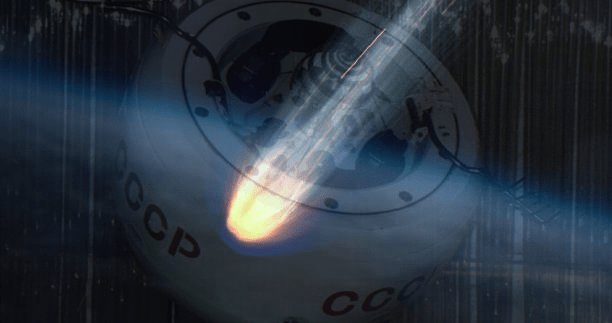
As previously reported by The Times of Central Asia, a Soviet spacecraft launched from Baikonur more than five decades ago is expected to re-enter Earth’s atmosphere between May 9 and 11, 2025. Known as Kosmos-482, the probe was part of the Soviet Union’s Venera program aimed at exploring Venus. However, due to a launch failure in 1972, it never escaped Earth’s orbit and has been circling the planet ever since.

Kosmos-482 was engineered to endure the extreme conditions of Venus, making it significantly more robust than typical satellites. Its descent module, weighing around 495 kilograms (approximately 1,100 pounds), features a durable titanium shell, raising the possibility that parts of the spacecraft could survive re-entry and reach the Earth’s surface.

Experts estimate the spacecraft will re-enter at speeds of up to 27,000 kilometers per hour (around 17,000 miles per hour). The potential impact zone spans between 52 degrees north and south latitude, covering much of the inhabited world. Despite this wide range, the risk to human life is regarded as minimal. Most likely, the spacecraft will either disintegrate in the atmosphere or fall into the ocean.

In Uzbekistan, the national space agency Uzcosmos has assessed the probability of debris landing within the country at between 0.3% and 0.5%. Ahror Agzamov, head of the New Technologies Department at Uzcosmos, stated that while the risk is low, the agency is closely monitoring the situation.

“While most of the spacecraft will burn up upon re-entry, the nearly half-ton titanium sphere, designed to operate under Venus’s harsh conditions, poses a particular concern,” Agzamov explained. “It is expected to survive re-entry, and despite being equipped with a parachute, that system may not function after 53 years in space. The object could strike the Earth at speeds up to 500 kilometers per hour.”

Agzamov cautioned the public against interacting with any debris. Due to the possibility of hazardous chemical residues in the spacecraft’s components, any discovered fragments should be reported immediately to local authorities, he stated.

Uzbekistan’s Role in the Venera Program

Uzbekistan has a historical connection to the Soviet space program. The former Tashkent Mechanical Engineering Design Bureau contributed to the later stages of the Venera missions by developing soil sampling and drilling equipment used on Venera-13 and Venera-14 (1982), and Vega-1 and Vega-2 (1985). These devices were tested at a facility in the village of Nevich in the Tashkent region.

As Kosmos-482 begins its final descent, space agencies around the world continue to track its trajectory to provide timely updates and ensure public safety.

UNICEF Delivers Over 500 Pieces of Medical Equipment to Tajikistan

The United Nations Children’s Fund (UNICEF) has handed over more than 500 units of modern medical equipment to the Ministry of Health and Social Protection of the Population of Tajikistan in a significant move to bolster the country’s healthcare system.

The official handover ceremony took place on May 6 in Dushanbe and was attended by Deputy Health Minister Shodikhon Jamshed and international partners.

Jamshed expressed gratitude for UNICEF’s longstanding cooperation, adding that such support plays a vital role in strengthening Tajikistan’s healthcare capacity. The new equipment, including CPAP (Continuous Positive Airway Pressure) machines and oxygen concentrators, will be used to treat newborns with respiratory difficulties and patients requiring oxygen therapy.

“The equipment will be distributed across 73 neonatal care facilities nationwide. Additionally, training courses will be held for healthcare workers on using these devices and providing respiratory care to newborns,” Jamshed stated.

Since its founding in 1946, UNICEF has been active in Tajikistan through various initiatives aimed at advancing children’s rights and improving access to essential services such as education and healthcare.

One of its flagship efforts includes a $1 million juvenile justice reform project, implemented in partnership with the Swiss government. The initiative seeks to establish alternative measures for minors in conflict with the law, focusing on rehabilitation and reintegration.

In the field of early education, UNICEF and USAID are implementing a five-year, $7.5 million program to enhance school readiness. This includes teacher training, updated educational materials, and the promotion of inclusive learning environments.

To address malnutrition, UNICEF has launched a three-year program in Khatlon and Dushanbe aimed at improving maternal and child nutrition and reducing mortality. Emphasis is placed on primary healthcare and preventive measures.

In collaboration with the European Union, UNICEF is also contributing to the restoration of medical infrastructure. One example is the refurbishment of the central district hospital in Tursunzade, part of Tajikistan’s National Health Strategy 2030, designed to expand access to essential health services across the country.

Issyk-Kul Authorities Launch Campaign to Improve Traffic Rule Awareness

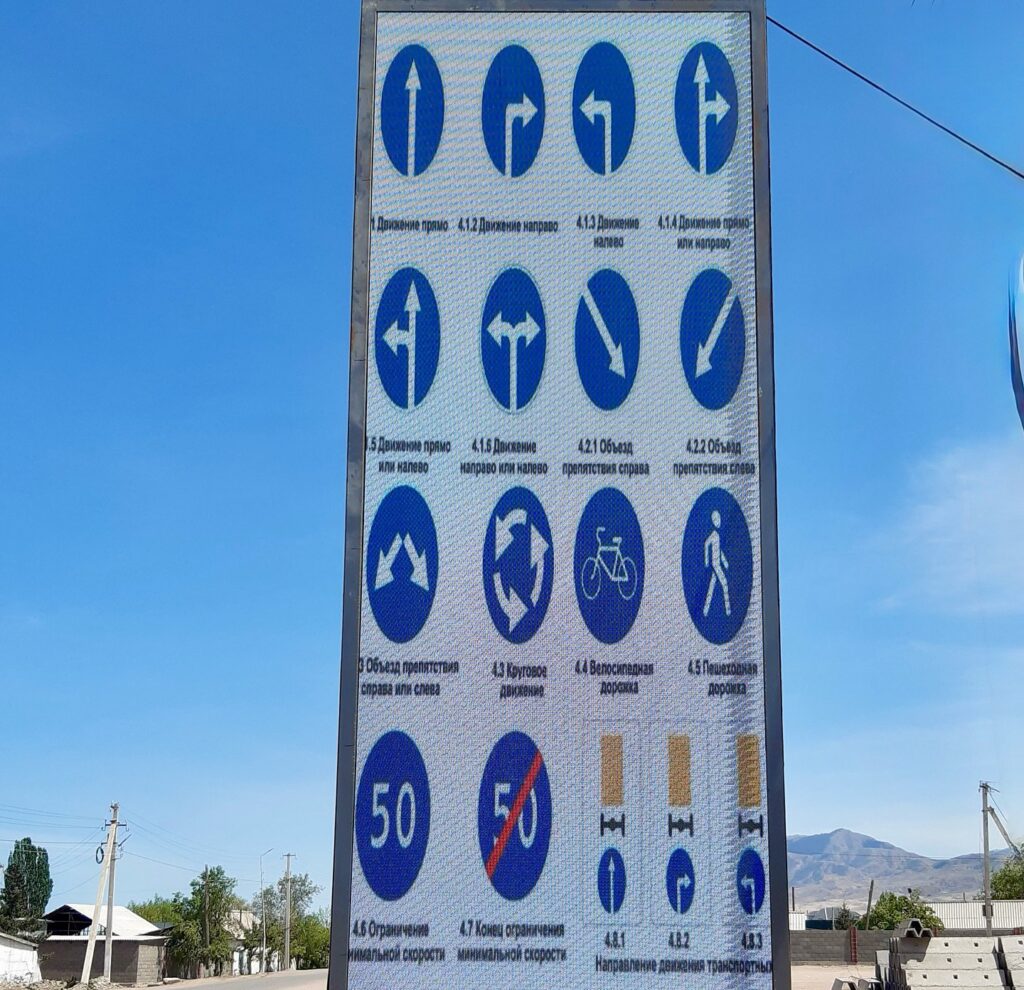
Law enforcement authorities in Kyrgyzstan’s Issyk-Kul region have launched a campaign to improve public knowledge of traffic regulations. As part of the initiative, information boards explaining the meaning of road signs have been installed along major roads.

The Ministry of Internal Affairs stated that the campaign aims to promote better understanding and adherence to traffic laws among both drivers and pedestrians. In addition to roadside boards, educational content is being disseminated via LED screens and billboards across the region.

“The main objective of the campaign is to help citizens better understand and follow traffic rules. These materials will be useful for both drivers and pedestrians, and are also aimed at improving overall road safety,” the ministry noted.

Official statistics indicate that Kyrgyzstan ranks third among Central Asian countries for the number of traffic accidents, with one in three incidents attributed to violations of rules of the road by drivers.

“Our efforts are aimed at ensuring road safety in the Issyk-Kul region. Compliance with traffic rules is important for each of us and is a guarantee of safety for both us and other road users,” stated the regional Department of Internal Affairs.

The initiative comes amid broader concerns about driving standards in Kyrgyzstan. Earlier this year, government officials revealed that more than half of all driver’s licenses in the country were obtained illegally, a disclosure that has spurred new efforts to enforce compliance and raise road safety standards nationwide.

Gold and Copper Exploration in Kazakhstan Gets Boost from Australian Joint Venture

Australian mining firm C29 Metals Limited has entered into a joint venture agreement with Bask International Group Ltd, a company registered in Astana. The newly established joint venture (JV) aims to explore promising copper and gold deposits across Kazakhstan.

C29 Metals is not a newcomer to Kazakhstan’s mineral sector. In the spring of 2024, the company obtained a geological exploration license for its Ulytau project, which includes several solid mineral deposits, notably uranium. It has since submitted two additional applications for uranium exploration. However, according to a recent company announcement, the new JV will focus exclusively on copper and gold and will not be involved in C29 Metals’ uranium interests in the country.

The joint venture, registered at the Astana International Financial Center (AIFC), will concentrate on identifying and acquiring exploration projects with significant geological potential. According to the agreement, C29 Metals will hold a 75% stake in the venture, with Bask International Group retaining 25%. C29 will fully finance the geological exploration, thereby relieving its Kazakh partner of any financial burden. The board of directors will comprise two representatives from the Australian company and one from the Kazakh side.

“The conclusion of this joint venture agreement marks another important milestone in our strategic growth plans,” said Shannon Green, Managing Director of C29 Metals. “The partnership with Bask International Group in Kazakhstan will give us access to opportunities beyond our typical reach. Bask’s network and capabilities will enable us to move at an unprecedented pace as we scale operations.”

Yerlan Issekeshev, head of Bask International Group Ltd, emphasized Kazakhstan’s untapped mining potential: “Kazakhstan is on the cusp of a new era in resource development. While exploration slowed during the post-Soviet period, the country’s mineral wealth remains vast and underexplored.”

As previously reported by The Times of Central Asia, Kazakhstan is set to auction off 50 gold and rare metal deposits in June 2025, offering electronic tenders for exploration and development rights.