• KGS/USD = 0.01144 0%
  • KZT/USD = 0.00194 -0%
  • TJS/USD = 0.10844 -0.46%
  • UZS/USD = 0.00008 0%
  • TMT/USD = 0.28571 0.28%
  • KGS/USD = 0.01144 0%
  • KZT/USD = 0.00194 -0%
  • TJS/USD = 0.10844 -0.46%
  • UZS/USD = 0.00008 0%
  • TMT/USD = 0.28571 0.28%
  • KGS/USD = 0.01144 0%
  • KZT/USD = 0.00194 -0%
  • TJS/USD = 0.10844 -0.46%
  • UZS/USD = 0.00008 0%
  • TMT/USD = 0.28571 0.28%
  • KGS/USD = 0.01144 0%
  • KZT/USD = 0.00194 -0%
  • TJS/USD = 0.10844 -0.46%
  • UZS/USD = 0.00008 0%
  • TMT/USD = 0.28571 0.28%
  • KGS/USD = 0.01144 0%
  • KZT/USD = 0.00194 -0%
  • TJS/USD = 0.10844 -0.46%
  • UZS/USD = 0.00008 0%
  • TMT/USD = 0.28571 0.28%
  • KGS/USD = 0.01144 0%
  • KZT/USD = 0.00194 -0%
  • TJS/USD = 0.10844 -0.46%
  • UZS/USD = 0.00008 0%
  • TMT/USD = 0.28571 0.28%
  • KGS/USD = 0.01144 0%
  • KZT/USD = 0.00194 -0%
  • TJS/USD = 0.10844 -0.46%
  • UZS/USD = 0.00008 0%
  • TMT/USD = 0.28571 0.28%
  • KGS/USD = 0.01144 0%
  • KZT/USD = 0.00194 -0%
  • TJS/USD = 0.10844 -0.46%
  • UZS/USD = 0.00008 0%
  • TMT/USD = 0.28571 0.28%
09 December 2025

Kyrgyzstan Proposes Closure of All Rural Libraries

Kyrgyzstan’s Cabinet of Ministers has submitted a draft bill for public consultation that proposes the closure of all rural libraries across the country, citing declining readership and poor infrastructure as the primary reasons behind the move.

According to the draft law, the heads of rural administrations are required to assess the operational efficiency and relevance of local libraries within three months. Libraries deemed underutilized or ineffective are to be closed, with their book collections transferred to school libraries in the same regions.

The Ministry of Culture reports that Kyrgyzstan currently has 1,050 libraries: 859 rural, 9 regional, 64 district, and 116 urban. Of these, 51 libraries are considered structurally unsound, while 214 require major repairs.

“Unfortunately, even those institutions that remain open often suffer from extremely low attendance. Data on the number of visitors and subscribers are often invalid and may be distorted, creating an illusion of library activity. This creates a misconception about the demand for services that do not actually meet the needs of the local population,” reads the bill’s explanatory note.

The document’s authors estimate that over half of the country’s libraries are effectively non-operational and argue that functioning cultural institutions lack sufficient material and technical support.

With the growth of digital technologies, traditional libraries, particularly in rural areas, are losing popularity, especially among younger generations, according to the proposal’s initiators.

Cyberattacks Double in Kazakhstan in Early 2025

Kazakhstan experienced a sharp increase in cyberattacks during the first quarter of 2025, with 30,000 information security incidents recorded between January and May, double the number reported during the same period in 2024.

According to data from research agency Ranking.kz, the most significant growth was observed in botnet-related activity, including spam mailings, password cracking, and remote system intrusions that cause service disruptions. Such incidents surged to 17,600 in the first quarter of 2025, compared to just 1,700 a year earlier.

Conversely, attacks involving computer viruses, worms, and Trojans declined by 17.9% year-on-year, totaling 7,900 cases. However, phishing attempts targeting Kazakhstani users rose by 37.2%, reaching 2,000 reported incidents.

Other categories saw a decrease. Cases involving inaccessibility of internet resources dropped by 48.1% to 112, while distributed denial-of-service (DDoS) attacks fell to 23, down from 30 in the same period last year. Incidents of unauthorized access or modification of digital content also declined slightly, with nine reported cases versus 13 previously.

Despite the rise in cyber threats, Kazakhstan’s IT sector continues to demonstrate robust growth. In 2024, the value of services in computer programming, consulting, and related fields reached 1.5 trillion tenge (approximately $2.9 billion), a 36.3% increase compared to 2023. Since 2016, the volume of services in this sector has expanded more than tenfold, and by over fivefold since 2019.

Regionally, Almaty and Astana dominated the sector, accounting for 90.2% of all IT services provided. Almaty led with KZT 853.1 billion ($1.6 billion), followed by Astana with KZT 486.7 billion ($950 million). The lowest activity was recorded in the Ulytau region, with only KZT 712.3 million ($1.3 million) in services.

Separately, The Times of Central Asia previously reported that a Chinese firm involved in cyber intelligence operations had been active in Kazakhstan for several years, accessing telecom data over an extended period.

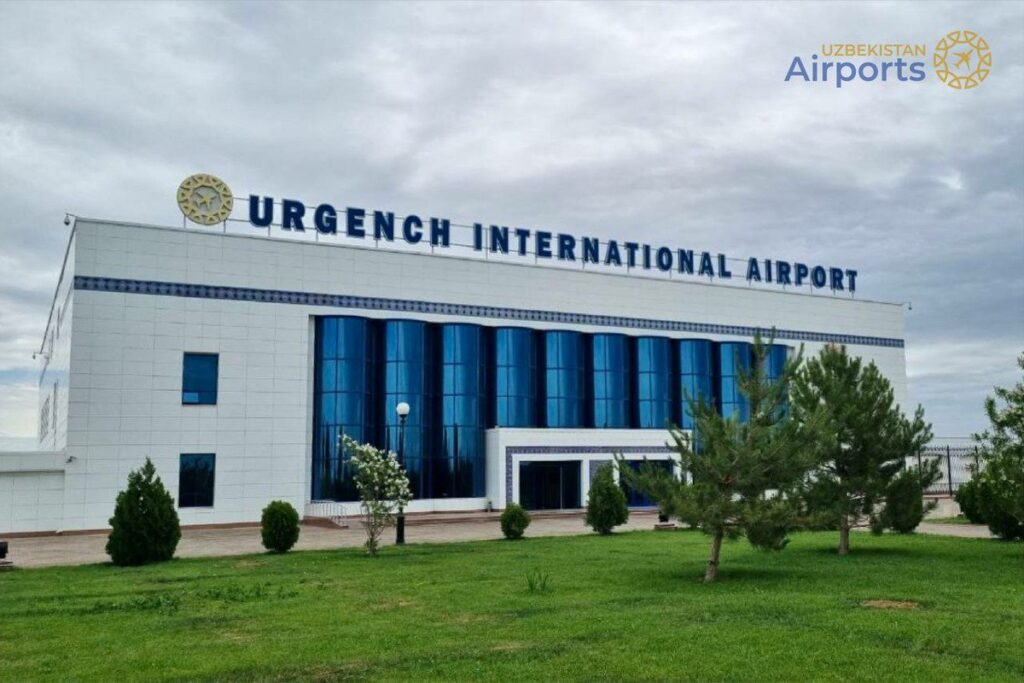
South Korean Firm to Oversee Modernization of Uzbekistan’s Urgench Airport

South Korea’s Incheon International Airport Corporation has secured the contract to manage and modernize Urgench Airport in Uzbekistan’s Khorezm region, following a competitive international tender.

The open tender, announced in August 2024, attracted bids from eight companies across France, South Korea, Turkey, Qatar, and other countries. The selection of the Korean corporation underscores growing economic cooperation between Uzbekistan and South Korea.

On May 1, during a visit to Khorezm, Uzbek President Shavkat Mirziyoyev met with representatives from Incheon International Airport Corporation to discuss the details of the modernization project.

Valued at $223 million, the project includes the construction of a new runway, state-of-the-art passenger and cargo terminals, and the installation of modern lighting and signaling systems in line with International Civil Aviation Organization (ICAO) standards.

Construction and renovation are scheduled for completion by 2027. Once modernized, Urgench Airport will be capable of handling large aircraft such as the Boeing 747 and Airbus A350. The redesigned passenger terminal will accommodate 1,300 passengers per hour, more than triple its current capacity of 400.

The initiative aims to transform Urgench Airport into a regional aviation hub, enhancing access to Khorezm, a region celebrated for its rich cultural and historical heritage. Officials hope the improved infrastructure will further boost tourism.

“Khorezm is seeing a construction boom, with new hotels, recreation zones, and shopping centers,” said Mirziyoyev. “Our goal is to increase tourist arrivals to five million people. If the airport infrastructure rises to meet this scale, it will generate mutual benefit and revenue growth.”

During his visit, the president reviewed design concepts for the future terminal and emphasized the importance of incorporating traditional Uzbek cultural motifs in both the exterior and interior design.

Turkmen Cultural Workers Fired Over Refusal to Fund Presidential TV Monitor

Another case of forced financial contributions among civil servants has emerged in Turkmenistan. In early April, four employees of the Kerki district’s cultural department were dismissed after protesting salary deductions. The funds were intended to finance the purchase of a television monitor designated to display images of President Serdar Berdimuhamedov.

Salary Deductions Without Consent

According to an order from local authorities, 230 Turkmenistan Manat (TMT) was deducted from the March salaries of employees at urban and rural cultural centers to pay for a large monitor at the Kerki Palace of Culture. Given that average monthly salaries range between 1,800-2,100 TMT (officially $514-$600, unofficially $92-$108), the deduction represented a significant portion of income.

The monitor was meant to display the president’s image against a national flag backdrop during official events. At other times, it remained unused. Several employees independently refused the deduction and were subsequently dismissed. Among them was a cleaning staff member.

Coercion and Unofficial Duties

One of the dismissed workers, a resident of Taze Usul village, reported that such deductions are routine. Employees are also compelled to engage in activities beyond their job descriptions, such as growing silkworm cocoons, harvesting cotton, and cleaning streets ahead of official visits. These tasks often occur on weekends and public holidays.

Following their refusal to pay, the dismissed workers were allegedly visited by police, who pressured them into signing resignation letters citing “health reasons.”

“I wrote several letters to the etrap and velayat hakims, and to the Minister of Culture in Ashgabat. No action was taken, except my dismissal,” said one of the affected employees.

As a result of the dismissals, only two individuals remain at each cultural center in the Kerki district, now personally bearing the costs of maintenance, repairs, and event organization.

Pattern of Enforced Contributions

This incident is part of a broader pattern. In January 2025, civil servants in the newly built city of Arkadag, including teachers and librarians, were reportedly pressured to purchase homes on mortgage, with down payments ranging from 75,000 to 80,000 TMT ($21,428-$22,857).

In May 2024, state agency heads in Balkan velayat were ordered to purchase souvenir watches featuring portraits of former President Gurbanguly Berdimuhamedov and his son, President Serdar Berdimuhamedov. Prices ranged from 1,500 to 3,000 TMT ($428-$857) depending on seniority.

Similar practices go back years. In August 2020, civil servants in Farap were compelled to buy domestically manufactured televisions, with 2,400 TMT ($685) deducted from their salaries in advance. Delivery was delayed by months. In February 2018, state employees had to pay for bicycles to join a mass bike ride, with contributions per worker depending on the institutional size. The cost of a bicycle reached 4,000 TMT ($1,142).

According to civil servants, refusal to participate in such initiatives increasingly results in job loss, a sign of deepening authoritarian control in Turkmenistan’s public sector.

Kazakhstan Seeks to Mitigate Impact of U.S. Tariffs

Kazakhstan is working to minimize the economic damage from newly imposed U.S. tariffs, the highest levied on any Central Asian country. The government is assessing the scope of potential losses and pursuing diplomatic efforts to reverse or reduce the trade measures.

A New Front in the Trade War

On April 2, U.S. President Donald Trump announced sweeping new tariffs on imports from over 180 countries. Kazakhstan was subjected to a 27% tariff rate. In contrast, most other post-Soviet countries, including Uzbekistan, Kyrgyzstan, Armenia, and Tajikistan, were assigned a 10% tariff, described by the U.S. administration as the “base rate” for countries that “trade fairly” with the United States. Russia and Belarus, whose trade with the U.S. is effectively suspended due to sanctions, were exempt from the increase. Only Moldova, which reportedly imposes a 61% duty on U.S. goods, received a higher rate than Kazakhstan.

According to Washington, Kazakhstan applies a 54% tariff on U.S. imports, prompting a reciprocal response, though the methodology behind the administration’s calculations has been questioned by many analysts. Moldova’s higher rate of 61% led to a 31% U.S. tariff.

Limited Exposure for Key Exports

U.S. President Trump announced a 90-day reprieve for affected countries on April 9, allowing time for negotiations to take place. While the move signals potential flexibility, the economic impact remains uncertain.

Kazakh Trade Ministry representative Serik Ashitov stated on April 29 that only 4.8% of Kazakhstan’s exports to the U.S. would be affected by the tariffs. Crucially, major exports, such as oil, uranium, silver, and ferroalloys stand to remain untouched. These commodities account for approximately 90% of Kazakh shipments to the U.S.

Despite fears of a broader economic fallout, Kazakhstan’s stock market showed resilience in the first quarter of 2025, according to financial news channels. However, the trade conflict has had a deflationary effect on key exports. Oil prices have dropped below projected baselines amid concerns about declining global demand driven by slowing industrial activity, especially in Asia.

“We’re observing falling oil prices and reduced global trade. The tariffs are cutting into industrial output in China and other key consumers of raw materials, which affects oil demand directly,” noted a representative of the Kazakhstan Stock Exchange. As of late April, Brent crude was trading at approximately $64 per barrel.

Negotiations and Constraints

In response, Kazakhstan has initiated diplomatic talks with the United States and plans to raise the issue at the World Trade Organization (WTO). “At present, there is no reason to believe these measures will significantly affect our exports. Nonetheless, we will continue working with American counterparts to mitigate the consequences of these unilateral measures,” Ashitov said during a press briefing.

However, analysts caution that Kazakhstan may face structural limits in attempting to resolve this dispute. As a member of the Eurasian Economic Union (EAEU), Kazakhstan does not set its tariff policy independently. “Our customs duties are EAEU duties,” economist Almas Chukin explained. “If we wanted to unilaterally lower tariffs for the U.S., as Israel did, it would require the approval of Minsk, Yerevan, Bishkek, and Moscow”.

Chukin also noted that trade volumes between Kazakhstan and the U.S. are relatively modest. Neighboring Uzbekistan, for instance, has double the trade volume with Washington.

While Kazakhstan may not feel immediate direct consequences, the country remains vulnerable to broader instability in global trade and falling export revenues.

Kazakhstan Sees Surge in Tourists from Arab Countries

Kazakhstan experienced a significant rise in tourism from the Arab world in 2024, with a 62% increase in visitors from five Arab countries, according to the Ministry of Tourism and Sports.

Data from the Border Service indicates that the number of tourists from Oman surged by 80%, exceeding 15,000 visitors. The United Arab Emirates followed closely, with 14,700 tourists, a 40% increase compared to 2023. Saudi Arabia saw a 47% rise, contributing over 9,000 visitors. Meanwhile, tourist arrivals from Qatar increased by 50%, and visitors from Bahrain nearly quadrupled compared to 2022.

In a bid to further attract travelers from the Gulf region, Kazakhstan participated in the Arabian Travel Market, held in Dubai from April 28 to May 1. The national stand highlighted major tourist destinations including Almaty, Astana, and the Baikonur Cosmodrome. The country promoted a diverse range of travel offerings, from cultural and culinary routes to scientific and educational tours.

Kazakhstan was also among the most sought-after destinations for Arab tourists during the Eid al-Fitr holidays, marking the end of Ramadan.

Overall, Kazakhstan continues to solidify its status as a rising international tourism destination. In 2024, the country welcomed 15.3 million visitors, a 66% increase from the previous year. Among them were 655,000 tourists from China, 146,000 from India, 130,000 from Turkey, 92,000 from Germany, and 40,000 from South Korea.