• KGS/USD = 0.01144 0%
  • KZT/USD = 0.00194 -0%
  • TJS/USD = 0.10896 -0%
  • UZS/USD = 0.00008 0%
  • TMT/USD = 0.28571 0.28%
  • KGS/USD = 0.01144 0%
  • KZT/USD = 0.00194 -0%
  • TJS/USD = 0.10896 -0%
  • UZS/USD = 0.00008 0%
  • TMT/USD = 0.28571 0.28%
  • KGS/USD = 0.01144 0%
  • KZT/USD = 0.00194 -0%
  • TJS/USD = 0.10896 -0%
  • UZS/USD = 0.00008 0%
  • TMT/USD = 0.28571 0.28%
  • KGS/USD = 0.01144 0%
  • KZT/USD = 0.00194 -0%
  • TJS/USD = 0.10896 -0%
  • UZS/USD = 0.00008 0%
  • TMT/USD = 0.28571 0.28%
  • KGS/USD = 0.01144 0%
  • KZT/USD = 0.00194 -0%
  • TJS/USD = 0.10896 -0%
  • UZS/USD = 0.00008 0%
  • TMT/USD = 0.28571 0.28%
  • KGS/USD = 0.01144 0%
  • KZT/USD = 0.00194 -0%
  • TJS/USD = 0.10896 -0%
  • UZS/USD = 0.00008 0%
  • TMT/USD = 0.28571 0.28%
  • KGS/USD = 0.01144 0%
  • KZT/USD = 0.00194 -0%
  • TJS/USD = 0.10896 -0%
  • UZS/USD = 0.00008 0%
  • TMT/USD = 0.28571 0.28%
  • KGS/USD = 0.01144 0%
  • KZT/USD = 0.00194 -0%
  • TJS/USD = 0.10896 -0%
  • UZS/USD = 0.00008 0%
  • TMT/USD = 0.28571 0.28%
09 December 2025

Moscow’s MGIMO University to Open Branch in Astana

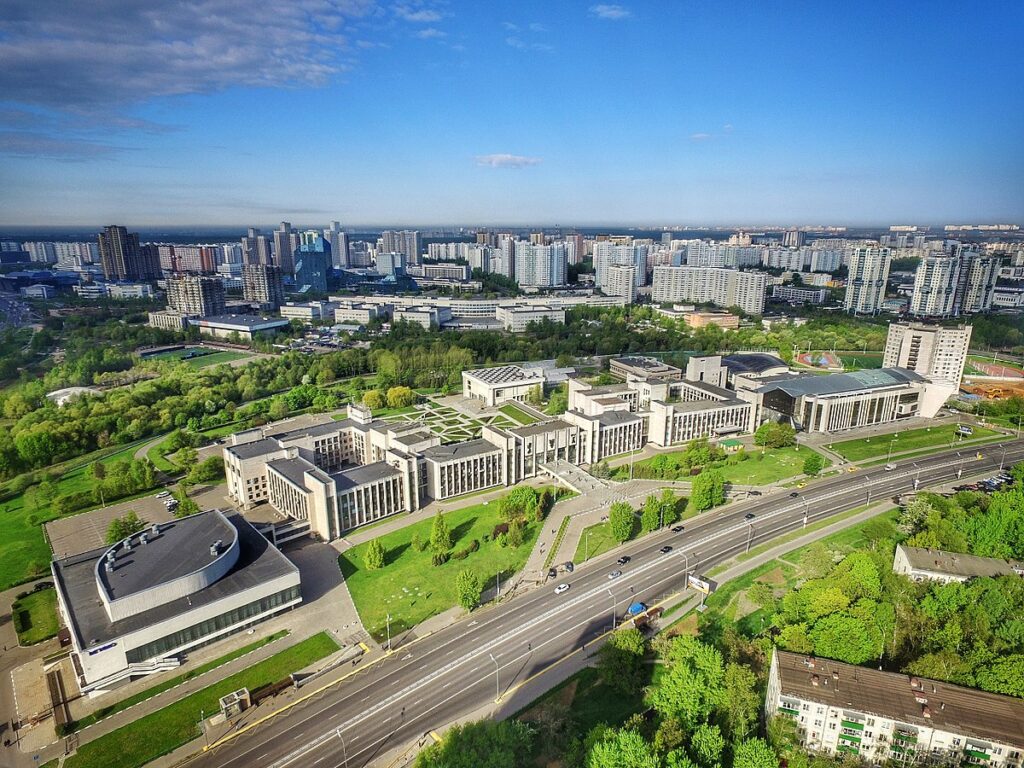
The Moscow State Institute of International Relations (MGIMO), one of Russia’s most prestigious universities and the flagship institution of the Russian Ministry of Foreign Affairs, will open a branch in Astana in September 2025, according to Kazakhstan’s Ministry of Science and Higher Education.

The Astana branch, known as MGIMO-Astana, will initially offer two undergraduate programs: World Mineral Resources and Energy Markets and Analysis and Modeling of Socioeconomic and Business Processes. Two master’s degree programs will also be available: Financial Economics and Financial Technologies and Multilateral Institutions and Management of Global Technological Development.

Applicants will have the opportunity to apply for academic grants, though tuition-based enrolment will also be available. Instruction will be conducted by MGIMO professors from Moscow, complemented by local faculty trained in the university’s academic standards and methodologies.

MGIMO-Astana will initially operate from the campus of the L.N. Gumilyov Eurasian National University, before moving to its own dedicated campus. Planning and design for the new facility are already underway.

This will be MGIMO’s second international branch. Its first overseas campus, MGIMO-Tashkent, opened in Uzbekistan and currently offers six undergraduate and graduate programs, all taught by MGIMO faculty and tailored to the local academic landscape.

As The Times of Central Asia previously reported, Cardiff University in Wales also plans to open a campus in Astana later this year, underscoring the Kazakh capital’s growing role as a regional hub for higher education.

Turkmenistan Launches Eco-Friendly Stone Paper Production

Turkmenistan has inaugurated its first-ever production of environmentally friendly stone paper, marking a milestone in the country’s industrial development. The initiative was launched in Ak Bugday etrap of Ahal province by the Derýa Ýoly Economic Society under the Ekoston brand. The facility has an annual production capacity of 5,500 tons.

The company’s products attracted significant attention at an exhibition commemorating the 17th anniversary of the Union of Industrialists and Entrepreneurs of Turkmenistan. Stone paper is noted for its eco-friendliness, high durability, and broad range of applications.

Manufactured from calcite and polymers without the use of toxic plasticizers, the production process does not involve water consumption, deforestation, or the emission of harmful gases. It also generates no wastewater, making the process both safe and environmentally sustainable.

Experts report that the material begins to degrade under exposure to sunlight and rain within 10-12 months, without polluting the environment. Even when incinerated, stone paper produces no black smoke or toxic fumes, and the residue is recyclable.

Moisture-resistant, tear-proof, and insect-repellent, the product is safe for contact with food, making it suitable for school notebooks, printed materials, packaging, and disposable tableware. The product meets international environmental safety standards and is positioned as a viable alternative to conventional paper in both everyday and industrial use.

Alongside the stone paper initiative, other areas of applied science are gaining momentum in Turkmenistan, where local scientists have developed a rejuvenating gel derived from milk whey, rich in proteins, vitamins, and minerals. The gel is designed to improve the skin’s protein and moisture balance while promoting regeneration.

Additionally, Turkmen researchers have pioneered a microencapsulation technology for camel thorn extract, a plant renowned for its medicinal qualities. This innovation holds potential applications in both the pharmaceutical and food industries.

Seismic Cities: Is Central Asia Prepared for a Major Earthquake?

The recent 7.7-magnitude earthquake in Myanmar, which claimed over 3,500 lives and caused structural failures more than 1,000 kilometers away in Bangkok, has once again highlighted the precariousness of life in seismically active regions.

“Earthquakes happen on geological faults, which are often sited at the edges of mountain ranges.” Richard Walker, Professor of Tectonics at the University of Oxford told The Times of Central Asia. “Sadly, the edges of mountain ranges are often the best places to live, due to the presence of water and of land for farming.”

All Central Asian capitals, except for Kazakhstan’s relocated capital Astana, are located on such terrain. This has historically made them vulnerable.

The 1948 earthquake in Ashgabat destroyed almost the entire city; Tashkent suffered a similarly destructive event in 1966, and Almaty was wracked by twin blows in 1887 and 1911.

Although no such catastrophic event has occurred in the last half century, the earth beneath the region continues to rumble restlessly. Two quakes in early 2024 left the residents of Almaty unnerved. Last week, on April 14, a 5.9 magnitude earthquake in Tajikistan caused the death of a young boy and damage to around thirty homes near the Chinese border.

Though moderate, these tremors serve to remind residents of the active tectonics of the region and raise questions about the structural readiness of buildings and infrastructure should a stronger event occur.

Botched Building

After the 2023 earthquake on the Turkey-Syria border, which killed over 53,000 people in Turkey alone, authorities launched investigations into over a hundred individuals linked to the construction of buildings that did not withstand the tremors.

Such stories were familiar to people who grew up in the Soviet Union. In the 1988 Spitak earthquake in Armenia, tens of thousands died in Leninakan (now Gyumri). Many of the casualties were put down to the collapse of identikit 9-storey tower blocks built in the Brezhnev era. These were designed to withstand a magnitude 7 earthquake; in the event, the 6.8 magnitude quake that struck Leninakan caused 72 out of 78 of these buildings to collapse. In a bitter irony, many older, pre-Soviet structures remained intact. One team of international inspectors blamed “very low construction standards and suspect joint details” in Leninakan for the scale of the disaster.

Similar precast tower blocks to those that collapsed in Armenia can be seen across the former USSR. According to the Uzbek media, the Cabinet of Ministers estimated in 2023 that approximately 70% of private housing in the country failed to meet current earthquake resistance standards.

“The 2023 earthquake in Turkey was a tragic reminder of the importance of strict compliance with building codes and continuous quality control of construction in seismic regions,” Daulet Sarsenbayev, director of the Kazakhstan’s National Scientific Center for Seismological Observations and Research, told TCA. “Such events provide valuable lessons for all countries, including Kazakhstan, in terms of the need to strengthen the regulatory framework, increase transparency in the construction industry, and invest in resilient infrastructure.”

In response to the Turkish disaster, the Uzbek government implemented a temporary moratorium on construction projects in Tashkent. Kyrgyzstan has also moved to establish an interdepartmental working committee to check buildings for seismic resistance.

Managing the Narrative

Given its seedy reputation, the construction industry presents an easy target whenever disasters occur. However, poorly built structures are not the norm.

Walker believes that devastation caused by the earthquake in Turkey and Syria was primarily due to its strength (magnitude 7.8), as well as the length of the rupture, which stretched several hundred kilometers. “Such a long rupture in a densely populated region means that many buildings and their inhabitants experienced very strong shaking. The majority of these buildings withstood that shaking,” he said.

Another oft cited case of cavalier planning policy to appease the construction industry was the decision to reclassify a no-build zone around Bishkek. The land in question, a 1.5-kilometer zone adjacent to the Issyk-Ata fault to the city’s south, had long constrained the city’s growth. The decision to remove such restrictions has been argued by some urban planners and construction engineers to be prioritizing profit over public safety.

However, Kanatbek Abdrakhmatov, the Director of Kyrgyzstan’s Institute of Seismology, told TCA that these limits were overcautious. “My analysis showed that such a width around the fault influence zone does not exist in any of the countries where strong earthquakes occur,” he said. “In the U.S., the prohibited zone around the famous San Andreas fault is only about 45 feet (about 15 meters),” he added. “We revised the relevant standards and reduced the width of the fault influence zone. This made it possible to develop land and expand the city boundaries.”

Modern engineering methods can produce buildings that can withstand even severe earthquakes. The key issue lies in ensuring these standards are universally applied.

“Stringent building codes are very important, but it is also important to ensure those codes are adhered to,” said Walker.

Faulty Knowledge

Walker and Abdrakhmatov both highlight the importance of a precise understanding of local geography. Mapping the location of each fault helps to understand where shaking will occur most strongly.

“Over past years we have been working with national institutes across Central Asia to apply modern analysis methods to understand where hazards exist, with the aim of helping to prepare for future earthquake events,” said Walker.

One of those institutes is Abdrakhmatov’s Institute of Seismology. This knowledge of local geology has given the Kyrgyz Director confidence that the center of Bishkek is well prepared for even an extreme earthquake.

“This part of the city is located on boulder-pebble soil, which reduces and smooths out the strength of the tremors,” he said. However, Abdrakhmatov warns that near the fault itself, few buildings would be able to withstand such tremors.

Early-Warning Systems

After earthquakes in Kazakhstan early last year, a new Department of Seismic Safety and Mobilization Preparation was created by the national government.

In an interview with state media outlet KazInform, Batyrkhan Suleimenov, the acting head of the department, reassured residents that the government had begun to identity areas most at risk from landslides, as well as developing an early-warning system for earthquakes. While this will do nothing to reinforce buildings, it might buy some time for residents.

“Earthquake waves spread out from the epicenter at speeds of several kilometers per second, so it can take some time for the damaging shaking to arrive at any one place,” said Walker. “Early warning systems work by instruments sensing the first earthquake waves close to the epicenter, and then distributing an alert about the incoming seismic waves. It provides a short time period, usually seconds, that allows people to take cover and for critical systems to be shut down.”

Walker adds that “to be effective, early warning systems have to be combined with effective education campaigns, so that people know how best to react.”

In this regard, Almaty has attempted to introduce seismic drills once every quarter, and a push notification system, dubbed MasAlert, will send warnings to every phone in the city when an earthquake of magnitude 5 or higher is deemed likely.

A Regional Problem

Seismologists argue that there should be more regional cooperation in preparing for earthquakes. In remote parts of Tajikistan, Uzbekistan and Kyrgyzstan, the nearest large population center is often in a neighboring country.

“Unfortunately, such issues are resolved at the national government level,” said Abdrakhmatov. “This creates certain difficulties, because earthquakes know no borders and a strong event that occurs close to the borders affects not only populated areas, say, of our country, but also nearby areas of neighboring countries.” He adds that such an approach risks delaying first aid to those who desperately need it.

Professor Walker notes that in his collaborations with researchers from the region, much can be learned from history, and can even be seen preserved in the landscape. This helps to “show where earthquake hazards lie and to help inform what might happen when the next earthquake occurs,” he told TCA.

However, Walker stresses that political will and funding are vital to prepare the region. Memories are short and few remember the tragedies that befall previous generations.

“These types of projects are important, but time consuming, and there is still much to do and much to learn,” Walker said. “They require long-term efforts and support.”

Meet the Kyrgyz Woman Behind the Vaccine Revolution

COVID-19 exposed numerous challenges humanity has yet to address, with one of them being directly related to tackling potential future pandemics.

A key aspect of this is vaccines, which have to be transported in refrigerated units. This allows them to maintain their effectiveness and safety, the so-called “cold chain infrastructure” saving them from becoming unusable. This complex transportation requirement, however, results in millions of people missing out on potentially life-saving vaccines. But does it have to be this complicated?

“Motherhood changes people, irreversibly. For me it was not just becoming a parent, but it also influenced the direction of my research,” Asel Sartbaeva wrote in her 2018 article, ‘Vaccines: The End of the Cold War?’ “When my daughter was only a few days old, I took her to the doctors to be vaccinated with the BCG vaccine (against tuberculosis). The doctor took the vaccine out of the fridge and administered it directly. That’s when I asked: ‘why must vaccines be refrigerated?’ and then the natural follow-up question, ‘can I help to make them stable at room temperatures?’”

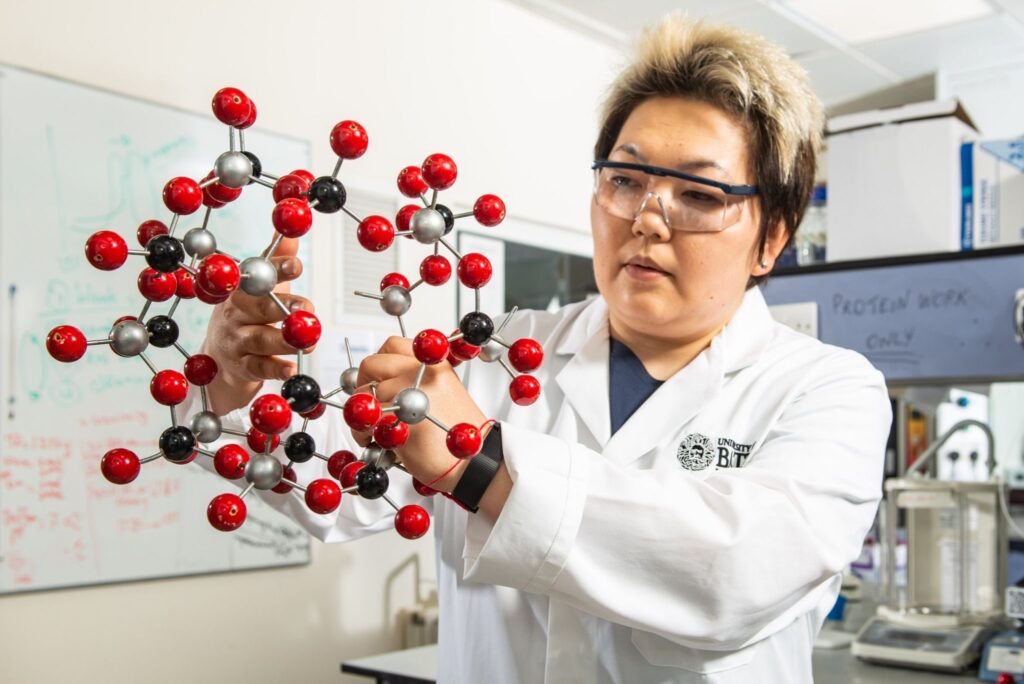
Born and raised in Kyrgyzstan, Asel Sartbaeva “currently wears several hats”, as her LinkedIn profile says. She is an award-winning interdisciplinary chemist, Reader in Chemistry (Associate Professor) at the University of Bath, and the first Central Asian to obtain a PhD from University of Cambridge. Sartbaeva is also the CEO and Co-Founder of EnsiliTech, a startup with a technology that allows vaccines and other biopharmaceuticals to be stored and transported at room temperature.

EnsiliTech was launched in 2022 as a project at the University of Bath, and was built on over a decade of Sartbaeva’s research into ensilication – the technique of fitting vaccine components with a silica coat to stop them from spoiling outside of refrigerated temperatures.

In December 2022, EnsiliTech successfully raised £1.2 million in an oversubscribed pre-seed funding round led by Science Angel Syndicate and the Fink Family Office with co-investment from QantX, Elbow Beach Capital, angel investors and Innovate UK. In 2023, the startup won a £1.7 million grant from the British government’s Department of Health and Social Care to develop the first thermally stable mRNA vaccine in the world, to combat Hantavirus, which is found in Asia and South America. In the same year, the new startup attracted their first customer, a Global Top 10 animal vaccine company based in the EU, which paid EnsiliTech to thermally stabilise three of their vaccines. Currently, Ensilitech is planning to licence their ensilcation technology to several customers and internally developing thermally stable vaccines and antibodies.

Along with her scientific and business goals, Sartbaeva is also passionate about the wider participation and girls and the women’s empowerment movement. “We need to show girls that science isn’t boring and is a great choice for girls who have a natural passion for science,” she says.

In 2021, Sartbaeva became the ambassador for UNICEF’s Girls in Science programme, launched in 2020 to empower 500 girls from new settlements and rural areas so they could excel in science, technology, engineering and math, and bolster their career opportunities. Sartbaeva is a role model for young Kyrgyz women interested in science and tech along with many others building their companies in a still hostile, patriarchal world. In 2019, Sartbaeva hosted the team of girls building the first Kyrgyz satellite, who met scientists from the University of Bath. Sartbaeva will return to Bishkek for the Central Asia Startup Cup 2025 tech conference as one of its keynote speakers later this month.

Last month EnsiliTech was awarded a prestigious grant for £1.4 million from Innovate UK, the UK’s innovation agency, under the Sustainable Medicines Manufacturing Innovation Programme. The grant will further support the development and implementation of the startup’s ensilication technology; it will also allow it to explore the potential patient benefits of ensilicated antibody therapies, which allow for subcutaneous rather than intravenous administration, reducing the pressure on healthcare systems and enabling more therapies to be administered in home settings.

The company is now raising a £3.5 million seed round to further refine its revolutionary technology. “The new funding is critical because we want to create bespoke vaccines, fully developed by us, so we can offer a thermally stable vaccine which is completely free of refrigeration,” Sartbaeva stated earlier this year.

“Removing the dependence [on refrigeration] will have a truly game-changing impact on our ability to distribute vaccines all around the globe, and can help save millions of people.”

Adventures of the Spirit of Time: Exploring History and Imagination Through Silk Road Legends

Uzbek author Gulchekhra-begim Makhmudova’s four-part children’s book series, Adventures of the Spirit of Time, explores themes of history, legend, and imagination. Published in Russian between 2021 and 2022, the series gained popularity in Uzbekistan and received the Hertfordshire Press Award for Best Adaptation for Children in 2024. This recognition highlighted its creative storytelling, emphasis on cultural heritage, and educational value. The series is now available worldwide in English through Hertfordshire Press.

The narrative follows four characters, Amir, Salma, Tohir, and Zuhra, as they uncover a magical well and awaken a mystical entity called the Spirit of Time. Guided by this spirit, the group embarks on adventures through various eras and locations, including historical and mythical settings along the Silk Road and beyond. Combining elements of fantasy, science fiction, and history, the series addresses themes of friendship, bravery, and identity, while introducing readers to Central Asian folklore and cultural traditions.

The books feature illustrations by Zilola Khamidova, which depict the Silk Road’s cultural and historical richness with vivid detail. The English edition preserves the authenticity of the original work while ensuring accessibility for international readers. Adventures of the Spirit of Time offers an engaging way for young readers to explore Central Asian heritage and timeless stories of human exploration and connection.

Tokayev Moves to Reclaim Kazakhstan’s Energy Future

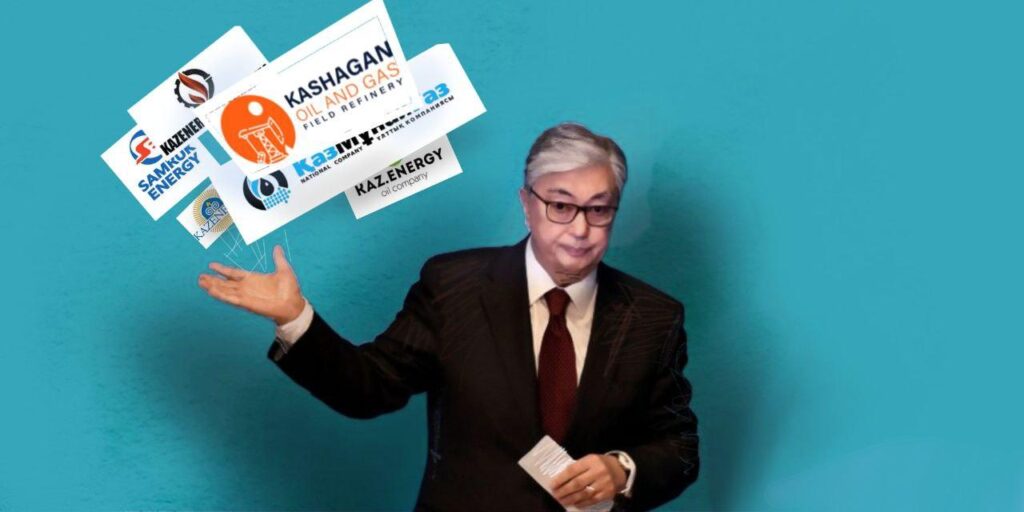
In January 2025, Kazakhstan’s President Kassym-Jomart Tokayev instructed the government to seek revisions to the nation’s production-sharing agreements (PSAs). The first known result of that directive has now surfaced, with the International Consortium of Investigative Journalists (ICIJ) publishing a report regarding a confidential interim ruling in an arbitration case. According to this information, Kazakhstan is pursuing a $160 billion claim against the North Caspian Operating Company (NCOC), the consortium managing the Kashagan oil field. The ruling states that after royalty payments, NCOC receives 98% of remaining revenue from Kashagan’s output.

The document concerns a narrower environmental dispute, but the 98% figure alters the landscape. The contract in question dates to the 1990s, when Kazakhstan — newly independent, fiscally constrained, and eager for technical expertise — entered into deals that prioritized attracting investment over securing long-term national benefit. The government now argues that those historical constraints no longer apply, while the revenue-sharing terms remain effectively frozen in place. Rather than seek unilateral redress or executive override, Tokayev’s administration has turned to arbitration. The venue, the Permanent Court of Arbitration in The Hague, and the legal framing mark a continuation of Kazakhstan’s methodical approach to reasserting national interests in its domestic political economy.

This latest move cannot be understood as an isolated decision. It reflects a trajectory of state behavior extending back three decades. In the early 1990s, when Chevron’s bid for Tengiz was effectively imposed as a condition for U.S. bilateral assistance, Kazakhstan lacked both the leverage and the institutional competence to resist — a dynamic I analyzed in detail at the time. Chevron’s refusal to direct more than a token amount of investment to social infrastructure nearly sank the agreement. A similar dynamic surrounded the financing and structuring of the Caspian Pipeline Consortium (CPC). Kazakhstan’s attempts to assert greater influence were often thwarted, not least by the asymmetry of legal expertise and negotiating experience.

That imbalance began to shift by the early 2000s. The creation of KazMunaiGas (KMG) in 2002 consolidated the state’s participation in the energy sector and enabled its strategic action to become more coordinated. By 2003, Kazakhstan was insisting on conformity with international accounting standards at Tengiz, not only to ensure transparency but also to block attempts by foreign operators to defer investment obligations. Environmental enforcement became more assertive as well, with fines imposed on Tengizchevroil for massive open-air sulfur storage, a practice that had long provoked public concern.

The Kashagan field, discovered in the late 1990s and described as the largest oil find since Alaska’s Prudhoe Bay in 1968, became the focal point of these tensions. From the outset, Kazakhstan’s participation in the consortium was marginal. A restructuring of the consortium in the early 2000s brought KMG back in, but cost overruns and delays continued. By 2007, the government had suspended work at Kashagan, citing both ecological violations and spiraling expenditures, in a sequence of events I traced contemporaneously during the legislative and consortium restructuring that followed. Amendments to the Law on the Subsurface followed, granting the state powers to amend or annul contracts deemed contrary to national interest. While controversial, the law reflected a calculated decision to build formal mechanisms for contract rebalancing into the legal order itself.

Tokayev’s current move falls into that tradition. His January statement calling for “better terms” carried forward the logic of legal assertiveness, now deployed through international mechanisms. The arbitration claim, while formally limited to a specific set of grievances, points to a broader contention: the revenue model governing one of the country’s most significant strategic assets no longer corresponds to the political economy of the present. Analysis by the local energy consultancy EXia suggests, according to the ICIJ report, that between 2016 and 2023, Kazakhstan received $5.4 billion in revenue from Kashagan, while the consortium sold an estimated $55 billion in oil. The development cost, while high, does not fully explain the persistence of such a skewed distribution into the present day.

Astana has moved deliberately but not provocatively. There have been no statements denouncing foreign companies, and no sudden regulatory seizures. The claim has been brought under standard rules of arbitration and is being conducted behind closed doors. Even when TotalEnergies and Eni dismissed the case as lacking merit, and NCOC called the associated environmental fines a “cash grab,” the official response remained restrained. Tokayev’s team appears to be betting on procedural legitimacy to rebalance the terms without destabilizing the investment climate.

Domestically, the 98% figure has resonance. For years, Kazakhstan’s public has questioned the lack of transparency around major resource contracts. The Kashagan, Tengiz, and Karachaganak agreements remain unpublished, contributing to an atmosphere of suspicion. The new information makes visible what many long suspected: that the state’s share in key resource flows is far smaller than what many citizens regard as fair. Tokayev’s arbitration initiative meets this discontent with an institutional response. It signals that sovereign national interests can be pursued through legal reform rather than rhetorical confrontation.

Such a posture has precedent. In a case around the Karachaganak gas field in northwest Kazakhstan, the government used a combination of environmental fines, tax assessments, and procedural leverage to secure a 10% equity stake for KMG in 2012. This followed delays in development with rising costs and regulatory disputes that created pressure points. To that situation, the government of the day responded with structured, often multi-phase negotiations. Adjustments to equity shares or managerial structures then followed. The current arbitration, while involving a different mechanism, follows a similar arc.

The companies and other critics have suggested that Kazakhstan’s evolving stance reflects a drift toward resource nationalism. This is an oversimplification that overlooks the layered administrative learning process that I described in a 2012 study of Kazakhstan’s legal and institutional strategy. Critics have suggested that Kazakhstan’s evolving stance reflects a drift toward resource nationalism.  The 2012 legal reforms, including the Law on Production Sharing Agreements and the revised subsoil legislation, were not tools of expropriation. They were responses to a legal and administrative environment increasingly capable of enforcing domestic standards. The model contracts, tax code reforms, and clearer arbitration frameworks that emerged in the 2000s aimed to give the state — not just the companies — a basis to defend its interests.

Tokayev’s administration inherited that framework. Its use of arbitration reflects not weakness but confidence. It demonstrates a belief that Kazakhstan’s legal footing is strong enough to bear international scrutiny. Moreover, in contrast to earlier decades, the government is now able to marshal detailed evidence, financial data, and expert analysis to support its case. That capacity alone is a marker of institutional change in domestic governance.

Whether the claim succeeds is less important than what it represents. It is an implementation of Tokayev’s declared policy to “strengthen the economy and society”, distributing benefits of extraction among the country’s citizens, in consonance with the demands of domestic legitimacy, rather than guarding them in the hands of a few hundred oligarchs as the old regime did. The new strategy avoids the drama of contract annulment while still asserting the right to redress. It is the expression of a continuing concern under changed conditions.