• KGS/USD = 0.01144 0%
  • KZT/USD = 0.00196 -0%
  • TJS/USD = 0.10896 -0%
  • UZS/USD = 0.00008 0%
  • TMT/USD = 0.28571 0.28%
  • KGS/USD = 0.01144 0%
  • KZT/USD = 0.00196 -0%
  • TJS/USD = 0.10896 -0%
  • UZS/USD = 0.00008 0%
  • TMT/USD = 0.28571 0.28%
  • KGS/USD = 0.01144 0%
  • KZT/USD = 0.00196 -0%
  • TJS/USD = 0.10896 -0%
  • UZS/USD = 0.00008 0%
  • TMT/USD = 0.28571 0.28%
  • KGS/USD = 0.01144 0%
  • KZT/USD = 0.00196 -0%
  • TJS/USD = 0.10896 -0%
  • UZS/USD = 0.00008 0%
  • TMT/USD = 0.28571 0.28%
  • KGS/USD = 0.01144 0%
  • KZT/USD = 0.00196 -0%
  • TJS/USD = 0.10896 -0%
  • UZS/USD = 0.00008 0%
  • TMT/USD = 0.28571 0.28%
  • KGS/USD = 0.01144 0%
  • KZT/USD = 0.00196 -0%
  • TJS/USD = 0.10896 -0%
  • UZS/USD = 0.00008 0%
  • TMT/USD = 0.28571 0.28%
  • KGS/USD = 0.01144 0%
  • KZT/USD = 0.00196 -0%
  • TJS/USD = 0.10896 -0%
  • UZS/USD = 0.00008 0%
  • TMT/USD = 0.28571 0.28%
  • KGS/USD = 0.01144 0%
  • KZT/USD = 0.00196 -0%
  • TJS/USD = 0.10896 -0%
  • UZS/USD = 0.00008 0%
  • TMT/USD = 0.28571 0.28%
09 December 2025

Opinion: The Integration of Afghanistan into Central Asia

Shared rivers and joint water management can shape a new regional partnership

Central Asia and Afghanistan sit on the same rivers, yet often behave as if they belong to different regions. Water ties them together more firmly than any border, but the politics of the past have kept Afghanistan outside the regional system. Today, as climate pressures intensify and development accelerates on both sides of the Amu Darya, the case for integrating Afghanistan into Central Asia has never been stronger. And the path to that integration begins with water.

The debate around the Qosh Tepa Canal makes this evident. Afghanistan was never part of the agreements that govern the Amu Darya River (Protocol 566 of the Soviet Union and the Almaty 1992 agreement). It did not sign allocation protocols and never joined regional basin institutions. Still, it was expected to follow rules it had no hand in shaping. Now, that old arrangement has reached its limit. The canal will bring new agriculture to the north of Afghanistan, but downstream states depend on the same river. The real question is not whether Afghanistan should develop, but how to shape that development jointly so the river can sustain all sides.

Central Asia already has cooperative models that Afghanistan could join. Uzbekistan and Tajikistan have shown how two neighbors can jointly manage a transboundary river through their collaboration in hydropower on the Zarafshan. Kyrgyzstan, Uzbekistan, and Kazakhstan have signed a similar mechanism with the KambarAta-1 project, which will generate energy and regulate seasonal flows for downstream agriculture. These experiences show that once countries share responsibility for a river, trust can grow and benefits expand.

Afghanistan can become part of this regional architecture. The 161-meter-high planned dam on the Kokcha River, set to generate 445 megawatts of electricity, offers a clear entry point. A jointly governed dam on this river would give Afghanistan energy, while downstream states would benefit from its flow in terms of agriculture. When operations are transparent and agreed upon, water becomes a field of cooperation rather than tension.

Energy trade adds another layer of opportunity. Central Asia has a long record of exchanging electricity and gas in return for upstream releases. Uzbekistan and Kazakhstan have done this with Kyrgyzstan for many years through a joint water and energy agreement. The same model can work with Afghanistan. The country needs power, and it can offer coordinated water management in return. A structured energy for water arrangement would give Afghanistan an incentive to cooperate and offer Central Asia predictability.

Agriculture is another arena where cooperation promises immediate gains. Uzbekistan’s policies on water-saving technologies offer a strong example. They subsidize drip, sprinkler systems, canal improvement, land levelling, efficient pumps, and even solar-powered irrigation. These investments reduce water losses while increasing yields only if their rebound effect, such as further expansion of agriculture, is controlled. The same approach could be applied in the northern provinces of Afghanistan, including in the area under the Qosh Tepa Canal. With similar financial support and technical guidance, Afghan farmers could modernize irrigation, reduce wastage, and improve productivity. Such upgrading requires financial support, which could be facilitated by third‑party funding organizations from the private sector, if the countries agree.

Moreover, water saving could be boosted by transitioning from water‑intensive crops to less water‑consuming ones. But farmers change crops only when the market gives them a reason. In northern Afghanistan, rice is important because of excess water and brings a stable income. If Central Asian states want farmers to transition toward crops that use less water, then regional trade must incentivize this. Uzbekistan, Tajikistan, and Turkmenistan can import vegetables, fruits, and legumes from Afghanistan. Turkmenistan already imports large quantities of vegetables from other countries, which could be replaced by Afghanistan, and shift more of that demand onto Afghan producers. Such trade would ease pressure on Turkmen water resources and give Afghan farmers stable buyers for crops that consume less water, gradually steering cultivation away from rice.

Upgrading agriculture can also support peace and stability. When farmers see improved incomes from modern techniques and expanded markets, pressure on water and land decreases. Cooperation between communities becomes easier. These programs fit naturally within peacebuilding, climate adaptation, and rural development portfolios, and third-party organizations can finance them. Joint pilot farms, training programs, and technology transfers along the Amu corridor would benefit all sides.

Another critical area for cooperation is early warning systems. Floods, glacial lake outbursts, and sudden climate-related disasters affect both Afghanistan and Central Asia. Shared monitoring, regional data platforms, and coordinated warning protocols would protect lives and livelihoods. Afghanistan could join the regional systems that already exist, or new ones could be built that link hydrometeorological services across the Amu basin. When neighbors detect threats together and respond together, regional resilience grows.

Security concerns remain central to Central Asia’s hesitation toward deeper integration with Afghanistan. Cross-border trafficking, extremist movements, and instability along the Amu corridor pose risks to regional peace. The Taliban, as the de facto authority, can play a constructive role by committing to joint border monitoring, curbing militant groups that threaten its neighbors, and cooperating on intelligence-sharing mechanisms. If Afghanistan demonstrates its reliability in addressing these concerns, trust will grow, and water cooperation will be reinforced by a foundation of security.

All these developments point toward a larger shift. Afghanistan’s natural place is within Central Asia. Its climate challenges match those of its northern neighbors, and its long-term interests align with the region’s priorities. Central Asia can help Afghanistan stabilize its water use, modernize agriculture, and integrate with regional trade. Afghanistan can offer regulated flows, hydropower potential, and a new market for energy and technology. Moving away from the endless friction associated with Pakistan in the south and stepping into the regional structures of the north is both logical and advantageous.

Beyond water and energy, integration offers significant economic dividends. Afghanistan’s northern provinces can become a hub for agricultural exports, hydropower trade, and transit routes linking Central Asia to South Asia. Coordinated infrastructure projects—roads, railways, and transmission lines—would reduce costs and open new markets. Regional investment in Afghanistan’s modernization would not only stabilize its economy but also expand Central Asia’s access to diversified trade corridors, creating a win‑win dynamic that strengthens resilience against external shocks.

This is the moment to shape a shared water future. A future in which Afghanistan is not an unpredictable upstream actor, but a constructive partner. A future in which development in Afghanistan is aligned with water security in the entire region. Central Asia has the experience and tools. Afghanistan has the need and potential. What has been missing is the choice to move forward together. Now is the time to make that choice. A shared water future, reinforced by security cooperation and economic integration, can be the bridge that brings Afghanistan fully into Central Asia.


The views expressed in this article are those of the author and do not necessarily reflect the official policy or position of the publication, its affiliates, or any other organizations mentioned.

Kazakhstan to Develop AI Rules for Financial Sector

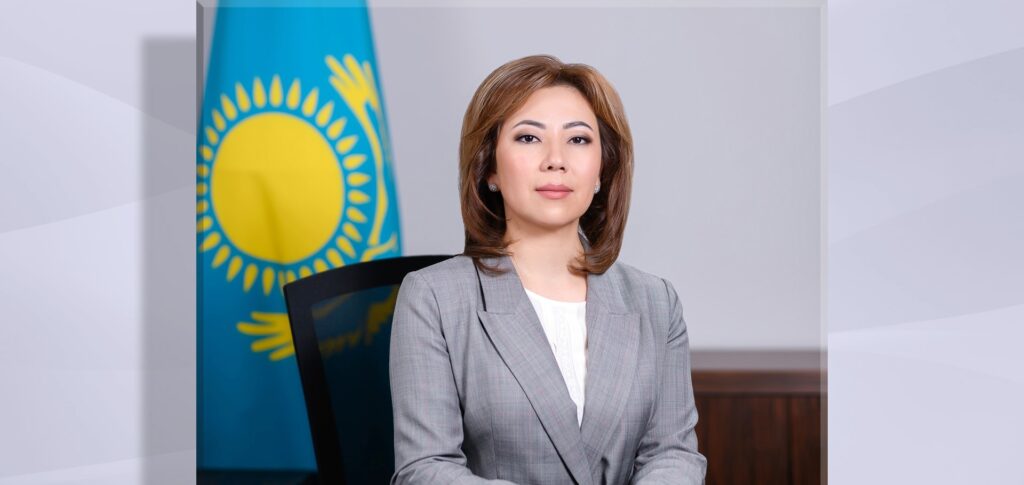
Kazakhstan’s Agency for Regulation and Development of the Financial Market (ARDFM) plans to establish a regulatory framework governing the use of artificial intelligence (AI) in the country’s financial sector. The announcement was made by ARDFM Chair Madina Abylkassymova during the 13th Congress of Financiers of Kazakhstan.

According to the regulator, 75% of banks in Kazakhstan already use AI technologies in areas such as credit scoring, fraud detection, marketing, and customer service chatbots. However, adoption levels vary significantly: large banks have made substantial progress, while medium and smaller institutions are primarily conducting pilot projects.

Abylkassymova stressed that the widespread use of AI is imminent, necessitating the development of unified standards and regulatory guidelines.

“There is currently no dedicated document regulating artificial intelligence, but one will certainly be introduced,” she said. “The main challenges today involve the absence of uniform standards, inconsistent data quality, and a shortage of qualified specialists. At present, each financial institution independently sets objectives and configures its AI systems, but without common rules. We must therefore rely on existing regulatory practices and client-service standards.”

She added that regulatory measures should be proportionate to the level of risk associated with specific financial transactions. “We will conduct a detailed risk assessment. We do not believe every application of AI must be tightly regulated. Low-risk areas may require light oversight, whereas high-risk applications, particularly those with systemic implications, should face stricter controls.”

Abylkassymova identified data quality as a major obstacle to AI development. She noted that information is often fragmented and stored across various systems and formats, increasing the likelihood of errors in AI-driven decision-making. A proposed legislative initiative includes the creation of a unified database of anonymized data accessible to market participants, aimed at improving AI model accuracy.

Ongoing discussions are addressing whether access to government databases should be free or paid, and whether different pricing models should apply depending on the purpose of use.

“We place extensive requirements on financial institutions, including offering access to government services through their digital platforms,” Abylkassymova explained. “To fulfill these functions, banks need access to public databases. So, the question is: is it justified to charge for such access? That’s one scenario. It’s another matter entirely when access is sought for purely commercial gain.”

She concluded that the future AI framework will be developed in consultation with market stakeholders, with the goal of striking a balance between enabling innovation and safeguarding financial system stability.

Previously, The Times of Central Asia reported that Kazakhstan’s Ministry of Finance is piloting a digital platform that leverages AI and big data to help entrepreneurs identify the most profitable sales locations for their products.

How Kyrgyzstan’s Fastest-Growing Restaurant Tech Startup Is Revolutionizing Dining

Bishkek has long been known for its vibrant restaurant scene. Now the sector is implementing innovations, making the lives of its customers even easier. Meet Pai, the Kyrgyz startup serving as a digital concierge between restaurants and their customers.

“In Kazakhstan, I saw a product where you could pay your bill right at your table with two taps and leave without interacting with the staff. That’s when I realized you could build a whole world around this, turning every interaction between a guest and an establishment into a digital experience,” says Ehrlan Zholdosh, CEO and Co-Founder of Pai.

Zholdosh is not a newcomer to the industry; his experience in product design and management in Eastern Europe and the Middle East was an asset when launching his own company, Pai.

Old Habits Die Hard
 It’s a universal restaurant experience around the globe when you’re done with your meal and ready for the check – it can take an age to come, and that’s if you can find waitstaff in the first place. Now, with Pai, which essentially turns every table into a payment terminal, this process has been streamlined to the point where it takes only seconds to pay and even leave a tip.

The very first MVP (minimum viable product) was launched in Mar 2024. This is when Aibek Nogoev joined as a Co-Founder to completely overhaul the technical side of the product. The co-founder’s team has complementary skillsets — the third Co-Founder, Kairygul Kalbaeva, has over ten years of experience in the restaurant business, which came in handy when onboarding the first customers, as she understands how restaurants operate inside out.

As for the Pai team, the majority of its members were hired in ololoPlanet, one of the locations of ololo, the largest chain of tech hubs in Central Asia, where Pai has its offices.

Apart from enabling customers to pay faster and more smoothly, Pai aims to build a restaurant super-app that integrates with the ERP systems restaurants use, including customizable loyalty programs. Another strategic benefit for restaurants using Pai is a non-invasive way to collect user data.

The Snowball Effect

In September, Pai won first place in the country’s largest hackathon, Startup Nation. It may have been tough to onboard customers at the beginning of Pai’s journey, but now there are over 70 active restaurants and more than 100 in the waitlist, with hundreds of thousands of users and a daily turnover in excess of $20,000.

Recent changes to Kyrgyz tax legislation linked to the efforts to make the restaurant industry less opaque have been a massive boost as well. The authorities are trying to combat the shadow economy, pushing businesses, including restaurants, to become significantly more transparent, and many in the restaurant industry see Pai as the best solution. Its customer base now includes the majority of the largest restaurant chains in the Kyrgyz Republic, including global franchises.

The key challenge lies in its integration with ERP systems, which delivery services usually don’t integrate with. Pai has plans to expand its services to ultimately allow users to not only pay and receive rewards, but to enjoy new features, including ordering delivery and leaving reviews.

On the Way to Regional Expansion

Now, with domination within the Kyrgyz market and seven cities covered, Pai has ambitions beyond its home country and is looking to expand, starting with neighboring Kazakhstan, which offers a much larger market.

“Inspired by the words of PayPal’s founder, our product moved from zero to one by creating an innovative solution in a field lacking a standardized user experience or a monopoly, especially in a globalized world. Our first goal is to make requesting the bill from a waiter as obsolete as ordering a taxi via a phone call, and then build a new tech industry around restaurant services,” says Zholdosh.

Uzbek boxer Mullojonov Gets Three-Year Suspension for Doping Violation

Uzbek heavyweight boxer Lazizbek Mullojonov, who won Olympic gold in Paris last year, has been suspended from amateur bouts for three years because of doping, the International Testing Agency said.

“The athlete tested positive for the prohibited substance methasterone metabolites after providing an out-of-competition sample on 11 June 2025,” the agency said in a statement on Friday on behalf of World Boxing, which governs international amateur boxing. Methasterone is a steroid that enhances muscle and strength.

The agency said Mullojonov, 26, has agreed to the suspension, which was reduced by one year from the standard period of four years “due to his early admission” of the anti-doping violation. The agency is based in Lausanne, Switzerland.

The suspension is retroactive to July 22 of this year, when Mullojonov was provisionally suspended pending the outcome of an investigation, and runs until July 21, 2028. The 2028 Summer Olympics in Los Angeles take place from July 14-30.

Under the ruling on Friday, Mullojonov’s competitive results between June 11 of this year, the date of a sample collection, and July 22 are disqualified.

The Uzbekistan Boxing Federation had said Mullojonov may have ingested “prohibited doping substances” during a hair transplant last year. It said the surgery occurred on November 19, 2024, at a private clinic in Fergana city in Uzbekistan after the Paris 2024 Olympic Games. The athlete may have taken medications containing banned substances that were provided by the clinic during the treatment.

Mullojonov also won gold in the super-heavyweight category at the Asian Championships in 2022. Despite the suspension from amateur competition, Mullojonov can compete in some professional fights, including one in which he defeated Nigerian boxer Monyasahu Muritador in Tashkent on Friday.

With Shared Goals, Azerbaijan Draws Closer to Central Asia

Then there were six.

The five Central Asian countries of Kazakhstan, Kyrgyzstan, Tajikistan, Turkmenistan, and Uzbekistan are widely thought of as a group, united by geography, their shared history as former Soviet republics, and growing collaboration in recent years. Now, Azerbaijan is emerging as a sixth member of the group, even though it is in the South Caucasus.

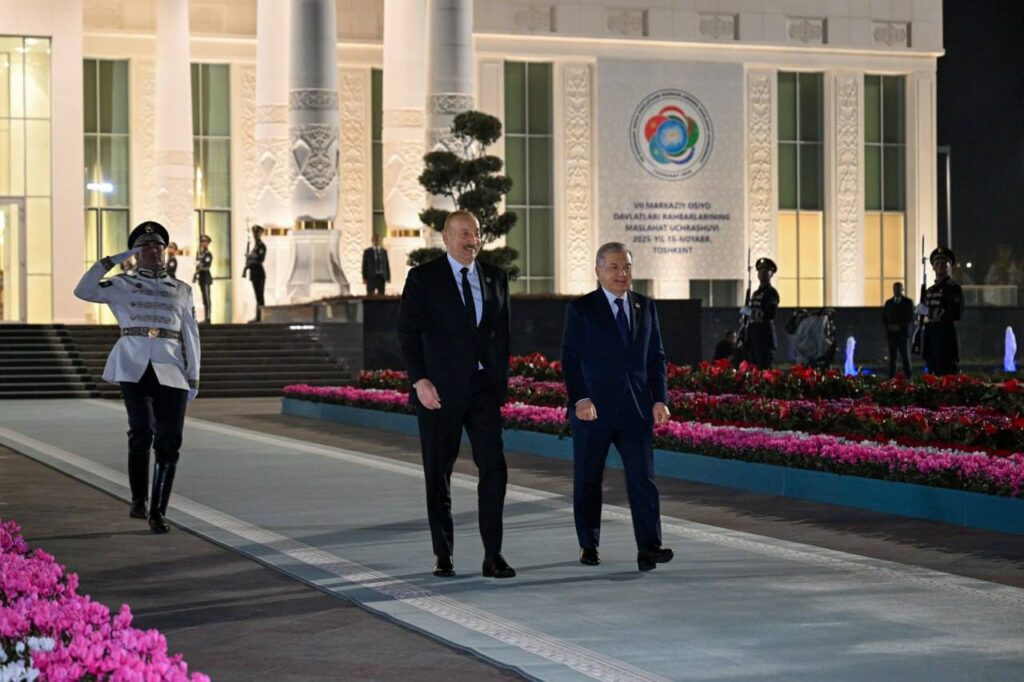
At a summit on Sunday, Central Asian leaders supported Azerbaijan’s accession to the region’s Consultative Meeting format as a full participant, “forming a unified space for interaction between Central Asia and the South Caucasus,” Uzbekistan’s presidency said.

The Consultative Meeting format is a vehicle for high-level collaboration among Central Asian countries, which have taken steps to resolve border disputes and other sources of tension between them over the years. The format addresses trade, security, and other issues. All five Central Asian leaders, as well as President Ilham Aliyev of Azerbaijan, attended the annual meeting in Tashkent on Sunday.

In a speech, Aliyev noted that he had visited Central Asian countries 14 times in the last three years, and that Central Asian leaders had visited Azerbaijan a total of 23 times during the same period. He said Azerbaijan and Central Asia “today form a single geopolitical and geo-economic region, whose importance in the world is steadily growing.”

Azerbaijan, which is also a former Soviet republic, shares the Turkic background of some of the Central Asian nations. While all the countries have distinct national identities, they covet the goal of more robust trade routes linking Asia and Europe, as well as regional solidarity in an uncertain geopolitical environment where China, Russia, and the United States are dominant powers.

After Azerbaijan was admitted to the Central Asian talks format, Azerbaijani presidential adviser Hikmet Hajiyev posted on X: “From now on, Central Asia stands as 6.”

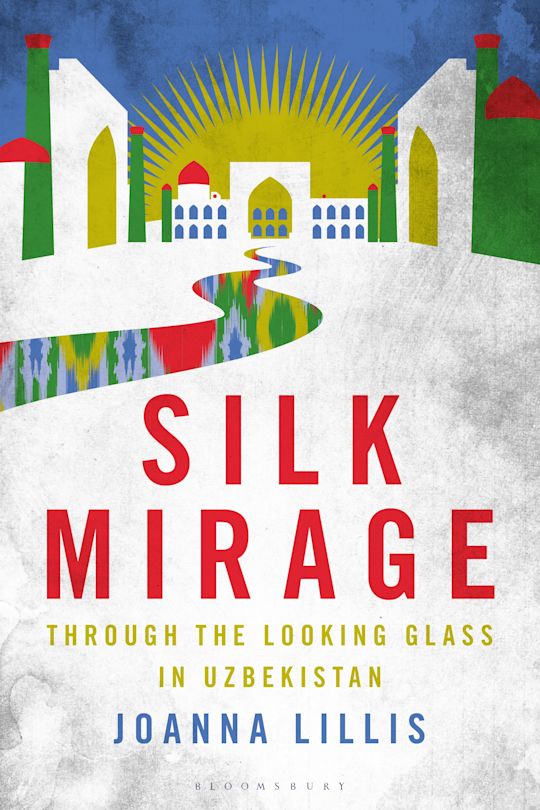
New Book Review: ‘Silk Mirage: Through the Looking Glass in Uzbekistan’ by Joanna Lillis

“Vibrant” and “brutal” are words that British journalist Joanna Lillis uses to describe Uzbekistan in her new book Silk Mirage: Through the Looking Glass in Uzbekistan, released this week through Bloomsbury. But they could just as easily be used to describe the book itself.

In her own words, Lillis, a Central Asia correspondent for The Economist and other media, set out to create “a portrait of Uzbekistan from independence to the modern-day, dipping into history to demonstrate where the country came from and how it got where it is today, and offer clues about where it is going.” She achieves this with a book that is clear-eyed and meticulously researched, detailing how Uzbekistan’s two 21st-century leaders, presidents Islam Karimov and Shavkat Mirziyoyev, have shaped the lives of Uzbekistan’s remarkable people.

The book opens with a summary of the paranoia and violence of the Karimov era (1989-2016), told through Lillis’ experience of having recently arrived in Tashkent in 2001. She lived in the country until 2005, and has spent a lot of time in Uzbekistan thereafter. While the western media that reported on Karimov’s death in 2016 speculated on a battle behind the scenes to succeed him, Silk Mirage is clear that power was always going to pass to Miziyoyev, who had been Karimov’s prime minister for the previous 14 years. Lillis does, though, memorably mention that “there may have been a fierce under-the-rug catfight.”

A recurring topic in Silk Mirage is the repression of the media in Uzbekistan, and local journalists’ need to self-censor and avoid uncomfortable issues. There is none of that in this absolutely fearless book. Lillis gives stark details of Karimov’s human rights abuses, particularly in accounts of the horrific Jaslyk prison. She also confronts his successor’s failure to eradicate some of the injustices in the present day. 

When comparisons are made between life under Karimov, referred to as “Old Uzbekistan”, and the New Uzbekistan of Mirziyoyev, the progress towards democracy is described as a qualified success. The country now has a parliament with younger, more accountable deputies; however, “opposition” is still a dirty word, and the proliferation of new political parties is misleading. 

Economic reforms have led to the previous official corruption and black market profiteering being replaced with a state that is friendlier to local businesses and foreign investors alike. That being said, there are still restrictions on citizens’ rights.

So, have Mirziyoyev’s plans for democracy and reforms been slowed down by systemic issues – the need for his government to first dismantle the dictatorship he inherited? Or is Karimov’s old ally too much of a product of Old Uzbekistan to fully stop the past from repeating? Lillis leaves the reader to decide for themself. 

Silk Mirage dedicates chapters to events in Uzbekistan that have occasionally caught international attention. The last two decades have seen the authorities’ 2005 massacre of hundreds of people in the eastern city of Andijan, which was blamed on an ambiguous Islamist cult; outcries over forced labour and child labour in Uzbekistan’s cotton industry; the ecological crisis in the vanishing Aral Sea; and the (less publicised) violent riots in Karakalpakstan, an autonomous republic in Uzbekistan’s west, in 2022. On all of these issues, Lillis gives a comprehensive account, based on interviews with Uzbeks who have been witnesses to them.

Lillis also goes further back in the country’s history, to bring to life the city of Bukhara – and the Jadids, a group of enlightened Uzbeks who aligned with the Bolsheviks to play an influential role in the early Soviet Uzbek Republic. The Jadids were killed during Stalin’s purges in the 1930s, but their members are being rehabilitated under Mirziyoyev.

Another interesting parallel between the Old and New Uzbekistan is the role of each president’s daughter in public life. Silk Mirage tears down Gulnara Karimova for her vulgar excesses and dumbfounding corruption; by contrast, Saida Mirziyoyeva – aide to her father, but most visible through her leadership of Uzbekistan’s Art and Culture Development Foundation – is the ambassador that Karimova never was, and a champion of Uzbekistan’s creative industries. 

For all that Karimov and Mirziyoyev loom large in Silk Mirage, it is the ordinary Uzbeks whose stories from this mesmerising country shine through. Through Lillis’ reporting, we meet the young tech entrepreneur Dildora Atadjanova, whose app helps Uzbek farmers to sell their crops to exporters. We also meet Agzam Turgunov, a former political prisoner who is now fighting to help others like him clear their names. And we are introduced to the former director of the State Art Museum of the Republic of Karakalpakstan, Marinika Babanazarova, who for years was the director of a vast collection of Karakalpak and other nonconformist art, better known as the Savitsky Museum. The story of the museum is an enthralling success story in its own right.

These are just three of the dozens of human stories that make Silk Mirage such a poignant read. Lillis has held a looking glass up to today’s Uzbekistan, and come back with a true reflection.