• KGS/USD = 0.01144 0%
  • KZT/USD = 0.00196 -0%
  • TJS/USD = 0.10896 -0%
  • UZS/USD = 0.00008 0%
  • TMT/USD = 0.28571 0.28%
  • KGS/USD = 0.01144 0%
  • KZT/USD = 0.00196 -0%
  • TJS/USD = 0.10896 -0%
  • UZS/USD = 0.00008 0%
  • TMT/USD = 0.28571 0.28%
  • KGS/USD = 0.01144 0%
  • KZT/USD = 0.00196 -0%
  • TJS/USD = 0.10896 -0%
  • UZS/USD = 0.00008 0%
  • TMT/USD = 0.28571 0.28%
  • KGS/USD = 0.01144 0%
  • KZT/USD = 0.00196 -0%
  • TJS/USD = 0.10896 -0%
  • UZS/USD = 0.00008 0%
  • TMT/USD = 0.28571 0.28%
  • KGS/USD = 0.01144 0%
  • KZT/USD = 0.00196 -0%
  • TJS/USD = 0.10896 -0%
  • UZS/USD = 0.00008 0%
  • TMT/USD = 0.28571 0.28%
  • KGS/USD = 0.01144 0%
  • KZT/USD = 0.00196 -0%
  • TJS/USD = 0.10896 -0%
  • UZS/USD = 0.00008 0%
  • TMT/USD = 0.28571 0.28%
  • KGS/USD = 0.01144 0%
  • KZT/USD = 0.00196 -0%
  • TJS/USD = 0.10896 -0%
  • UZS/USD = 0.00008 0%
  • TMT/USD = 0.28571 0.28%
  • KGS/USD = 0.01144 0%
  • KZT/USD = 0.00196 -0%
  • TJS/USD = 0.10896 -0%
  • UZS/USD = 0.00008 0%
  • TMT/USD = 0.28571 0.28%
09 December 2025

Kyrgyzstan Delays Opening of Alternative North-South Highway to 2026

Kyrgyzstan has pushed back the opening of its long-anticipated alternative North-South highway to 2026, according to the Ministry of Transport and Communications. The route was originally slated to open in May 2025, but the timeline has been extended to accommodate additional infrastructure work.

The delay stems from plans to construct two avalanche protection galleries, three overpass bridges, and a 25-kilometer bypass section between the villages of Barpy and Safarovka. The ministry confirmed that all additional construction will be completed by 2026.

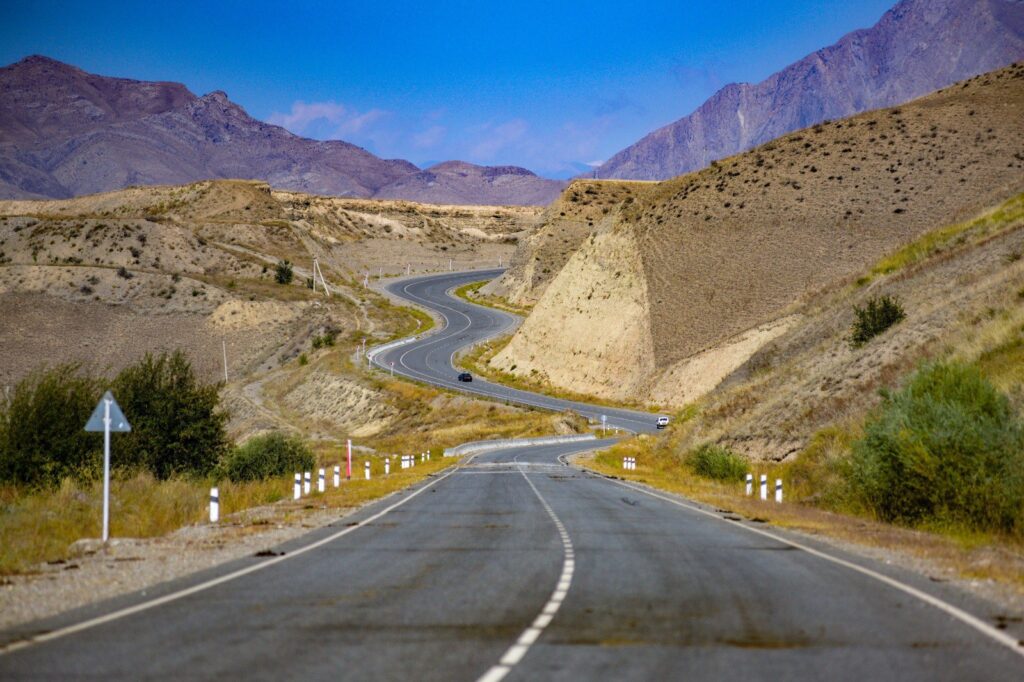
The 433-kilometer highway is a strategic transport corridor linking Balykchy in the Issyk-Kul region with Jalal-Abad in the south. Notably, approximately 200 kilometers of the route traverse areas where no roads previously existed.

Key engineering achievements along the route include Kyrgyzstan’s longest tunnel, located at the Kok-Art mountain pass, and two major overpass bridges. Once operational, the highway is expected to cut travel time between Jalal-Abad and Balykchy from 13 hours to just six.

Currently, the only existing route connecting Kyrgyzstan’s northern and southern regions is the Bishkek-Osh highway. The new North-South corridor is expected to dramatically enhance both passenger and freight transportation between the regions, especially in the absence of a direct railway connection.


Kazakhstan to Auction 50 Rare Metal Deposits in June 2025

Kazakhstan will grant exploration and development rights for 50 deposits of gold and rare metals through an electronic auction scheduled for June 2025, the Ministry of Industry and Construction has announced.

Almas Kushumov, Director of the Ministry’s Department of Subsoil Use, shared the details through MINEX Kazakhstan (Mining and Exploration Forum).

“We will auction off deposits with confirmed balance reserves, gold, coal, rare metals, and polymetals,” Kushumov said. “The information will be published soon on the Unified Platform of Subsoil Use, and in June we plan to hold the electronic auction. All participants will be able to submit their documents online.”

The auction will be hosted on the Unified Subsoil Use Platform: minerals.e-qazyna.kz. Licenses will be awarded for both exploration and production, with production licenses valid for 25 years. Companies from the United States, European Union, and China have already submitted applications, according to the ministry.

The full list of the 50 deposits will be made public in the coming days. Kazakhstan has prior experience with this auction format, between 2023 and 2024, 117 deposits were awarded through electronic auctions, generating over KZT29 billion ($55.9 million) in signing bonuses.

Kazakhstan currently holds over 9,000 registered deposits, including 987 classified as solid mineral sites. Many of these were surveyed more than three decades ago, which is why the government is now prioritizing not only production rights but also geological exploration, with strong interest from both domestic and foreign investors.

Kushumov noted that the introduction of the Code on Subsoil and Subsoil Use in 2018 significantly improved the investment climate, tripling the volume of private capital in the sector.

As previously reported by The Times of Central Asia, the state mining company Tau-Ken Samruk is advancing work at the Kuirektykol rare earth deposit, where exploration began in 2022. Recent studies have identified new promising zones which, if confirmed, could place Kazakhstan among the global leaders in rare earth metal reserves.

Kazakhstan Aims to Cut Civil Service to Curb Budget Spending

Kazakhstan’s Ministry of National Economy has proposed a reduction in the number of state organizations and civil servants as part of broader efforts to lower government spending.

The proposal was presented on Wednesday during a session of the Mazhilis, the lower house of Kazakhstan’s parliament, as lawmakers reviewed the country’s proposed new Tax Code. The issue of fiscal efficiency and potential savings sparked debate among deputies.

“We have prepared several proposals. We will reduce the number of employees in subordinate organizations,” said Minister of National Economy Serik Zhumangarin during the session.

As part of the plan, the government is also proposing a moratorium on increasing administrative costs and halting the construction of new government office buildings.

If a particular agency demonstrates a genuine need for additional personnel, the issue will be addressed through a redistribution of existing vacancies across government bodies. “Any increase in staff in one agency should be matched by a proportional decrease in others,” Zhumangarin noted.

According to the minister, government optimization efforts in 2023 led to savings of approximately KZT400 billion (about $767 million). Furthermore, if the new tax measures are approved, including raising the value-added tax (VAT) from 12% to 16% and lowering the VAT registration threshold from KZT78.6 million to KZT40 million annually, the state budget could gain an estimated KZT2.8 trillion (roughly $5.4 billion) per year.

OpenAI Registers as Taxpayer in Uzbekistan

U.S.-based artificial intelligence company OpenAI has officially registered as a taxpayer in Uzbekistan. According to the State Tax Committee, OpenAI was added to the country’s special platform for foreign electronic service providers on April 8, becoming the 67th international internet company to register in Uzbekistan.

OpenAI is best known for developing ChatGPT, the AI chatbot that gained rapid global popularity following its launch in November 2022. Within five days, the platform surpassed one million users. In March 2023, OpenAI released GPT-4, a more advanced version of the model capable of understanding both text and images. Since November 2023, ChatGPT has been accessible to users in Uzbekistan.

The move comes amid heightened efforts by Uzbek authorities to enforce tax compliance among foreign digital platforms operating in the country. On March 4, the National Agency for Perspective Projects and the State Tax Committee issued a joint warning to Chinese e-commerce platform Temu, which had failed to register as a taxpayer. As a result, access to Temu has been blocked in Uzbekistan since March 20.

Although Temu is legally registered in Uzbekistan, the Tax Committee reported on March 18 that the platform still owes 46 billion UZS (approximately $3.5 million) in unpaid taxes. First Deputy Chairman of the Tax Committee Mubin Mirzayev stated that Temu must settle its debt before it can resume operations in the country.

According to analyst Timurmalik Elmuradov, Temu faces two options: either open a local branch or register as a value-added tax (VAT) payer. The platform’s monthly sales in Uzbekistan are estimated at $8-9 million.

Other foreign platforms have also come under scrutiny. Russian online retailer Wildberries, which initially received a similar warning, has since paid 52 billion UZS (about $4 million) in taxes, according to Mirzayev. The government says it is committed to ensuring that all e-commerce companies operating in Uzbekistan comply with local tax regulations.

ADB Forecasts Steady Economic Growth for Tajikistan Through 2026

The Asian Development Bank (ADB) projects that Tajikistan will sustain strong economic growth over the next two years, according to the bank’s Asian Development Outlook 2025 released in April.

Robust Growth Ahead

Tajikistan’s gross domestic product is forecast to grow by 7.4% in 2025 and 6.8% in 2026. This growth is expected to be fueled by significant investments in the energy and industrial sectors, solid domestic demand, and an increasingly dynamic private sector.

While these figures mark a slight decline from the impressive 8.4% GDP growth recorded in 2024, one of the highest in the region, the ADB highlights the need for deeper structural reforms. In particular, digital transformation and the expansion of e-governance are deemed critical to ensuring long-term, sustainable development.

Digital Transformation: Opportunities and Hurdles

ADB’s Resident Representative in Tajikistan, Ko Sakamoto, emphasized the strategic importance of digitalization.

“We welcome the government’s prioritization of digital transformation as a key driver of development. We stand ready to support efforts to overcome persistent barriers, including a lack of investment,” he said.

Despite widespread mobile phone usage, Tajikistan ranks 139th globally in mobile internet speed. However, digital engagement is on the rise: in the first half of 2024, the number of registered digital wallets hit 10.4 million, and non-cash transactions rose 16.2% year-on-year.

ADB experts recommend that Tajikistan focus on developing a robust digital infrastructure to broaden access to public services. The widespread integration of digital technologies in governance and business is seen as vital to industrial modernization and improving overall quality of life.

Inflation, meanwhile, is projected at 5.0% in 2025 and 5.8% in 2026. Key inflationary pressures include rising consumer lending, salary increases for public sector employees, and higher utility tariffs.

Continued Partnership and Support

The Asian Development Bank, a major multilateral financial institution supporting sustainable and inclusive development across Asia and the Pacific, has been working with Tajikistan since 1998. Over that time, the country has received more than $2.7 billion in assistance, including $2.2 billion in grants.

These funds have supported vital infrastructure projects in transportation and energy, as well as climate resilience and social development programs.

Established in 1966, ADB has 69 member countries, 49 of which are from the region. The bank continues to be one of Tajikistan’s principal development partners, offering innovative financing tools and strategic cooperation to enhance economic sustainability and improve livelihoods.

Stadler Begins Production of Railcars for Kazakhstan’s National Railway in Astana

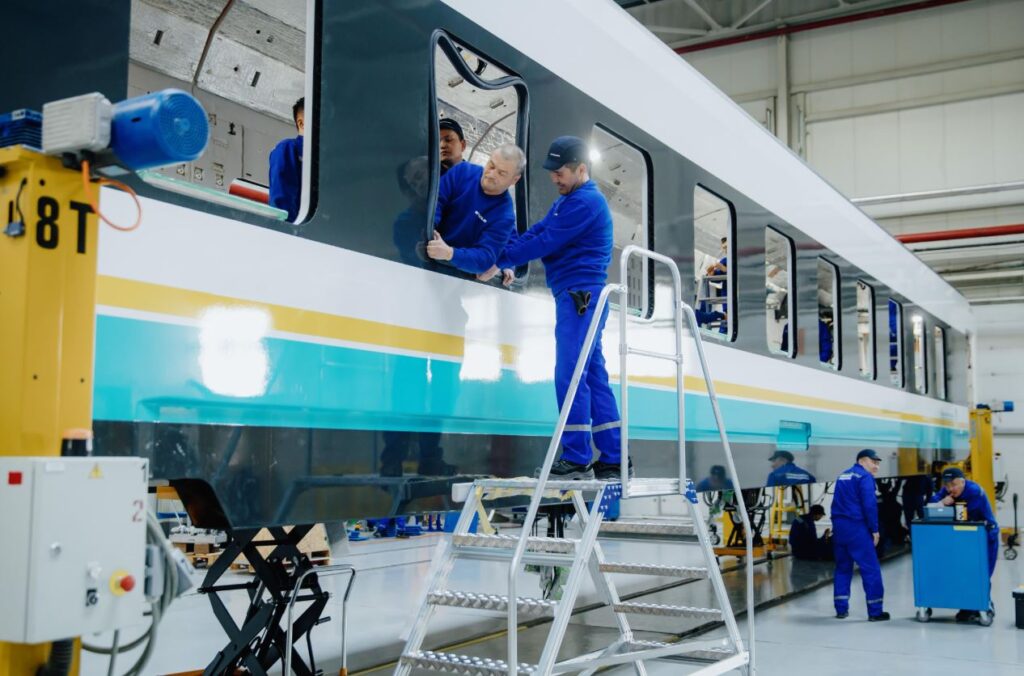
Serial production of passenger railcars for Kazakhstan’s national rail carrier, Passenger Transportation JSC, has officially commenced in Astana. The project is being implemented at the Stadler Kazakhstan LLP plant as part of a broader initiative to modernize the country’s railway sector.

Contract for 557 Cars

The initiative stems from a long-term agreement between Passenger Transportation JSC and Swiss rail manufacturer Stadler Rail AG. Under the terms of the contract, 557 passenger cars of various types, including compartment and platzkart models, generator cars, and specially adapted trains for passengers with disabilities, are to be produced by 2030. The first 51 units are scheduled to enter service in 2025.

The contract also includes a 20-year maintenance commitment by the manufacturer, aimed at ensuring the reliability and longevity of the rolling stock.

Full Production Cycle

During a recent visit to the plant, representatives of Passenger Transportation JSC inspected the facilities and reviewed completed bodies of passenger and generator cars. More than 400 specialists are currently employed at the plant, the majority of whom are Kazakh nationals.

The manufacturing process encompasses a complete production cycle, from body welding and painting to the assembly of electrical components, bogies, and interior fittings. Each railcar undergoes both static and dynamic testing before leaving the production line. In the past two years, the facility has undergone significant modernization and localization, including workforce training in advanced technologies.

Comfort and Safety

The new Stadler cars are designed with passenger comfort and safety in mind. Each compartment coach will offer 40 sleeping berths and feature air conditioning, video surveillance, electric heating, and an automated fire suppression system.

Passengers will have access to electrical outlets and USB ports in each compartment. The railcars will sport a distinctive exterior in corporate blue, yellow, and white, while the interiors will be tailored to suit Kazakhstan’s climate and long-distance travel requirements.

Swiss Quality in the Steppe

Stadler Rail AG is a leading European rail manufacturer with over 80 years of experience and operations in 45 countries. Renowned for producing reliable and technologically advanced railcars suited to harsh climates, the company has supplied equipment to regions including Scandinavia and Eastern Europe.

President Kassym-Jomart Tokayev personally discussed the establishment of the Kazakh production facility with Stadler Chairman Peter Spuhler in December 2022. Located in Astana’s industrial park, the plant spans over 31,000 square meters and has an annual production capacity exceeding 100 railcars.

The launch of serial production marks a pivotal step in overhauling Kazakhstan’s railway infrastructure. Beyond replacing outdated rolling stock, the project fosters technological advancement, local job creation, and the strengthening of the domestic rail manufacturing sector.