• KGS/USD = 0.01144 0%
  • KZT/USD = 0.00194 -0%
  • TJS/USD = 0.10896 -0%
  • UZS/USD = 0.00008 0%
  • TMT/USD = 0.28571 0.28%
  • KGS/USD = 0.01144 0%
  • KZT/USD = 0.00194 -0%
  • TJS/USD = 0.10896 -0%
  • UZS/USD = 0.00008 0%
  • TMT/USD = 0.28571 0.28%
  • KGS/USD = 0.01144 0%
  • KZT/USD = 0.00194 -0%
  • TJS/USD = 0.10896 -0%
  • UZS/USD = 0.00008 0%
  • TMT/USD = 0.28571 0.28%
  • KGS/USD = 0.01144 0%
  • KZT/USD = 0.00194 -0%
  • TJS/USD = 0.10896 -0%
  • UZS/USD = 0.00008 0%
  • TMT/USD = 0.28571 0.28%
  • KGS/USD = 0.01144 0%
  • KZT/USD = 0.00194 -0%
  • TJS/USD = 0.10896 -0%
  • UZS/USD = 0.00008 0%
  • TMT/USD = 0.28571 0.28%
  • KGS/USD = 0.01144 0%
  • KZT/USD = 0.00194 -0%
  • TJS/USD = 0.10896 -0%
  • UZS/USD = 0.00008 0%
  • TMT/USD = 0.28571 0.28%
  • KGS/USD = 0.01144 0%
  • KZT/USD = 0.00194 -0%
  • TJS/USD = 0.10896 -0%
  • UZS/USD = 0.00008 0%
  • TMT/USD = 0.28571 0.28%
  • KGS/USD = 0.01144 0%
  • KZT/USD = 0.00194 -0%
  • TJS/USD = 0.10896 -0%
  • UZS/USD = 0.00008 0%
  • TMT/USD = 0.28571 0.28%
09 December 2025

UNDP and GIZ Renovate Osh Laboratory to Strengthen Tuberculosis Diagnosis in Southern Kyrgyzstan

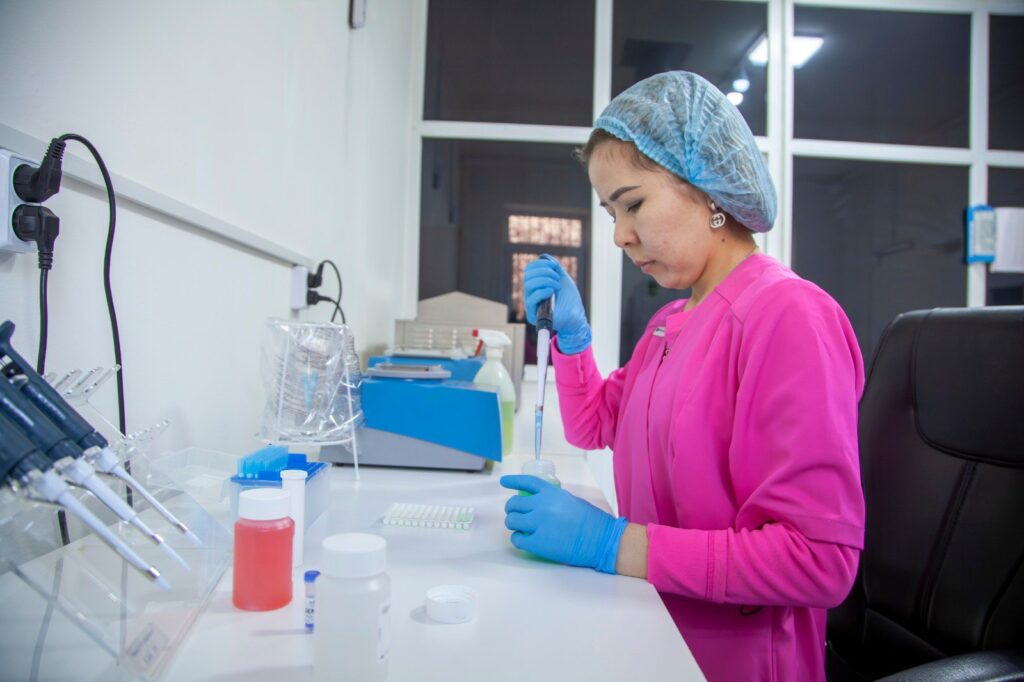
On April 7, the National Center for Phthisiology and the Osh Region Tuberculosis Center, with support from the United Nations Development Programme (UNDP) and the German Agency for International Cooperation (GIZ), inaugurated a renovated building of the Osh Interregional Reference Laboratory in southern Kyrgyzstan.

UNDP, in partnership with GIZ, carried out a full-scale renovation, upgraded staff capacities, and certified diagnostic equipment. The modernization enables the facility to enhance tuberculosis (TB) diagnostics and improve treatment effectiveness, UNDP Kyrgyzstan reported.

Accurate and timely diagnosis is essential for effective TB treatment. In this context, UNDP supports the Kyrgyz government’s efforts to expand diagnostic capacity, improve treatment outcomes, and reduce the national TB burden, advancing the goal of a TB-free Kyrgyzstan.

Until 2019, Kyrgyzstan operated two reference laboratories equipped with advanced TB diagnostic technologies. The National Reference Laboratory oversaw supervision, mentoring, and quality control across the country, with a focus on drug susceptibility testing in northern regions. Meanwhile, the Osh facility served the southern regions of Osh, Jalal-Abad, and Batken. Despite having modern equipment, the laboratory was housed in a deteriorating building that compromised diagnostic quality. Operations were scaled down in 2019 due to poor conditions and resumed only after the facility’s renovation in December 2024. The lab now provides full diagnostic services for Osh city and the Osh and Batken regions.

U.S. Support Bolsters National TB Response

Kyrgyzstan has made substantial progress in TB detection and treatment in recent years, with strong backing from the U.S. government. Since 2019, the United States has invested over $20 million in TB-related programs through the U.S. Agency for International Development (USAID).

Declining TB Incidence and Mortality

According to Abdullaat Kadyrov, Director of the National Phthisiology Center, Kyrgyzstan has seen a sustained decline in tuberculosis incidence and mortality over the past 15-20 years.

In 2001, the country recorded 168 TB cases per 100,000 people and a mortality rate of 27 per 100,000. By 2024, this had fallen to 56.3 per 100,000, with mortality dropping to 2.6 per 100,000.

Uzbekistan to Introduce Special Tax System for High Earners

Uzbekistan is preparing to implement a new tax regime targeting the country’s highest earners, marking a significant shift in its approach to income taxation. The plan was announced by Mubin Mirzayev, First Deputy Chairman of the State Tax Committee, during a press conference on April 1.

According to Mirzayev, more than 18 million of Uzbekistan’s 38 million residents currently earn income and pay taxes. “We have developed special tax rules for individuals with the highest incomes,” he said. “A comprehensive database will be established to prevent income concealment or misreporting.”

The new system, which will take approximately a year to fully develop, will be electronic and designed to track both domestic and international income.

“If a resident of Uzbekistan earns income abroad, they will also be required to pay taxes on it here,” Mirzayev stated. For non-residents, the system will consider taxes already paid in other jurisdictions to prevent double taxation.

Currently, most Central Asian countries apply a flat income tax rate regardless of earnings. Uzbekistan’s plan signals a departure from that model, aligning more closely with progressive tax policies seen in other parts of the world. Mirzayev noted that the proposal echoes ideas once suggested by U.S. President Donald Trump, who advocated for tailored tax rules for high-income individuals to enhance fairness.

The reform is part of broader government efforts to strengthen tax collection and promote greater equity in the system. Officials emphasize that the overarching goal is to ensure that all citizens, particularly high earners, contribute their fair share.

European Investment Bank Commits €365 Million to Environmental Projects in Central Asia

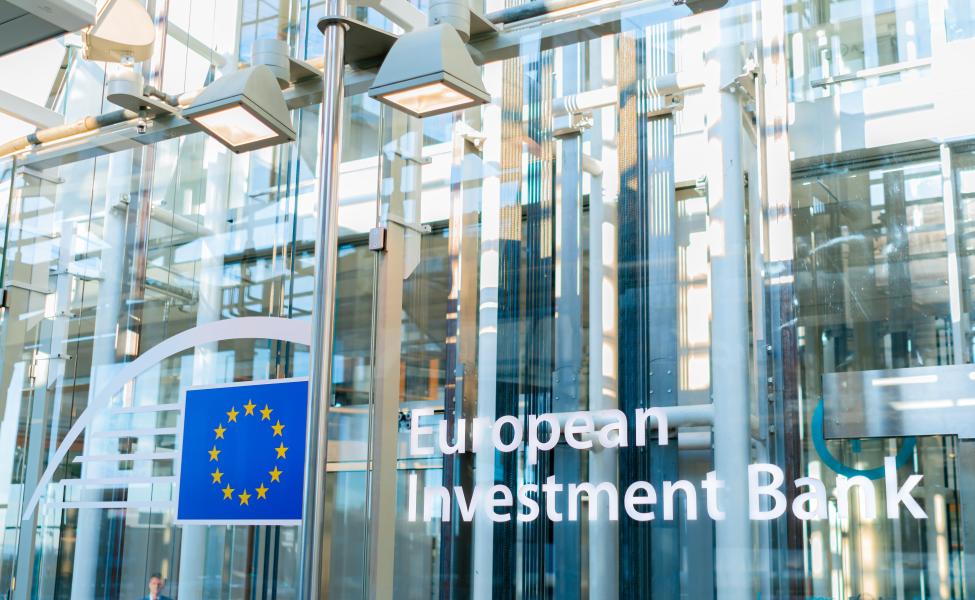
At the first EU-Central Asia Summit, held in Samarkand, Uzbekistan, on April 4, European Investment Bank (EIB) Vice-President Kyriacos Kakouris signed four memorandums of understanding with partners in Kyrgyzstan, Tajikistan, and Uzbekistan. The agreements will direct €365 million in funding and are expected to unlock up to €1 billion in investment for sustainable transport, water management, and climate resilience initiatives across the region.

The EIB is the long-term lending institution of the European Union.

These agreements support the EU’s Global Gateway strategy, which aims to boost private sector development, improve transport and logistics infrastructure, and strengthen water management and environmental sustainability throughout Central Asia.

In Kyrgyzstan, the EIB will provide €50 million through the Kyrgyzstan State Development Bank to support infrastructure investments via the National Promotional Bank.

Tajikistan will receive €100 million to develop sustainable transport infrastructure along the Trans-Caspian Transport Corridor.

In Uzbekistan, €175 million will be allocated to the Uzbekistan Water Implementation Center for water management and environmental sustainability projects, particularly under the Aral Sea Project, in collaboration with the French Development Agency (AFD).

Additionally, Uzbekistan’s JSCB Microcredit bank will receive €40 million to bolster private sector development and to enable local financing for projects that contribute to sustainable transport and logistics connectivity.

During the summit, Kakouris also signed a Host Country Agreement with Uzbekistan, establishing an EIB Regional Representation in the country to enhance the Bank’s presence in Central Asia.

The EIB further announced the launch of negotiations for a framework agreement with Turkmenistan, signaling plans to begin operations there.

“These agreements underscore the European Union and Central Asia’s shared commitment to deepening mutually beneficial cooperation,” said Kakouris. “As the EU’s bank, the EIB will continue playing a pivotal role in strengthening economic ties, promoting sustainability and private sector development, and enhancing infrastructure across the region. The memorandums of understanding pave the way for future financing in the transport and water sectors. Moreover, the Host Country Agreement with Uzbekistan and the launch of negotiations with Turkmenistan mark important milestones for the EU’s growing engagement in Central Asia.”

Central Asia Launches Joint Initiative to Eliminate Tuberculosis by 2030

All five Central Asian nations have launched a regional campaign titled “Central Asia Free of Tuberculosis” with the ambitious goal of eliminating tuberculosis (TB), including drug-resistant strains, across the region by 2030, according to Turkmenportal. The initiative is led by the WHO Regional Office for Europe and supported by international health organizations.

Health ministers and senior officials from Kazakhstan, Kyrgyzstan, Tajikistan, Turkmenistan, and Uzbekistan convened in Astana to formally launch the campaign and sign a joint declaration. The agreement outlines commitments to work closely with the World Health Organization (WHO), the Stop TB Partnership, the Global Fund, civil society organizations, and other partners.

Over the past decade, the five countries have made significant strides in combating TB through the introduction of new treatments and improved disease surveillance systems. The new initiative aims to accelerate these efforts toward total eradication.

Key Objectives of the Initiative Include:

  • Testing Coverage: Ensure that at least 95% of all new and recurrent TB cases are diagnosed using rapid WHO-recommended diagnostic tools, which are already in place across the region.
  • Treatment Expansion: Broaden access to shorter, injection-free treatments for drug-resistant TB, which have demonstrated success rates of over 85%.
  • Vaccine Preparedness: Prepare national health systems for the rollout of new TB vaccines once they become available.
  • Primary Healthcare Integration: Incorporate TB diagnosis and treatment into each country’s primary healthcare system, with support from WHO’s Primary Health Care Centre in Almaty.

WHO Regional Director Dr. Hans Kluge commended the political leadership demonstrated by the Central Asian governments. He emphasized that the region is now closer than ever to achieving TB elimination but must sustain its commitment through continued investments and stigma-reduction efforts to ensure equitable access to care.

The regional strategy is expected to yield significant results by 2027 and will serve as a framework for monitoring and accelerating progress toward TB elimination in Central Asia.

Russian Eco-Blogger to Fund Forest Restoration in Northern Kazakhstan

A major reforestation campaign will launch later this month on the northwestern outskirts of Petropavlovsk, near the Voroniy Island neighborhood, to restore forestland damaged by fire. Approximately 10,000 trees will be planted with the help of local residents, volunteers, and activists. The initiative is fully financed by Russian eco-blogger Alexei Sibirsky.

Grassroots Support and Cross-Border Solidarity

The project was initiated by concerned residents of Petropavlovsk. Local activist Dinara Omurzakova reached out to Sibirsky after learning of his successful reforestation work around Semey, in the east of the country. Sibirsky responded positively, agreeing not only to fund the purchase of seedlings and soil preparation but also to take part in the planting personally.

“I had been following Alexei for a long time. When I saw that he was involved in a similar project in East Kazakhstan, I wrote to him, and he agreed to come to us,” Omurzakova said.

Eco-Activism Without Borders

Alexei Sibirsky is among the most prominent Russian-speaking environmental bloggers, with a following in the millions. His initiatives span multiple countries, focusing on reforestation and the clean-up of water bodies. He funds these efforts through advertising and income from his eco-services platform, which offers tree planting and environmental clean-up.

Sibirsky began his environmental mission following a life-changing accident. Since then, he has implemented green projects worldwide, including several in Kazakhstan. In 2022, after Russia’s partial mobilization, he relocated to Uralsk with his family. As a gesture of gratitude for the city’s hospitality, he organized a clean-up along the Ural River. In 2024, he participated in a river clean-up in Almaty.

A Collective Effort Toward a Greener Future

The Petropavlovsk campaign will be the largest privately supported environmental initiative to date in the North Kazakhstan region. The local forestry authority will manage land preparation, while regional environmentalists, including activist Timur Zveryachenko, are also involved.

Organizers are inviting community members to join the planting on April 26 and 27.

“Every resident of our city can participate with their family and children. If this event is successful, we’ll definitely do it again,” said Omurzakova.

Reforestation as a Strategic Priority

North Kazakhstan region has one of the lowest forest coverage rates in the country, just 5.5%. The regional akimat (council) manages over 550,000 hectares of forest land. Since 2021, the region has been implementing a long-term reforestation program that runs through 2027, aiming to plant 122 million seedlings across 20,000 hectares. From 2021 to 2023 alone, 28.2 million trees were planted.

The Voroniy Island reforestation effort is not just a standalone event but part of a broader strategy to tackle one of the region’s most pressing environmental challenges. Support from both grassroots activists and private benefactors adds critical momentum to these efforts.

UN Calls on Turkmenistan to Probe Suspected Poisoning of Journalist Soltan Achilova

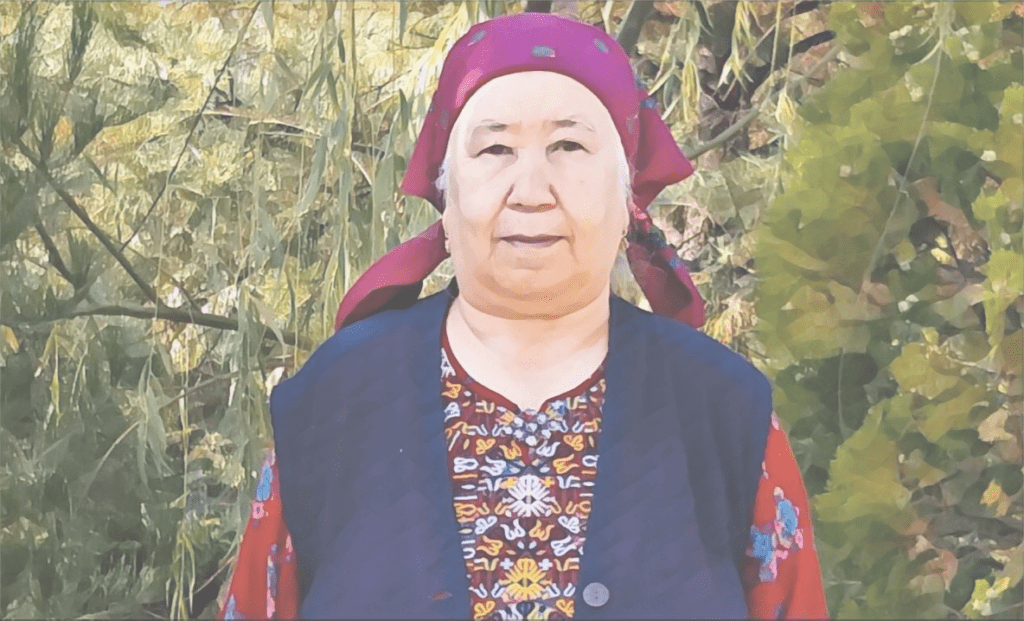
The UN Special Rapporteur on the situation of human rights defenders, Mary Lawlor, has called on Turkmenistan to launch an independent investigation into alleged attempts to poison 75-year-old journalist and human rights activist Soltan Achilova and her family members. The appeal was published on the website of the Office of the UN High Commissioner for Human Rights.

“These are extremely serious allegations which, if confirmed, would constitute a violation of Achilova’s right to life,” Lawlor stated. “Authorities have an obligation to conduct a thorough investigation and bring the perpetrators to justice.”

The alleged poisoning incident occurred in November 2024 when Achilova and her daughter were forcibly hospitalized in an infectious disease clinic on the day they were scheduled to leave the country. Phones were disconnected, and security personnel were reportedly present at the hospital, leading Lawlor to suspect a deliberate attempt to block their departure.

“The forced hospitalization of Achilova and her daughter on the day of their departure suggests an attempt to prevent them from traveling,” she said.

Lawlor also cited disturbing conditions during their detention. For the first three days, they were not given food, water, or hygiene products. “Such treatment seems to be aimed at further humiliating and intimidating them,” she added.

Long-Term Harassment and Intimidation

Achilova has endured years of state pressure, including surveillance, travel bans, and property damage. Her phone and online activities are reportedly monitored, and she has not received alternative housing or compensation since her home was demolished in 2006. In both 2017 and 2024, unknown individuals vandalized her family’s property, breaking the windows of her son’s car, but the authorities did not investigate.

“Gurbansoltan Achilova has faced years of harassment and intimidation, including previous travel restrictions, concerns that we have already raised with the government on June 19, 2020, and January 11, 2024,” Lawlor said. “Given our repeated appeals, I expect more than another letter refuting the allegations. The authorities must immediately stop all harassment and guarantee Achilova’s safety and her ability to work and travel freely.”

A Voice for Independent Journalism

Soltan Achilova is one of Turkmenistan’s last independent female journalists publishing under her real name. Since 2006, she has been subjected to repeated threats, surveillance, and attacks. In 2023, her passport was deliberately damaged before she could travel to Geneva. In another incident in November 2024, as she prepared for an international trip, unidentified men in white coats broke into her home. One reportedly seized her keys and told her, “Why do you need a key in the other world?” before forcibly taking her to a medical facility.

Repression Amid Global Scrutiny

Turkmenistan ranks among the worst countries for press freedom, placing 175th out of 180 in the 2024 World Press Freedom Index published by Reporters Without Borders. The report highlights the systematic persecution of the nation’s remaining independent journalists.

The UN continues to monitor Achilova’s case and has urged the Turkmen government to take meaningful steps to end harassment and ensure her safety. The international community is watching closely for signs of accountability and reform.