• KGS/USD = 0.01144 0%
  • KZT/USD = 0.00196 -0%
  • TJS/USD = 0.10899 0%
  • UZS/USD = 0.00008 0%
  • TMT/USD = 0.28571 0.28%
  • KGS/USD = 0.01144 0%
  • KZT/USD = 0.00196 -0%
  • TJS/USD = 0.10899 0%
  • UZS/USD = 0.00008 0%
  • TMT/USD = 0.28571 0.28%
  • KGS/USD = 0.01144 0%
  • KZT/USD = 0.00196 -0%
  • TJS/USD = 0.10899 0%
  • UZS/USD = 0.00008 0%
  • TMT/USD = 0.28571 0.28%
  • KGS/USD = 0.01144 0%
  • KZT/USD = 0.00196 -0%
  • TJS/USD = 0.10899 0%
  • UZS/USD = 0.00008 0%
  • TMT/USD = 0.28571 0.28%
  • KGS/USD = 0.01144 0%
  • KZT/USD = 0.00196 -0%
  • TJS/USD = 0.10899 0%
  • UZS/USD = 0.00008 0%
  • TMT/USD = 0.28571 0.28%
  • KGS/USD = 0.01144 0%
  • KZT/USD = 0.00196 -0%
  • TJS/USD = 0.10899 0%
  • UZS/USD = 0.00008 0%
  • TMT/USD = 0.28571 0.28%
  • KGS/USD = 0.01144 0%
  • KZT/USD = 0.00196 -0%
  • TJS/USD = 0.10899 0%
  • UZS/USD = 0.00008 0%
  • TMT/USD = 0.28571 0.28%
  • KGS/USD = 0.01144 0%
  • KZT/USD = 0.00196 -0%
  • TJS/USD = 0.10899 0%
  • UZS/USD = 0.00008 0%
  • TMT/USD = 0.28571 0.28%
09 December 2025

What Does Turkey’s “Return” to Europe Mean for Central Asia?

Turkey’s ties with Europe are undergoing a reinvigoration. This phenomenon is foregrounded by recent high-level diplomatic engagements and burgeoning military and economic linkages, which may at first glance appear as a realignment within the Euro-Atlantic system. It holds deeper implications, however, and most consequentially for Central Asia.

Turkey is re-entering the European strategic imagination, this time not as a supplicant but as a self-assured middle power. Europe’s altered international environment, by changing its external posture, will provide the Central Asian states with additional geopolitical resources in a world marked by shifting alignments and competing centers of power.

To grasp the systems-level implications of this shift, one must first dispense with the linear narrative of bilateralism that has long framed Turkey-Europe or Turkey-Central Asia relations in isolation. Instead, Turkey’s position as a hub of multi-vectorial networks — anchored in NATO, increasingly interlocked with EU markets, yet culturally and politically entwined with Turkic Central Asia — makes it a proactive agent whose movement in one sphere triggers systemic perturbations across others. Thus, when Turkey edges closer to Europe, it also subtly reconfigures the vector of Central Asia’s international relations.

The second Trump administration is continuing the transition in Europe’s security architecture that was inaugurated during the first. With longstanding assumptions about American commitment to the Atlantic alliance shaken, Europe finds itself unmoored. In this new context, Turkey’s military interventions — its incursions in northern and now central Syria, its containment of Russian advances in Ukraine, and its supply of military drones to Azerbaijan — demonstrate a degree of strategic autonomy that is rare among NATO members.

Europe has noticed. The readjustment of its view of Turkey is evident through invitations to summits with key EU players, overtures from German and Polish leaders, and discussions around deepening the customs union. Turkey is no longer peripheral country knocking at the EU’s door; shifts in the international system have made it an increasingly indispensable node in the continent’s security and energy architectures. This European courtship of Turkey has ramifications well beyond Brussels or Berlin, or even Ankara.

For the Central Asian states, afflicted by asymmetric dependencies on Russia, Turkey’s geopolitical normalization with Europe presents a “demonstration effect”. That is, it puts the spotlight on a regional actor that is using soft power affinities and hard power capabilities to parlay its peripheral status into centrality. Turkey’s return to Europe showcases a successful strategy of multidirectional engagement. Such “strategic hedging” obviates obedience to any single bloc, instead leveraging the overall system’s recursive entanglements for national-interest advantage.

The Turkish-Azerbaijani partnership is illustrative. Turkey’s provision of military assistance used during the Second Karabakh War in 2020, notably the Bayraktar TB2 drones, enabled Azerbaijan to shift the regional balance. Russia is no longer the hegemonic power in the South Caucasus and must compete in a condition where it is diplomatically and militarily weakened by its war against Ukraine. Baku stands to benefit from its multisectoral economic cooperation with Ankara, which goes far beyond military assistance. Specifically, Azerbaijan’s partnership with Turkey enhances its autonomous access to European political and economic systems.

This logic extends beyond the South Caucasus. Central Asian republics like Kazakhstan and Uzbekistan have long sought to diversify their foreign relations beyond the Moscow–Beijing axis. Turkey’s growing influence in Europe offers Central Asia an opportunity to readjust its own alignments, and this process is already under way. Partnership with Turkey adds another vector on the strategic pathway to their cooperation with Western systems. In systems-theoretic terms, Turkey serves as a coupling interface between two loosely integrated subsystems — Europe and Central Asia — where previous linkages were weak and constrained by chokepoints on capital, knowledge, and influence.

None of this, of course, occurs in a vacuum. Russia’s declining leverage, compounded by Western sanctions and the vitiation of its own forces in Ukraine, creates space for new actors to assert influence. China’s rise provides Central Asia with infrastructure but not ideological or cultural affinity. Turkey’s renewed ties to Europe position it, by contrast, as a system-balancer: culturally proximate, economically credible, and strategically mobile. It is the hybrid quality of being Western-facing and Eastern-rooted that increases Turkey’s relevance for Central Asia.

Yet the durability of this influence remains contingent. Europe’s embrace of Turkey is pragmatic, not ideological. Should the EU fragment further, or should Ankara overplay its hand, the momentum could stall. Central Asia’s receptivity likewise depends on Ankara’s maintenance of its ability to remain an autonomous actor whose proximity to Europe amplifies, rather than constrains, its regional partnerships.

In the medium term, the challenge for Turkey will be to operationalize this systemic advantage without succumbing to overextension. For Central Asian states, the opportunity lies in strategically leveraging Turkish-European synergy to increase their own possibilities. The region’s long history of subordination to external powers has produced a diplomatic caution, but the spectacle of Turkey navigating from NATO to the Kremlin to Brussels — all while deepening ties with Baku, Tashkent, and Astana — offers a working model for a new kind of Eurasian agency.

Turkey’s “return” to Europe is, therefore, not a story of Atlantic integration, particularly as the United States is withdrawing its longstanding attention to Europe in the direction of Asia and the Indo-Pacific. This “return”, rather, represents a redefinition of how once-peripheral actors can, in the rapidly evolving international system, transform their situation and affirm their new position, afforded by the evolution in that system. For Central Asia, the lesson is clear: proximity to Turkey now means potential proximity to Europe. In a world of connectivity and relative rather than absolute autonomy, proximity is still an underestimated resource.


Uzbekistan Prepares to Host Historic Central Asia-EU Summit in Samarkand

Samarkand is set to host the first-ever Central Asia-European Union (EU) summit on April 3-4, marking a pivotal moment in relations between the two regions. In the lead-up to the event, Uzbek President Shavkat Mirziyoyev spoke with Euronews about the growing cooperation between Central Asia and the EU.

Deepening Economic Ties

President Mirziyoyev emphasized the historical and strategic depth of Central Asia’s relationship with the EU.

“Over the past 30 years, our partnership has grown steadily in trade, investment, security, and digital transformation. Today, we are entering a new phase of cooperation that will benefit both regions,” he said.

In recent years, economic ties between the regions have strengthened significantly. Trade turnover has quadrupled over the past seven years, reaching €54 billion. European companies are increasingly investing in Uzbekistan and across Central Asia.

Mirziyoyev noted that Central Asia has become a model for constructive dialogue and cooperation.

“We have proven that through dialogue and mutual respect, we can resolve even the most complex issues. The recent agreement between Kyrgyzstan and Tajikistan on border demarcation is a testament to this approach.”

As chair of the Central Asian Five, Uzbekistan is prioritizing regional security, economic integration, and environmental sustainability. Key infrastructure projects, such as the Trans-Caspian and Trans-Afghan transport corridors, are central to improving connectivity with international markets.

To attract further European investment, Uzbekistan has introduced reforms to improve the business climate. In 2024, trade with EU member states reached $6.4 billion, and more than 1,000 European companies now operate in the country. The anticipated signing of the Enhanced Partnership and Cooperation Agreement (EPCA) is expected to deepen economic relations.

Mirziyoyev also proposed aligning the EU’s Global Gateway strategy with regional transport initiatives.

“We must work together to simplify trade procedures and ensure that Central Asian products gain greater access to European markets. Only through joint efforts can we build a strong and resilient economic partnership,” he stated.

He added that enhanced financial assistance from European institutions could further bolster the region’s economic resilience.

Energy and Security: Shared Priorities

Central Asia is emerging as an important player in global energy markets, particularly in renewable energy. Uzbekistan is implementing over 50 solar and wind projects, aiming to raise the share of renewables to 54% within five years.

“Green energy is the future, and Uzbekistan is ready to lead this transformation in our region. A Central Asia-EU Clean Energy Partnership will help us achieve this goal,” Mirziyoyev said.

On security, he emphasized the need for coordinated efforts to combat terrorism, extremism, and cyber threats.

“We must strengthen our cooperation in security matters, because stability in Central Asia means stability in Europe as well.”

Uzbekistan also continues its active engagement with Afghanistan, stressing the importance of inclusive dialogue and regional support.

“Afghanistan should not be left in isolation. We must continue dialogue and provide support to help the Afghan people rebuild their country,” the president concluded.

Italian Company Eyes Tomato Product Manufacturing in Kazakhstan

Italy’s Tramite Group is exploring opportunities to establish a tomato paste production facility in Kazakhstan, as part of broader efforts to boost agro-industrial cooperation between the two countries.

On April 1, Kazakhstan’s Minister of Agriculture, Aidarbek Saparov, met with Gianantonio Tramet, founder and general manager of Tramite Group, to discuss tomato cultivation and processing in Kazakhstan, according to a statement from the Ministry of Agriculture.

Tramet noted that his company is actively seeking partners to supply natural food products from Kazakhstan, citing the country’s favorable climate for growing high-quality produce. Italy currently imports 180,000 tons of tomato paste annually, and Tramite Group is considering shifting part of this demand to be met through production in Kazakhstan and other Central Asian countries.

Agro-Industrial Cluster in Shardara

Tramite Group plans to collaborate with Kazakhstan’s Agriqa Farms LLP, which has launched a project to develop an export-oriented agro-industrial cluster in town of Shardara, in the central Turkestan region.

The initiative will begin in May 2025 with the construction of a 22-hectare greenhouse complex. It will also include:

  • A tomato paste processing plant with a planned capacity of 3,360 tons per day
  • An alfalfa granulation facility
  • A fruit and vegetable drying and freezing plant

In 2026, the project will expand to install drip irrigation systems across 8,000 hectares of farmland.

Saparov welcomed the initiative and reaffirmed Kazakhstan’s commitment to supporting large-scale agro-processing ventures. He assured Tramite Group of comprehensive government assistance for the joint Kazakh-Italian enterprise.

Kyrgyzstan and Tajikistan Move Closer to Electricity Exports to South Asia

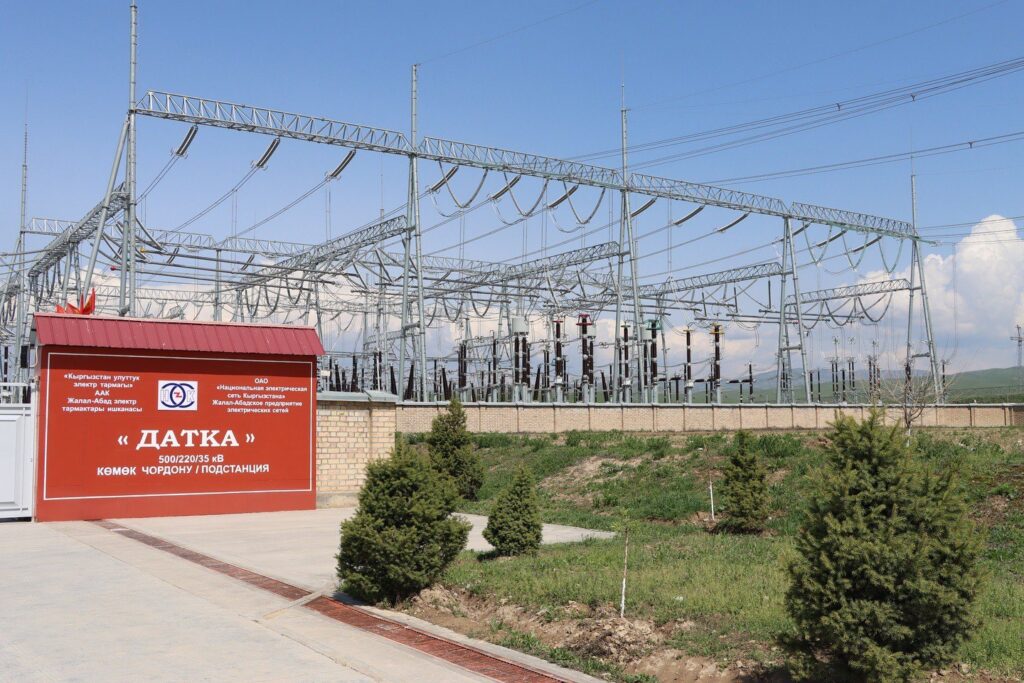
Kyrgyzstan and Tajikistan have officially launched the 500 kV Datka-Sughd overhead power transmission line, a key component of the CASA-1000 (Central Asia-South Asia) electricity transmission project. The initiative is designed to export surplus summer electricity from the two Central Asian countries to Afghanistan and Pakistan.

The 485-kilometer line, which connects the Datka substation in Kyrgyzstan with the Sughd substation in Tajikistan, was inaugurated on March 31 during Kyrgyz President Sadyr Japarov’s visit to the Tajik city of Khujand. Tajik President Emomali Rahmon also attended the ceremony.

The new line enables bidirectional power flows, significantly enhancing the resilience and stability of Central Asia’s power grid. According to Kyrgyzstan’s Ministry of Energy, both Kyrgyzstan and Tajikistan have completed their respective infrastructure components of the CASA-1000 project.

Project Progress and Timeline

In Pakistan, construction is expected to be completed by August 2025. In Afghanistan, where work had stalled, construction has now resumed. Over 95% of the necessary materials have already been delivered to the country. Full completion of the Afghan section and the start of commercial operations are expected in 2027.

The CASA-1000 project, with a total cost exceeding $1.2 billion, is financed by the World Bank, the European Investment Bank, the European Bank for Reconstruction and Development, the Islamic Development Bank, and other international partners. The Kyrgyz and Tajik sections alone accounted for approximately $544 million, or 45.3% of the total project budget.

Once fully operational, CASA-1000 will have the capacity to transmit up to 11 billion kilowatt-hours of electricity per year.

Economic and Regional Impact

Tajikistan and Kyrgyzstan are expected to jointly export up to 5 billion kilowatt-hours of green electricity annually to Pakistan, roughly 5% of Pakistan’s total electricity consumption. The projected revenue from these exports is over $250 million per year for the two countries.

The successful implementation of CASA-1000 not only promises economic benefits for Central Asia but also marks a significant step in regional energy cooperation, renewable energy deployment, and cross-border infrastructure integration.

Central Asia’s Billionaires Make Forbes Rich List in 2025

Forbes has released its annual list of the world’s billionaires for 2025, featuring a record 3,028 individuals, 247 more than last year. Their combined wealth has surged to $16.1 trillion, nearly $2 trillion more than in 2024. The United States leads the list with 902 billionaires, followed by China with 516 (including Hong Kong), and India with 205. Rankings were based on stock prices and exchange rates as of March 7, 2025.

Elon Musk, CEO of Tesla and SpaceX, once again tops the list with an estimated net worth of $342 billion, nearly double his fortune from the previous year. Meta CEO Mark Zuckerberg ranks second with $216 billion, while Amazon founder Jeff Bezos remains in third with $215 billion.

Billionaires with Central Asian Ties

Among the global elite is Alisher Usmanov, a billionaire with Uzbek roots. Ranked 125th, his net worth is estimated at $16.7 billion. Usmanov holds stakes in the steel and mining conglomerate Metalloinvest, as well as investments in Xiaomi and various telecom, mining, and media companies. Though he currently resides in Tashkent, Usmanov holds Russian citizenship and remains under U.S., U.K., and EU sanctions imposed following Russia’s invasion of Ukraine.

Kazakhstan’s Wealthiest on the List

Kazakhstan is well represented on this year’s list. Vyacheslav Kim, chairman of Kaspi Bank, ranks 464th with a net worth of $7.1 billion. Timur Turlov, CEO of Freedom Holding, follows at 605th with $5.8 billion. Vladimir Kim, another prominent Kazakh businessman, is ranked 620th with $5.7 billion.

Dinara Kulibayeva and Timur Kulibayev, ranked jointly at 673, hold an estimated fortune of $5.3 billion. Kulibayeva, daughter of former president Nursultan Nazarbayev, and her husband are majority shareholders in Halyk Bank and have extensive investments in the oil and gas sector. Kulibayev also founded Altyn Alma, an investment firm that later became Almex LLP.

Another Kazakh billionaire, Bulat Utemuratov, is ranked 979th with an estimated fortune of $3.7 billion.

Bishkek Activists Demand Comeback for City’s Scrapped Trolleybuses

As Bishkek prepares to introduce its first fleet of electric buses, local activists are mounting a legal campaign to save the city’s trolleybus system from complete dismantlement.

Municipality’s Modernization Push

The first two electric buses from China’s Anhui Ankai Automobile Co. have already arrived in Bishkek and will soon begin operating on city routes. In total, the city has procured 120 electric buses, with the remaining 118 expected to be delivered by May, according to Daiyrbek Orunbekov, head of information policy at the President’s Office.

Orunbekov said the new vehicles will replace outdated public transport and help improve the capital’s environmental conditions.

“City streets used to be clogged with shuttle buses, and the roads were in disarray. Now modern buses are replacing minibuses. Last year, the roads were reconstructed and old trolleybus lines dismantled. Some residents were initially unhappy, but electric buses, more spacious and comfortable, are now on the routes,” he explained.

A Contested Phase-Out

Despite these upgrades, the decision to remove trolleybus lines has sparked a backlash. Bishkek residents and activists have sued the mayor’s office, arguing that officials acted without proper authorization in dismantling the network. All trolleybus lines in Bishkek were removed in a short period. Of the remaining fleet, 100 trolleybuses, many still under loan repayment, were transferred to Osh, six to Naryn, and 42 remain parked on the outskirts of the capital.

Meanwhile, Kyrgyz MP Ulan Bishimbayev has announced that the authorities plan to retrofit some of the old trolleybuses with batteries to convert them into electric buses. One pilot project is already underway.

“We invited specialists who confirmed it was possible. One trolleybus is being remodeled in pilot mode and should be launched within 10 days,” Bishimbayev said.

Legal Battle and Environmental Concerns

The next court hearing on the trolleybus issue is scheduled for April 9 at the Bishkek City Court. Activists argue that trolleybuses, powered by a network of 19 existing substations, remain one of the most sustainable forms of transport.

“Trolleybus wires are a consumable material that needs replacement every 20 years. The challenge of restoring them is manageable. What matters are the substations, and they are still intact,” activist Bermet Borubayeva told The Times of Central Asia.

She also questioned the narrative that the old system was outdated.

“A representative from the president’s staff claimed the trolleybuses were outdated and would be replaced with electric buses. But that’s misleading. The trolleybuses bought with a €23.5 million European Bank for Reconstruction and Development (EBRD) loan just six years ago are still modern, with a service life of 20 years,” she said.

Borubayeva also pointed out that the batteries used in electric buses typically last only 5-10 years and pose environmental risks when recycled.

According to earlier electrification plans approved by European lenders, Bishkek was expected to combine trolleybus and electric bus networks. However, city authorities have opted for a different course.