• KGS/USD = 0.01144 0%
  • KZT/USD = 0.00194 -0%
  • TJS/USD = 0.10896 -0%
  • UZS/USD = 0.00008 0%
  • TMT/USD = 0.28571 0.28%
  • KGS/USD = 0.01144 0%
  • KZT/USD = 0.00194 -0%
  • TJS/USD = 0.10896 -0%
  • UZS/USD = 0.00008 0%
  • TMT/USD = 0.28571 0.28%
  • KGS/USD = 0.01144 0%
  • KZT/USD = 0.00194 -0%
  • TJS/USD = 0.10896 -0%
  • UZS/USD = 0.00008 0%
  • TMT/USD = 0.28571 0.28%
  • KGS/USD = 0.01144 0%
  • KZT/USD = 0.00194 -0%
  • TJS/USD = 0.10896 -0%
  • UZS/USD = 0.00008 0%
  • TMT/USD = 0.28571 0.28%
  • KGS/USD = 0.01144 0%
  • KZT/USD = 0.00194 -0%
  • TJS/USD = 0.10896 -0%
  • UZS/USD = 0.00008 0%
  • TMT/USD = 0.28571 0.28%
  • KGS/USD = 0.01144 0%
  • KZT/USD = 0.00194 -0%
  • TJS/USD = 0.10896 -0%
  • UZS/USD = 0.00008 0%
  • TMT/USD = 0.28571 0.28%
  • KGS/USD = 0.01144 0%
  • KZT/USD = 0.00194 -0%
  • TJS/USD = 0.10896 -0%
  • UZS/USD = 0.00008 0%
  • TMT/USD = 0.28571 0.28%
  • KGS/USD = 0.01144 0%
  • KZT/USD = 0.00194 -0%
  • TJS/USD = 0.10896 -0%
  • UZS/USD = 0.00008 0%
  • TMT/USD = 0.28571 0.28%
09 December 2025

Kazakhstan Launches Ambitious Project to Revive Legendary Aport Apple

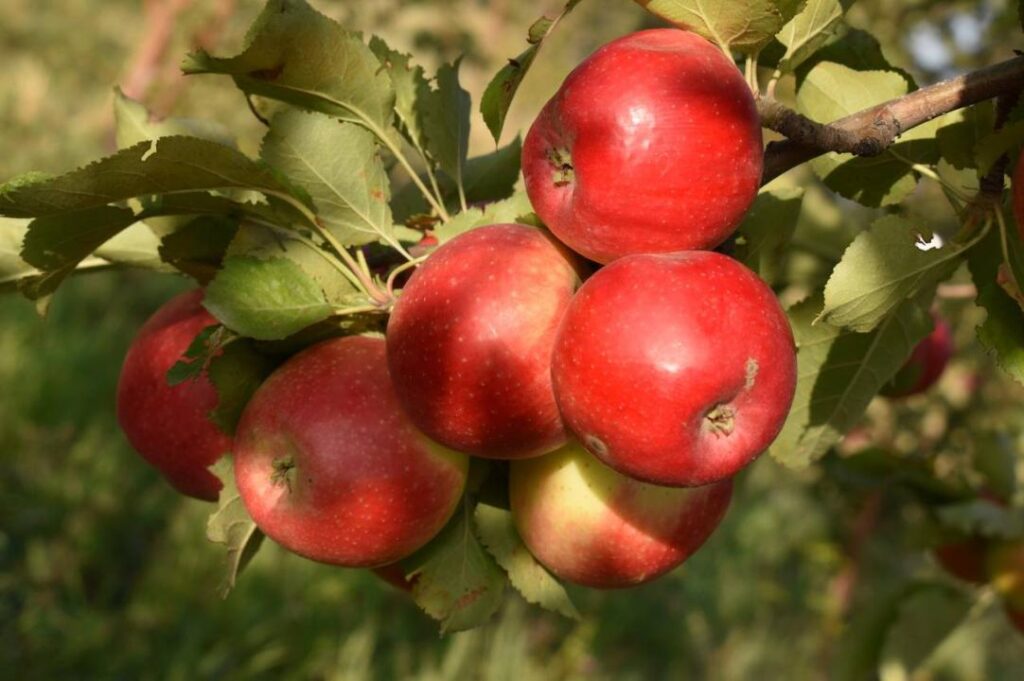
Kazakhstan has launched a major initiative to restore one of Almaty’s most iconic symbols, the Aport apple variety.

The Return of a National Symbol

According to the National Agrarian Scientific and Educational Center (NANOC), new Aport orchards will be planted in the Almaty region starting in 2025, covering an area of 110 hectares. The project, set to run through 2028, plans to introduce approximately 25,000 seedlings. Funding has already been secured, and experts from KazNII Horticulture LLP have begun implementing the roadmap.

“We are confident that the revival of this variety will be an important step in the development of domestic horticulture and will provide Kazakhstanis with high-quality and tasty fruits,” NANOC stated.

The first harvest is expected in eight years. According to scientific forecasts, yields could reach up to 57.7 kilograms per tree in the early stages and up to 100 kilograms as the orchards mature. Aport apples are known not only for their distinctive aroma and taste but also for their durability: with proper storage, they remain fresh until March, and with modern preservation methods, even until June.

A Fruit Steeped in History

The Aport apple is more than just a fruit, it’s a cultural brand of Almaty. With its large size, vibrant color, and rich aroma, the Aport became a hallmark of the city. Historical records show that in 1865, a peasant named Yegor Redko brought Aport seedlings from Russia’s Voronezh Province to the town of Verny (modern-day Almaty). Within a decade, the variety flourished in the unique climate of the Zailiyskiy Alatau, revealing its full potential.

By the early 20th century, Aport apples had gained international acclaim. At an exhibition in Germany in 1908, the variety won a prize. Since then, it has been recognized as a Kazakhstani brand. In 2023, the Aport was officially patented as a national product. Justice Minister Azamat Eskarayev has announced efforts to register the Aport as an international brand, including in European countries.

Decline and Recovery Challenges

The decline of the Aport apple began in the late 20th century, driven by rapid urbanization and the commercial development of former orchard lands. According to Saule Kazybayeva, Deputy Chair of the Board at the Kazakh Research Institute of Fruit and Vegetable Growing, the Aport was replaced by hardier and more commercially viable varieties like Golden Delicious.

Moreover, the Aport requires specific care and environmental conditions, making it less appealing for mass production. Another setback has been the degradation of its genetic qualities. The traditional method of grafting Aport onto wild Sivers apple stock is often not properly followed, especially by private farms, resulting in a loss of the variety’s signature flavor.

The Current Outlook

According to the Ministry of Agriculture, Aport orchards now cover 2,500 hectares across Almaty and Zhetysu oblasts, with around 416,000 trees in total. Almaty itself has about 230 hectares of Aport orchards. However, local authorities acknowledge that both the orchard area and fruit quality are in decline, largely due to disease susceptibility.

Despite these challenges, a revitalization program is already underway, supported by private investors and nurseries. Scientists hope the project will preserve this unique agricultural heritage and stimulate broader interest in horticulture across the country.

If successful, the Aport apple may once again become not only a national symbol but also a point of pride, returning to both store shelves and the hearts of Kazakhstanis.

Tajikistan to Chronicle Soccer Legacy with New Museum and Landmark Book

A museum dedicated to the history of Tajik soccer will be inaugurated in a new stadium currently under construction in Dushanbe. The project was initiated by Rustami Emomali, Mayor of Dushanbe and President of the Tajikistan Football Federation​.

A People’s Archive of Soccer Heritage

The Tajikistan Football Federation has called on fans, athletes, and sports veterans to contribute memorabilia related to the country’s soccer history. Sought-after items include match jerseys, medals, trophies, certificates, books, and any other artifacts that reflect the evolution of soccer in Tajikistan.

“The owners of valuable items and objects, as well as the authors of significant materials, will be recognized and encouraged,” the federation said in a public appeal.

In parallel with the museum, the federation is preparing to publish The History of Tajik Soccer, the first comprehensive volume covering all major milestones in the sport’s national development.

From the First Matches to the Soviet Leagues

Soccer began to gain popularity in Tajikistan in the early 1920s. In 1936, the Tajikistan Football Federation was formally established, and a year later, the first championship of the Tajik SSR took place. Dinamo, a club from Stalinobod (now Dushanbe), emerged as the inaugural champion.

In 1947, Dinamo debuted in the USSR championship, marking the beginning of Tajikistan’s participation in Soviet leagues. A defining moment came in 1989 when Dushanbe’s Pamir club competed in the Supreme League of the Soviet Union, a peak achievement during the Soviet soccer era that remains a point of pride for the country.

A New Era After Independence

With the dissolution of the Soviet Union in 1991, Tajik soccer entered a new chapter. The Tajikistan Football Federation became a member of FIFA and the Asian Football Confederation in 1994, enabling the country to participate in global and regional competitions.

Today, Tajikistan is investing in soccer infrastructure, focusing on youth training and international performance. The upcoming museum and book aim to celebrate the sport’s rich past while inspiring future generations of players and fans.

New York Film Academy Launches Branch in Kazakhstan

The New York Film Academy (NYFA) has officially opened a branch in Kazakhstan, marking its third campus outside the United States and the first world-class creative university to establish a presence in the country, the Ministry of Science and Higher Education of Kazakhstan announced. The launch agreement was signed virtually on March 1 by Sayasat Nurbek, Kazakhstan’s Minister of Science and Higher Education, and Michael Yang, President of the New York Film Academy.

Academic programs at the new campus are set to begin on September 29 at the Energo University Creative Industries Park in Kaskelen, near Almaty. Instruction will be delivered in person by professional NYFA faculty from the United States.

The Kazakhstan branch will offer one-year and short-term training programs in five core disciplines:

  • Filmmaking
  • Producing
  • Screenwriting
  • Animation and Visual Effects (3D Animation & VFX)
  • Game Development (Game Design)

The inaugural class will enroll up to 200 students from Kazakhstan and neighboring countries, including China, India, and Russia. Graduates will receive diplomas from the U.S.-based NYFA and will have the opportunity to continue their studies at the Academy’s campuses in New York or Los Angeles, with credits transferred from their coursework in Kazakhstan.

Kyrgyzstan’s Gold Reserves Could Last a Century, Says Top Geologist

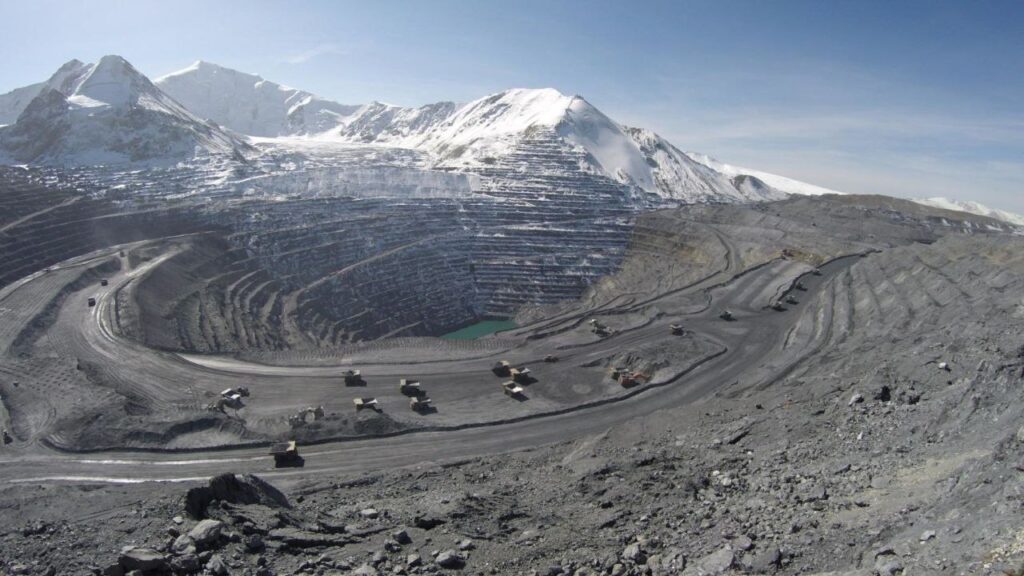
Kyrgyzstan’s largest gold mining operation, Kumtor Gold Company, has identified an additional 147 tons of gold through recent geological exploration. These reserves have now been officially added to the balance sheet of the state-run enterprise, reinforcing expert forecasts that gold extraction in the country can continue for decades to come.

The announcement was made by Minister of Natural Resources Meder Mashiev during a press briefing in Bishkek.

Mashiev noted that previously unexploited reserves at Kumtor, a key contributor to the national budget, were estimated at 127 tons. Following the new exploration, total reserves now stand at 261 tons.

Kumtor Gold Company was nationalized in 2022 after Canadian firm Centerra Gold withdrew from the project. At the time, industry experts predicted the mine would cease operations by 2027 due to depleted reserves at the main open pit. The prospect of investing in new infrastructure at adjacent sites was deemed economically unfeasible.

This view was partly supported by production data: in 2015, ore yielded about 5 grams of gold per ton; today, it yields less than one gram. Local experts, however, have described this decline as temporary.

According to official figures, Kumtor produced 17.3 tons of gold in 2022, 13.5 tons in 2023, and was projected to produce 12.2 tons in 2024, numbers not seen since 2012, when output fell below 10 tons. Back then, the company cited falling global gold prices and the limited viability of high-volume production.

Under the 2022 agreement with Centerra Gold, the Kyrgyz Cabinet of Ministers assumed full management of the Kumtor mine. The Canadian company also agreed to pay over $60 million for environmental protection and transferred control of a $53 million reclamation fund to the Kyrgyz side. In return, it was released from future mine reclamation obligations.

In an interview with The Times of Central Asia, Rozalia Djenchuraeva, a geologist at the National Academy of Sciences, stated that with proper management, Kumtor could continue producing gold for another hundred years.

“Gold is not running out. There’s still a substantial amount at Kumtor. In the 1980s and 1990s, we recalculated potential reserves in the area and identified over a thousand tons,” Djenchuraeva said. “The entire strip where Kumtor is located is gold-bearing. It stretches along the mountains beneath glaciers, and we have enough gold to last a century. The key is to avoid harming nature.”

She emphasized that much of the remaining gold lies beneath glaciers, making extraction without environmental damage particularly challenging. “The high-altitude ecosystem is very sensitive to human interference,” she said.

Nonetheless, Djenchuraeva believes that modern exploration and mining technologies offer a path forward. “If we proceed responsibly and with care, gold extraction can continue for many years to come,” she concluded.

Historic Khujand Summit Paves Way for Peace in the Ferghana Valley

The presidents of Kyrgyzstan, Tajikistan, and Uzbekistan gathered in the northern Tajik city of Khujand on March 31 for a meeting that is decades overdue. Among the agreements the three signed were one fixing the border where their three countries meet.

Prior to Uzbek President Shavkat Mirziyoyev’s arrival, Kyrgyzstan’s President Sadyr Japarov and Tajikistan’s President Emomali Rahmon exchanged ratified documents of the border agreement between the two countries. Rahmon and Japarov, via video link, also launched the Datka-Sughd power transmission line, a major step in the CASA-1000 project that aims for both their countries to supply electricity to Afghanistan and Pakistan.

These agreements might not seem monumental, but they represent a major departure from the troubled past the three governments have had in their border areas.

Trouble in Paradise

The three countries share the Ferghana Valley, an area roughly the size of Costa Rica that is home to more than 20% of Central Asia’s population. Since the Central Asian states became independent in late 1991, the Ferghana Valley has also been the region’s hotbed of tension.

The Ferghana Valley is the cradle of ancient Central Asian civilization. Some living there today say it was the location of the Garden of Eden, and it is not difficult to see why. The Valley is abundant in fruits and vegetables and has extensive arable and grazing land. It is surrounded by mountains to the north, east, and south, and the rivers that flow from these mountains supply ample water.

Since independence, the Ferghana Valley has been the most dangerous place in all of Central Asia. The arbitrary borders Soviet mapmakers drew to divide Kyrgyzstan, Tajikistan, and Uzbekistan left many problems for the three after they became independent states. Agreement on where Kyrgyz-Uzbek border is came only in late 2022, and Kyrgyzstan and Tajikistan just signed the agreement on delimitation of their border on March 12.

The Islamic Movement of Uzbekistan

The roots of Islam lie deep in the Ferghana Valley. There were already calls for Shari’a law in Uzbekistan’s section of the valley just months after Uzbekistan declared its independence.

The most serious security threat to Central Asia to date originated in the Ferghana Valley in 1999 and 2000.

In early August 1999, a group of some 20 armed militants from the Islamic Movement of Uzbekistan (IMU) appeared in southern Kyrgyzstan, captured a village, and took the villagers and subsequent government negotiators hostage.

The IMU leaders were from the eastern Uzbek city of Namangan. They were connected to the protests in Uzbekistan in late 1991 and later joined the Islamic opposition in neighboring Tajikistan’s 1992-1997 civil war. The peace accord that ended the civil war called for opposition fighters to either join the Tajik armed forces or disarm. There was no longer any need for the opposition’s foreign fighters, and the final phase of disarmament was underway by the summer of 1999.

In mid-August, the Kyrgyz government paid a ransom for the hostages’ release and the departure of the IMU militants, but this provided only a brief respite. Hundreds of IMU militants entered Kyrgyzstan several days later, seizing several villages and the people living in them.

The IMU released a statement clarifying that the group’s goal was to overthrow then-Uzbek President Islam Karimov and asking Kyrgyzstan to open a corridor through Kyrgyz territory to Uzbekistan.

Karimov warned Kyrgyzstan not to allow the IMU militants to reach Uzbekistan, and the Kyrgyz and Uzbek authorities criticized the Tajik government for not taking action to neutralize IMU bases in Tajikistan’s mountains. The Tajik government denied the militants had bases in Tajikistan, though it was clear the IMU fighters could only have entered southern Kyrgyzstan from Tajikistan.

The IMU withdrew from Kyrgyzstan in October as winter approached, after collecting another ransom from the Kyrgyz government.

In the summer of 2000, the IMU returned to southern Kyrgyzstan, and entered the mountain regions of southeastern Uzbekistan. Uzbekistan had already started placing landmines along parts of its border with Kyrgyzstan after the 1999 incursion, and when the militants appeared in Uzbekistan, the Uzbek military evacuated mountain villages and put landmines in the area along the Tajik border.

Dozens of Kyrgyz and Tajik civilians, mainly shepherds or people gathering firewood, were killed or wounded by these landmines in the years that followed. It took five years for Uzbekistan to start removing the landmines from the Kyrgyz border area, and it was not until 2020 that Uzbek sappers removed the last of the landmines from the Tajik border.

Unmarked Borders

After independence, there were difficulties between the Central Asian states in finding agreement on where exactly their frontiers should be, and many sections remained disputed for decades.

The root cause of the 2021 and 2022 border battles between the Kyrgyz and Tajik militaries was disputed land and water rights in unmarked areas of their frontier. The open conflict came after a decade of clashes between communities along the Kyrgyz-Tajik border.

Since independence, incidents of civilians straying into the territory of a neighboring country have been common.

In the Ferghana Valley, after the 1999 and 2000 IMU incursions, Uzbekistan’s border guards took no chances along the country’s frontier with Kyrgyzstan and Tajikistan. From 2000 until President Mirziyoyev came to power in 2016, Uzbek border guards shot dozens of people, some fatally, who crossed from Kyrgyzstan or Tajikistan, often unintentionally, into usually poorly marked or unmarked Uzbek territory.

The enclaves in the Ferghana Valley have also been scenes of conflict.

Tajikistan’s Vorukh enclave has been at the center of many of the conflicts in southern Kyrgyzstan, and the fighting between the Kyrgyz and Tajik armies in 2021 and 2022 raged all around the enclave.

The situation has been little better around Uzbekistan’s Soh enclave that is surrounded by Kyrgyzstan. Soh once was on the main road connecting the Kyrgyz cities of Osh and Batken, but after the IMU incursions, Uzbekistan restricted passage through Soh. That required Kyrgyzstan to build a new section of road that avoided Soh.

An incident in July 2009, when Kyrgyz border guards allegedly beat a teenager from Soh because he could not speak Kyrgyz, sparked tensions. In May 2010, residents of Soh stopped several vehicles with Kyrgyz license plates, beating the passengers and damaging the cars. Residents of several nearby Kyrgyz villages responded by blocking the road to Soh, prompting Uzbekistan to temporarily send additional armored vehicles to Soh.

Inter-ethnic violence broke out between Kyrgyz and Uzbeks in southern Kyrgyzstan days after the Soh stand-off. The conflict was unrelated to the events in Soh, but it left more than 400 people dead, mostly Uzbeks, thousands of people injured, caused widespread damage in the areas in and around Osh and Jalal-Abad, and sent several hundred thousand Uzbeks fleeing into Uzbekistan, or remaining just on the Kyrgyz side of the Uzbek border.

Uzbekistan closed its border with Kyrgyzstan at that time, and that border remained closed until September 2017.

Tensions around Soh continued. In May 2020, residents of Soh and Kyrgyz villagers clashed when a dispute broke out over water use. More than 100 people were injured, and several houses were burned down.

Uzbekistan had greatly restricted traffic crossing its border from Tajikistan since the days of Tajikistan’s civil war, and often, the border was entirely closed until March 2018.

Just a few years prior to the border reopening, Tajik-Uzbek relations had sunk so low that rather than using an existing Soviet-era railway line that connected Uzbekistan’s section of the Ferghana Valley to Tashkent, Uzbekistan spent $1.9 billion to build the Angren-Pap railway line that avoided Tajik territory.

A New Beginning?

These are just a few of the more publicized problems in the Ferghana Valley in the last nearly 34 years. There have also been accusations of one of the three countries attempting to quietly and illegally remark sections of the border. Uzbek troops occupied the Ungar-Too area in Kyrgyzstan twice in 2016.

There was flooding, drought, illegal narcotics trafficking through the Ferghana Valley, and other problems that affected all three countries.

It is extraordinary that through all of this, the leaders of the three countries sharing the Ferghana Valley never held a summit to discuss solutions to the many challenges their countries face. That is what makes the summit in Khujand a special event that can hopefully lay the groundwork for easing tensions and peacefully sharing and developing the potential of the Ferghana Valley.

Scientists of Ancient Central Asia Still Relevant in the Modern World; The Idea of the Averaged Turkic Language

There is a debate on social media between Uzbek and Tajik communities about the medieval scholar Ibn Sina. The discussion revolves around the question of nationality — was Ibn Sina Tajik, Uzbek, or something else? Similar debates have emerged about other medieval scholars, including Al-Farabi.

Ibn Sina (commonly known in the West as Avicenna) and Al-Farabi were two of the most influential scholars of the Islamic Golden Age. Ibn Sina, known for his contributions to medicine, philosophy, and science, wrote The Canon of Medicine, a foundational text in medical education for centuries. First published in 1025, his work stood as the standard medical textbook in Europe from its translation into Latin in the twelfth century through to the 1650s. Al-Farabi, often called the Second Greatest Teacher after Aristotle, made significant contributions to philosophy, logic, and political theory, shaping intellectual thought in the Islamic world and beyond.

To explore this further, TCA spoke with two scholars — Fakhriddin Ibragimov, PhD, and Dr. Bakhtiyor Karimov — who have studied the lives and works of Ibn Sina and Al-Farabi extensively.


Fakhriddin Ibragimov; image courtesy of the subject.

Fakhriddin Ibragimov, a researcher at the Abu Rayhan Biruni Institute of Oriental Studies, has spent nearly 15 years studying Ibn Sina. According to Ibragimov, historical sources provide no direct evidence of Ibn Sina’s nationality.

“Ibn Sina (980 – 1037) was born in the village of Afshona, near Bukhara. Nowhere in his works or those written by his contemporaries is his nationality mentioned,” Ibragimov told TCA. “However, he is identified as a Muslim, like most people in Central Asia at the time. Also, many manuscript sources indicate that he was from Bukhara.” Ibragimov explains.

Ibragimov also highlights that Ibn Sina himself wrote about his upbringing, describing how he was raised in an intellectual environment where philosophical and religious discussions were common: “We had a lot of scientific discussions, debates, and gatherings at home. Issues of faith were also raised there. My father and brother adhered to the Ismaili faith [one of the religious movements in Islam that was widespread in the Near and Middle East in the 10th and 11th centuries], but I did not join them,” Ibn Sina wrote. However, he did not mention any ethnic identity in his works or in those written by his contemporaries.

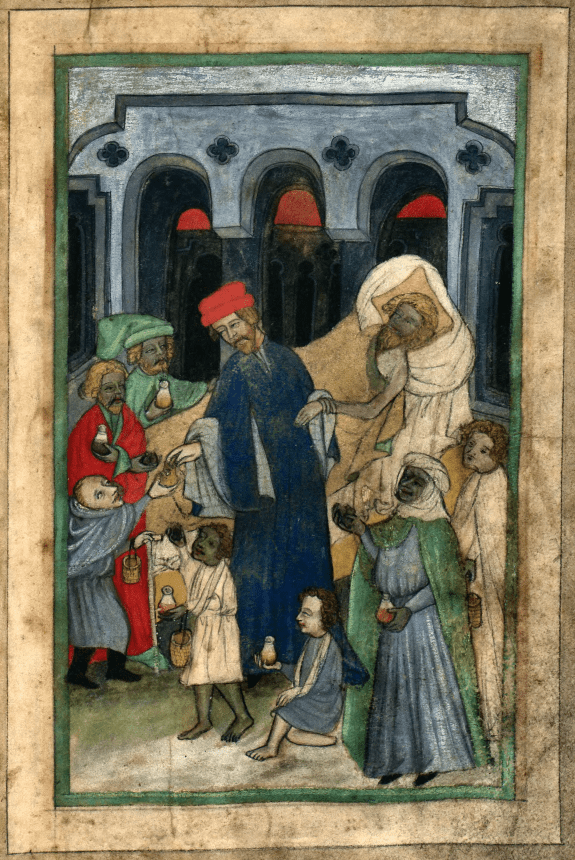
Avicenna at the sickbed, miniature by Walenty z Pilzna, Kraków (ca 1479–1480); image: jbc.bj.uj.edu.pl

The claim over Ibn Sina’s legacy is widespread. While Uzbeks and Tajiks both regard him as one of their own, Iranians also consider him Persian due to the language of his writings. In 2018, a bust of Abu Ali Ibn Sina was installed in front of the campus of the Autonomous University of Madrid as a gift from the Iranian embassy. The inscription on the bust reads, “Persian physician and philosopher.” Even Jewish scholars have cited him as part of their intellectual heritage. However, Ibragimov argues that Ibn Sina should be seen as a global figure rather than being tied to any single nationality. “He was a product of the Bukhara civilization, but his influence belongs to the world,” he told TCA.


Bakhtiyor Karimov; image courtesy of the subject.

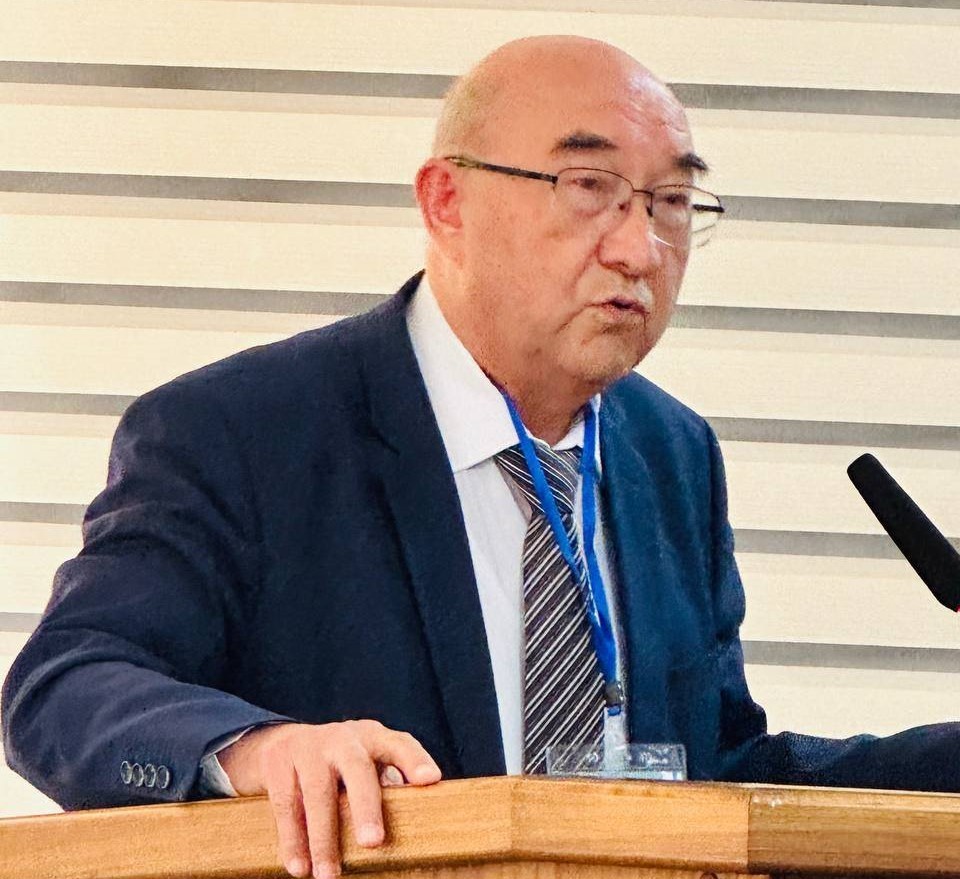
Similar discussions surround Al-Farabi, the renowned philosopher and scientist. Dr. Bakhtiyor Karimov, a leading researcher at the same institute, believes the evidence is clearer in Al-Farabi’s case.

Karimov argues that Al-Farabi’s nationality is not ambiguous. “His full name — Muhammad ibn Muhammad ibn Tarkhan ibn Uzlak Farabi at-Turki — indicates his Turkic origins. Historians of the time, such as Ibn Abu Usaybiya, explicitly referred to him as a Turkic.”

Karimov highlights that national identities were fluid in that era, and the names of distinct Turkic peoples emerged only much later. “Thousands of years ago, both Kazakhs and Uzbeks were named after a single Turkic people. National names appeared later; this was a slow process. The division into separate nations occurred about 2,500 years ago, but there are still about 20 Turkic peoples who speak a language closely related to each other. It is inappropriate to argue about whether a scientist is an Uzbek or a Kazakh – Farabi was a scholar of the Turkic world.

Pages from a 17th-century manuscript of al-Farabi’s commentary on Aristotle’s metaphysics; image: Bodleian Library, University of Oxford.

“Not only Kazakhs and Uzbeks, but also representatives of Central Asia and all Turkic civilizations, and, of course, all of humanity, can be proud of Farabi. Studying Al-Farabi and his works would lead people to ask new questions about historical events. In my view, people would make a discovery through learning the scholars works, they would invent the O‘rtaturk tili [Averaged Turkic language], a language that would be understandable for all Turkic peoples,” notes Karimov. He believes that a shared linguistic system would help unify Turkic-speaking nations and strengthen cultural ties.

“There are around 300 million Turkic speakers worldwide. Many of these languages share a high degree of mutual intelligibility, with common words and similar grammatical structures. By standardizing these shared elements, we could create a language that would be understood by all Turkic peoples,” he explained.

Karimov first formulated this idea of the Averaged Turkic language with his colleague Shoahmad Mutalov 51 years ago, but due to political constraints at the time, they could not openly promote it. However, in 1992, after Uzbekistan gained independence, they published a book titled O‘rtaturk tili (The Averaged Turkic Language) to further elaborate on their concept.

In a recent speech, Karimov suggested that the Averaged Turkic Language could become a world language. “Six presidents of independent Turkic states (Turkish, Azerbaijani, Turkmen, Uzbek, Kyrgyz, Kazakh) might write a letter to UN Secretary-General, Mr. António Guterres, requesting to include the Averaged Turkic language among world languages. Because about 150 million people speak Russian, and about 75 million speak French as native languages. About 300 million people speak various Turkic languages, but as I said above, speakers of these languages can understand each other 70-80% without an interpreter.”

TCA will explore this idea in greater depth in an upcoming article, examining its potential impact on cultural and linguistic unity among Turkic nations.

——-

Experts agree that the intellectual achievements of Ibn Sina, Al-Farabi, and other scholars of the 9th-12th centuries belong to all of humanity. Doctor of Historical Sciences Mirsodiq Is’hakov emphasizes the importance of unity rather than division: “The civilization of that time belongs to everyone. Our cultural past is shared. The scientists of that period are a collective heritage.

Language played a key role in the dissemination of knowledge. In particular, Arabic and Persian or Tajik were widely used in the Middle Ages, and Turkic languages also played a special role in cultural processes. “In those times, Persian was widely used for administrative and scholarly work. Even in Babur’s court in India, Persian remained the official language until 1858. But this does not mean everyone was Persian or Tajik,” Is’hakov clarified.

The debate over nationality may continue, but one thing remains clear: these scholars’ legacies transcend borders, enriching not just Central Asia but the entire world.