• KGS/USD = 0.01144 0%
  • KZT/USD = 0.00194 -0%
  • TJS/USD = 0.10844 -0.46%
  • UZS/USD = 0.00008 0%
  • TMT/USD = 0.28571 0.28%
  • KGS/USD = 0.01144 0%
  • KZT/USD = 0.00194 -0%
  • TJS/USD = 0.10844 -0.46%
  • UZS/USD = 0.00008 0%
  • TMT/USD = 0.28571 0.28%
  • KGS/USD = 0.01144 0%
  • KZT/USD = 0.00194 -0%
  • TJS/USD = 0.10844 -0.46%
  • UZS/USD = 0.00008 0%
  • TMT/USD = 0.28571 0.28%
  • KGS/USD = 0.01144 0%
  • KZT/USD = 0.00194 -0%
  • TJS/USD = 0.10844 -0.46%
  • UZS/USD = 0.00008 0%
  • TMT/USD = 0.28571 0.28%
  • KGS/USD = 0.01144 0%
  • KZT/USD = 0.00194 -0%
  • TJS/USD = 0.10844 -0.46%
  • UZS/USD = 0.00008 0%
  • TMT/USD = 0.28571 0.28%
  • KGS/USD = 0.01144 0%
  • KZT/USD = 0.00194 -0%
  • TJS/USD = 0.10844 -0.46%
  • UZS/USD = 0.00008 0%
  • TMT/USD = 0.28571 0.28%
  • KGS/USD = 0.01144 0%
  • KZT/USD = 0.00194 -0%
  • TJS/USD = 0.10844 -0.46%
  • UZS/USD = 0.00008 0%
  • TMT/USD = 0.28571 0.28%
  • KGS/USD = 0.01144 0%
  • KZT/USD = 0.00194 -0%
  • TJS/USD = 0.10844 -0.46%
  • UZS/USD = 0.00008 0%
  • TMT/USD = 0.28571 0.28%
09 December 2025

Tajikistan to Modernize Energy, Cotton, and Education Sectors with EU Grants

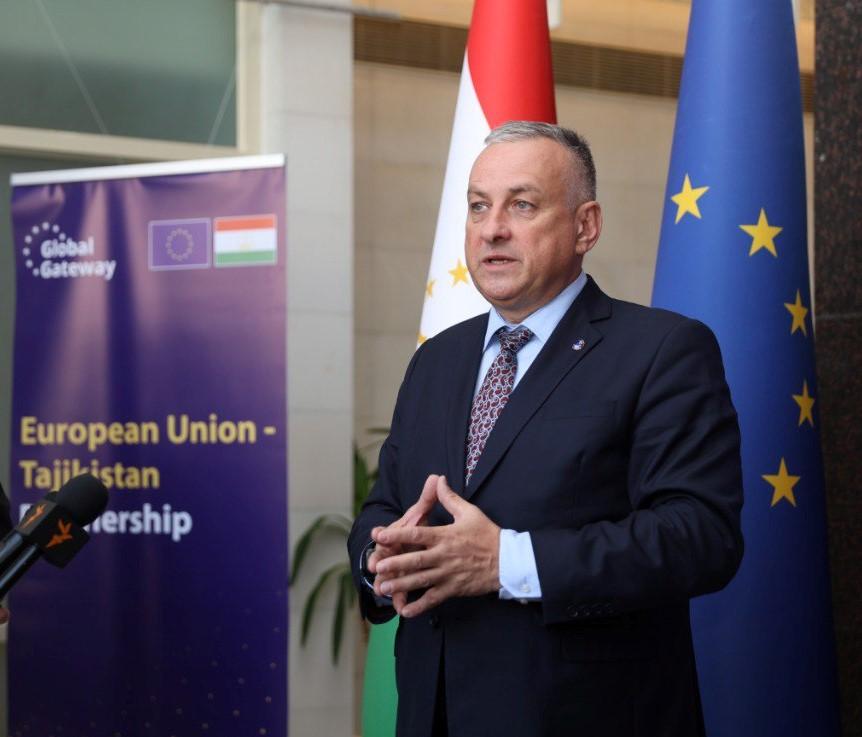
On March 14, European Commissioner for International Partnerships Jozef Síkela arrived in Tajikistan. He met with President Emomali Rahmon to reaffirm the European Union’s commitment to the country through the EU’s Global Gateway initiative​.

During their meeting, Síkela and Rahmon discussed the state and future of EU-Tajikistan relations, as well as pressing regional issues. Their talks focused on expanding economic and trade ties, attracting investments in industry and agriculture, and securing funding for hydropower projects. Rahmon emphasized Tajikistan’s commitment to green technologies and its goal of generating 100% of its electricity from renewable sources under the Strategy for the Development of the Green Economy until 2037​.

EU’s New Funding for Tajikistan

During his visit, Síkela announced several new EU funding initiatives aimed at strengthening Tajikistan’s sustainable development.

According to the EU Delegation to Tajikistan, two key agreements were signed with Team Europe partners to drive sustainability efforts in the country:

  • A €20 million investment grant with the European Bank for Reconstruction and Development (EBRD) to modernize Tajikistan’s electricity grid, reduce energy losses, and prepare for future renewable energy investments. This aligns with the EU’s broader goal of enhancing energy security and supporting the green transition in Central Asia.
  • A €20 million grant with Deutsche Gesellschaft für Internationale Zusammenarbeit (GIZ), the German Agency for International Cooperation, to promote sustainability in Tajikistan’s cotton sector. The initiative will support certified sustainable cotton production, improve processing for high-quality exports, and create new opportunities for the domestic private sector.

Additionally, the EU announced a €10 million disbursement as part of a larger €30 million budget support program. This funding will help implement the National Strategy for Education Development 2030 and the Programme for Professional Training of Citizens 2021-2025, improving the quality and relevance of both general secondary education and vocational training​.

As part of his visit, Síkela toured the Rogun Hydropower Plant, a crucial project for Tajikistan’s energy infrastructure.

“With its Global Gateway strategy, the EU is investing in Tajikistan’s future by supporting critical infrastructure upgrades, expanding renewable energy capacity, and modernizing key industries such as cotton production,” Síkela stated. “These investments will reduce energy losses, create jobs, and open new export markets”​.

Kazakhstan Strengthens Position in Global Critical Minerals Market

Kazakhstan has the potential to ensure a stable supply of critical minerals essential for the global energy transition and the expansion of the electric vehicle market, according to analysts at the Astana International Financial Center (AIFC)​.

An AIFC study highlights Kazakhstan’s competitive advantages in exporting copper, zinc, aluminum, silver, and lead. Additionally, nickel, gold, lithium, and rare earth metals are seen as promising sectors for export expansion​.

Kazakhstan holds a 5% share of the global zinc market, ranking seventh in reserves with 6.7 million tons. In 2022, Turkey, Russia, and China accounted for 70% of Kazakhstani zinc exports. The country also controls about 4% of the global copper market, with 20 million tons in reserves, placing it 11th worldwide. Its main copper buyers in 2022 were China, Turkey, and the UAE​.

Kazakhstan ranks eighth globally in lead reserves (2 million tons) and 12th in production, with 40,000 tons mined in 2021. Global lead demand is projected to rise from 11.6 million tons in 2022 to 13.4 million tons by 2031. In the silver market, Kazakhstan holds the third-largest reserves, accounting for 2.7% of global supply​.

In 2023, Kazakhstan ranked 11th in global bauxite reserves (160 million tons) and 10th in production (4.3 million tons), though its aluminum market share remains below 1%. The primary destinations for aluminum exports are Turkey, Italy, and Greece. Meanwhile, Kazakhstan is among the world’s top 20 nickel-producing countries, holding reserves of approximately 1.5 million tons, or 2% of global reserves, though its market share remains small​.

The country is also actively exploring lithium deposits in collaboration with companies from Germany, the UK, and South Korea. In March 2024, South Korean specialists discovered a lithium deposit in East Kazakhstan with a content of 5.3%, valued at an estimated $15.7 billion.

Kazakhstan has also strengthened its position in the critical minerals market through international agreements. It recently signed a contract with the European Union worth €3 million for the supply of essential raw materials​.

Kyrgyzstan and Tajikistan Restore Flights Following Landmark Border Agreement

Regular flights between Kyrgyzstan and Tajikistan will resume in April 2025, marking a significant step in restoring air connectivity between the two countries​.

A test flight on the Bishkek-Khujand-Bishkek route was successfully conducted by Kyrgyz airline Asman Airlines. Regular operations on this route will begin on April 8, with flights scheduled once a week. The approximate cost of a one-way ticket is expected to be around $90​.

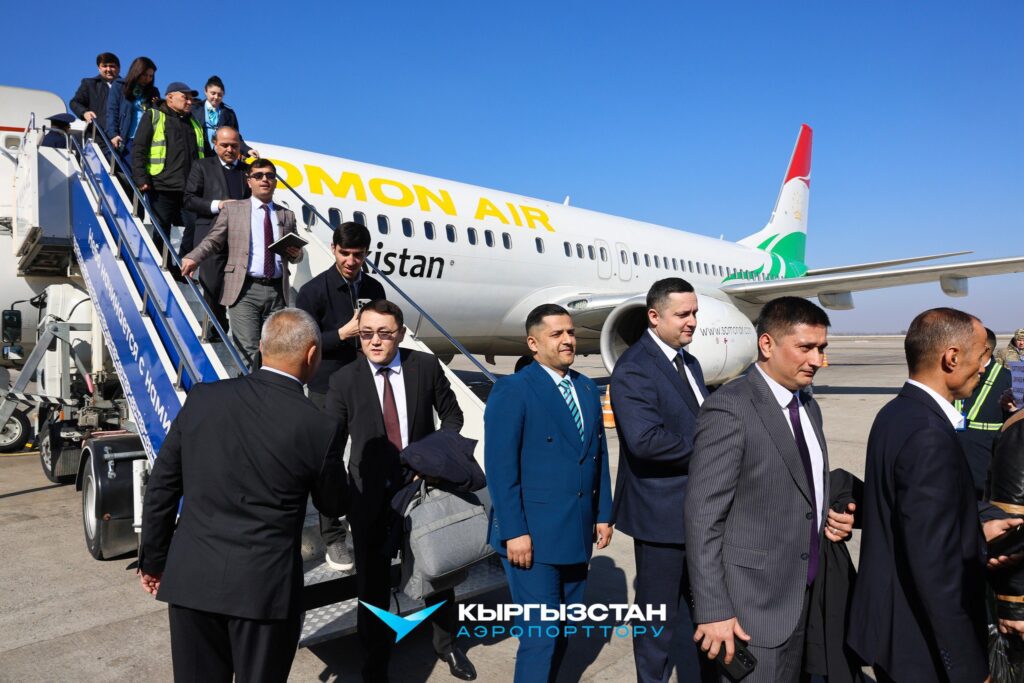
Additionally, Tajikistan’s national carrier, Somon Air, has resumed regular flights between Dushanbe and Bishkek after nearly four years. The first flight was made possible following an agreement between the two governments to restore air service​.

“This important development significantly strengthens air connectivity between Kyrgyzstan and Tajikistan, creating new opportunities for passengers and businesses. With the support of the presidents of both countries, regular flights between the capitals will become more accessible, contributing to the growth of economic and cultural ties,” said Manasbek Samidinov, Chairman of the Board of Manas International Airport Company​.

As previously reported by The Times of Central Asia, the resumption of air travel comes shortly after a historic border demarcation agreement between Kyrgyzstan and Tajikistan. On March 13, Presidents Sadyr Japarov and Emomali Rahmon signed a treaty finalizing all border sections. The landmark deal was the result of three years of negotiations, mutual concessions, and land swaps.

Biodiversity Experts Tell Banks to Halt Projects That Endanger Central Asia’s Rivers

On March 14, World Rivers Day of Action, international environmental organizations issued a stark warning about the future of Central Asia’s key rivers and lakes. A coalition, including Rivers without Boundaries, International Rivers, Friends of the Earth US, Urgewald, and CEE Bankwatch Network, called on major international development banks to reconsider their funding policies for hydropower projects.

According to environmentalists, Central Asia already has more than 300 large dams, with over 200 additional projects either planned or under construction, many with financial backing from international banks.

In a joint statement addressed to the World Bank, the European Bank for Reconstruction and Development, the European Investment Bank, the Asian Development Bank, the Eurasian Development Bank, the Islamic Development Bank, and the Asian Infrastructure Investment Bank, the groups expressed concern over the rapid expansion of dams in the region. They argue that these hydropower projects are fragmenting rivers, destroying natural habitats, and violating human rights.

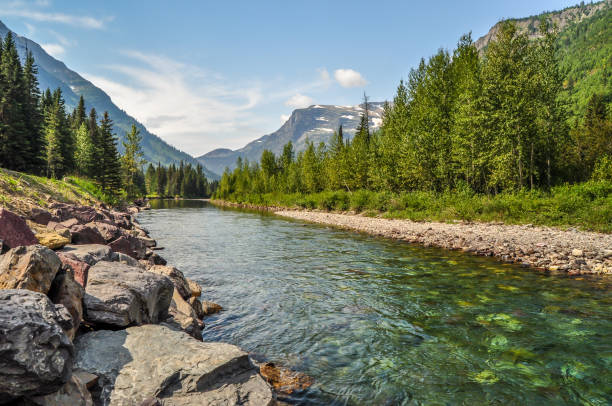
Despite UNESCO World Heritage protections and other conservation measures, environmentalists warn that increased international funding for both large and small hydropower projects could irreversibly damage Central Asia’s rivers. A newly published map by Rivers without Boundaries identifies the region’s most valuable and vulnerable freshwater ecosystems. If all planned projects are completed, nearly all of Central Asia’s river systems will be fragmented, including those that remained untouched during Soviet-era hydroengineering efforts.

“Dams and reservoirs in Central Asia are often presented as necessary for water conservation and energy development,” said Evgeny Simonov, international coordinator of Rivers without Boundaries. “However, global experience shows that this approach is often economically inefficient and environmentally destructive.”

Andrey Ralev, a biodiversity specialist at CEE Bankwatch Network, emphasized the severe impact of hydropower projects on the Amu Darya and Syr Darya rivers, which have already contributed to the Aral Sea crisis. “Their mountain tributaries still support unique biodiversity. Development banks should support their protection, not finance destructive hydropower projects,” he said.

Katharina Lu, a senior manager at Friends of the Earth US, highlighted the growing impact of climate change and biodiversity loss on river ecosystems and local communities. “International development banks must stop blindly supporting hydropower and instead consider decentralized energy solutions with less environmental impact,” she said.


Kazakhstan to Establish Nuclear Energy Agency

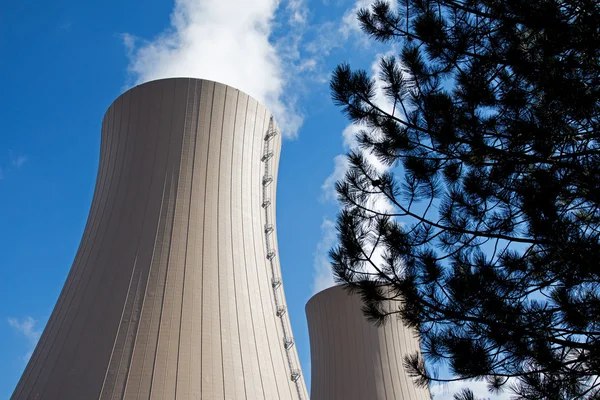
Kazakhstan will create a Nuclear Energy Agency, President Kassym-Jomart Tokayev announced during a session of the National Kurultai (annual assembly).

“Given the special significance of this issue, I have decided to establish the Agency for Nuclear Energy under the President. We must maximize the potential of gas and coal-fired generation, as well as renewable energy sources,” Tokayev said​.

Tokayev emphasized the need for a comprehensive, long-term approach to energy sector development.

“By approving the construction of the first nuclear power plant in a referendum, citizens have given the green light to this initiative. However, it is crucial not only to meet current energy demands but also to lay the foundation for future economic growth. That is why I believe it is necessary to construct not one, but three nuclear power plants to establish a full-fledged nuclear cluster,” he said​.

Kazakhstan held a referendum on October 6, 2024, regarding the construction of its first nuclear power plant. According to the Central Election Commission, 63.66% of eligible voters participated, with 71.12% (5.56 million people) supporting the project​.

In January 2025, the government finalized a shortlist of potential technology suppliers for the plant. The candidates include Russia’s Rosatom, South Korea’s KHNP, China’s CNNC, and France’s EDF​.

Simultaneously, authorities are completing an analysis of possible locations for the second and third nuclear power plants. The final construction plan is expected to be unveiled in the second quarter of 2025, with the city of Kurchatov among the potential sites under consideration​.

Kazakh Theatrical Performance Breaks Annual Record

The play Gauhartas, directed by Kazakhstani theater artist Askhat Maemirov, has been staged over 250 times within a year, marking a record achievement in Kazakhstan’s theater industry.

This widely acclaimed production is an adaptation of a work by esteemed Kazakh writer, Dulat Isabekov. His story depicts the life of a Kazakh family during the Soviet period, shedding light on the struggles of ethnic minorities under an authoritarian regime. In 1975, the Kazakhfilm studio produced a movie based on this work.  

With every show selling out, the play has already drawn nearly 75,000 spectators. It has been performed in several major cities across Kazakhstan, including Aktau, Atyrau, Oral, Taldykorgan, and Almaty. Plans are now in place to present the production on an international stage. “In this production, we emphasize the significance of family and cultural values in Kazakh society,” said the director of the musical drama. “We examine the roles of mothers and fathers, questioning their responsibilities and influence. By portraying the life of an ordinary Kazakh family, we aim to reflect deeper human emotions. At its core, the play conveys the importance of safeguarding love and happiness within the home.”

Though Gauhartas was first introduced to readers fifty years ago, its themes remain highly relevant today. The dynamics of family life and the bond between parents and children continue to be timeless subjects in literature and theater, and currently, many young people in Kazakhstan are coming to watch this play.

Image: TCA, Duisenali Alimakyn

This work was written by the recently deceased Kazakh writer, Dulat Isabekov, when he was 25 years old while serving in the military near Moscow. Depicting Kazakh society, including one family’s internal resistance to the system and the impact of Soviet society on people, this work became one of the author’s timeless creations.

The play offers a fresh perspective to Kazakh audiences by addressing the issue of women’s equality. It delves into the fractured relationship between society, a father, and a son, highlighting their inability to connect and understand one another, ultimately leading to tragedy. In essence, this work looks back at the past, aligns with the present, and paves the way for a hopeful future.