
• KGS/USD = 0.01144 0%
  • KZT/USD = 0.00194 -0%
  • TJS/USD = 0.10896 -0%
  • UZS/USD = 0.00008 0%
  • TMT/USD = 0.28571 0.28%
  • KGS/USD = 0.01144 0%
  • KZT/USD = 0.00194 -0%
  • TJS/USD = 0.10896 -0%
  • UZS/USD = 0.00008 0%
  • TMT/USD = 0.28571 0.28%
  • KGS/USD = 0.01144 0%
  • KZT/USD = 0.00194 -0%
  • TJS/USD = 0.10896 -0%
  • UZS/USD = 0.00008 0%
  • TMT/USD = 0.28571 0.28%
  • KGS/USD = 0.01144 0%
  • KZT/USD = 0.00194 -0%
  • TJS/USD = 0.10896 -0%
  • UZS/USD = 0.00008 0%
  • TMT/USD = 0.28571 0.28%
  • KGS/USD = 0.01144 0%
  • KZT/USD = 0.00194 -0%
  • TJS/USD = 0.10896 -0%
  • UZS/USD = 0.00008 0%
  • TMT/USD = 0.28571 0.28%
  • KGS/USD = 0.01144 0%
  • KZT/USD = 0.00194 -0%
  • TJS/USD = 0.10896 -0%
  • UZS/USD = 0.00008 0%
  • TMT/USD = 0.28571 0.28%
  • KGS/USD = 0.01144 0%
  • KZT/USD = 0.00194 -0%
  • TJS/USD = 0.10896 -0%
  • UZS/USD = 0.00008 0%
  • TMT/USD = 0.28571 0.28%
  • KGS/USD = 0.01144 0%
  • KZT/USD = 0.00194 -0%
  • TJS/USD = 0.10896 -0%
  • UZS/USD = 0.00008 0%
  • TMT/USD = 0.28571 0.28%
09 December 2025

Kyrgyzstan Prepares for Spring Field Work

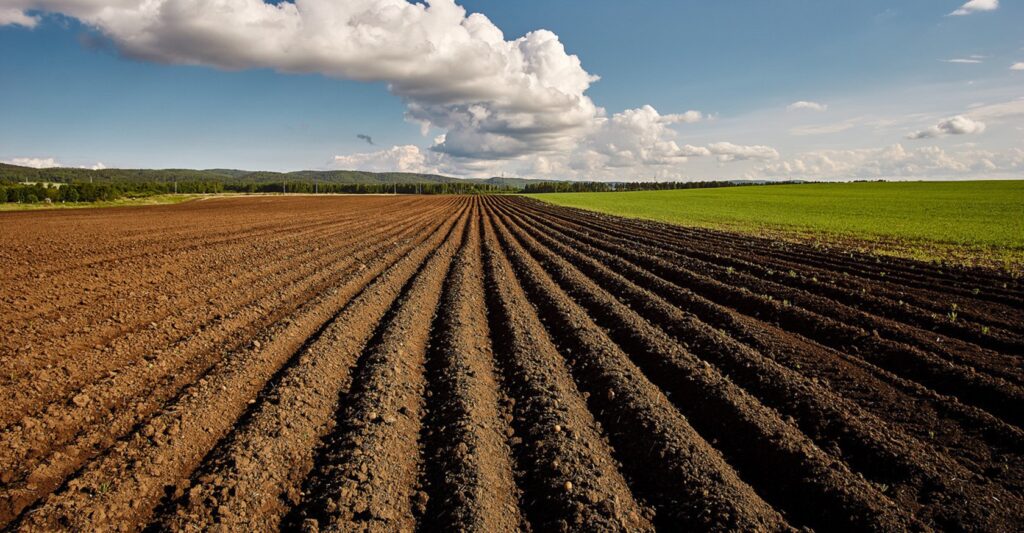
Kyrgyzstan’s Minister of Water Resources, Agriculture, and Processing Industry, Bakyt Torobaev, has reported to parliament on the country’s preparations for the 2025 spring agricultural season. Key topics discussed included the reconstruction of irrigation facilities, the availability of fuel, seeds, and fertilizers, and the issuance of soft loans for purchasing agricultural machinery.

According to Torobaev, the government has secured 42,000 tons of diesel fuel and 12,000 tons of gasoline to support farmers. This year’s total sowing area will cover 1.25 million hectares, an increase of 3,300 hectares from the previous year, which is expected to result in a larger harvest.

Irrigation System Challenges

Judging by questions raised by deputies from various regions, the main concern for farmers remains irrigation water supply. The discussion covered the construction of additional irrigation canals and the overall condition of the country’s irrigation system.

Last year, a drought and deteriorating irrigation infrastructure led to significant water shortages for farmers, prompting widespread criticism of the Ministry of Agriculture. In response, the ministry developed a plan to construct dozens of Seasonal Regulation Basins, reservoirs designed to store excess water from snowmelt and rainfall for use in dry months. By 2028, the ministry aims to build 106 of these reservoirs.

Seed and Fertilizer Supply

Deputies also inquired about the availability of seeds ahead of spring planting. Torobaev gave assurances that 90% of the required seed volume has already been secured, and there will be no shortages of seeds, fertilizers, or pesticides.

“This year, 64,600 tons of grain seeds will be sown. As of today, 58,500 tons have been accumulated, ensuring 91% of the required supply. For crops such as cereals, rice, tobacco, legumes, and soybeans, we are fully stocked at 100%,” Torobaev stated.

Additionally, more than 12 million fruit and berry seedlings have been prepared for planting in state nurseries, with mineral fertilizers and pesticides actively being stocked.

Advancements in Irrigation

In southern Kyrgyzstan, enhanced water-saving irrigation has already begun. This technique involves providing crops with a high volume of water early in the growing season, which promotes better growth, increases stress resistance, and improves soil structure.

Kazakhstan Looks to Reduce Dependence on Feed Imports

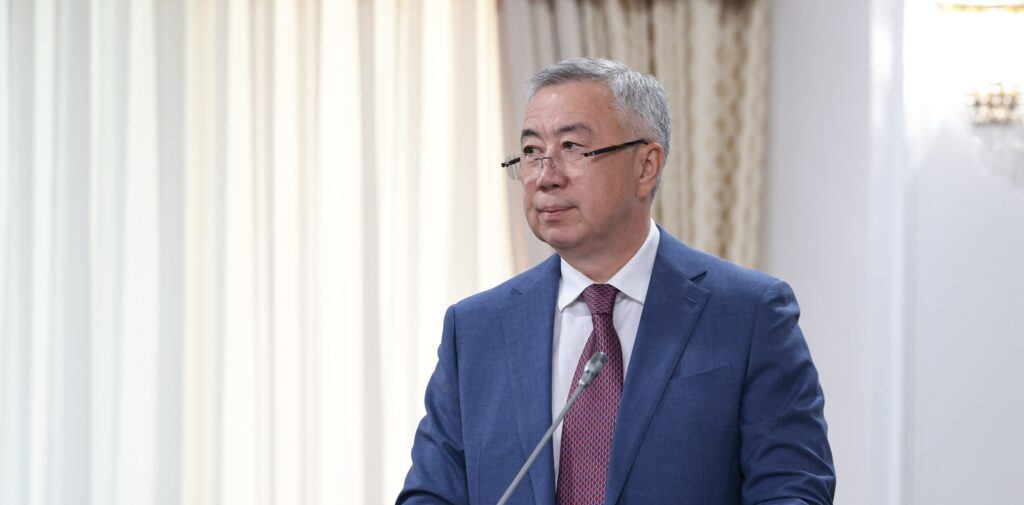
On March 12, Kazakhstan’s Deputy Prime Minister, Serik Zhumangarin, met with executives from Hungary’s UBM Group, which plans to build three plants in Kazakhstan to produce 48,000 tons of premixes and 300,000 tons of compound feed annually. The project also includes the establishment of a laboratory and a training center.

According to the Kazakh government’s press service, the project aims to reduce Kazakhstan’s reliance on imported compound animal feed, which currently exceeds 250,000 tons per year.

Zhumangarin emphasized that ensuring local livestock farmers have access to high-quality, domestically produced feed is a strategic priority for lowering meat production costs. He also reiterated Kazakhstan’s broader goal of meeting at least 90% of domestic food demand with locally produced goods, particularly essential food products.

The UBM Group project will involve the construction of facilities in the Kostanay and Karaganda regions, as well as in Almaty.

  • In the Karaganda region, a business partner and construction site have already been selected.
  • In Kostanay and Almaty, local partners have been identified, but final decisions on construction sites are still pending.

To expedite the process, Zhumangarin instructed local administrations and the Ministry of Agriculture to allocate land plots by the end of March, allowing the investor to begin earthworks in the second quarter of this year.

The entire construction project is expected to be completed within two years.

Visit by EU’s Sikela Strengthens Global Gateway Partnership with Turkmenistan

On March 12, European Commissioner for International Partnerships Jozef Síkela visited Turkmenistan, as part of the European Union’s work to expand cooperation under the Global Gateway strategy. The visit focused on transport connectivity, renewable energy, and trade facilitation, aiming to integrate Turkmenistan into regional and global economic networks, according to the EU Delegation to Turkmenistan.

Global Gateway and the Trans-Caspian Transport Corridor

The Global Gateway strategy is the EU’s initiative to bridge global investment gaps by promoting sustainable connectivity in digital, energy, and transport sectors, while strengthening education and research systems. The initiative seeks to mobilize €300 billion in public and private investments between 2021 and 2027, fostering sustainable growth and resilient partnerships worldwide.

A key topic during Síkela’s meetings with Turkmenistan’s President Serdar Berdimuhamedov and Foreign Minister Rashid Meredov was the Trans-Caspian Transport Corridor, a strategic route enhancing connectivity between Central Asia and Europe.

Síkela reaffirmed the EU’s support for Turkmenistan’s role in this corridor, emphasizing its potential to create faster, more secure trade routes.

“We see Turkmenistan as a key partner for building stronger connections between Europe and Central Asia. By working together under the Global Gateway, especially through the Trans-Caspian Transport Corridor, we are creating faster, more secure trade routes that will open new opportunities for businesses, attract investments, and create jobs. Our joint efforts aim to cut trade times between Europe and Asia to only 15 days, while helping Turkmenistan become an important hub for commerce between Asia and Europe.”

According to the Turkmen Foreign Ministry, Berdimuhamedov highlighted the Turkmenbashi Port as a vital transit hub on the Caspian coast, offering a direct link to the Black Sea, Europe, the Middle East, South Asia, and the Asia-Pacific region.

While in Turkmenistan, Síkela visited the Turkmenbashi Port, where he met with Mammethan Chakyev, Director General of the Agency for Transport and Communications under the Cabinet of Ministers. He reaffirmed the EU’s commitment to supporting infrastructure modernization and regulatory alignment to international standards.

Energy and Climate Cooperation

As part of the visit, two key initiatives were launched under the EU-Turkmenistan bilateral cooperation facility:

A €6 million project, implemented by the International Trade Centre (ITC), will support Turkmenistan’s accession to the World Trade Organization (WTO) and promote economic modernization.

A €4.5 million initiative, implemented by GIZ, aims to advance renewable energy development, reduce methane emissions, and improve energy efficiency.

Síkela also welcomed Turkmenistan’s accession to the Global Methane Pledge, stressing the importance of emissions reduction and sustainable energy solutions for fostering a greener economy. The EU’s technical and financial assistance will further support Turkmenistan’s efforts to align with international trade and environmental standards.

Uzbekistan and France Sign €6.5 Billion Partnership Agreements

Uzbekistan’s President Shavkat Mirziyoyev arrived in Paris on March 12 for a state visit at the invitation of French President Emmanuel Macron. The visit focused on strengthening political, economic, and cultural ties between the two countries.

Expanding Cooperation with UNESCO

As part of his visit, President Mirziyoyev met with Audrey Azoulay, Director-General of UNESCO, to discuss Uzbekistan’s growing collaboration with the organization. The talks also covered preparations for the 43rd UNESCO General Conference, set to take place in Samarkand this autumn, the first time the event will be held outside UNESCO’s Paris headquarters in 40 years.

Uzbekistan has been actively engaged with UNESCO on various cultural and educational projects. The country has joined the International Center for the Preservation and Restoration of Cultural Heritage, and Bukhara has been added to the Network of Creative Cities. Several Uzbek traditions and artifacts, such as sericulture, pottery, and the archives of the Emir of Bukhara, have also been recognized by UNESCO.

Bilateral Talks and Strengthened Economic Ties

During his meeting with President Macron at the Élysée Palace, Mirziyoyev discussed ways to enhance Uzbek-French relations. Both leaders noted that agreements made during their 2023 meeting in Samarkand were already being implemented.

Trade between the two nations has grown significantly, surpassing €1 billion last year. The number of joint ventures has quadrupled, with French businesses increasing their presence in Uzbekistan.

A series of business forums and cultural events were held in Paris, Toulouse, Lyon, and Nice, covering key areas such as medicine, science, and education. Notably, a bust of Abu Rayhan Beruni, the renowned Uzbek scholar, was unveiled in the French town of Grez-Armainville.

€6.5 Billion Innovation and Industrial Partnership

One of the most significant outcomes of the visit was the launch of a new Innovation and Industrial Partnership Program, which includes €6.5 billion worth of joint projects in energy, infrastructure, mining, and transport. With this, the total value of Uzbek-French projects now exceeds €12 billion.

In education, an agreement was signed to establish the Uzbek-French University in Tashkent, with experienced French specialists expected to teach there. Additionally, cooperation will continue in training French language teachers in Uzbekistan.

To further boost business, tourism, and cultural exchanges, both sides discussed increasing the number of direct flights between Uzbekistan and France.

Signed Agreements and Strategic Partnership

Following the talks, Mirziyoyev and Macron adopted a joint declaration on the establishment of a strategic partnership. Key agreements signed include:

  • An intergovernmental agreement on the establishment of the Uzbek-French University
  • A mutual visa exemption for diplomatic passport holders
  • A cooperation program for investment and innovation covering €6.5 billion in projects
  • Agreements on healthcare, music, cinema, and theater collaboration
  • A protocol to strengthen French language education
  • A partnership agreement between the cities of Tashkent and Paris

Kazakhstan’s Karaganda Among World’s Most Polluted Cities as Central Asia Struggles with Air Quality

Kazakhstan’s Karaganda – the heartland of the nation’s coal and metallurgical industries – was ranked as the world’s third most polluted city in 2024, according to the 2024 World Air Quality Report released by IQAir. 

The report evaluates global air quality for 2024, presenting PM2.5 air pollution data collected from 8,954 cities across 138 countries, regions, and territories. PM2.5, or fine particulate matter, is measured in micrograms per cubic meter (µg/m³) and is a key indicator of air pollution.

Karaganda recorded an annual average PM2.5 concentration of 104.8 µg/m³ in 2024. In comparison, Byrnihat, India, the world’s most polluted city, had an average PM2.5 concentration of 128.2 µg/m³.

Central Asian Cities in the Global Ranking

Among the world’s most polluted cities, Central Asia’s major cities ranked as follows:

  • Dushanbe, Tajikistan – 176th, PM2.5: 46.3 µg/m³
  • Tashkent, Uzbekistan – 510th, PM2.5: 31.4 µg/m³
  • Bishkek, Kyrgyzstan – 1009th, PM2.5: 21.2 µg/m³
  • Almaty, Kazakhstan – 1072nd, PM2.5: 20.3 µg/m³
  • Astana, Kazakhstan – 1608th, PM2.5: 15.4 µg/m³

Kazakhstan’s Regional Air Quality Standing

In the ranking of the world’s most polluted countries, Kazakhstan had the best air quality in Central Asia, ranking 71st globally. Other regional rankings were:

  • Tajikistan – 6th most polluted country
  • Uzbekistan – 19th
  • Turkmenistan – 26th
  • Kyrgyzstan – 41st

Global Air Pollution Trends

According to the report, only 17% of global cities met the World Health Organization (WHO) air pollution guideline for PM2.5. The seven countries that met the WHO’s annual average PM2.5 guideline of 5 µg/m³ were:

  • Australia
  • Bahamas
  • Barbados
  • Estonia
  • Grenada
  • Iceland
  • New Zealand

The five most polluted countries in 2024 were:

  1. Chad – 91.8 µg/m³ (more than 18 times higher than the WHO guideline)
  2. Bangladesh – 78.0 µg/m³ (more than 15 times higher)
  3. Pakistan – 73.7 µg/m³ (more than 14 times higher)
  4. Democratic Republic of the Congo – 58.2 µg/m³ (more than 11 times higher)
  5. India – 50.6 µg/m³ (more than 10 times higher)

A total of 126 out of 138 countries (91.3%) exceeded the WHO’s annual PM2.5 guideline of 5 µg/m³.

Air Pollution’s Impact on Human Health

The report underscores that air pollution remains the greatest environmental threat to human health. According to the WHO, 99% of the global population lives in areas that do not meet recommended air quality levels.

Air pollution is the second leading global risk factor for death and the second leading cause of death among children under five, following malnutrition. The health effects of air pollution include respiratory diseases, developmental issues, and increased mortality.

In 2021 alone, 8.1 million deaths were attributed to air pollution, with 58% of those deaths caused by ambient PM2.5 pollution.

Kazakhstan to Require Parents to Purchase Special SIM Cards for Children

Kazakhstan plans to introduce special SIM cards for children, limiting their access to the internet. Deputy Minister of Education Yedil Ospan announced the initiative on March 12, stating that discussions are ongoing with authorized government agencies as part of a comprehensive plan. 

“We assume that operators should issue special SIM cards intended for use by children. That is, a parent will be obliged to buy these very SIM cards for their children,” Ospan said.

According to him, these SIM cards will include built-in security filters restricting access to inappropriate content, including certain websites and social networks. Parents will also be able to monitor their child’s phone usage and track their location through a dedicated application.

Ospan emphasized that while Kazakhstan already offers children’s mobile plans with access to educational resources, they do not provide full control over internet safety. The new initiative aims to enhance digital protection for minors.

Research from Kazakhstan Kids Online indicates that official access to digital platforms is permitted from age 13. However, 60% of children aged 9-10 and 66% of those aged 11-12 already have personal internet accounts. In response, the Ministry of Education, in collaboration with experts, is developing legislative amendments to strengthen internet safety measures for children.

The introduction of child-specific SIM cards is part of broader efforts to regulate mobile communications in Kazakhstan. The Ministry of Digital Development has also proposed limiting individuals to a maximum of 10 SIM cards, although this measure remains under discussion.


