• KGS/USD = 0.01144 0%
  • KZT/USD = 0.00194 -0%
  • TJS/USD = 0.10844 -0.46%
  • UZS/USD = 0.00008 0%
  • TMT/USD = 0.28571 0.28%
  • KGS/USD = 0.01144 0%
  • KZT/USD = 0.00194 -0%
  • TJS/USD = 0.10844 -0.46%
  • UZS/USD = 0.00008 0%
  • TMT/USD = 0.28571 0.28%
  • KGS/USD = 0.01144 0%
  • KZT/USD = 0.00194 -0%
  • TJS/USD = 0.10844 -0.46%
  • UZS/USD = 0.00008 0%
  • TMT/USD = 0.28571 0.28%
  • KGS/USD = 0.01144 0%
  • KZT/USD = 0.00194 -0%
  • TJS/USD = 0.10844 -0.46%
  • UZS/USD = 0.00008 0%
  • TMT/USD = 0.28571 0.28%
  • KGS/USD = 0.01144 0%
  • KZT/USD = 0.00194 -0%
  • TJS/USD = 0.10844 -0.46%
  • UZS/USD = 0.00008 0%
  • TMT/USD = 0.28571 0.28%
  • KGS/USD = 0.01144 0%
  • KZT/USD = 0.00194 -0%
  • TJS/USD = 0.10844 -0.46%
  • UZS/USD = 0.00008 0%
  • TMT/USD = 0.28571 0.28%
  • KGS/USD = 0.01144 0%
  • KZT/USD = 0.00194 -0%
  • TJS/USD = 0.10844 -0.46%
  • UZS/USD = 0.00008 0%
  • TMT/USD = 0.28571 0.28%
  • KGS/USD = 0.01144 0%
  • KZT/USD = 0.00194 -0%
  • TJS/USD = 0.10844 -0.46%
  • UZS/USD = 0.00008 0%
  • TMT/USD = 0.28571 0.28%
09 December 2025

Uzbekistan and Taliban Agree on Hairatan-Herat Railway Project

Taliban Deputy Chief Minister Abdul Ghani Baradar announced that construction on the planned Hairatan-Herat railway would begin within 10 days of a feasibility study, which Uzbekistan will finance. He also stated that Uzbekistan had agreed to reduce the cost of a power transmission line project to Afghanistan by $30 million, lowering the total to $222 million, Amu TV reports. The announcement followed Baradar’s two-day visit to Uzbekistan.

The railway project aims to extend the existing line from Hairatan, a key trade hub on the Uzbekistan-Afghanistan border, through Mazar-e-Sharif and on to Herat. The first phase, a 75-kilometer section from Hairatan to Mazar-e-Sharif, was completed in 2010 with funding from the Asian Development Bank. The planned extension is expected to enhance trade links between Central Asia and the Middle East.

During the visit, Baradar and his delegation met with Uzbek Prime Minister Abdulla Aripov and Deputy Prime Minister Jamshid Khodjayev to discuss trade, energy, aviation, and infrastructure. Baradar stated that Uzbekistan had agreed to increase electricity exports to Afghanistan during the summer and reduce tariffs.

Taliban Commerce Minister Nooruddin Azizi added that discussions also covered trade and banking cooperation, as well as a potential railway extension from Hairatan to Spin Boldak. Additionally, Uzbekistan will lift restrictions on Afghan agricultural exports and establish four trade centers in major cities across both countries.

Aripov visited Kabul last August for talks focused on boosting trade, strengthening energy cooperation, and collaborating on copper, iron, oil, and gas projects. Both sides agreed that trade between Uzbekistan and Afghanistan could reach $1 billion in 2024 and expand to $3 billion in the near future.

Report Addresses Cross-Border Challenges in Irtysh River Basin

The Eurasian Development Bank (EDB) has released a report titled “The Irtysh River Basin: Transboundary Challenges and Practical Solutions”, analyzing the water resources of the transboundary Irtysh River basin, shared by China, Kazakhstan, and Russia. The report highlights growing water demand in all three countries and proposes practical solutions to address cross-border challenges.

Strategic Importance of the Irtysh River

The Irtysh River, the world’s longest transboundary tributary, stretches 4,248 km and, together with the Ob River, forms Russia’s longest waterway, the second longest in Asia and the seventh longest globally. Flowing from China through Kazakhstan into Russia, the river is crucial for all three countries, necessitating strategic cooperation in its management.

The Irtysh River Basin; image: eabr.org

Key Challenges in Each Country

China

In China, the upper Irtysh River is essential for the Xinjiang Uygur Autonomous Region (XUAR), where the population has surged from 15.2 million in 1990 to 25.87 million in 2022. Rapid regional development has made water stress a pressing issue. Research forecasts that annual water withdrawals from the Irtysh could more than triple, from the current 1.5 – 2.0 km³ to 7 km³, out of an average natural flow of 8.3 km³.

Kazakhstan

In Kazakhstan, the Irtysh and its tributaries support 30% of the population and contribute 45% of the country’s total agricultural output. The Irtysh HPP Cascade accounts for 10% of Kazakhstan’s electricity generation and 80% of its hydropower capacity. Increased water withdrawals by China pose significant risks to Kazakhstan’s water security.

Russia

For Russia, upstream water policies in China and Kazakhstan are major concerns. Excessive Chinese withdrawals could reduce Kazakhstan’s downstream flow, impacting Omsk and the surrounding Omsk Municipal District. Changes in water availability and quality over the next decade present serious socio-economic challenges for the region.

Key Recommendations from the Report

The EDB report outlines four major recommendations for managing transboundary water challenges:

Expanding Bilateral and Trilateral Cooperation

The report urges stronger water agreements between Kazakhstan and Russia, as well as between Kazakhstan and China, incorporating international water management principles. Recommended cooperation areas include:

  • Ensuring international navigation on the Irtysh-Ob River system
  • Controlling water pollution
  • Regulating safe water usage
  • Improving efficiency during floods, droughts, and low-water periods

This groundwork would help establish a future trilateral water management agreement between the three countries.

Strengthening Water Management Infrastructure

The report calls for soft infrastructure development, such as:

  • Creating an interstate river flow monitoring system with open data access
  • Developing joint training programs for water management specialists
  • Expanding interdisciplinary water research involving experts from all three nations

Coordinating Hydraulic Infrastructure Operations

The report stresses the importance of joint management of existing and future hydropower plants, dams, reservoirs, and irrigation canals to ensure stable water supplies without harming other nations’ resources. Priority projects include:

  • Shulbinsk HPP (Phase 2) in Kazakhstan
  • Semipalatinsk HPP in Kazakhstan
  • Modernization of the Satpayev Irtysh-Karaganda Canal in Kazakhstan
  • Construction of the Krasnogorsk hydro-system near Omsk, Russia

Developing a Multimodal Transport Corridor

The report proposes a multimodal transport corridor linking Russia, Kazakhstan, and China, utilizing the Irtysh-Ob waterway to connect:

  • The Northern Sea Route (Arctic shipping lane)
  • The Silk Road (Eurasian trade route)

This corridor would enhance global connectivity, providing landlocked Central Asian nations and northwestern China with access to Russian inland regions and Arctic ports.

The report underscores the urgent need for coordinated water management to balance economic growth, environmental sustainability, and regional stability. With China’s rising water demand, Kazakhstan’s agricultural dependence, and Russia’s downstream concerns, enhanced bilateral and trilateral cooperation is essential for securing the future of the Irtysh River Basin.

Securing Central Asia’s Future: EBRD’s Regional Head on the Fight for Water Sustainability

Every fourth inhabitant of Central Asia, home to more than 83 million people, does not have regular access to safe drinking water. The region spans more than four million square kilometers, and over 15% of its territory is covered by the Karakum and Kyzylkum deserts, as well as waterless places such as the Ustyurt Plateau (similar in size to the United Kingdom), which stretches across Kazakhstan, Uzbekistan, and Turkmenistan. The extreme heat common to Central Asia in summer makes water a precious resource.

To make matters worse, irresponsible human activity, particularly wasteful water use for irrigation, has led to one of the most devastating ecological catastrophes globally. The Aral Sea, where up to 60,000 tonnes of fish were caught annually only 30 years ago, has practically ceased to exist. Most of Central Asia’s freshwater intake relies on glacial melts affected by global warming. 

The World Resources Institute forecast in its 2023 Aqueduct Water Risk Atlas that an additional one billion people globally will live with extremely high water stress by 2050. This will disrupt economies and agricultural production. Most Central Asian countries will be severely affected.

While the European Bank for Reconstruction and Development (EBRD) cannot reverse the global warming process or tackle its impacts alone, it can certainly contribute to climate change mitigation efforts, securing better water access, and promoting its rational use. There is frequently no water supply or water treatment infrastructure in rural areas of the regions where it invests. 

Most municipal water supply and treatment utilities across Central Asia have not seen much investment or refurbishment over the last 30 years. The EBRD has been working to address this issue, and many of its investment projects are already impacting people’s lives.
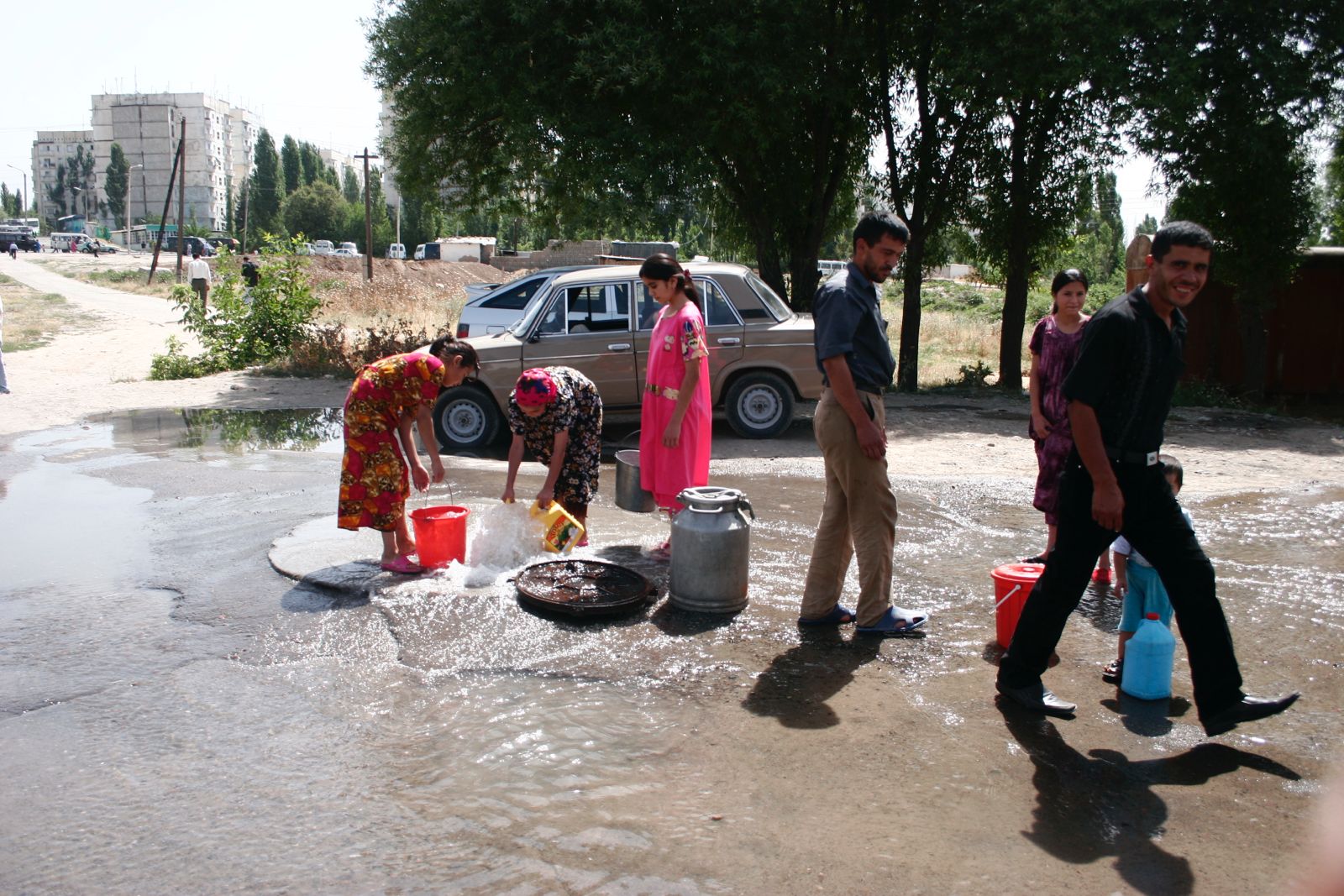
Image: EBRD

In Kazakhstan, the Bank’s work with Vodnye Resoursy Marketing (VRM)/Shymkent water company, the country’s only privately owned municipal water utility, perfectly illustrates why the EBRD is such a strong advocate of private-sector involvement in the provision of municipal services. Over many years, we have enjoyed excellent cooperation with this company, which has translated into high-quality water supply services for more than 1.2 million residents of Shymkent. It has become a benchmark for the region for its effective and efficient operations.

Thanks to VRM’s efforts, with 1.2 million residents, Shymkent became the first city in Kazakhstan to install a water meter for every consumer. User habits have changed: personal daily water consumption has decreased from 456 liters 27 years ago to 150 liters. The water savings achieved during this period will enable Shymkent to meet the needs of its population for another 20 years. 

The EBRD started working with VRM in 2009 and has financed five projects totaling €60 million. With the Bank’s financial assistance, VRM has introduced an automated network monitoring system, improved power supply at twelve pumping stations, constructed eleven electrical substations, and built a European Union standards-compliant biogas facility (the only one of its kind in Central Asia), which helps VRM to meet all of its thermal energy needs. Water losses from the system have declined from 42% to 17%. The EBRD’s and VRM’s joint investments have allowed the upgrade of 126 km of water supply networks and 112 km of sewer networks in Shymkent. 
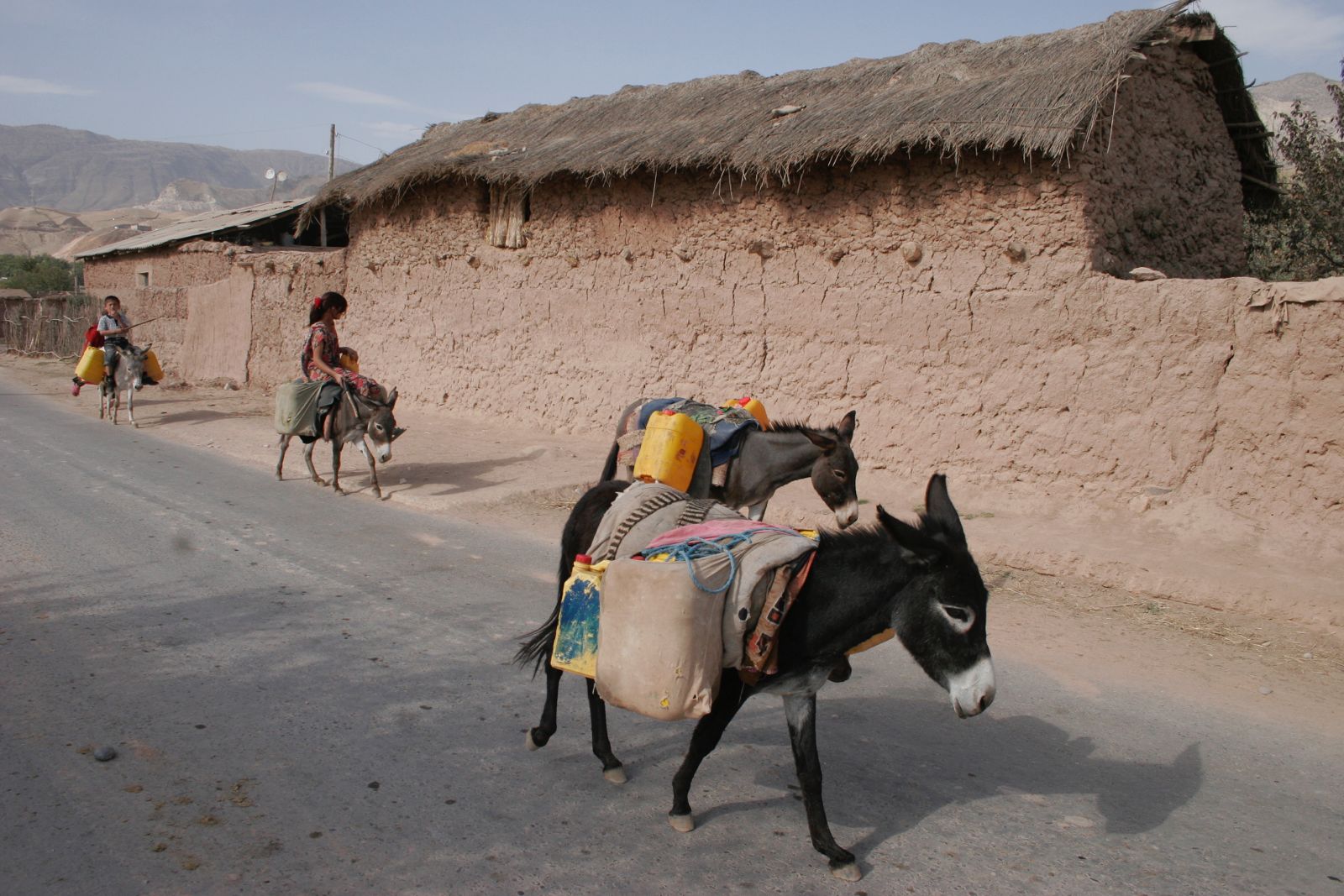
Image: EBRD

Building sustainable infrastructure that can provide high-quality water and wastewater services to businesses and households in Central Asia is not easy. The institutional capacity of state-owned utilities in countries such as the Kyrgyz Republic and Tajikistan is often very low. This slows project implementation, making them more expensive and frustrating for stakeholders. 

Luckily, the EBRD has a solution. Thanks to its cooperation with donors (the EU, Switzerland, Japan, and the Global Environment Facility, to name but a few), the EBRD can offer longer loan maturities, mobilize grants to cover project-associated costs, and spend time on policy dialogue with relevant ministries, agencies, and state-owned companies. The EBRD is helping to strengthen the Kyrgyz Republic’s and Tajikistan’s resilience to climate change and reduce energy and water consumption by rehabilitating water networks and building pump stations, clean water reservoirs, and water intake and treatment facilities.

More than 1.7 million people in 21 municipalities across Tajikistan enjoy better access to clean and safe drinking water after completing eight water infrastructure rehabilitation projects (in various parts of the country, from Khujand to Khorog). Over the last 18 years, the EBRD has mobilized $102 million (€99 million), including its loans, donor grants, and technical cooperation funds. These funds have facilitated the replacement of over 700,000 meters of water network pipes, constructing or rehabilitating 44 water intakes, the installation of 25,000 water meters, and the procurement of more than 150 specialized vehicles and other equipment.

In the Kyrgyz Republic, the Bank has invested more than $196 million (€190 million) in 31 water projects in 26 cities, many of them under the Kyrgyz Water Sector Resilience Framework. Sub-loans to small municipalities in the mountains of Tian Shan and in the Ferghana Valley, where socioeconomic issues surrounding shared water resources are most pressing, may be not large but are very important. They address critical drinking water and wastewater infrastructural issues and promote sustainable water use by minimizing water losses and encouraging water conservation.

In 2024, the EBRD Board approved a €100 million Regional Integrated Water Resources Management Framework for the Kyrgyz Republic and Tajikistan. It will help to identify and implement more water-related projects in the coming years.

In the region’s two largest economies, Kazakhstan and Uzbekistan, the Bank has financed water and wastewater projects amounting to €255.8 million and €407 million, respectively. These include a sovereign loan of €96.4 million for constructing a new wastewater treatment plant in Aktobe, Kazakhstan (the EBRD’s largest municipal project in Central Asia). The funds will also finance the construction of a sludge treatment facility with a biogas-fuelled power generation unit.

It is also worth noting that the Bank is working to improve the efficiency of regional irrigation water conveyancing systems in Kazakhstan, Uzbekistan, and the Kyrgyz Republic. All the countries depend on irrigated agriculture and are known for relatively low levels of rainfall throughout the year. Replacing old water pumps and pipes with modern equipment will ensure better control over the flow of water and reduce losses.

Kazakh Ex-Security Chief’s Wild Trump KGB Recruitment Story Gains Media Traction

A recent Facebook post by Major General Alnur Musayev, the former head of Kazakhstan’s National Security Committee (KNB), has drawn widespread attention after he claimed that the KGB recruited U.S. President Donald Trump in 1986 under the codename “Krasnov” (a Russian family name, derived from the word “krasniy,” an adjective meaning “red”). The post apparently referenced Trump’s hair color in assigning him the pseudonym. Given Musayev’s checkered background, in Kazakhstan, the post was largely taken as satire – though it remains unclear whether it was meant as such. However, the claim was taken literally by several media outlets, particularly in Ukraine, where journalists and commentators circulated the story as fact. As a result, the post evolved into a larger media narrative.

Falsehoods in Musayev’s Account

Musayev’s version of events contains several factual inaccuracies that contradict both his own professional history and the operational structure of the KGB. Musayev began his post with the statement: “In 1987, I served in the 6th Directorate of the USSR KGB in Moscow.”

However, official records indicate that between 1986 and 1989, Musayev was assigned to the USSR Ministry of Internal Affairs, where he held senior positions in its 8th Main Directorate, overseeing Soviet law enforcement. He had no known connection to the 6th Directorate of the KGB.

Musayev further stated: “The most important area of work of the 6th Directorate was the recruitment of businessmen from capitalist countries.” This is also inaccurate. The 6th Directorate of the KGB, formed in 1982 from the former Directorate P of the 2nd Main Directorate, was not involved in foreign recruitment. Its primary responsibilities were: Industrial espionage – gathering intelligence on Western technology and economic developments, and Counterintelligence within the Soviet economy – protecting industrial assets from foreign espionage.

The recruitment of foreign nationals, including businessmen, fell under the jurisdiction of the First Main Directorate (FMD) of the KGB, not the 6th Directorate.

Finally, Musayev concluded with his most sensational assertion: “In that year, our Directorate recruited a 40-year-old businessman from the United States, Donald Trump, under the pseudonym Krasnov.”

While the pseudonym appears to be a play on Trump’s hair color, Musayev made no effort to clarify that his story was fabricated, allowing it to be widely circulated as a legitimate claim.

Analysis from Kazakh Experts

Kazakh political analyst Daniyar Ashimbayev dismissed Musayev’s statement as baseless, writing on his Telegram channel: “The global circus show continues. The former KNB (National Security Committee of the Republic of Kazakhstan) chairman, who is wanted for treason and enjoys portraying himself as a man with ‘inside knowledge,’ now claims that Donald Trump was recruited by the KGB’s 6th Directorate.”

Ashimbayev also pointed out that Musayev had failed to specify whether he personally recruited Trump, or if it was done by someone else. More importantly, he reaffirmed that the 6th Directorate was never responsible for recruiting foreigners.

Musayev has a history of controversial intelligence claims. In the late 1990s, while serving as head of the KNB, he accused then-Kazakh Prime Minister Akezhan Kazhegeldin of being a KGB agent. In response, Kazhegeldin countered with an equally improbable assertion that he had been a covert businessman for the KGB and knew the whereabouts of hidden Soviet Communist Party funds.

Musayev’s Background and Controversies

Musayev briefly led the KNB in the late 1990s before aligning himself with Rakhat Aliyev, the influential but later disgraced son-in-law of former President Nursultan Nazarbayev. Musayev was implicated in various political and criminal activities, including corruption, torture, and an alleged coup attempt.

By 2008, both Musayev and Aliyev had fled Kazakhstan, later becoming political opponents. Their relationship deteriorated, with Musayev later accusing Aliyev of ordering assassination attempts against him.

Aliyev was arrested in Austria in 2014 and was found hanged in his Vienna prison cell in 2015. Musayev, however, was acquitted of all charges in 2015.

Motivations Behind the Fabrication

Ashimbayev has speculated that Musayev’s motives for fabricating the Trump recruitment story could stem from a desire for attention or potential external influence.

“Apparently, Alnur Alzhaparovich decided to play an old game and remind the world of his existence, or perhaps he was encouraged by his European contacts. He is not residing in Europe without reason.”

While Musayev’s claim may have started as an attempt at satire, its rapid spread and misinterpretation highlight the volatility of today’s information landscape. As seen in this case, fabricated stories can quickly gain traction, even among mainstream media outlets, reinforcing the importance of verifying historical claims before amplifying them.

Karimova and Nazarbayeva: Power, Prison, and Privilege – The Diverging Fates of Central Asia’s First Daughters

The lives of the eldest daughters of Kazakhstan’s first president, Nursultan Nazarbayev, and Uzbekistan’s first president, Islam Karimov, share striking similarities. Both once wielded immense influence in their respective countries, yet their destinies took drastically different turns.

Amid a flurry of media reports after Uzbekistan and Switzerland signed an agreement to return funds appropriated by Karimova, some recent articles have compared the trajectories of the two women. While Nazarbayev allowed his daughter, Dariga, to maintain her wealth and political standing, Karimov took decisive action against his daughter, Gulnara, stripping her of power and ensuring she faced legal consequences.

The Rise and Fall of Gulnara Karimova

Once a high-profile public figure, Gulnara Karimova built a vast business empire, pursued a career in fashion career, and even dabbled in pop music under the name ‘Googoosha.’ A former UN envoy and self-styled ‘Princess of Uzbekistan,’ – “From her desire for self-expression came her poems. From her poems came the music. Meet Googoosha…..poet, mezzo soprano, designer and exotic Uzbekistan beauty,” read Karimova’s X account and since removed official website. “A robber baron… a greedy, power-hungry individual who uses her father to crush business people or anyone else who stands in her way… She remains the single most hated person in the country,” asserted a leaked U.S. diplomatic cable.

With her political ambitions becoming increasingly apparent, alarming Uzbekistan’s leadership, however, the authorities closely monitored her activities and reported them to her father.

By 2014, Karimova had fallen from grace. Placed under house arrest, images of her detention were leaked to the media. After Islam Karimov’s death in 2016, legal proceedings against her intensified. In 2017, she was sentenced to nine years in prison on corruption charges. The Uzbek Supreme Court later extended her sentence to 13 years and four months, with the term officially calculated from August 21, 2015.

Karimova’s financial empire also crumbled. In 2020, the Swiss authorities froze her assets, valued at 800 million Swiss francs (approximately $880 million at the time). Uzbekistan recovered $131 million from these funds, and in February 2024, Uzbekistan and Switzerland signed an agreement to repatriate an additional $182 million. The funds, originally seized by the Swiss authorities in 2012 as part of a corruption case against Karimova, will be transferred to Uzbekistan through the UN Uzbekistan Vision 2030 Fund.

Dariga Nazarbayeva: From Power to Uncertainty

Unlike Karimova, Dariga Nazarbayeva remained a central political figure in Kazakhstan for years. Nazarbayeva held several high-ranking positions, including deputy prime minister and chair of the Senate. In 2019, when Nazarbayev stepped down, she was just one step away from the presidency.

Following the political turmoil in Kazakhstan in January 2022, Nazarbayeva disappeared from public life. While her current whereabouts remain unclear, she is frequently linked to luxurious properties in London and the UAE. A British court recently reviewed a case involving her London properties, which were initially seized as “unjustified wealth.” However, she and her family successfully proved that the assets were acquired legally.

The protests that erupted on January 2, 2022, in Kazakhstan were initially triggered by rising gas prices but quickly escalated into something far more sinister as Nazarbayev attempted to claw back the reins of power. In the aftermath, Nursultan Nazarbayev was stripped of many state privileges, and his relatives lost their leadership positions. According to official figures, 238 people were killed in the resulting crackdown.

Despite stepping away from politics, Dariga remains one of Kazakhstan’s wealthiest individuals. Forbes Kazakhstan ranked her 15th on its 2024 list of the country’s richest people, estimating her fortune at $590 million. However, this figure only accounts for officially confirmed assets.

Two Daughters, Two Legacies

According to Zhas Alash, the key distinction between the cases of the two daughters lies in how their fathers handled their ambitions. Karimov swiftly distanced Gulnara from power, ensuring she faced legal consequences. In contrast, Nazarbayev allowed Dariga to ascend within the government, leaving her influence largely unchecked.

Even after his resignation, speculation persisted that Nazarbayev might groom Dariga as his successor. While that failed to materialize, Dariga remained politically active for years before quietly retreating from public life.

Today, Gulnara Karimova remains behind bars, while Dariga Nazarbayeva’s future remains uncertain.

Russian Foreign Ministry Opposes Visa Regime for Central Asian Countries

Russia’s Foreign Ministry has voiced opposition to the introduction of a visa regime for citizens of Central Asian countries, Foreign Minister Sergey Lavrov stated during a session at the State Duma (Russia’s parliament).

Lavrov emphasized that tightening Russia’s approach to labor migrants from Central Asia “would not serve our long-term interests.” While acknowledging concerns over violations committed by migrants in various regions, he argued that increased oversight, not additional barriers, was the appropriate response.

“We believe that enhancing control over their activities is necessary, but erecting barriers, let alone introducing a visa regime, is not the right course of action,” Lavrov stated.

Lavrov noted that Russia’s latest measures regarding migration aim to improve monitoring rather than obstruct labor migration.

“We have held multiple meetings with ambassadors from Eurasian Economic Union (EAEU) member states to discuss their concerns and clarify our policies. The EAEU’s founding documents guarantee equal rights for all member states’ citizens, allowing them to enter Russia without formal invitations or prior declarations of employment. However, these provisions now require further clarification. Authorities must track migrant arrivals, verify their employment status, and ensure compliance with Russian law. I am convinced this can be done without creating artificial obstacles in relations with our closest allies,” Lavrov stated.

In contrast, some Russian politicians have called for stricter migration controls. In late March 2024, just days after the deadly terrorist attack at Moscow’s Crocus City Hall, Sergei Mironov, chairman of the A Just Russia – For Truth party and head of its State Duma faction, proposed introducing a visa regime with Central Asian states.

Mironov argued that such a policy “should in no way be regarded as an unfriendly gesture toward our neighbors” and expressed hope that Central Asian governments would understand the rationale behind the move.

For the past 30 years, Russia has been the primary destination for hundreds of thousands, if not millions, of labor migrants from Central Asia. However, economic challenges, stricter migration policies, and growing anti-migrant sentiment in Russia have increasingly pushed many workers to seek opportunities elsewhere.




