• KGS/USD = 0.01144 0%
  • KZT/USD = 0.00196 -0%
  • TJS/USD = 0.10899 0%
  • UZS/USD = 0.00008 0%
  • TMT/USD = 0.28490 0%
  • KGS/USD = 0.01144 0%
  • KZT/USD = 0.00196 -0%
  • TJS/USD = 0.10899 0%
  • UZS/USD = 0.00008 0%
  • TMT/USD = 0.28490 0%
  • KGS/USD = 0.01144 0%
  • KZT/USD = 0.00196 -0%
  • TJS/USD = 0.10899 0%
  • UZS/USD = 0.00008 0%
  • TMT/USD = 0.28490 0%
  • KGS/USD = 0.01144 0%
  • KZT/USD = 0.00196 -0%
  • TJS/USD = 0.10899 0%
  • UZS/USD = 0.00008 0%
  • TMT/USD = 0.28490 0%
  • KGS/USD = 0.01144 0%
  • KZT/USD = 0.00196 -0%
  • TJS/USD = 0.10899 0%
  • UZS/USD = 0.00008 0%
  • TMT/USD = 0.28490 0%
  • KGS/USD = 0.01144 0%
  • KZT/USD = 0.00196 -0%
  • TJS/USD = 0.10899 0%
  • UZS/USD = 0.00008 0%
  • TMT/USD = 0.28490 0%
  • KGS/USD = 0.01144 0%
  • KZT/USD = 0.00196 -0%
  • TJS/USD = 0.10899 0%
  • UZS/USD = 0.00008 0%
  • TMT/USD = 0.28490 0%
  • KGS/USD = 0.01144 0%
  • KZT/USD = 0.00196 -0%
  • TJS/USD = 0.10899 0%
  • UZS/USD = 0.00008 0%
  • TMT/USD = 0.28490 0%
09 December 2025

Japarov Highlights China as Key Trade and Investment Partner for Kyrgyzstan

Ahead of his state visit to China, which began on February 4, Kyrgyz President Sadyr Japarov highlighted the strategic partnership between the two countries in an interview with Xinhua news agency. He described China as one of Kyrgyzstan’s main trade and investment partners. The full interview was published on Japarov’s official website.

Strengthening Bilateral Ties

Japarov underscored the value of the long-standing comprehensive strategic partnership between Kyrgyzstan and China.

“In recent years, our countries have significantly strengthened mutual trust and built a relationship based on good neighborliness, friendship, and productive cooperation,” he said.

One of the most significant projects in Kyrgyz-Chinese cooperation is the China-Kyrgyzstan-Uzbekistan railway, officially launched in Kyrgyzstan on December 27, 2024. Japarov emphasized that the railway aligns with Chinese President Xi Jinping’s Belt and Road Initiative and reflects the high level of political trust between the three countries.

“This route is more than just a transport corridor. It will facilitate the delivery of goods from China to Kyrgyzstan and further to Central Asia, the Middle East, Turkey, Europe, and beyond. It will also allow our products to reach South and Southeast Asia,” he stated.

Expanding Economic Cooperation

Japarov reiterated that China has long been one of Kyrgyzstan’s key trade and investment partners. In 2024, bilateral trade turnover reached $22.71 billion.

He expressed support for expanding Kyrgyz-Chinese economic cooperation in various sectors, including agriculture, the processing industry, energy, and environmental protection. He also advocated for increased collaboration between regions, the creation of a banking and financial platform, and the development of e-commerce.

Enhancing Trade and Border Connectivity

To improve trade efficiency, Kyrgyzstan and China are working to increase the transit capacity of the two existing border checkpoints – Torugart and Irkeshtam. Japarov also expressed hope that opening a third border checkpoint at Bedel would further boost trade flows between China and Central Asia.

He noted that trade and economic cooperation have accelerated, as seen in the extended working hours at the Torugart and Irkeshtam checkpoints. Previously, the Chinese side operated these crossings for eight hours a day, five days a week. However, in 2024, they transitioned to 14-hour operations, seven days a week.

“Since March 1, 2024, the Kyrgyz side has switched to a round-the-clock working schedule at both Torugart and Irkeshtam. We expect our Chinese partners to follow suit,” Japarov said.

Agricultural and Digital Trade Initiatives

Japarov also highlighted ongoing efforts to promote the export of Kyrgyzstan’s environmentally friendly agricultural products to China.

Additionally, both countries are implementing the Two Countries, Two Parks project in Kyrgyzstan’s Naryn region, linking the Kashgar (China) and Naryn (Kyrgyzstan) free economic zones. The initiative aims to enhance e-commerce between Kyrgyzstan and China’s Xinjiang-Uyghur Autonomous Region.


Trump’s Trade Wars and Kazakhstan’s Economic Jitters

U.S. President Donald Trump is addressing his country’s economic challenges with aggressive trade policies, threatening tariff barriers and demanding concessions from major economies. The Times of Central Asia explores whether these actions could deepen economic challenges in Kazakhstan and the broader Central Asian region.

A New Round of Trade Wars

In early February, the United States officially announced a 25% tariff on imports from Canada and Mexico, alongside a reduced 10% tariff on Canadian energy resources. Additionally, a 10% tariff was imposed on all Chinese imports. The justification given was to curb illegal immigration and drug trafficking.

While Mexico and Canada managed to delay the new tariffs through negotiations, China responded swiftly with retaliatory measures. According to China’s Ministry of Finance, Beijing imposed a 10% tariff on U.S. oil and agricultural machinery imports, and a 15% duty on coal and liquefied natural gas (LNG). Additionally, Chinese regulators launched an antitrust investigation into Google, further escalating tensions. Despite these developments, a resolution remains possible, though seemingly ever more distant. On February 3, Trump announced plans to speak with Chinese President Xi Jinping, but that call was then canceled following China’s retaliatory measures. In a further escalation, on February 5, the US Postal Service said it has stopped accepting parcels from mainland China and Hong Kong until further notice.

Meanwhile, Trump has also signaled plans to impose new duties on goods from the European Union.

As of November 2024, China was the third-largest U.S. trading partner, accounting for 11.3% of total U.S. foreign trade. Mexico (15.4%) and Canada (13.8%) ranked first and second, respectively. In contrast, Kazakhstan and other Central Asian nations do not rank among the top 15 U.S. trading partners.

Domestic Issues Outweigh External Pressures

According to economist Aidarkhan Kusainov, Trump’s trade policies are unlikely to have a direct impact on Kazakhstan and Central Asia. Speaking to The Times of Central Asia, Kusainov argued that domestic economic challenges far outweigh the influence of global trade wars.

“Our economy faces significant internal distortions, making global trade wars a relatively minor factor. Inflation in Kazakhstan is not caused by external pressures but by rising fuel and utility costs, tax policies, and discussions about increasing value-added tax (VAT). Within a short period, the tenge’s exchange rate against the U.S. dollar has shifted from 490 to 530,” he said.

Kusainov further emphasized that if Kazakhstan’s inflation rate were around 2%, any impact from global factors would be worth analyzing. However, with official inflation at 9% – and real inflation likely much higher – domestic issues are the primary concern.

“Our economy is so small compared to the world’s leading economies that its presence in the global market is nearly imperceptible. By economic volume, we are smaller than some Chinese provinces. Other Central Asian countries are even less integrated into global trade,” Kusainov noted.

He warned that only a large-scale global crisis could significantly impact Kazakhstan’s economy, potentially exposing internal vulnerabilities that the government can no longer mitigate.

Inflation Risks

Inflation remains a pressing concern in Kazakhstan. According to the Bureau of National Statistics, food prices rose by 1.4% in one month, while service costs increased by 1.1%, and non-food goods by 0.6%. Annual inflation reached 8.9% in January 2025, up from 8.6% in December 2024. Some essential goods, particularly utilities, saw price hikes of over 40%.

In addition, Kazakh Prime Minister Olzhas Bektenov recently announced the possibility of raising VAT from 12% to 20%. Experts predict that if implemented, this could drive prices up by at least 30%.

Meanwhile, analysts from Tengenomika argue that Trump’s trade wars will further strain Central Asia’s economies.

“The rise of protectionist measures among the world’s largest economies – particularly those dealing in high-tech and widely consumed goods – creates additional inflationary risks globally. This is especially concerning for small, open economies like Kazakhstan, which will ultimately bear the costs of higher import prices for essential investment and consumer goods,” the experts stated.

The Government’s Position

Kazakh officials are weighing potential outcomes. Vice Minister of Trade and Integration, Kairat Torebayev, acknowledged concerns over escalating U.S.-China trade tensions.

“Yes, there are fears that the trade war could escalate, and we have considered various scenarios. One concern was an oversupply of Chinese goods due to reduced U.S. market access. However, American and Kazakh consumer preferences differ significantly, so a major influx of Chinese products into Kazakhstan is unlikely,” Torebayev explained.

He added that many Chinese manufacturers produce goods specifically for the U.S. market, where purchasing power is much higher, making redistribution to Kazakhstan a complex process.

Global Dynamics – Domestic Challenges

While Trump’s trade policies have reshaped global economic dynamics, their direct impact on Kazakhstan – and Central Asia more broadly – should remain limited. Domestic challenges including inflation, tax policies, and exchange rate fluctuations pose a far greater risk to regional economies. However, the broader inflationary pressures triggered by global protectionism could still add strain to Kazakhstan’s already fragile economic landscape.

“Mayday! Mayday!” Kazakhstan Releases Report on AZAL Plane Crash

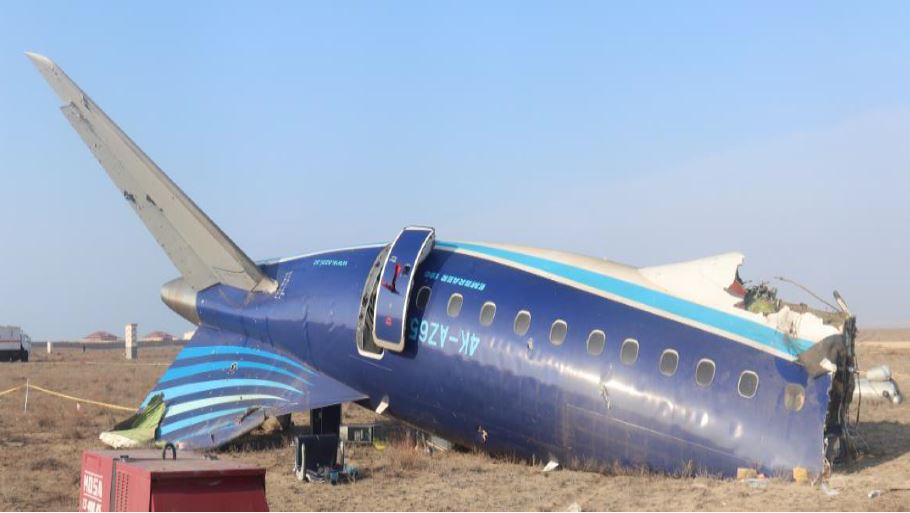
A preliminary report on the Dec. 25 crash of an Azerbaijan Airlines passenger plane in Kazakhstan contains details that could be consistent with widespread assertions that the aircraft was damaged by ground fire during an earlier attempt to land as planned in Russia. But the report, released on Tuesday by Kazakhstan’s Ministry of Transport, leaves many questions unanswered about the crash that killed 38 out of the 67 people on board the plane and sharpened tensions between Azerbaijan and Russia.

Image: Department for Investigation of Accidents and Incidents in Transport preliminary report

An investigation is ongoing and a final report will be prepared on the disaster just outside the Kazakh city of Aktau, meaning that more information could emerge on Russia’s alleged culpability in the case. While the preliminary report helps to fill out a picture of the chaos and confusion that unfolded on the Embraer 190 plane on the Baku-Grozny route, it is unlikely to satisfy Azerbaijan, which accused Russia of a coverup and demanded accountability.

The report on the politically sensitive case says its purpose is to focus on aviation safety and not to establish anyone’s guilt. Assigning blame could come in criminal cases that were opened by Azerbaijani and Kazakh prosecutors, though holding those responsible to account, especially if they are in Russia, will be a challenge.

Image: Department for Investigation of Accidents and Incidents in Transport preliminary report

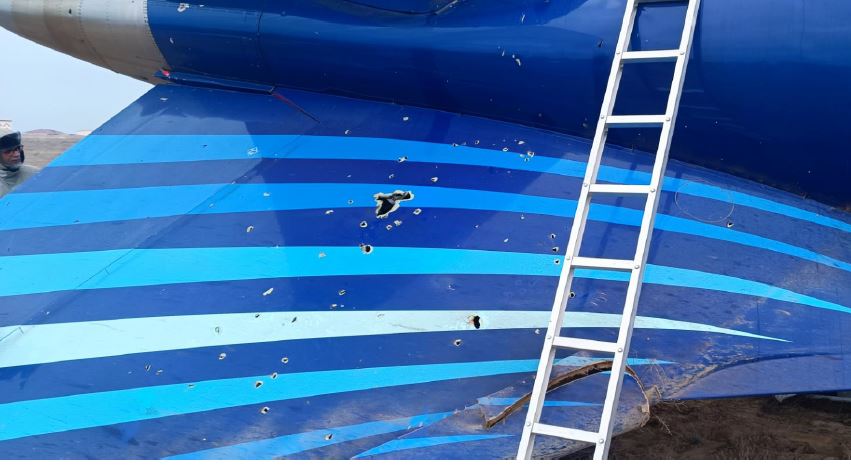
The report says parts of the plane were hit by objects from outside the plane and photos show portions of the fuselage riddled with holes, but the analysis doesn’t confirm that they were the result of missile shrapnel as some security and aviation analysts have said.

“The initial inspection of the surviving fragments revealed numerous through and non-through damages of various sizes and shapes in the tail section of the fuselage, vertical stabilizer and stabilizer, elevator and rudder. Similar damages were found on the left engine and left wing of the aircraft, as well as on the units and components of the aircraft. In some places, the damages have a regular rectangular shape,” the report said.

Russian President Vladimir Putin has apologized to his Azerbaijani counterpart, Ilham Aliyev, in a phone conversation. However, the Russian leader did not acknowledge that the aircraft had been accidentally hit by Russian fire before diverting to Aktau. Russia has said the area was under attack by Ukrainian drones at the time. Kazakhstan has led the investigation, which includes representatives from Azerbaijan, Russia and Brazil. The Canada-based International Civil Aviation Organization, a United Nations agency that oversees aviation safety, is also involved.

The preliminary report provides a picture of the flight and subsequent crash that is consistent with past accounts of survivors and other sources of information, though it also offers gripping detail from the data and cockpit voice recorders that were recovered and analyzed in Brazil, where the plane model is made.

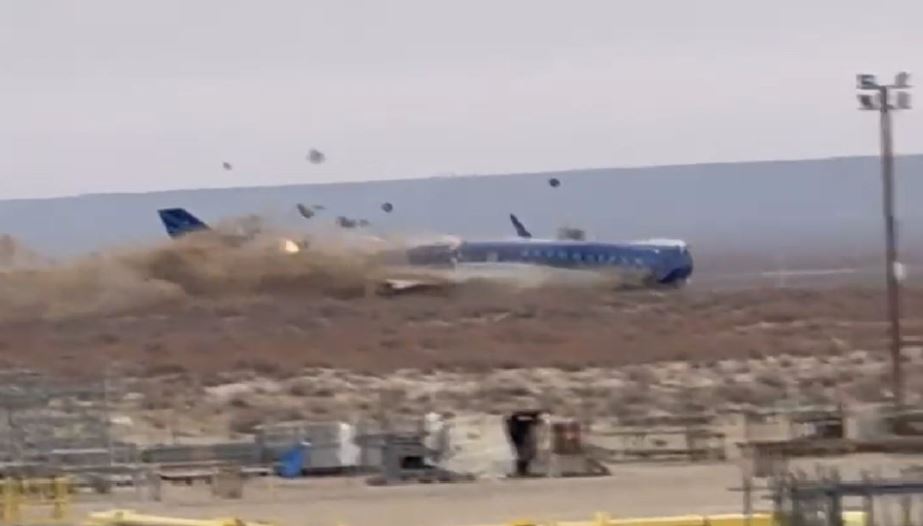
At one point, the sound of a boom is recorded.

Citing the voice recorder, the report says that “the captain contacts the cabin crew via the intercom to clarify the situation: “Hello, what happened?” The flight attendant reported: “Two seats exploded, I… um, I can’t go over because the passengers are standing up, I’m reseating them.”

The transcript of the cockpit voice recorder describes an increasingly desperate situation as the crew stops receiving satellite signals – Azerbaijan has claimed that the aircraft’s communication systems were jammed from the ground – and struggles to control the plane after what appear to be two explosions. The hydraulic systems fail and then oxygen runs low in the passenger cabin. Some passengers lose consciousness. The pilots are unsure of the cause of the crisis, initially saying there had been a bird strike and then an oxygen canister explosion.

“Mayday, mayday, mayday!” the pilots broadcast to Aktau air traffic controllers as the Azerbaijan Airlines plane approaches the city. They tell the controllers they have lost control of many instruments, are operating the craft with thrust levers, and request an emergency landing.

Image: Department for Investigation of Accidents and Incidents in Transport preliminary report

Pilots can control engine power by using the thrust levers in the cockpit. But if they are only using thrust levers to control the aircraft, that could indicate catastrophic failure of other key instruments that control the plane’s altitude and speed.

The tower offers “vectoring assistance for the approach” – a way of guiding the plane with directions – and the aircraft says, “please provide vectoring.”

As the airline careens toward a flat area, short of the airport runway, an automated alarm blares: “TERRAIN, TERRAIN, PULL UP.”

Image: Ministry for Emergency Situations of Kazakhstan

Then, impact. Part of the plane bursts into flames. Kazakh emergency responders rush to the debris-strewn scene. The two pilots and a flight attendant were among the dead.

Citing Restrictions, OSCE Withdraws Observer Mission Ahead of Tajikistan’s Elections

The Organization for Security and Cooperation in Europe has canceled plans to observe parliamentary elections in Tajikistan in March, saying the authorities have not provided assurances that its mission observers will be accredited for the event.

The Dushanbe-based election experts of the OSCE haven’t been able to start working since their observation mission opened on Jan. 22, according to the group’s office for democratic institutions and human rights. The office had concluded that it needed 20 long-term observers and 150 short-term observers to monitor concerns about the impartiality of Tajik election officials, the lack of independence of the judiciary and law enforcement and a deterioration in the rights of expression and assembly.

The OSCE office said on Tuesday that it “deploys election observation missions at the invitation of states, and host governments need to provide the necessary conditions for their effective and unrestricted operation. Prolonged uncertainty surrounding accreditation undermines the integrity of this process.”

Tajikistan has a presidential system of power and longtime President Emomali Rahmon had said that elections to the lower parliamentary chamber, the 63-member Majlisi Oli, would be held on March 2. Elections to the upper chamber, the Majlisi Milli, will be held on March 28. Rahmon’s eldest son, Rustam Emomali, is chairman of the upper chamber, positioning him as a possible successor to his father, and some of the chamber’s 33 members are appointed by the president.

International concerns are growing about the harsh environment for government opponents and journalists not affiliated with the state in Tajikistan, some of whom have been imprisoned. The government often casts critics as a threat to stability in a country that endured a civil war in the 1990s and – with its long border with Afghanistan – points to Islamic extremism as a perpetual threat.

The biggest opposition party, the Islamic Renaissance Party of Tajikistan, was labeled a terrorist group and banned in 2015. Rahmon leads the ruling People’s Democratic Party of Tajikistan and there are half a dozen other parties with small numbers of seats.

In a speech to parliament in late December, Rahmon said “national security and sustainable economic development” were among the key goals of his administration. Despite criticism that he is authoritarian, he used the language of democracy in a brief reference to the elections.

“The upcoming elections should be held in a transparent, free, and high-level manner in accordance with the Constitution and laws of the Republic of Tajikistan, and voters should choose their worthy candidates,” said Rahmon, who has been in power since 1994.

Observers from the Collective Security Treaty Organization, a group of post-Soviet states, will monitor Tajikistan’s elections.

Shopping Center May Be Built Beneath Bishkek’s Ala-Too Square

Bishkek authorities are moving forward with plans to reconstruct the Manas monument and the underground space beneath it in Ala-Too Square, the capital’s central public space. According to the Bishkek Mayor’s Office, the 1,500-square-meter area beneath the monument is currently unused.

According to tender documents published on the government procurement website, the basement beneath Ala-Too Square is set to be redeveloped into retail space. The estimated cost of the reconstruction project is KGS 1.8 million ($20,600).

“We want to renovate the basement area – it has been in a dilapidated state since 1983 due to lack of maintenance. As for the future, we are considering various possibilities for the space. However, it is important to clarify that the Manas monument will not be removed,” Bishkek Mayor’s Office spokeswoman Nazgul Zhamgyrchieva told reporters.

Despite this reassurance, some Bishkek residents remain concerned, particularly since the Manas monument has already been removed from its pedestal as part of the reconstruction. Many fear it may not be returned to its original place.

The monument to Manas, a symbol of Kyrgyzstan’s national heritage, has stood in Ala-Too Square since 2011. Alongside the White House, the National Historical Museum, and the national flag, it forms part of Bishkek’s so-called “marble center”, a key landmark in the capital.

Kazakhstan Proposes Polygraph Testing for Law Enforcement Officials

Kazakhstan’s General Prosecutor’s Office has drafted a decree proposing the use of polygraph examinations when appointing law enforcement officers to senior positions. Previously, there had been discussions about requiring all government job applicants to undergo lie detector tests.

According to the proposal, polygraph testing could be applied to candidates for leadership roles in all law enforcement agencies, state protection services, and the State Courier Service.

“The main objectives of the test are to identify hidden negative motives for seeking employment in law enforcement agencies, including affiliations with banned public associations, criminal organizations, and terrorist groups,” the draft states.

Additionally, polygraph tests would aim to detect potential issues such as alcohol or drug addiction, gambling problems, concealed illnesses, suicidal tendencies, undisclosed income, dual citizenship, or the use of forged documents. Candidates may also be questioned about corruption-related offenses, unauthorized disclosure of classified or official information, and abuse of power.

“The examination of an employee from a law enforcement agency, civil protection agency, or the State Courier Service of the Republic of Kazakhstan will be conducted when they are nominated for higher managerial positions – whether as part of regular or unscheduled attestation or through a competition for a leadership role. It may also be used during official investigations, with the individual’s consent,” the draft decree states.

The proposal, published on the Open NPA portal, is open for public discussion until February 14, 2025.

Kazakhstan established a legal framework for polygraph use late last year. However, this is not the country’s first attempt to introduce lie detector tests for civil servants. In 2010, members of the Nur Otan party proposed using polygraphs to screen government officials involved in financial matters. At that time, the plan covered all government departments – both law enforcement and civilian – though it faced greater resistance from the latter.

Ultimately, the proposal was not implemented in the civil service. Now, 15 years later, discussions have resumed, though with a narrower focus on law enforcement personnel.

As The Times of Central Asia previously reported, Kazakhstan also has plans to establish a register of corrupt officials.