• KGS/USD = 0.01144 0%
  • KZT/USD = 0.00194 -0%
  • TJS/USD = 0.10844 -0.46%
  • UZS/USD = 0.00008 0%
  • TMT/USD = 0.28571 0.28%
  • KGS/USD = 0.01144 0%
  • KZT/USD = 0.00194 -0%
  • TJS/USD = 0.10844 -0.46%
  • UZS/USD = 0.00008 0%
  • TMT/USD = 0.28571 0.28%
  • KGS/USD = 0.01144 0%
  • KZT/USD = 0.00194 -0%
  • TJS/USD = 0.10844 -0.46%
  • UZS/USD = 0.00008 0%
  • TMT/USD = 0.28571 0.28%
  • KGS/USD = 0.01144 0%
  • KZT/USD = 0.00194 -0%
  • TJS/USD = 0.10844 -0.46%
  • UZS/USD = 0.00008 0%
  • TMT/USD = 0.28571 0.28%
  • KGS/USD = 0.01144 0%
  • KZT/USD = 0.00194 -0%
  • TJS/USD = 0.10844 -0.46%
  • UZS/USD = 0.00008 0%
  • TMT/USD = 0.28571 0.28%
  • KGS/USD = 0.01144 0%
  • KZT/USD = 0.00194 -0%
  • TJS/USD = 0.10844 -0.46%
  • UZS/USD = 0.00008 0%
  • TMT/USD = 0.28571 0.28%
  • KGS/USD = 0.01144 0%
  • KZT/USD = 0.00194 -0%
  • TJS/USD = 0.10844 -0.46%
  • UZS/USD = 0.00008 0%
  • TMT/USD = 0.28571 0.28%
  • KGS/USD = 0.01144 0%
  • KZT/USD = 0.00194 -0%
  • TJS/USD = 0.10844 -0.46%
  • UZS/USD = 0.00008 0%
  • TMT/USD = 0.28571 0.28%
09 December 2025

Kazakhstan Harvests Record Grain and Oilseed Crop

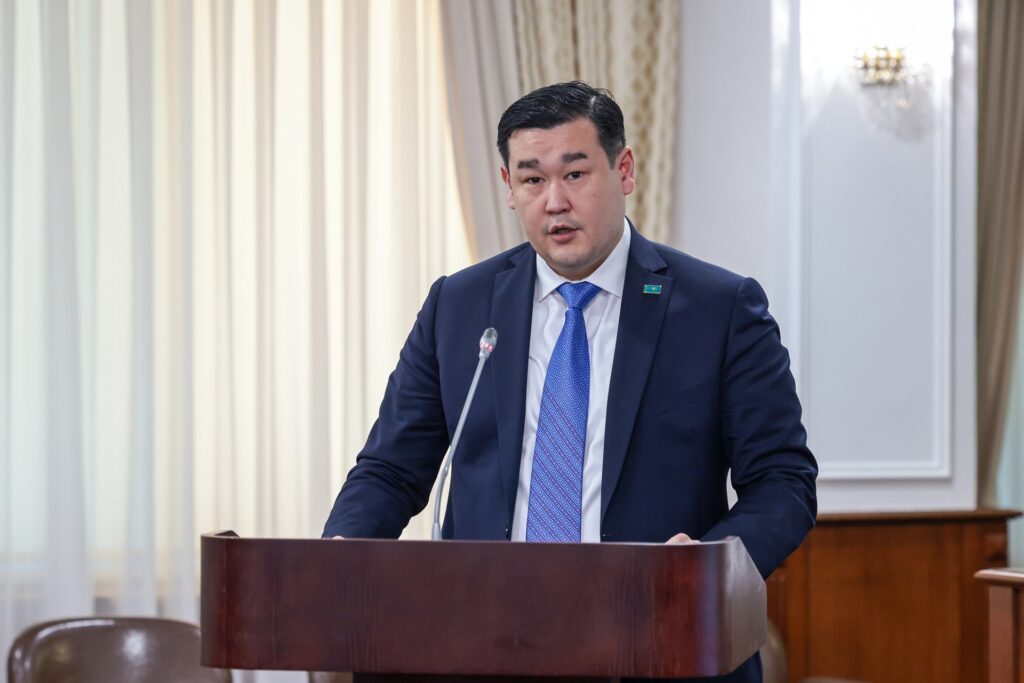
Kazakhstan has reported a record harvest for 2025, collecting over 27 million tons of grain and 4.5 million tons of oilseeds for the first time, according to Deputy Minister of Agriculture Azat Sultanov.

The Ministry of Agriculture said the grain harvest reached 27.1 million tons in initial weight, including 20.3 million tons of wheat, an increase of 0.5 million tons compared to last year, despite a reduction in wheat acreage by nearly 900,000 hectares. Of the soft wheat delivered to elevators, 53% was graded 1-3, slightly lower than the 56% recorded in 2024. Class 4 wheat accounted for 35%, up from 28% a year earlier.

“More than half of this volume has a gluten content above 20%, which allows this wheat to be used for food purposes,” Sultanov noted.

Around 12% of the harvest consisted of unclassified wheat, which will be used for animal feed and fodder production, sectors where demand is growing, particularly in neighboring countries.

For the first time, the volume of legumes reached one million tons, while a new record was set for oilseeds at 4.5 million tons, with harvesting still underway in several regions. The country also produced 2.9 million tons of potatoes, 3.8 million tons of vegetables, and 2.6 million tons of melons and gourds. Harvesting of oilseeds, grain corn, and sugar beets is nearing completion.

“The agricultural season that has just ended showed steady growth in production. For the second year in a row, Kazakhstan has demonstrated positive dynamics thanks to the use of modern technologies and crop diversification. The harvest took place at the optimal time, and no serious problems arose,” Sultanov emphasized.

Between September and October, Kazakhstan exported 2.2 million tons of grain from the new harvest, 21% more than in the same period last year. During the previous marketing season (September 2024 to August 2025), exports totalled 13.4 million tons, a 47% year-on-year increase. Sultanov confirmed the government’s intention to maintain the current export potential.

“In 2024, some experts doubted that it would be possible to reach 12 million tons, but in fact, the plan was exceeded. This year, Kazakhstan is developing new export destinations, deliveries have begun to Belgium, Portugal, Poland, Norway, Vietnam, the UAE, Morocco, Algeria, and Egypt, while exports to Iran, Azerbaijan, Armenia, and Georgia have resumed. Demand for Kazakh grain remains stable, with export potential estimated at 13 million tons,” Sultanov said.

The Times of Central Asia previously reported that President Kassym-Jomart Tokayev has set a target of increasing Kazakhstan’s grain exports to China to 2 million tons annually.

U.S. and Uzbekistan Sign Landmark Economic and Strategic Agreements

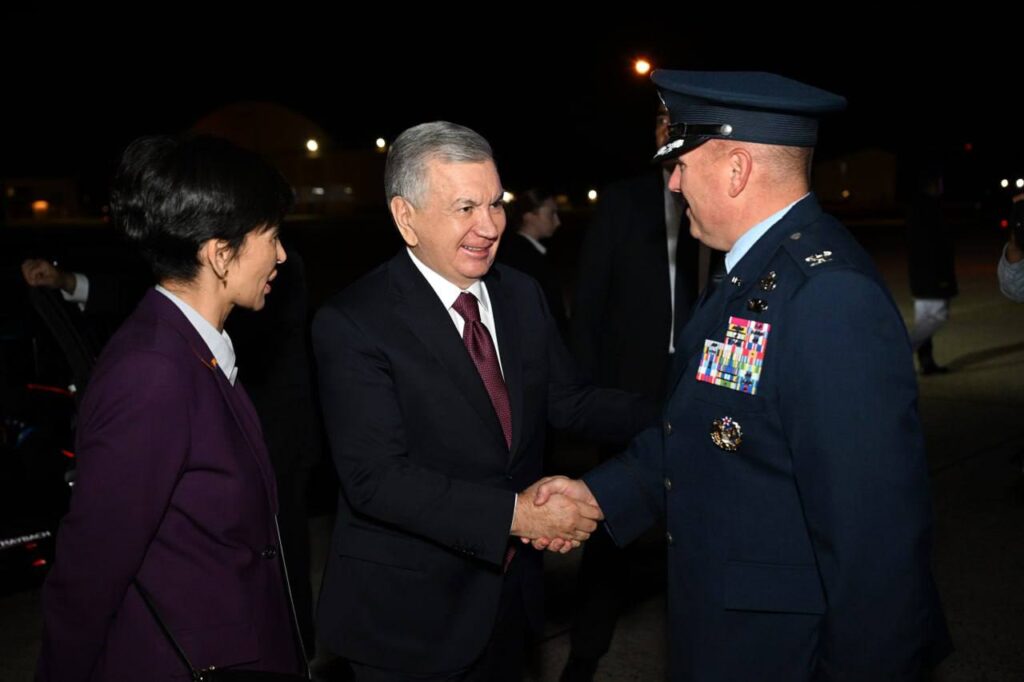
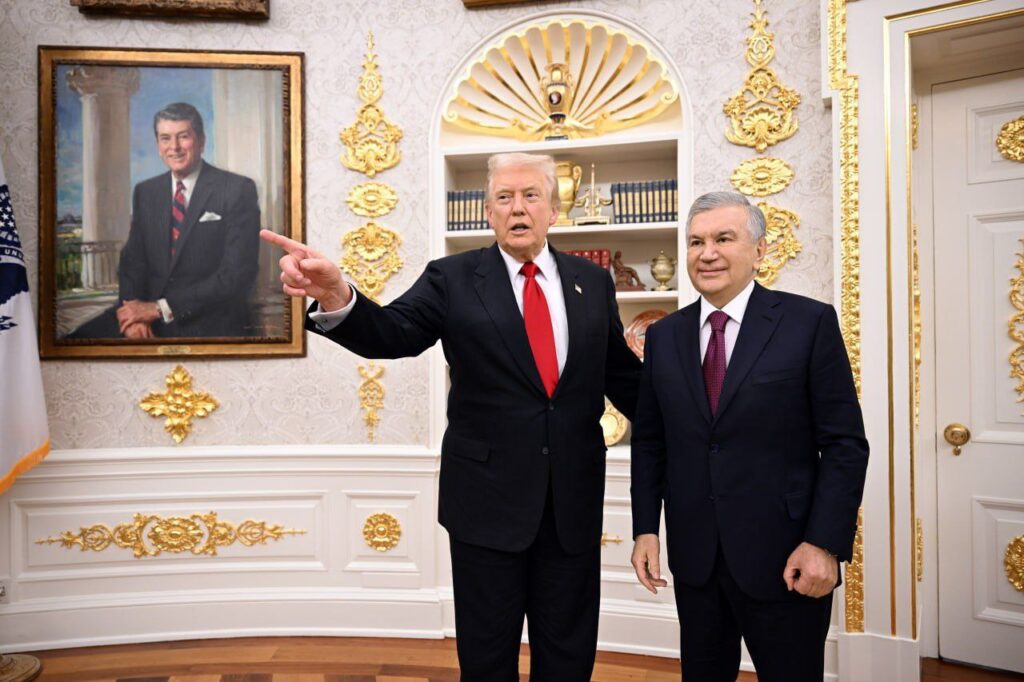
The United States and Uzbekistan are deepening their economic and technological partnership. Following President Shavkat Mirziyoyev’s meeting with U.S. President Donald Trump in Washington, the U.S. State Department announced a sweeping package of agreements, described as among the most significant in the history of bilateral relations in both investment and strategic scope.

High-Level Business Engagements

During his Washington visit, President Mirziyoyev held talks with representatives from major American corporations, investment funds, and financial institutions.

The meeting was attended by U.S. Secretary of Commerce Howard Lutnick, Special Assistant to the President Ricky Gill, Special Assistant to the President Ricky Gill, Deputy Secretary of Agriculture Stephen Vaden, and executives from companies such as Traxys, FLSmidth, McKinsey, Meta, Google, Amazon, Boeing, Air Products, Axiom Space, Cove Capital, Freeport-McMoRan, Orion CMC, Cargill Cotton, John Deere, Honeywell, Valmont Industries, and Flowserve Corporation.

Opening the event, Mirziyoyev highlighted that trade between Uzbekistan and the U.S. has quadrupled over the past eight years, and more than 300 American companies are now operating in the country. He added that this is just the beginning of a new era in economic cooperation.

Key strategic goals were outlined: by 2030, Uzbekistan aims to develop a new-generation energy system with 18-20 GW of renewable capacity, more than half of it sourced from solar and wind. In this context, the two countries plan to jointly develop and process critical minerals such as uranium, copper, tungsten, molybdenum, and graphite, establishing resilient supply chains and leveraging U.S. processing technologies.

Infrastructure is another major focus. Uzbekistan intends to invest over $12 billion by 2030 to modernize roads, railways, terminals, and airports.

Digital cooperation is also expanding. Projects with Google, Meta, and NVIDIA include the launch of Apple Pay and Google Pay, the creation of a Digital Academy, and the development of startup hubs. These initiatives are expected to be supported by the U.S. International Development Finance Corporation (DFC) and the U.S. Exim Bank.

Mirziyoyev reaffirmed his personal commitment to supporting American investment, stressing that Uzbekistan remains a stable and favorable destination for foreign businesses.

Securing Access to Strategic Raw Materials

Washington’s primary interest lies in critical minerals. The U.S. will gain priority access to joint mining projects and exclusive access to geological data on rare earth and other strategically significant elements. This move is part of a broader U.S. effort to diversify global sources of inputs vital to defense, green energy, and other high-tech sectors.

The two countries are also preparing a $400 million investment package to develop sustainable supply chains for critical and rare earth minerals. For Uzbekistan, this represents a key step toward integration into global value chains and reduced reliance on limited partners.

Energy Cooperation: A Role for Small Modular Reactors

Uzbekistan plans to acquire American small modular reactors (SMRs), a technology increasingly favored by emerging economies for its scalability and relatively low upfront costs.

Interest in SMRs has grown following the 2025 approval of the upgraded NuScale Power Module (77 MW), and Uzbekistan may become one of the first countries in the region to deploy the technology.

In parallel, U.S.-based Air Products is planning to invest up to $3 billion in a methanol production facility in Uzbekistan. The project will anchor the initiative known as “Methanol Island,” which is a key component of a future olefin production hub in the Bukhara region.

For Tashkent, this marks one of the largest foreign investments in years and a critical step toward deeper gas processing and the development of an export-oriented petrochemical industry.

Visa-Free Regime, Security, and Technology Transfer

Beginning in 2026, U.S. citizens will be able to enter Uzbekistan without a visa for up to 30 days, a measure aimed at boosting business travel and investment flows.

Security cooperation is also intensifying, with plans for enhanced intelligence sharing and equipment supply for Uzbekistan’s law enforcement agencies.

Tashkent is preparing to purchase $5 billion worth of American auto parts over the next three years. At the same time, the U.S. may participate in the planned 2026 privatization of UzAuto Motors, offering a potential entry point for American automakers and specialist suppliers.

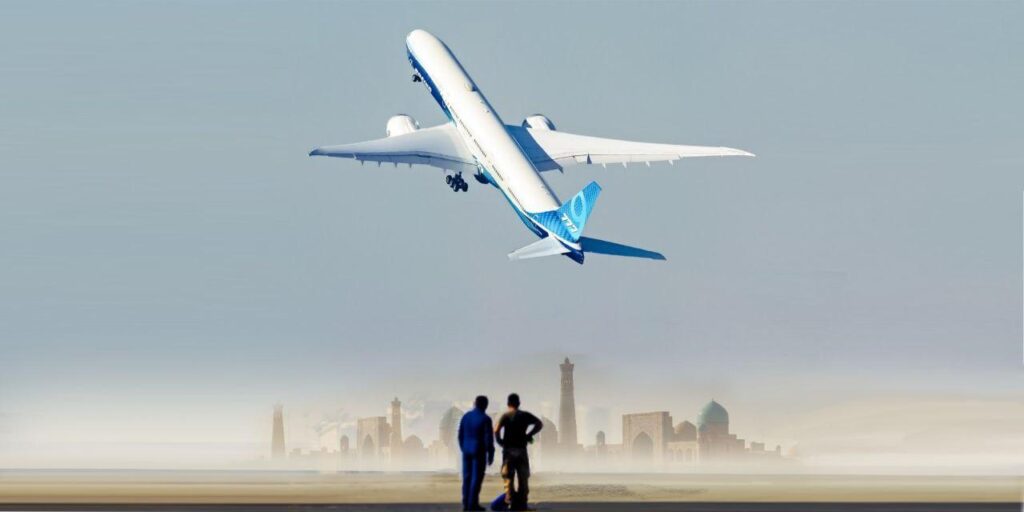
Uzbekistan Airways has also announced a major acquisition: a $8.5 billion order for 22 Boeing 787 Dreamliners.

Meanwhile, the country intends to import up to $2 billion worth of American agricultural equipment, a move expected to significantly enhance the efficiency of its farming sector.

“President of Peace” or “President of the World”? Mirziyoyev’s Interpreter Draws Attention During Comments on Trump

President Shavkat Mirziyoyev’s remarks at the recent C5+1 summit in Washington drew international attention following a translation error reported in several foreign media outlets.

According to his press service, Mirziyoyev told U.S. President Donald Trump that people in Uzbekistan refer to him as a “president of peace,” citing what he described as Trump’s role in helping resolve multiple armed conflicts. However, the simultaneous interpreter rendered the phrase as “president of the world,” leading international media, including Reuters, to report that Mirziyoyev had used that expression.

The two leaders had previously met on 23 September at the United Nations headquarters. During that meeting, Mirziyoyev congratulated Trump for contributing to the resolution of “seven conflicts,” specifically mentioning the settlement between Azerbaijan and Armenia.

The Uzbek news outlet Kun.uz later published a full translation of the conversation in Uzbek. According to that report, Mirziyoyev also stated that Trump was deserving of a Nobel Prize, although this remark was not translated during the meeting.

The renewed attention came as Trump announced what he described on Truth Social as an “incredible Trade and Economic Deal” between the United States and Uzbekistan. According to the U.S. president, Uzbekistan has committed to investing and purchasing nearly $35 billion in key American sectors over the next three years, with expected commitments exceeding $100 billion over the next decade.

Trump specified that the sectors include critical minerals, aviation, automotive parts, infrastructure, agriculture, energy, chemicals, and information technology. He thanked Mirziyoyev and said Washington looks forward to a “long and productive partnership.”

On the same day, Mirziyoyev joined the leaders of Kazakhstan, Kyrgyzstan, Tajikistan, and Turkmenistan at the C5+1 summit held at the White House and chaired by Trump. During the session, the Uzbek president proposed the creation of a permanent C5+1 Secretariat that would rotate among member states, as well as the establishment of a ministerial coordinating council on investment and trade. He also suggested forming a Central Asian Investment Partnership Fund and a special committee on critical minerals.

Additional proposals included collaboration on agricultural technologies, coordination on transport corridors linking Central Asia with the South Caucasus and Europe, and the organization of a cultural heritage exhibition in the United States. Uzbekistan also offered to host the next C5+1 summit in Samarkand.

The Illusion of Chinese Investment in Kazakhstan

Concerns about how Chinese businesses operate abroad — and the challenges already confronting Kazakhstani entrepreneurs — have resurfaced following a recent letter to the prime minister from an association of oil service companies reporting price dumping. Despite these developments, Kazakhstani experts remain hesitant to discuss the negative effects of China’s growing influence in the country’s real economy.

Technological Dependence

The reluctance is unsurprising. Astana’s official policy seeks broad rapprochement with Beijing, spanning economic, political, and cultural spheres. Given the power imbalance, Kazakhstan avoids public statements that might offend its wealthier partner, particularly in the media, which China monitors closely.

As a result, the recent complaint by the PetroCouncil — an oil and gas association representing more than 150 domestic service companies — about dumping by foreign, mainly Chinese, firms has been met with silence from local experts.

In a letter addressed to Prime Minister Olzhas Bektenov, the PetroCouncil warned that foreign firms, particularly from China, have been offering services to major Kazakhstani enterprises at prices 60–70% below market value. This, they argue, is forcing out local businesses, reducing Kazakhstani content, eroding tax revenue and employment, diminishing engineering expertise, and threatening industrial safety.

We asked PetroCouncil Managing Director Daniel Zholdybaev why foreign companies have come to dominate Kazakhstan’s oil and gas sector and whether the competence of local personnel or service providers is a factor.

According to Zholdybaev, the dominance is rooted in how foreign operators first entered Kazakhstan’s market: by bringing their own technologies. This created long-term dependency not only on their expertise but also on foreign suppliers.

“Chevron, for instance, maintains a vetted list of approved suppliers, and wherever the company operates, it only works with those on that list,” Zholdybaev explained.

While Kazakhstan continues to develop domestic manufacturing capabilities, local firms are still barred from participating in high-risk operations such as work on wells with extreme pressure or temperature conditions.

Zholdybaev noted that Kazakhstan’s three major fields — Tengiz, Karachaganak, and Kashagan — account for 90 percent of oil and gas imports. The operators of these projects are mainly Western companies. Russia, due to international sanctions, plays only a marginal role in procurement despite maintaining a presence in Kazakhstan.

However, it is Chinese companies, actively welcomed by the state, that have introduced the issue of price dumping.

Chinese firms operating in Kazakhstan’s oil and gas industry maintain closed procurement systems, sourcing goods and services almost exclusively from Chinese suppliers. As a result, Chinese investment brings minimal benefit to Kazakhstan’s economy. Even construction contracts often return to China.

Russian observers, typically sensitive to Central Asia’s dealings with China and the United States, have also remained largely silent on this issue. A rare exception was political analyst Yuri Baranchik, who posted a sharply critical comment on his Telegram channel:

“This is a clear example of what happens when Chinese companies are allowed full access to the domestic market,” he wrote. “They dump prices to bankrupt local businesses, monopolize the sector, and then dictate terms. Now the Kazakh government must figure out how to support its own enterprises without alienating China.”

Parallel Tourism

Meanwhile, Almaty, the country’s economic hub, is promoting its latest tourism initiative. City officials project that 50,000 Chinese tourists will visit annually, based on an agreement signed by Akim Darkhan Satybaldy and the China Professionals-Workers International Travel Service Head Office (CPITS).

“According to preliminary estimates, Chinese tourists will spend around $1,500 each on lodging, dining, excursions, and shopping,” the Akimat stated. “This could generate an annual economic impact of approximately $75 million, boosting the local economy, service industry, and small businesses.”

However, the expected benefits may be less certain. Similar assurances were made in Russia, which became a major destination for Chinese tourists even before the pandemic, only to discover an illicit ecosystem that diverted tourism revenue back to China.

In 2017, Victoria Bargacheva, president of the St. Petersburg Association of Chinese Language Guides and Interpreters, detailed how an underground economy developed around unregulated Chinese tour operators. Speaking to Fontanka, she described how Chinese tourists were funneled into Chinese-owned restaurants and shops, bypassing local businesses entirely. Travel agencies allegedly paid for accommodations with undeclared cash, cutting out Russian taxes and leaving little revenue behind.

Tourists often exchanged no rubles at all, instead using yuan and circulating funds exclusively within Chinese-owned operations.

“The tourists consume services, but the money returns to Chinese companies,” Bargacheva said. “Even hotel stays are often arranged off the books, via bribed administrators.”

Today, similar signs are emerging in Almaty. Organized groups of Chinese tourists can be seen traveling in branded private buses and visiting newly opened Asian restaurants catering specifically to them.

Whether the 50,000 visitors will truly inject $75 million into the city’s economy remains uncertain, or whether the actual figure will be far lower, with much of the revenue diverted before reaching local businesses.

Gennady Golovkin Unveils Presidential Program for World Boxing

Gennadiy Golovkin, the former world champion and current head of Kazakhstan’s National Olympic Committee, has officially presented his program as a candidate for the presidency of World Boxing.

World Boxing was established in 2023 after the International Olympic Committee (IOC) suspended the International Boxing Association (IBA) from organizing Olympic qualifying events, and raised the possibility of removing boxing from the Olympic program entirely.

Golovkin, known globally by his ring name GGG, was appointed chairman of the World Boxing Olympic Commission in late 2024. Under his leadership, the new organization secured IOC accreditation to oversee Olympic qualifying events for the 2028 Games.

The current president of World Boxing, Dutch official Boris van der Vorst, will conclude his term at the end of November 2025. He has announced he will not seek re-election.

On November 23 in Rome, representatives from 125 national boxing federations affiliated with World Boxing will vote to elect a new president, vice president, and board members. Golovkin has been nominated for all three roles. His sole opponent in the presidential race is Mariolis Charilaos of Greece.

On Friday, November 7, Golovkin published his official campaign platform.

According to the document, available via the Kazakhstan Boxing Federation’s social media channels, Golovkin’s proposals center on athlete representation, governance transparency, and digital innovation.

If elected, he plans to establish a World Boxing Athletes’ Council in 2026 with voting rights on the Executive Board, and to protect athletes’ rights through the implementation of an independent judging system.

Golovkin also aims to launch a World Boxing Academy for athletes and coaches, covering anti-doping education, mental health awareness, and refereeing standards. The academy would also assist boxers in transitioning to post-athletic careers and offer targeted grant support.

A key element of his platform is the use of artificial intelligence. Golovkin proposes AI-assisted refereeing and the creation of a digital platform called Digital Ringside, which would publish real-time bout data, athlete profiles, and explanations of judging decisions, serving as a transparency tool for the media and public.

In addition, Golovkin advocates for the annual publication of audited financial reports and the development of sponsorships with international brands aligned with Olympic values to support amateur boxing.

“As chairman of the World Boxing Olympic Commission, I worked with partners to expand our membership base. Thanks to those efforts, we achieved provisional recognition and preserved boxing’s place in the Los Angeles 2028 Olympic program,” Golovkin said. “If you place your trust in me, I will continue working to safeguard boxing’s Olympic future, not only for 2028, but for generations to come and to secure full IOC recognition for World Boxing.”

As previously reported by The Times of Central Asia, World Boxing held its first amateur world championship in 2025, where Kazakhstan topped the team standings.

Washington Shifts C5+1 From Diplomacy to Deals

On November 6, 2025, Washington hosted the C5+1 summit, bringing U.S. President Donald Trump together with the leaders of Kazakhstan, Kyrgyzstan, Tajikistan, Turkmenistan, and Uzbekistan. The tone shifted from broad diplomacy to deliverable transactions, with officials emphasizing cooperation on critical raw materials. The timing signified a broader shift in supply chains away from China and Russia, and the discussion moved from general diplomacy to transactions that can be tracked and delivered.

The private-sector track also accelerated. The B5+1 (“B” for “business”) platform is meant to carry follow-through on minerals, processing, logistics, and services. It complements state-to-state commitments by putting contract-ready work streams and policy dialogue in the same frame. Verification is simple: match U.S. and host-government readouts with company filings and ministry communiqués issued after the summit. Subsequent notices should specify instruments, values, financing, timelines, and the units responsible.

What Was Signed Versus What Was Signaled

The summit mixed firm orders with preliminary commitments. Uzbekistan Airways converted eight options for the Boeing 787-9 (covered by FAA Type Certificate Data Sheet T00021SE) into a firm order, bringing its total to twenty-two Dreamliners. That flows into the manufacturer’s backlog and starts financing and ground-side preparation. Tajikistan’s Somon Air announced up to four 787-9s and ten 737 MAX; that signals intent, with binding contracts and financing to follow. Engine families for the 787-9 are Rolls-Royce Trent 1000 TEN and GE Genx-1B, setting maintenance and training paths. Air Astana said it had selected up to fifteen 787-9s. Slot allocation and financing are next, along with sale-and-leaseback or operating-lease decisions.

A parallel commercial package aimed to show that U.S.–Central Asia ties can move on a near-term clock, framed publicly through the Department of Commerce’s announced “C5+1 Deal Zone,” earmarked at “over $25 billion.” Rare earths and related inputs sat at the center of the talks. Aviation and other signings were presented as tangible outcomes. The substance rests with the underlying company agreements and national approvals, although the packaging usefully aggregates a single narrative for public consumption.

Minerals were cast as the strategic core, even though many projects remain in the early stages. Public readouts emphasized supply-chain resilience and competition with China and Russia. For shipments into the European Union, the bottleneck remains the processing limits set by the EU Critical Raw Materials Act. Customs classification uses the Harmonized System (HS), a universal tariff code maintained by the World Customs Organization (WCO): tungsten falls under HS 8101, while rare-earth metals and their compounds are under HS 2805 and HS 2846. Bankability likewise depends on recognized industry disclosure rules for reporting mineral resources, which require standardized geology, sampling, and reserve estimates before serious financing proceeds. Wire services likewise underscored rare earths and closer cooperation along the value chain.

Country Outcomes

Kazakhstan. The most tangible non-aviation item was a tungsten venture at Northern Katpar and Upper Kairakty, with an indicated project scope of around $1.1 billion. A Letter of Interest (LOI) from the U.S. Export–Import Bank (EXIM) suggests a figure near $900 million on a 70/30 structure with the state company Tau-Ken Samruk. An EXIM LOI is indicative and non-binding; it enables execution of due diligence and agreement on preliminary terms of reference. On aviation, Air Astana’s 787-9 selection sets the stage for a binding order and expanded long-haul range from Almaty and Astana. Media placed total agreements above $17 billion across all sectors combined.

Uzbekistan and Tajikistan. Tashkent’s new 787-9 firm order positions the carrier for broader intercontinental service once delivery and financing schedules are set. Wide-body induction will require ETOPS (Extended Operations) 180 procedures, dispatcher training, and simulator time. Uzbekistan also publicized agreements on rare earths with Denali Exploration Group and ReElement Technologies, plus an industrial pact with Flowserve on pumping stations. Credit support features in the road map, with EXIM meetings linking aircraft finance to other projects. Somon Air’s plan—up to four 787-9s and ten 737 MAX—would add its first wide-bodies and demands training, maintenance, and airport readiness before long-haul services.

Kyrgyzstan and Turkmenistan. Bishkek emphasized hydropower upgrades, transport, and IT development. These fit the country’s energy mix and grid goals, though new financing tools were not unveiled in Washington. Pre-summit reporting on the Kambar-Ata-1 (1,860 MW) project illustrates the scale of hydro financing under consideration by European partners. The project hints at the likely multi-lender packages with export credit and international financial institution participation. Turkmenistan, for its part, confirmed presidential participation; however, no new bilateral instruments were published around the event.

Financing, Rules, and Execution

Early financing signals and front-end preparation move airlines and mining sponsors from headlines to funded work. An EXIM LOI can make long-term debt feasible and let buyers shift to preliminary term sheets and diligence. The U.S. Development Finance Corporation (DFC) can fund feasibility and front-end studies, from metallurgical flow-sheets in mining to Level-D simulators in aviation. All this will embed new rule-sets and standard procedures in the region.

The Commercial Law Development Program is a U.S. Department of Commerce initiative that helps partner governments improve commercial laws and procurement so projects can be bid once and disputes contained. In practice, many contracts use materials from the FIDIC, a nonprofit group that publishes simple, standard contract templates for construction projects worldwide. Sanctions and export controls—for example, from the U.S. Export Administration Regulations—then govern parts, inputs, payments, and licenses channeling how components move and how payments clear.

Logistics will also decide whether the agreements are implemented. Middle Corridor frictions include port handling, vessel scheduling on the Caspian, and rail interoperability. Broader use of the CIM/SMGS electronic rail consignment note, which is a single digital waybill accepted across Europe and Central Asia, and more regular roll-on/roll-off ferry schedules on the Caspian would ease near-term bottlenecks. The EBRD and the EU’s Trans-European Transport Network adds customs coordination and digital documentation to the to-do list. To retain more value, embed minerals processing and aviation training and maintenance capacity in project finance from the start, not as add-ons.

Connecting Networks, Expanding Options

The summit points away from geopolitical bloc alignments and toward a multiplex Central Asian order of overlapping rule systems and multiple pathways for cooperation. Energy standards, aviation certification, export credit, sanctions compliance, customs, and data regimes operate as partially independent networks. Influence will accrue to actors who braid these networks on concrete projects and keep sequencing coherent.

Standards and finance are the main levers here: specifications determine what can be bought and maintained, while credit decides who can buy and when. Pairing more than one credible source of credit with more than one standards path strengthens the working network that interlinks Central Asian governments, firms, lenders, and corridor operators. Their practical task is to build parallel channels that are usable in real time.

Taken together, the week’s actions aim to shift Central Asia’s external ties from reliance on a single rule bundle toward managed interdependence. Small-group formats can convert one-off deals into routines while standardizing procurement procedures and regularizing dispute resolution.

When such nodes interconnect across corridors, they add redundancy to midstream minerals processing. New supply-chain corridors alone do not suffice. Interoperable paperwork, predictable customs, and cross-recognized certifications are required; otherwise, flows will revert to the inherited legacy routes. The Washington summit matters insofar as it begins to institutionalize those options, widening the geo-economic room for maneuver by the five Central Asian states.