• KGS/USD = 0.01144 0%
  • KZT/USD = 0.00195 -0%
  • TJS/USD = 0.10896 -0%
  • UZS/USD = 0.00008 0%
  • TMT/USD = 0.28571 0.28%
  • KGS/USD = 0.01144 0%
  • KZT/USD = 0.00195 -0%
  • TJS/USD = 0.10896 -0%
  • UZS/USD = 0.00008 0%
  • TMT/USD = 0.28571 0.28%
  • KGS/USD = 0.01144 0%
  • KZT/USD = 0.00195 -0%
  • TJS/USD = 0.10896 -0%
  • UZS/USD = 0.00008 0%
  • TMT/USD = 0.28571 0.28%
  • KGS/USD = 0.01144 0%
  • KZT/USD = 0.00195 -0%
  • TJS/USD = 0.10896 -0%
  • UZS/USD = 0.00008 0%
  • TMT/USD = 0.28571 0.28%
  • KGS/USD = 0.01144 0%
  • KZT/USD = 0.00195 -0%
  • TJS/USD = 0.10896 -0%
  • UZS/USD = 0.00008 0%
  • TMT/USD = 0.28571 0.28%
  • KGS/USD = 0.01144 0%
  • KZT/USD = 0.00195 -0%
  • TJS/USD = 0.10896 -0%
  • UZS/USD = 0.00008 0%
  • TMT/USD = 0.28571 0.28%
  • KGS/USD = 0.01144 0%
  • KZT/USD = 0.00195 -0%
  • TJS/USD = 0.10896 -0%
  • UZS/USD = 0.00008 0%
  • TMT/USD = 0.28571 0.28%
  • KGS/USD = 0.01144 0%
  • KZT/USD = 0.00195 -0%
  • TJS/USD = 0.10896 -0%
  • UZS/USD = 0.00008 0%
  • TMT/USD = 0.28571 0.28%
09 December 2025

Two Weeks After Crash, Russia Closes City Airspace and Azerbaijan Cancels Flight

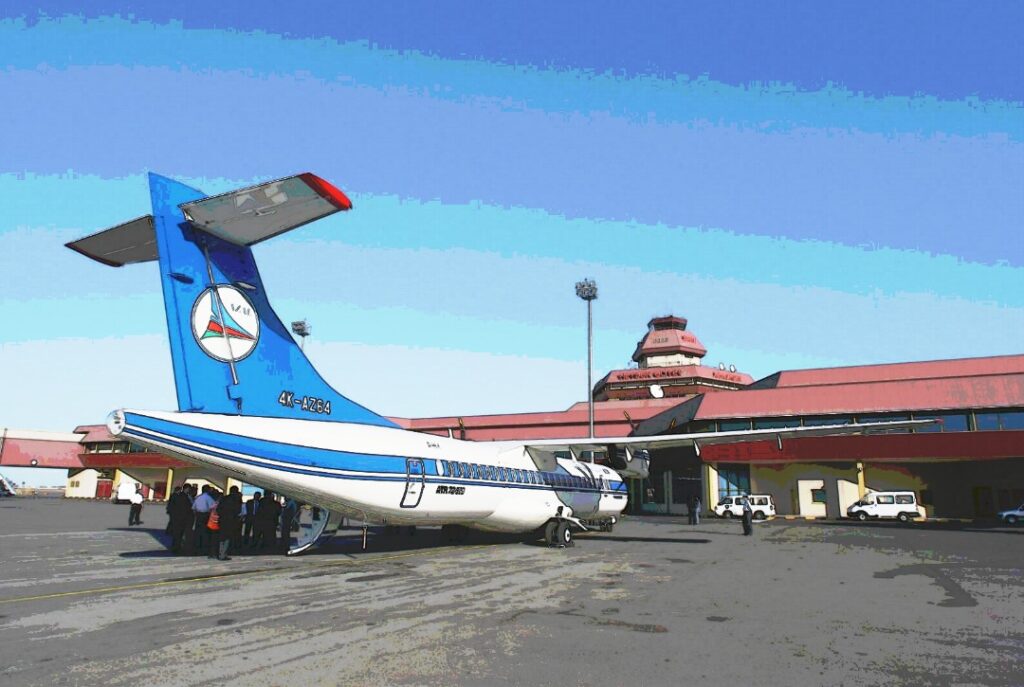
Azerbaijan Airlines canceled a flight to the southwest Russian city of Kazan on Wednesday after the airspace over the city was closed as a security precaution, Azerbaijan’s state media reported.

The cancellation of the Baku-Kazan-Baku flight came two weeks after an Azerbaijan Airlines passenger plane crashed in Kazakhstan after, according to Azerbaijan, the aircraft was accidentally hit by Russian ground fire and diverted from a planned landing in Grozny, Chechnya. Russian President Vladimir Putin has not confirmed the Azerbaijani account, though he apologized and said Russian air defenses were repelling Ukrainian drones over Grozny and two other Russian areas at the time.

Azertac, an Azerbaijani state news agency, said the cancellation of the Kazan-bound flight came after Russia’s announcement of its so-called “Kovyor,” or “carpet,” operation, in which airspace over an area is closed temporarily because of a perceived threat. Kazan has previously been targeted by long-range Ukrainian drones.

The Kovyor protocol came under scrutiny after an Azerbaijani airliner crashed on Dec. 25 in Aktau, Kazakhstan, killing 38 people and leaving 29 survivors.

Without naming Putin, President Ilham Aliyev has harshly criticized Russian officials for alleged attempts to cover up what happened by floating false theories about the cause of the crash and said the Kovyor plan was activated after the plane was shot at, indicating criminal liability.

“If there was a threat to Russian airspace, the captain of the plane should have been informed about it immediately. The airspace should have been closed immediately and the plane should have turned back,” Aliyev said, according to APA, another Azerbaijani government news agency. “I should also note that about 10 days before the accident, a similar incident occurred near the city of Grozny. An AZAL plane was turned back halfway. Why was the crew not warned about it this time? Naturally, the investigation will show this.”

Kazakhstan is leading the investigation team, which includes officials from Azerbaijan and Russia as well as input from Brazilian technicians who have examined the flight data and cockpit voice recorders from the Brazil-produced Embraer 190 plane. Kazakhstan has said a preliminary report is expected within 30 days of the crash.

Azerbaijan Airlines suspended flights to some Russian cities after the crash.

Heads of Kyrgyz, Tajik, and Uzbek Governments Meet… Finally

It took more than 30 years, but the prime ministers of the three Central Asian countries that share the Ferghana Valley finally met to discuss a range of important issues that concern all three states.

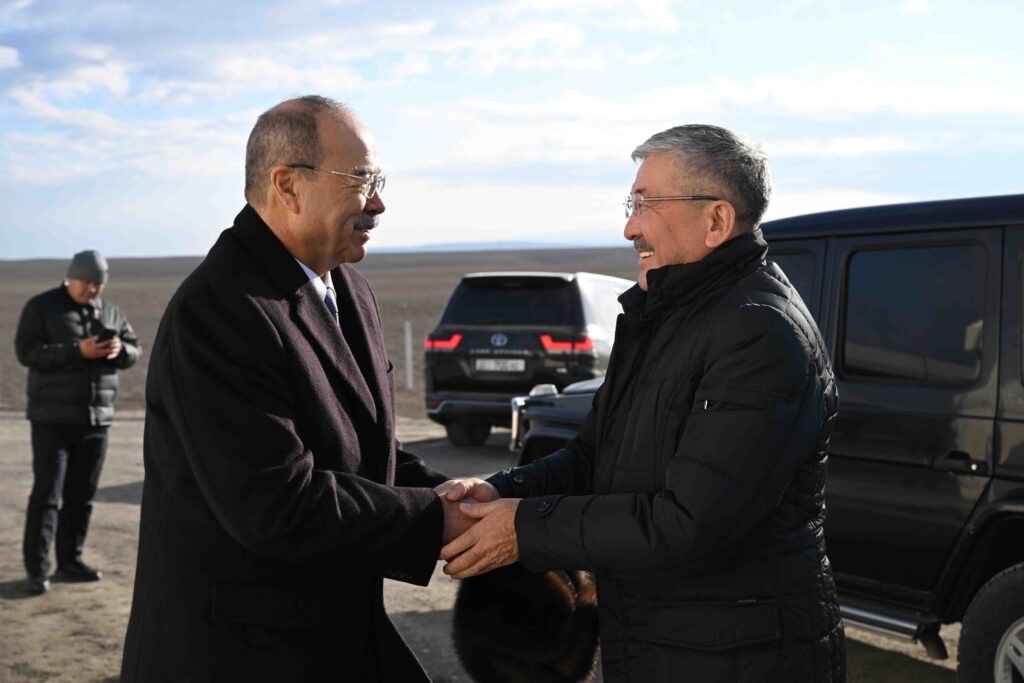
Tajik Prime Minister Kohir Rasulzoda, Uzbek Prime Minister Abdulla Aripov, and Chairman of Kyrgyzstan’s Cabinet of Ministers (Kyrgyzstan does not have a post of prime minister) Adylbek Kasymaliyev met on January 8 at a desolate area where the borders of the three countries meet.

Image: gov.kg

The group touted agreements on the completion of the delimitation process along the Uzbek-Kyrgyz border and the early December 2024 agreement on the Kyrgyz-Tajik border.

Since 1991, unmarked areas of the borders in the Ferghana Valley were often the scenes of conflicts between communities on either side of the frontier. Border guards sometimes fired on trespassers and dozens of people were killed or wounded, sometimes simply because they inadvertently strayed over unmarked territory into the neighboring country.

The Ferghana Valley is the most densely populated region in Central Asia. This is due to the rich agricultural land which makes the region to this day the breadbasket of Central Asia.

Soviet mapmakers drew lines to create Soviet republics in the region, though these borders mattered little since they were internal administrative boundaries inside one country.

Image: gov.kg

After the USSR collapsed, these often-arbitrary, zigzagging borders took on meaning, and disputes quickly broke out about what land historically belonged to which nation and who had rights to water use. These issues were greatly complicated by the existence of enclaves created during the Soviet period such as Uzbekistan’s Soh and Shahimardon and Tajikistan’s Vorukh, all three of which are surrounded by Kyrgyzstan.


Looking Ahead

The three prime ministers discussed hydropower plants (HPP), an important topic for all three countries, especially as key HPPs are located in the mountains ringing the Ferghana Valley and more are currently under construction.

Central Asia is one the regions most affected by climate change, so HPPs and water use in general are crucial issues, especially given that agriculture in the Ferghana Valley is vital to all three countries. All three countries face electricity shortages and hydropower is seen as a means of alleviating or even totally resolving this dilemma, but at the same time waters flowing from the mountains of Kyrgyzstan are important for agriculture in every Central Asian state.

Uzbek media noted Uzbek Energy Minister Jurabek Mirzamahmudov was part of the delegation attending the January 8 talks. Reports did not mention if energy ministers from Kyrgyzstan and Tajikistan were also present.

Image: gov.kg

Central Asia is also taking on a new importance as a trade corridor between Europe and China, and from Europe and China into Afghanistan and on further to Pakistan. Reports noted logistics were high on the agenda at the meeting of the three prime ministers.

Trade between the three countries, specifically in the Ferghana Valley, was also discussed not only for economic reasons but also as a confidence-building measure now that the borders in the region have finally been set.


A New Era of Friendship and Cooperation?

The January 8 meeting of the three prime ministers was significant simply because it happened.

It took 30 years for officials from the three countries to get together under the same roof, and that happened on April 23, 2021, when the governors of Uzbekistan’s Ferghana Province, Kyrgyzstan’s Batken Province, and Tajikistan’s Sughd Province met for talks on economic cooperation. That there were no follow-up meetings until 2025 illustrates how thorny the issues are in the Ferghana Valley, and that no one wanted to risk making the delicate situation worse by raising contentious issues.

The catalyst for this meeting of prime ministers was likely the Kyrgyz-Tajik border agreement that came after the militaries of the two countries fought brief, but devastating battles along areas of their border in late April 2021 and September 2022.

Uzbekistan, with a population (and army) more than twice as large as Kyrgyzstan and Tajikistan combined, called for calm during both conflicts, but refrained from taking a more active role in mediating. Perhaps, now that Kyrgyzstan and Tajikistan have reached agreement on their common border, Uzbekistan felt more comfortable participating in a “Ferghana troika” meeting.

In any case, the borders of these three countries have often been closed over the course of the last 33 years, and frequently even when they were open, it was slow and difficult to cross from one country into another.

When the terrorist Islamic Movement of Uzbekistan was roaming the mountain areas where the three countries borders meet in 2000, Uzbekistan put landmines along its borders with Kyrgyzstan and Tajikistan.

Those were only removed a few years ago.

All this has hindered the development of the Ferghana Valley.

Meetings like the one on January 8 should have happened much sooner.

It would have saved a lot of suffering and hard feelings that still might take years to soothe.

However, at least the prime ministers of the three countries have finally come together, and that meeting could lead to a summit of the three countries’ leaders sometime in the future.

The Ferghana Valley is probably the most important piece of land in Central Asia for the survival of the people of the region. Until now it has been one of the leading sources of problems between the countries that share it, but perhaps the January 8 meeting is the start of a more harmonious and prosperous period for the valley.

Kazakhstan Revises 2025 Oil Production Target Amid OPEC+ Commitments

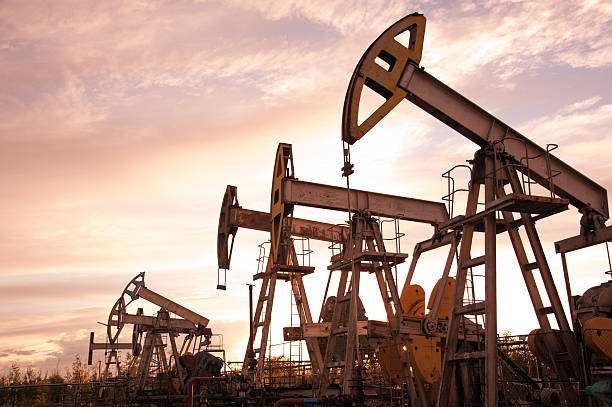
Kazakhstan’s Ministry of Energy has lowered its 2025 oil production target by one million tons as part of the country’s commitment to meeting its obligations under the Organization of the Petroleum Exporting Countries (OPEC+) agreements. In 2024, Kazakhstan had already reduced oil production by 2.5 million tons compared to its original plan.

The revised target for 2025 now stands at 96.2 million tons, down from the 97.2 million tons announced in December 2024. Despite the reduction, Prime Minister Olzhas Bektenov has instructed the Energy Ministry to implement stronger measures to increase natural gas and oil production to meet planned output levels. Frequent revisions to production forecasts in 2024 highlighted the ongoing challenges in achieving production stability.

The lowered forecast is attributed to several factors, including extended maintenance shutdowns at major oilfields. The Tengiz oilfield experienced shutdowns in May and August, totaling 50 days, while the Kashagan oilfield underwent maintenance for 21 days. Additionally, an unscheduled shutdown occurred at the Karachaganak field.

Production was further impacted by limitations on gas intake at the Orenburg gas processing plant, which affected operations at Karachaganak. Planned maintenance at the Caspian Pipeline Consortium (CPC)—the primary route for Kazakh oil exports—also constrained transportation capacity. Compliance with OPEC+ agreements added to the reductions in production.

In mid-2024, Kazakhstan, alongside Russia and Iraq, submitted compensation schedules to OPEC to fulfill their obligations to cut oil production after exceeding quotas under the OPEC+ agreement. Under this plan, Kazakhstan began reducing production by 18,000 barrels per day in July and further cut output by 265,000 barrels per day in October 2024. These reductions will continue until September 2025.

Oil export revenues in 2024 amounted to approximately 2 trillion KZT ($3.8 billion), while total budget revenues from the oil sector exceeded 2.3 trillion KZT ($4.4 billion).

As previously reported by The Times of Central Asia, the National Bank of Kazakhstan recently lowered its forecast for oil prices in 2025, reducing the projected cost from $82.5 to $70 per barrel. This, combined with the revised production volumes, is expected to further impact revenues from the oil sector.

Turkmenistan Develops Innovative Grapevine-Based Products

The International Science and Technology Park of the Academy of Sciences of Turkmenistan is conducting groundbreaking research on the use of local grape varieties in biotechnology, focusing on waste-free production. The biotechnology laboratory is studying grape varieties such as “Garauzyum,” “Gelinbarmak,” “Terbash,” “Khalili,” and “Dagtokga,” analyzing the properties of grapes, including their leaves, seeds, and vines, to develop innovative technologies.

Altyn Rakhmanova, head of the laboratory, highlighted the versatility of grapes, noting their significance beyond traditional wine-making. She emphasized their potential to produce biologically active substances, compound feed, and environmentally friendly fuel.

“Our research is aimed at identifying the potential of this crop for use in various industries,” Rakhmanova explained.

The laboratory has already developed several grapevine-based products, including the antioxidant resveratrol, animal feed, and fuel briquettes. These briquettes, made from grapevine combined with other wood-based materials, are particularly noteworthy for their environmental benefits. When burned, they emit no toxic resins, making them suitable for both domestic and industrial use. This innovative approach not only reduces waste but also diversifies the product range. The project’s uniqueness lies in its combination of environmental sustainability and broad applications.

In addition to product development, the biotechnology laboratory is exploring opportunities for international collaboration. Scientists believe that partnerships with foreign companies and research organizations will facilitate the exchange of knowledge and foster the creation of advanced environmentally friendly technologies.

AIIB Commits $500 Million to Tajikistan’s Rogun Hydropower Project

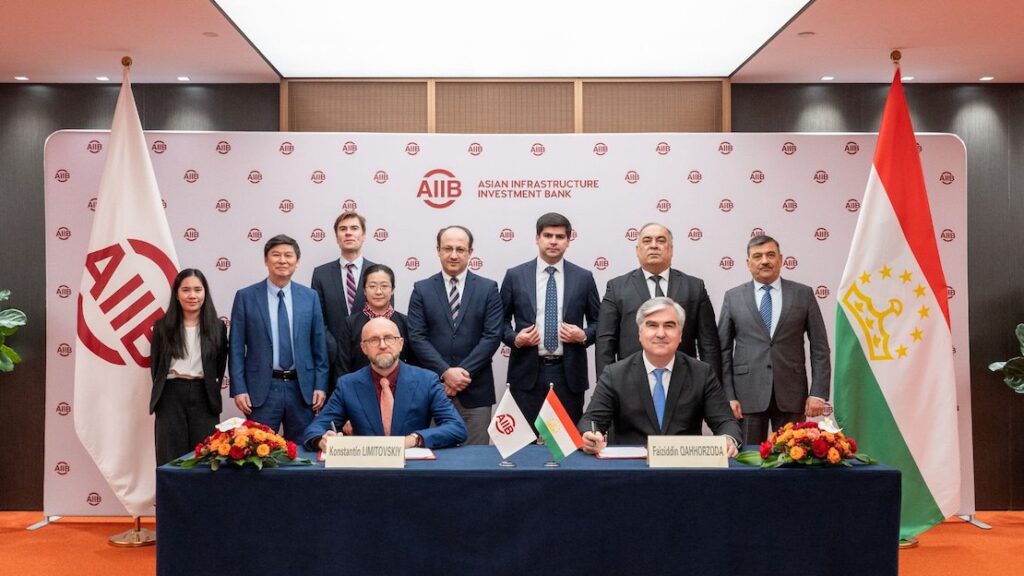
The Beijing-based Asian Infrastructure Investment Bank (AIIB) has approved a multiphase program totaling $500 million, including an initial Phase 1 loan of $270 million, to support Tajikistan’s flagship Rogun Hydropower Plant (HPP) project. The announcement was made on January 6, following the financing approval on December 19, 2024.

The Rogun HPP, located on the Vakhsh River — a tributary of the Amu Darya River — lies 110 kilometers from Dushanbe, Tajikistan’s capital. With a designed generation capacity of 3,780 MW, a 335-meter-high dam, and a reservoir spanning 170 square kilometers, the Rogun HPP is expected to deliver improved electricity access to around 10 million people. It aims to address Tajikistan’s chronic winter power shortages and position the country as a key regional energy supplier.

The project is co-financed with the World Bank, with potential contributions from a global consortium of donors. It seeks to enhance the supply of clean, affordable, and climate-resilient hydropower, with the potential to export electricity to neighboring Central Asian countries.

As Central Asia’s energy demand is projected to grow by 40% by 2030 and triple by 2050, the Rogun HPP will play a pivotal role in increasing reliability and reducing the cost of electricity supply across the region.

Konstantin Limitovskiy, AIIB Chief Investment Officer, commented on the significance of the project, stating: “This project will significantly contribute to the green energy transition and energy security of Central Asia. Investing in sustainable energy infrastructure is not merely about meeting today’s demands, but about empowering future generations with clean, reliable power that drives transformative growth, strengthens resilience, and unlocks the full potential of the region.”

Tajikistan ranks eighth globally in hydropower potential, yet only about 4% of this capacity is currently utilized. The Rogun HPP is set to play a critical role in decarbonizing electricity grids across Central Asia, supporting the region’s ambitious Nationally Determined Contributions (NDCs) under the Paris Agreement.

Kazakhstan Leads Central Asia in Global Passport Power Ranking 2025

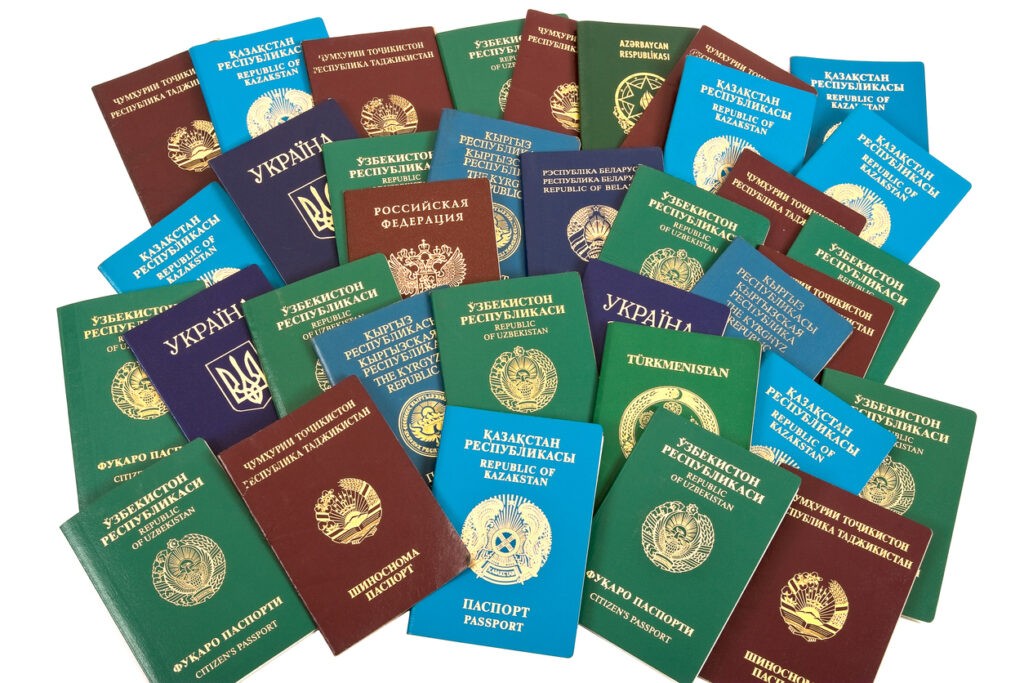
Kazakhstan has secured the top spot among Central Asian countries, ranking 52nd globally in the latest Passport Index by Canadian consulting firm Arton Capital. The ranking evaluates passports based on the number of destinations their holders can access visa-free or with a visa on arrival.

Kazakhstan’s passport allows visa-free travel to 46 countries and visa-on-arrival access to 50 more, totaling 96 destinations. However, Kazakh citizens still require visas for 102 destinations.

Uzbekistan ranks 68th, climbing two places from 2024. Uzbek passport holders enjoy visa-free access to 32 countries and can obtain visas on arrival for 46 more. Visas are required for 120 destinations.

Kyrgyzstan stands at 78th in the global ranking. Its citizens can travel visa-free to 30 countries and obtain visas on arrival in 48. Like Uzbekistan, Kyrgyz nationals need visas for 120 destinations.

Tajikistan ranks 80th, with its citizens able to visit 27 countries visa-free and 46 with a visa on arrival. Tajik nationals require visas for 125 destinations.

Turkmenistan is 85th globally, the lowest among Central Asian nations. Turkmen passport holders have visa-free access to 18 countries and visa-on-arrival privileges for 50 destinations but need visas for 130 countries.

Globally, the United Arab Emirates retains its position as the most powerful passport, followed by Spain, France, Germany, and Belgium. Several countries share the same rank; for instance, German, Belgian, and Italian citizens can visit 133 countries visa-free and obtain visas on arrival in 45 countries.